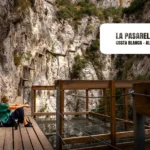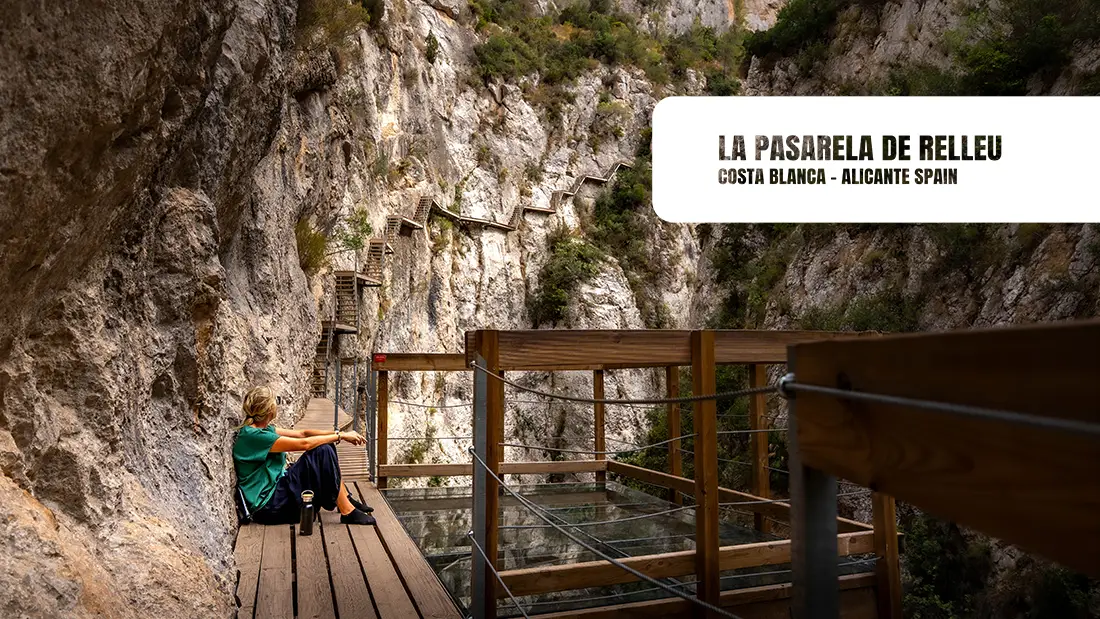
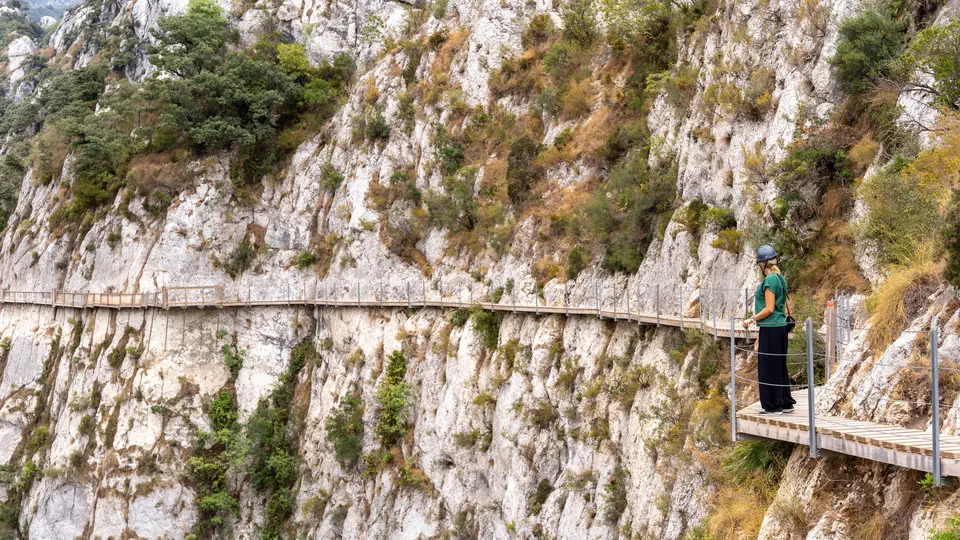
La Pasarela de Relleu is a wooden walkway suspended above a deep gorge.
Costa Blanca is a place full of beautiful beaches, sea views, water sports and all the other attractions you would naturally associate with a coastline bordering a warm sea. However, this is only part of what this region of Spain has to offer. So, if during your stay on the Costa Blanca you fancy seeing something wholly different from beaches, promenades and busy resorts, I have a place for you that is definitely worth adding to your list. La Pasarela de Relleu, also known as Pasarela del Pantano de Relleu, is a relatively short but very impressive route running above a gorge near the former Relleu reservoir.
Where is La Pasarela de Relleu?

Pasarela de Relleu is located in the village of Relleu, in Alicante Province, in the Marina Baixa region. Alicante is approximately 40–45 kilometres from Relleu, while driving from Benidorm takes roughly 30–35 minutes. Relleu itself is a small settlement surrounded by mountains. This location is precisely what makes the trip such an interesting change from the typical Costa Blanca holiday.
We drove from Orihuela Costa, not far from Torrevieja, and it took us just over an hour to reach the route leading to the walkway suspended above the high gorge. I do not know what the public transport options are like, but I suspect they are rather limited, so a car remains the only means of transport I would recommend. Keep in mind that the mountain road is in good condition and relatively quiet, but it is devilishly winding, so stay focused and drive carefully throughout the journey.
If you are planning to explore the whole region by car, it is worth having a look at my guide to the Costa Blanca in 7 days – a ready-made road trip itinerary. Relleu fits very nicely into such a plan, especially if you want to see some less obvious places during your trip.
What exactly is La Pasarela de Relleu and what will you see during the walk?
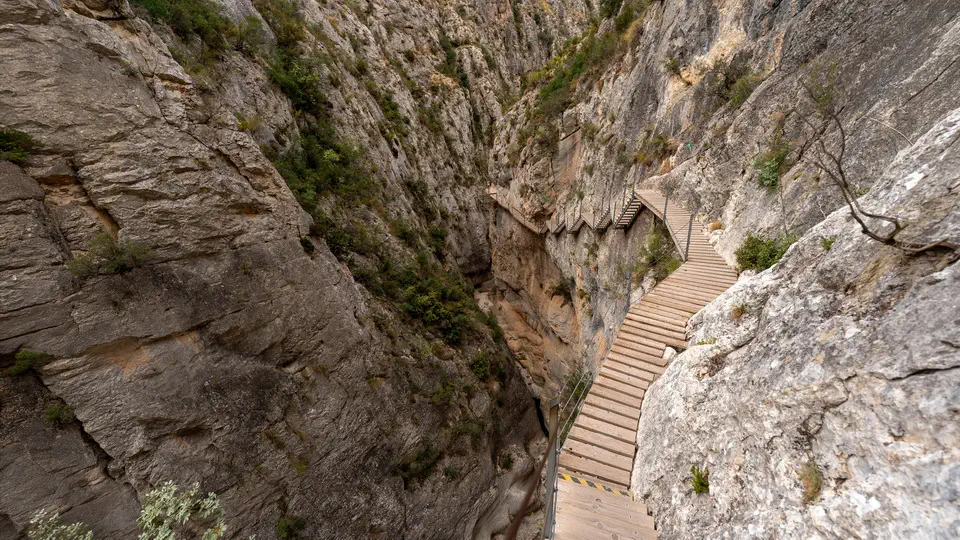
The main attraction is, of course, the wooden walkway suspended from the wall of the rocky gorge. In some places it is around 60 metres above the bottom, so the first impression can be powerful. The walkway itself is approximately 850 metres long there and back. This is not, however, a classic mountain trail where you have to tackle difficult climbs. The walkway has been designed so that people without much experience of mountain hiking can also manage it.
The most characteristic feature is undoubtedly the scenery. Standing on the wooden structure, you look down into the rocky gorge, while ahead of you is the raw landscape typical of this part of Spain: grey-brown hills cut by ravines and occasionally dotted with rather sparse trees and bushes. For anyone with a fear of heights, however, this can feel like a much greater adventure than the relatively short length of the route might suggest.
One of the most distinctive points along the route is a viewpoint with a glass floor. If you have no problem with heights, it is worth stepping onto it and looking straight down. If, on the other hand, you suffer from vertigo, be prepared for your legs to feel a little weak. I managed it, and Magda joined me after hesitating for a moment. Either way, it is worth pushing yourself a little and treating the trip to La Pasarela de Relleu as an experience in its own right, as well as an opportunity to see the landscape from a perspective you would normally never have access to.
Pantano de Relleu – the old reservoir
The route is located beside Pantano de Relleu, the Relleu reservoir, and its history is one of the more interesting aspects of the whole excursion. The reservoir was built in the 17th century and was connected with water supply and agriculture in the region. Today, the surroundings of the old reservoir look wholly different from the typical tourist attractions of the Costa Blanca.
On the longer version of the route, you can see old channels, aqueducts, irrigation reservoirs, azuds and a former lime kiln. Part of the trail also follows the historic Camí de les Ripalmes, also known as Camí del Fasamais. Thanks to this historic setting, the walk along the gorge above the steep ravine is only one part of the whole experience.
La Pasarela de Relleu and the routes from Relleu – which version should you choose?
You need to remember that La Pasarela de Relleu is not a standalone attraction where you simply drive up, park the car and reach the walkway a few minutes later. The walkway lies roughly halfway along a route, and you can choose between a longer and a shorter option.
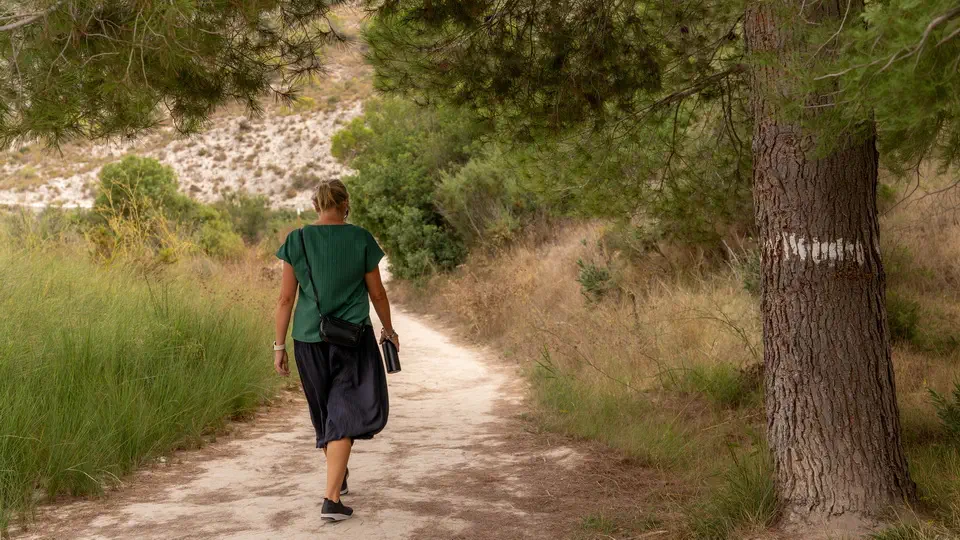
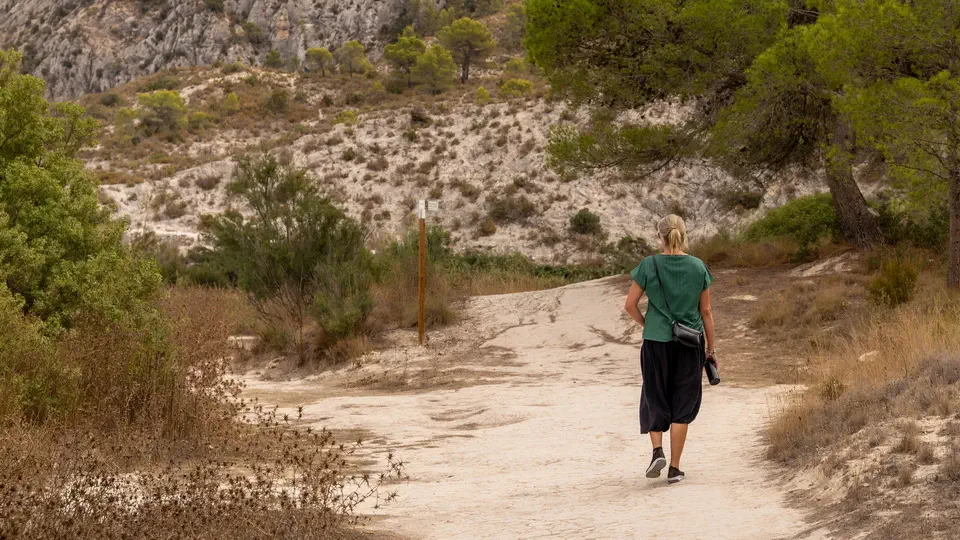
- The longer route from Relleu – The most interesting option starts at the town hall in Relleu. The entire route is approximately 10 kilometres long and forms a circular loop. Official information gives around three hours as the walking time, although I would always allow more, especially if you want to take photographs and enjoy the scenery without rushing. The starting point is at Ayuntamiento de Relleu, where you will find an information board. The route is marked with green and white signs. In my opinion, this is the best option if you wish to treat the excursion as a proper walking route rather than simply ticking off the famous walkway. Just remember that the trail crosses dry and largely uninhabited terrain, so make sure you have comfortable footwear, plenty of water and, if necessary, some food for a picnic. Along the way you will see, among other things:
- old paths and roads once used by residents,
- fields and agricultural terraces,
- channels and irrigation systems,
- old water reservoirs,
- a lime kiln,
- remains of former hydraulic infrastructure,
- Pantano de Relleu,
- and, of course, La Pasarela de Relleu, the spectacular walkway above the deep gorge.
- The shorter route to Pasarela de Relleu – If you do not fancy walking 10 kilometres, you can approach the pasarela from a car park located closer to the attraction. The official website gives the shorter route as approximately 3.6 kilometres in total, with around 40 metres of elevation gain and a walking time of about one hour. The pasarela itself is roughly 1.5 kilometres from the starting point of this route.
La Pasarela de Relleu – practical information useful when planning your visit
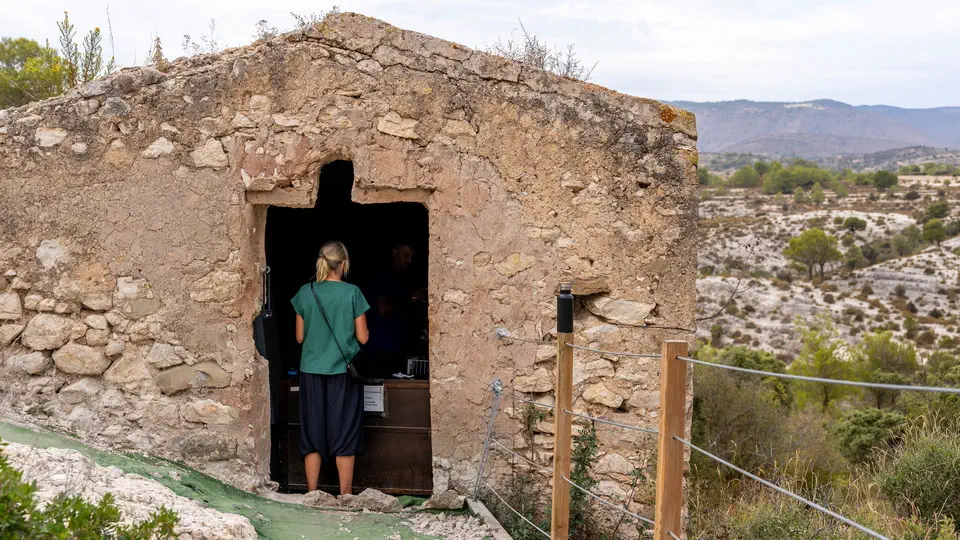
How much does entry to Pasarela de Relleu cost? – In 2026, a standard ticket costs €3.50. Residents of Relleu who are officially registered in the village can enter free of charge after showing the appropriate identification. Tickets can be purchased online or on site at the control point. In my opinion, this is a very reasonable price for an attraction that subsequently requires regular maintenance and safety checks. I have paid considerably more in Europe for considerably smaller pleasures.
Opening hours – According to the latest information on the official website, the walkway is currently open from Monday to Sunday between 9:00am and 6:30pm, with the last admission at 6:00pm. Before travelling, however, I would definitely check the current opening hours, particularly outside the main season or in poor weather. Official Pasarela de Relleu website – tickets and information.
Do you need to book a ticket? – If you want to visit at a particular time, I definitely recommend booking in advance. This is particularly important during the high season, when interest in the attraction is greater. The booking refers to the time at which you need to arrive at the entrance to the walkway, not the time when you start the entire walking route. You therefore need to set off early enough. This is where it is easy to make a mistake. If you choose the longer route from Relleu, you have to allow enough time to reach the walkway. The organisers estimate that the longer section leading to the entrance takes around 1 hour and 15 minutes, but I would allow at least an hour and a half.
How should you prepare for the walk? – You do not need any specialist equipment, but I would treat this as a normal mountain walk. It is worth taking comfortable shoes with good grip, water, a hat, sun cream, a phone, or camera, something to eat if you choose the longer option, and a lightweight jacket outside the hottest months. In summer, I would pay particular attention to the temperature. This is Alicante, after all, so the sun can be relentless even when the route itself does not look particularly demanding. Before setting off, I would also check the weather forecast. The official attraction website points out that weather conditions need to be considered when planning the walk, which means that in rain or strong winds you will not be allowed onto the walkway – presumably to prevent you from ending up at the bottom of the canyon.
Is La Pasarela de Relleu suitable for children? – Yes, but children should remain under adult supervision at all times. The route itself is not technically difficult, but the height and the drop beneath the walkway mean that common sense is essential. If you are travelling with children, I would choose the shorter option. It allows you to see the main attraction without having to complete the entire 10-kilometre loop.
Is Pasarela de Relleu safe? – Yes, provided you respect the rules in place along the route. The walkway has been created as a tourist walking attraction. It is not a via ferrata and does not require a harness or specialist climbing equipment. You do, however, need to remember that you are walking high above the bottom of the gorge. I would not run here, lean over the barriers or take my eyes off children, particularly near the exposed sections. If you have a serious fear of heights, think carefully before travelling about whether this will actually be enjoyable for you. The structure itself is safe, but psychologically the crossing may be considerably more challenging for some people than the easy nature of the trail suggests.
Practical information at a glance
- Practical information at a glance – La Pasarela de Relleu
- Location: Relleu, Alicante Province, Spain
- Long route: approximately 10 km, circular
- Short route: approximately 3.6 km
- Length of the pasarela itself: approximately 850 m there and back
- Height: up to around 60 m above the bottom of the gorge
- Difficulty: easy
- Ticket: €3.50
- Opening hours: 9:00am–6:30pm, last admission at 6:00pm
- Getting there: a car is the best option
- Booking: recommended, particularly during the high season
- Children: yes, but only under adult supervision.
Relleu village – worth staying a little longer
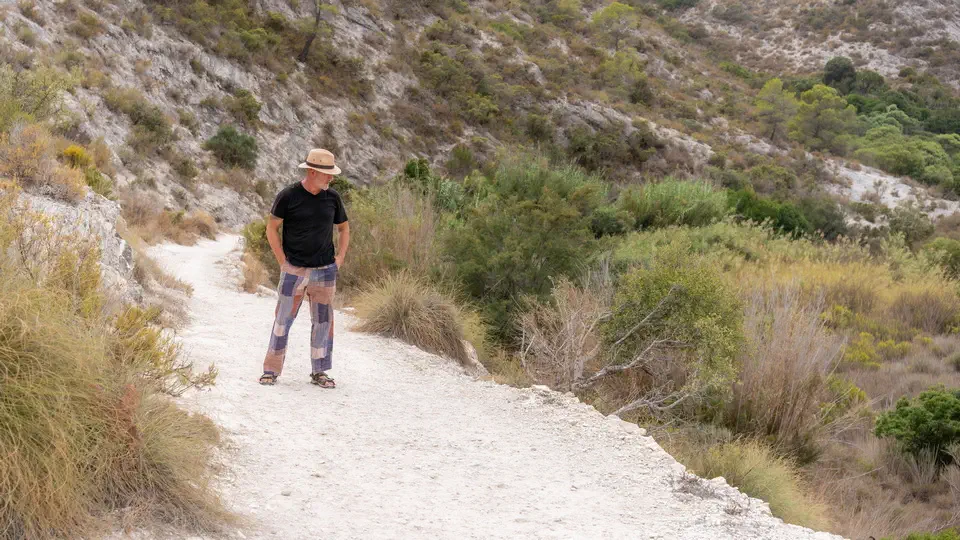
I would not limit your visit to the walkway above the gorge. Relleu itself is a small and peaceful village where you can see traditional buildings and experience an atmosphere entirely different from that of Benidorm or Alicante. This is actually one of the things I like most about the Costa Blanca. The region has two faces. One consists of wide beaches, flat blocks and resorts. The other begins just a few kilometres inland.
So, what can you actually see in such a small place as Relleu? Quite a lot, actually, and you can have a surprisingly good time if you enjoy history and arrive with the right attitude.
- Church of Saint James the Apostle – Iglesia de Sant Jaume Apòstol – The most important historic building in Relleu is the parish church dedicated to Saint James the Apostle. The church stands in the centre of the village and has a simple architectural style typical of the region. It is worth walking over to it while exploring Relleu, especially as it is located close to the main square.
- Relleu old town – I would not come to Relleu expecting to explore dozens of monuments. The nicest way to experience the village is simply to wander through the streets of the old part. Narrow lanes, white houses, small squares and buildings adapted to the steep terrain show a wholly different side of the Costa Blanca from the one we know from Benidorm or Alicante. Relleu lies in a mountain valley, so views of the surrounding hills appear around almost every corner. For me, this quiet, slightly sleepy atmosphere is one of the village’s greatest attractions.
- Town Hall – Ayuntamiento de Relleu – The town hall stands beside the village’s main square and is a useful landmark before starting the walk to Pasarela de Relleu. The route towards the reservoir is also signposted from here. If you choose the longer version of the excursion, this is where I would start. This way you will see not only the famous walkway but also Relleu itself and the landscape surrounding the village.
- Museo Etnológico de Relleu – An interesting place for anyone who wants to understand the history of the village a little better is the ethnological museum. It presents the traditional life of Relleu’s inhabitants and former occupations connected, among other things, with agriculture and water management. This is particularly interesting in the context of Pasarela de Relleu because during the walk you can see the remains of former water-management systems. In this part of Alicante, water has always been enormously important, and the landscape around Relleu is closely connected with terraced farming and irrigation systems.
- Lavadero Público – the former public laundry – Relleu has also preserved elements of the old infrastructure of everyday life, including a traditional public laundry. Such places may be less impressive than churches or viewpoints, but they are precisely the kind of details that allow you to see what life in small Spanish communities looked like only a few decades ago.
- Remains of Relleu Castle – Above the village you will find the remains of a former castle whose history dates back to the medieval period. Today, you will not find a monumental fortress here; what survives are mainly fragments of walls and structural remains. The location of the castle is nevertheless very intriguing. From above, you can look down over Relleu and the surrounding mountains, so anyone interested in history and viewpoints should consider including it in their walk.
- Relleu and the history of water management – In my opinion, water is one of the most interesting themes connected with Relleu. The village lies in a dry, mountainous region where agriculture has depended for centuries on making careful use of every available source of water. This is why, when exploring the area around Pantano de Relleu, you can see old channels, aqueducts, reservoirs and other elements of water-management infrastructure. Pantano de Relleu itself is one of the oldest structures of its kind in the Valencia region. The reservoir was built in the 17th century and formed part of a system used to collect water for agriculture. It creates an interesting contrast: today, tourists mainly come here for spectacular photographs from the wooden walkway, while several hundred years ago the main reason for this infrastructure to exist was simply to provide water for local people and farmers.
If you would like to discover more places like this, have a look at my article about the most beautiful villages on the Costa Blanca. Relleu fits perfectly into this less obvious side of the region. It is also a good idea to combine the excursion with other attractions in the northern part of the Costa Blanca. In our guide to attractions on the Costa Blanca – what to do and what to see, I have collected the places that I believe are worth visiting during a stay in the region.
Is it worth travelling inland on the Costa Blanca just to walk along La Pasarela de Relleu? I would put it this way: if I had to choose between another crowded viewpoint and a trip to Relleu to walk along a walkway suspended above a deep gorge, I would choose the latter. La Pasarela de Relleu is wholly different from the typical attractions of the Costa Blanca.
The walkway itself makes the biggest impression, of course, but the entire journey leading to it is worth appreciating as well. Old paths, mountains, remains of former irrigation systems and Pantano de Relleu combine to create a very enjoyable excursion. If you have a car, I would devote at least half a day to Relleu. And if you enjoy walking, I would choose the full route from Relleu. That way, the walkway becomes not just a single attraction but the highlight of the entire walk.
If you are planning more excursions like this, make sure you also see our guide to the Costa Blanca and our ready-made seven-day Costa Blanca road trip itinerary.
The Relleu cliff walkway – facts, information and interesting details
- La Pasarela de Relleu is located approximately 40 kilometres from Alicante – the walkway lies in the mountains near the small village of Relleu, in Alicante Province.
- The walkway is suspended up to 60 metres above the bottom of the gorge – at its highest points, the crossing can be a genuinely powerful experience, particularly for anyone with a fear of heights.
- The entire route along the walkway is approximately 850 metres long – this figure refers to the walk there and back from the wooden control point to the end of the pasarela.
- Pasarela de Relleu was built onto the wall of the gorge – the wooden elements of the structure are cantilevered from the rock face, meaning that you are quite literally walking above the drop.
- In some places the walkway comes to within around 20 metres of the bottom of the gorge – the height changes as you walk, which means that the scenery continues to change as well.
- There are two viewpoints along the route – from them you can admire the rocky walls of the gorge and the surrounding mountains, while one of them has a glass floor.
- The glass floor lets you look straight down – for many people, this is the most exciting part of the route and an obligatory stop for photographs.
- The pasarela is not a standalone trail – the walkway lies roughly halfway along a longer route leading towards Pantano de Relleu.
- The walkway can only be reached on foot – you can drive to the area around the beginning of the shorter route, but the final section has to be completed on foot.
- There are two main route options – the longer one is approximately 10 kilometres and forms a loop, while the shorter option is around 3.6 kilometres and follows an out-and-back route.
- The shorter route has only around 40 metres of elevation gain – this means that the walk to the pasarela does not require any particular level of fitness.
- The longer route has around 200 metres of elevation gain – if you choose the full loop, you can therefore treat the excursion as a proper mountain walk.
- The route follows part of an old horse trail – a section uses the restored historic Camí de les Ripalmes, also known as Camí del Fasamais.
- A 17th-century reservoir is located close to the walkway – Pantano de Relleu is a historic structure connected with the former management of water in this dry region of Spain.
- Old irrigation channels can be seen during the walk – remains of infrastructure once used to transport and store water have survived along the route.
- There is an old lime kiln on the trail – it is one of the examples of the remains of former economic activity in the Relleu area.
- Old water reservoirs and weirs have also survived along the route – thanks to them, the walk is not simply a scenic excursion but also a journey through the history of local water management.
- Pasarela de Relleu is suitable for families with children – the route has no technical difficulties, but children must remain under adult supervision throughout the walk.
- There is an admission fee for the walkway – the current standard ticket price is €3.50, while registered residents of Relleu can enter free of charge after showing the appropriate identification. The fee helps, among other things, to maintain and clean the infrastructure.
- Pasarela de Relleu has become one of the most distinctive attractions in the inland part of the Costa Blanca – a place that was once mainly visited by residents now attracts tourists searching for unusual experiences away from the beaches and large resorts.
- Interesting cities near Costa Blanca:
- Cullera, located on the Valencia coast, is a resort town known for its beautiful beaches with light and fine sand.
- La Mata is a small town in the south of Spain, located on the Costa Blanca coast.
- San Pedro del Pinatar is a town located on the Costa Calida coast in the province of Murcia, southern Spain.
- Torrevieja is a coastal city and municipality located on the Costa Blanca in the province of Alicante.
- Attractions near Costa Blanca:
- Bodegas Luzon is one of the oldest and largest vineyards in the Spanish municipality of Jumilla, located in the Region of Murcia.
- Cullera Castle (Castell de Cullera) is, in my opinion, one of the most fascinating attractions of the city.
- Dino Park Algar on the Costa Blanca coast, is a land ruled by prehistoric dinosaurs.
- Terra Natura Benidorm – A beautiful zoo on the Costa Blanca.
- Aqua Natura in Benidorm is a large water park connected to the Benidorm Zoo.
- Algar Waterfall is a perfect idea if you want to get away from civilisation for a few hours and spend some time surrounded by nature.
- El Palmeral Park in Alicante, a place where you can relax and regain strength.
- L’Oceanogràfic is the Spanish name for the Oceanarium in Valencia, the largest aquarium in Europe, located in the southern part of Spain by the Mediterranean Sea.
- La Pasarela de Relleu a walkway over a gorge near Alicante
- Las Salinas de Torrevieja is an industrial plant that extracts sea salt from a shallow but vast lake in Laguna Salada de Torevieja.
- Natural Park El Fondo, or as the Spanish say, Parque Natural el Hondo, is located in the beautiful region of Valencia, near cities such as Alicante, Valencia, La Mata, Torrevieja.
- Palm Grove of Elche largest palm grove in Europe.
- Rio Safari Elche is a zoo located on the Costa Blanca coast of Spain.
- Tetería Carmen del Campillo, a Moorish-style teahouse hidden between Crevillent and Albatera.
- The Science Museum in Valencia is part of a massive project called the City of Arts and Sciences.
- The goal of our today’s trip is the Valor chocolate factory and museum.
- The Castle of Santa Barbara (Castillo de Santa Barbara), also known as the Alicante Fortress, looms over the city like an unconquerable defender.
- The Church of the Virgin Mary in the Spanish city of Murcia is one of the biggest attractions of the city and an undeniable symbol of it.
- The Naval Museum in Cartagena is a fascinating attraction in the city that anyone with even a slight interest in European history
- The Museum in Torrevieja is an interesting attraction in the port part of the city.
- The Ducal Palace of Gandia is a tourist attraction in the city and a fascinating monument worth visiting during your stay on the Costa Blanca in Spain.