The Museum of Sacred Art in Orihuela is one of the city’s attractions that you really should not miss.
Orihuela, on the Costa Blanca, is best known for its historic churches, monumental Santo Domingo College and the beautiful architecture of its old town. However, the city has another attraction that I would particularly recommend to anyone interested in history and art. This is the Museo Diocesano de Arte Sacro, or Diocesan Museum of Sacred Art, housed in the former Episcopal Palace. Its collections are considerably more interesting than the term ‘museum of sacred art’ might suggest.
Here you will find paintings by outstanding Spanish artists, medieval sculptures, historic liturgical jewellery, richly decorated ecclesiastical vestments and ancient books. The star of the collection is a painting attributed to Diego Velázquez, although this is certainly not the only reason to step inside the museum. It is also worth paying attention to the building itself. The Episcopal Palace has a history stretching back several centuries, and its Renaissance and Baroque features provide an interesting setting for the works on display. It is precisely this combination of architecture, history, and art that makes a visit something more than simply looking at another collection of paintings hanging on walls.
The museum fits perfectly into a visit to the historic centre. If you decide to explore the city described in our guide to Orihuela and its most important attractions, make sure you include it in your walking itinerary.
The Museum of Sacred Art in Orihuela and the History of the Episcopal Palace – From a Medieval Hospital to an Art Museum
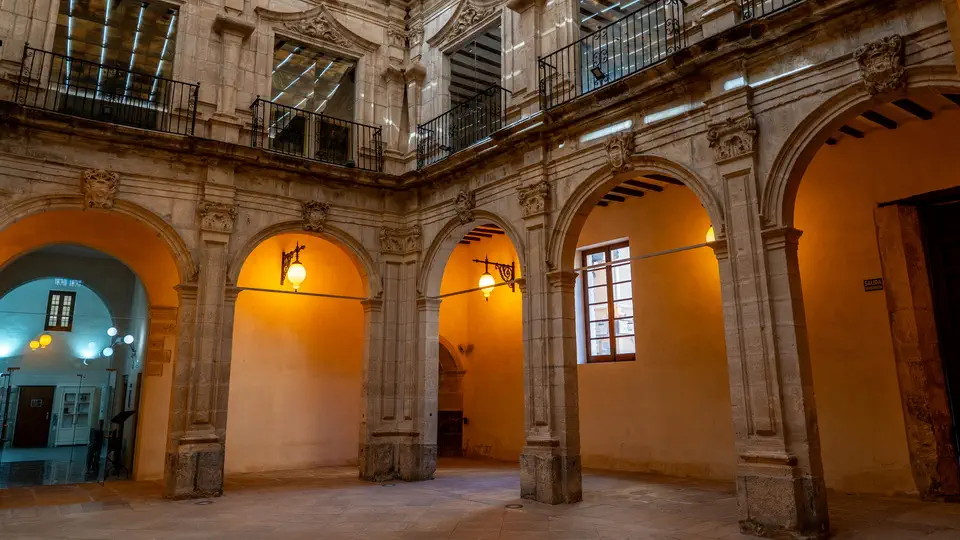
The history of the Palacio Episcopal is almost as fascinating as the works currently displayed inside it. The building was not originally constructed as a grand episcopal residence. Its beginnings are connected with a medieval hospital, while its subsequent transformation reflected Orihuela’s growing importance as a religious and administrative centre.
Before the palace appeared here, the medieval Hospital of Corpus Christi and San Bartolomé occupied the site. Its origins date back to the 14th century. The institution was established in 1384 and provided assistance to residents and those in need of care. It was an important social institution, administered by a local religious brotherhood. The hospital occupied an attractive position on Calle Mayor, opposite the former collegiate church of El Salvador, which is now the cathedral. It is worth remembering that, in medieval Orihuela, the area around what is now the cathedral formed an important centre of urban life. Its proximity to the church, main streets and the River Segura was significant for both practical and representative reasons.
The situation changed in the middle of the 16th century, when Orihuela began strengthening its position as an ecclesiastical centre. Until then, the city had remained under the jurisdiction of the Bishops of Cartagena, who maintained their residence here. However, in 1558, the Portuguese bishop Esteban de Almeida decided to change his existing residence. A property exchange took place. The bishop handed over his former palace and, in return, received the Hospital of Corpus Christi together with the adjoining buildings. In this way, the former charitable institution began its transformation into an ecclesiastical residence. Construction and adaptation work followed, laying the foundations for the Renaissance Palacio Episcopal.
The transformation coincided with one of the most important events in the city’s history. In 1564, the Diocese of Orihuela was established, making it independent of the Bishopric of Cartagena. This was a considerable distinction and confirmation of the city’s growing importance. From that moment onwards, the palace became the official residence of the local bishops and the administrative centre of the diocese. It was no longer simply the home of a clergyman. Decisions concerning the operation of churches, the management of property, religious education and the spiritual life of the entire region were made within its walls.
It is worth looking out for the coat of arms of Bishop Esteban de Almeida, which has survived beside the Curia portal. It is one of the tangible reminders of the beginnings of the new residence. The surviving architectural details allow us to reconstruct the different stages in the building’s development.
The original palace had a Renaissance character. Its architecture reveals influences from the Italian Renaissance, particularly in the design of the galleries, arcades and representative interiors. The design is attributed to the architect Jerónimo Quijano, who worked in the Murcia and Orihuela regions during this period. However, this is a historical and artistic attribution rather than an indisputably confirmed authorship. Among the most valuable surviving elements from the first construction phase are the Renaissance coffered ceilings, some representative rooms and the gallery overlooking the River Segura.
The palace we see today owes much of its appearance to the reconstruction carried out in the 18th century. Over successive generations, the building was extended and adapted to meet the needs of the bishops and ecclesiastical administration. Eventually, the original Renaissance structure was no longer sufficient for an increasingly extensive institution.
A particularly important phase of work began in 1733, during the episcopate of José Flórez Ossorio. This was an extensive modernisation programme that significantly changed the character of the entire complex. The work included strengthening the foundations, constructing a new representative entrance portal, extending the administrative rooms and creating a cloister. The curial rooms, library, and archive were also modernised. The palace was intended not only to provide comfortable accommodation for the bishop but also to serve as an appropriate representation of a powerful ecclesiastical institution.
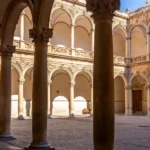
During this period, elements characteristic of the Baroque and Rococo styles appeared. They are particularly noticeable in the central courtyard, where decorative arcades and ornamental details create a very different atmosphere from the more restrained Renaissance sections. Looking closely at the building, it becomes clear that this is not a uniform structure created at a single point. Instead, it is an architectural story spanning several centuries, with each period leaving its own distinctive mark.
During the 20th century, the palace gradually began to lose its original function. Administrative changes within the diocese and the transfer of its main structures to Alicante meant that the former episcopal residence was no longer used to the same extent as before. A lack of appropriate maintenance and structural problems caused the condition of the building to deteriorate. Repeated flooding of the River Segura, damp and the passage of time only made matters worse. Earlier alterations had also taken place in some rooms, obscuring the original architectural layout.
In 1975, the palace was granted National Monument status, underlining its importance to Spain’s cultural heritage. This was an important step towards protecting the building, although the decision alone did not solve its technical problems. It was not until the end of the 20th century that extensive conservation work began. The restoration programme, carried out between 1998 and 2011, was intended not only to secure the structure but also to restore the historic character of its interiors. Among other things, sections of the gallery that had been bricked up were uncovered, the cloister and Renaissance staircase were restored, and the courtyard spaces were reorganised.
The idea of using the palace as a museum was also connected with the need to provide suitable conditions for the valuable diocesan collections. The Museum of Sacred Art itself was established much earlier, on 9 May 1939. Its founder was Luis Almarcha Hernández, then Vicar General of the diocese. Initially, the collection was housed on the upper floor of the palace. It included works of art, paintings, furniture and historical documents recovered after the Spanish Civil War. Some of these objects had previously been kept in the National Museum established in Orihuela in 1937, whose purpose was to protect historic artefacts from destruction and looting.
In the 1960s, due to the poor condition of the palace, the collections were moved to the cathedral. For several subsequent decades, the most valuable works could be seen there. Only after the comprehensive restoration was completed could the museum return to its former home. On 24 February 2011, the Museo Diocesano de Arte Sacro officially reopened in the restored Palacio Episcopal. Today, the building serves several purposes. It houses the museum, provides a place for the preservation of historic objects and forms part of the diocese’s archival heritage. Former residential and administrative rooms have been given new functions, while retaining many elements of their historic furnishings and architecture.
What Is It Like to Visit the Museum of Sacred Art in Orihuela?
The exhibition is arranged chronologically. This makes it possible to follow the development of religious art in the south-eastern part of the Iberian Peninsula while also discovering the history of the Diocese of Orihuela-Alicante. It is not simply a collection of beautiful objects. The different sections of the exhibition demonstrate how religious beliefs, iconography, artistic techniques and church furnishings changed over time. It is worth spending a little time reading the descriptions, as many of the exhibits have fascinating historical backgrounds.
The First Room – Temporary Exhibitions and New Discoveries
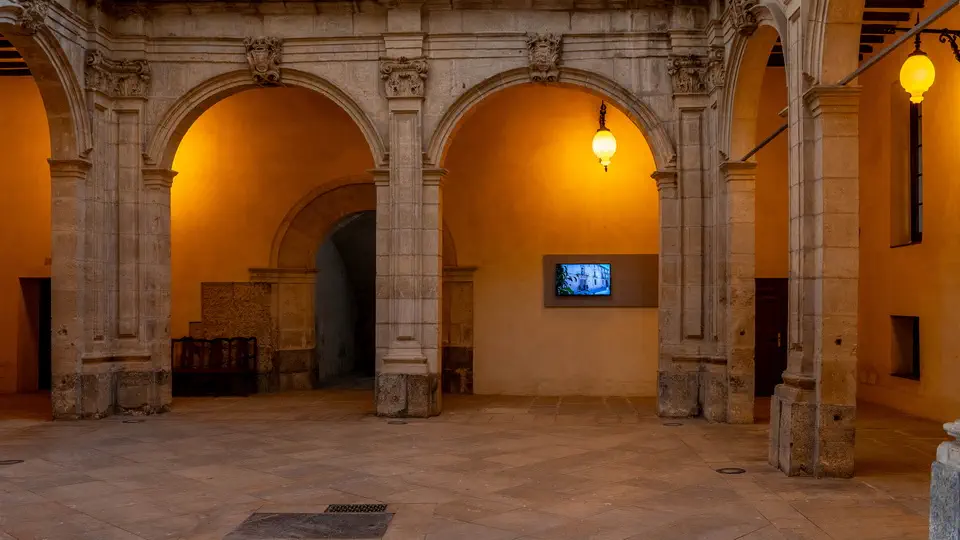
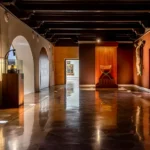
One of the first stops on the museum route is a room located in the former carriage house of the Episcopal Palace. In the past, carriages were kept here, followed later by a car belonging to the bishop. Today, the room serves as an exhibition space. It displays recent acquisitions, discoveries resulting from historical research, works on loan from other institutions and exhibitions devoted to selected subjects relating to sacred art.
I think this is an interesting idea, as it allows the museum to regularly complement its permanent exhibition with new themes. You should not assume, therefore, that every visit will reveal the same collection of objects.
The Early Christian Art Gallery – The Beginnings of Christianity
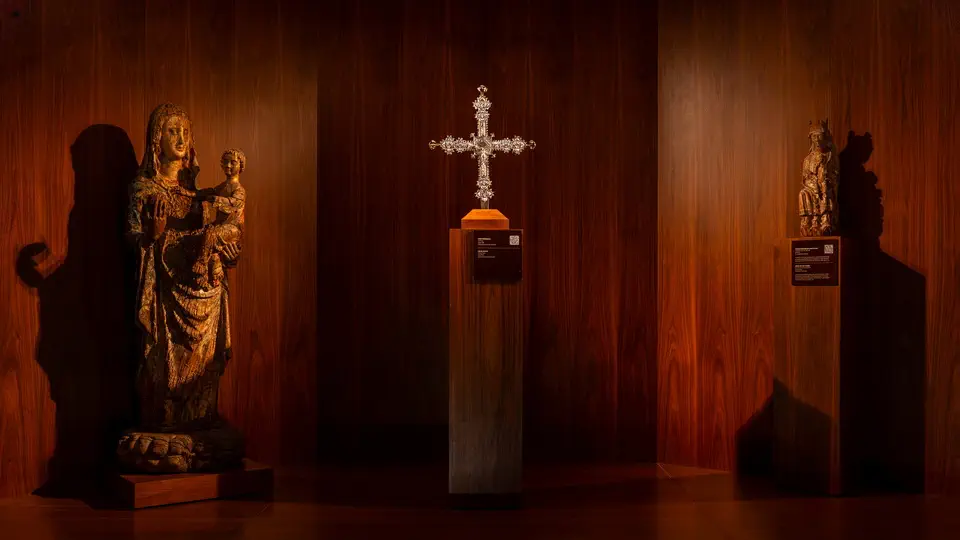
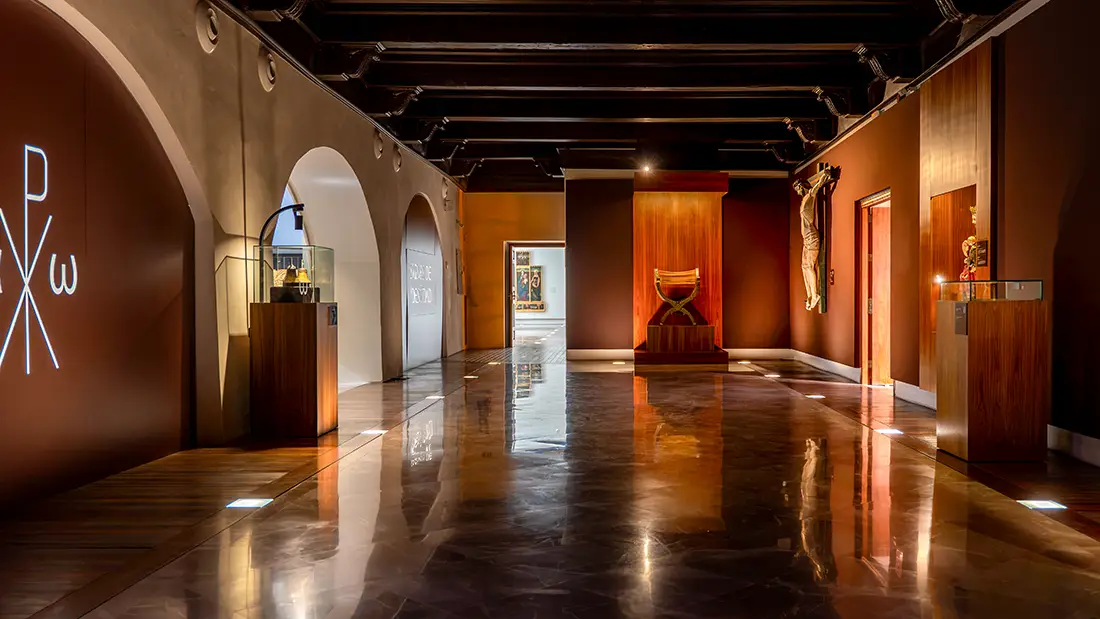
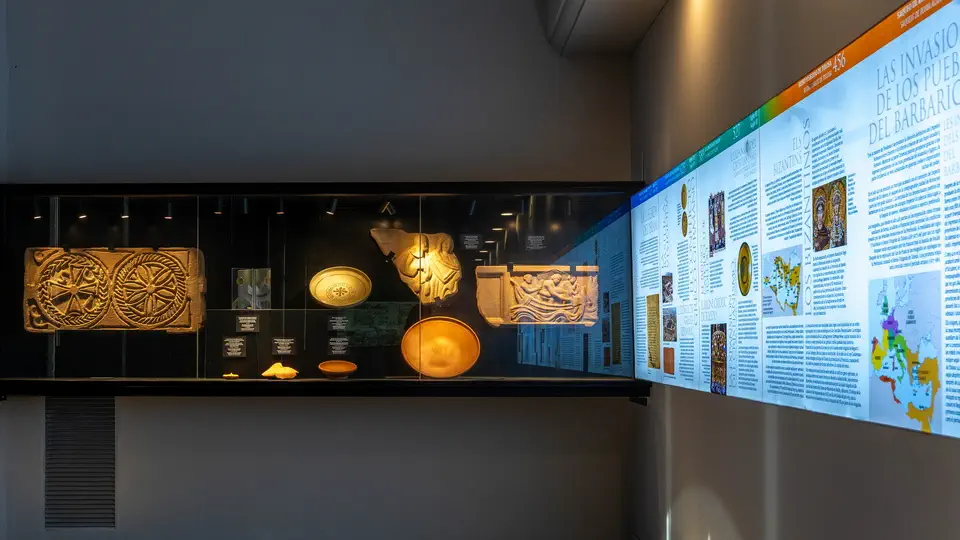
One of the most interesting sections of the exhibition is devoted to early Christian art. It is located on the first floor of the palace, in the former Bishops’ Gallery, whose arcades face towards the River Segura. The exhibition is entitled Signos de Identidad, or ‘Signs of Identity’. Its purpose is to introduce visitors to the earliest Christian communities that lived in what is now the province of Alicante and the surrounding areas.
The exhibition mainly covers the period from the 3rd to the 8th century. It explores the symbolism used by the first Christians, before Christianity became the official religion of the Roman Empire and began to exert an increasingly significant influence on public life.
Particular attention is given to symbols such as the fish, dove, anchor, palm, and Good Shepherd. Each had a specific religious meaning. The fish was one of the oldest symbols of Christianity, the dove was associated with purity and the Holy Spirit, while the Good Shepherd represented Christ caring for his followers.
The exhibition also explains the significance of the Christogram, a symbol formed by combining the Greek letters X and P, representing Christ. Not all the objects on display are originals. Part of the exhibition consists of replicas of important archaeological artefacts, including a fragment of the Sarcophagus of Jonah from Elda and decorative elements discovered in Albufereta. This allows visitors to learn about regional archaeological discoveries whose originals are now held in other museums.
It is a particularly worthwhile section for anyone interested in understanding what religious art looked like before the development of the familiar medieval representations of saints, Madonnas and biblical scenes.
The Medieval Art Gallery – The Beginnings of Christian Orihuela
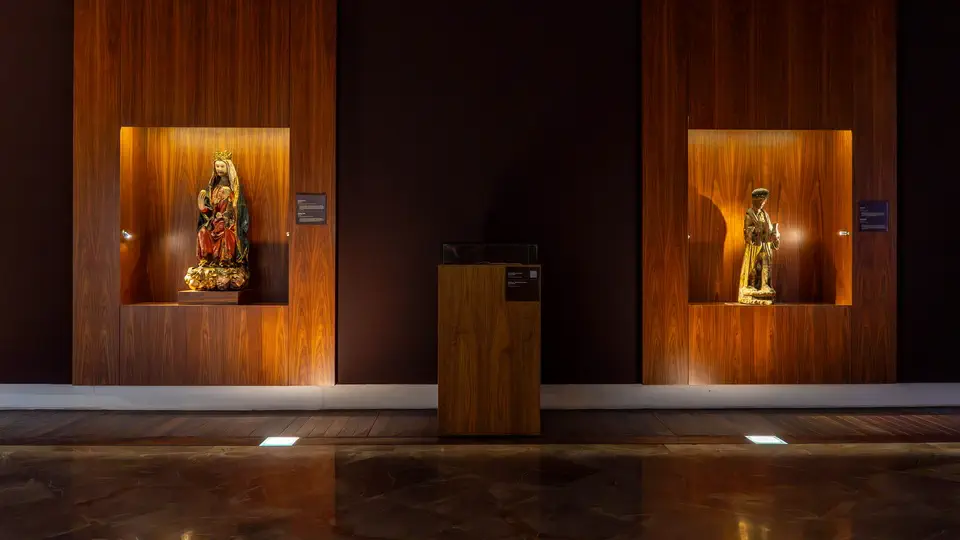
The next section of the exhibition takes us into the medieval period. This was an especially important time in the city’s history, as its later political and religious significance began to take shape. The gallery presents the history of the former Kingdom of Valencia, the territory of Orihuela and the local bishopric. Visitors can learn about the events surrounding the Reconquista, changes in political allegiance and the long-standing efforts of residents to establish an independent diocese.
Orihuela became part of Castile in 1243 and later, following the conquest carried out by James II, was incorporated into the Crown of Aragon. During the 14th and 15th centuries, it became one of the most important administrative centres in the southern part of the Kingdom of Valencia. This history is reflected in the works gathered here. The exhibition includes medieval sculptures, paintings, liturgical objects and documents.
One of the most important exhibits is a 13th-century Enthroned Madonna. It is the oldest surviving representation of the Virgin Mary in the collections of the Diocese of Orihuela-Alicante. The sculpture is significant not only from an artistic perspective but also historically. It offers an opportunity to see what medieval religious art looked like at a time when new ecclesiastical structures were only beginning to develop in this area.
It is worth comparing these medieval religious representations with later Renaissance and Baroque works. Older sculptures are often more formal and hieratic, with their creators concentrating primarily on symbolic meaning.
The Painting Gallery – From the Renaissance to the Spanish Baroque
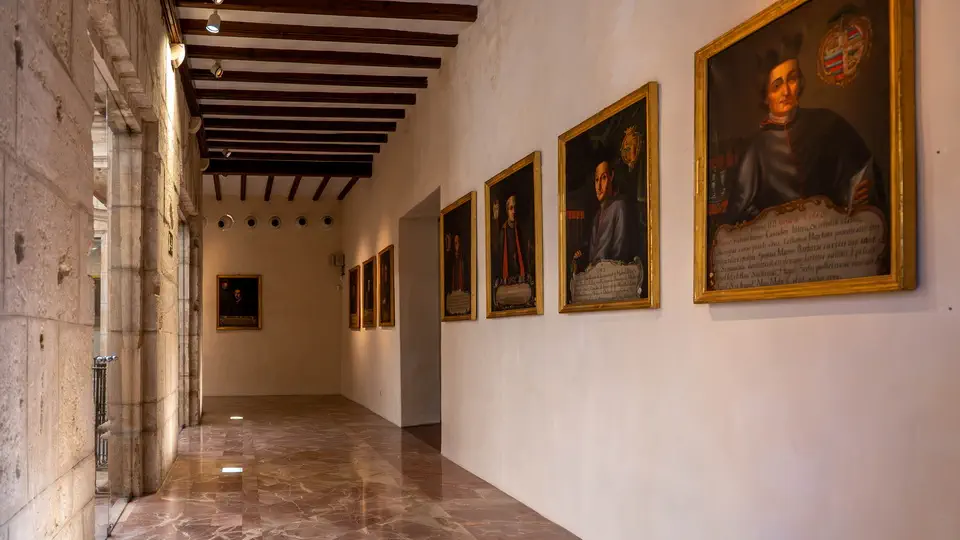
The painting collection is one of the strongest features of the entire museum. It contains works from different periods, including paintings associated with some of the most important names in Spanish art history. The pieces connected with the Renaissance and Baroque periods are particularly interesting.
Among the artists represented are Paolo de San Leocadio, Matías Stom, Pedro Orrente and Jerónimo Jacinto de Espinosa. The collection also includes works associated with Juan Pantoja de la Cruz, Vicente López and Joaquín Agrasot.
One of the most valuable paintings is Saint Michael the Archangel, attributed to the Italian painter Paolo de San Leocadio. The work dates from the 15th century and is an important example of early Renaissance painting in this part of Spain. It is worth remembering that Italian artistic influences reached the Iberian Peninsula through various channels, and painters arriving from Italy played an important role in the transformation of Spanish painting.
Another painting that deserves a little attention is La Vieja del Candil, or The Old Woman with a Lamp, attributed to Matías Stom. This is a distinctly Baroque work, making use of strong contrasts between light and shadow. Such compositions were characteristic of the Caravaggisti movement, which had a considerable influence on European painters during the 17th century.
Looking closely at this painting, you can appreciate just how important light is in creating its atmosphere. It is not simply a way of illuminating the figure. Instead, it becomes part of the narrative, directing the viewer’s attention towards the most important details of the composition.
Velázquez’s Painting – The Greatest Treasure of the Museum
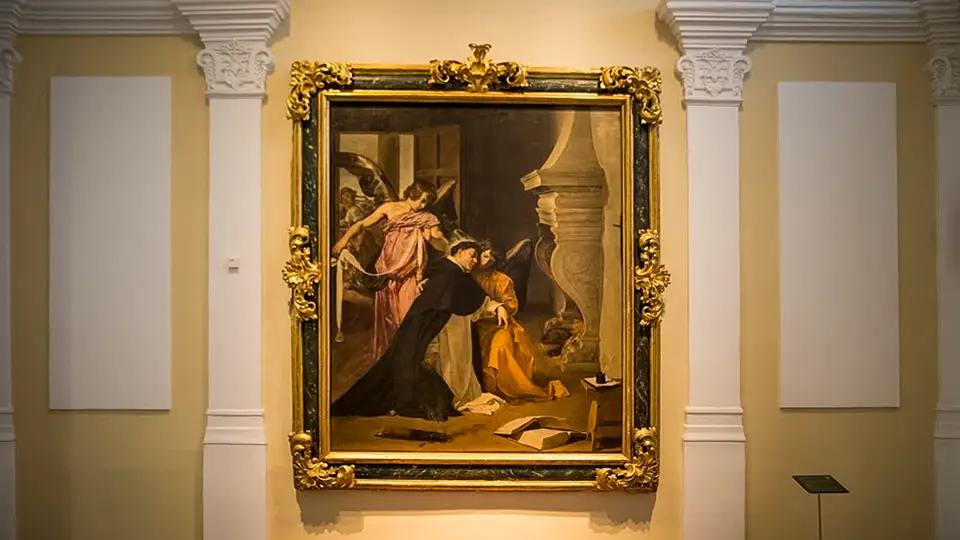
If I had to choose one work that makes a visit to the Museum of Sacred Art in Orihuela particularly worthwhile, it would be La Tentación de Santo Tomás de Aquino, or The Temptation of Saint Thomas Aquinas. The painting is attributed to Diego Velázquez, one of the greatest artists of the Spanish Golden Age. It was created around 1632, shortly after the artist’s first journey to Italy.
The painting is impressive, measuring 244 by 203 centimetres. It depicts Saint Thomas Aquinas at the moment when he overcomes a temptation of the flesh. According to the story associated with his life, a young woman was sent to persuade him to abandon his religious vocation. Thomas resisted the temptation and drove her away, remaining faithful to his calling.
Velázquez presented this story in a particularly interesting way. The composition is not simply a static portrait of a saint. Instead, we see several elements of the narrative that together create a multi-layered scene. Among the important details are a cross drawn in ash on the wall, a fireplace, and a doorway visible in the background.
The painting also has an interesting history connected with Orihuela itself. For a long time, it was housed in Santo Domingo College, where it originally decorated the hall used for academic ceremonies. Its story is therefore closely connected with this historic institution. During the Spanish Civil War, the work was moved, and after the war it became part of the museum collections.
This detail provides a wonderful connection between two of the city’s most important historic attractions. You can first discover the history of the former college and then admire a painting that formed part of its interior decoration for centuries. You can read more about the complex itself in our article about Santo Domingo College in Orihuela.
The Sculpture Gallery – Medieval Madonnas and Works by Francisco Salzillo
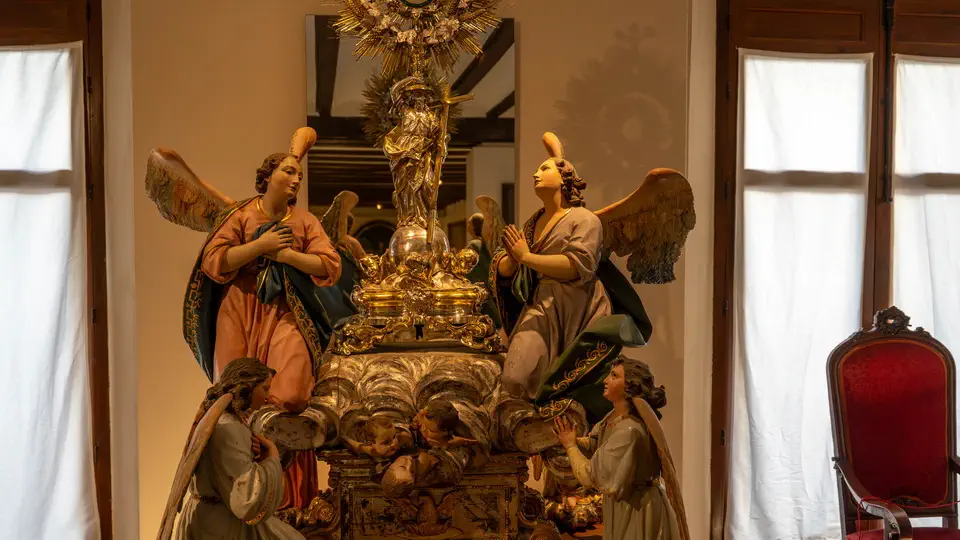
The museum also has an interesting collection of religious sculpture. Here you will find works from different periods, ranging from the Middle Ages to the Baroque era. Representations of the Virgin Mary occupy a particularly important place in the collection.
Among them are the previously mentioned 13th-century Enthroned Madonna and the Virgen de Gracia, or Our Lady of Grace. Both sculptures demonstrate how the representation of Mary changed over successive centuries.
Later religious art became considerably more expressive, dynamic and naturalistic. Good examples are the works associated with Francisco Salzillo, an outstanding sculptor who worked in Murcia during the 18th century. Salzillo became particularly famous for his remarkably expressive religious sculptures. His works are often characterised by meticulous attention to facial expressions, gestures, and clothing. It is worth examining them closely, as these details are precisely what make the figures so convincing.
The Silverwork Gallery – Ecclesiastical Treasures from Different Periods
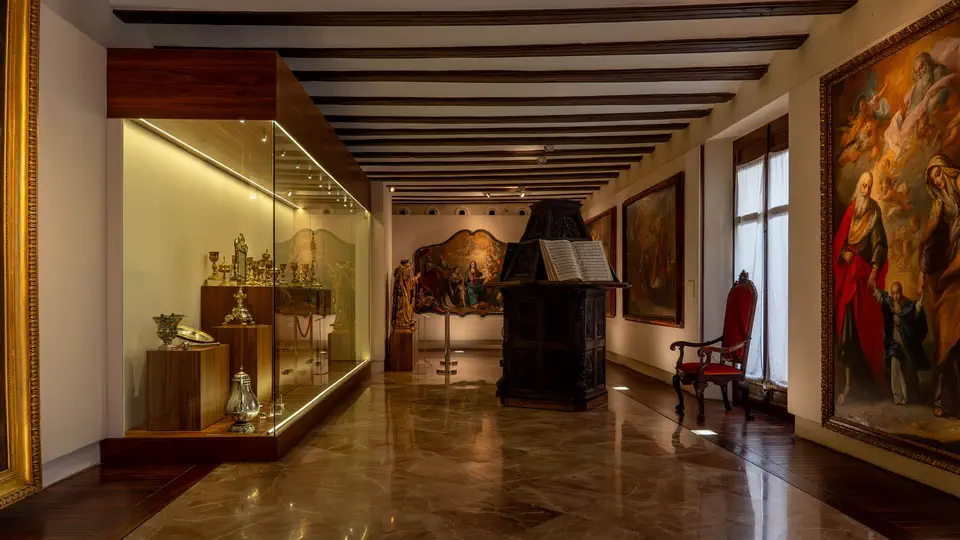
One of the most fascinating parts of the collection is the sacred silverwork gallery. It contains objects used during religious services, created over several centuries in Spanish and foreign workshops. Among them are chalices, reliquaries, monstrances and other items of church equipment. Many were made from silver, often enhanced with gilding, precious stones and elaborate ornamentation.
The museum highlights the exceptional importance of its silverwork collection, which is considered one of the most significant in the entire Valencian Community. Particularly noteworthy are the Cardinal Despuig Chalice, associated with Italian silversmithing traditions, and the monumental monstrance from the Church of Santiago in Orihuela.
In 2026, the exhibition was further enriched with additional 18th-century objects from the treasury of the Church of Santiago. These include silver liturgical furnishings and reliquaries associated with the veneration of Saint James and relics of the True Cross.
This is an especially interesting part of the museum for anyone fascinated by traditional craftsmanship. Take a moment to appreciate the precision of the work, the ornamentation, and the differences between objects produced in various workshops.
Liturgical Vestments and Ancient Books
The museum also displays historic textiles and vestments used during religious services. One particularly interesting exhibit is a 16th-century liturgical vestment known as a casulla, or chasuble. Such garments were often made from expensive fabrics and decorated with embroidery depicting religious symbols. Their appearance depended on the period, the wealth of their donors and the nature of the particular ceremony.
Today, these garments are not only evidence of former liturgical practices but also examples of the development of textile craftsmanship.
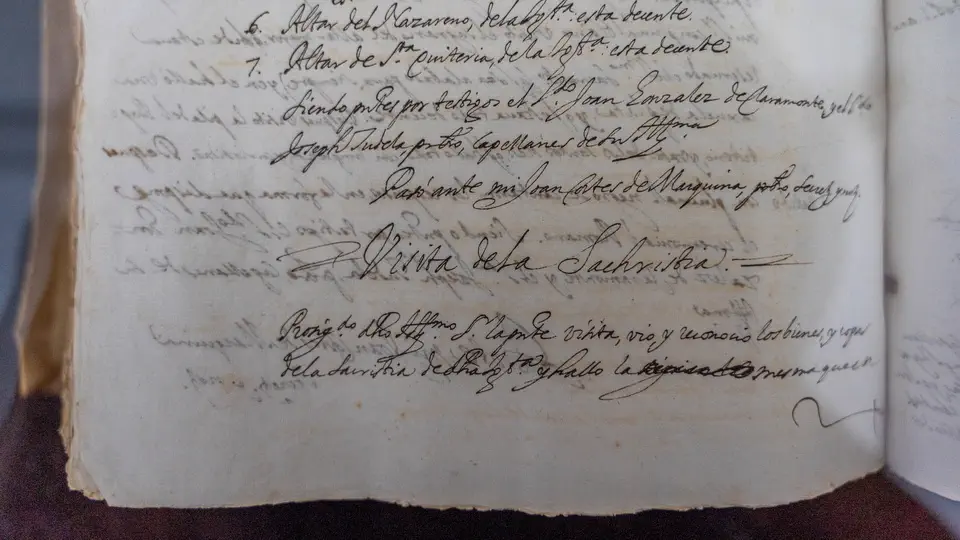
Another separate group consists of ancient books, manuscripts, and incunabula. Particularly interesting is the Nuremberg Chronicle from 1493, also known as Liber Chronicarum. It is one of the most famous illustrated books printed towards the end of the 15th century. The volume presents a history of the world, beginning with biblical times and continuing up to the period in which its authors lived. It contains numerous woodcuts depicting cities, historical figures and important events.
The presence of such a work in a museum of sacred art demonstrates just how extensive the collections really are. We are not looking exclusively at objects associated with church furnishings. We are also discovering the history of books, printing and the intellectual culture of earlier centuries.
The Yellow Salon and 19th-Century Art
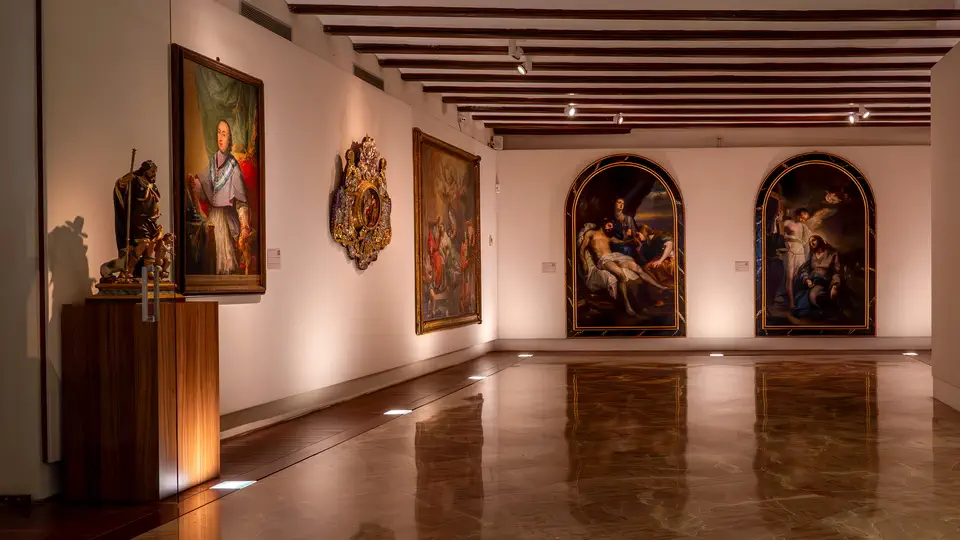
Among the museum rooms is the so-called Yellow Salon, described as the gallery of 19th-century art. It displays decorative art objects that provide an insight into later changes in taste and the way representative interiors were furnished.
This is an interesting addition to the earlier sections of the exhibition. It demonstrates that the diocese’s heritage is not limited to medieval sculptures and Baroque paintings. It also includes furnishings and everyday objects that gradually acquired historical and artistic significance.
Temporary Exhibitions – A Museum That Continues to Change
In addition to its permanent collection, the museum organises temporary exhibitions devoted to particular artists, historic objects and subjects connected with sacred art. One worth mentioning is ARS. El Tesoro Artístico de Santiago de Orihuela, prepared in 2025. It presented treasures from the Church of Santiago, including historic liturgical objects made from silver and bronze, reliquaries and sculptures by Francisco Salzillo.
At present, from 12 November 2026 to 14 January 2027, visitors can see the exhibition Velázquez. Ayer, Hoy y Siempre. Amalia Navarro. This is an artistic tribute to Velázquez’s work, presented from the perspective of contemporary artist Amalia Navarro.
Exhibitions such as these provide an additional reason to check the museum’s website before travelling. The programme can change, and some temporary displays offer an opportunity to see objects that have not previously been available to visitors.
Practical Information – Visiting the Museum in Orihuela
The museum is located in the Palacio Episcopal, the former Episcopal Palace, on Calle Mayor de Ramón y Cajal. It is easy to combine a visit with a trip to the cathedral and a walk through the oldest part of the city.
Museum of Sacred Art in Orihuela – Opening Hours
- Tuesday–Saturday: 10:00–14:00 and 16:00–19:00.
- Sunday and selected public holidays: 10:00–14:00.
- Monday: closed.
Museum of Sacred Art in Orihuela – Admission Prices
- Museum of Sacred Art: €4.
- Orihuela Cathedral: €2.
- Museum and cathedral combined ticket: €6.
The exhibitions in the First Room and the cloister can be visited free of charge. You can find up-to-date information on the official website of the Museo Diocesano de Arte Sacro de Orihuela.
I would allow approximately one to one and a half hours to explore the collection at a comfortable pace. If you are interested in painting, sculpture and religious history, you could easily spend considerably longer here.
A Few Final Thoughts After Visiting the Museum of Sacred Art in Orihuela
In my opinion, the Museum of Sacred Art in Orihuela should be included in the itinerary of anyone who wants to discover more about the city’s historic centre. It is not somewhere that should be treated merely as an addition to a visit to the cathedral. The museum has a valuable artistic and historical collection in its own right.
What impressed me most was the diversity of the exhibits. Alongside medieval sculptures, you will find works by Spanish masters, richly decorated liturgical objects, ancient books and everyday items associated with the life of the Church in earlier centuries.
The story of Velázquez’s painting is particularly fascinating. It demonstrates just how closely individual historic objects are connected with specific places and how turbulent their journeys through history can be. This is precisely why I recommend combining a visit to the museum with a tour of Santo Domingo College. In this way, you can discover two places whose histories complement one another.
Orihuela has considerably more to offer, of course. The cathedral, the Churches of Saints Justa and Rufina and Santiago, former palaces and the monumental college together form an fascinating collection of historic landmarks. If you are spending your holiday on the Costa Blanca, I recommend setting aside at least one day to discover this part of Alicante province.
The Museum of Sacred Art is one of those places that helps us understand why Orihuela was such an important religious and cultural centre for centuries. And that is precisely why I would not leave it out of a visit to the city.
Museum of Sacred Art in Orihuela – Facts and Interesting Things to Know
- The Museum of Sacred Art in Orihuela is housed in the former Episcopal Palace, a building whose history dates back to the 16th century.
- The museum building stands on the site of a medieval hospital, Corpus Christi, founded in 1384.
- In 1558, Bishop Esteban de Almeida took over the former hospital as part of a property exchange and began transforming it into his residence.
- The establishment of the Diocese of Orihuela in 1564 made the palace the official residence of the local bishops.
- The palace combines Renaissance, Baroque and Rococo architectural features. This makes the building itself just as interesting as the exhibits displayed inside.
- The major reconstruction of the palace began in 1733 on the initiative of Bishop José Flórez Ossorio.
- The palace has three internal courtyards, which once helped separate the residential areas from the administrative and service sections.
- One of the most distinctive architectural features is the monumental staircase, topped by a dome resting on an octagonal drum.
- The blue glazed tiles covering the staircase dome are a characteristic feature of architecture in the Valencian region.
- The Bishops’ Gallery faces towards the River Segura. Its arcades are a reminder of the Renaissance character of the oldest part of the palace.
- The Museum of Sacred Art was established on 9 May 1939. Its founder was Luis Almarcha Hernández, who played an important role in protecting the diocese’s heritage.
- During the Spanish Civil War, many works of sacred art needed protection. The museum became one of the places where recovered historic objects were stored and safeguarded.
- Due to the poor structural condition of the palace, the museum collections were moved to Orihuela Cathedral during the 1960s.
- The palace was granted National Monument status in 1975, underlining its importance to Spain’s architectural heritage.
- The comprehensive restoration of the building took place between 1998 and 2011. Once the work was completed, the museum was able to return to its historic home.
- The Museo Diocesano de Arte Sacro officially reopened in the Episcopal Palace on 24 February 2011.
- One of the most valuable paintings in the museum is The Temptation of Saint Thomas Aquinas, attributed to Diego Velázquez. The work was created around 1632.
- Velázquez’s painting measures an impressive 244 by 203 centimetres. For many years, it decorated Santo Domingo College in Orihuela.
- The collection includes a medieval 13th-century sculpture of an Enthroned Madonna, regarded as the oldest surviving representation of the Virgin Mary in the collection of the Diocese of Orihuela-Alicante.
- The museum owns works associated with Paolo de San Leocadio, an Italian painter who played an important role in the development of Renaissance painting in the Valencian region.
- The collection includes La Vieja del Candil, or The Old Woman with a Lamp, attributed to Matías Stom. It is an example of painting that makes use of the characteristic Baroque interplay of light and shadow.
- Among the most valuable historical books is the Nuremberg Chronicle from 1493, also known as Liber Chronicarum. It is one of the most famous illustrated European incunabula.
- The collection of sacred silverwork includes chalices, monstrances, and reliquaries. Many of these objects were made from silver and decorated with intricate ornamentation.
- Visitors can admire historic liturgical vestments, including a 16th-century chasuble. These ancient ecclesiastical textiles are valuable evidence of the development of artistic craftsmanship and the history of religious ceremonies.
- The museum’s exhibitions are not limited to the permanent collection. Temporary exhibitions are organised in the former carriage house, known as the First Room, presenting new acquisitions and works connected with the history of the diocese.