Interesting facts about Kashubia are part of our collection, where you can discover all sorts of fascinating details about the world around us.
Kashubia is one of those regions of Poland that is difficult to describe in a single sentence. On the one hand, there is the Baltic Sea, countless lakes, forests and rolling hills; on the other, there is a language of its own, a distinctive culture, traditional cuisine, music, embroidery and an exceptionally strong sense of regional identity. It is this combination that makes Kashubia capable of surprising even those who think they know Poland quite well. The Kashubians are part of the Polish community, but they have also managed to preserve many elements of their heritage. Kashubian is officially recognised as a regional language in Poland, and people still use it at home, at school, in church and throughout their cultural life.
Kashubia is worth discovering through more than just its best-known attractions. Occasionally, a plate of potatoes, an old village name, a traditional embroidery pattern or a single sentence spoken in Kashubian can tell you much more about the region. Below, I have collected a selection of interesting facts about Kashubia, divided into several themes: geography, history, language and people, culture and customs, and traditional cuisine. There is also a special section at the end for younger readers.
Interesting Facts About Kashubia – Geographical Facts About Kashubia

Kashubia is usually associated with lakes, forests and its distinctive rolling landscape. However, this is not a region with a uniform appearance. The coastal areas of Kashubia look quite different from the surroundings of Kartuzy and Wieżyca, while the southern part of the region has yet another character.
- Kashubia is located in northern Poland. – Historically and culturally, it is closely connected with Gdańsk Pomerania. However, the region does not have one clearly defined geographical boundary, which is why its extent can be interpreted in different ways.
- Kashubia has access to the Baltic Sea. – The northern part of the region includes areas around Puck and the Hel Peninsula. The sea has influenced the lives, occupations, and cuisine of local people for centuries.
- Kashubia is a land of lakes. – Particularly large numbers of lakes can be found across the Kashubian Lake District. Water has always been an important feature of the local landscape, economy, and transport network.
- The Wdzydze Lakes have a distinctive cross-shaped layout. – This group of lakes is also known as the Kashubian Sea. The village of Wdzydze Kiszewskie, home to the famous open-air museum, lies on its shores.
- Kashubia is home to Wieżyca. – At 328.6 metres above sea level, it is the highest hill not only in Kashubia but also across the Central European Lowlands.
- The Kashubian landscape is hillier than you might expect from northern Poland. – In many places, you will come across steep roads, valleys, glacial hills and deep depressions in the terrain.
- Much of Kashubia’s landscape was shaped by glaciers. – Today’s hills, lakes and numerous hollows are the result of geological processes that took place during the last glacial periods.
- Enormous erratic boulders can be found throughout Kashubia. – These rocks were carried here by glaciers from Scandinavia. Some are now protected as natural monuments.
- Kashubia is heavily forested. – The southern part of the region is particularly well known for its extensive woodland, where forestry, traditional beekeeping and gathering wild produce have developed over the centuries.
- Kashubia has both coastal and lake landscapes. – This means that during a single trip you can discover the Baltic Sea, dunes, and dramatic coastal cliffs, as well as lakes, forests and rolling hills.
- Kashubia is not exclusively a rural region. – Important towns include Kartuzy, Kościerzyna, Bytów, Puck and Wejherowo, while Kashubian culture is also very much present in the larger cities of Pomerania.
- Gdańsk has strong historical and cultural connections with Kashubia. – However, the question of which town deserves to be called the capital of Kashubia is far from straightforward. Kartuzy, Kościerzyna, Wejherowo and Gdańsk have all been associated with this title on various occasions.
- Kashubia has its own geographical names. – Throughout the region, you will encounter many place names and names of individual settlements that originate from the old Kashubian language and history.
- Some Kashubian place names sound rather unusual. – A good example is Swornegacie, the name of a village that has attracted the attention of tourists for many years.
- There are places in Kashubia called America and Palestine. – These are not modern jokes created by residents, but historical names given to particular settlements and small groups of buildings.
- The Kashubian landscape has always been an important part of local identity. – Lakes, forests, the sea, and hills appear not only in descriptions of the region but also in traditional songs, legends and folk art.
- Kashubia contains some remarkable traces of ancient settlement. – Among the most unusual are stone circles and burial mounds associated with the Wielbark Culture.
- The Stone Circles in Odry are among the most extraordinary archaeological sites in the region. – Our account of this place shows just how fascinating the landscape of the nature reserve can be.
- Stone circles can also be found in Leśno. – This archaeological site is associated with the Wielbark Culture and the Goths. It contains surviving stone circles, burial mounds, graves and an unusual anthropomorphic stone stele. You can read more in our article about the Stone Circles in Leśno.
- Kashubia has an extraordinarily varied landscape. – This is precisely why it is difficult to create a single picture of what typical Kashubia looks like. The northern coastal areas differ considerably from the forested landscapes in the south, where you will find beautiful Kashubian Switzerland, as well as the rolling terrain of the Kashubian Lake District.
Interesting Facts About Kashubia – Historical Facts About Kashubia
The history of Kashubia is complicated because, over the centuries, the region found itself at the crossroads of different countries, cultures, and influences. Pomeranian dukes, the Teutonic Knights, Prussians, Germans and Poles all left their mark here. Throughout these changing political circumstances, the Kashubians had to find ways to preserve their culture and identity.
- The name Kashubia has medieval origins. – One of the oldest known written references to the name dates back to the 13th century. It appears in a papal bull issued by Pope Gregory IX in 1238.
- The Kashubians are an ethnic group with Slavic roots. – Their culture developed from the ancient communities that inhabited Pomerania.
- The Kashubians survived despite numerous political changes. – Over the centuries, Kashubian lands found themselves within the borders of several states and political entities.
- Kashubian identity did not disappear when the borders changed. – Language, family traditions, customs and local ways of life helped people maintain their distinct identity.
- Florian Ceynowa played an enormous role in the revival of Kashubian identity. – This 19th-century doctor, activist, and researcher of the Kashubian language is regarded as one of the most important pioneers of the modern Kashubian movement.
- Ceynowa considered Kashubian to be a separate Slavic language. – He also made attempts to establish a consistent writing system for it.
- The first modern attempts to write Kashubian appeared in the 19th century. – The modern Kashubian alphabet developed partly from the proposals put forward by Ceynowa in 1879.
- The Kashubians found themselves between Polish and German influences. – The Kashubian language, for example, contains noticeable influences from Low German.
- Kashubia experienced some extremely difficult periods during the 20th century. – The Second World War and the post-war years were particularly tragic for the region and its inhabitants.
- The Second World War had a devastating impact on Kashubian communities. – Local people experienced executions, forced displacement, repression, and Germanisation.
- One of the most important memorial sites is Piaśnica. – In the Piaśnica forests, the Germans murdered thousands of people between 1939 and 1940, including members of the local intelligentsia.
- The Kashubians were also persecuted for their social and patriotic activities. – Teachers, priests, officials, and local community leaders were among those affected by the repression.
- After the war, Kashubian identity had to find its place in a wholly new reality. – It was only in the following decades that opportunities to develop and promote regional culture in public gradually increased.
- The modern Kashubian movement began to develop dynamically once again. – Social organisations played an important role, particularly the Kashubian-Pomeranian Association.
- The Kashubians have their symbols. – The Kashubian flag and coat of arms are particularly important.
- Black and gold are the colours most strongly associated with Kashubia. – They can be seen on flags, souvenirs and during regional celebrations.
- Kashubian history is closely connected with the sea. – Fishing was the foundation of life for many families living in the northern part of the region for centuries.
- Not all Kashubians were fishermen. – Further inland, agriculture, forestry, crafts, and trade played important roles in everyday life.
- Many objects from traditional Kashubian households can be seen in Wdzydze Kiszewskie. – The Kashubian Ethnographic Park is one of the best places to discover what life was like for the region’s former inhabitants.
- The open-air museum in Wdzydze has a long history of its own. – It dates back to 1906, when Izydor Gulgowski and his wife Teodora purchased an 18th-century cottage and began creating a collection of traditional Kashubian material culture.
Facts About the Kashubian Language, People, and Regional Identity
Language is one of the most important features that distinguishes Kashubia from many other regions of Poland.
- Kashubian is a Slavic language. – It belongs to the West Slavic and Lechitic groups of languages.
- Kashubian is the only legally recognised regional language in Poland. – It received official regional language status in 2005.
- Kashubian has its international language code. – In 2003, it was assigned the ISO 639-2 code CSB.
- Students can take their school-leaving examination in Kashubian. – The possibility of taking the Polish Matura examination in Kashubian has existed since 2005.
- Kashubian is taught in schools. – Thousands of children and young people study the language.
- Kashubian is also used in church. – In some parishes, religious services and liturgies are conducted partly or entirely in Kashubian.
- There is a literary tradition in Kashubian. – Books, magazines and other publications are produced in the language.
- Kashubian is present in the media. – You can find radio and television programmes presented in Kashubian.
- Kashubian has its spelling system. – Some of its most distinctive letters include ë, ô and ù.
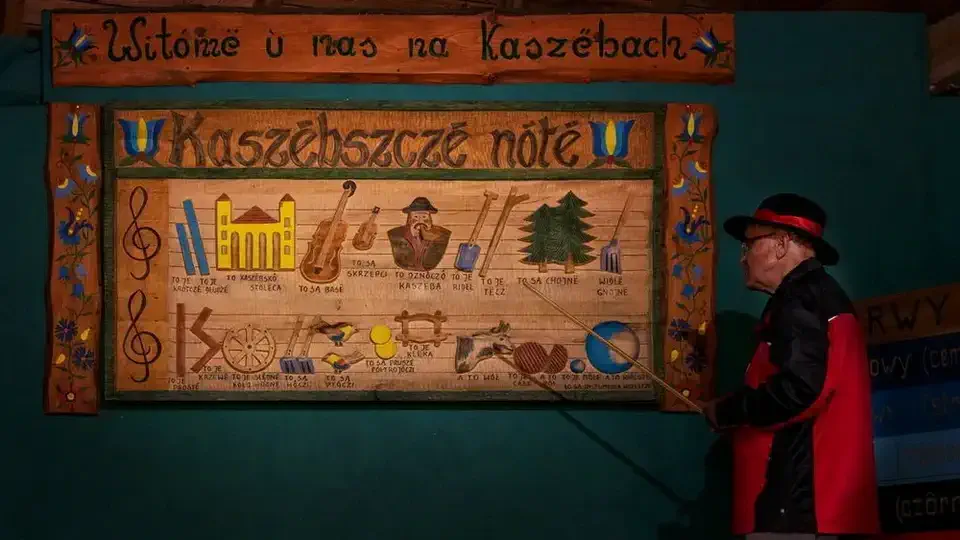
- The word Kaszëbë simply means Kashubia. – Even the spelling itself demonstrates that Kashubian is much more than a Polish dialect with a few different words.
- Kaszëbsczé nótë is one of the best-known traditional Kashubian songs. – It is a traditional counting song in which successive verses help people remember distinctive objects and symbols associated with Kashubia.
- The Kashubian Notes can also be sung in Polish. – This has helped them become one of the most recognisable elements of regional folklore.
- Kashubian identity does not mean rejecting Polish identity. – For many people, being both Kashubian and Polish is a completely natural part of who they are.
- Kashubians also live outside their traditional homeland. – Large Kashubian communities can be found in the Tricity area, among other places.
- The Kashubian diaspora has also reached across the Atlantic. – Kashubian communities can be found in Canada, for example.
- The Kashubian language survived despite strong influences from other languages. – Its history reflects Polish and German influences, as well as traces of older Pomeranian languages and dialects.
- Traces of ancient beliefs have survived in Kashubian. – Some names of mythical creatures and spirits have been preserved mainly through the language and local storytelling traditions.
- Kashubian does not sound the same everywhere. – There are noticeable differences between the various regional varieties of the language.
- Kashubian is a living language, not simply a part of folklore. – It is still used in everyday communication, although the level of fluency and frequency of use naturally varies between different places and generations.
- Kashubian identity is strongly connected with family. – Passing on the language, songs, recipes, stories, and customs from one generation to the next remains one of the most important ways of preserving the region’s heritage.
- Interesting facts about Poland, as well as a lot of information you might not have known.
Interesting Facts About Kashubia Culture, Customs, Embroidery, and Legends
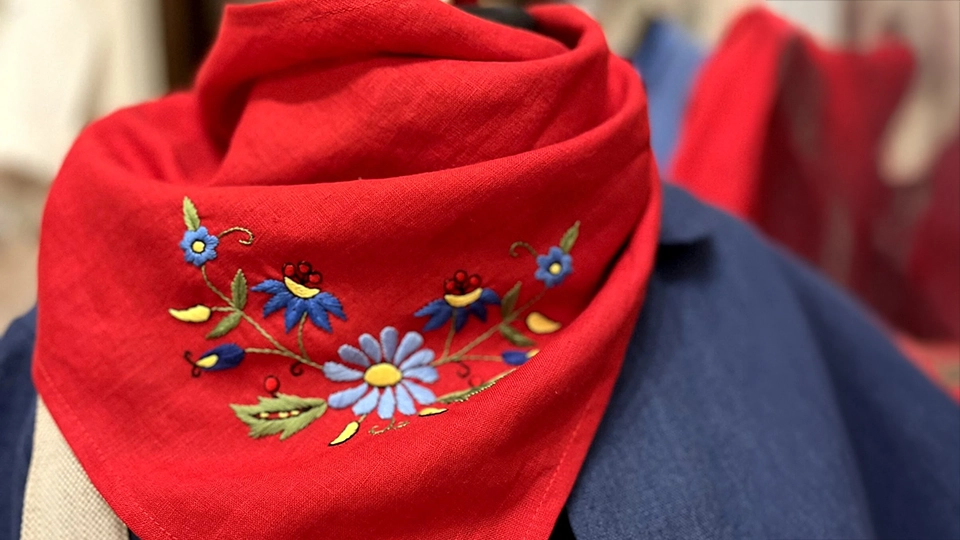
Kashubia has a very distinctive folk culture. If you have ever seen Kashubian embroidery, traditional clothing or heard the famous Kashubian Notes, you are unlikely to have any difficulty recognising the region.
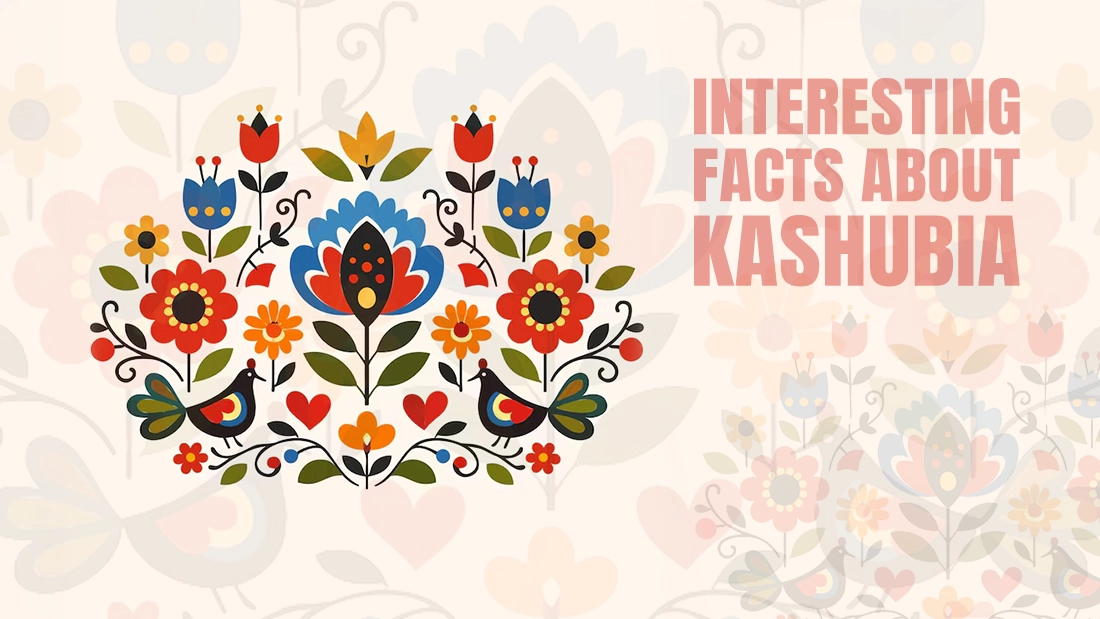
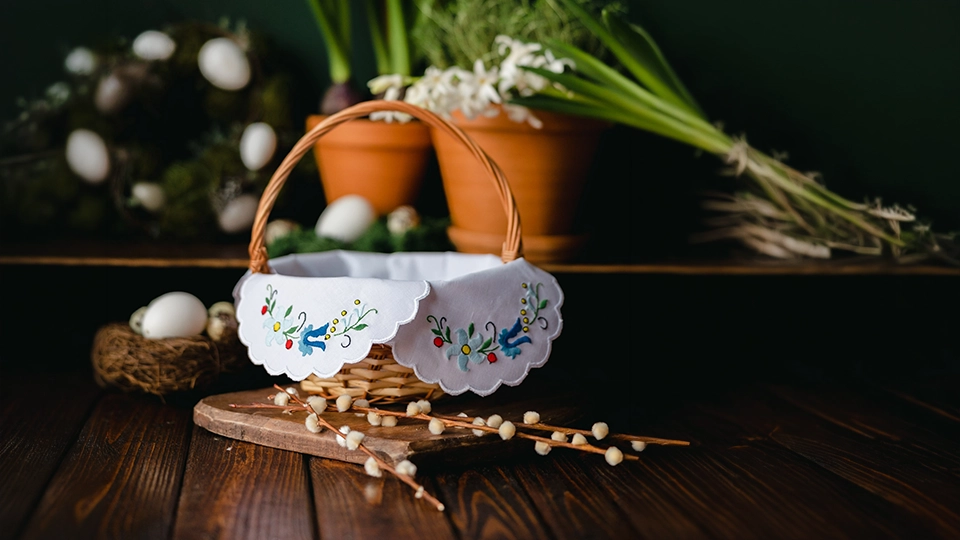
- Kashubian embroidery is one of the region’s most important symbols. – Its distinctive floral patterns appear on clothing, tablecloths, napkins, and souvenirs.
- There are several schools of Kashubian embroidery. – Individual styles differ in their patterns and the way colours are used.
- Żukowo embroidery has been included on Poland’s National List of Intangible Cultural Heritage.
- Kashubian embroidery has a distinctive colour palette. – Traditional patterns use blue, green, yellow, red, black, and brown. The proportions of individual colours vary depending on the particular school of embroidery.
- Kashubian embroidery features many floral motifs. – You can find flowers, leaves, fruit and other patterns inspired by nature.
- Kashubian pottery also has its own distinctive designs. – One of the best-known centres of traditional pottery is the village of Chmielno.
- The Necel family played an enormous role in the development of Kashubian pottery. – Their distinctive decorative patterns became one of the most recognisable symbols of Kashubian craftsmanship.
- The Kashubians have their own traditional folk costumes. – Depending on the person’s gender, age, and the occasion, the costume consisted of numerous distinctive elements.
- Traditional Kashubian clothing was not identical throughout the region. – Just as with embroidery, local variations also existed in traditional dress.
- Snuff holds a special place in Kashubian culture. – The tradition of taking snuff is still present in the region and has become one of the most recognisable Kashubian customs.
- Snuff boxes could be genuine works of art. – Museums display various beautifully decorated containers that were traditionally used to store snuff.
- Kashubia has a rich musical folklore. – Traditional songs and dances are still performed by regional folk groups.
- One of the most distinctive traditional instruments is the Kashubian bazuna. – It is a long wooden wind instrument which once had practical uses as well.
- Traditional Kashubian customs were closely connected with the seasons. – Different ceremonies and rituals accompanied winter, Easter, the harvest and the summer solstice.
- Sobótka was an important folk celebration. – Kashubian traditions have preserved customs associated with Midsummer Night.
- Kashubian legends often draw inspiration from the local landscape. – Lakes, boulders, forests, and hills become places inhabited by extraordinary mythical creatures.
- The Stolemy are among the most characteristic giants of Kashubian folklore. – According to legend, these enormous creatures could carry and throw gigantic rocks over great distances.
- The Stolemy were used to explain the origins of enormous boulders. – Before people understood the scientific origins of erratic boulders, legends provided an imaginative explanation for their presence in the landscape.
- Stone circles have inspired many modern stories. – Numerous tales about mysterious lights, unusual energy and ancient rituals have developed around the sites in Odry and Leśno. However, it is worth distinguishing local legends from archaeological evidence.
- Kashubian folklore is still alive. – It is not simply something preserved in museums. You can experience it during regional festivals, hear it in traditional music and encounter it in the everyday lives of local people.
- Szymbark in Kashubia – a distinctive and fascinating Kashubian theme park
- The American Old Cars Museum in Kościerzyna, home to a collection of classic American cars, is a great place for anyone who loves beautiful automobiles with enormous engines.
Facts About Kashubian Cuisine
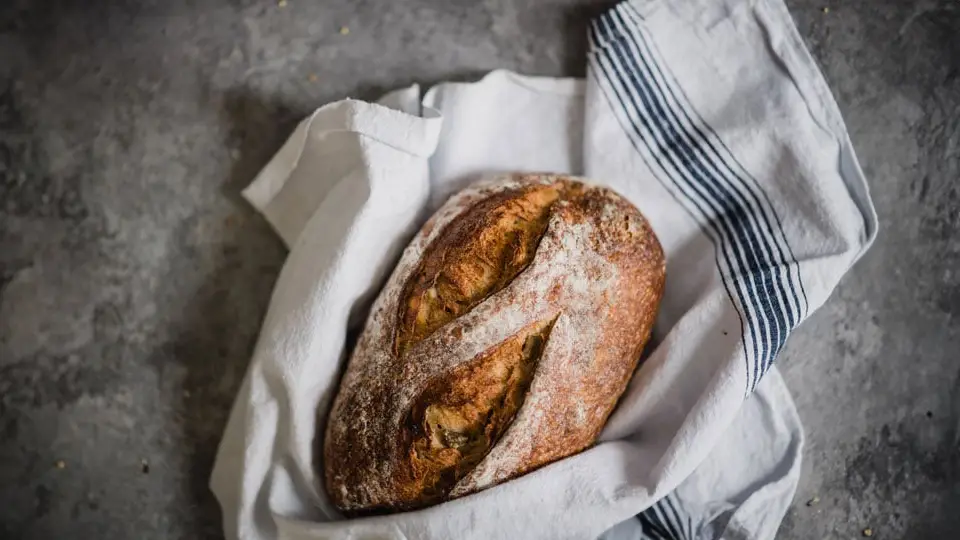
Kashubian cuisine is an excellent example of how the natural environment influences the way people eat. The sea provided fish, the forests offered mushrooms and berries, while farms supplied potatoes, cabbage, meat, and dairy products. As a result, traditional Kashubian food is simple, filling and closely connected with whatever could be grown, caught or gathered locally.
- Potatoes were one of the staple foods of the Kashubians. – They grew well in the region’s relatively light soils, which is why local cooks developed numerous ways of preparing them.
- Kashubian cuisine is highly seasonal. – In the past, people mainly ate what they could gather, catch or produce at a particular time of year.
- Fish play an important role in northern Kashubian cuisine. – Herring and other Baltic fish were particularly important.
- Kashubian-style herring is one of the region’s best-known traditional dishes. – Today, you can find numerous variations of this popular recipe.
- The Kashubians also ate plenty of goose meat. – Goose was an important part of traditional festive meals.
- Offal was rarely wasted. – One example is drobné miãso, a traditional dish prepared using pieces of meat and offal.
- Traditional Kashubian lard could contain onions and apples. – It was usually made from fresh pork fat, often with onions and sometimes with garlic and marjoram.
- Lard was once an important way of preserving food. – After a pig was slaughtered, larger quantities of fat were prepared and stored in the pantry for later use.
- Szadolce and kulanki demonstrate just how important potatoes were. – These are traditional potato dumplings, sometimes served with milk or cream.
- Many traditional Kashubian dishes were made using potatoes. – They were used to preparing dumplings, pancakes, potato cakes and numerous other meals.
- Kashubian cuisine made good use of the gifts of the forest. – Mushrooms, berries, and other wild plants were important additions to the everyday diet.
- Apples and other orchard fruits also played an important role. – They were used both in desserts and for making preserves.
- Kashubian bańtkowa soup is a relatively recent addition to Poland’s Traditional Products List. – It was included in the list in 2023. It is a light broth with a distinctive vegetable and fish flavour.
- Swede was an important vegetable in traditional Kashubian cooking. – It was used, among other things, to prepare traditional soups.
- Duck and goose blood soup, known as czernina, is also part of Kashubian cuisine. – This distinctive soup was once a traditional feature of Pomeranian cooking.
- Kashubian cuisine is not exclusively based on fish. – This is worth remembering because the stereotype of Kashubia as a region of fish dishes represents only a small part of its culinary traditions.
- Poultry dishes were also common. – Geese, ducks, and chickens were particularly popular during holidays and important family celebrations.
- Recipes were passed down through families. – This is why a single traditional dish can have several local variations.
- Traditional Kashubian cuisine was economical. – That does not mean it lacked flavour. People made use of whatever was available on their farms, while spices, cooking techniques and generations of culinary experience added character to otherwise simple ingredients.
- Food is one of the best ways to discover Kashubia. – If you try some local dishes during your travels, you will gain a much more profound understanding of what everyday life in the region used to be like.
Interesting Facts About Kashubia for Children
Kashubia can be a fascinating subject not only for adults but also for younger visitors. Many local stories sound like the beginning of an adventure, with giants, mysterious stones, old castles, extraordinary lakes, a language of its own and traditional dishes that you will not find everywhere.
- Kashubia lies beside the Baltic Sea. – This means that you can spend one day walking along the coast and the next exploring lakes and forests.
- The highest hill in Kashubia is Wieżyca. – It reaches 328.6 metres above sea level.
- There is a place called the Kashubian Sea in Kashubia. – This is the name given to the group of Wdzydze Lakes.
- The Kashubians have their language. – It is called Kashubian and is officially recognised as a regional language in Poland.
- The word Kaszëbë means Kashubia. – The Kashubians have their song about unusual objects. – It is called Kaszëbsczé nótë, or the Kashubian Notes.
- According to local legends, enormous giants once lived in Kashubia. – They were called the Stolemy.
- Legend has it that the Stolemy could throw enormous stones. – This was once used to explain the presence of gigantic boulders scattered across the region.
- There are ancient stone circles in Kashubia. – You can see extraordinary structures dating back approximately 2,000 years in Leśno and Odry.
- The Kashubians have their own colourful patterns. – You can see them in traditional embroidery.
- Some Kashubian pottery looks like miniature works of art. – Traditional ceramics are decorated with distinctive regional patterns.
- The Kashubians have their own musical instrument called the bazuna. – It is a large wooden wind instrument.
- You can see old windmills in Kashubia. – Some have survived in open-air museums.
- The open-air museum in Wdzydze features traditional Kashubian houses. – There is also a school, a church, inns, windmills, and many other historic buildings.
- Kashubian food can contain a surprising amount of potatoes. – They were traditionally used to prepare dumplings, pancakes and numerous other dishes.
- The Kashubians also eat fish. – This is hardly surprising in a region that includes part of the Baltic coastline.
- You can see Kashubian place names on road signs. – In areas where the use of the Kashubian language meets the relevant legal requirements, local place names may appear alongside their Polish versions.
- The Kashubians have their flag. – Its distinctive black and gold colours can be seen during regional events and celebrations.
- Kashubia has many fascinating legends. – Stories about the Stolemy, witches, knights and mysterious lakes can be a wonderful starting point for a family trip.
- The best way to discover Kashubia is to visit the region yourself. – You can explore lakes, forests, old villages, open-air museums, castles and stone circles, as well as sample traditional local food.
Kashubia – A Region Best Discovered With All Your Senses
Kashubia is fascinating precisely because it is so difficult to define in a single sentence. It is not just lakes and forests, not just the Baltic Sea, and not simply the Kashubian language or distinctive embroidery. It is also the story of people who lived for centuries at the crossroads of different cultures. It is a cuisine based on potatoes, fish, goose meat, mushrooms and produce from local farms. It is traditional songs, snuff boxes, pottery, legends about the Stolemy and mysterious stone circles in Odry and Leśno.
When exploring the region, it is therefore worth looking beyond the most popular tourist attractions. Kashubia is best discovered slowly, by following smaller country roads, visiting villages, talking to local people and sampling traditional dishes.
A good starting point could be our article about the open-air museum in Wdzydze Kiszewskie, where you can discover traditional Kashubian life in a wonderfully compact form. You should also read our article about the Stone Circles in Leśno and our account of the Stone Circles in Odry. History enthusiasts may also enjoy exploring Bytów Castle, while anyone wanting to discover more places in the region can start with our guide to the attractions of Pomerania.
If you would like to spend a few days exploring Kashubia, I have also prepared a ready-made itinerary: Three Days in Kashubia – A Weekend Travel Itinerary.
Discovering Kashubia is a wonderful adventure, and you never quite know where you will end up or what you might find. If you come across a particularly interesting, unusual or little-known place, I would be grateful if you let me know. I promise we will add it to our list of Kashubian attractions.
Interesting Facts About Kashubia – Polish version