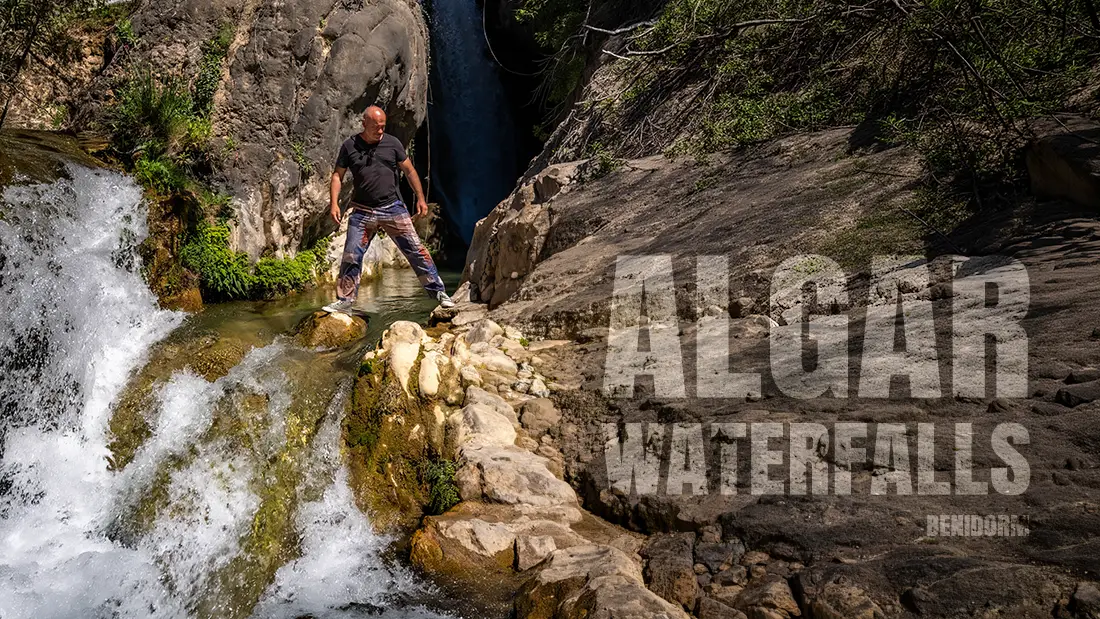
Algar Waterfall is a perfect idea if you want to get away from civilisation for a few hours and spend some time surrounded by nature.
When you’re in Benidorm, surrounded by skyscrapers, crowded beaches, music pouring out of dozens of bars, and that unmistakable Spanish buzz, remember that less than a 20-minute drive away there’s a wholly different world. The sound of water, green hills, rocks, crystal-clear natural pools. The air smells of forest and damp earth. This is Algar Waterfall (in Valencian: Les Fonts d’Algar or Fuentes del Algar). A place many tourists call the “hidden gem of the Costa Blanca” – although in peak season, it’s not quite so hidden any more.
If you’re tired of lying on the beach and fancy a taste of real nature without travelling far from the resort, this is an ideal half-day or full-day trip. Below you’ll find everything worth knowing before you go: how to get there, how much it costs, what to pack, and what else to see nearby.
Where exactly is Algar Waterfall and why is it worth visiting
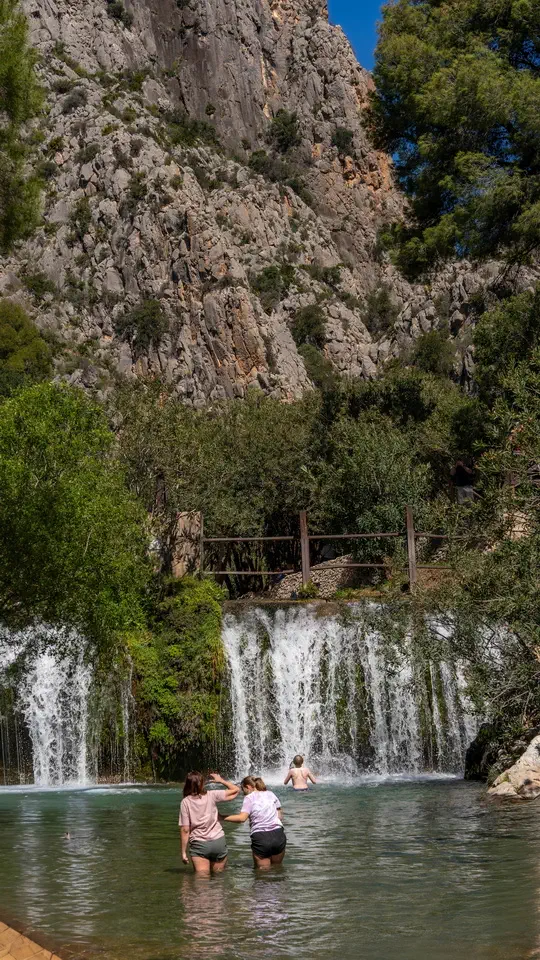
Fuentes del Algar, or Algar Waterfall, is located in the municipality of Callosa d’en Sarrià, just 3 km from the centre of this small town and about 15–19 km inland from Benidorm. It has been a protected wetland area (Zona Húmeda Protegida) since 2002. The Algar River (the word “Algar” comes from Arabic and means “cave” or “grotto”) has, over thousands of years, carved cascades, natural pools and small waterfalls into the limestone rock.
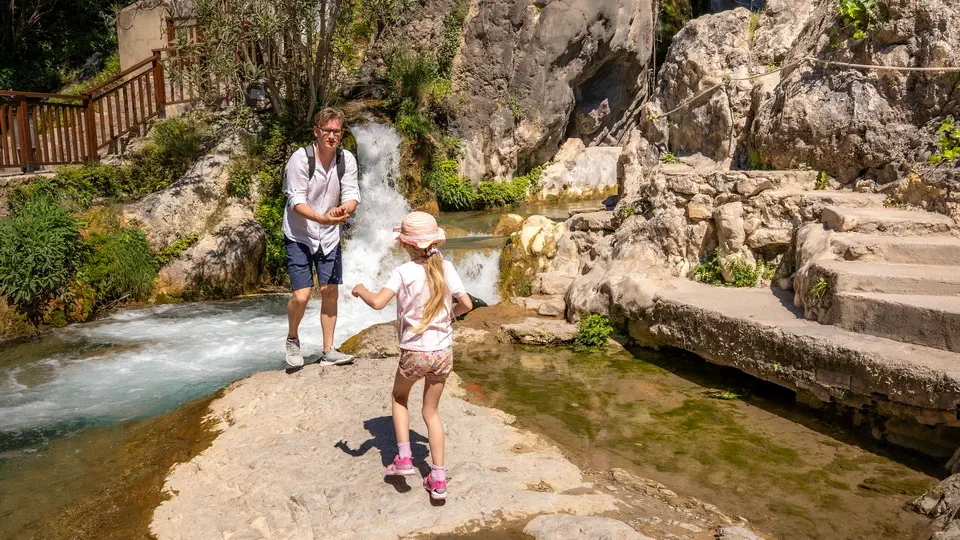
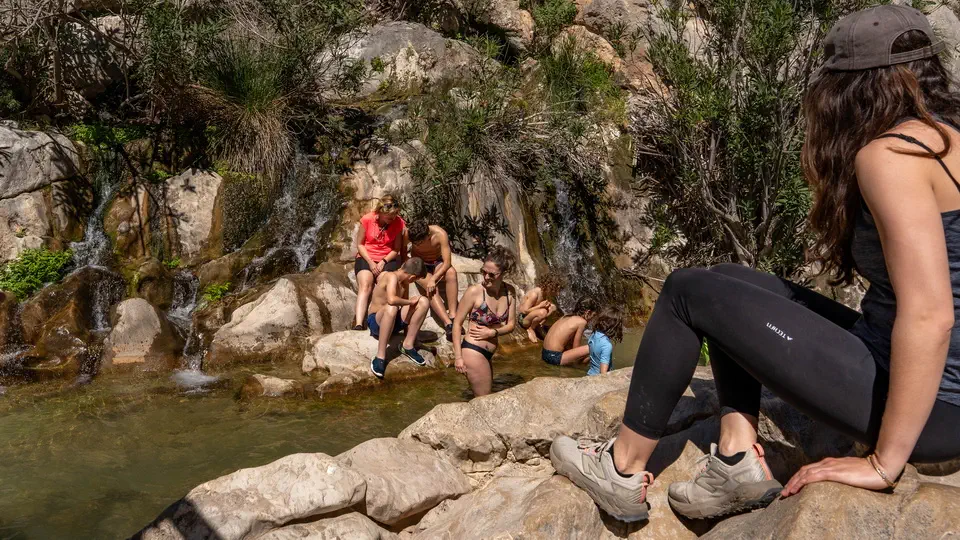
Why do people come here? Because the water is incredibly clean and has a constant temperature of around 18 °C – refreshing in summer, but not freezing in winter. You can swim in designated areas, walk along the paths by the river, take Instagram-worthy photos and simply escape the concrete of Benidorm. For families with children, it’s a great option – there are shallow pools and the route isn’t demanding. For everyone else – a romantic stroll and a chance to relax in the shade of trees.
The surrounding area is full of typical Mediterranean plants: oleanders, tamarisks, fig trees and plenty of greenery that contrasts beautifully with the dry hills typical of this part of Spain. The water flows from underground springs and cascades downwards, creating a “fountain-like” effect – hence the name “Fuentes”.
Algar Waterfall – history and interesting facts, from the Moors to a “source of health”
The area has a long history. Callosa d’en Sarrià developed from ancient settlements – traces from the Neolithic period, the Bronze Age, as well as Iberian and Roman remains, have been found here. During Muslim times, there were alquerías (farmsteads), and after the Reconquista in the 13th century, the land passed into the hands of Admiral Bernat de Sarrià – hence the town’s name.
Algar Waterfall itself is not a “historic monument”, but the entire system of channels and old dams, still functioning today, shows how water was once used to irrigate orchards (Callosa is well-known for its nísperos – loquats). In the past, these pools were considered a “source of health” – locals believed that bathing in the cold, clean water had healing properties. Today it’s mainly a tourist attraction, but there’s still a strong sense of respect for nature.
How to get to Algar Waterfall from Benidorm and other places
By car (the most convenient option):
- From Benidorm: take the CV-70 towards La Nucía, then the CV-715 towards Callosa d’en Sarrià. The journey takes 25–30 minutes. The road is winding but very scenic – you’ll pass fruit orchards and mountains.
- From Alicante: take the AP-7 motorway (exit 65 or 65A), then continue on local roads. Around 45–60 minutes.
- From Altea or Calpe: even closer, 20–35 minutes.
- There are car parks on site (paid or free depending on the restaurant you visit). In high season, it’s best to arrive early.
- At this link you’ll find a pin that will take you straight to one of the nearby car parks just before the entrance to Algar Waterfall (bear in mind that in peak season all car parks may be full – park earlier and walk the remaining distance).
By bus (less convenient, especially in high season):
- From Benidorm: Line 18 operated by Llorente Bus. The stop is close to the park entrance. A one-way ticket costs around €4. Services run regularly, but check the timetable as they may be less frequent not current.
- Organised tours: Very popular are combined trips such as “Guadalest + Algar” or “Altea + Guadalest + Algar”. Coaches pick you up from hotels in Benidorm/Albir, and the entrance fee is often included. A practical option if you don’t fancy driving on winding roads.
Opening hours, tickets, and practical tips
The park is open almost all year round (closed only on certain public holidays such as 1 and 6 January, 24–25 and 31 December). Example opening hours (may vary slightly – always check the official website):
- July–mid-September: 9:00–20:00 (in peak season entry is divided into time slots, e.g. 9–13, 13–16, 16–20, to avoid overcrowding).
- April–June and September–October: usually until 18:00–19:00.
- Winter (December–February): 9:00–15:30.
Algar Waterfall – ticket prices (approximate, based on recent seasons – check current rates):
- Adults: €4–5 (low/high season)
- Children over 3: €2
- Children under 3 and people with disabilities: often free
Tickets can be purchased online (recommended, especially in summer – same-day online purchases are frequently not available) or at the ticket office on site (subject to availability). Booking online guarantees entry.
Algar Waterfall – what to bring?
- Swimwear and a towel (essential!).
- Water shoes or sandals with thick soles – the rocks can be sharp.
- High-factor sun cream, a hat, and drinking water.
- A change of clothes (it can feel cool in the shade after swimming).
- Something to snack on – there are picnic areas.
There are toilets on site, small cafés/restaurants near the entrance, and first aid points. The path is well-marked, easy, and about 1.5 km long (one way, returning the same way or via a loop). A visit typically takes 2–3 hours, or 4–5 if you include swimming and a picnic.
Tip: in summer, come early in the morning (at opening time) or for later afternoon slots. Around midday, it can be crowded and hot.
What you can see and do at Algar Waterfall
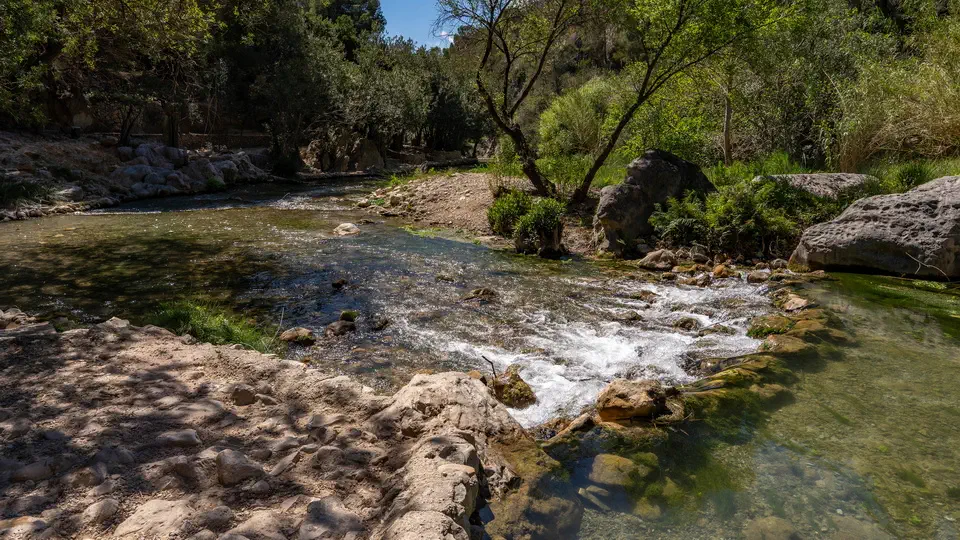
The main attraction is a walk along the river. You follow the path, passing a series of cascades and pools:
- Small waterfalls and “fountains” emerging from the rocks.
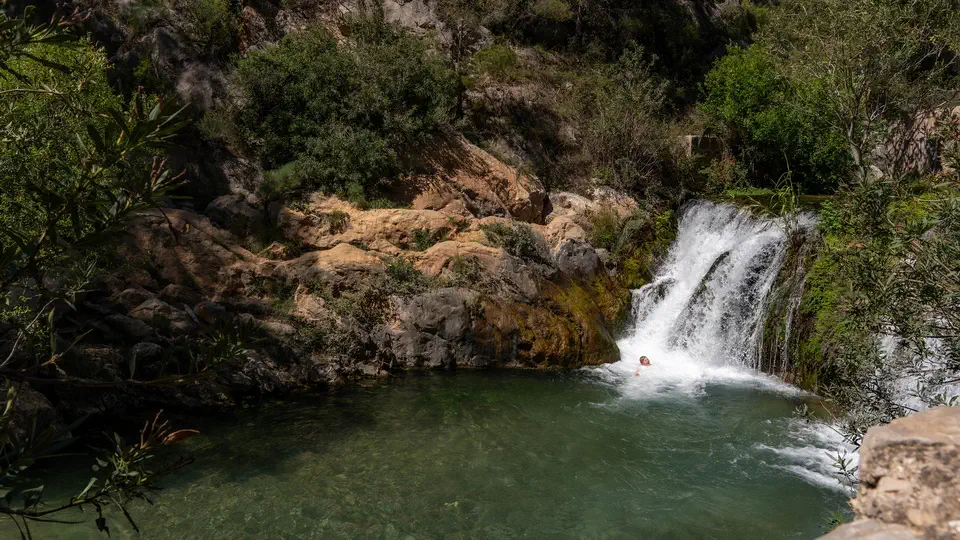
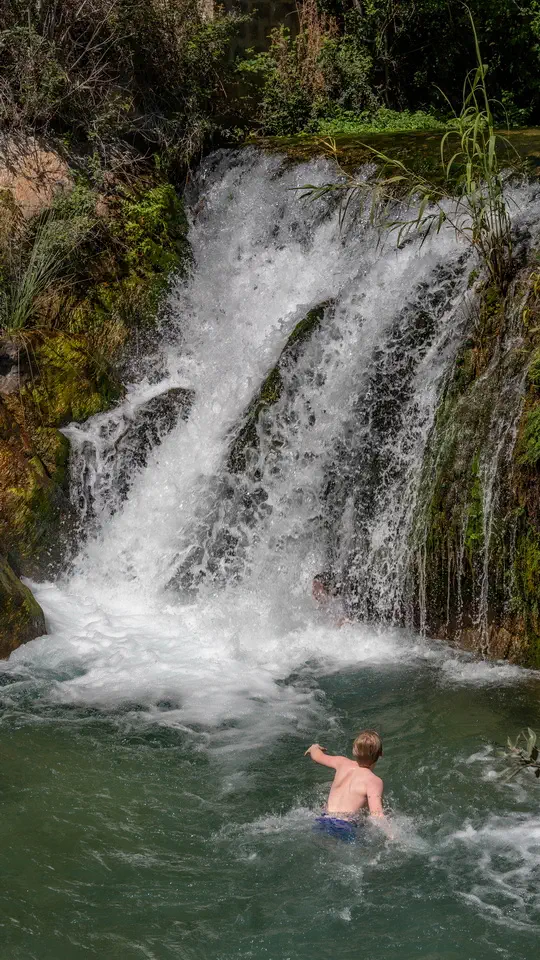
- Deeper natural jacuzzi-style pools where you can swim.
- Shallow areas perfect for children.
- Old irrigation channels and dams – an interesting cultural landscape feature.
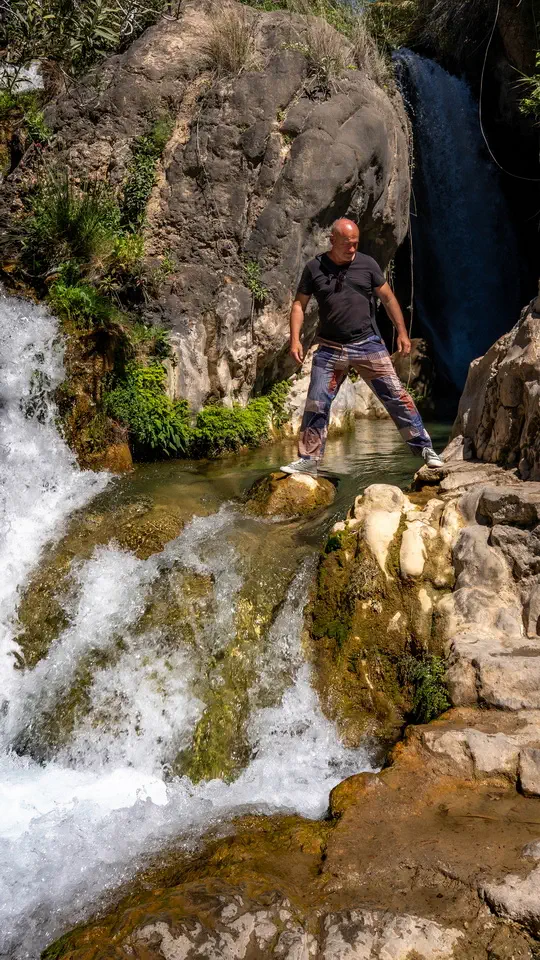
The water is crystal clear – you can see the bottom. In sunlight, the turquoise colour looks stunning. You can sit on the rocks, listen to the sound of the water and simply unwind. Some pools are deeper and allow you to swim beneath the cascades (safely – no jumping from heights!). For photographers, it’s a paradise – especially in the morning when the light is soft. The golden hour in the evening also produces beautiful shots. If you want something more active, you can combine your visit with a longer walk towards Bolulla (Salt de Bolulla – another nearby waterfall).
Nearby attractions – what to see after visiting Algar
Algar Waterfall is a great base for a mini trip around Marina Baixa. Here are the best options within 15–30 minutes:
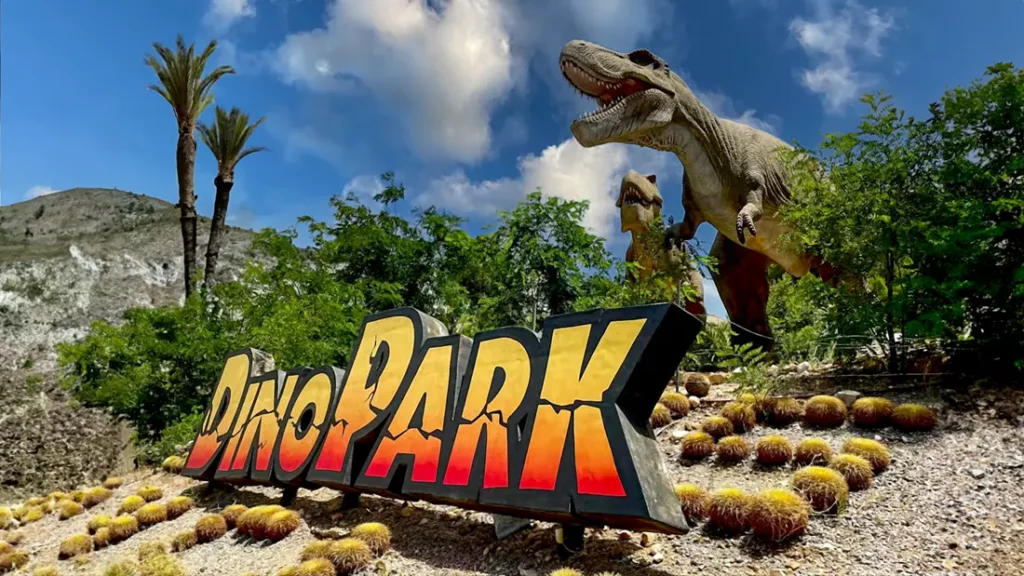
- Dino Park Algar – a theme park where you can see life-sized dinosaur models in a natural setting. It’s particularly impressive and a great hit with children.
- Guadalest (approx. 15 km) – one of the most beautiful villages in Spain. A castle perched on a rock, museums (including a miniature museum!), and spectacular views of the valley and reservoir. Perfect for 1–2 hours. Often combined with Algar in one trip.
- Callosa d’en Sarrià – the town itself. Worth a stroll through the old centre, a visit to the church, and trying local products (loquats, honey, wine). There are markets and events in season.
- Altea – a beautiful old white town with a church dome, promenade and artistic atmosphere. 15–20 minutes from Algar. Great for lunch with a sea view.
- Polop de la Marina – famous for Fuente de los Chorros (a fountain with 221 taps). A peaceful, charming place.
- Benidorm – back to “civilisation” for the beach, dinner, or an evening show. The contrast is striking – and after nature, somehow even more enjoyable.
You can also head further to Villajoyosa (colourful houses) or Alicante, but for one day, Algar + Guadalest + Altea is a perfect combination.
Where to eat near Algar Waterfall
There are restaurants and bars near the park entrance serving typical Spanish cuisine: paella, grilled meats, fresh salads, tapas. Many places offer deals such as “parking + lunch = discounted entry”. In Callosa d’en Sarrià you’ll find more local eateries with authentic dishes. It’s worth trying products made from nísperos (loquats) – jams, liqueurs, desserts. In Guadalest, there are restaurants with breathtaking views.
When to visit – the best time
- May–June and September–October: the sweet spot. Warm weather, pleasant water, fewer crowds than July–August.
- July–August: the most picturesque, but also the busiest and most expensive. Time slots are mandatory.
- Winter and early spring: quieter, lush greenery after the rains, but cooler water and shorter opening hours. Ideal if you prefer peace and quiet.
The weather on the Costa Blanca is usually kind – even in December it can be 15–18 °C and sunny.
Summary – is Algar Waterfall worth visiting from Benidorm? Plus a few interesting facts to finish
Absolutely. It’s one of those places that reminds you the Costa Blanca is more than just beaches and nightlife. For a small cost (tickets + transport), you get several hours in a beautiful, well-maintained natural setting, with the chance to swim in natural pools and walk among cascades. Ideal for families, couples, photographers, and anyone who wants to slow down for a while.
If you’re planning a trip to Benidorm, add Algar Waterfall (Fuentes del Algar) to your list. You won’t regret it – it’s like a mini reset after a day among skyscrapers and crowded beaches. Have questions? Want to know how to combine it with a specific hotel in Benidorm or whether it’s suitable for a trip with a small child? Please let me know – I’ll be happy to help! And if you’ve seen something unusual worth sharing, feel free to get in touch – we’d love to include your insights in the article.
- The name Algar comes from Arabic and means “cave” or “grotto”. Over thousands of years, water has indeed carved real underground channels and springs into the limestone rock.
- Since 2002, the entire area has been protected as a Zona Húmeda Protegida (protected wetland) – one of the most valuable wet ecosystems on the Costa Blanca.
- The water in the natural pools (so-called “tolls”) maintains a constant temperature of around 18 °C all year – refreshing in summer and not freezing in winter.
- Locals once called Algar Waterfall a “source of health” – it was believed that bathing in its crystal-clear water had healing properties.
- The Algar River is only about 12 km long – it rises in the Sierra del Ferrer and Bernia mountains and flows into the Mediterranean Sea at beautiful Altea.
- The landscape was shaped by karst processes – water dissolves limestone rock, forming cascades, springs emerging directly from the rock, and deep pools.
- There are several waterfalls within the park of varying heights – from small cascades to the impressive Toll de la Caldera (over 10–15 metres high).
- An easy 1.5 km path runs along the river – you can walk it in both directions, with viewpoints and rest areas along the way.
- In the 1950s, tourists reached this place… on donkeys! At the time, it was the main way to access this remote spot.
- Since the Middle Ages, water from the Algar has supplied old irrigation channels, mills, and farmland – some of these ditches and dams still function today.
- The area is famous for growing nísperos (loquats) – those orange, sweet fruits harvested in spring and used to make jams, liqueurs, and desserts.
- In the park you can encounter typical Mediterranean wildlife: frogs, turtles, fish, dragonflies, and sometimes even squirrels and various bird species.
- There is a botanical garden and arboretum on site with hundreds of Mediterranean plants, as well as an environmental museum showcasing local flora and fauna.
- Nearby you’ll find Dino Park Algar – a dinosaur-themed park that’s perfect as an extra attraction for children after a walk by the waterfalls.
- Water flows from many small springs at once – that’s why the place is sometimes called “Font de Fonts”, meaning “the source of all sources”.
- Alcohol and glass bottles are not allowed in the park – but there is a large picnic area where you can enjoy your food.
- The deepest pools exceed 2 metres – the water is so clear you can see the bottom, but the rocks can be sharp, so water shoes are recommended.
- In summer, entry is organised in time slots (e.g. 9–13, 13–16, 16–20) to avoid overcrowding and protect the environment.
- From the waterfalls and pools, you get views of green terraces and mountains – the contrast with concrete Benidorm (just 15 km away) is truly striking.
- It’s one of the few places on the Costa Blanca where you can swim beneath a cascade, walk among oleanders and feel like you’re in a true mountain oasis rather than on a typical beach excursion.
- Interesting cities near Costa Blanca:
- Cullera, located on the Valencia coast, is a resort town known for its beautiful beaches with light and fine sand.
- La Mata is a small town in the south of Spain, located on the Costa Blanca coast.
- San Pedro del Pinatar is a town located on the Costa Calida coast in the province of Murcia, southern Spain.
- Torrevieja is a coastal city and municipality located on the Costa Blanca in the province of Alicante.
- Attractions near Costa Blanca:
- Bodegas Luzon is one of the oldest and largest vineyards in the Spanish municipality of Jumilla, located in the Region of Murcia.
- Cullera Castle (Castell de Cullera) is, in my opinion, one of the most fascinating attractions of the city.
- Dino Park Algar on the Costa Blanca coast, is a land ruled by prehistoric dinosaurs.
- Terra Natura Benidorm – A beautiful zoo on the Costa Blanca.
- Aqua Natura in Benidorm is a large water park connected to the Benidorm Zoo.
- Algar Waterfall is a perfect idea if you want to get away from civilisation for a few hours and spend some time surrounded by nature.
- El Palmeral Park in Alicante, a place where you can relax and regain strength.
- L’Oceanogràfic is the Spanish name for the Oceanarium in Valencia, the largest aquarium in Europe, located in the southern part of Spain by the Mediterranean Sea.
- Las Salinas de Torrevieja is an industrial plant that extracts sea salt from a shallow but vast lake in Laguna Salada de Torevieja.
- Natural Park El Fondo, or as the Spanish say, Parque Natural el Hondo, is located in the beautiful region of Valencia, near cities such as Alicante, Valencia, La Mata, Torrevieja.
- Palm Grove of Elche largest palm grove in Europe.
- Rio Safari Elche is a zoo located on the Costa Blanca coast of Spain.
- Tetería Carmen del Campillo, a Moorish-style teahouse hidden between Crevillent and Albatera.
- The Science Museum in Valencia is part of a massive project called the City of Arts and Sciences.
- The goal of our today’s trip is the Valor chocolate factory and museum.
- The Castle of Santa Barbara (Castillo de Santa Barbara), also known as the Alicante Fortress, looms over the city like an unconquerable defender.
- The Church of the Virgin Mary in the Spanish city of Murcia is one of the biggest attractions of the city and an undeniable symbol of it.
- The Naval Museum in Cartagena is a fascinating attraction in the city that anyone with even a slight interest in European history
- The Museum in Torrevieja is an interesting attraction in the port part of the city.
- The Ducal Palace of Gandia is a tourist attraction in the city and a fascinating monument worth visiting during your stay on the Costa Blanca in Spain.