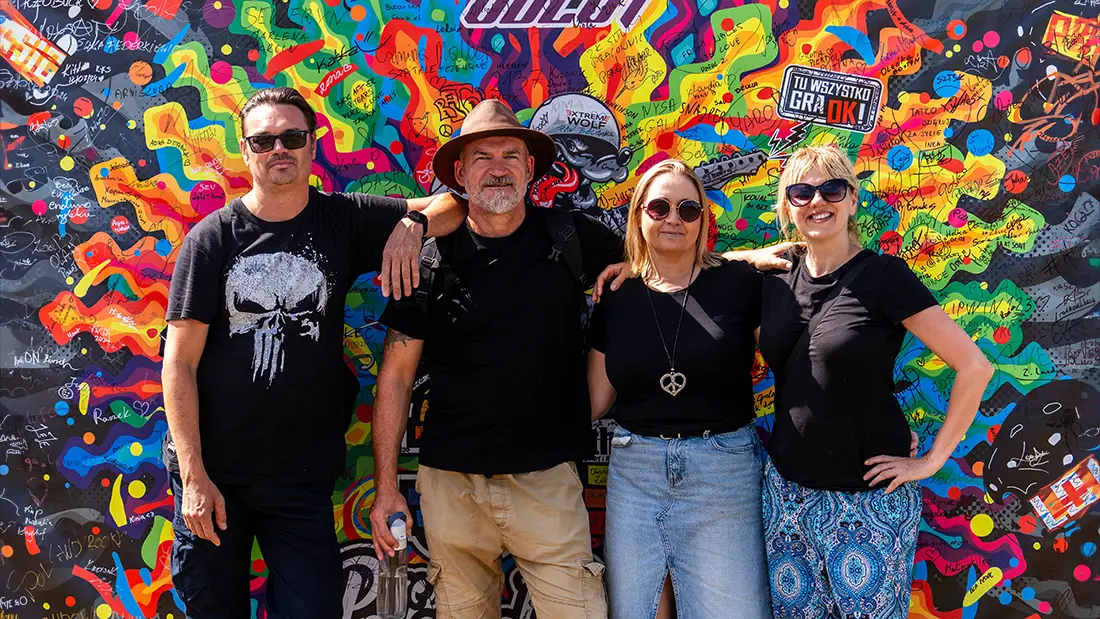
There are festivals people travel to primarily to see a particular band. There are also those where the most important things turn out to be a fashionable outfit, a good photograph or the chance to show off your presence on social media. Pol’and’Rock Festival is wholly different. Music remains essential here, but just as significant are the people, the atmosphere, and the feeling that, for a few days, you can live according to slightly different rules.
On a vast field, people of all ages come together, travelling from the furthest corners of Poland and from abroad. Some are visiting for the first time, while others return almost every year, often with their children, friends, or groups of people they met at previous editions. In the tents, fans of metal, punk rock, reggae, alternative music, hip-hop and electronic music sleep side by side.
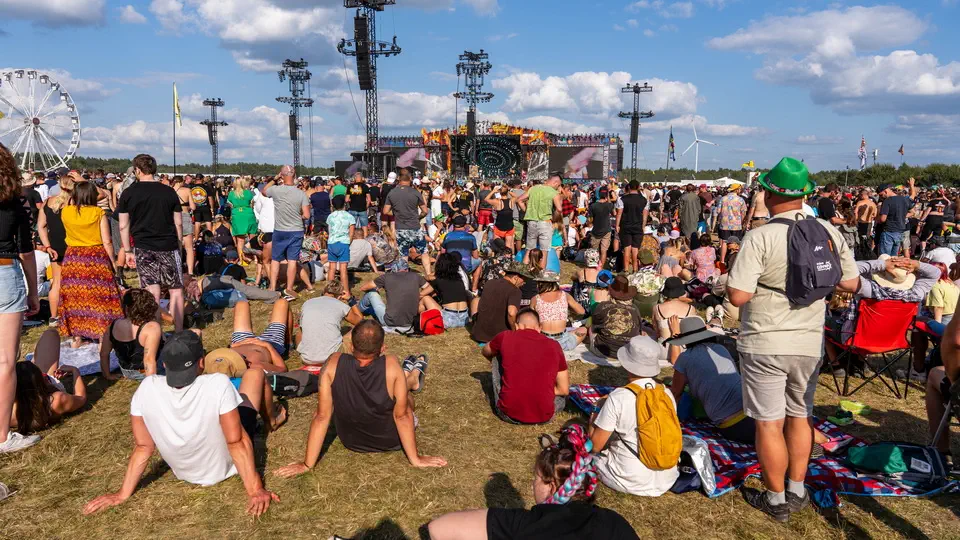
Pol’and’Rock is therefore far more than an ordinary music event. It is a huge temporary town built over several days, where concerts are mixed with workshops, debates, meetings, the activities of social organisations and spontaneous events created by the festival-goers themselves.
Pol’and’Rock Festival – what exactly is it?
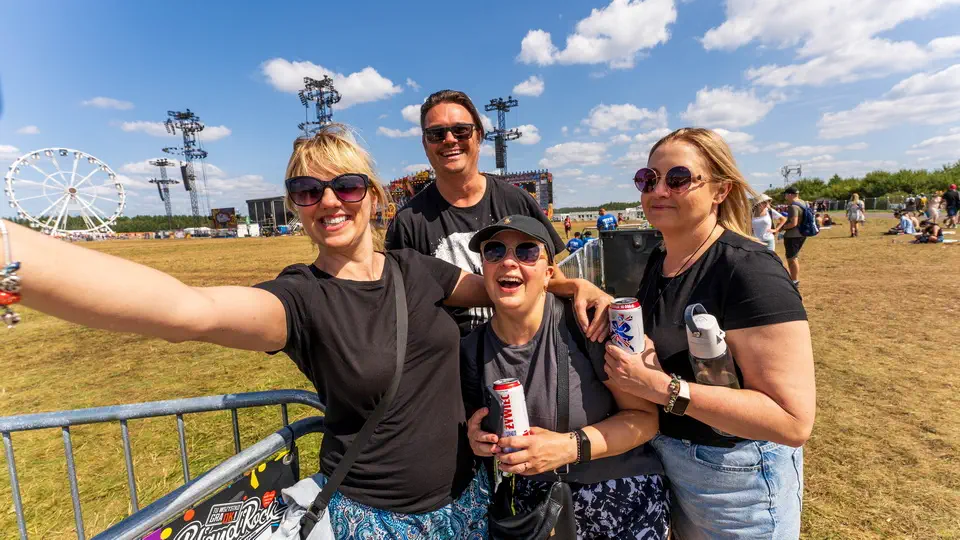
Pol’and’Rock Festival, formerly known as Przystanek Woodstock, has been organised since 1995 by the Great Orchestra of Christmas Charity Foundation (WOŚP). The event was created as a way of thanking volunteers, donors, and everyone supporting the annual January WOŚP fundraising campaign. The organisers describe it as the largest music festival in Poland and one of the largest events of its kind in Europe.
One of its most important features is that it is free and open to everyone. You do not need to buy a ticket to attend the concerts, while the basic camping area is also free of charge. Separate paid camping areas may be available for those looking for additional facilities, but the vast majority of festival-goers use the traditional campsite.
It is precisely this openness that makes Pol’and’Rock different from many commercial music events. This does not, of course, mean that the whole trip is completely free. You still have to pay for transport, food, drinks, shopping and some additional services. However, simply attending the concerts and most other events does not depend on having an expensive festival pass.
From Przystanek Woodstock to Pol’and’Rock Festival
The history of Pol’and’Rock Festival began in the mid-1990s, when the Great Orchestra of Christmas Charity was already one of the best-known social initiatives in Poland. Jurek Owsiak and people associated with the WOŚP Foundation wanted to thank the volunteers, donors, and everyone involved in organising the January fundraising events in a special way. Instead of an official gala, they chose music, having fun together and an event accessible to everyone.
The obvious inspiration was the legendary American Woodstock festival of 1969, associated with freedom, peace, and the rebellion of a young generation. However, the direct inspiration for creating the Polish festival also came from the anniversary Woodstock ’94 event, where Jurek Owsiak observed, among other things, the work of the Peace Patrol. This idea later gave rise to the Polish Pokojowy Patrol, which has helped organise the festival from its very beginning.
The first Przystanek Woodstock took place in 1995 in Czymanowo, near Lake Żarnowieckie. Around 30,000 people attended, already demonstrating that Jurek Owsiak’s idea had found fertile ground. Among the performers were Myslovitz, IRA, Urszula, Dezerter and Illusion. The event was accompanied by the slogan “Love, Friendship, Music”, which became one of the festival’s most important symbols in the years that followed.
The first edition was very different from the later versions of the event. There was no extensive festival town, numerous stages, huge partner zones or dozens of additional activities. What mattered most were the concerts, the direct atmosphere and the feeling of being part of something new.
The name “Przystanek Woodstock” combined a reference to the American festival with the popular television series “Przystanek Alaska” (“Northern Exposure”). It also fitted the idea behind the event – it was meant to be a temporary stop where people from different parts of Poland could meet, listen to music and forget about their everyday divisions.
- Szczecin-Dąbie and the search for a permanent location – In 1996, the second edition of Przystanek Woodstock was held at the Szczecin Aeroclub airfield in Szczecin-Dąbie. The festival was still looking for the right format and a location that would be large enough, safe and well connected. The move also demonstrated that the event was not a one-off experiment. The organisers intended to develop the idea, while the audience was willing to follow the festival to different cities. Szczecin-Dąbie, however, hosted the event for just one edition.
- Żary – where the festival really grew – In 1997, Przystanek Woodstock moved to Żary in the Lubusz Voivodeship. This was where the event began to take on the form of a huge, multi-day outdoor festival. It was held in Żary from 1997 to 1999 and then again from 2001 to 2003. Żary occupy a special place in the festival’s history. A vast camping area was established on the former airfield, and as the number of participants grew, so did the infrastructure. More food outlets, sanitary facilities, medical services and organisational facilities appeared. The Pokojowy Patrol also became increasingly important. One of the festival’s most distinctive traditions is associated with Żary. Roman Polański, the last stationmaster of the local railway station, blew the whistle to mark the start of the event from 1997 onwards. Over time, his presence became a symbolic link between the old Przystanek Woodstock and the later Pol’and’Rock Festival.
- Lębork and the festival that officially did not happen – One of the most unusual episodes in the history of Przystanek Woodstock took place in 2000. The festival was supposed to be organised in Lębork, but the WOŚP Foundation ultimately cancelled the official event. The decision was made amid disputes, organisational difficulties and concerns about safety. Despite the cancellation of the concerts, some people travelled to Lębork. An informal gathering took place and later became known as the “Wild Przystanek Woodstock”. There was no gigantic stage or official programme, but people came because they wanted to keep the spirit of the event alive. The year 2000 was also important for the development of the Pokojowy Patrol. As the planned festival did not take place, the Foundation invited patrol volunteers to a separate training meeting. This eventually developed into a professional training system for volunteers working with WOŚP.
- The return to Żary – After the events in Lębork, Przystanek Woodstock returned to Żary in 2001. The festival remained there for another three years. This was a period of continued development and the strengthening of its distinctive identity. Przystanek was increasingly becoming more than a collection of concerts. It was turning into a meeting place for people, social organisations and volunteers. Alongside music, educational, environmental and civic activities became increasingly important. The growing popularity of the event also brought greater challenges. Tens and eventually hundreds of thousands of participants required suitable land, security systems, sanitary facilities and efficient transport. Żary was becoming an increasingly difficult location for such a massive event.
- Kostrzyn nad Odrą – sixteen years in one place – In 2004, Przystanek Woodstock moved to Kostrzyn nad Odrą. This was one of the most important decisions in the entire history of the event. The festival’s new home was a former military training ground, offering considerably more space than the previous locations. Kostrzyn nad Odrą hosted the festival for sixteen years. This is why, for an entire generation of participants, the name of the town became almost synonymous with Przystanek Woodstock. The distinctive festival field, hills, sunflowers, queues of festival trains and crowds walking from the railway station created an image that became firmly established through television coverage and the memories of participants. In Kostrzyn, the festival grew to enormous proportions. Increasingly major artists from Poland and abroad began appearing on the main stage. Performers representing rock, metal, punk, reggae, folk, hip-hop, electronic music and even classical and operetta music took to the stage. At the same time, the non-musical side of the festival continued to develop. In 2006, the Akademia Sztuk Przepięknych, or Academy of Fine Arts, was created as a space for meetings with writers, actors, travellers, scientists, sportspeople, journalists and public figures. Over time, ASP became one of the festival’s pillars, demonstrating that a huge music festival could also be a place to discuss culture, society, politics, science, and the problems of the modern world.
- The change of name to Pol’and’Rock Festival – In 2018, one of the most visible changes in the history of the event took place. After 23 editions under the name Przystanek Woodstock, the event was given a new name – Pol’and’Rock Festival. The change did not mean the birth of an entirely new festival. The previous edition numbering, the free nature of the event, its connection with the WOŚP Foundation and its main slogans and traditions were all retained. The first Pol’and’Rock Festival was therefore also the 24th edition of an event that had begun in 1995. The new name was created as a play on words. It simultaneously evokes Poland, rock and an invitation to celebrate together. The organisers emphasised that the name had changed, but the festival’s most important values had not. A year later, in 2019, the 25th anniversary edition took place. It was an opportunity to recall the most decisive moments from Czymanowo, Szczecin, Żary and Kostrzyn.
- The pandemic and the “Most Beautiful House Party in the World” – The year 2020 brought a situation wholly different from anything the festival had previously experienced. Due to the COVID-19 pandemic and the restrictions introduced to limit its spread, a traditional mass event could not take place. Instead, the organisers created the “Najpiękniejsza Domówka Świata”, or “Most Beautiful House Party in the World”. The festival moved to the internet, allowing artists, organisers, and fans to meet virtually and preserve at least part of the atmosphere of Pol’and’Rock at a time when thousands of people could not gather. The unusual edition demonstrated just how important the festival community had become. Even without a physical field, stages, and hundreds of thousands of people camping together, the organisers and participants attempted to maintain the spirit of the event.
The festival today
Pol’and’Rock Festival has evolved considerably since the first Przystanek Woodstock in 1995, but many of its fundamental ideas remain unchanged. Music is still at the heart of the event, yet it is only one part of the experience. The festival brings together concerts, meetings, workshops, social campaigns, educational activities and countless smaller events. The Akademia Sztuk Przepięknych remains one of the best-known places for discussions and meetings, while the NGO zone gives visitors an opportunity to learn more about organisations working in areas such as health, ecology, human rights and culture.
The festival’s atmosphere is also very different from that of many other large-scale events. People tend to talk to one another more easily, chance encounters are common and participants are often willing to help each other with small problems. That does not mean that conflicts or unpleasant situations never happen at such a massive event. Idealising a crowd of several hundred thousand people would be naive. Nevertheless, the dominant experience remains one of community and a temporary escape from the divisions of everyday life.
Pol’and’Rock Festival is scheduled to take place from 30 July to 1 August 2026. The event will be held at Czaplinek-Broczyno Airport. The programme includes the Main Stage, Small Stage, Akademia Sztuk Przepięknych, NGO areas, workshops, partner activities and accompanying events. Before travelling, it is essential to check the current regulations, site map, access arrangements, transport information and gate opening times. The organisation of such a large event can change from one year to the next, so experiences from previous editions are not always sufficient.
Music Without Being Tied to a Single Genre
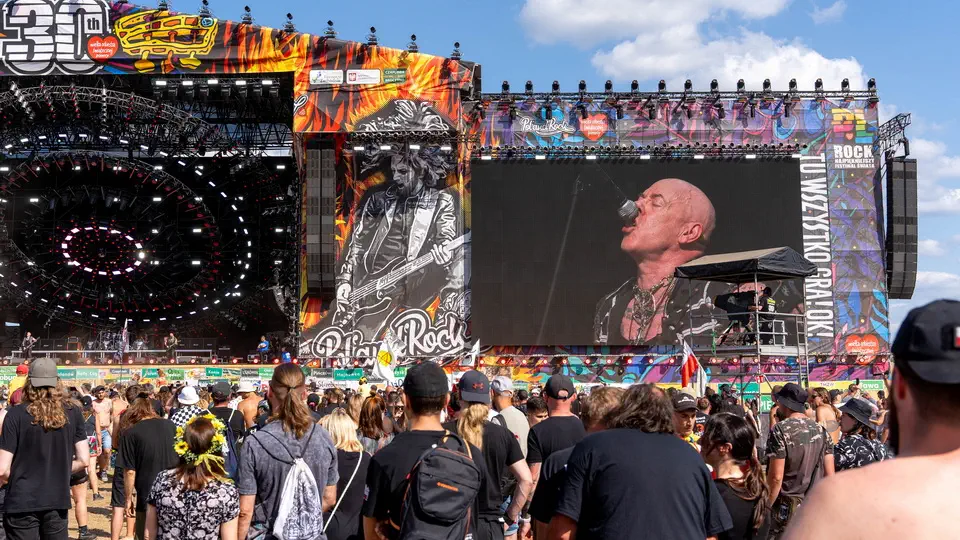
The name of the festival naturally suggests rock music, and over the years the stages at Pol’and’Rock have indeed welcomed many important rocks, punk, metal and alternative bands. It would be a considerable oversimplification, however, to say that only artists playing heavier music perform here. The programme has long been much more diverse. Alongside hard-hitting metal, you can hear reggae, folk, blues, hip-hop, electronic and experimental music, and sometimes even performances that nobody would expect to find at a huge rock festival.
There have been some particularly unusual concerts in the festival’s history. In 2009, an operetta performance was organised featuring seven tenors and Wiesław Ochman. The audience danced in pairs, while Jurek Owsiak appeared wearing a dinner jacket. That evening demonstrated perfectly that the festival is not afraid of musical experimentation or of challenging people’s expectations.
Alongside the huge main stages, the smaller concert areas also play a critical role. This is where you can discover lesser-known performers who are only just beginning to build their audience. Many festival-goers later recall that the performance that stayed with them the longest was not that of the biggest star, but a concert they stumbled upon by chance by a band they had never even heard of before.
Academy of the Finest Arts – A Festival That Wants to Talk
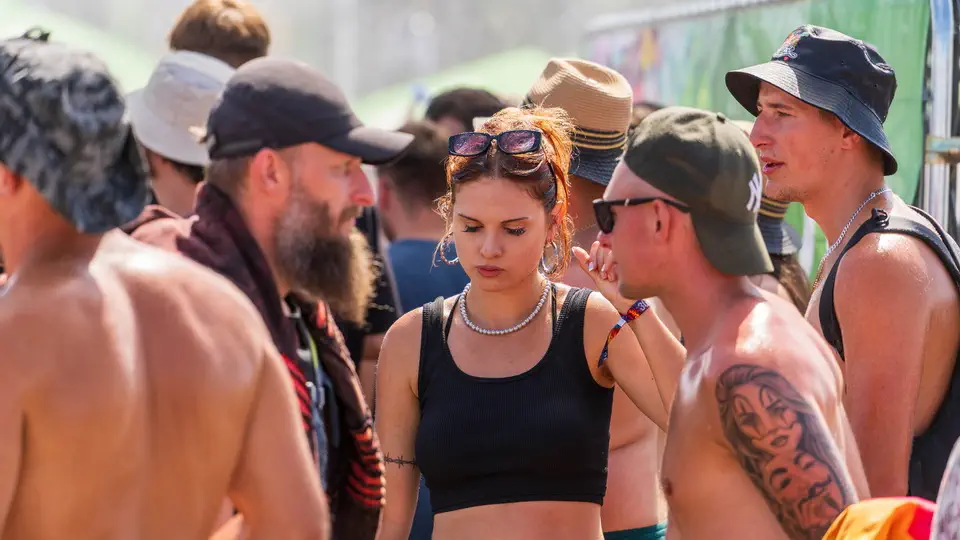
One of the most important elements of Pol’and’Rock Festival is the Academy of the Finest Arts, usually simply referred to as ASP. It was established in 2006 as a space for meetings with people from the worlds of culture, art, science, politics, the media and wider society. During the day, visitors can attend conversations with actors, writers, travellers, sportspeople, journalists, scientists and social activists. The audience is not merely there to listen. Festival-goers can ask questions, express their opinions and engage in discussions with the invited guests.
The subjects discussed can be difficult. Conversations cover issues including human rights, wars, social problems, mental health, culture, ecology, discrimination, media responsibility and the challenges facing the modern world. Thanks to ASP, Pol’and’Rock becomes much more than a series of concerts. You can spend the night dancing until late, then sit on the grass the following day and listen to a discussion that makes you reconsider your views.
Non-Governmental Organisations and the Social Side of the Festival
Dozens of non-governmental organisations operate at the festival. They organise workshops, educational campaigns, meetings, consultations, and activities relating to health, ecology, human rights, safety, and support for people in need. You can learn basic first aid, talk to specialists, find out more about the work of particular foundations, take part in creative workshops or discover how you can get involved in volunteering.
It is easy to walk past these places without stopping when you are caught up in the festival crowds. It is worth giving them some of your time, though. Occasionally, a simple conversation beside the tent of a social organisation can turn out to be more interesting than the concert you had originally planned to see.
For a broader introduction to the country and some of the things that make it distinctive, you can also read our guide to interesting facts about Poland and the Polish people.
The Pokojowy Patrol and Safety
One of the most recognisable features of the festival is the Pokojowy Patrol, a group of trained volunteers who help with the organisation of the event. The patrol volunteers provide information, assist festival-goers, respond to difficult situations and work alongside the services responsible for safety.
Despite the friendly atmosphere, it is important to remember that Pol’and’Rock is an event attended by a huge number of people. Common sense is therefore essential. Keep your documents, money, and phone with you, while it is a good idea to mark your tent in some distinctive way, as finding it among thousands of similar structures after dark can be surprisingly difficult.
You also need to remember about the sun, staying properly hydrated and sudden changes in the weather. Within just a few hours, the festival field can transform from a dry, dusty expanse into a muddy landscape full of puddles.
What Is Life Like on the Festival Field?
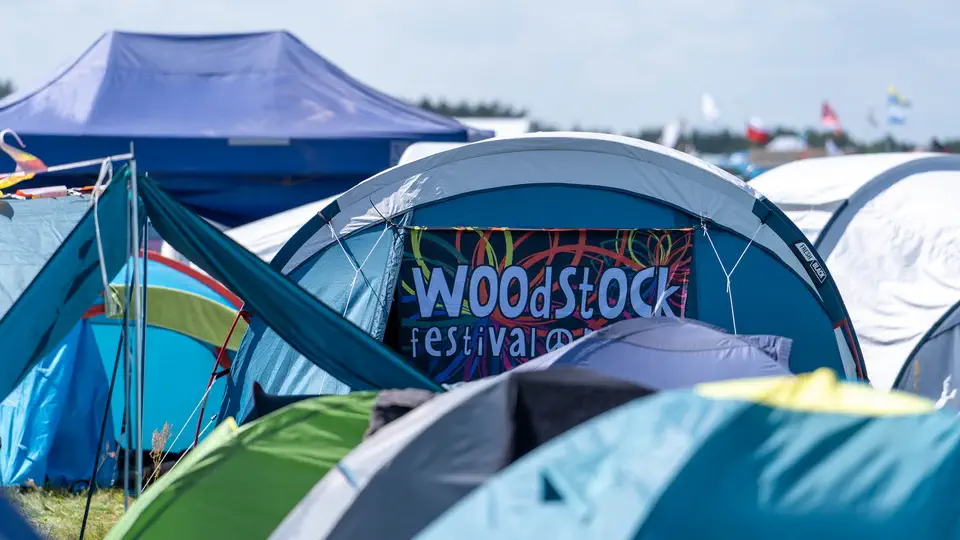
The first impression can be overwhelming. Everywhere you look there are tents, flags, banners, installations built by festival-goers, food outlets, organisation stands and seemingly endless groups of people heading in different directions. During the day, the field is bursting with life. Someone is playing a guitar, someone else is practising juggling, sleeping in a hammock or preparing breakfast outside their tent. In the evening, the crowds begin moving towards the stages, and once the concerts are over, the party often continues for many more hours.
The conditions are those of a campsite, and not everyone will immediately take to them. You have to accept dust, queues, noise, shared sanitary facilities and limited privacy. Anyone expecting hotel-like comfort may be disappointed. At the same time, these inconveniences are part of what creates the atmosphere. After two days, you stop worrying about dusty shoes, messy hair and the lack of perfect order. Music, meeting people and the feeling that a huge, colourful celebration is taking place all around you become far more important.
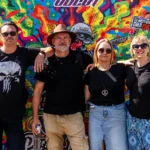
A good tent is essential, one that can cope with both sunshine and rain. A comfortable sleeping mat or mattress, a warm sleeping bag and some additional protection against moisture will also be useful. Comfortable shoes are a must. The distances between the campsite, stages, food areas and ASP can be considerable, so you can easily walk many kilometres during the day. It is worth taking lightweight sandals, wellington boots or other footwear suitable for wet weather as well. Your packing list should also include high-factor sun cream, a hat (I would obviously recommend a proper hat), a waterproof jacket, a water bottle, a power bank, a basic first-aid kit, toilet paper, earplugs and a small backpack or bum bag for essential items such as your documents and money.
A distinctive flag, light or some other marker placed beside your tent can be extremely useful. After a night-time concert, all the rows of tents can look almost the same.
An Atmosphere You Cannot Really Learn About from Other People’s Stories
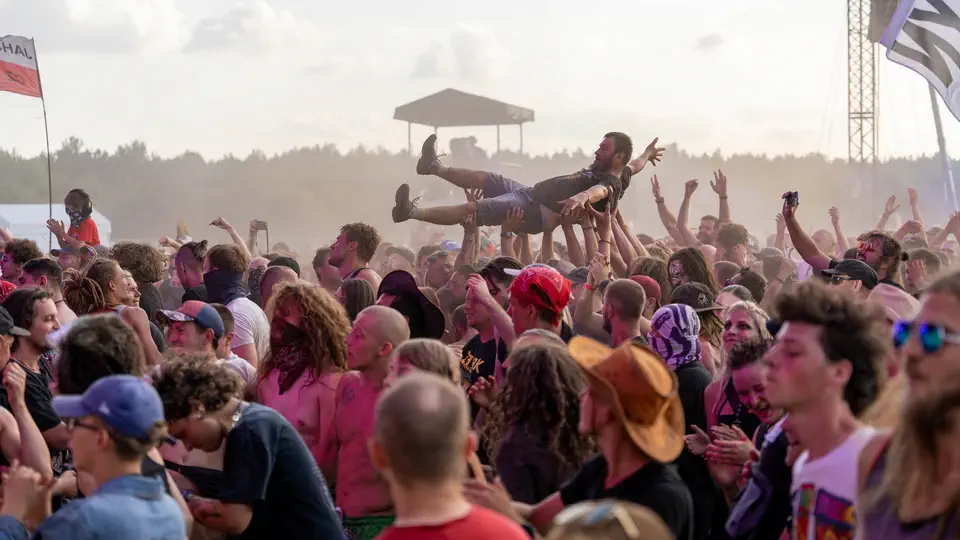
Pol’and’Rock is often described as the “Most Beautiful Festival in the World”. Of course, this is a phrase created and popularised by the organisers and the festival community, and not everyone has to agree with it. Crowds, noise, heat, and camping conditions can certainly be tiring for some people. Nevertheless, it is difficult not to notice that the festival has an atmosphere that is distinctly different from many other large-scale events. People tend to talk to one another more often, chance encounters are easier to turn into friendships, and festival-goers are generally willing to help each other with small problems.
That does not mean that conflicts or unpleasant situations never occur at an event of this size. Idealising a crowd of several hundred thousand people would be naive. Even so, the dominant experience remains one of community and a temporary escape from the divisions of everyday life.
Pol’and’Rock Festival is scheduled to take place from 30 July to 1 August 2026. The event will be held at Czaplinek-Broczyno Airport. The programme includes the Main Stage, Small Stage, Akademia Sztuk Przepięknych, non-governmental organisation zones, workshops, partner activities and accompanying events. Before travelling, it is essential to check the current regulations, site map, access arrangements, transport information and gate opening times. The organisation of such a large event can change from one year to the next, so experiences from previous editions are not always enough.
Is Pol’and’Rock Festival worth visiting?
Pol’and’Rock Festival is not an event exclusively for the most devoted rock fans. You can come for the music, meetings at ASP, the atmosphere, the workshops or simply out of curiosity. However, you need to accept the nature of the festival. This is not an elegant weekend with comfortable accommodation, a quiet breakfast and a carefully planned schedule. Here, dust mixes with mud, the music makes it difficult to go to sleep early, and chance encounters can completely change your plans for the day.
The festival’s greatest strength is not one concert, one stage or one particular star. It is the massive community that builds its own city for a few days. It is loud, imperfect and sometimes chaotic, but at the same time full of energy. You may return home tired, sleep-deprived and with a tent in need of a thorough clean. It is very likely, however, that along with the dust you will also bring back memories that are impossible to compare with those from an ordinary concert.
Pol’and’Rock Festival information and interesting facts
- Pol’and’Rock Festival is organised as a thank-you to people supporting the Great Orchestra of Christmas Charity. The festival was not created solely as a music event. The WOŚP Foundation established it with volunteers, donors, and everyone involved in the January fundraising campaign in mind.
- The first edition of the festival took place in 1995. At the time, the event was called Przystanek Woodstock and was held in Czymanowo beside Lake Żarnowieckie. It was the beginning of an event that would eventually become one of the largest music festivals in Europe.
- The name Przystanek Woodstock referred to the legendary 1969 festival. The organisers drew on ideals of freedom, peace, friendship and experiencing music together. These values remain an important part of the image of Pol’and’Rock Festival today.
- The festival changed its name in 2018. Przystanek Woodstock then became Pol’and’Rock Festival. This was not the beginning of a new event, however, but a continuation of the same festival, retaining its previous numbering, organisers and fundamental principles.
- The event is organised by the Great Orchestra of Christmas Charity Foundation. This is the same organisation that holds the huge WOŚP Grand Finale in Poland every year, raising money to purchase medical equipment and support healthcare programmes.
- The festival has been closely associated with Jurek Owsiak from the very beginning. The founder and president of the WOŚP Foundation also became the event’s most recognisable face. His distinctive announcements, energy and direct contact with the audience have become part of the festival tradition.
- Pol’and’Rock Festival is a free, non-ticketed event. Participants do not have to buy a multi-day pass to enter the festival site and watch the concerts. The free nature of the festival is one of its most important and recognisable features.
- The money raised during the WOŚP Grand Finale is not used to organise the festival. The costs of the event are covered primarily by sponsors, partners and other sources of funding connected with its organisation. The money raised through the public WOŚP campaign is allocated to the declared medical purposes.
- The festival has changed location many times. It has been held in Czymanowo, Szczecin-Dąbie, Żary, Kostrzyn nad Odrą, at Makowice-Płoty Airport and at the former Czaplinek-Broczyno Airport. Each of these locations influenced the character of the individual editions.
- Kostrzyn nad Odrą was for many years the unofficial capital of the festival. Przystanek Woodstock, followed by Pol’and’Rock Festival, was held there from 2004 onwards. For many regular participants, the vast Kostrzyn field remains the place most strongly associated with the event.
- In 2021, the festival was held at Makowice-Płoty Airport. It was an unusual edition taking place during the period of pandemic restrictions. The number of participants was considerably lower than during the traditional, completely open editions of the event.
- Since 2022, the festival has been held at the former Czaplinek-Broczyno Airport. The vast site in the West Pomeranian Voivodeship makes it possible to build a huge festival town with stages, camping areas, food outlets and zones operated by social organisations.
- The event is not limited exclusively to rock music. The festival stages feature metal, punk, reggae, folk, electronic music, blues, hip-hop and alternative music. The programme deliberately combines well-known stars with less established performers.
- Some of the bands that later became hugely popular appeared at the earliest editions. One example is Myslovitz, who played at the first Przystanek Woodstock in Czymanowo and again the following year in Szczecin-Dąbie.
- The festival programme has also included some surprising concerts. Pol’and’Rock is not afraid of musical experimentation, which is why performances of symphonic, folk and operetta music, as well as projects combining wholly different genres, can appear alongside heavy rock.
- One of the event’s symbols is the slogan “Love, Friendship, Music”. These words refer to the atmosphere of community and mutual respect that the organisers have sought to create since the festival’s earliest editions.
- The organisers describe the event as the “Most Beautiful Festival in the World”. This name is widely used in official announcements, promotional materials and statements by Jurek Owsiak. Over time, it has also been adopted by a large part of the festival audience.
- Participants have also been given their own distinctive name. The organisers often refer to them as the “Most Beautiful Audience in the World”, highlighting their energy, openness, and involvement in creating the atmosphere of the event.
- The Pokojowy Patrol is responsible for helping with the organisation of the event. It is a group of WOŚP Foundation volunteers who assist participants, provide information, support the organisers and cooperate with the services responsible for safety.
- The history of the Pokojowy Patrol began together with the festival. The organisation has been operating since 1995, the year of the first Przystanek Woodstock. Its name and concept were inspired by volunteer organisations operating at American events connected with the Woodstock tradition.
- Pokojowy Patrol volunteers undergo special training. They learn, among other things, teamwork, communication, how to respond in crisis and how to provide basic assistance. After completing their training, they take part in WOŚP Foundation activities.
- The Pokojowy Patrol does not operate only during Pol’and’Rock Festival. Volunteers also help during the WOŚP Grand Finale, cultural events, mass gatherings and relief campaigns organised throughout the year. Among other things, they have assisted people affected by floods.
- Red T-shirts are the trademark of the Pokojowy Patrol. Thanks to their distinctive clothing, the volunteers are easy to spot in a massive crowd. Participants can approach them with questions, report problems or ask for help.
- Safety is handled by several teams. In addition to the Pokojowy Patrol, the festival has the Niebieski Patrol, a professional security team, as well as the Medyczny Patrol, made up of paramedics, doctors, nurses, and other healthcare professionals.
- The Akademia Sztuk Przepięknych is one of the most important areas of the festival. Meetings are held there with actors, writers, travellers, scientists, journalists, sportspeople and social activists. The audience can take part in the discussions and ask questions of the invited guests.
- The festival is also a place where difficult social issues are discussed. Meetings, debates, and workshops cover subjects including human rights, health, ecology, discrimination, addiction, violence, volunteering and civic responsibility.
- A large NGO Zone operates on the festival grounds. Foundations and associations organise workshops, consultations, presentations and educational activities there. Organisations working in areas including health, ecology, science, culture and human rights are represented.
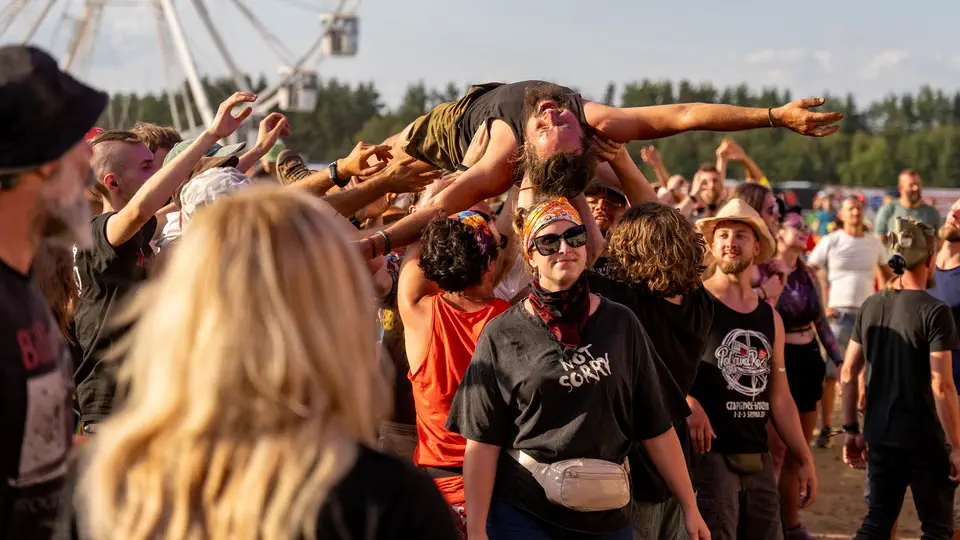
- Festival life also continues beyond the official stages. Participants organise their concerts, sing-alongs, meetings, games and small events around their tents. As a result, the giant field resembles a temporary city created by the festival-goers themselves.
- One song particularly strongly associated with the festival is “It’s so good to see you.” by the band Tabu. The organisers describe it as the Festival Song of All Time, and participants sing it, among other occasions, when the gates of the event are opened.
- Pol’and’Rock Festival is more than a series of concerts. The organisers combine music with social activity, education, volunteering and the idea of helping one another. This is why many participants return to the festival not only for the performers, but above all for the atmosphere and the people they can meet there.