Retiro Park in Madrid is one of those places that instantly lifts your spirits. You walk through one of its gates, leaving the busy streets, blaring car horns and elegant town houses behind, and suddenly Madrid seems to slow down. It does not disappear completely – this is still the Spanish capital, after all – but it becomes gentler. More suited to leisurely walks. More human.
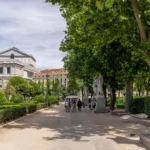
I really liked Retiro. Not only because it is green, spacious, and beautifully maintained, but because it offers much more than an ordinary city park. It is part royal garden, resembling the much smaller Jardines del Cabo Noval, part open-air museum and part stage for artists, runners, families, couples and solitary readers with books tucked under their arms. The park covers more than 125 hectares and contains over 15,000 trees, making it a genuine refuge from the sun during Madrid’s scorching summer days.
The history of Retiro Park – from royal residence to a park for everyone
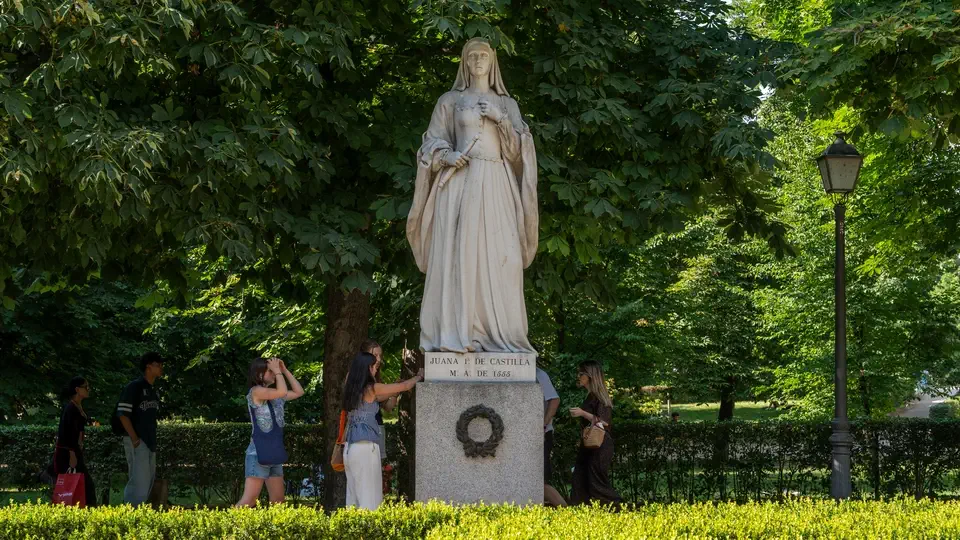
The park’s full name is Parque del Buen Retiro, which roughly translates as the “Park of Pleasant Retreat”. It is difficult to imagine a more appropriate name. Its origins date back to the period when Madrid was becoming an increasingly important centre of Spanish power. The Buen Retiro Gardens were created in the 17th century by King Philip IV as a place of relaxation for monarchs from the Habsburg dynasty. It was a royal setting for entertainment, leisure and courtly splendour, rather than a park intended for ordinary residents.
The Buen Retiro Palace complex was also built here during the 17th century. Very little remains of the palace’s former grandeur today, but you need to imagine that this was once a place filled with ceremonies, performances, receptions, and court life. The gardens hosted plays, musical events and gatherings of the social elite. Back then, this was certainly not somewhere you would see a person in shorts eating a sandwich on a bench. It was an exclusively royal world, carefully separated from the everyday life of the city.
Wars and political upheavals treated the estate rather brutally. It suffered particularly extensive damage during the Napoleonic Wars. French troops used the park and the remains of its palace buildings as a military base, destroying part of the complex in the process. Over time, the park was restored, altered and adapted to meet changing needs. In 1868, following the revolution and the fall of Queen Isabella II, the gardens became public property. From that point onwards, they truly began to serve the people of Madrid.
Today, Retiro Park forms part of the Paisaje de la Luz, or “Landscape of Light”, which was added to the UNESCO World Heritage List in 2021. This protected area encompasses Retiro Park, Paseo del Prado and the Jerónimos neighbourhood. Its importance comes from the remarkable combination of culture, science, art, and nature found in the heart of the city. If you would like to learn more about the history of the park or other parts of Madrid, you should visit the Museum of the History of Madrid. Here you will find answers to many of your questions, as well as an enormous amount of fascinating information about the city.
First impressions – why I liked Retiro so much
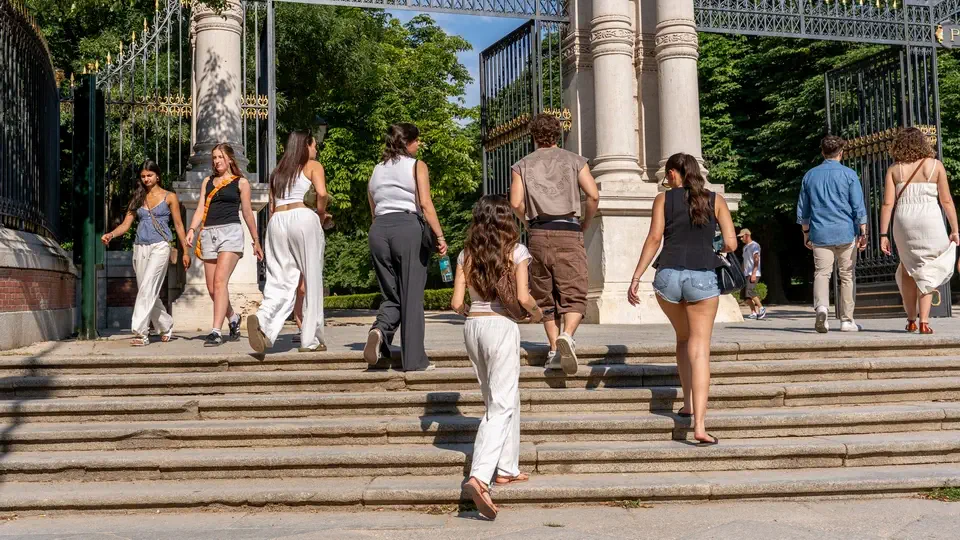
It is best to enter Retiro Park without rushing. Do not treat it as just another attraction to tick off between the Prado Museum and Puerta de Alcalá. It is an easy mistake to make in Madrid because there is so much to see and usually far too little time. I recommend allowing at least half a day for Retiro. Better still, visit it twice – once in the morning, when the park wakes up alongside its runners, and again in the early evening, when the light becomes softer and the area around the lake starts to resemble a picture postcard.
What I liked most was that Retiro does not feel lifeless or overly museum-like. It is genuinely alive. Someone is practising yoga. Someone else is playing the guitar. Another person is walking their dog. Children stare eagerly at the ducks, couples take photographs beside the Crystal Palace, and older residents of Madrid sit peacefully on the benches as though they have known every path since childhood.
The Great Pond and the monument to Alfonso XII
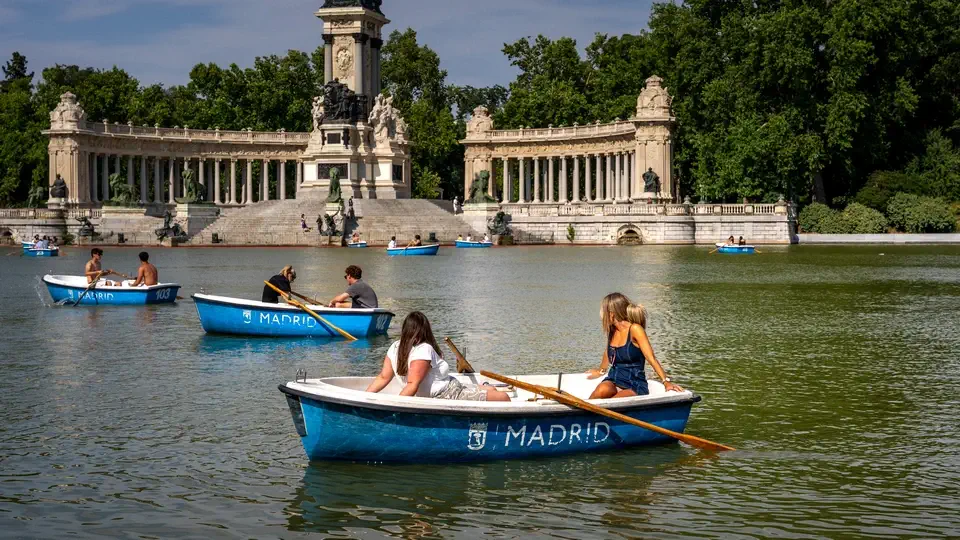
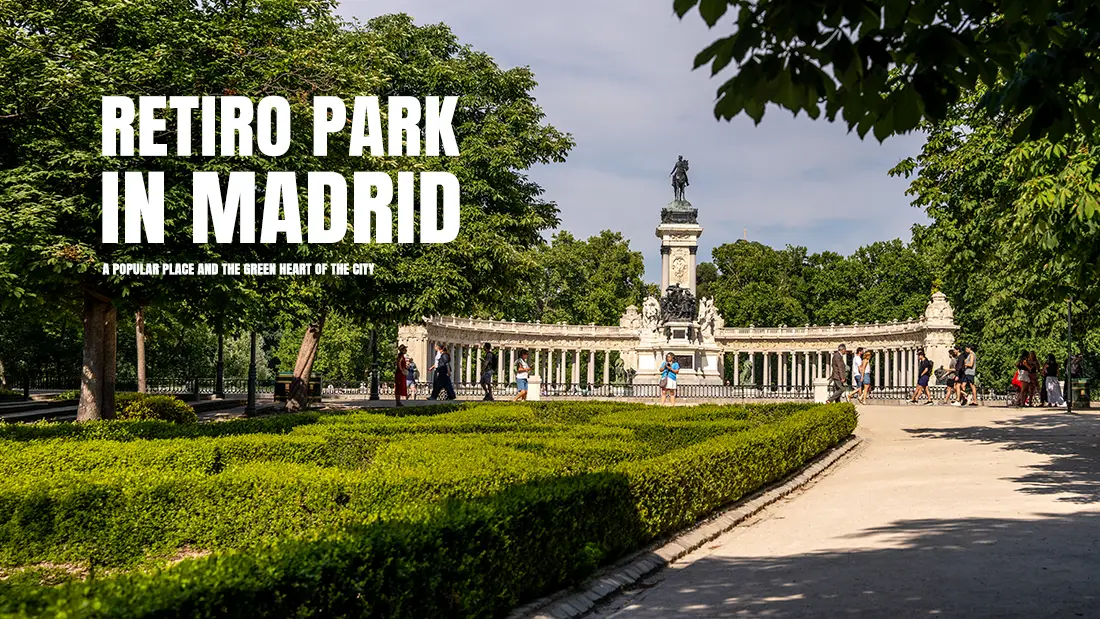
The most recognisable attraction in the park is Estanque Grande, or the Great Pond. This is where you will see rowing boats, reflections of trees shimmering on the water and the monumental statue of King Alfonso XII. This part of Retiro is the most photogenic and also the most crowded, but it is still worth visiting. The best time to come is early in the morning or shortly before sunset.
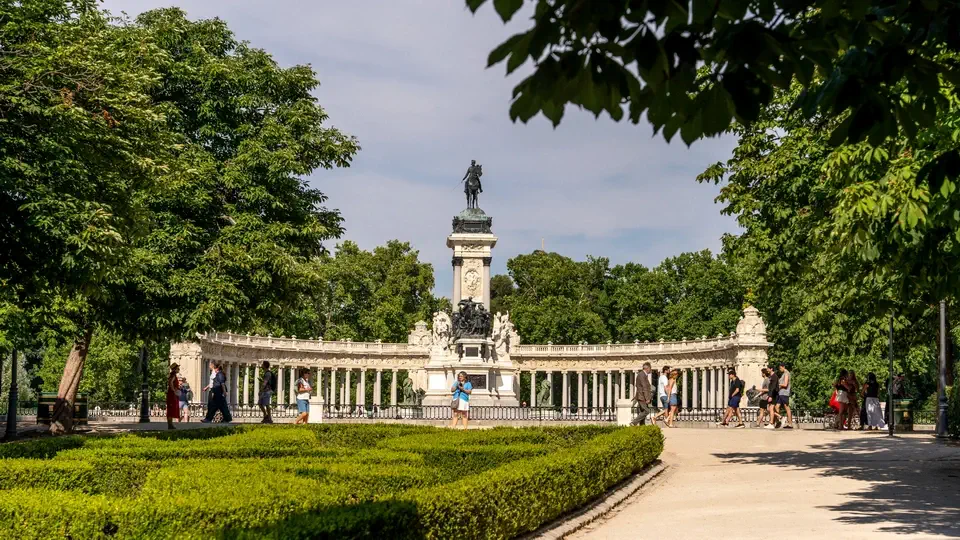
The monument to Alfonso XII stands beside the pond and was officially unveiled in 1922 by his son, Alfonso XIII. Its design was inspired by grand European monuments, including examples found in Rome and Berlin. It is certainly impressive when seen up close, although I think it looks most beautiful from the opposite side of the pond, where you can admire the whole structure with the water and rowing boats in the foreground.
You can hire a rowing boat here. According to current tourist information, a 45-minute boat rental costs €6 from Monday to Friday and €8 at weekends and on public holidays. It may not be the ideal attraction for anyone looking for peace and quiet, as things can become cheerful and slightly chaotic out on the water, but that is precisely part of its charm.
The Crystal Palace – Retiro’s most beautiful corner
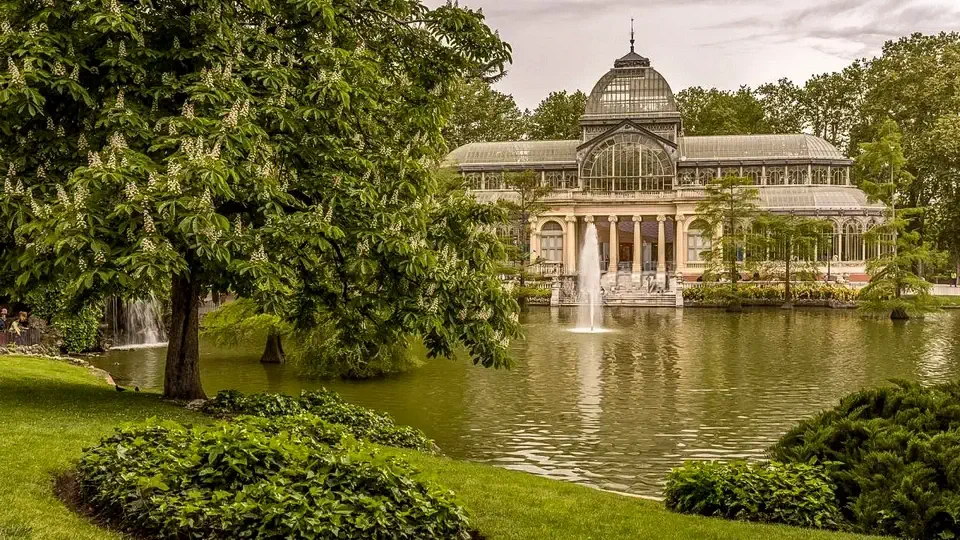
If I had to choose just one place in Retiro Park that you absolutely should visit, it would be Palacio de Cristal, or the Crystal Palace. This glass-and-metal pavilion was built in 1887, originally serving as a type of conservatory for plants brought from the Philippines. Today, it is regarded as one of the finest examples of iron-and-glass architecture in Spain.
The palace stands beside a small pond, surrounded by trees, and looks rather like the dream of an architect who was completely fascinated by light. When sunshine streams through its glass walls, the entire interior seems to become almost weightless. Outside, the best thing to do is find a spot beside the water, sit down and simply admire the view. It is one of those places where almost everyone takes photographs, yet even that does not spoil its atmosphere.
The Crystal Palace and the nearby Velázquez Palace are currently used as exhibition spaces by the Reina Sofía Museum. Both buildings were designed by Ricardo Velázquez Bosco towards the end of the 19th century as exhibition pavilions. In practical terms, this means that while walking through the park, you can suddenly step straight into the world of contemporary art. Admission is either free or available for a small charge, depending on the current exhibition and entry arrangements.
Retiro Park in Madrid – Velázquez Palace, Casa de Vacas and culture in the park
Retiro Park is not only about leafy paths and fountains. It also contains several cultural venues. Palacio de Velázquez is used as an exhibition space, while Casa de Vacas is a cultural centre hosting exhibitions, concerts and theatrical performances. Interestingly, Casa de Vacas was built in 1874 as a cowshed and dairy before later becoming a popular entertainment venue in Madrid.
That is precisely what makes Retiro so special. You may set off intending to take a simple walk, only to encounter royal history, exhibition architecture, theatre, contemporary art and old urban stories along the way. The park never forces any of this upon you. It simply allows you to discover everything at your pace.
The Fountain of the Fallen Angel – the park’s most mysterious place
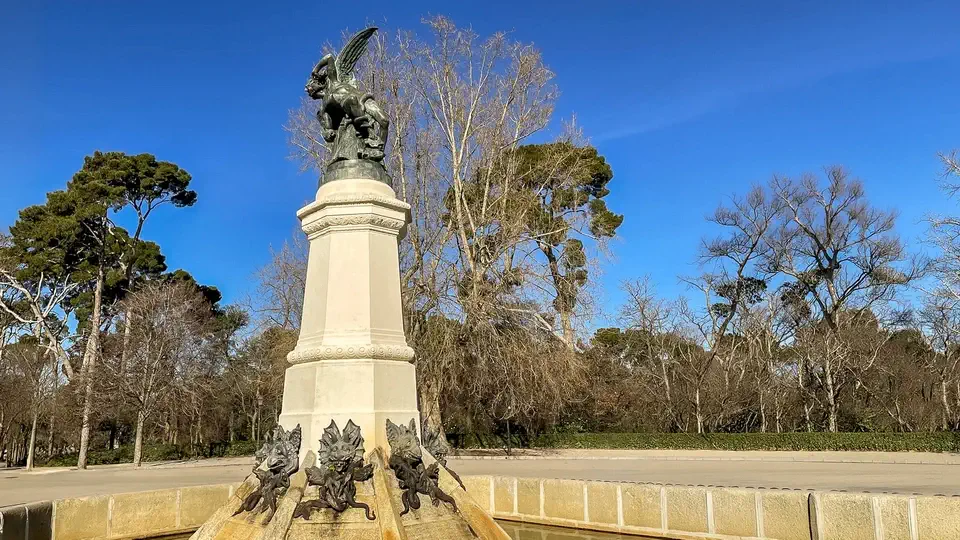
One of the most unusual places in Retiro is Fuente del Ángel Caído, or the Fountain of the Fallen Angel. It depicts the moment of Lucifer’s fall and has attracted lovers of urban legends for many years. Madrid’s official tourism website claims that the sculpture stands 666 metres above sea level – a detail that immediately fires the imagination.
Some people say that it is one of the few monuments in the world dedicated to the fallen angel. Others add stories about the location’s strange energy, mysterious shadows seen at night, and unfortunate encounters beside the fountain. I tend to approach such tales with a healthy dose of scepticism, but I have to admit that there really is something unsettling about this sculpture. It is beautiful, dynamic and dark. It certainly does not look like an ordinary piece of park decoration.
The legend surrounding its elevation of 666 metres acts as a magnet for tourists, although it is worth remembering that much of Madrid lies at a similar height above sea level. Even so, the symbolism is simply too good for residents and tour guides not to make use of it. And why not? Every proper park needs a dark story of its own.
The rose garden, ancient trees and quieter paths
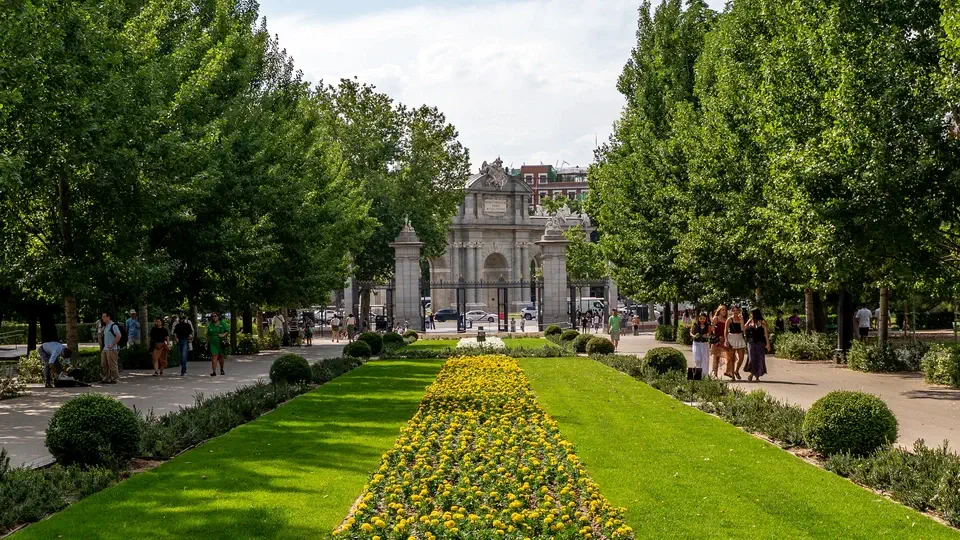
If you want to escape the crowds, move away from the main pond. Retiro Park is large enough for you to find quieter paths, less crowded benches and places where birdsong becomes the dominant sound within just a few minutes. La Rosaleda, the rose garden, is particularly pleasant. It looks most beautiful while the roses are in bloom, but even outside the flowering season, it remains a lovely place for a peaceful walk.
It is also worth paying attention to the park’s ancient trees. One of them is an ahuehuete, or Montezuma cypress, which may have been growing here since around 1630, according to Madrid’s tourist information. There is also an ancient olive tree believed to be more than 600 years old. Details like these turn a walk through Retiro into more than just a pleasant experience – they make it a journey filled with small discoveries.
Events and festivals in Retiro Park
The best-known event held in Retiro is Feria del Libro de Madrid, the Madrid Book Fair. It is one of the city’s most important literary events. Madrid’s official tourism website highlights the long-standing relationship between the fair and Retiro Park, which has become part of the cultural memory of several generations of readers.
The fair usually takes place from late May until early June. In 2026, it was scheduled to be held in Retiro from 29 May to 14 June, with the event’s official website providing separate opening hours for weekdays and weekends. If you happen to be in Madrid during this period, be prepared for crowds, queues for autographs, an enormous number of books and a wonderful atmosphere. For me, it is one of the best opportunities to see how local people truly use and enjoy the park.
Retiro also hosts events connected with the celebrations of San Isidro, Madrid’s patron saint. The city lists the park as a venue for popular attractions, including fireworks displays held as part of the festivities. On top of that, there are exhibitions in the Crystal Palace, Velázquez Palace and Casa de Vacas, weekend puppet shows, smaller concerts and outdoor events.
Is Retiro Park worth visiting?
Definitely. For me, Retiro Park is one of the most enjoyable places in Madrid. It is not merely an addition to the city’s grand museums and palaces but a major attraction in its own right. You can visit for an hour, although it is just as easy to spend half a day here without becoming bored. The shade provided by its numerous trees is particularly welcome during hot weather – and I know what I am talking about, as we explored Madrid in temperatures exceeding 35°C!
What I like most about Retiro is the way it combines elegance with everyday life. On one side, you have royal history, monuments, palaces and UNESCO recognition. On the other, you see children eating ice cream, people roller-skating, musicians performing, families having picnics and ordinary conversations taking place on park benches. This is the Madrid I like most. Not the formal, stiff and monumental version, but the warm, green and slightly lazy one.
Retiro Park in Madrid – practical advice for visitors
The easiest way to reach Retiro Park is by metro. The most convenient stations are Retiro, Ibiza, Estación del Arte, Atocha and Príncipe de Vergara. Madrid’s official tourism website also lists numerous buses stopping near the park, so getting there should not present any difficulty.
Admission to the park is free. Retiro is open every day, usually from 6:00 am until midnight between April and September, and from 6:00 am until 10:00 pm between October and March. Bear in mind, however, that it may be partially or completely closed during high winds or dangerous weather conditions. Madrid’s authorities announce such measures on information screens beside the entrances and through official public notices.
My advice? Visit in the morning or late afternoon during summer. Madrid can become extremely hot in the middle of the day and, although Retiro offers plenty of shade, not every path remains cool. Bring water, wear comfortable shoes and do not plan your visit on the assumption that you can simply rush through the park. Retiro is best enjoyed slowly.
If you are short on time, follow this route: Puerta de Alcalá – the Great Pond – the monument to Alfonso XII – the Crystal Palace – the Fountain of the Fallen Angel – La Rosaleda. It will give you an excellent overview of the park. If you have more time, wander along the quieter side paths, visit Casa de Vacas, sit on a bench and watch the people passing by. Those are the moments when Retiro Park reveals its true character.
The mysteries and legends of Retiro Park
The most famous legend is, of course, the one associated with the Fallen Angel. The story of a statue of Lucifer standing exactly 666 metres above sea level sounds like a ready-made film script. Some believe it to be a coincidence, others see it as a hidden symbol, while a few simply regard it as an exceptional story for tour guides. I treat it as a brilliant urban legend that adds a little spice to the park.
Another of Retiro’s mysteries is connected with the Napoleonic era. The park was not always a peaceful place for leisurely walks. During the Peninsular War, French troops used the site. Subsequent archaeological investigations uncovered traces of former military facilities, pieces of weaponry and other remains connected with the fighting. As you walk peacefully along the paths today, it is difficult to imagine that gunshots may once have echoed through the same grounds.
There is also a tale about the old Montezuma cypress, which is said to have survived those difficult times because Napoleon’s soldiers placed a cannon among its branches. It sounds rather unlikely, but these are precisely the kinds of stories that stay in your memory after a visit. Madrid’s official tourism website also mentions this anecdote in its description of the ancient tree.
Retiro Park in Madrid – facts, information and interesting details
- Retiro Park was once a royal garden. Before it became a public park, it served Spanish monarchs as a place for relaxation, entertainment and lavish court celebrations.
- Retiro Park forms part of a UNESCO World Heritage Site. Since 2021, Retiro and Paseo del Prado have together created the “Landscape of Light”, the first UNESCO World Heritage Site located within Madrid itself.
- The Crystal Palace was built for an exhibition about the Philippines. It was constructed in 1887 as a pavilion for exotic plants and remains one of the park’s most beautiful architectural treasures.
- The park contains the famous Fountain of the Fallen Angel. It attracts visitors not only because of its artistic value but also due to the legend that it stands exactly 666 metres above sea level.
- The Great Pond is one of the most photographed places in Madrid. Its rowing boats, the monument to Alfonso XII and reflections shimmering on the water create the classic image of Retiro.
- Casa de Vacas was once a dairy. Today, the former cowshed and milk shop operates as a cultural centre hosting exhibitions, concerts and theatrical performances.
- Retiro has its own puppet theatre. Teatro de Títeres stages weekend performances and is one of the most family-friendly attractions in the park.
- More than 15,000 trees grow in the park. Their shade makes Retiro one of the best places to rest and escape the heat in central Madrid.
- Retiro Park is an excellent place for runners. Early in the morning, you will see many residents beginning their day with a training session among its peaceful avenues.
- The Madrid Book Fair takes place in the park. This major literary event has been closely associated with Retiro for decades and attracts authors, publishers, and readers from across Spain.
- The Crystal Palace has hosted important political events. In 1936, Manuel Azaña was proclaimed president of the Second Spanish Republic inside the pavilion.
- You can explore Retiro with an audio guide. In 2026, a project featuring audio guides and interactive maps covering 38 locations around the park was launched.
- Traces of the former royal menagerie have survived within the park. The restored Foso de los Monos serves as a reminder of the period when exotic animals were kept in Retiro.
- It is an ideal place to take a break after visiting Madrid’s museums. Retiro lies close to the Prado, Reina Sofía and Thyssen-Bornemisza museums, making it easy to combine culture with a relaxing walk.
- Retiro Park is beautiful at any time of year. Its gardens bloom in spring, its trees provide shade in summer, its autumn colours are magnificent, and in winter, it becomes quieter and feels more local.
- I also invite you to read our other articles related to Madrid:
- Mercado de San Miguel in Madrid with lovely tapas is one of those places in Madrid that is difficult to miss.
- Museum of the History of Madrid (Museo de Historia de Madrid).
- The Museum of Romanticism in Madrid is not one of those places that tries to attract visitors.
- 3 days in Madrid.
- Plaza Mayor is one of those places that seems to appear in almost every photograph of Madrid.
- Plaza de Oriente is not a vast park where you can spend hours wandering along woodland paths.
- Jardines del Cabo Noval are easy to overlook.
- Puerta del Sol is neither the most beautiful nor the most atmospheric square in Madrid.