Marseille in 3 Days is a great idea, provided you plan your visit properly—and the article below will help you do just that.
Marseille is a city that positively surprised me. I had heard a lot about dangerous Marseille, problems with rubbish, homeless people and drug addicts. Of course, all of these problems do exist in the city, but there are so many attractions, remarkable historic sites and interesting places that you will soon forget about the problems you may encounter on the streets. I would recommend planning at least three days or a full weekend for Marseille. You can, of course, arrive in the morning, see the Old Port, climb to Notre-Dame de la Garde and leave again in the evening, but then you will see little more than the places featured on the covers of tourist guidebooks.
Marseille in 3 Days – Itinerary at a Glance
If you have three days to explore Marseille, you can put together a genuinely interesting itinerary. You will see the oldest part of the city, the Old Port, Le Panier, the monumental La Major Cathedral, MUCEM, Fort Saint-Jean, the Basilica of Notre-Dame de la Garde, Palais Longchamp and the remarkable replica of the prehistoric Cosquer Cave. I would use the third day for the coast, the Calanques, or a boat trip towards Château d’If and the Frioul Islands.
If you are planning a weekend in Marseille, you can use the itinerary below as a ready-made route. If you have less time, simply choose the most important sights from the first and second days.
The following itinerary is one I put together myself and, in my opinion, it works very well. You will see a lot without exhausting yourself like a horse pulling a cart full of tourists up to Morskie Oko. Three days in Marseille give you plenty of opportunities, so treat the list below as a starting point and you are welcome to adapt it to your plans.
- Day 1: Vieux-Port → Le Panier → La Major → MUCEM → Fort Saint-Jean → Notre-Dame de la Garde → evening by the sea.
- Day 2: Palais Longchamp → Musée des Beaux-Arts → Cosquer Méditerranée → Maison Yellow → Vieux-Port area.
- Day 3: Calanques or Château d’If and the Frioul Islands → La Corniche → Vallon des Auffes.
This itinerary allows you to see both the most important sights in Marseille and places that reveal a more local side of the city. Below, you will find a more detailed plan with the attractions arranged throughout each day.
Marseille in 3 Days – Day 1: Old Port, Le Panier, MUCEM and Notre-Dame de la Garde
The first day should be devoted to the most characteristic part of Marseille. This is where you can best see the city’s history and its deep connection with the Mediterranean. It is quite a long walk, but believe me, it is worth it.
- Vieux-Port – start at the Old Port – In the morning, head to Vieux-Port, Marseille’s Old Port. It is the perfect place to begin getting to know the city. On one side you have the sea and boats, while on the other there is the dense urban fabric of the centre, with the distinctive silhouette of Notre-Dame de la Garde rising above the city. I would not rush here. Walk along the waterfront, have a look at the fish market and simply spend some time watching the city come to life. The Old Port is also a great place for breakfast or your first coffee of the day. If you would like to learn more about the city’s history and its main sights before your trip, have a look at our main guide, Marseille – what to see and how to plan your visit.
- Le Panier – the oldest Marseille – From the Old Port, I would walk towards Le Panier. This is Marseille’s oldest district and one of those places where it is better not to follow the map too closely. Narrow streets, stairways, little squares, colourful façades, murals and small shops make wandering around much more enjoyable than ticking sights off a list. I would allow around 1–2 hours for Le Panier, with enough time for a coffee or a small bite to eat. I would not try to explore the entire district rushing because its greatest attraction is the atmosphere itself.
- La Major – the monumental cathedral by the sea – From Le Panier, make your way towards the waterfront. On the way, you will come across Cathédrale Sainte-Marie-Majeure, better known as La Major. It is one of Marseille’s most distinctive buildings. The alternating light and dark stone and the enormous bulk of the cathedral immediately catch your eye. Allow around 30–45 minutes to visit the interior.
- MUCEM and Fort Saint-Jean – From La Major, continue towards MUCEM. This is one of the places I would definitely include during a weekend in Marseille, even if you are not particularly interested in museums. The building itself is an attraction. Its modern, openwork structure stands almost directly above the water, creating a fascinating contrast with the historic buildings of the city. Right next to it is Fort Saint-Jean, connected to MUCEM by a footbridge. I would allow around 2–3 hours for the whole complex, although you will obviously need more time if you want to explore the exhibitions in detail. It is also a superb place to stop for lunch.
- Cosquer – an option for those looking for something truly unusual – If you still have plenty of time on your first day, you could add Cosquer Méditerranée here. Personally, however, I would leave the Cosquer Cave for day two. It is very close to MUCEM and can easily be combined with other attractions around the port. It is worth knowing that you are not visiting the actual cave, but a remarkably detailed reconstruction. The original lies underwater near the Calanques and is inaccessible to ordinary visitors. The experience itself is nevertheless genuinely fascinating.
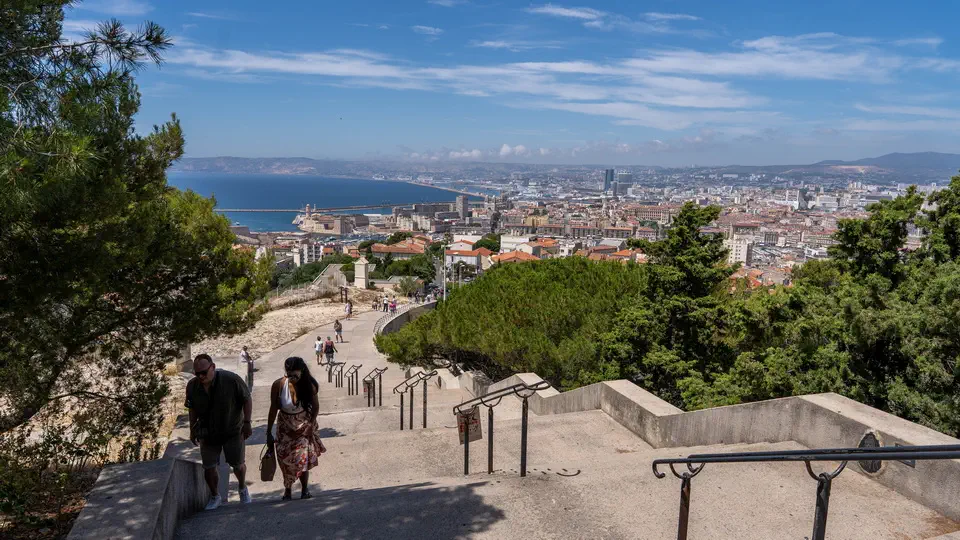
- Notre-Dame de la Garde – finish the day with the best view – In the afternoon, make your way up to Notre-Dame de la Garde. I would not attempt the climb on foot in the middle of a hot day. If you enjoy uphill walks and have the energy, certainly do it, but otherwise take a bus or another form of transport. The basilica itself is beautiful, but for me, the main reason to come here is the panorama. From the top you can see Vieux-Port, the Frioul Islands, Château d’If, the sea and a massive part of Marseille. Inside, make sure you look up at the models of ships hanging from the ceiling. They are votive offerings connected, among other things, with sailors and the sea.
- Evening – Vieux-Port or the sea – After coming down from the hill, head back towards the Old Port. This is a good time for dinner and for trying some local food. If you would like to discover more of Marseille’s flavours, make sure you try a bouillabaisse, panisses or at least some local seafood.
Marseille in 3 Days – Day 2: Palais Longchamp, Museums, Cosquer and Marseille Through Food
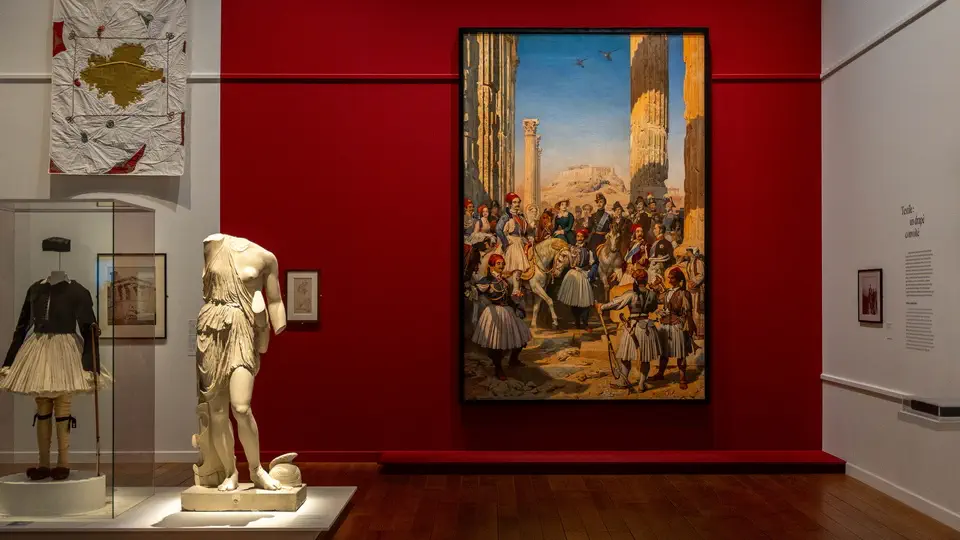
On the second day, we will move slightly away from the most obvious part of the city, but that certainly does not mean it will be any less interesting.
- Palais Longchamp – In the morning, head to Palais Longchamp. It is one of those Marseille landmarks that is easy to miss if you restrict yourself to the port area. The monumental building, with its enormous fountain, looks almost like a palace built for French aristocracy. Its history, however, is closely connected with water and the gigantic investment that significantly improved Marseille’s water supply in the nineteenth century. It is also worth walking around the complex from the park side.
- Musée des Beaux-Arts – If you enjoy art, stay here a little longer. One wing of Palais Longchamp houses the Musée des Beaux-Arts, or Museum of Fine Arts. I would not regard it as an essential stop on a first visit to Marseille, but if you have three days, it is certainly worth making some time for it. What I find particularly interesting is that the museum introduces visitors not only to major European art, but also to artists connected with Provence and Marseille. Allow around 2–3 hours for Palais Longchamp and the museum.
- Cosquer Méditerranée – a journey ten of thousands of years into the past – Next, return towards the port and visit Cosquer Méditerranée. This is one of those attractions that might seem a little too touristy before your visit. I had the same impression myself. After seeing it, I changed my mind. The cave replica has been created with extraordinary attention to detail. Inside, you will see prehistoric paintings, engravings and rock formations recreated because of documentation from the original cave. The most fascinating thing is that the original cave is now located around 37 metres below the surface of the Mediterranean Sea. Allow approximately two hours for Cosquer.
- Maison Yellow – a different side of Marseille – After Cosquer, walk towards La Joliette and visit Maison Yellow – Musée de l’Anis. I would not travel across half of Marseille just to see this museum, but here it is conveniently located along the route. Maison Yellow tells the story of anise, pastis, advertising, and the culture of southern France. It is small and can be visited relatively quickly, which is precisely why it fits so well into a three-day itinerary.
- Evening – dinner and the Old Port – After the second day, I would not plan any more major attractions. Marseille is also a city that should simply be experienced. Sit down in a restaurant, try some local food, walk along Vieux-Port in the evening and watch how the city changes after sunset.
Marseille in 3 Days – Day 3: Calanques, Château d’If or the Coast?
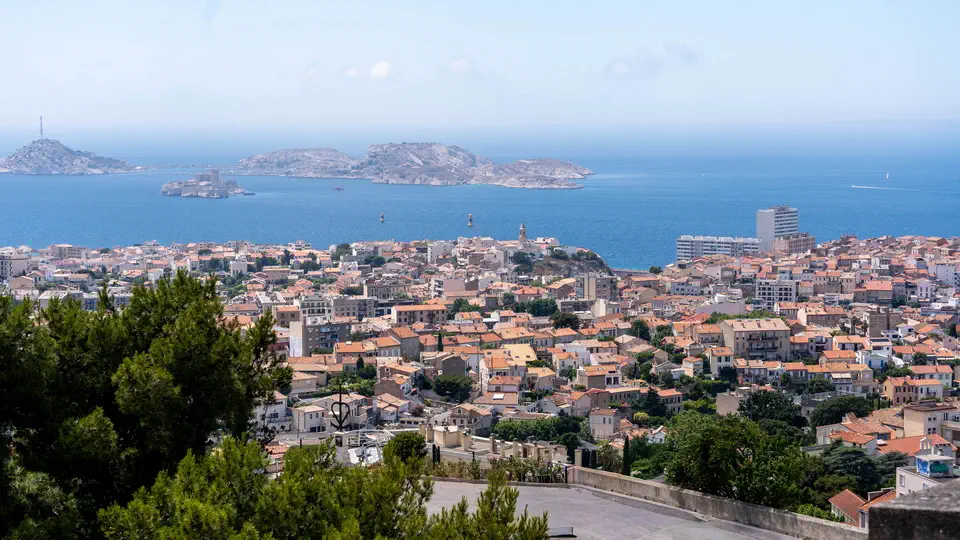
I would approach the third day slightly differently. You have two main options here, and I would not try to do both on the same day. Marseille is a large city, and each of these excursions deserves enough time of its own. If you enjoy nature and walking, choose the Calanques; if you prefer history, the sea and boat trips, choose Château d’If and the Frioul Islands.
- Option 1 – Parc National des Calanques – For me, this is one of the best ways to finish a three-day visit to Marseille. After two days among historic buildings, museums and city streets, you suddenly find yourself surrounded by limestone cliffs, secluded coves and turquoise water. Parc National des Calanques stretches between Marseille and Cassis and is one of the most remarkable landscapes in southern France. You can choose a walking route to one of the calanques or take a boat trip. Before travelling, always check the current access rules. During the summer, access to parts of the area can be restricted when the fire risk is high. If you are planning a hike, start early. The sun can be very strong in this part of France, while many of the trails offer little shade.
- Option 2 – Château d’If and the Frioul Islands – If you would rather be on the water than in the mountains, take a boat trip to Château d’If. The fortress on the small island is one of Marseille’s best-known symbols. Its fame is largely due to Alexandre Dumas, who placed the prison of Edmond Dantès here in The Count of Monte Cristo. The setting itself is impressive. Marseille looks completely different from the sea than it does from the streets of the city centre. You can combine your visit to Château d’If with the Frioul Islands. There you can walk along rocky paths, discover little coves and fortifications, and simply get away from the city for a while. It is a particularly good option on a sunny day with little wind.
Day 3 – The Second Part of the Route: La Corniche and Vallon des Auffes
Whichever option you choose, whether the Calanques or Château d’If, I would return towards the city in the late afternoon and finish your three days in Marseille along La Corniche. This coastal road allows you to discover a calmer side of the city. There are beaches, little coves, viewpoints and small harbours along the way. You do not need to walk the entire route; the important thing is to get here in the late afternoon.
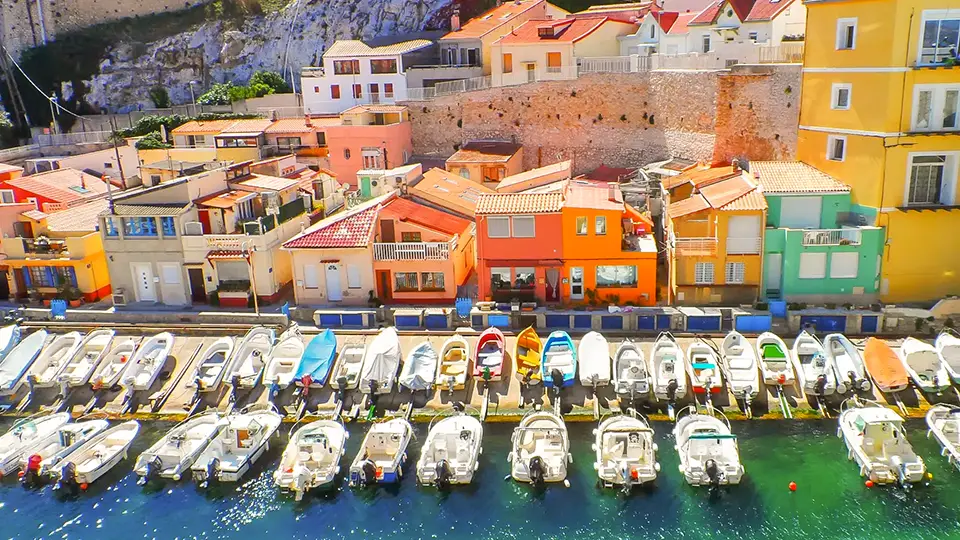
Finally, stop at Vallon des Auffes. This small fishing harbour is tucked between the rocks and the buildings of the city. Small houses, boats, a stone bridge and the sea create an atmosphere that is wholly different from the monumental Vieux-Port. The best time to arrive is shortly before sunset. I would sit down in one of the restaurants, order some fish or seafood and simply finish the journey without checking another attraction off the map.
Marseille at the Weekend – How to Shorten This Itinerary
If you only have a weekend in Marseille, I would not try to do everything.
- Friday – arrival – If you arrive in the afternoon or evening, walk around Vieux-Port, have dinner and see Marseille after dark.
- Saturday – the main sights
- Morning: Vieux-Port → Le Panier → La Major → MUCEM → Fort Saint-Jean
- Afternoon: Notre-Dame de la Garde
- Evening: Vieux-Port or Vallon des Auffes
- Sunday – choose one direction
- If the weather is good and you fancy some nature: Calanques
- If you prefer history and the sea: Château d’If + Frioul
- If the weather is poor: Palais Longchamp → Musée des Beaux-Arts → Cosquer Méditerranée
This approach gives you the flexibility to adapt your itinerary to the weather instead of stubbornly following a schedule prepared weeks in advance.
Marseille in 3 Days – Where to Stay

For a three-day stay, I would choose accommodation around Vieux-Port, Le Panier or La Joliette. We stayed near Le Panier and were happy with the choice. The biggest advantage is that you can start most days without having to travel right across the city. If you are travelling by car, make sure you check the parking situation at your hotel carefully.
You do not need a car to explore central Marseille. In fact, it can often be more of a hindrance than a help, and personally I would avoid driving into the city centre. Vieux-Port, Le Panier, La Major, MUCEM and Fort Saint-Jean can all be explored comfortably on foot. For attractions further away, I would use public transport.
What and Where to Eat During 3 Days in Marseille?
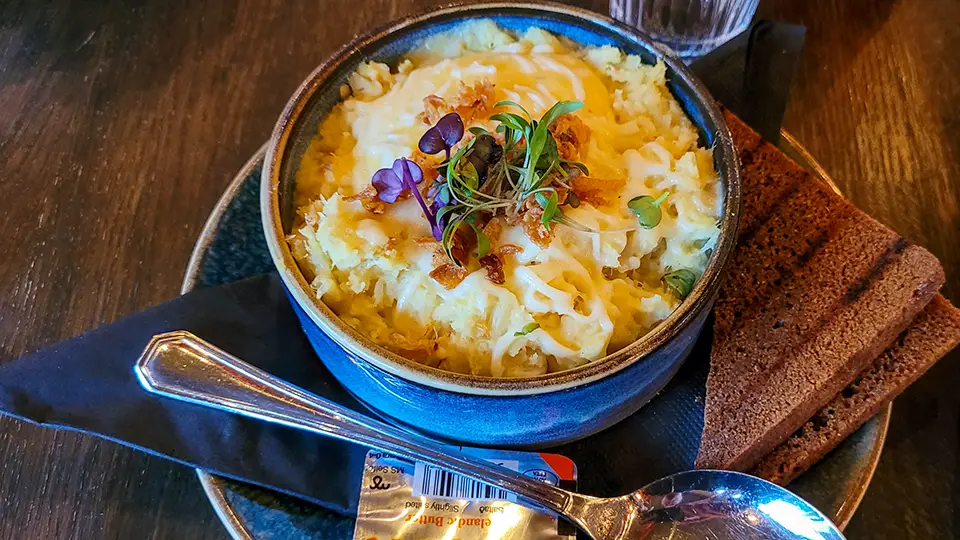
Marseille is one of those cities where I would plan time not only for sightseeing, but also for eating. The city’s cuisine is strongly connected with the Mediterranean: fresh fish, seafood, olive oil, garlic, herbs and saffron are everywhere. The most famous dish is, of course, bouillabaisse, the traditional Marseille fish stew. It began as a simple fishermen’s dish made using less valuable fish, while today it has become something of a culinary ritual in good restaurants. What would I recommend trying in Marseille? There is a lot to choose from, but I would not miss:
- Bouillabaisse – the signature dish of Marseille. It is an aromatic fish and seafood broth, usually served with toasted bread, garlic and rouille sauce.
- Panisses – fried pieces made from chickpea flour. Simple, crisp, and perfect as a quick snack.
- Soupe de poissons – an intensely flavoured fish soup, often served with toast and rouille.
- Aïoli – a Provençal garlic and olive oil sauce, commonly served with fish, vegetables, and seafood.
- Pieds et paquets – a traditional, hearty dish made with offal and lamb’s trotters. It is mainly for those who want to explore a more unusual side of local cuisine.
- Navettes de Marseille – distinctive, firm little boat-shaped biscuits, usually flavoured with orange blossom water.
Now that you know what to order, you still have to choose a restaurant. Below are some places I have visited with friends, together with my impressions. I have divided them into more expensive and cheaper options, although cheaper certainly does not mean worse.
- More expensive and suitable for a special occasion
- AM par Alexandre Mazzia – a creative cuisine restaurant and one of the best-known gastronomic addresses in Marseille. Michelin places it in the highest price category.
- Restaurant Michel – a classic address for anyone wanting to try traditional bouillabaisse. The restaurant has been operating since 1946 and is located near Catalans Beach.
- Chez Fonfon – in the picturesque Vallon des Auffes, this restaurant specialises in fish and bouillabaisse and has a long family tradition dating back to 1952.
- Le Miramar – a popular address at Vieux-Port, also known for its bouillabaisse. Keep in mind that traditional bouillabaisse in Marseille is not a cheap dish, and the best-known restaurants can involve a significant expense.
- Cheaper and more relaxed
- Maison Charlie – a small, popular place around Le Panier, good for breakfast, a light lunch or a quick meal during the day.
- Le Bistro Du Panier – a relaxed restaurant in one of the most atmospheric parts of Marseille. A good option if you would rather not spend a lot on dinner.
- Bouillabaisse TURFU – an interesting option for anyone wanting to try a modern take on Marseille’s most characteristic dish without choosing a costly restaurant. I had a delicious fish soup here, so good that I came back the following day.
- Sur le Pouce – an inexpensive Tunisian restaurant that shows just how Mediterranean and multicultural contemporary Marseille really is.
My advice: if this is your first time in Marseille, I would not turn every meal into an expensive dinner. One evening is worth reserving a table for a good bouillabaisse, while the other meals can be much more casual – panisses, fresh fish, local snacks or a small bistro allows you to experience the everyday character of the city much better. Marseille’s official tourist information lists dozens of places serving bouillabaisse, so there is certainly no shortage of choice.
Marseille in 3 Days – A Few Practical Tips
- Do not try to explore everything on foot – The centre is excellent for walking, but Marseille is large and quite hilly. I would use public transport for longer distances. I used hop-on hop-off buses that operate around the city throughout the day, which I found very convenient and reasonably priced, especially because you can get on and off along the entire route.
- Save Notre-Dame de la Garde for good weather – The panorama is one of the basilica’s greatest attractions. It is still worth going inside on a cloudy day, but with good visibility, the view is on another level.
- Buy tickets for popular attractions in advance – This is particularly important for Cosquer Méditerranée and boat trips. When you only have three days, it is a shame to lose half a day arranging admission.
- Do not plan too many museums in one day – Marseille has plenty of them, but I do not come here to spend three days indoors. That is why I have mixed museums with walks, the port, and the sea in this itinerary.
- Start sightseeing early in summer – This is particularly important for the Calanques and Notre-Dame de la Garde. The midday sun can make longer walks considerably harder.
- Leave yourself some spare time – This is probably the most important piece of advice. Marseille is not a city that should be explored while constantly watching the clock. Stop for a coffee, pop into a small bakery, sit by the port and turn down a side street in Le Panier.
Are three days enough for Marseille? Yes, but after three days you will probably not feel that you have seen everything. And that is a good thing. In three days, you can see the most important historic sights, learn about the city’s history, visit several interesting museums, try Marseille’s cuisine and spend some time by the sea.
If you have a fourth day, I would use it for slower sightseeing or a longer trip around the Calanques. For me, this is the way Marseille makes the most sense. I would not treat the city as a list of attractions to tick off, but as a place where you need to spend some time. Because the greatest attraction of Marseille is not only Vieux-Port, MUCEM, Notre-Dame de la Garde or La Major. It is the city’s character – maritime, Mediterranean, noisy, multicultural and occasionally a little chaotic.