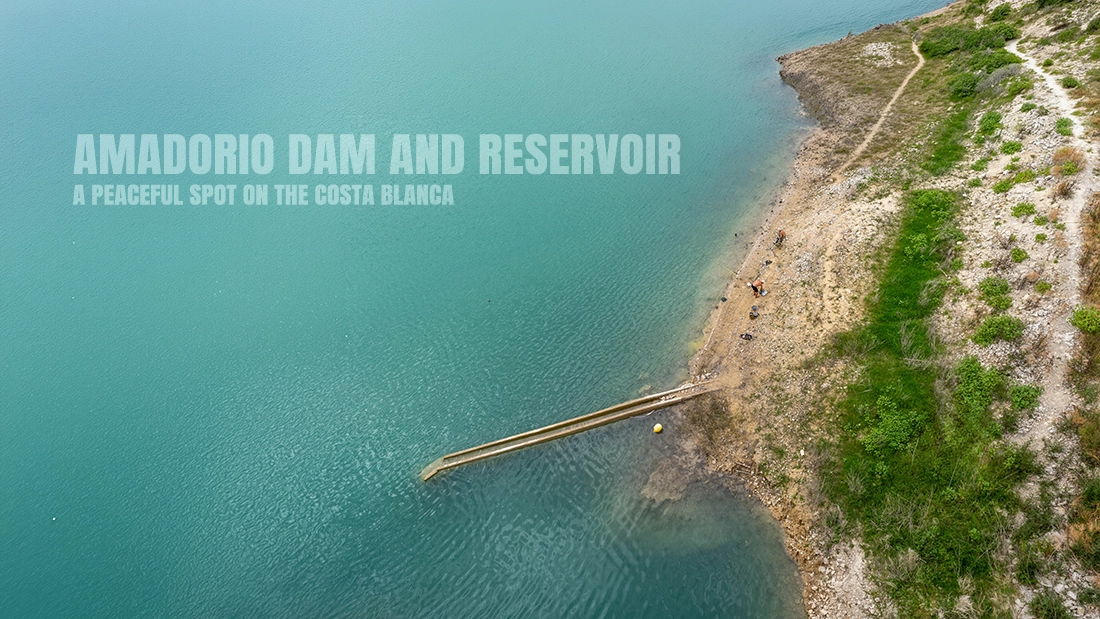
The Amadorio Dam and Reservoir are a lovely place to visit, particularly if you enjoy walking and spending time in nature.
As I have often mentioned, the Costa Blanca is best known for its beaches, seaside resorts and the blue waters of the Mediterranean. However, when travelling around this part of Spain, it is well worth venturing away from the beaten track to discover places where nature meets human ingenuity. One such destination is the Amadorio Dam and the reservoir it created, known as Embalse de Amadorio, in Alicante Province, not far from Villajoyosa and Orxeta.
I visited this area hoping to discover another side of the Costa Blanca. Instead of crowded beaches, I found an expansive stretch of water, dry hills and a peaceful landscape where it is easy to appreciate the natural surroundings. The reservoir makes an interesting destination for a short trip, but it also serves a much greater purpose. It stores precious water, supports the regional economy and provides a habitat for various wildlife.
Where is the Amadorio Dam?
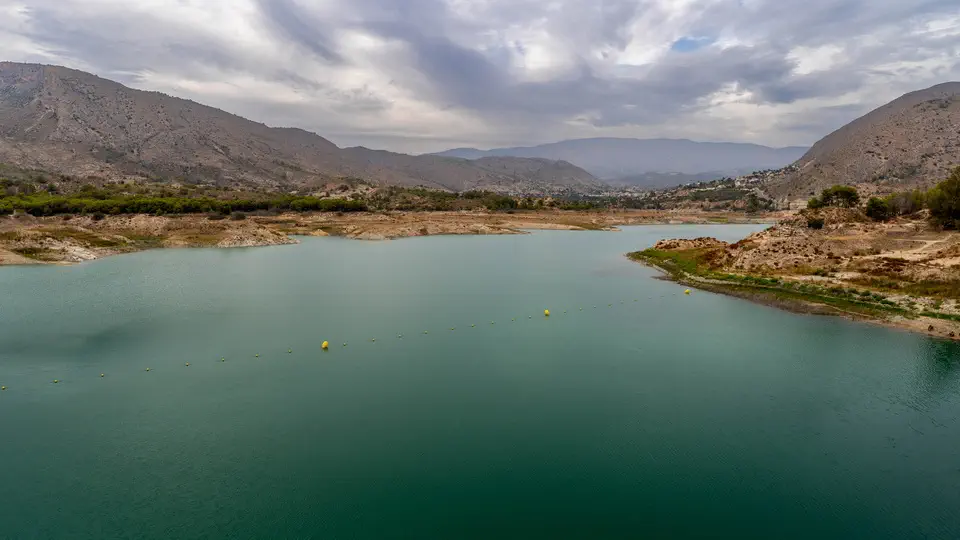
The Amadorio Dam lies in the Marina Baixa region of Alicante Province, a short distance from the Mediterranean coast. It is worth including in an itinerary around the Costa Blanca, especially if you want to see more than just the seaside towns during your holiday.
The surrounding countryside has a characteristic Mediterranean appearance. Hills covered with low shrubs, grasses, and trees adapted to hot summers and limited rainfall stretch around the reservoir. Against this backdrop, the water looks particularly striking. Its colour changes according to the weather, the light, and the level of water in the reservoir.
This is an appealing destination for anyone who enjoys peaceful walks, landscape photography and wildlife watching. You will not find the typical facilities of a busy seaside resort here. The main attraction is the open space itself, the contrast between the water and the dry land, and the opportunity to see what the countryside in the interior of Alicante Province looks like.
The Amadorio Dam: The history of a structure that transformed the landscape
The history of the Amadorio Dam is closely linked to one of the greatest challenges faced by the people of Alicante Province for centuries: water scarcity. Water is often in short supply in this part of Spain, particularly during long, hot summers. Irregular rainfall means that periods of heavy rain can be followed by months of drought. For this reason, the ability to store water is essential for local communities, agriculture, and tourism.
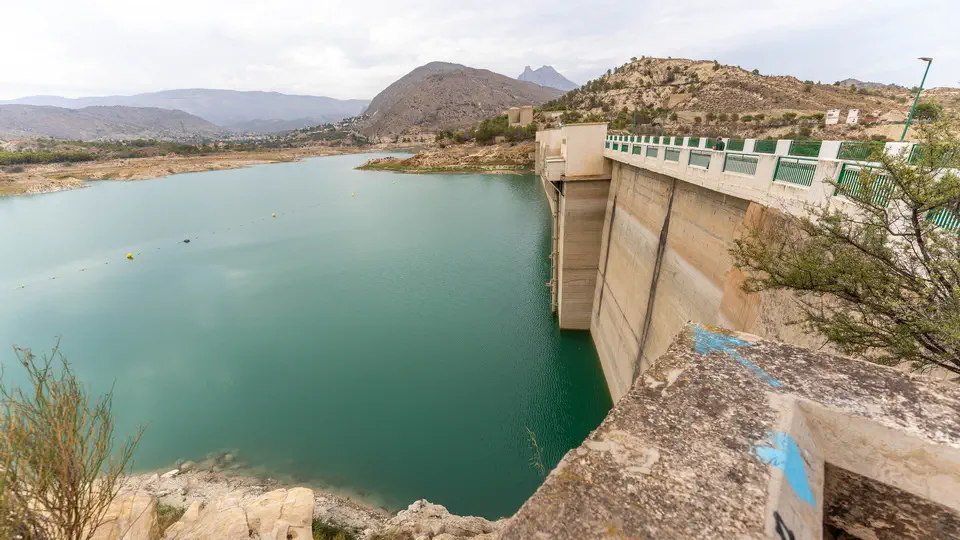
Construction of the Amadorio Dam began in 1948 and was completed in 1960. The result was a concrete gravity dam, a type of structure whose stability relies primarily on its weight. The dam stands approximately 64 metres high, and its crest is more than 335 metres long. The reservoir created behind it can hold well over 15 million cubic metres of water at its normal maximum operating level. The project changed not only the way water was managed but also the landscape of the Amadorio River valley, near Villajoyosa and Orxeta.
Today, the reservoir is a distinctive feature of the surrounding countryside. Water stretches between dry Mediterranean hills, creating a setting that attracts people who enjoy peaceful walks and photography. It is worth remembering, however, that this is not a natural lake, but an artificial reservoir created primarily for practical purposes.
The main purpose of the Amadorio Dam is to store water used for various needs, including public water supplies and agricultural irrigation. The reservoir forms part of a wider water management system serving the Marina Baixa region, where available resources must be distributed appropriately among different towns and communities.
The importance of this infrastructure has increased as the Costa Blanca has developed. Popular holiday resorts, a growing population and the seasonal influx of tourists all increase demand for water. The dam therefore requires regular inspections and upgrades to the equipment responsible for water extraction and safety. Recently, measures have included emergency planning and improvements to water intake installations. This demonstrates that Amadorio continues to play an important role and is not simply a relic of an earlier era of hydraulic engineering.
The creation of the reservoir brought economic benefits, but it also changed the natural conditions in the river valley. The dam affects water flow, sediment transport and the ability of aquatic organisms to move along the river. At the same time, the reservoir has become a habitat used by birds, fish and other animals.
This does not mean that an artificial reservoir is more beneficial to nature than a natural river in every respect. Droughts, fluctuations in water levels and the arrival of non-native species can all disrupt the local ecological balance. Environmental monitoring and responsible water management are therefore essential. When visiting the Costa Blanca, it is worth looking at the Amadorio Dam as more than just an interesting engineering structure. It illustrates how people adapt the landscape to their needs and how important water is to the development of Alicante Province.
The Amadorio Reservoir: A peaceful place on the Costa Blanca
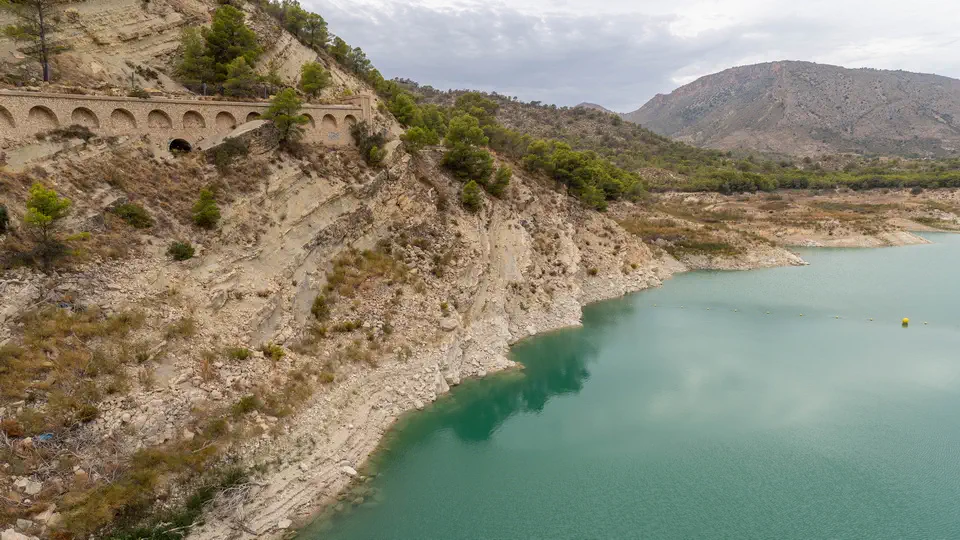
For me, the most interesting part of this trip is the reservoir and its surroundings. Water fills the space between the dry hills, creating a landscape quite different from the one most people associate with the Alicante coastline.
Depending on the time of year, the reservoir can look wholly different. After periods of heavier rainfall, there is more water, creating a broad blue expanse among the hills. Following a long, dry summer, the water level may fall considerably, exposing sections of the shoreline. These changes clearly demonstrate how strongly the landscape of this region depends on water availability.
It is worth stopping for a moment to admire the surface of the reservoir. In calm weather, the water reflects the surrounding hills, while birds searching for food can sometimes be spotted above it. With a little patience, an ordinary walk can turn into an opportunity to observe wildlife. The vegetation is typical of the Mediterranean climate. You may encounter Aleppo pines, rosemary, juniper, and shrubs adapted to a shortage of water. This is not a dense, green forest but a landscape in which plants must cope with high temperatures and long periods without rain.
What wildlife lives around the Amadorio Reservoir?
The reservoir and its banks provide habitats for various organisms. Some are easy to spot, while others remain hidden in the water, vegetation or among the stones. The species present vary according to the season and the conditions within the reservoir.
Waterbirds
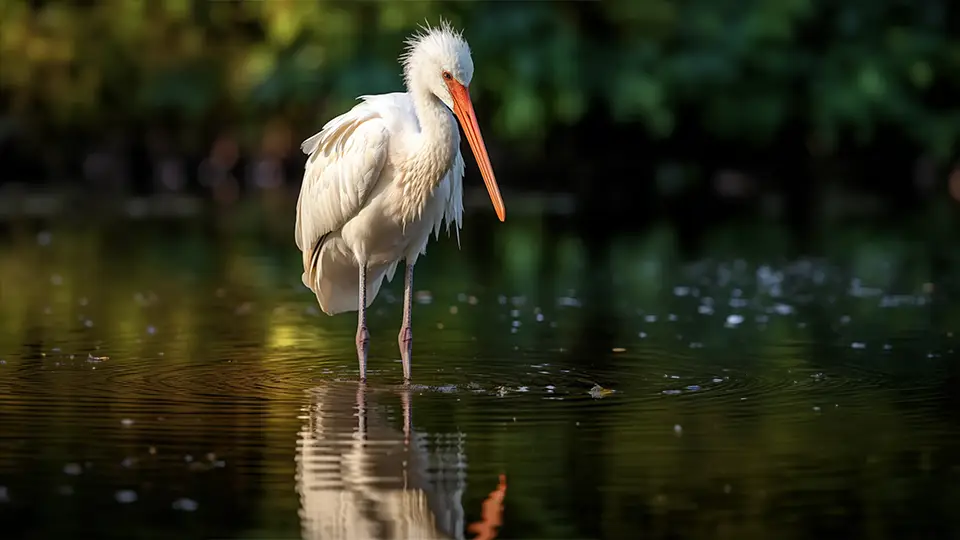
Birds are among the most interesting inhabitants of this area. Herons and cormorants can be seen around the reservoir, along with yellow-legged gulls. Depending on local conditions, other water-associated species may also appear.
Herons can stand motionless at the water’s edge for long periods, watching for small animals, while cormorants catch their food by diving beneath the surface. Their presence suggests that the reservoir provides a useful feeding ground for birds passing through or living in the surrounding area.
If you enjoy birdwatching, bring binoculars or a camera with a telephoto lens, and avoid getting too close to places where birds are resting. Wildlife is easier to observe from a distance, and remaining quiet allows you to notice more details of their behaviour.
Fish and aquatic organisms
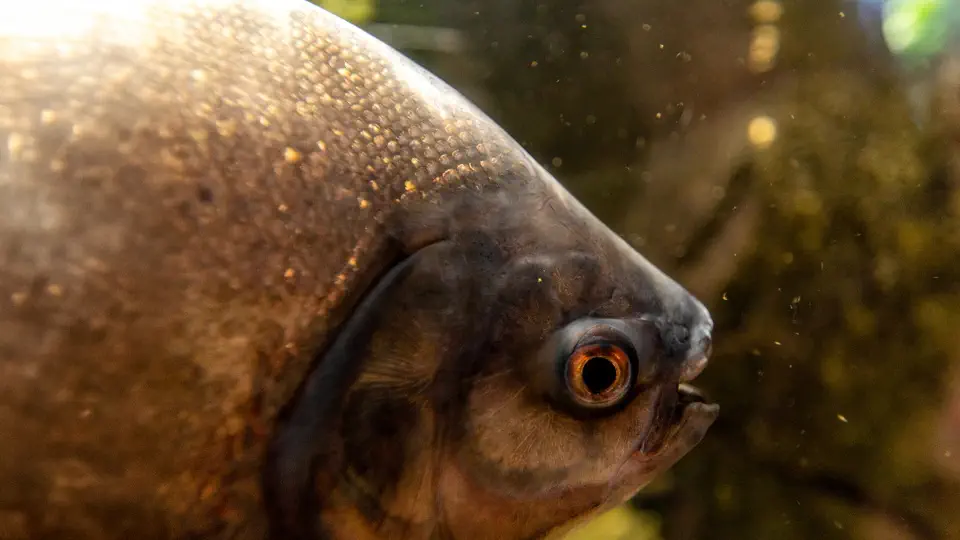
Fish live in the reservoir and form part of the local food chain. They provide food for some birds while feeding on other aquatic organisms themselves. Small invertebrates also develop in the water and play an important role in the functioning of the wider ecosystem.
It is worth remembering that a reservoir differs from a natural river. Water depth, flow speed, food availability and living conditions all change. Such environments can support native species as well as species introduced through human activity.
Amphibians, reptiles, and insects

Amphibians may find suitable conditions in areas where the banks remain damp. Dragonflies can also be seen near the water, with their larvae developing in aquatic habitats. Although small, these insects play an important ecological role and provide food for other animals.
The available records for the surrounding area also mention the Mediterranean tortoise. However, you should not expect to see one on every walk. Many animals lead secretive lives, and their presence depends on environmental conditions. It is also important to distinguish observations made at the reservoir itself from those concerning the Amadorio River and its downstream reaches. A species found in the river will not necessarily be present in every part of the reservoir.
Observing wildlife helps us understand the importance of this place. The reservoir is not merely a store of water for human use; it is also an environment where different species interact and natural processes take place. During your walk, look beyond the larger birds. Some of the most interesting discoveries may involve tiny insects, tracks left along the shoreline or changes in the vegetation. A little patience can give an ordinary excursion a much more rewarding natural history dimension.
What role does the Amadorio Dam play in the environment?
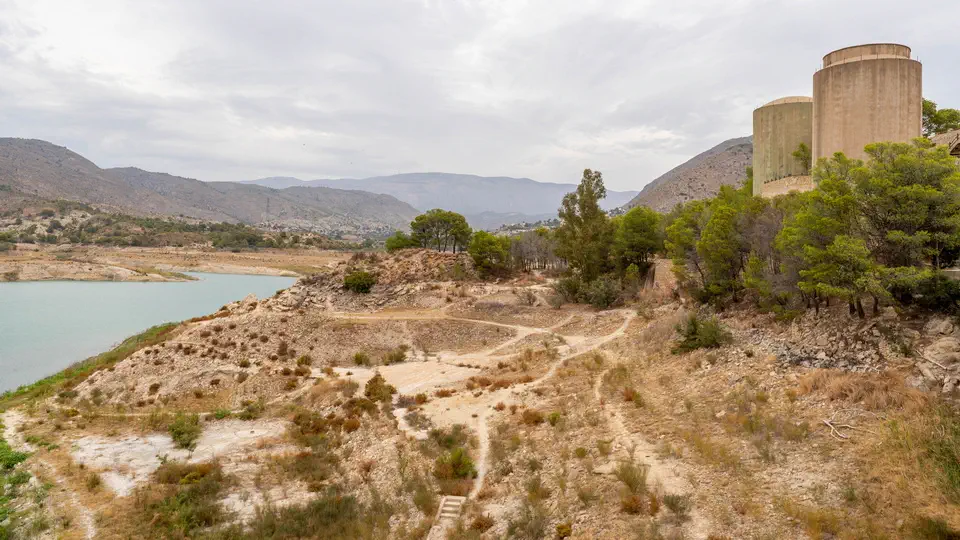
The importance of the dam extends far beyond its visible concrete structure. In a region where rainfall is irregular and summers can be extremely dry, the ability to store water is invaluable.
- Storing water for residents and agriculture – One of the reservoir’s main functions is to retain water for use throughout the regional economy. These supplies are important for public water provision and the irrigation of agricultural land. The dam is also part of the wider water management system and can help reduce the effects of high-water events. Water is an especially precious resource on the Costa Blanca. Residents, farms, and the tourism industry all depend on it. During periods of drought, managing these resources carefully becomes even more important.
- Creating new habitats for wildlife – The reservoir has changed the natural landscape, but it has also created an environment used by various species. Birds find places to feed and rest, fish inhabit the water, and amphibians and insects may develop in the wetter areas along the banks. However, an artificial reservoir cannot replace every function of a natural river. A dam changes the flow of water and may restrict the free movement of organisms. Fluctuations in the reservoir level affect habitat availability, while the altered conditions may benefit some species and make survival more difficult for others.
- The impact of drought on the reservoir – Drought is one of the greatest challenges facing water management in this part of Spain. When rainfall is scarce for an extended period, the reservoir level can fall, reducing the area of available aquatic habitat. Lower water levels affect fish, birds and other organisms, but they also have consequences for people. Less stored water means that resources must be managed more carefully. The Amadorio Dam therefore illustrates why nature conservation and responsible water management need to go hand in hand. Storing water alone does not solve every problem. Water quality checks, wildlife monitoring and responsible use of resources are also necessary.
- Non-native species and ecological balance – Non-native species can appear in reservoirs and rivers altered by human activity, competing with native animals for food and space. Monitoring has been carried out in the Amadorio river basin in connection with the presence of invasive species. Their impact depends on the particular species and the environmental conditions. Some can alter how an ecosystem functions, for example by eating native organisms or competing with them for resources. This is why ecological monitoring is an important part of protecting the reservoir and its surroundings.
Walking around the Amadorio Reservoir: Practical tips
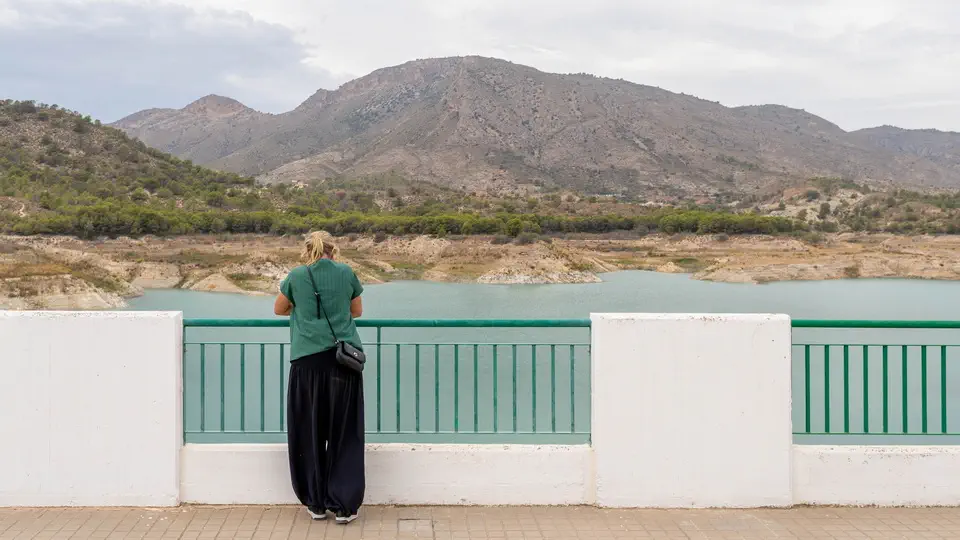
A visit to the reservoir makes a pleasant, peaceful excursion during a stay on the Costa Blanca. Before setting off, however, take the weather into account and check whether the places you intend to visit are accessible. Above all, bring drinking water. In this dry Mediterranean landscape, you may not find a shop or anywhere else to replenish your supplies. In summer, a hat, sun cream and comfortable footwear are also essential.
Paths in the area can be rocky and uneven, so do not assume that every section of the shoreline is suitable for walking. Avoid steep descents, stay out of restricted technical areas around the dam and follow any local prohibitions. If you plan to watch wildlife, choose a quieter time of day and bring binoculars. Do not disturb the birds, leave rubbish behind or feed wild animals. These simple precautions will help preserve the natural character of the area.
Some tourist guides suggest longer routes around the reservoir, covering approximately 16 kilometres. Before setting off on such a walk, check the route, the current condition of the paths and whether every section is accessible. The time required will depend on the conditions, your walking pace and the route you choose.
A few final thoughts
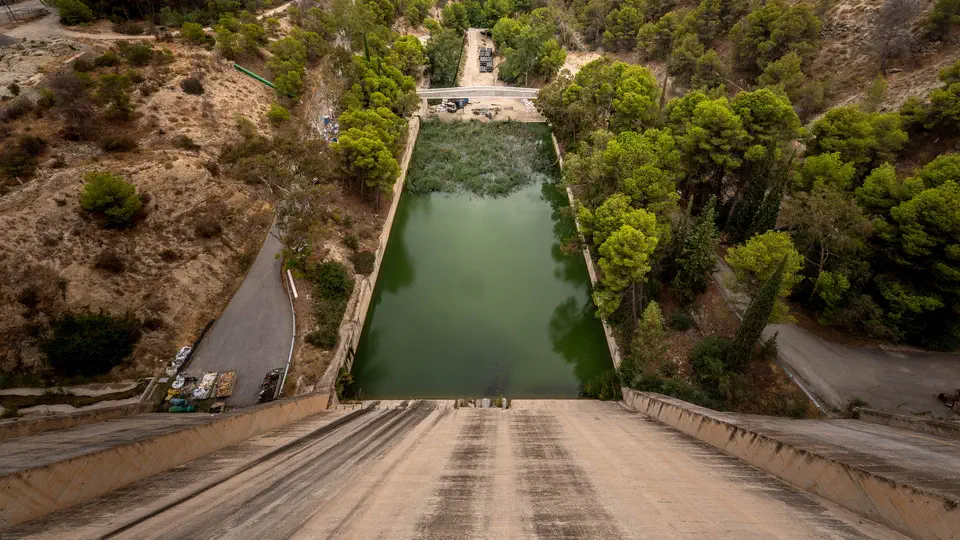
In my opinion, this is an interesting destination for anyone who wants to discover a less familiar side of the Costa Blanca. You do not come here for extensive tourist facilities or a collection of attractions that will fill an entire day. The real appeal lies in the landscape, the tranquillity, and the opportunity to observe nature in a place shaped by human activity. Another example of how people have altered the natural environment is Pantano de Elche, a picturesque dam on the River Vinalopó.
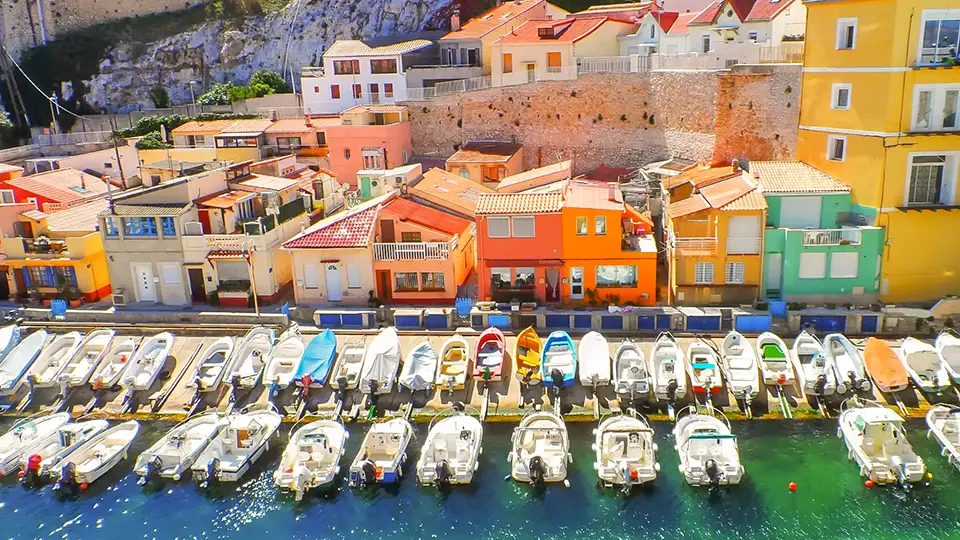
During your visit, you can see how the concrete dam has influenced the surrounding landscape, how water levels change and how birds and other animals make use of the reservoir. It is also an opportunity to understand why water is so important to the people of Alicante Province. You can combine the excursion with a visit to nearby Villajoyosa, famous for its colourful houses and the Valor chocolate factory and museum, or use it as a starting point for discovering other places inland. For more inspiration, have a look at our guide to the attractions of the Costa Blanca, where we share ideas for exploring this part of Spain.
The Amadorio Dam and Reservoir demonstrate that interesting destinations do not always have to be famous monuments or popular viewpoints. Occasionally, all it takes is a pause beside the water, a look at the surrounding hills and a few minutes spent watching the birds to discover another part of a region that might otherwise seem familiar.
Amadorio Reservoir: Details, information and interesting facts
- The Amadorio Dam is located in Alicante Province, in the Valencian Community, near the towns of Villajoyosa and Orxeta. It is an interesting destination for anyone who wants to discover a less familiar side of the Costa Blanca and see a landscape quite different from the popular seaside resorts.
- Construction of the Amadorio Dam began in 1948 and was completed in 1960. The project took twelve years to finish and resulted in a reservoir that permanently changed the appearance of the Amadorio River valley.
- The Amadorio Dam stands approximately 64 metres high, measured from its foundations. Its massive structure was designed to withstand the pressure of the stored water while ensuring the safe operation of the reservoir.
- The dam’s crest is more than 335 metres long, making the structure impressive even to people with little interest in engineering. The concrete construction contrasts sharply with the dry hills typical of the Mediterranean landscape.
- At its normal maximum operating level, the Amadorio Reservoir can hold approximately 15.83 million cubic metres of water. This considerable capacity makes it possible to store resources that become particularly valuable during long periods without rainfall.
- The Amadorio Reservoir is an artificial body of water created by building a dam across the river. It is therefore not a natural lake but part of an infrastructure system designed primarily to improve water management in Alicante Province.
- One of the reservoir’s most important functions is storing water for use throughout the region. These supplies are essential for local communities and for irrigating agricultural land, where crops require a regular supply of water.
- The Amadorio Dam is particularly important in a region where drought is a serious challenge. Rainfall on the Costa Blanca can be irregular, and hot weather may persist for months, so retaining water after periods of rain helps manage available resources more effectively.
- The water level changes according to rainfall and demand for the stored supplies. After a rainy winter, the reservoir can look particularly impressive, while a long, dry summer may expose much larger sections of its banks.
- When the water level falls, parts of the land that were previously submerged become visible. These changes are a reminder of how strongly the landscape of south-eastern Spain depends on rainfall and water availability.
- The Amadorio Reservoir provides a habitat used by various bird species. Herons and cormorants can be observed in the area, making use of the water as a place to rest, feed and search for food.
- Cormorants catch their prey by diving beneath the surface and hunting for fish. Their presence is an interesting feature of the local wildlife, and watching them can add an enjoyable element to a walk for anyone interested in nature photography.
- Herons often hunt in shallow water, where they look for fish and other small animals. They can remain motionless for long periods, making it easier to observe their characteristic hunting behaviour if you take your time.
- Fish live in the reservoir and form an important part of the local food chain. They provide food for fish-eating birds while feeding on smaller aquatic organisms themselves, helping sustain the wider ecosystem.
- Insects associated with aquatic environments, including dragonflies, can be found near the water. Their larvae develop in the water, while adult dragonflies hunt smaller insects, contributing to the natural ecological balance.
- The vegetation around the reservoir includes plants adapted to the hot Mediterranean climate. Aleppo pines, junipers and drought-resistant shrubs can survive long periods with little rainfall, creating the characteristic landscape of the region.
- The construction of the Amadorio Dam altered the river’s natural flow and the living conditions of aquatic organisms. Although the dam created new habitats for some animals, it also affected sediment transport and the ability of certain organisms to move along the river.
- Invasive species can threaten the ecological balance of reservoirs. If non-native organisms reproduce rapidly, they may compete with native species for food and space, which makes wildlife monitoring important for environmental protection.
- The Amadorio Reservoir is an example of how infrastructure created by people can become part of the surrounding natural landscape. Although its primary purpose is water storage, the area also attracts people interested in walking, photography and wildlife observation.
- Visiting the Amadorio Dam helps explain the importance of water to the communities of the Costa Blanca. The reservoir demonstrates why responsible resource management is essential in a drought-prone region and how human activity affects the natural environment.