Madrid can impress you with its monumental Royal Palace, world-class museums and the lively Puerta del Sol. During my most recent visit, however, I discovered a place that helped me understand the city far better than simply walking through its streets. That place was the Museum of the History of Madrid (Museo de Historia de Madrid).
This is not a museum filled with long rows of exhibits that you look at merely out of a sense of obligation. Quite the opposite. Each room tells the story of Madrid, from the days when it was a small Arab fortress to its transformation into a modern European metropolis. You can see how its streets, architecture, means of transport and residents’ clothing changed over the centuries, as well as how everyday life in Madrid gradually evolved.
What impressed me most was that the museum does not focus exclusively on kings and wars. Above all, it tells the stories of ordinary people – merchants, craftspeople, artists, residents of the city’s old neighbourhoods and everyone else who helped shape Madrid’s character over the centuries. Interestingly, the building itself is one of the city’s most important historic landmarks. You only need to look at its spectacular façade to understand why so many visitors stop here before they have even crossed the museum’s threshold.
The Museum of the History of Madrid and its past
The story of the museum begins long before the institution itself was established. The building that houses it today was constructed at the beginning of the 18th century as the Hospicio de San Fernando, or Royal Hospice of Saint Ferdinand. Construction began in 1721 on the initiative of King Philip V. Madrid was expanding rapidly, while the number of people living impoverished continued to grow. The city needed somewhere that could provide shelter for orphans, homeless children and its poorest residents.
The building was designed by Pedro de Ribera, one of the greatest architects of the Spanish Baroque period. Madrid owes many of its exceptionally ornate buildings to him. Ribera was well-known for his love of elaborate decoration, sculptures, columns and imaginative ornamentation. He made full use of his talent when designing the Hospicio de San Fernando.
The building’s most distinctive feature is its monumental entrance, made from granite and limestone. It is still regarded as one of the finest examples of Spanish Churrigueresque Baroque architecture. When I stood in front of it for the first time, I found it difficult to take my eyes off the sheer number of sculptures and intricate details. Even people who have little interest in architecture tend to notice this remarkably ornate entrance.
The building served as a hospice for more than a hundred years. It accommodated children who had lost their parents, elderly people and residents who, for various reasons, had found themselves in difficult circumstances. It was a place of social care, but also of education. Children were taught practical trades so that they would be able to support themselves in adult life.
The 19th century brought enormous changes to Madrid. The Spanish capital expanded rapidly as new neighbourhoods, boulevards, squares and residential buildings were constructed. The role of the former hospice also began to change. The building was altered and modernised on several occasions, although fortunately, its most distinctive façade survived.
At the beginning of the 20th century, there were growing calls for the historic building to be protected. In 1919, it was added to the list of national monuments, saving it from demolition. At the time, many of Madrid’s old buildings were being cleared to make way for modern developments.
The museum itself was founded much later. In 1929, the Municipal Museum of Madrid (Museo Municipal) opened with the aim of documenting the capital’s history and collecting works of art connected with the city. Its collection grew year after year and came to include paintings, maps, documents, photographs, sculptures, furniture and everyday objects.
During the Spanish Civil War, much of the collection had to be secured and protected. Museum employees did everything they could to save the most valuable exhibits from destruction. Thanks to their efforts, a substantial part of the collection survived this extremely difficult period.
At the beginning of the 21st century, the building underwent an extensive renovation that lasted several years. The façade and interiors were restored, the installations were modernised and new exhibition spaces were created. When the museum reopened, it was given its present name – the Museum of the History of Madrid.
Today, its collection contains more than 60,000 objects documenting the city’s development from the 16th century to the present day. Not everything can be displayed at once, so the exhibitions change regularly. This means that even a return visit can reveal something new.
One of the museum’s greatest strengths is the way in which it tells its story. You do not simply look at a series of individual exhibits. Instead, you discover the history of an entire city – its residents, architecture, culture and everyday life. That is why walking through Madrid after leaving the museum takes on an entirely different meaning. Its squares, townhouses and narrow streets are no longer anonymous. Each one begins to tell its story.
Visiting the Museum of the History of Madrid – my impressions
I came across the Museum of the History of Madrid almost accidentally. I had planned to visit only a few of the city’s best-known attractions, but while walking along Calle de Fuencarral, I noticed the impressive Baroque façade of the former Hospicio de San Fernando and decided to go inside. It turned out to be one of the best decisions I made during my entire stay in the Spanish capital.
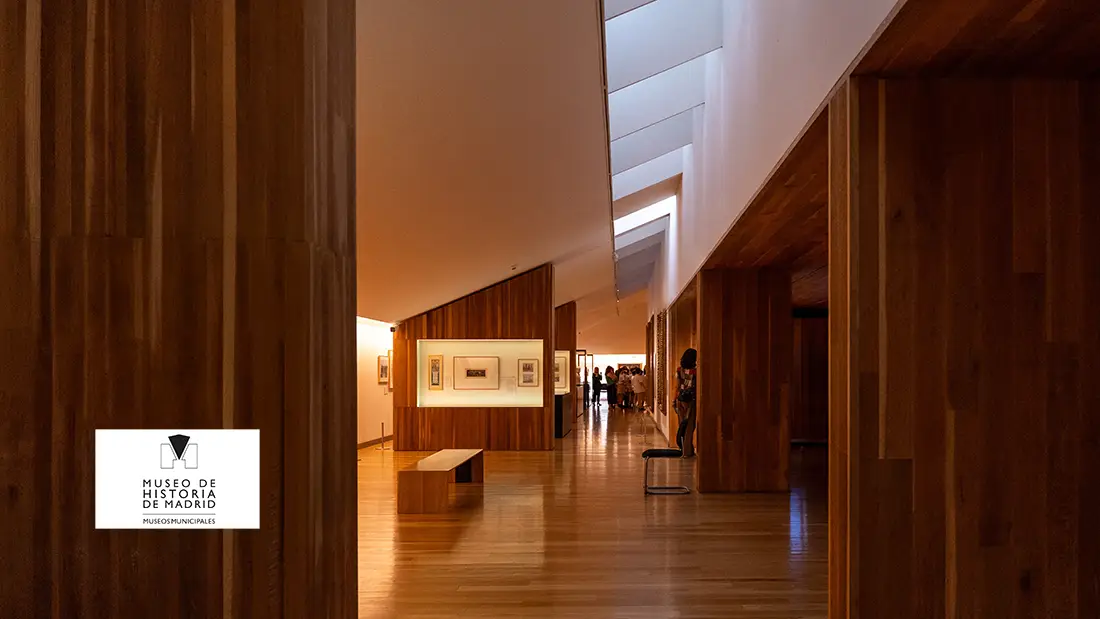
As soon as you walk through the door, you notice that this is not a museum that tries to impress visitors with countless modern screens and multimedia displays. History plays the leading role here. The rooms are spacious, well lit and arranged with considerable care. The exhibits have not been placed at random – they guide you through the successive stages of Madrid’s development like chapters in a large book.
What I particularly liked was that you do not need to be a historian to understand the collection. The descriptions are clear and the exhibition follows a chronological order. You simply follow the suggested route and watch a small, walled settlement gradually transform into one of Europe’s largest cities.
The museum is surprisingly peaceful. Even at the height of the tourist season, I did not encounter any crowds. Most visitors choose the Prado, the Reina Sofía National Art Centre Museum or the Thyssen-Bornemisza Museum instead. As a result, you can stop beside each exhibit and examine it properly without feeling rushed.
It is worth allowing between two and three hours for a thorough visit. Anyone with a particular interest in Spanish history could easily spend half a day here.
Museum rooms and the most important exhibitions
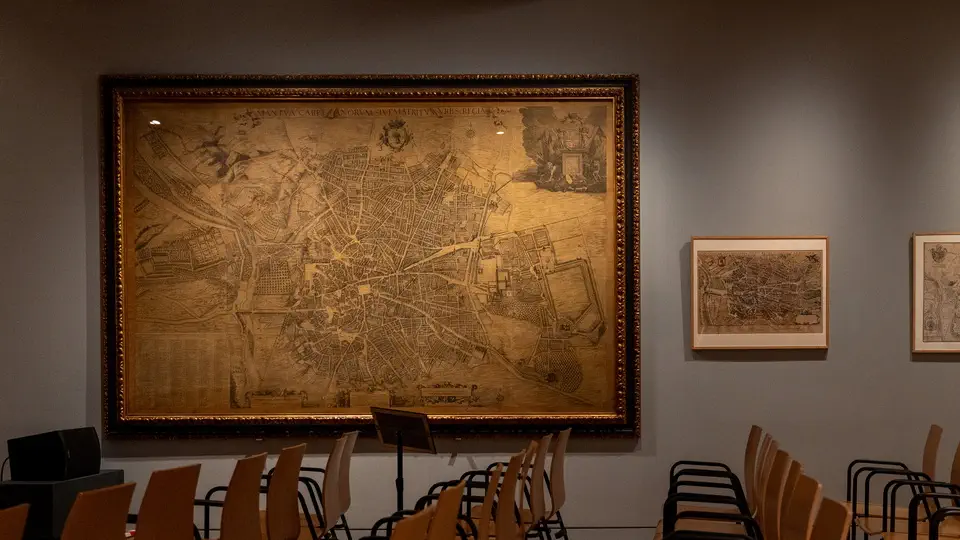
One of the greatest advantages of the Museum of the History of Madrid is the logical arrangement of its exhibitions. Each room presents a different period in the city’s history, making the visit feel like a journey through time.
Madrid before it became the capital of Spain
The first rooms tell the story of the small settlement established during the period of Moorish rule. Here you can see maps, prints and models depicting medieval Madrid surrounded by defensive walls. The reconstructions of the former fortifications and the city’s earliest streets are particularly interesting.
Looking at them, it is difficult to believe that today’s metropolis, home to several million people, grew from a small fortress built to protect the routes leading towards Toledo.
Madrid under the Habsburgs
This is one of the most interesting parts of the museum. In the 16th century, King Philip II moved the Spanish court and capital to Madrid. This event completely transformed the city’s fortunes. A relatively small administrative centre became the political heart of one of the most powerful countries in the world.
This section contains paintings of old Madrid, urban plans, royal documents, historic furniture and objects used in residents’ everyday lives, as well as weapons and items that once belonged to the city guard. I particularly enjoyed the models showing Madrid’s expansion. They make it easy to see just how quickly new neighbourhoods developed.
Madrid under the Bourbons
The next part of the museum is devoted to the 18th century. This was when Madrid began to resemble an elegant European capital. Wide avenues, palaces, gardens, and grand public squares were constructed.
Large paintings depicting the lives of residents during this period hang on the walls, while the display cases contain aristocratic clothing, jewellery, porcelain and numerous everyday objects. This section offers perhaps the clearest explanation of why Madrid came to be regarded as one of Europe’s most beautiful cities.
Madrid in the 19th century
This part of the museum made a particularly strong impression on me. Madrid was beginning to develop at an extraordinary pace. The first trams appeared, gas street lamps were installed, and photography, industry and trade all expanded.
The museum displays numerous photographs of streets taken more than a century ago. Interestingly, many of them look remarkably similar to places that you can still visit while walking through the city centre today.
Alongside the photographs are old shop signs, public transport tickets, uniforms, advertisements, theatre posters and furnishings from historic homes. It is one of the most vivid and engaging parts of the entire museum.
Madrid in the 20th century
The final rooms explore the events of the 20th century. Here you can see objects connected with the Spanish Civil War, the city’s reconstruction and its development after the Second World War.
There are also photographs documenting the changes that took place during the second half of the century. This is where you can most clearly see how quickly Madrid developed from a historic capital into a modern European metropolis.
The Museum of the History of Madrid – the most valuable and best-known exhibits
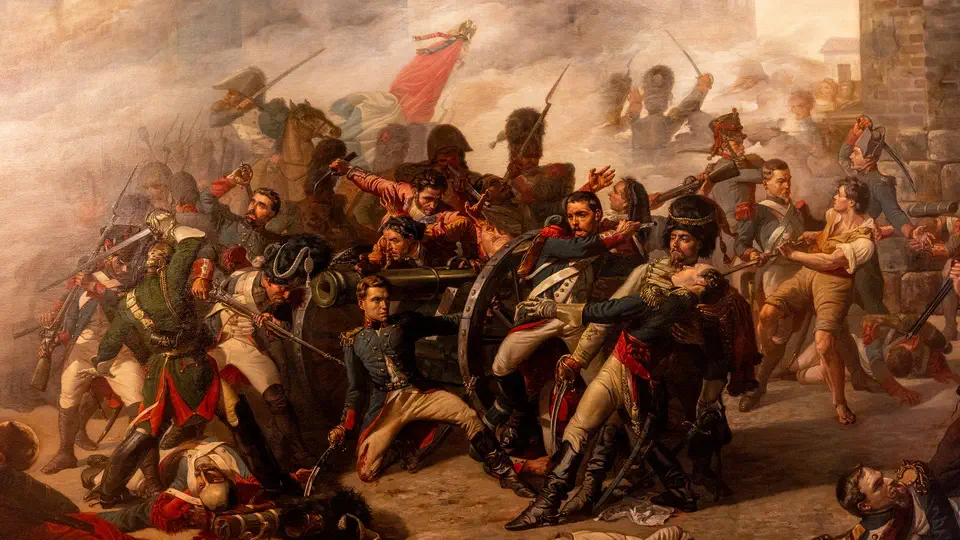
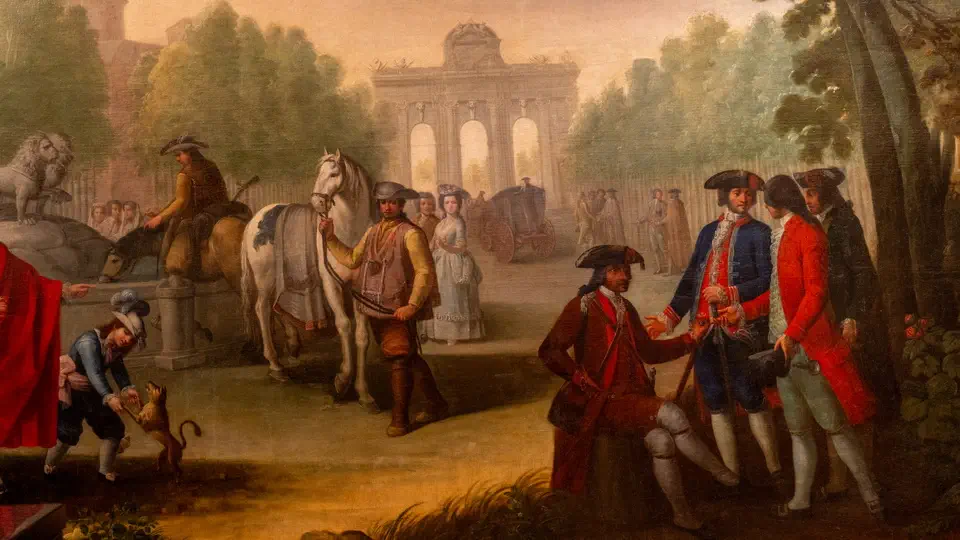
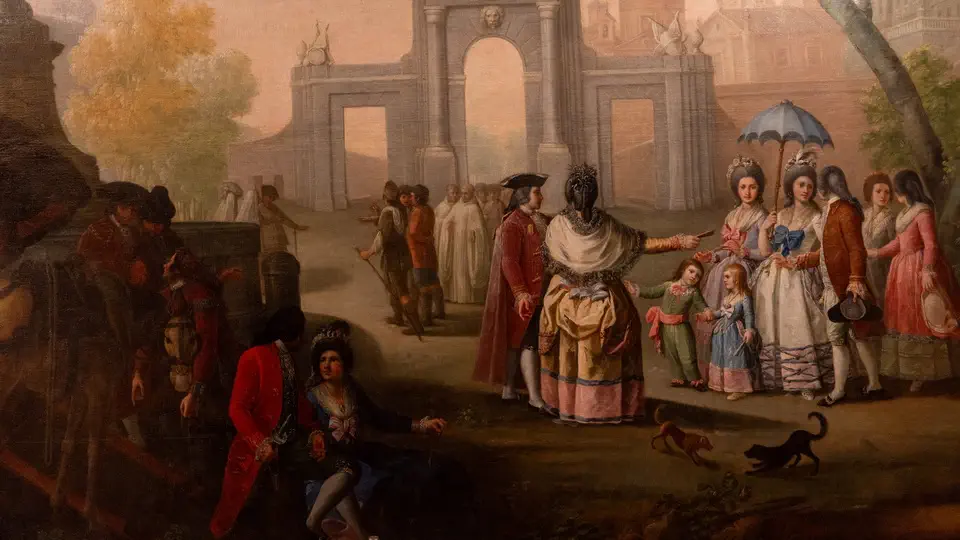
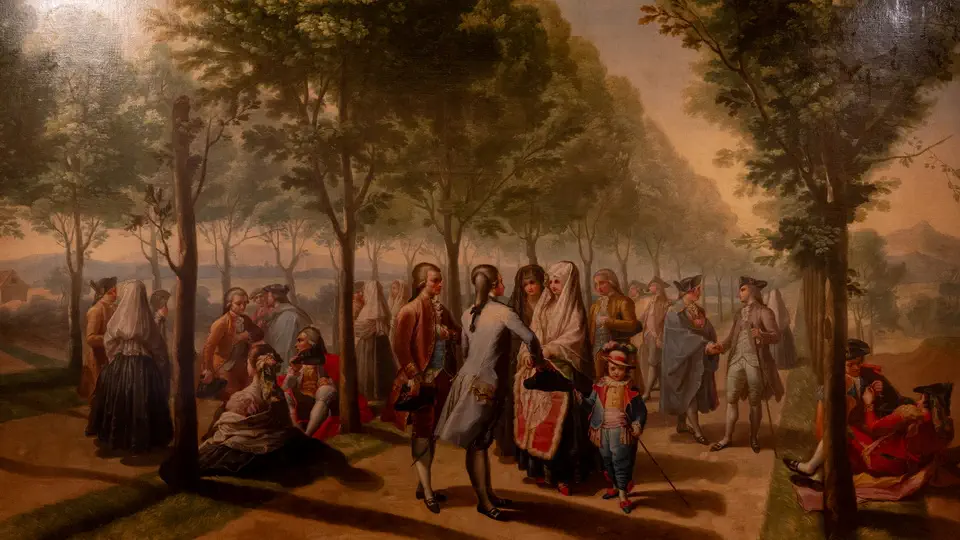
Although the museum owns tens of thousands of objects, several exhibits attract particular attention.
- Allegory of the City of Madrid by Francisco de Goya – This is undoubtedly one of the museum’s greatest treasures. Painted around 1810, it presents the city as a female figure symbolising Madrid. The work was altered several times to reflect Spain’s changing political situation. The oval beside the woman displayed portraits of successive rulers or symbols representing whoever held power at the time. Looking at the painting, you can almost read the country’s turbulent history.
- The model of Madrid by León Gil de Palacio – This is one of the most impressive exhibits in the entire museum. Created between 1828 and 1830, the model depicts Madrid in remarkable detail. It contains thousands of buildings, reproduced with astonishing precision. I probably spent more time looking at this model than at any other exhibit. You can compare the old street layout with a modern map and try to find landmarks and districts that still exist today.
- Portrait of Queen Isabella II – The painting depicts one of the most controversial figures in the history of the Spanish monarchy. It is a fine example of 19th-century court portraiture and reflects the splendour and extravagance of royal life at the time.
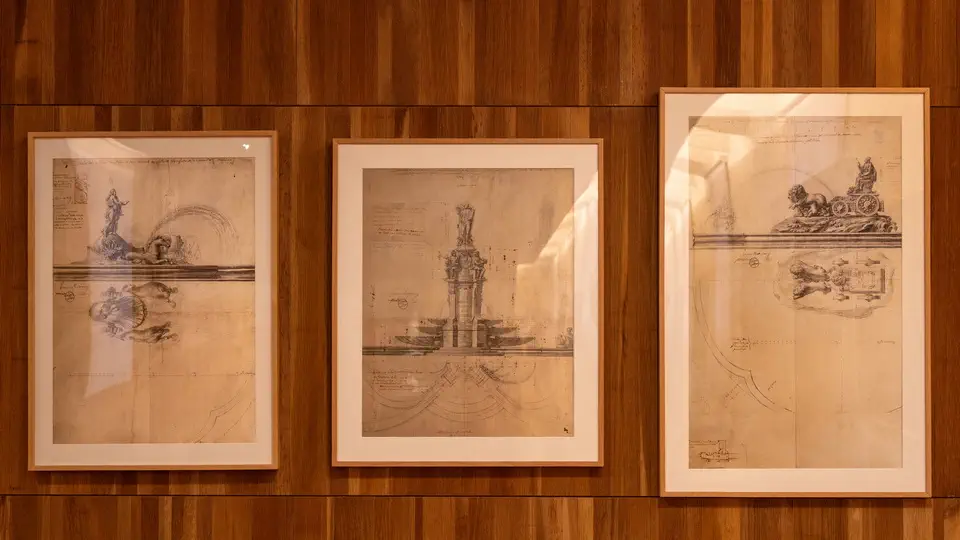
- Historic urban plans of Madrid – These maps are a real treat for anyone interested in history. Some are well over three hundred years old and show the city’s development almost street by street. They reveal what the areas around Plaza Mayor, Puerta del Sol and the Royal Palace looked like before the major redevelopment projects that transformed Madrid.
- The Alfonso photographic collection – This collection documents the lives of Madrid’s residents at the beginning of the 20th century. The photographs capture everyday street scenes, markets, religious celebrations, the first cars and the development of public transport. For me, this was one of the most moving parts of the exhibition. Some photographs feel as though they were taken only a few decades ago rather than more than a century in the past.
- The clock from the former city hall – Although it is not the museum’s most spectacular exhibit, the clock has considerable historical value. For many years, it measured time for Madrid’s residents and witnessed some of the most important political and social events to take place in the city centre.
- Historic carriages and elements of the old cityscape – The museum also has an extensive collection of street lamps, street-name signs, fragments of old fountains and architectural features salvaged from buildings that no longer exist. Such objects help you understand just how dramatically the appearance of Madrid has changed over the past few centuries.
Practical information for visitors to the Museum of the History of Madrid
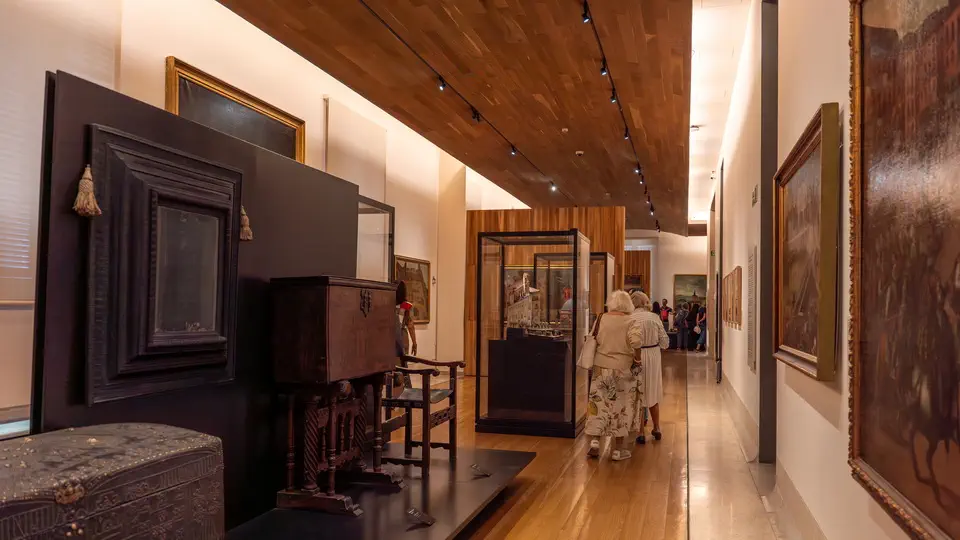
Having visited the museum, I can confidently say that it is one of Madrid’s most underrated attractions. Most tourists head straight for the Prado or the Royal Palace, often overlooking the Museum of the History of Madrid. That is a mistake because this is the place that helps you understand why modern Madrid looks the way it does.
If you are planning a visit, it is worth preparing in advance. A few simple tips will help you see more and avoid some common mistakes.
Where is the museum? – The Museum of the History of Madrid is located at Calle de Fuencarral 78, just over ten minutes on foot from Gran Vía. It is in an excellent location. The fashionable Malasaña and Chueca neighbourhoods are nearby, so you can easily combine your museum visit with exploring atmospheric streets filled with cafés, restaurants, and shops.
How do you get there? – The easiest way to reach the museum is by taking the Madrid Metro. The closest stations are Tribunal, Bilbao and Alonso Martínez, all of which are only a few minutes away on foot. Numerous city buses also stop nearby. If you are exploring the centre on foot, you can reach the museum from Puerta del Sol in approximately 20 minutes.
How much does admission cost? – This is one of the museum’s greatest advantages. Admission to the Museum of the History of Madrid is free. You do not need to buy a ticket or make a reservation in advance. Simply walk in during opening hours. This also makes it an excellent place to visit if the weather suddenly takes a turn for the worse, or you want to escape Madrid’s summer heat for a while.
Opening hours – Opening times may change on public holidays or when special events are being held. The museum is usually open from Tuesday to Sunday, approximately between 10.00 am and 8.00 pm. It is closed on Mondays. It is always worth checking the latest opening hours before your visit, particularly during public holidays.
How much time should you allow? – The absolute minimum is around an hour and a half. If you are interested in history or photography, however, it is worth setting aside between two and three hours. I spent almost three hours inside and did not feel bored for a single moment.
Is the museum suitable for children? – Yes, although this will naturally depend on their age. Older children who are interested in history can see models of the city, historic clothing, weapons, photographs and numerous scale reconstructions. Younger visitors may be particularly impressed by the enormous model of 19th-century Madrid and the museum’s historic carriages.
Can you take photographs? – Yes. Photography for personal use is generally permitted, although flash photography is not allowed. Pay attention to the signs beside individual exhibits, as temporary exhibitions may have different rules.
My advice before visiting
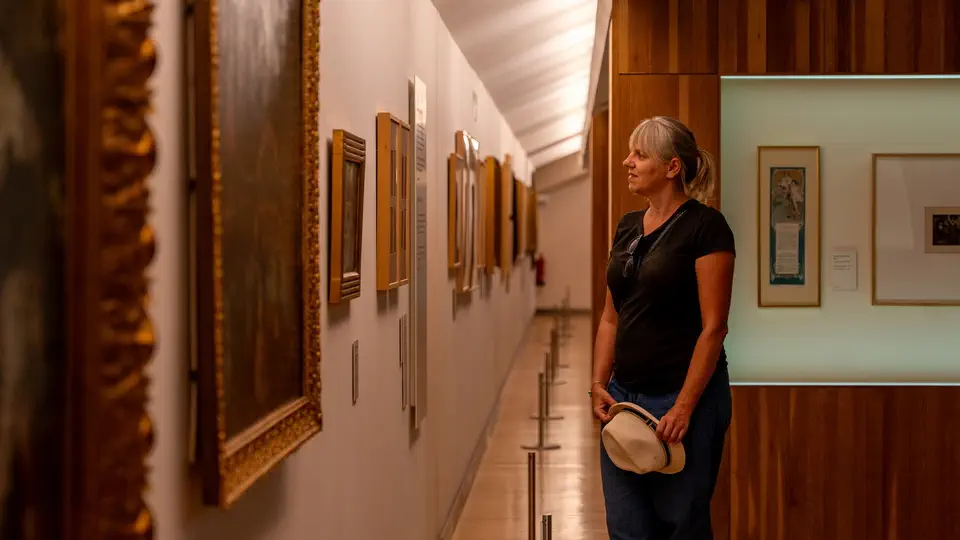
Having explored the museum, there are a few things I would do differently. That is why I would like to share several practical suggestions with you.
Begin your Madrid sightseeing with this museum – Most people visit the museum towards the end of their stay in Madrid. I would recommend doing the opposite. Learning about the city’s history makes subsequent visits to Plaza Mayor, the Royal Palace and Puerta del Sol much more interesting. You suddenly begin to recognise the places that you have just seen in old paintings, photographs, and maps.
Do not rush past the model of Madrid – Many visitors give it only a quick glance. That is a big mistake. You can easily spend half an hour studying it and identifying familiar squares, churches, and streets. It is one of the most fascinating objects in the entire museum.
Pay attention to the details – The most interesting exhibits are not always the largest. I was particularly fascinated by the old public transport tickets, street signs, historic advertisements, portraits of residents and fittings from shops that operated more than a century ago. These relatively ordinary objects offer some of the clearest insights into the everyday lives of Madrid’s former residents.
Combine your visit with a walk through Malasaña – After leaving the museum, it is worth walking a few streets further. Malasaña is one of Madrid’s most atmospheric neighbourhoods, filled with small cafés, restaurants and colourful murals. It is a perfect place to rest after visiting the exhibition.
Do not hurry! – This is not the Prado. You do not need to rush through each room simply to say that you have seen everything. It is better to stop beside a few carefully chosen exhibits and read their stories. By doing so, you are far more likely to remember the museum after your visit.
A few final thoughts
The Museum of the History of Madrid is not a place visited by the majority of tourists coming to the Spanish capital. That is precisely why it made such a strong impression on me. There are no crowds, no sense of urgency and no need to squeeze between large tour groups.
Instead, you will find a calm and engaging story about a city that changed over the centuries from a small Moorish settlement into one of Europe’s most important capitals.
The museum’s greatest strength is that it presents history through the eyes of Madrid’s residents. Alongside royal portraits and works by great artists, you will find old photographs, maps, advertisements, everyday objects and models of historic streets. Together, they help you imagine what life in Madrid was like in the past.
It was these small details that made me see the city differently after leaving the museum.
If you are planning to spend a few days in Madrid, I strongly recommend setting aside two or three hours for a visit. Admission is free, while its location means that you can easily combine it with exploring the atmospheric Malasaña and Chueca neighbourhoods.
For me, this was one of the most rewarding experiences of my entire stay in the Spanish capital. It is also somewhere I would gladly return to the next time I visit Madrid.
Mysteries and legends of the Museum of the History of Madrid
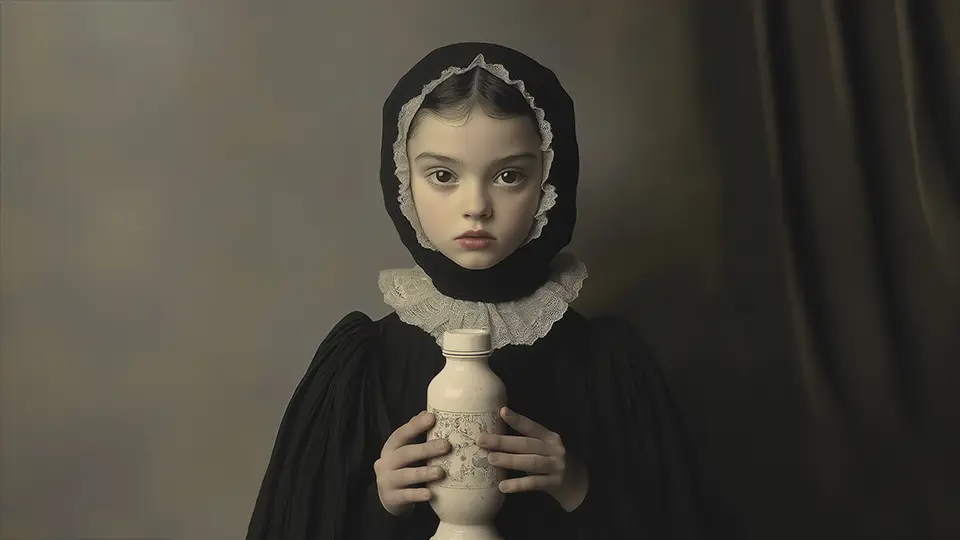
Every old building in Madrid has its secrets, and the Hospicio de San Fernando is no exception. For well over three hundred years, its walls have witnessed thousands of human stories – both happy and tragic. It is hardly surprising that numerous tales have grown up around the former hospice and been passed down from one generation to the next.
The ghost of a child from the former hospice
The best-known legend tells of a boy who lived in the hospice during the 18th century. According to the story, he was an orphan abandoned outside the entrance during an freezing winter. The child supposedly died from a serious illness before reaching adulthood.
For decades, employees of the hospice claimed that they could hear quiet footsteps and a child’s laughter in the corridors at night. Some even said that they had seen a small figure disappearing behind the doors of the former dormitories.
These stories have never been confirmed, of course, but the legend is still mentioned in tales about the building.
Madrid’s lost archives
During the Spanish Civil War, some municipal documents were hidden to protect them from destruction. Historians still do not know whether all of these archives were ever recovered.
According to one theory, several chests of documents may remain concealed in undiscovered rooms within the former hospice or in cellars that have since been filled in. Although no evidence supporting this story has been found, the legend has fired the imagination of researchers for many years.
Mysterious underground chambers
Beneath the building are extensive cellars that were once used for storing food and as utility rooms. Some old plans appear to indicate the existence of additional passages that are no longer accessible.
It has been suggested that some of these corridors were bricked up during 19th-century alterations. There is no evidence of secret tunnels leading to other parts of the city, but similar stories have long been part of Madrid’s folklore.
The stone guardian of the entrance
The Baroque portal designed by Pedro de Ribera is covered with sculptures depicting saints, angels and religious symbols. According to an old superstition, one of these stone figures protected everyone who crossed the threshold of the hospice.
Residents believed that touching the stone portal before entering would bring good fortune and protect them against illness.
Although this is now treated as a local legend, many people still pause briefly in front of the monumental entrance to admire the extraordinary craftsmanship of the 18th-century stonemasons.
In my opinion, stories like these give the museum its unique atmosphere. Even if they are merely legends, they allow us to look at old Madrid through the eyes of its residents. After all, it was the people of the city who created these tales over the centuries, and today they can be just as fascinating as the exhibits themselves.
Museum of the History of Madrid – facts, information and interesting details
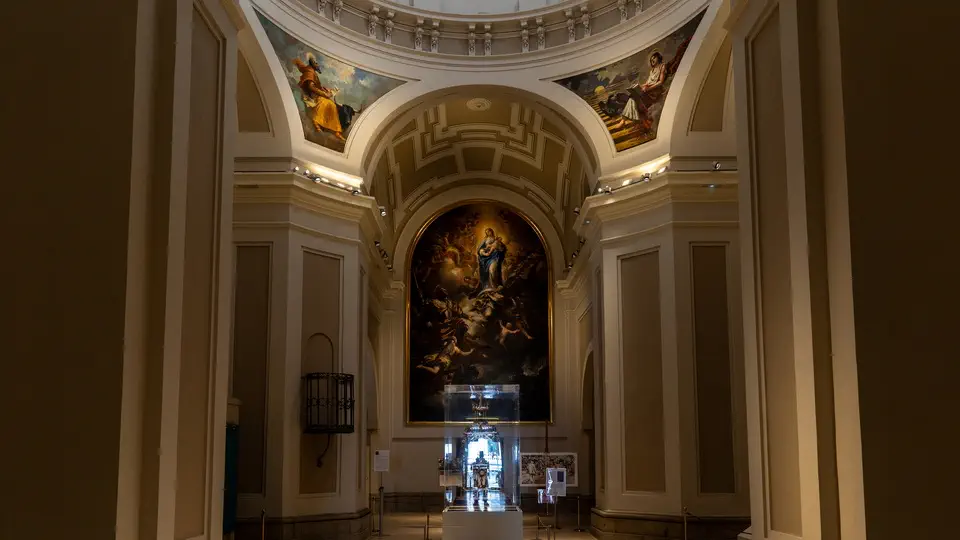
- The building itself is older than most museums in Spain. It was constructed at the beginning of the 18th century as the Hospicio de San Fernando. This means that while exploring the museum, you are also visiting one of the finest examples of Baroque architecture in Madrid.
- The entrance portal is considered a masterpiece of Spanish Baroque architecture. Designed by Pedro de Ribera, the monumental doorway impresses visitors with its abundance of sculptures, ornaments and decorative details. Many art historians regard it as one of Spain’s most beautiful Baroque portals.
- For many years, the building was home to hundreds of orphans and children from impoverished families. The former hospice provided not only shelter but also education and practical preparation for adult life.
- The museum owns more than 60,000 objects. Only part of the collection appears in the permanent exhibition, while the remaining items are kept in storage or displayed in temporary exhibitions.
- The model of 19th-century Madrid is the museum’s most popular exhibit. Created by León Gil de Palacio, it depicts the city with extraordinary precision. Thousands of individual buildings and the historic street layout can be identified on the model.
- The museum houses an original painting by Francisco de Goya. Allegory of the City of Madrid is one of the most valuable works in the entire collection and has reflected Spain’s changing political history over the years.
- The building underwent an extensive renovation at the beginning of the 21st century. The lengthy conservation work preserved its historic character while bringing the interior up to modern museum standards.
- Admission to the museum is completely free. It is one of the few attractions of this quality in Madrid that you can visit without purchasing a ticket.
- Despite its excellent location, the museum remains relatively unknown among tourists. Most visitors choose the Prado or the Reina Sofía Museum, allowing you to explore this collection in a much more peaceful atmosphere.
- The building escaped demolition during Madrid’s major redevelopment projects. Many historic structures disappeared from the city map during the 19th and 20th centuries, but the former hospice was granted official protection.
- The exhibitions present the lives of ordinary Madrid residents. Alongside works of art, you can see furniture, clothing, tools, documents and everyday objects used by local people over the past several centuries.
- The museum displays historic advertisements and posters. Its collection allows visitors to trace the development of Madrid’s commerce, theatre, and culture from the 19th century to the present day.
- Its collections include exceptional photographs of the city. These archival images show streets, squares, and buildings as they appeared more than a century ago. Many of them have survived in an almost unchanged form.
- The museum explores the history of public transport. Exhibits include objects associated with Madrid’s first trams and buses, as well as gas street lamps and the development of the city’s transport infrastructure.
- The most valuable exhibits were hidden during the Spanish Civil War. Thanks to the courage of museum employees, many priceless works of art survived one of the most difficult periods in Spanish history.
- Temporary exhibitions are organised regularly. Even people who have visited before can discover previously unseen objects connected with the city and its residents.
- The building is an important destination for architecture students. Pedro de Ribera’s Baroque design remains an outstanding example of how decoration and composition were used in 18th-century architecture.
- The museum contains surviving elements of Madrid’s old urban infrastructure. Its collection includes historic street signs, fragments of fountains, street lamps and architectural details from buildings that no longer exist.
- The collection continues to grow. The City of Madrid regularly provides the museum with additional photographs, documents, paintings, and memorabilia connected with the capital’s history.
- Visiting the museum makes it easier to understand the city afterwards. Once you have explored the exhibitions, you will have a much clearer appreciation of the history behind Plaza Mayor, Puerta del Sol, Gran Vía and the Royal Palace.
- The collections contain numerous exhibits associated with trade. You can see old shop signs, weighing scales, cash registers and commercial documents showing how Madrid’s economy developed.
- Many original features of the former hospice were preserved during its renovation. Historic staircases, courtyards, and sections of the walls continue to remind visitors of the building’s original purpose.
- The museum is popular with Madrid’s own residents. For many locals, it is a place where they can learn more about their city’s history and participate in cultural events.
- The exhibition changes throughout the year. Because the collection is so extensive, the museum regularly rotates some objects on display. As a result, each return visit can offer a slightly different experience.
- This is one of Madrid’s most underrated museums. It may not possess as many world-famous masterpieces as the Prado, but it presents the city’s history in a remarkably accessible and engaging way. Many visitors consequently consider it one of the most pleasant surprises of their stay in the Spanish capital.
- I also invite you to read our other articles related to Madrid:
- Retiro Park in Madrid is one of those places that instantly lifts your spirits.
- Mercado de San Miguel in Madrid is one of those places in Madrid that is difficult to miss.