Mercado de San Miguel in Madrid is one of those places in Madrid that is difficult to miss. Even if you are not planning a proper meal, you will probably still step inside out of sheer curiosity. That is precisely what I did. I was only going to walk past, have a brief look at the historic market hall and continue towards the Royal Palace. As you can probably guess, I ended up having wine, tapas, and seafood—and feeling slightly surprised when I added up how much I had spent.
Let me warn you straight away that Mercado de San Miguel is not an ordinary food market where Madrid residents do their everyday shopping. It is an elegant food hall filled with stalls selling tapas, wine, cheese, olives, seafood, sweets, and many other Spanish delicacies. The food is delicious, the displays are colourful, and the atmosphere is thoroughly enjoyable, but it is also fairly expensive. In summer, the crowds can be so intense that finding a free place at a table begins to feel like a competitive sport.
Despite these drawbacks, I still think Mercado de San Miguel is well worth visiting. The best approach is to be sensible: arrive early, sample a few carefully chosen dishes, and do not treat the market like a restaurant where you need to eat a full lunch.
Where is Mercado de San Miguel?
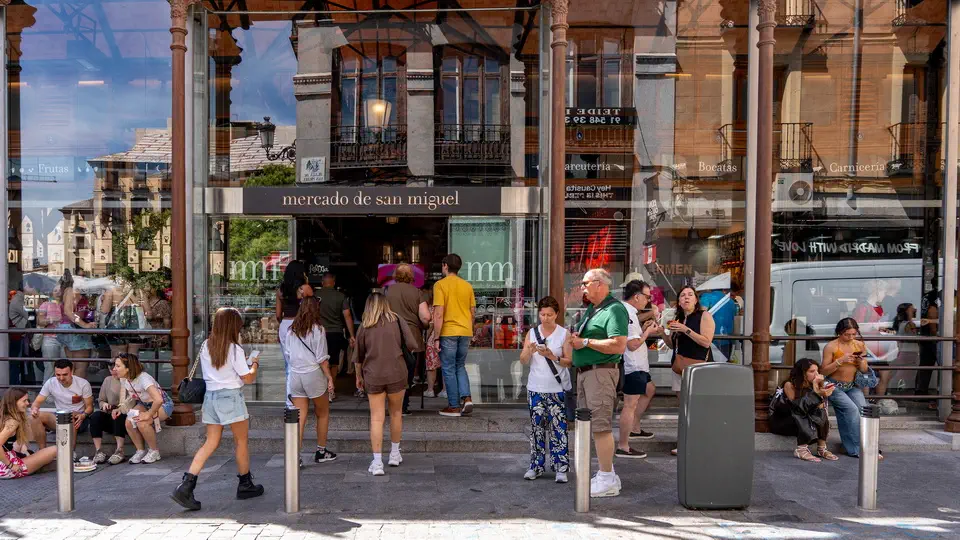
Mercado de San Miguel stands in the heart of Madrid’s historic centre, on Plaza de San Miguel, literally just a few dozen steps from Plaza Mayor. Its location is excellent, as you can easily combine a visit to the market with sightseeing at some of the most important attractions in the Spanish capital. It takes only two or three minutes to walk here from Plaza Mayor. Puerta del Sol, Almudena Cathedral, Teatro Real and the Royal Palace are also nearby. If you are planning to explore this part of the city, Mercado de San Miguel makes a natural stop for a quick bite to eat.
After visiting the market, you can continue towards the Royal Palace and stop at the small but very pleasant Jardines del Cabo Noval. The garden is not particularly large, but after the noise and bustle inside the market hall, its peaceful atmosphere can feel like a genuine relief. The nearest Metro stations are Ópera, served by lines 2 and 5, and Sol, served by lines 1, 2 and 3. However, if you are exploring central Madrid on foot, you probably will not need to use public transport.
First impressions—a historic market hall filled with enticing aromas
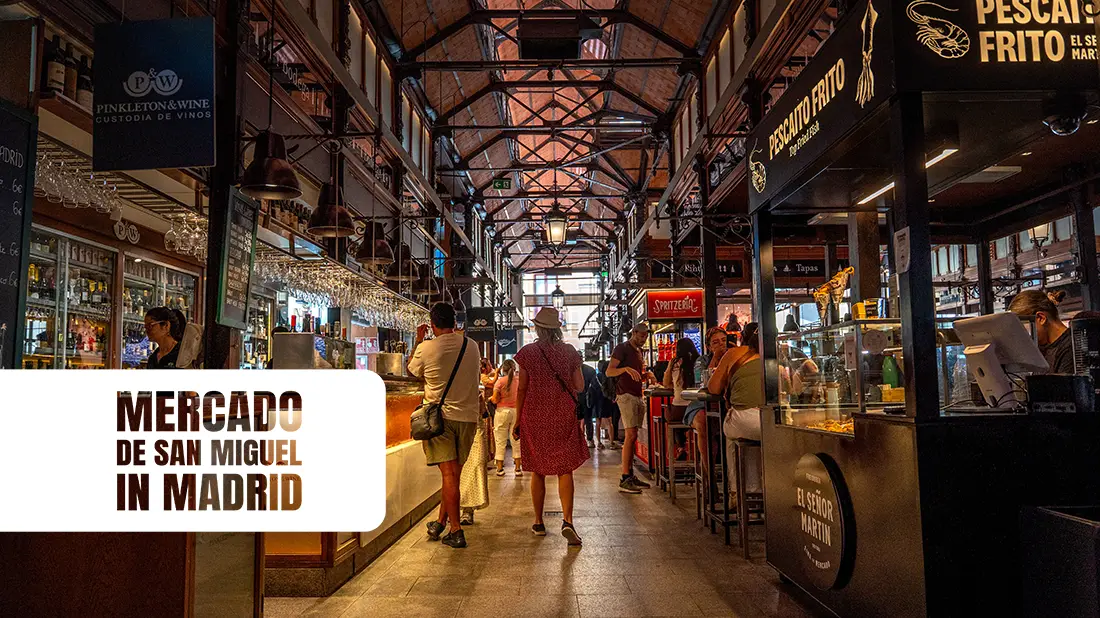
I liked the Mercado de San Miguel building before I had even stepped inside. It does not look like an ordinary market hall. Its iron structure, large glass panels and decorative details make it resemble an elegant pavilion from the early 20th century. Through the glass walls, you can see the activity inside. People wander between the stalls, waiters serve glasses of wine, and vendors arrange small portions of tapas as carefully as if they were preparing exhibits for a display. Everything looks incredibly tempting.
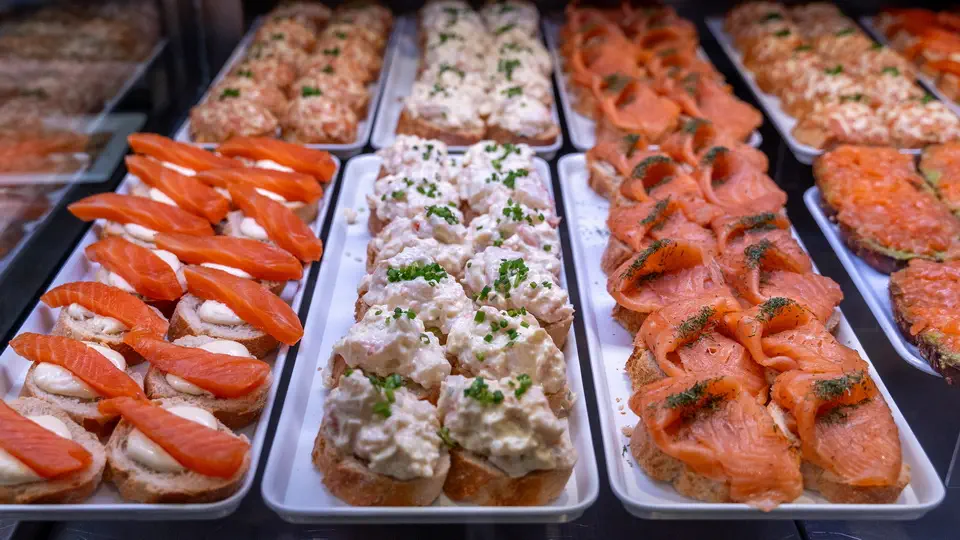
As soon as I entered, several aromas reached me at once. Fried croquettes, cured ham, seafood, cheese and freshly baked bread created a combination that instantly made my earlier promise to “just have a look around” completely meaningless. That is precisely what I like about places like this. You do not have to study a long menu or wonder what might be hiding behind an unfamiliar Spanish name. Most of the dishes are displayed right in front of you. All you need to do is point at whatever looks best. The problem is that almost everything here looks good.
The history of Mercado de San Miguel
Before the present market hall was built, this site was occupied by the Church of San Miguel de Octoes. The church was badly damaged by a fire towards the end of the 18th century and demolished in the early 19th century. An open-air market then began operating on the newly created square. At first, it consisted of makeshift stalls selling mainly fish, bread, vegetables and other products needed by residents of the surrounding neighbourhoods. However, conditions were not particularly hygienic. Eventually, the Madrid authorities decided to organise the market properly and construct a covered building.
Construction of the present Mercado de San Miguel began in 1913. It was designed by the Spanish architect Alfonso Dubé y Díez, and the market hall officially opened in May 1916. For its time, it was a remarkably modern structure. Its metal framework created a spacious interior, while the extensive glazing allowed plenty of natural light to enter.
For most of the 20th century, the hall served residents as a traditional food market. Over time, however, it began to lose customers. Supermarkets appeared, shopping habits changed, and maintaining the ageing building became increasingly difficult. At the beginning of the 21st century, Mercado de San Miguel underwent a major transformation. Following its renovation, the hall reopened on 13 May 2009, this time in an entirely new role. Instead of an ordinary market, it became an exclusive gastronomic destination where visitors could sample dishes from different regions of Spain.
In 2000, the building was officially recognised as a site of special cultural importance. Today, it is the only surviving market hall in Madrid with its complete historic iron structure. Further work was carried out between 2023 and 2026, including strengthening the pillars, repairing the roof and protecting the foundations.
What can you eat at Mercado de San Miguel in Madrid?

The market hall contains more than 30 stalls. There is no single menu shared by all of them. Each stall specialises in something different, allowing you to put together your meal from several small portions.
I started with olives. That might not sound particularly exciting, but the choice was impressive. Olives stuffed with cheese, peppers, anchovies, almonds, or garlic looked like tiny appetisers prepared for an elegant reception. Next came the croquettes, which are available in dozens of different varieties throughout Spain. Some specialities worth trying to include:
- jamón ibérico—thinly sliced, dry-cured Iberian ham;
- Spanish cheeses, particularly Manchego;
- croquettes filled with ham, cheese, cod, or mushrooms;
- pintxos served on small slices of bread;
- tortilla española made with potatoes and eggs;
- marinated olives and vegetables;
- oysters and other seafood;
- fried squid;
- garlic prawns;
- bacalao, or cod prepared in several ways;
- paella and other rice-based dishes;
- empanadas with various fillings;
- churros and other Spanish desserts.
I was particularly impressed by the seafood stalls. The oysters, crabs, prawns, mussels, and pieces of fish looked exceptionally fresh. Some products were prepared right in front of the customers. To accompany your food, you can order a glass of Spanish wine, sherry, vermouth, beer or cava. In my opinion, a glass of wine and two or three small portions of tapas suit the character of this place perfectly.
If you are interested in Spanish customs, food and the sometimes surprising behaviour of the locals, have a look at our interesting facts about Spain and the Spanish. They will help you understand why eating together, talking and spending a long time around the table are so important here.
Delicious, but the prices can hurt
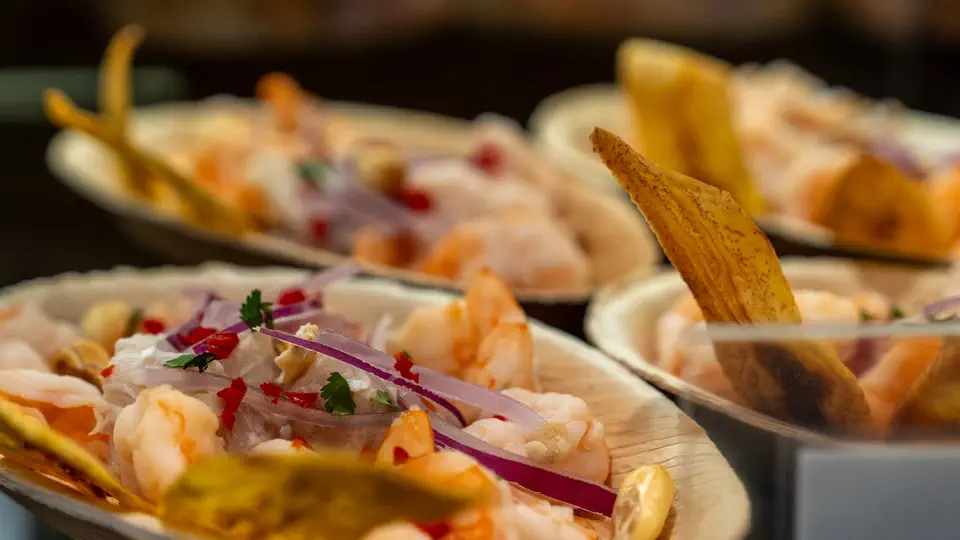
I am not going to pretend that Mercado de San Miguel is cheap because it simply is not. You can pay as much for just a few mouthfuls here as you would for a much larger meal in a less touristy part of Madrid. A small serving of tapas usually costs at least a few euros. Seafood, good Iberian ham and more elaborate dishes are even pricier. A single snack may not look particularly dangerous for your wallet, but once you buy five of them, add a glass of wine and then give in to the temptation of dessert, the total begins to rise at an impressive rate.
That is precisely the trap of Mercado de San Miguel. You buy everything separately, often from several stalls, so you do not immediately realise how much you are spending altogether. It is only later that you start adding up the receipts and wondering whether you have just eaten the most expensive olives of your life. In return for the higher prices, however, you get high-quality products, an enormous choice and the opportunity to sample many flavours in one place. You are also paying for the location, the historic surroundings and the market’s popularity. Mercado de San Miguel is a tourist attraction, and its prices will not let you forget it.
My advice is simple: set yourself a budget in advance and choose only the things you genuinely want to try. Do not buy everything that looks attractive because you will leave feeling satisfied, but also noticeably lighter in the pocket.
Summer crowds — when patience comes in very handy
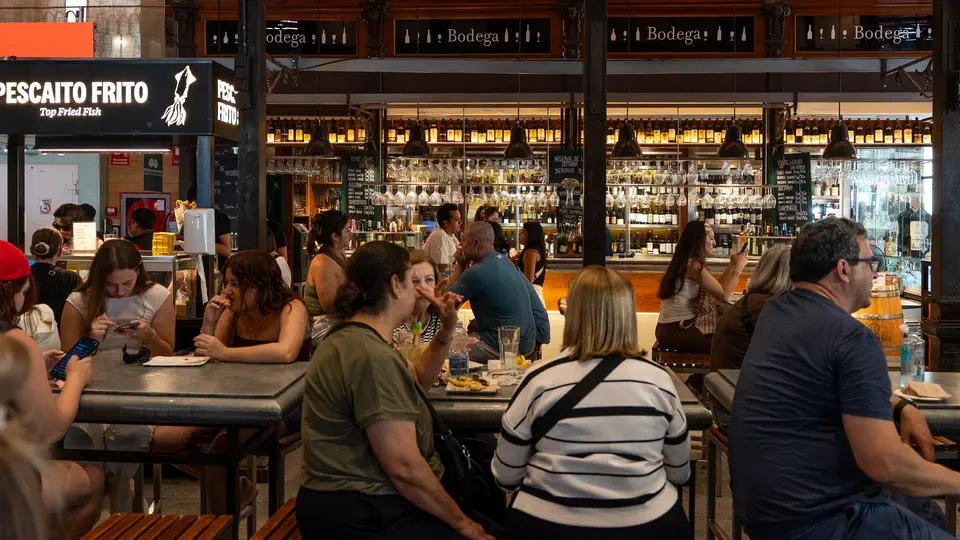
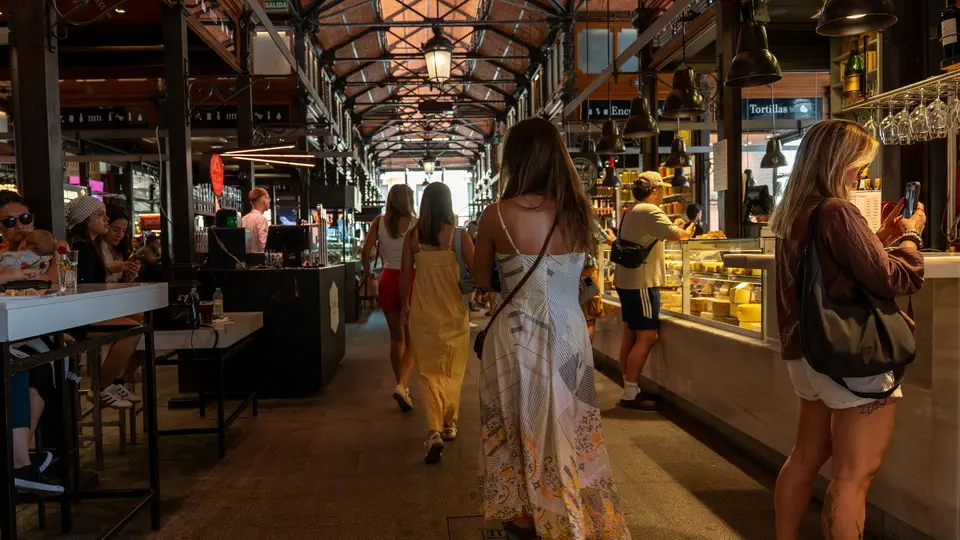
During the summer, Mercado de San Miguel can become unbearably crowded. It gets noisy inside, the aisles between the stalls become blocked, and finding a free table requires patience, quick reactions and a bit of luck.
At the busiest times, I felt as though I was spending more time trying to avoid other people than looking at the food. Someone would suddenly stop in front of a stall, somebody else would try to squeeze past while carrying a glass of wine, and another person would be taking an entire series of photographs of their tapas. It is all part of the atmosphere, but after a while it can become rather tiring.
The market is usually busiest at lunchtime and in the evening. If you visit Madrid in July or August, try to arrive shortly after it opens. The selection is still excellent in the morning, the staff have more time, and you can look around the stalls without being constantly jostled. The middle of the afternoon, between the main mealtimes, can also be a good time to visit.
Remember, however, that Spanish people eat lunch and dinner later than people in Poland. The crowds may therefore arrive just when you think lunchtime ended hours ago. After exploring the busy city centre, it is worth finding somewhere quieter. If you have more time, head to Retiro Park, the green heart of Madrid. It covers more than 125 hectares, so finding a little space for yourself should not be a problem.
Mercado de San Miguel or a traditional Madrid market?
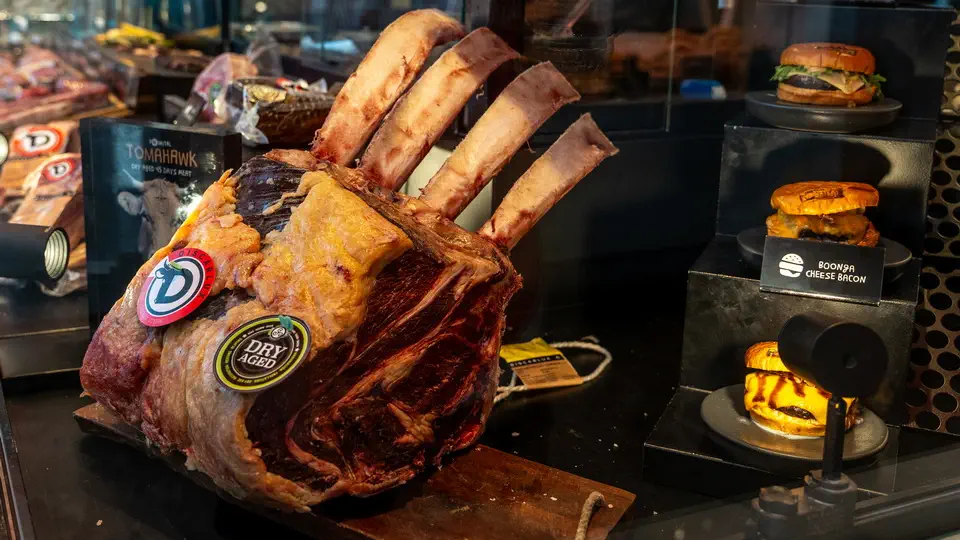
Mercado de San Miguel does not show the everyday lives of Madrid’s residents in the same way as local neighbourhood markets do. You will not see many people buying potatoes for lunch, a kilogram of onions or enough tomatoes to last the entire week. It is primarily an elegant food hall created for tourists, food lovers and anyone who wants to sample a wide range of Spanish products in a short time. It is worth being aware of this beforehand, so you do not later complain that the place is not “local” enough.
If you are looking for an ordinary market, you should also visit Mercado de la Cebada, Mercado de Antón Martín or Mercado de Maravillas. The atmosphere there is less polished, prices are often lower, and you will meet more residents among the customers. I think of Mercado de San Miguel as a kind of culinary museum, except that you can eat the exhibits. Everything is beautifully presented, carefully lit and arranged to catch your eye. It may not be the most authentic market in Madrid, but it is certainly one of the most impressive.
And since I have mentioned museums, I recommend the Museum of the History of Madrid to anyone interested in the city’s past. It is a good place to learn more about the development of the Spanish capital and see how Madrid has changed over the centuries.
Mercado de San Miguel opening hours and how to plan your visit
According to the latest information, Mercado de San Miguel is open from 10:00 am until midnight from Sunday to Thursday, and from 10:00 am until 1:00 am on Fridays, Saturdays and the days before public holidays. Admission to the market hall is free. You only pay for the food and drinks you order. It is worth checking the current opening times on the official Mercado de San Miguel website before your visit, particularly during public holidays and major events taking place in Madrid.
Around 20 minutes is enough if you only want to look around the hall. If you plan to try a few snacks and have a glass of wine, allow between 45 minutes and an hour. It is best not to arrive here feeling starving. That may sound strange, but hungry people tend to order with their eyes, and every stall will convince them that it is selling the most delicious thing in the whole of Madrid. I recommend the following plan:
- First, walk around the entire hall and see what food is available.
- Do not buy anything from the first stall you come across.
- Choose two or three dishes that you have never tried before.
- Order a glass of wine, vermouth or cava to accompany them.
- If you see a free place at a table, do not spend too long thinking about it.
- Save some money for dessert or coffee outside the market hall.
What can you see near Mercado de San Miguel?
The market’s location allows you to plan a very enjoyable route through central Madrid. You can begin at Puerta del Sol, walk to Plaza Mayor, visit Mercado de San Miguel and then continue towards Almudena Cathedral and the Royal Palace. Along the way, I recommend stopping at the Jardines del Cabo Noval mentioned earlier. If the weather is good, you can then continue your walk through Plaza de Oriente and the Sabatini Gardens.
It is worth saving Retiro Park for later in the day. It lies in a different part of the city centre, but you can easily reach it on foot or by Metro. Along the way, you can visit Madrid’s most important museums or simply wander through the city’s streets.
Is Mercado de San Miguel worth visiting? My opinion
In my opinion, it is definitely worth visiting, although not necessarily to eat a full lunch. Mercado de San Miguel impressed me with its historic architecture, colours, aromas and enormous selection of Spanish delicacies. The place has a lively energy that suits Madrid perfectly. What bothered me most were the high prices and the summer crowds. At times, the hall was so packed that it was difficult to approach a stall without being jostled, let alone find a place at a table. Even so, I remember my visit very positively.
Mercado de San Miguel is best treated as a culinary attraction rather than an ordinary market. Come in the morning, walk around all the stalls, choose a few snacks and enjoy the atmosphere. You do not have to try everything. Save something for your next visit because I am almost certain that when you return to Madrid, you will find yourself coming back here again.
Mercado de San Miguel in Madrid—facts, information and interesting details
- Mercado de San Miguel opened in 1916. Construction of the market hall began three years earlier under the supervision of architect Alfonso Dubé y Díez. At the time, it was one of the most modern commercial buildings in Madrid.
- A church once stood on the site of the present market. The Church of San Miguel de Octoes was badly damaged by a fire in 1790 and demolished at the beginning of the 19th century. The name of the former church survives in the names of both the square and the market.
- The original market operated in the open air. After the church was demolished, makeshift stalls appeared in the square, selling fish, vegetables, bread and other products needed by Madrid’s residents.
- Mercado de San Miguel is the last market hall of its kind in Madrid. It is the only surviving historic market in the city with a structure constructed almost entirely from iron.
- The market hall’s design was inspired by European market architecture. Similar structures were built in Paris, London, and other rapidly developing cities during the 19th and early 20th centuries.
- Mercado de San Miguel was not originally a destination for food lovers. For many decades, residents came here to buy ordinary food products such as meat, fish, fruit, vegetables, and bread.
- Much of the building’s exterior consists of glass. The glazing allows plenty of natural light into the interior, while passers-by can see the colourful stalls and lively activity inside before entering.
- The market is located only a few steps from Plaza Mayor. This excellent location makes Mercado de San Miguel one of the most frequently visited gastronomic attractions in central Madrid.
- The building received special protection in 2000. Mercado de San Miguel was designated a Bien de Interés Cultural, recognising it as a site of significant importance to Spain’s cultural heritage.
- In 2009, the market hall began an entirely new chapter in its history. Following an extensive renovation, the traditional market was transformed into an elegant gastronomic space where visitors can sample dishes from different regions of Spain.
- Mercado de San Miguel is considered Spain’s first major gastronomic market. Its success contributed to the popularity of similar destinations combining historic architecture, tourism, and food.
- There are more than 30 food and drink stalls inside the hall. Individual vendors specialise in products such as cheeses, cured meats, croquettes, olives, seafood, wine, desserts, and dishes prepared in front of customers.
- Today, Mercado de San Miguel is no longer an ordinary food market. Most visitors do not come here to buy groceries for home, but to enjoy ready-to-eat snacks and drinks while discovering the flavours of Spain.
- Seafood is one of the market’s greatest attractions. Visitors can sample oysters, prawns, mussels, crabs, squid, and fish sourced from different parts of the Spanish coast.
- Mercado de San Miguel allows you to take a culinary journey across Spain. Without leaving the building, you can try cheeses from Castile, seafood from Galicia, Iberian cured meats and dishes inspired by Basque cuisine.
- Stuffed olives are among the most popular snacks. You can find olives combined with anchovies, cheese, peppers, almonds, garlic and other ingredients that transform a simple snack into something remarkably attractive.
- Small portions dominate at Mercado de San Miguel. This way of serving food allows you to try several specialities, although it also makes it surprisingly easy to lose track of your spending.
- Prices at the market are higher than in many Madrid bars. You are paying not only for the food, but also for the popular location, the elegant presentation and the opportunity to eat inside a historic market hall.
- Mercado de San Miguel attracts millions of visitors every year. It is regularly listed among Madrid’s most popular attractions and is particularly popular with international tourists and food lovers.
- The hall can become packed during the summer. It is busiest at lunchtime and in the evening, when finding a free seat at one of the communal tables can require a great deal of patience.
- The quietest time to visit is usually shortly after opening. Arriving in the morning allows you to look around the stalls, order food and take photographs without constantly having to squeeze past other visitors.
- Customers buying food from different stalls share the same tables. The market has a relaxed communal seating system, meaning that everyone can order something different and then sit down to eat together.
- Mercado de San Miguel remains open until late at night. From Sunday to Thursday, the hall normally closes at midnight, while on Fridays, Saturdays, and the nights before public holidays it stays open until 1:00 am.
- Between 2023 and 2026, important work was carried out to protect the building. The individual stages included strengthening the external pillars, renovating the roof and securing the foundations of the historic structure.
- Mercado de San Miguel reopened on 26 February 2026. Following almost two months of final conservation work, all the previous stalls returned to the hall, while its gastronomic character remained unchanged.
- I also invite you to read our other articles related to Madrid:
- Retiro Park in Madrid is one of those places that instantly lifts your spirits.
- Museum of the History of Madrid (Museo de Historia de Madrid).