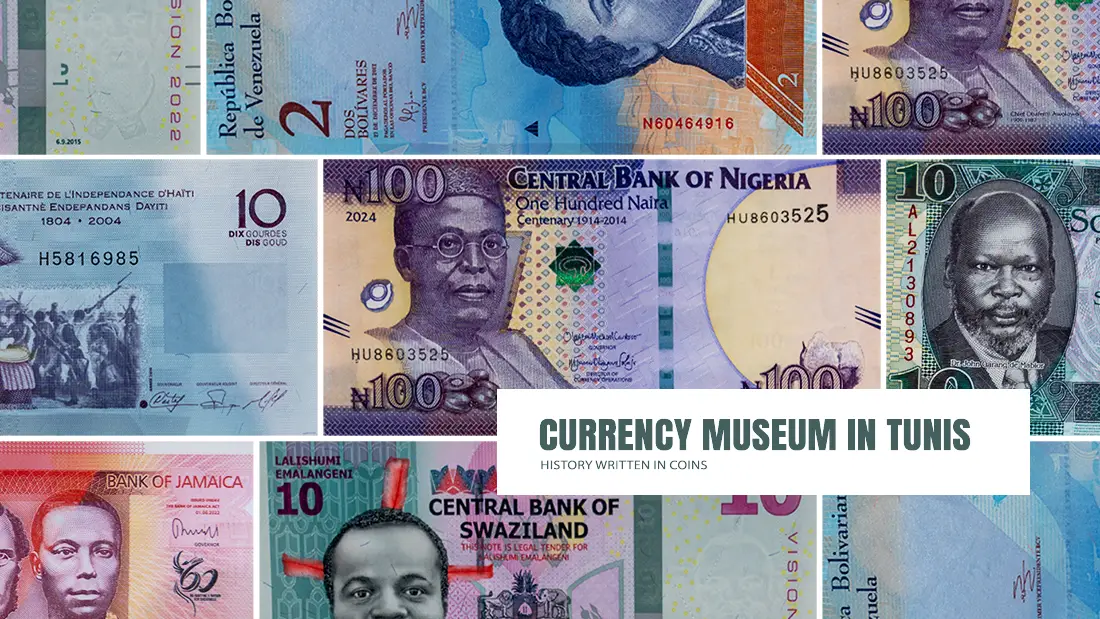
The Currency Museum in Tunis is a small and little-known attraction, but one that is well worth adding to your sightseeing itinerary.
Most tourists visiting Tunis head straight for the Medina, the Bardo Museum or the city’s lively avenues. Few realise, however, that only a few minutes from the centre is a place where you can travel through more than two and a half thousand years of Tunisian history. I am talking about the Currency Museum, located inside the headquarters of the Central Bank of Tunisia on Avenue Mohamed V.
It is one of the most underrated museums in the capital. Although it is devoted to numismatics, it will appeal to far more than dedicated coin collectors. The exhibition reveals how countries, religions, rulers, and trading routes have changed over the centuries, with the entire story told through coins, banknotes, and medals – and that is precisely what I would like to tell you about today.
The Currency Museum in Tunis and its history
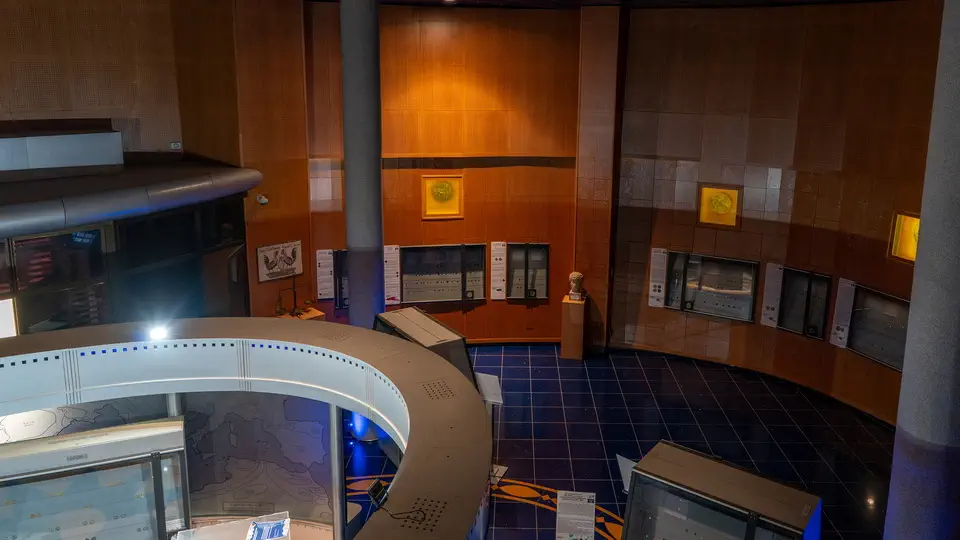
The Currency Museum opened in 2008 as part of the Central Bank of Tunisia. Its principal purpose was to preserve the country’s remarkably rich numismatic heritage and make it accessible to the public. The collection covers more than twenty-five centuries of monetary history in the lands of present-day Tunisia, beginning with the first coins minted by the Carthaginians and continuing through to modern Tunisian dinars.
The museum occupies an area of approximately 600 square metres and has been designed in a contemporary style. The architect gave the interior the form of an inverted cone with an elliptical base, allowing visitors to move through the exhibition in chronological order. Alongside the permanent collection, the museum also contains an area for temporary exhibitions, a library, a media library and a museum shop.
A journey through the history of Tunisia
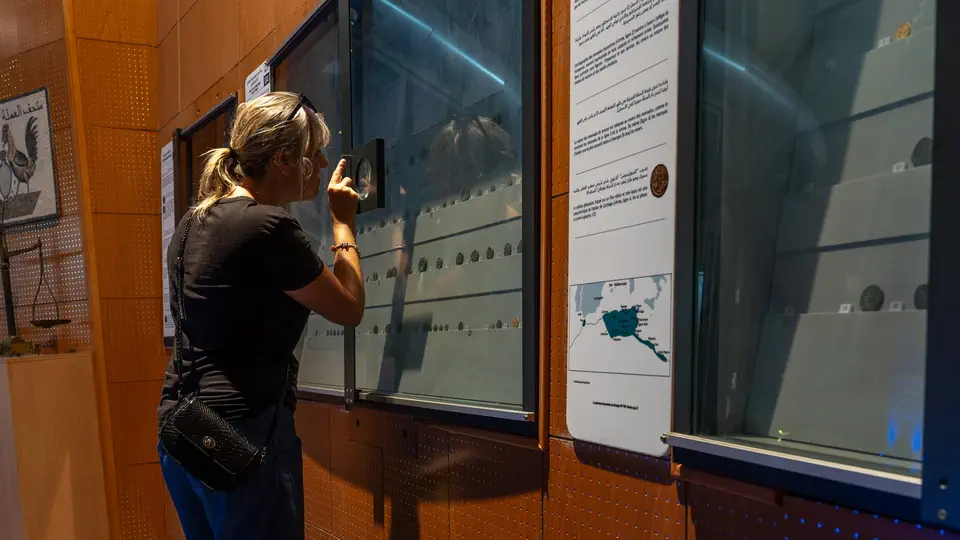
The visit begins with the Punic period, where you can admire the earliest coins minted in Carthage from the end of the fifth century BC. Many are decorated with distinctive Phoenician symbols, including the head of the goddess Tanit, horses and palm trees. Even then, money was far more than a means of payment; it was also an instrument of propaganda and a symbol of the power enjoyed by one of the wealthiest states in the ancient world.
The next section presents Numidian coins, recalling the reign of King Masinissa and the emergence of the first powerful Berber kingdom. Visitors then move into the Roman period, represented by one of the richest sections of the exhibition, where coins bearing the portraits of emperors from Augustus to Constantine the Great can be seen.
The part devoted to the Vandal and Byzantine periods is particularly interesting. Coins from these eras are among the museum’s rarest exhibits and illustrate the turbulent transition between antiquity and the Middle Ages. A large section of the museum also explores the history of Islam in North Africa. Coins issued under the Aghlabids, Fatimids, Hafsids and the Ottoman Empire show how inscriptions, calligraphy and religious symbols evolved as successive dynasties came to power.
The Currency Museum in Tunis – from the Protectorate to the modern dinar
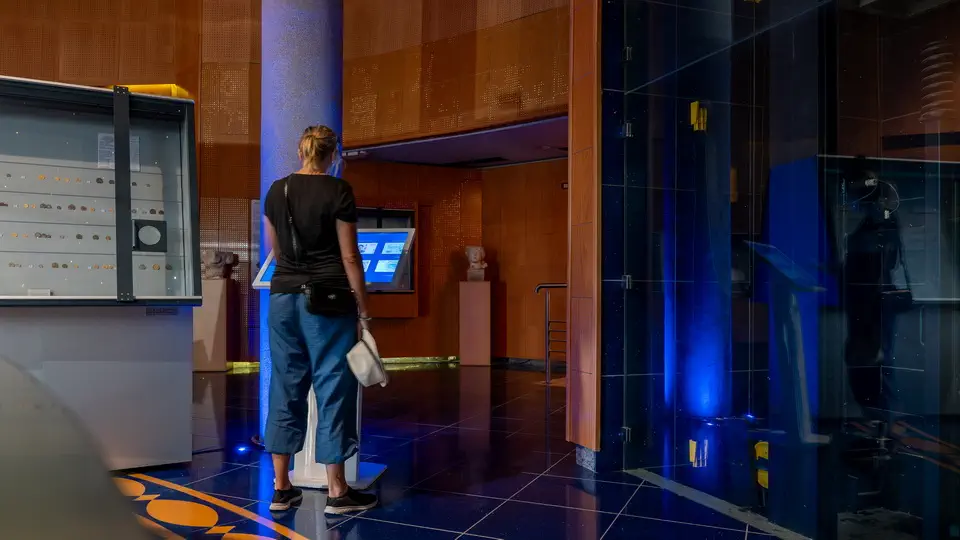
One of the most fascinating parts of the exhibition is devoted to the nineteenth and twentieth centuries. Here you can see the first Tunisian banknotes, including an exceptionally rare 50-rial note from 1847, considered one of the museum’s most valuable exhibits. The following displays present money from the period of the French Protectorate, followed by the first coins and banknotes issued by independent Tunisia after 1956.
The exhibition concludes with a presentation of modern coins and banknotes used in the Tunisian Republic. Visitors can trace how their appearance, security features and production technologies have changed over the years.
The Currency Museum in Tunis is about more than coins
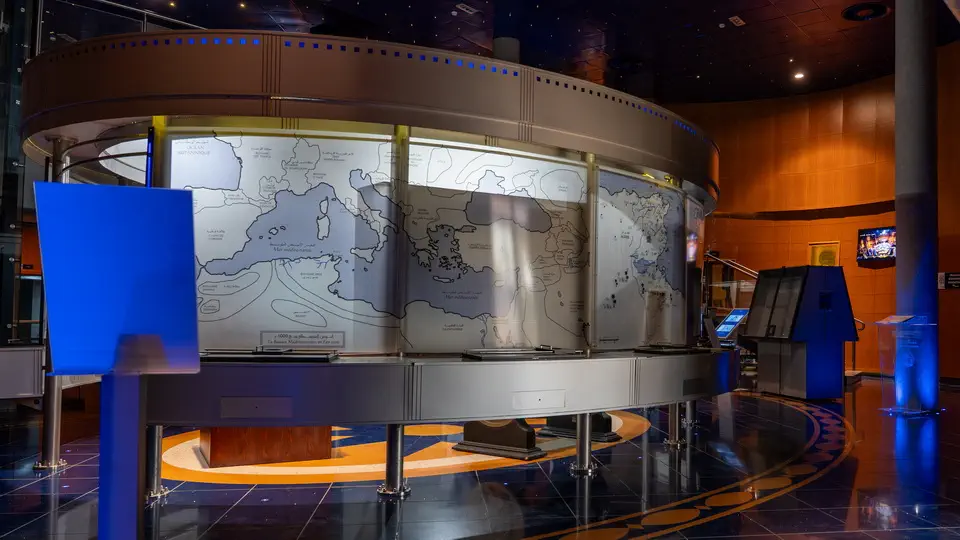
Although its name suggests that the museum focuses exclusively on coins, there is actually much more to see. The display cases contain commemorative medals, state decorations, historic banknotes, minting dies and tools once used in coin production. Part of the exhibition is also devoted to the history of the Central Bank of Tunisia and the development of the country’s modern financial system.
The modern Currency Museum in Tunis – practical information
Recently, the museum has undergone a process of digital modernisation. New multimedia features have been introduced, together with digital catalogues of the collection and an online virtual tour. These additions have made the museum considerably more appealing to younger visitors and to people who may never previously have taken an interest in numismatics.
The museum is located on Avenue Mohamed V, inside the Central Bank of Tunisia, around fifteen minutes’ walk from the historic Medina. It is currently open from Tuesday to Saturday between 9:30 am and 4:30 pm, and admission is free. Before visiting, it is advisable to check the latest opening hours on the museum’s official website, as they may change during public holidays or special events. The Currency Museum can easily be combined with a walk through the Medina or a visit to the Central Market in Tunis.
Is the Currency Museum worth visiting?
Definitely. This is one of those places that surprises almost everyone who steps through its doors. Even people with no previous interest in numismatics quickly discover that the history of money is also the history of Tunisia itself. Every coin tells a story about the conquerors, dynasties, religions and cultures that left their mark on this land.
If you are looking for an attraction that is quieter than the Bardo Museum or the Medina during your stay in Tunis, the Currency Museum is an excellent choice. It is a peaceful, modern and fascinating place that allows you to view Tunisia’s past from an entirely different perspective – through small pieces of metal and paper possessing enormous historical value.
The Currency Museum in Tunis – facts, information and interesting details
- The Currency Museum in Tunis is housed inside the headquarters of the Central Bank of Tunisia – It is one of the few numismatic museums in the world operating directly inside a central bank building. Visitors can therefore learn about both the history of money and the modern role of the institution responsible for maintaining the currency’s stability.
- The history presented in the museum covers almost 2,500 years – The exhibition begins with Carthaginian coins from the fifth century BC and concludes with modern Tunisian dinars, creating a remarkable journey through every major period in the country’s history.
- You can see coins from the age of powerful Carthage – The oldest exhibits feature distinctive symbols of the Carthaginian state, including the goddess Tanit, horses and palm trees, all of which became recognisable emblems of Phoenician civilisation.
- The Currency Museum in Tunis contains the first Tunisian banknote – One of the most valuable exhibits is a 50-rial banknote dating from 1847. It is considered the first form of paper money issued within the territory of present-day Tunisia.
- The exhibition covers approximately 600 square metres – Although the museum is not particularly large, the modern presentation makes it comfortable to explore and allows visitors to examine the successive periods of Tunisia’s monetary history in considerable detail.
- The museum follows a chronological route – The architects designed the exhibition so that visitors pass naturally through successive historical periods, beginning in antiquity and continuing all the way to the twenty-first century.
- The museum displays more than Tunisian coins – Its collection also includes money minted by the Greeks, Romans and Byzantines, as well as numerous Arab and Ottoman dynasties that left their mark on the history of North Africa.
- The collection from the French Protectorate is one of the largest in the world – The Central Bank of Tunisia owns more than 1,600 coins dating from between 1881 and 1956, representing almost every issue produced during this period.
- The coins reveal religious and cultural changes – Images of pagan deities gradually gave way to Arabic inscriptions and Islamic calligraphy, while figurative designs eventually returned on modern coins.
- The museum explains the birth of the Tunisian dinar – Visitors can learn why a new currency was introduced after independence and discover what the first coins and banknotes of the Tunisian Republic looked like.
- The exhibition also contains medals and commemorative coins – Alongside ordinary currency, visitors can see special issues produced to mark important national events and anniversaries of Tunisian independence.
- Ancient coins were genuine works of art – Some exhibits display remarkable precision despite having been produced well over two thousand years ago, often by hand and with the use of relatively simple tools.
- The Currency Museum in Tunis organises academic conferences – The museum regularly hosts lectures on monetary history, archaeology, economics and numismatic art, attracting researchers from different countries.
- A virtual tour of the museum is available online – People unable to travel to Tunis can explore the exhibition through an online tour prepared by the museum.
- Admission to the museum is free – It is one of the few attractions in central Tunis that can be visited without purchasing a ticket, making it an excellent addition to a sightseeing walk through the city.
- The coins tell the story of successive empires – Every change of power, from the Carthaginians and Romans to the Arabs and French, introduced new forms of currency, allowing visitors to follow the country’s history through pieces of metal.
- The exhibition shows how banknote security features have evolved – Visitors can follow the development of printing techniques and anti-counterfeiting measures, from basic watermarks to sophisticated modern security features.
- The museum welcomes families and school groups – Special educational workshops are organised in which children can learn about the history of money through games and interactive activities.
- Photography is permitted – Visitors may photograph the exhibits, provided that they do not use flash or a tripod without the museum’s permission.
- Every coin is a miniature historical chronicle – As you examine the successive display cases, it becomes clear that coins were not only a means of payment but also powerful instruments of propaganda. Rulers placed their names, religious symbols and references to important events on them to emphasise their authority and leave a permanent record for future generations.