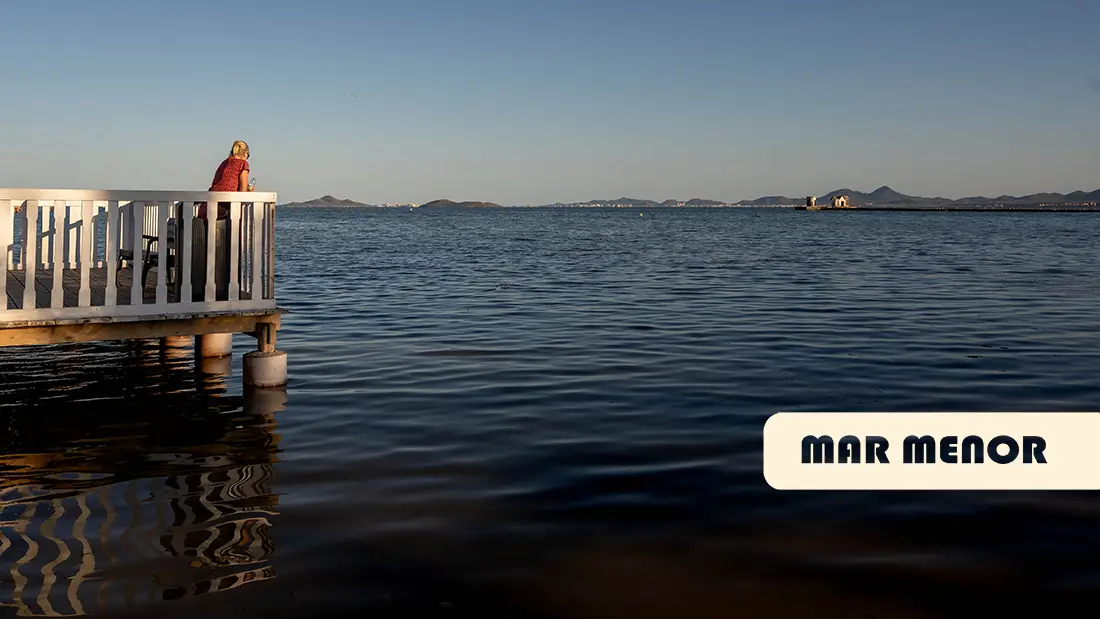
Mar Menor, on Spain’s Costa Cálida, is an extraordinary saltwater lagoon and one of the Murcia region’s greatest natural treasures.
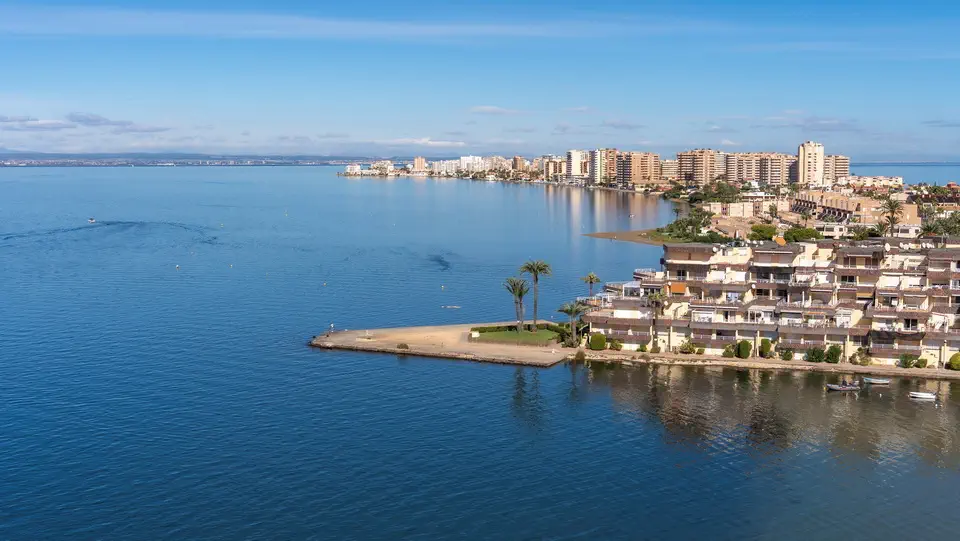
When you look at a map of south-eastern Spain, it is hard to miss this distinctive body of water, separated from the Mediterranean Sea by a long, narrow strip of land. This is Mar Menor, which translates from Spanish as the Little Sea. The name is slightly misleading because, in reality, it is an enormous lagoon covering approximately 170 square kilometres. It is the largest saltwater lagoon in Europe and one of the most recognisable natural features of the Murcia region.
Mar Menor is particularly interesting because of its geographical location. It is separated from the open Mediterranean by the La Manga sandbar, which I have already covered in a separate article. This means that you can swim in the open sea on one side of the strip of land and enjoy the much calmer waters of the lagoon on the other. If you are visiting La Manga, it is well worth setting aside some time to explore Mar Menor. It is much more than just a place for sunbathing and swimming. You will find small volcanic islands, salt marshes, traditional fishing harbours and natural habitats that provide shelter for numerous bird species. There is, however, another side to the story: serious environmental problems that have threatened this remarkable ecosystem for many years. If you are looking for a comfortable and safe holiday in Spain, have a look at this page. You will find current offers and ideas for a wonderful getaway.
Where is Mar Menor?
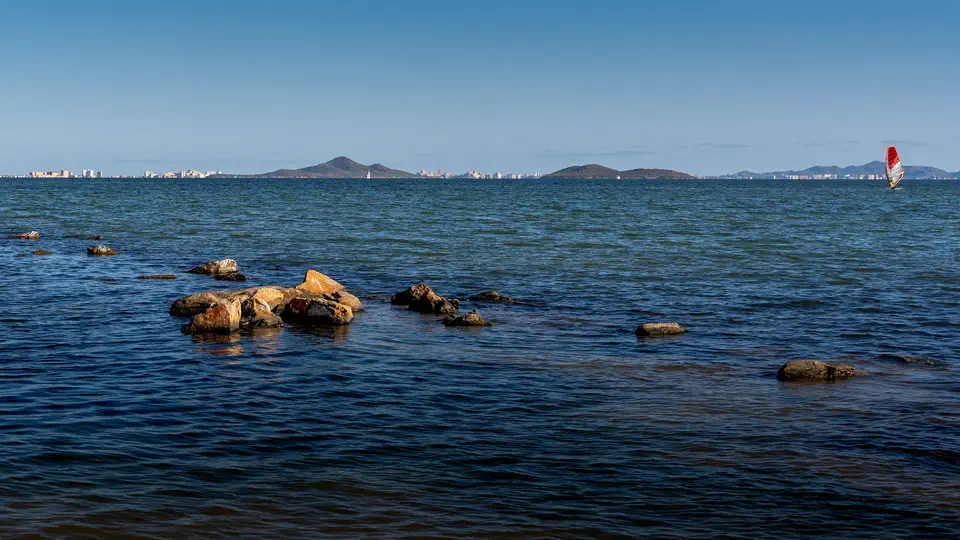
Mar Menor is located in the Region of Murcia, on Spain’s south-eastern coast. The lagoon stretches between the towns of San Pedro del Pinatar, San Javier, Los Alcázares and Cartagena. To the east, it borders the La Manga sandbar, which separates its waters from the Mediterranean Sea. It is a truly extensive body of water, with a shoreline of approximately 73 kilometres and a maximum depth of only around 7 metres. In many places, the water is considerably shallower, which is why it warms up quickly during the summer. The lagoon has an average depth of approximately 4 metres.
Laguna Mar Menor covers approximately 170 square kilometres, although older publications sometimes give a figure of around 135 square kilometres. This is partly due to differences in how the boundaries of the lagoon and its coastal areas are defined. What is particularly impressive, however, is its setting. Standing on the shore, you could easily imagine that you are looking at an enormous lake. The water is usually calm, and islands and distant stretches of coastline can be seen on the horizon. Only when you realise that this is saltwater connected to the Mediterranean does the landscape take on a rather different character.
Why is Mar Menor so salty, and where did its volcanic islands come from?
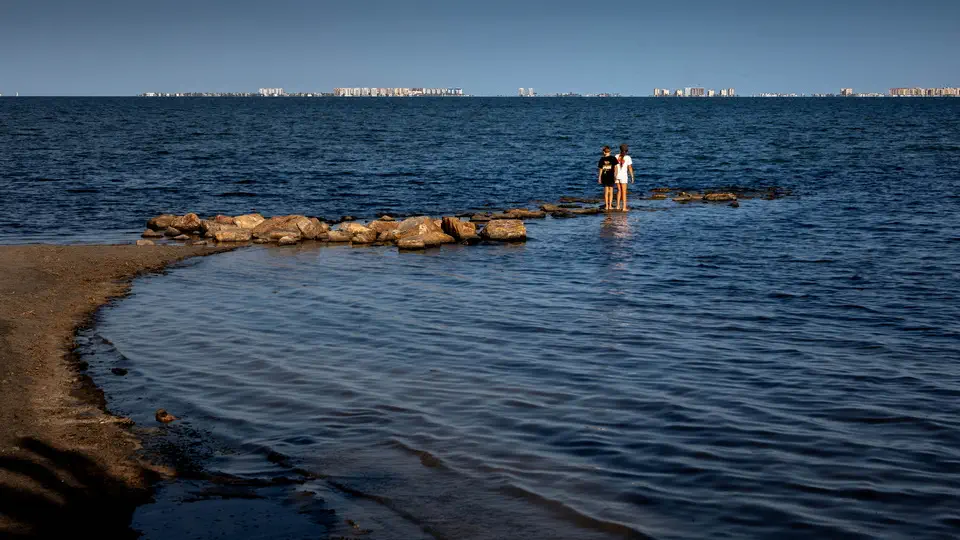
One of the most interesting features of this lagoon is its unusually salty water, which has a higher salinity than the open Mediterranean Sea. Several factors contribute to this, particularly the shallow depth of the lagoon, high temperatures and intense evaporation. Summers in the Murcia region can be extremely hot. The sun warms the shallow water for many hours each day, causing some of it to evaporate. The mineral salts remain in the lagoon, gradually increasing its salinity.
This does not mean that Mar Menor is completely cut off from the Mediterranean. Water is exchanged between the two bodies of water through natural and artificial channels known in Spanish as golas. The most important of these is El Estacio, through which a considerable volume of water flows. These connections mean that the lagoon is not an enclosed body of water. The combination of shallow water, high salinity and relatively warm temperatures creates particularly unusual natural conditions, allowing species that have adapted to this environment to thrive here.
One of the lagoon’s greatest curiosities is the presence of five islands of volcanic origin. They are not enormous islands with extensive resorts and seaside promenades. Most have retained their natural character and remain an important part of the local landscape. The largest is Isla del Barón, also known as Isla Mayor. Its distinctive shape can be seen from many places along the lagoon’s shoreline. The island is privately owned and is not a typical tourist attraction that visitors can explore freely. Nevertheless, its vegetation and geological origins make it particularly interesting.
Another island is Isla Perdiguera, one of the best-known islands in Mar Menor, which can be seen on organised boat trips. In the past, it was a popular destination for tourists arriving by boat to spend the day away from crowded beaches. The remaining three islands are Isla del Ciervo, Isla del Sujeto and Isla Redonda. Each has a slightly different shape and surface area, but together they form part of the lagoon’s remarkable landscape. Interestingly, Isla del Ciervo has been artificially connected to La Manga by a raised causeway. This has changed its natural character and provides one example of how human activity has altered the environment of Mar Menor.
The wildlife of Mar Menor – flamingos, birds and the underwater world
Mar Menor is much more than a shallow lagoon with warm water and long beaches. If you spend some time exploring this part of Murcia, it is well worth paying attention to the wildlife, as the area around the lagoon is one of the most interesting places for biodiversity along the Spanish Mediterranean coast. Hundreds of animal species live here, ranging from tiny fish hiding among underwater meadows and crabs and molluscs to large wading birds feeding in the shallows.
The most interesting places are those where open water, wetlands and saltwater pools gradually merge into one another. You can find these habitats around San Pedro del Pinatar, among the salt marshes along the northern shore of the lagoon and near Salinas de Marchamalo. These are the places where you can most easily appreciate just how much wildlife exists around Mar Menor.
Birds – the lagoon’s most visible inhabitants
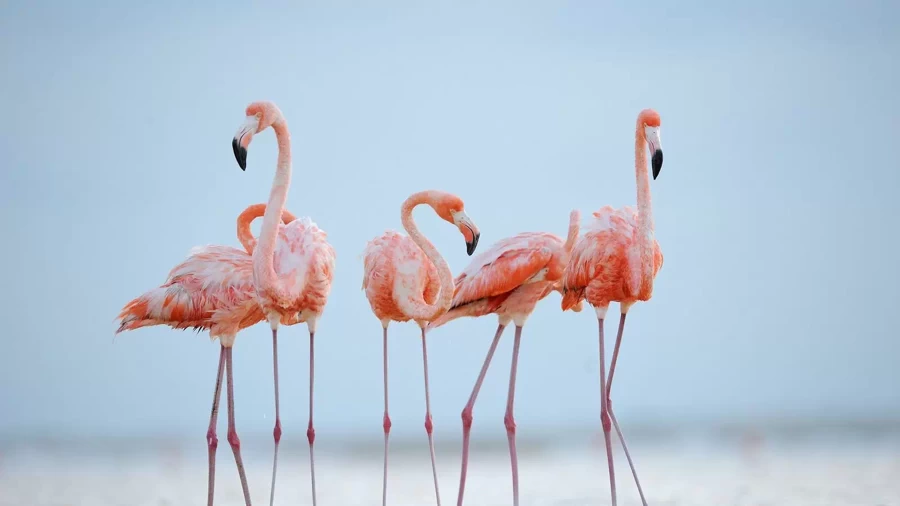
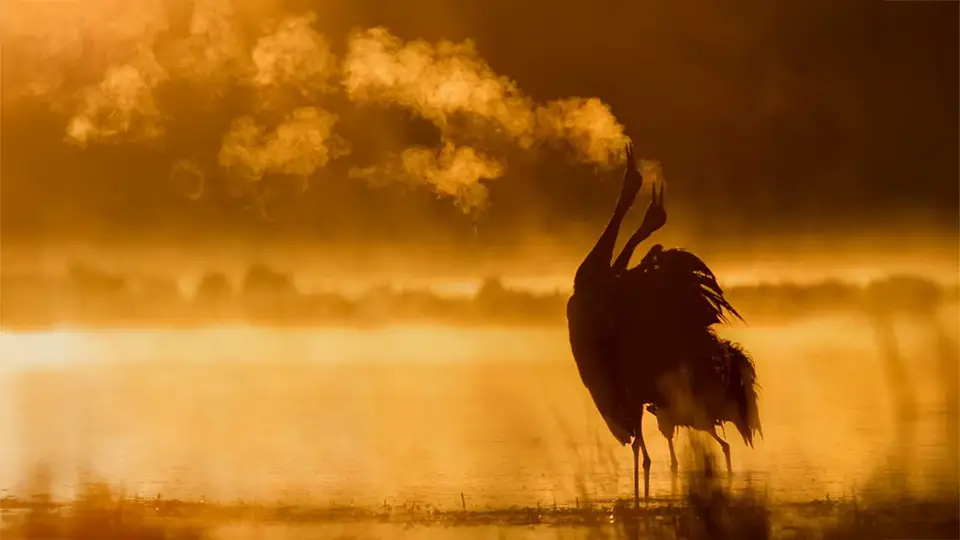
Birds are the easiest animals to spot. All you need to do is stop near the saltwater pools or take a leisurely walk along the shore, and you are likely to see flamingos, herons, gulls, and wading birds feeding in the shallow water. Some arrive here for the winter, others stop during their migrations between Europe and Africa, while several species also nest in the surrounding area.
- Greater flamingos are among the most distinctive birds of Mar Menor. Their long legs allow them to wade through shallow water, while their characteristic curved bills are used to filter tiny organisms and food particles. The colour of their plumage depends partly on pigments found in their diet. Flamingos are particularly easy to observe around the salt marshes and salt pans.
- Black-winged stilts are easy to recognise by their exceptionally long, slender red legs. They look almost as though they are walking on miniature stilts, which explains their English name. They feed in shallow water, picking out tiny invertebrates. The surroundings of Mar Menor provide suitable conditions both for feeding and breeding.
- Grey herons and little egrets hunt for fish, small crustaceans and other aquatic animals. They often stand perfectly still near the water’s edge, patiently waiting for the right moment to strike. The white plumage of a little egret makes it particularly easy to spot against the darker vegetation of the wetlands.
- Kentish plovers and other small wading birds search sandy shores for tiny invertebrates. Some species, including the Kentish plover, depend on natural beaches and dune systems. This is one of the reasons why it is so important to preserve stretches of coastline free from excessive development and tourist activity.
- Other birds found in the region include cormorants, terns, gulls, and grebes. Their numbers can increase considerably during migration periods, as the area around the lagoon provides an important resting and feeding ground for many waterbirds.
Fish of Mar Menor – small species and underwater hunters
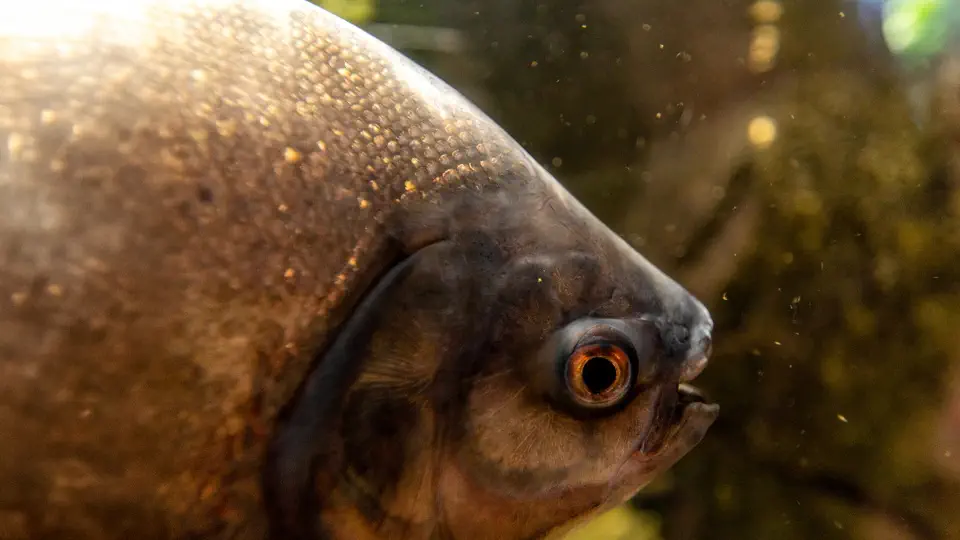
Life beneath the surface is just as active. Mar Menor is home to fish adapted to the lagoon’s particular conditions, including relatively high salinity, shallow water and considerable seasonal temperature variations.
One of its most unusual inhabitants is the seahorse, particularly the long-snouted seahorse (Hippocampus guttulatus). It has an elongated snout, a distinctive body shape and a prehensile tail that allows it to attach itself to underwater vegetation. It swims slowly and often remains almost motionless, which makes it surprisingly easy to overlook. You are unlikely to spot one during an ordinary swim, but its presence demonstrates just how important underwater meadows and natural hiding places are to the lagoon. Seahorses are among the species requiring protection, and their situation in Mar Menor is closely monitored by wildlife specialists.
Another fascinating inhabitant is the Spanish toothcarp (Aphanius iberus), a tiny fish that grows to only a few centimetres in length. It is endemic to the Iberian Peninsula, meaning that it occurs naturally only in this part of the world. Around Mar Menor, it inhabits shallow brackish water, wetlands and certain pools within the saltworks. It is seriously threatened by the loss of suitable habitats. Most tourists will never notice this tiny resident of the lagoon, despite its considerable importance to local wildlife.
The lagoon is also home to gilthead seabream, mullet, European seabass, sardines and various species of goby. Some fish use Mar Menor as a breeding ground and a safe nursery for young individuals, while others spend most of their lives here. European eels are also among its inhabitants, and their life cycle is particularly remarkable. They reproduce in the distant Sargasso Sea, after which young eels travel across the Atlantic and through European waters to reach coastal lagoons and rivers.
Crabs, prawns, and other invertebrates
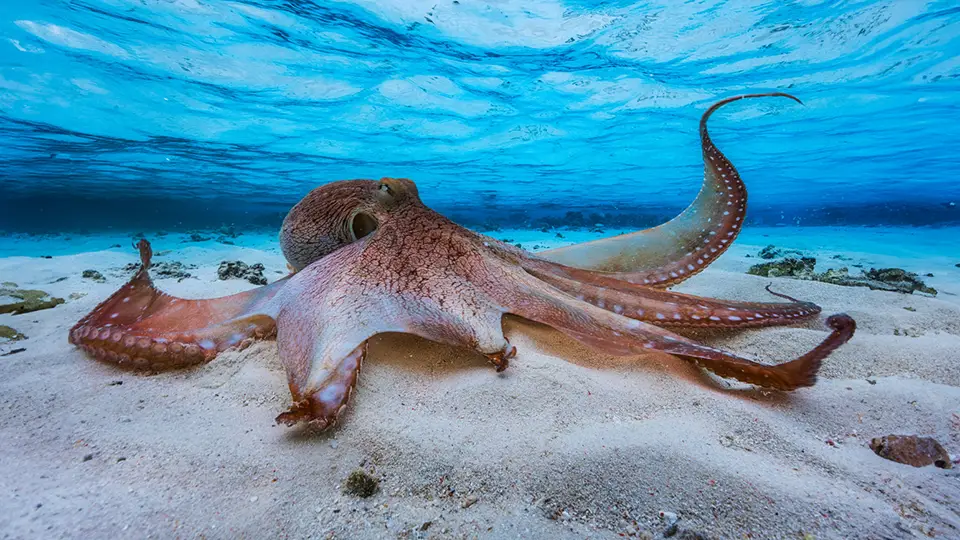
The seabed of Mar Menor provides a home for numerous invertebrates. Crabs, prawns, mussels, sea snails, sea anemones, starfish and jellyfish all live here. Although some are not particularly easy to spot, they form an important part of the local ecosystem.
- The Mediterranean green crab (Carcinus aestuarii) is one of the typical crustaceans found in the lagoon. It can be spotted near the seabed, among stones and aquatic vegetation. Its diet includes small invertebrates, organic remains and various tiny animals.
- Prawns inhabit both the shallower parts of the lagoon and areas covered with underwater vegetation. They are themselves an important source of food for larger fish and other predators, helping to transfer energy between different levels of the food chain.
- Octopuses are also among the inhabitants of this body of water. They are highly skilled predators, capable of changing both the colour and texture of their skin, allowing them to blend in remarkably well with the seabed. They hunt crabs, mussels, and other small animals.
- Jellyfish are another interesting feature of the underwater world. One species found in Mar Menor is commonly known as the fried egg jellyfish (Cotylorhiza tuberculata). Its distinctive yellowish centre and pale outer edges really do resemble a fried egg. Some jellyfish appear in the lagoon seasonally, and their numbers can vary from one year to another. It is worth remembering, however, that not every jellyfish should automatically be considered completely harmless.
Underwater meadows – a refuge for wildlife

The lagoon itself is not the only important habitat for wildlife. The surrounding wetlands, salt pans and saltwater pools are equally valuable. One particularly interesting area is the Salinas y Arenales de San Pedro del Pinatar Regional Park, located north of Mar Menor.
In shallow pools and along muddy banks, birds can find an abundance of food. Tiny crustaceans, insect larvae, molluscs and small fish live here, providing excellent feeding grounds for flamingos and other wading birds. Other inhabitants of the wetlands include terns, gulls, cormorants and various species of duck. Some birds remain here throughout the year, while others arrive only at particular times, especially during the spring and autumn migrations.
Endangered species and environmental challenges
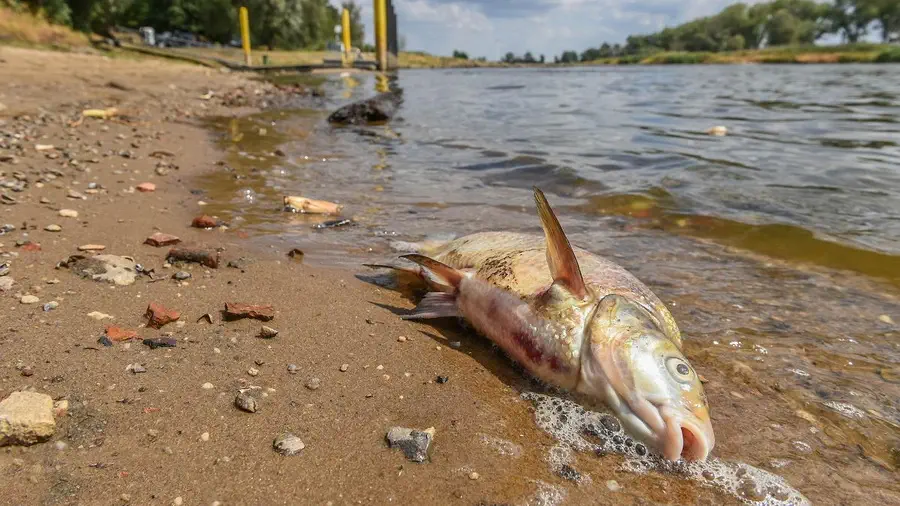
The abundance of wildlife around Mar Menor does not necessarily mean that its ecosystem is in good condition. For many years, the lagoon has faced serious problems caused by excessive nutrients entering the water from agricultural land, pollution, and pressure from urban development. In the past, it has experienced major ecological crises accompanied by mass deaths of fish and invertebrates.
The situation is particularly difficult for the Spanish toothcarp, a small endemic fish, and the noble pen shell (Pinna nobilis), a large mollusc that lives on the lagoon floor. The noble pen shell is critically endangered, and its populations in Mar Menor have been severely depleted. Protecting these species requires maintaining good water quality and preserving their natural habitats.
If you would like to see some wildlife during your stay in the region, I particularly recommend visiting the area around San Pedro del Pinatar. The salt pans and wetlands provide excellent opportunities to observe flamingos, herons, black-winged stilts and many other birds. Early morning or late afternoon is the best time to visit, when the light is more pleasant and birds are often more active.
The shores of the lagoon around Los Alcázares and Santiago de la Ribera are also worth exploring. When the water is calm, you can sometimes spot wading birds near the shore and even fish swimming in the shallows. It is a good idea to bring binoculars and keep your distance, particularly near nesting areas. The best way to discover Mar Menor is not simply to spend time on the beach. It is an ecosystem in which every part of the coastline matters, from underwater meadows and salt marshes to sandy shores. If you set aside some time to observe the wildlife during your holiday, you will discover a wholly different side to this popular part of Spain.
Beaches around Mar Menor – the quieter side of the coast
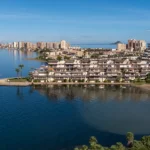
Many people visit the Murcia region specifically for the beaches around Mar Menor. Compared with the open Mediterranean, the water here is generally much calmer and the waves considerably smaller. Another advantage is the gently shelving seabed found along many stretches of the coastline. One of the most popular resorts is Los Alcázares, where you will find a long promenade, restaurants, cafés and sandy beaches. It is an excellent place for a leisurely walk, particularly in the evening, when temperatures begin to fall and the atmosphere beside the lagoon becomes much more pleasant.
Santiago de la Ribera, on the north-eastern side of Mar Menor, is also worth a visit. It has a typical holiday-resort atmosphere, although it is not as extensively developed as some parts of La Manga. If you would like to combine time on the beach with an opportunity to explore the natural surroundings, head to San Pedro del Pinatar. Here you will find famous salt pans, wetlands and beautiful stretches of natural coastline. You can read more about the area in our article about San Pedro del Pinatar and its attractions.
It is worth remembering, however, that calm water does not always mean ideal swimming conditions. Mar Menor has experienced environmental problems, so it is advisable to check the latest information about water quality before taking a dip.
Regular festivals and cultural events around Mar Menor
The towns surrounding the lagoon have a surprisingly varied calendar of events. When I first visited this part of Murcia, I quickly realised that life here revolves around much more than simply spending time on the beach. Throughout the year, the area hosts music festivals, historical re-enactments, local religious celebrations, food festivals and sporting events.
Most of the activity takes place during the summer, when the resorts around the lagoon fill with holidaymakers. That does not mean there is nothing worth seeing outside the main season, though. Spring brings some spectacular historical events, while September and October offer festivals connected with local traditions. Below, I have gathered some of the most interesting recurring events held in Los Alcázares, San Pedro del Pinatar, San Javier, Santiago de la Ribera and La Manga.
Incursiones Berberiscas – pirates return to Los Alcázares

One of the most spectacular events around Mar Menor is Incursiones Berberiscas, a series of historical re-enactments of Berber pirate raids held in Los Alcázares. The festival takes place in spring, usually during Holy Week, so its exact dates change every year. It recalls a period when the coastline was vulnerable to attacks by corsairs arriving from North Africa during the 16th and 17th centuries. At the time, people living in coastal settlements had to contend with raids, looting, and abductions. Today, these difficult chapters of local history are brought back to life in the form of a colourful festival.
For several days, Los Alcázares is transformed into a historical town. A medieval market appears alongside encampments, traditional craft demonstrations, theatrical performances, concerts and street entertainment. One of the main highlights is the symbolic landing of pirates on the beach, complete with special effects and staged battles. The procession of participants carrying torches is another particularly impressive sight.
I would especially recommend this event to anyone who enjoys history, historical re-enactments and festivals involving the local community. It is not simply an ordinary celebration organised exclusively for tourists. Local groups play an active part in the preparations, and the entire town genuinely comes alive during the festival. This year saw the 25th edition, demonstrating just how firmly the event has established itself in the calendar of Los Alcázares.
Semana Internacional de la Huerta y el Mar – the great festival of Los Alcázares
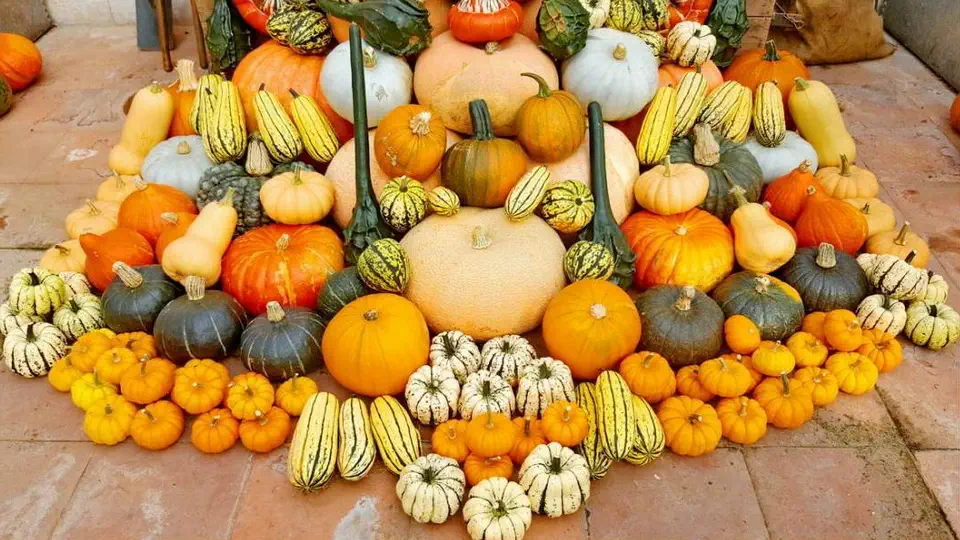
Another major event in Los Alcázares is Semana Internacional de la Huerta y el Mar, or the International Week of the Vegetable Gardens and the Sea. Held in August, it has been celebrating two important elements of the Murcia region’s identity for more than half a century: its agricultural traditions and its close relationship with the sea.
During the festival, the streets fill with music, dancing and colourful parades. There are performances by folk groups from different countries, displays of traditional costumes, concerts, workshops and food-related events. Visitors can also browse stalls run by local producers and sample regional specialities.
One of the most interesting parts of the programme is Bando Internacional de la Huerta y el Mar, a colourful procession celebrating the traditions of Murcia and other cultures. The ventorrillos are also extremely popular. These are food stalls run by local associations and festival groups, offering a wonderful opportunity to try Murcian specialities in a relaxed, festive atmosphere.
It is also worth paying attention to 15 August, when Los Alcázares celebrates the feast day of its patron saint, Our Lady of the Assumption. A procession takes place, with part of the celebration moving out onto the waters of Mar Menor. Semana Internacional de la Huerta y el Mar is one of the most important festivals in the entire region and has been granted the status of a Festival of International Tourist Interest.
Virgen del Carmen festival – a maritime procession in San Pedro del Pinatar
If I had to choose one event that best demonstrates the relationship between the people of Mar Menor and the sea, it would be the Fiestas de la Virgen del Carmen in San Pedro del Pinatar. The festival takes place every year on 16 July and is particularly important to fishermen and their families. Virgen del Carmen is the patron saint of seafarers, so the highlight of the celebrations is a maritime procession.
A statue of the Virgin Mary is carried onto a boat, which then sails across the lagoon accompanied by a fleet of decorated fishing and leisure vessels. Residents and visitors gather along the route, watching the procession from the waterfront and from the decks of their boats.
One of the most moving moments comes when red carnations are thrown into the water remembering fishermen and sailors who lost their lives at sea. This is followed by a moment of silence. It is therefore much more than a colourful parade of boats; it is a celebration with in-depth meaning for the local community.
The festival has a long history. The first maritime procession took place in 1892, and the tradition has continued ever since. The celebrations begin in the morning and include both a land procession and a maritime one, often ending with a fireworks display in the evening. The event was officially recognised as a festival of regional tourist importance as early as 1965.
International Jazz Festival in San Javier

Not all the events around Mar Menor are based on folklore and local traditions. San Javier hosts the Festival Internacional de Jazz, which has attracted jazz enthusiasts from across Spain and abroad since 1998. The festival takes place during the summer, mainly in July. Its stages welcome well-known performers, established bands and musicians representing a wide range of jazz styles. The programme includes everything from traditional jazz to more contemporary interpretations.
Concerts are held in the auditorium in Parque Almansa. The venue has seating reminiscent of an ancient theatre, creating a pleasant and relatively intimate atmosphere despite the considerable number of visitors. What began as a local initiative has gradually developed into one of Spain’s better-known jazz events. Today, it holds national tourist importance. If you enjoy live music, it is worth checking the programme before planning a summer stay in the area.
Día del Caldero – a celebration of local cuisine in Los Alcázares

Mar Menor also has its own culinary festival. One of the most important food-related events in Los Alcázares is Día del Caldero, a day dedicated to a traditional fish and rice dish. The festival takes place in October, usually around 12 October, and forms part of the celebrations connected with the town’s history and administrative independence.
Caldero is one of the region’s most recognisable dishes. It consists of rice cooked in a rich fish stock with garlic, paprika and other seasonings. In the past, it was primarily a fishermen’s meal, prepared using fresh fish caught in the lagoon.
During the festival, the promenade in Los Alcázares fills with people, music and the wonderful aroma of freshly cooked food. Culinary demonstrations, gatherings and various accompanying events are organised throughout the day. It is an excellent opportunity to discover local cuisine and see just how important food is to the traditions of the community. If you enjoy exploring different regions through their food, this is an event worth adding to your list. Trying caldero in a restaurant is one thing, but watching it being prepared during a local celebration is an entirely different experience.
Vuelta al Mar Menor Andando – a walking adventure around the lagoon
One of the more interesting events for active visitors is Vuelta al Mar Menor Andando, a group walking expedition around the lagoon. It is organised by sporting communities in San Javier and has a long-standing tradition. Participants complete the route over two days, starting in Santiago de la Ribera and heading towards Los Alcázares before continuing in the direction of La Manga. Stops for meals and an overnight stay are included along the way. This is not a conventional race but rather a shared challenge for people who enjoy walking and spending time outdoors.
I particularly like the idea behind this event. Instead of viewing Mar Menor from a single resort, participants get to discover different parts of the coastline and see how the landscape changes as they make their way around the lagoon. It is also an opportunity to meet other people who enjoy active holidays. The event usually takes place in September. However, you should remember that advance registration is required, and the organisers determine the route and participation arrangements for each edition.
Fiestas de La Manga del Mar Menor
La Manga also has its celebrations. Fiestas de La Manga del Mar Menor takes place in September, usually during the second half of the month. It is a local event featuring concerts, music, community gatherings and activities for families. Dates may change from year to year, so it is best to check the latest calendar published by the San Javier council before travelling. If you are planning a September holiday in La Manga, you might be lucky enough to enjoy some additional entertainment after the main tourist season has ended.
If you would like to combine a relaxing holiday with local festivals, it is worth choosing your travel dates according to the type of event that interests you most. Spring is the best time for the historical Incursiones Berberiscas in Los Alcázares. July brings the Virgen del Carmen maritime procession and the jazz festival in San Javier. August belongs to Semana Internacional de la Huerta y el Mar, while September brings sporting events and local celebrations. In October, you can discover the region’s culinary traditions during Día del Caldero.
Some events take place on changing dates, so it is worth checking the programme on the organisers’ websites or with the local tourist office before booking accommodation. This is particularly important for events connected with Easter and patron saint celebrations.
My advice is that if I had to choose one period for discovering local traditions, I would opt for the second half of July or August. This is when Mar Menor is at its liveliest, with concerts, processions and festivals taking place, while the coastal towns are full of energy in the evenings. If, on the other hand, you prefer a quieter holiday, September offers an excellent balance between pleasant weather, beach time and local events.
Environmental problems at Mar Menor – a beautiful place threatened by human activity
It is impossible to talk about Mar Menor using nothing but superlatives. This remarkable body of water has been struggling with serious environmental problems for many years, and these are not minor changes that can simply be ignored. One of the greatest threats is the excessive amount of nutrients, particularly nitrogen and phosphorus, entering the lagoon from intensive agricultural activity in the surrounding area. These substances reach the water through rainwater runoff and groundwater. Human activity, expanding urban development and growing tourist pressure create additional problems.
Excess nutrients encourage the rapid growth of algae and disrupt the natural balance of the ecosystem. The water becomes less transparent, and when large quantities of aquatic vegetation die, the decomposition of organic matter consumes oxygen. In extreme cases, this can lead to mass deaths of fish and other aquatic animals.
Particularly dramatic events occurred in 2019 and again in August 2021, when enormous numbers of dead fish and other marine organisms appeared along the shores of the lagoon. Photographs of these events were widely shared by the Spanish media and brought attention to the scale of the problem. Since then, various measures have been introduced to improve the ecological condition of the lagoon. These include reducing the amount of pollution entering the water, monitoring water quality and protecting natural habitats. Nevertheless, the situation still requires considerable attention. Mar Menor is a fragile ecosystem, and restoring its natural balance is not something that can happen overnight.
How to explore Mar Menor and is it worth visiting?
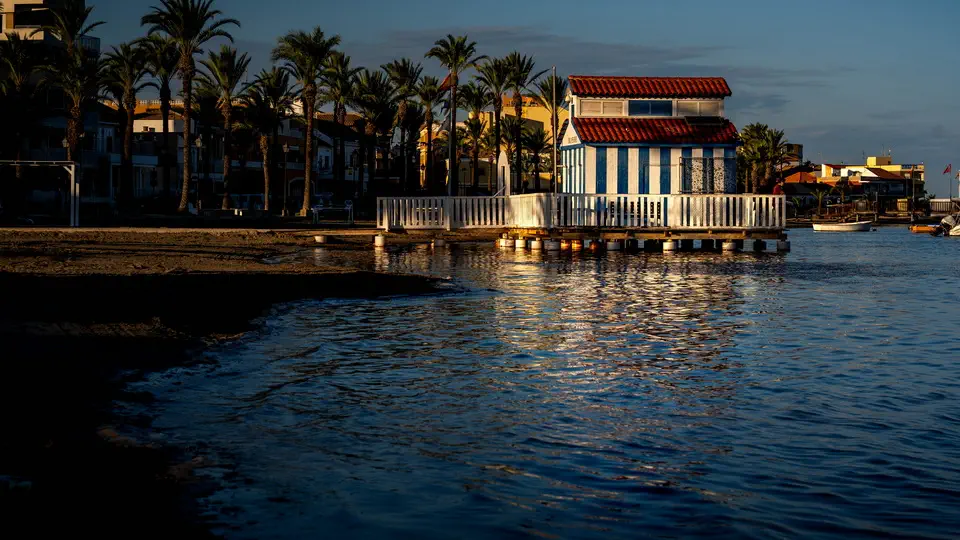
If you are staying in La Manga, you can start exploring Mar Menor almost immediately. All you need to do is cross to the other side of the sandbar to discover a much quieter side of the Spanish coastline. One particularly good idea is to take a boat trip across the lagoon. From the deck, you can admire the islands, look at the coastline from a different perspective and gain a more in-depth understanding of just how extensive this body of water really is. It is worth checking the available excursions at local marinas, particularly Puerto Deportivo Tomás Maestre.
If you prefer exploring by car, I recommend driving through Los Alcázares, Santiago de la Ribera and San Pedro del Pinatar. Each town has its own distinctive character. You can stop for a coffee, take a walk along the promenade or find a quieter beach. Nature lovers should make a special effort to visit the salt pans and wetlands in San Pedro del Pinatar. There are marked walking trails where you can enjoy the scenery and observe birds in their natural habitat. I would also recommend bringing a camera, as flamingos and other waterbirds can make wonderful photographic subjects.
I would definitely recommend visiting Mar Menor, as it is one of those places that demonstrate just how varied the Spanish coastline can be. On one side, you have traditional holiday resorts, beaches and restaurants, while on the other there is an extraordinary ecosystem with volcanic islands, wetlands and a rich variety of wildlife. What I particularly like is the contrast between the calm waters of the lagoon and the open Mediterranean Sea. All it takes is a short drive across La Manga to find yourself in a wholly different environment. If you have more time, do not limit your visit to the sandbar itself. Explore Los Alcázares, stop in San Pedro del Pinatar and discover its famous salt pans.
Mar Menor is best explored without rushing. It is not an attraction that you can tick off your list in fifteen minutes before moving on to the next destination. The more time you spend in the surrounding area, the better you will understand why the people of Murcia value this part of their region so highly. It is also important to remember that this natural treasure needs protection. Hopefully, future generations will be able to enjoy it in considerably better condition than the one it is struggling with today.
Mar Menor – facts, information and interesting curiosities
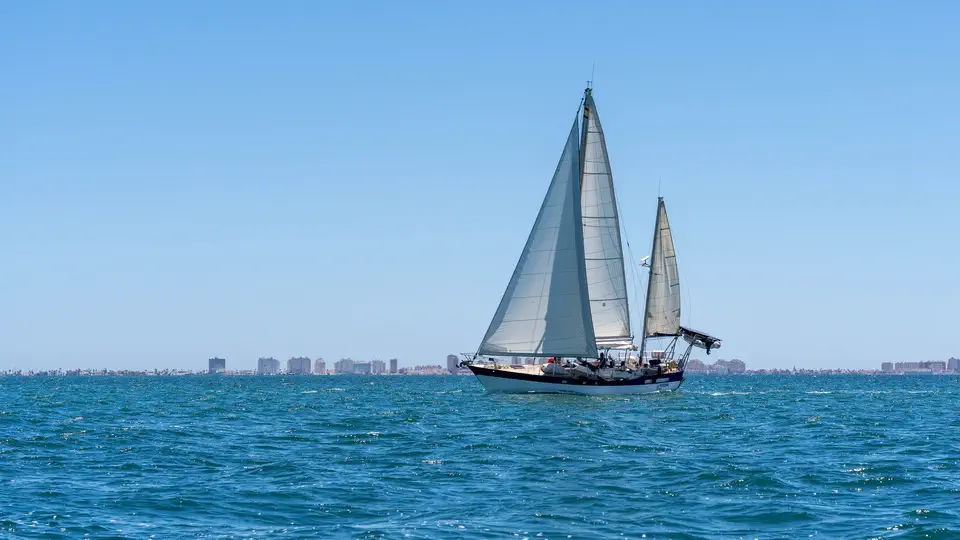
Mar Menor is an extraordinary lagoon in the Region of Murcia, on the south-eastern coast of Spain. Although its name translates as the Little Sea, in many respects it resembles an enormous saltwater lake. It has its islands, a rich underwater world, salt marshes and a long history connected with fishing and tourism. Here are 25 interesting facts that help explain why this corner of Spain is so special.
- Mar Menor is the largest saltwater lagoon in Europe. It covers approximately 170 square kilometres, although scientific publications sometimes give slightly smaller figures depending on the boundaries used for measurements. It is an enormous body of water separated from the Mediterranean Sea by the sandy La Manga sandbar.
- The name Mar Menor means the Little Sea. The Spanish name refers to the contrast between the lagoon and the open Mediterranean, which lies just beyond La Manga. Despite its name, Mar Menor is certainly not a small body of water. From some parts of its shoreline, you cannot even see the opposite coast.
- The lagoon is surprisingly shallow. Its average depth is approximately 4 metres, while the deepest sections reach around 7 metres. This allows the water to warm up quickly, particularly during the summer months. It is one of the reasons why Mar Menor is a popular destination for families with children.
- The water in Mar Menor is saltier than the Mediterranean. This is caused by the shallow depth of the lagoon, intense evaporation and limited water exchange with the open sea. Salinity varies depending on the location and weather conditions, but it has long been one of the defining characteristics of this body of water.
- La Manga was formed by sea currents and sand. human activity did not create the sandbar. Over thousands of years, waves and coastal currents transported sediment, gradually forming a long strip of land. This process partially separated what was once an open bay from the Mediterranean, creating the Mar Menor lagoon.
- There are five islands of volcanic origin in the lagoon. They are Isla del Barón, Isla Perdiguera, Isla del Ciervo, Isla del Sujeto and Isla Redonda. Their geological origins distinguish them from the sandy islets found in other lagoons. The islands are an important part of both the landscape and the local ecosystem.
- Isla del Barón is the largest island. It is also known as Isla Mayor and is distinguished by its cone-shaped profile and volcanic ground. There is a historic residence on the island, which is privately owned. For this reason, it is not a typical tourist attraction that visitors can explore freely.
- Isla del Ciervo was once a genuine island. Over time, it was connected to the mainland by a narrow causeway, allowing people to reach it on foot. It is an interesting example of how human activity has changed the landscape of Mar Menor. The surrounding area is known for its beaches and relatively peaceful atmosphere.
- The lagoon has several connections with the Mediterranean Sea. These channels are known as golas and allow water to move between the two bodies of water. One of the most important is El Estacio, which is also used by boats and yachts. Thanks to these connections, Mar Menor is not a completely isolated body of water.
- El Estacio has changed the conditions within the lagoon. The channel was deepened and widened to allow boats to navigate through it. This increased the exchange of water between Mar Menor and the Mediterranean. It also affected salinity and the functioning of the ecosystem, which continues to be studied by scientists.
- Mar Menor is an important habitat for flamingos. Large groups of these distinctive birds can be observed around the salt marshes and saltwater pools surrounding the lagoon. Flamingos feed on tiny crustaceans and other aquatic organisms. One of the best places to see them is around the salt pans of San Pedro del Pinatar.
- Flamingos are not born pink. Young birds usually have greyish or whitish plumage. Their characteristic pink colour develops gradually thanks to pigments in their food, including tiny crustaceans and algae. The intensity of the colour can vary considerably between individual birds.
- Mar Menor is home to an endangered fish called the Spanish toothcarp. This is a small fish that occurs naturally on the Iberian Peninsula. It can adapt to water with different levels of salinity, which allows it to survive in the lagoon and nearby wetlands. However, its populations are threatened by the loss of natural habitats.
- Seahorses live in the lagoon. One of the species found here is the long-snouted seahorse. These small creatures use their tails to attach themselves to underwater plants and move around very slowly. Their presence is closely connected with the condition of underwater meadows, which provide them with shelter.
- There are genuine underwater meadows beneath the surface. One of the most important plants is Cymodocea nodosa. It forms underwater beds that provide shelter for young fish, crustaceans, and other small organisms. These meadows also help stabilise sediment and maintain the ecological balance of the lagoon.
- You can find a jellyfish that resembles a fried egg in Mar Menor. Its scientific name is Cotylorhiza tuberculata. It has a distinctive yellowish centre and lighter edges that really do look like an egg frying in a pan. It appears seasonally, and its numbers depend on the conditions within the lagoon.
- Salt has been extracted in the area around the lagoon for centuries. Shallow pools, intense sunshine and wind create ideal conditions for the natural evaporation of seawater. The salt pans in San Pedro del Pinatar are particularly well known. Visitors can see distinctive salt pools that change colour depending on the stage of the production process.
- Mar Menor is protected under international conservation agreements. In 1994, it was included on the list of wetlands of international importance under the Ramsar Convention. It is also protected as part of the European Natura 2000 network. These designations reflect the lagoon’s exceptional importance for birds, plants and aquatic wildlife.
- The area around Mar Menor was inhabited in ancient times. The region was visited and settled by several ancient peoples, including the Iberians, Phoenicians and Romans. They were attracted by the resources of the sea, opportunities for fishing and the convenient location of the coastline. Traces of these ancient cultures can be found in nearby Cartagena, a city with an exceptionally rich history.
- Los Alcázares owes much of its history to the waters of the lagoon. The town’s name comes from the Arabic word al-qasr, meaning palace or residence. During Muslim rule, the area was used as a place of relaxation and later developed into a popular summer resort for people from the Murcia region.
- The area around Mar Menor was once vulnerable to pirate attacks. For many centuries, the south-eastern coast of Spain was threatened by raids carried out by corsairs from North Africa. Watchtowers and defensive structures were therefore built to provide early warning of approaching danger. One historic example is Torre del Ramé, near Los Alcázares.
- Mar Menor is well-known for its traditional caldero dish. This is a fish and rice speciality prepared using a rich stock made from fish, garlic and various seasonings. In the past, it was a popular meal among fishermen, who used freshly caught fish and simple ingredients. Today, caldero can be found in many restaurants around the lagoon.
- Mar Menor has a traditional fishing method known as encañizadas. This historic technique involves using special structures made from reeds and other natural materials to catch fish. It was traditionally used in the shallow channels connecting the lagoon with the Mediterranean. The structures allowed fishermen to catch fish moving between the two bodies of water.
- The lagoon has a shoreline of approximately 73 kilometres. Towns such as San Pedro del Pinatar, San Javier, Los Alcázares and Cartagena lie along its shores. Each has its character, and the area includes traditional holiday resorts, quieter stretches of coastline and places of considerable natural importance.
- Mar Menor has experienced serious ecological crises. The most difficult years included 2019 and 2021, when mass deaths of fish and other aquatic organisms occurred. One of the main causes of these problems is the excessive amount of nutrients entering the lagoon from intensively cultivated agricultural land. This encourages algal blooms, reduces oxygen levels in the water and disrupts the natural biological balance.
- Mar Menor is one of the most important natural areas in the Murcia region. Its importance comes not only from the lagoon itself but also from its islands, dunes, salt pans, wetlands and nearby hills. This combination of different habitats allows numerous plant and animal species to thrive within a relatively small area.