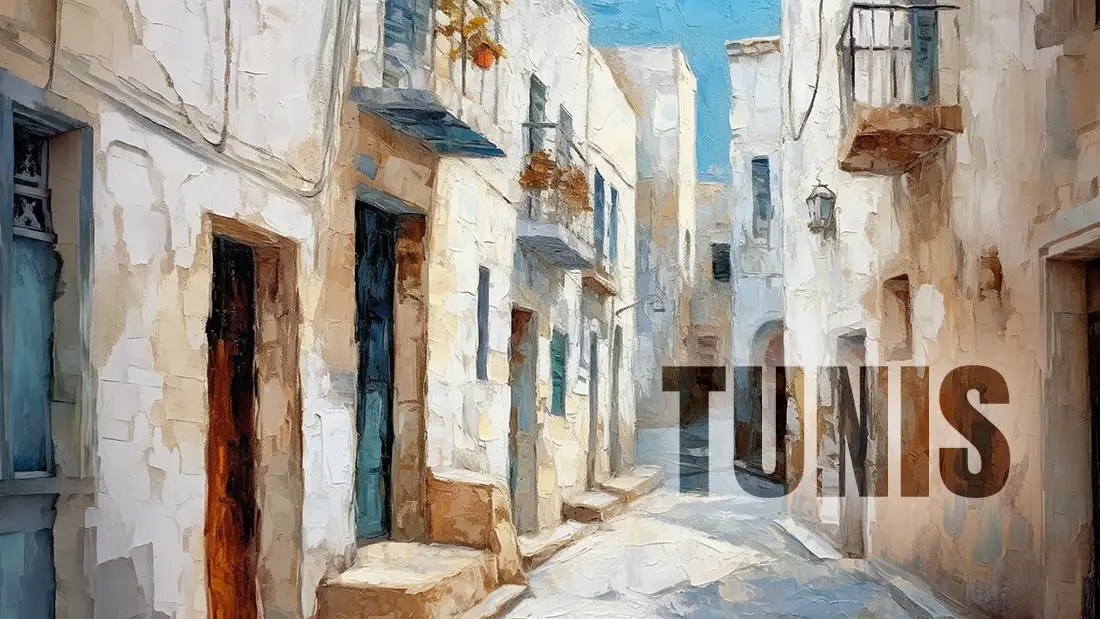
Tunis can stir up very mixed emotions – at least, that was certainly the case for me. On the one hand, the city has a fascinating history stretching back thousands of years. On the other, its modern appearance can be disappointing. It is a place where, in a single day, you can wander through streets that remember the Middle Ages, admire the remains of ancient Carthage, a UNESCO World Heritage Site, enjoy a coffee in the picture-perfect town of Sidi Bou Said, and then suddenly find yourself in a neglected neighbourhood filled with crumbling tenement buildings and rubbish lying along the roadsides.
During my stay, it was precisely this diversity that made the greatest impression on me. On the one hand, I was delighted by the wealth of history, the atmosphere of the medina and the sheer number of monuments. On the other, it was impossible not to notice the neglected buildings, dust, rubbish and frequent police and military patrols. Armed officers can be seen almost everywhere around the most important public buildings and tourist attractions. For some visitors, this may be a sign of a high level of security. For others, it is a reminder that Tunisia struggled with the threat of terrorism for many years and still maintains extensive security measures.
Despite these contrasts, Tunis remains one of the most fascinating cities in North Africa. It does not impress visitors as consistently as many European capitals, but it offers a sense of authenticity that is often missing elsewhere. It is a city where everyday life continues, right beside monuments dating back to the Roman Empire and the rule of medieval caliphs.
Tunis and its history – more than three thousand years of change
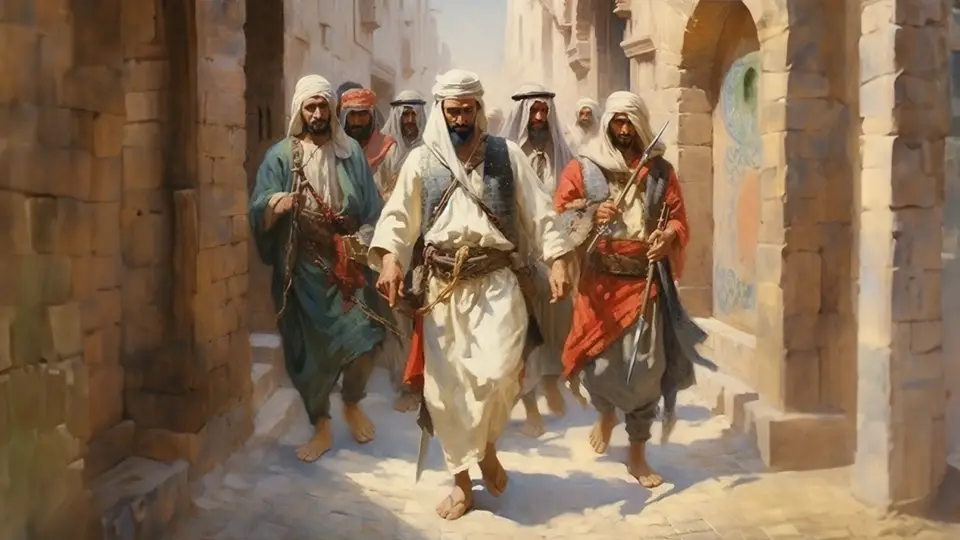
The history of Tunis is inseparably linked with the history of the wider region and nearby Carthage. Although Tunis is now the capital of the country, for many centuries it remained in the shadow of one of the most powerful cities of the ancient world.
The first settlements existed here several thousand years ago. The convenient location beside Lake Tunis and the proximity of the Mediterranean Sea meant that the area had long attracted traders and fishermen. The name of the city probably comes from the Berber language and may have meant a stopping place or camp.
The region only began to develop significantly in the ninth century BC when Phoenician settlers founded nearby Carthage. At the time, Tunis was a small settlement serving its powerful neighbour. Carthage quickly became one of the wealthiest ports in the Mediterranean, controlling vast trade routes stretching from Spain to Sicily.
During the Punic Wars between Carthage and Rome, the area around present-day Tunis repeatedly became a battlefield. In 146 BC, following the Third Punic War, the Romans destroyed Carthage. It seemed that the entire region would lose its importance. However, the opposite happened.
After some time, the Romans rebuilt Carthage as a colony, while Tunis gradually developed into an important trading centre. Roads, aqueducts, warehouses and small ports were constructed. For the following centuries, the two cities existed side by side, benefiting from the stability brought by Roman rule.
After the fall of the Western Roman Empire, the region was taken over by the Vandals and later by the Byzantine Empire. It was a period of frequent conflict, which caused parts of the surrounding area to become depopulated.
A major turning point came in the seventh century, when North Africa was conquered by the Arabs. They decided that Tunis should become the new administrative centre of the region. Mosques, city walls and marketplaces were soon constructed.
The most important event of this period was the establishment of the Great Mosque of Ez-Zitouna. Over the following centuries, it became one of the most important centres of Islamic learning in the entire Maghreb. The medina gradually developed around it, forming the maze of streets that remains the heart of the old city today.
Between the ninth and thirteenth centuries, Tunis experienced its golden age. Merchants arrived from Venice, Genoa, Andalusia, Egypt, and the Middle East. Palaces, caravanserais, Quranic schools and richly decorated houses belonging to the wealthiest families were built throughout the city.
While walking through the modern medina, it is not difficult to imagine what Tunis may have looked like during this period. Many of its streets have preserved almost the same layout they had eight hundred years ago.
From the sixteenth century onwards, Tunis came under the rule of the Ottoman Empire. The Turks reconstructed parts of the fortifications, expanded the port and built numerous palaces. The city became one of the most important ports in the Mediterranean basin, as well as a base for corsairs who attacked European merchant ships for many years.
At the end of the nineteenth century, the political situation changed dramatically. In 1881, Tunisia became a French protectorate. The French began building an entirely new part of the city. Wide boulevards, elegant tenement buildings, cafés, and grand public squares were designed to resemble Paris.
It was during this period that Avenue Habib Bourguiba was created. It remains the most important street in Tunis today. The old Arab medina and the modern European centre began to exist side by side, creating a fascinating architectural contrast.
After Tunisia gained independence in 1956, Tunis officially became the capital of the new state. The country’s first president, Habib Bourguiba, launched an extensive programme of modernisation. New residential districts, universities, government ministries and housing estates were developed.
During the following decades, the city’s population grew rapidly. The modern metropolitan area is now home to more than two and a half million people, making Tunis the largest city in Tunisia.
Unfortunately, this rapid expansion was not always accompanied by sufficient care for the urban environment. In many districts, neglected tenement buildings, damaged façades and properties in urgent need of renovation are clearly visible. This is particularly noticeable away from the main boulevards and tourist areas.
At the same time, intensive restoration work is being carried out on the city’s most important monuments. The medina has been added to the UNESCO World Heritage List, while many historic palaces have regained some of their former splendour.
Modern Tunis remains a city of contrasts. Medieval alleyways stand beside contemporary office blocks, French colonial buildings are found next to traditional Arab bazaars, and the remains of ancient Carthage lie only a dozen or so kilometres from the busy city centre.
It is this remarkable mixture of cultures, religions and historical periods that makes the Tunisian Capital One of the most interesting places to explore in North Africa.
Tunis and its greatest attractions – what is worth seeing?
Tunis is not a city that reveals all its charms immediately. Quite the opposite – the first impression can be rather surprising. Wide streets crowded with cars, the constant sound of horns, heavy traffic and somewhat chaotic architecture offer little indication of what lies only a few steps away.
It was only when I ventured into the old city and visited its most important monuments that I began to understand why Tunis had been one of the leading centres of the Maghreb for centuries.
The greatest advantage of the Tunisian capital is its extraordinary diversity. Within a radius of only a few kilometres, you can see medieval streets, Roman ruins, Arab palaces, French boulevards and one of the most beautiful small towns on the Mediterranean coast.
Each of these places tells a different story and reveals another side of the city.
The medina – the heart of old Tunis
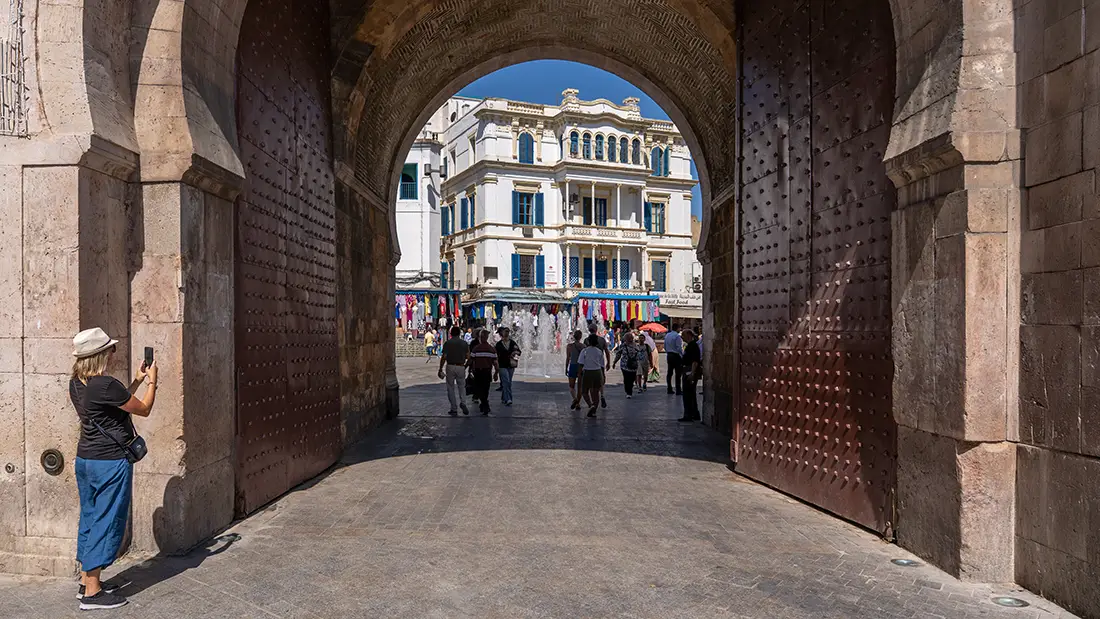
I cannot imagine visiting Tunis without spending at least a few hours in the medina. This is where the historic heart of the city truly beats.
The old town is listed as a UNESCO World Heritage Site and covers an area of more than 270 hectares. Within its boundaries are well over seven hundred historic buildings, including mosques, palaces, madrasas, mausoleums and traditional merchants’ houses.
As soon as you pass through one of the historic gates, it feels as though you have travelled several centuries back in time. Cars almost completely disappear, replaced by narrow, winding streets filled with residents, traders, and tourists.
The greatest charm of the medina lies in its authenticity. It is not an open-air museum created solely for visitors. Thousands of people still live here. Jewellers, leatherworkers, potters and weavers continue to work in small workshops. The smell of freshly baked bread drifts from tiny bakeries, while the aroma of strong Tunisian coffee fills the cafés.
Getting lost in the medina is one of its greatest attractions. Many streets are poorly signposted, and their layout appears completely random. At first, it is easy to lose your way, but that is precisely how you discover places that do not appear in any guidebook.
Every few minutes, I came across hidden courtyards, small squares, decorative doorways and tiny shops selling handmade products. Some streets are so narrow that two people can barely pass each other. Others suddenly open onto small squares surrounded by buildings several hundred years old.
It is best to begin exploring early in the morning, when traders are only starting to open their shops and the medina is not yet crowded.
Tunis and the Great Mosque of Ez-Zitouna – Tunisia’s spiritual centre
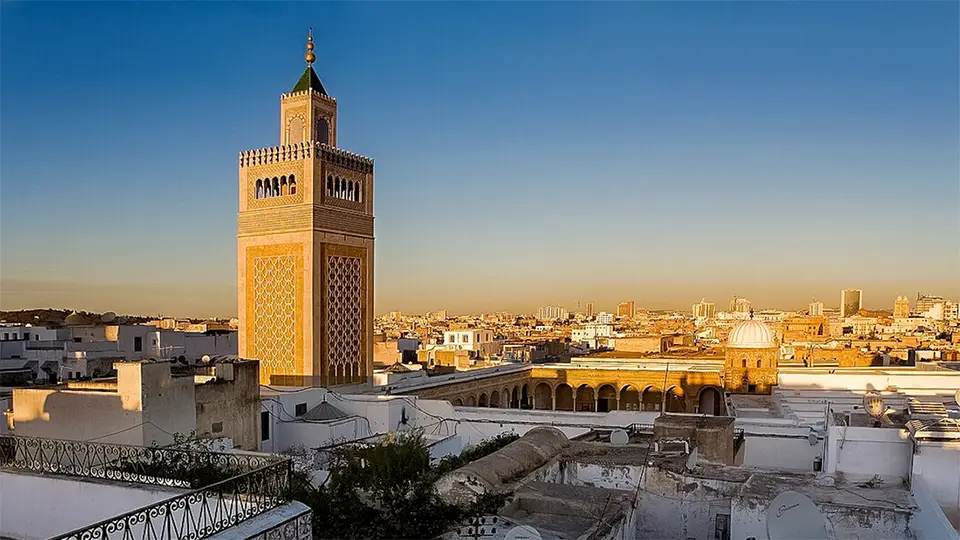
At the very heart of the medina stands the most important mosque in the country – Ez-Zitouna, also known as the Olive Mosque. Its history dates back to the eighth century, although its present appearance is the result of numerous alterations carried out over the following centuries.
Medieval Tunis developed around this very building. For more than a thousand years, it was home to one of the most important universities in the Islamic world. Scholars from North Africa, Spain, Egypt, and the Middle East studied here.
The mosque’s courtyard is striking in its simplicity and harmony. Its columns date back to the Roman and Byzantine periods, and many of them were brought from the ruins of Carthage.
Unfortunately, non-Muslims are not permitted to enter the main prayer hall. However, the courtyard and the exterior of the building are certainly worth seeing. The tall minaret rising above the rooftops of the old city is particularly impressive.
The souks – the most colourful part of the old city
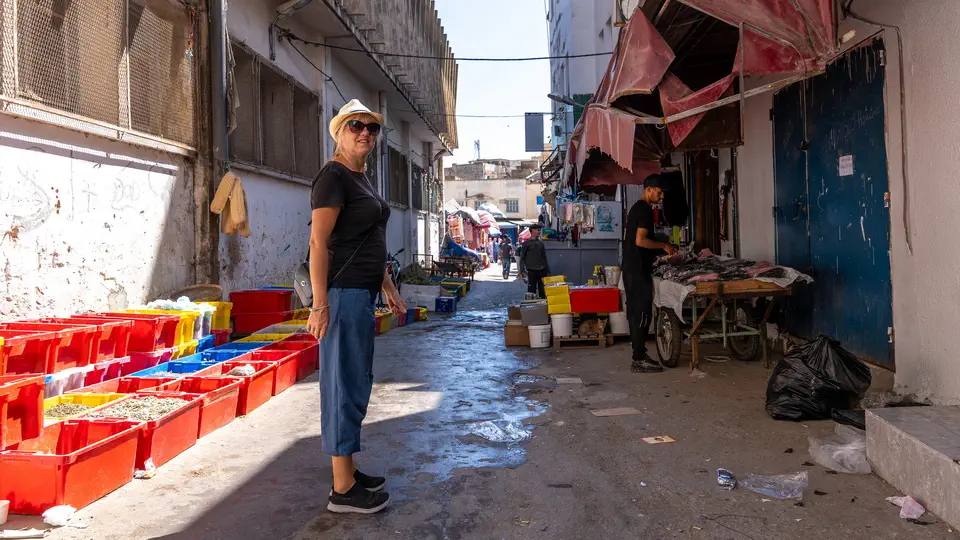
The medina is well-known for its dozens of traditional marketplaces, known as souks. Each one once specialised in a particular type of product. Even today, you can find streets occupied by jewellers, spice traders and sellers of perfume, carpets, ceramics, lamps, leather goods and traditional clothing.
My favourite was Souk El Attarine, where perfumes, scented oils and spices have been sold for centuries.
The air here is filled with the fragrance of jasmine, rose, cinnamon and cardamom. Only a few steps away is Souk Ech-Chaouachia, famous for the red fezzes that have been made by hand for several hundred years.
Walking between the stalls, it can feel as though very little has changed since the Middle Ages. Mass-produced souvenirs have, of course, appeared, but many family workshops still operate here, with traditional skills passed down from one generation to the next.
Avenue Habib Bourguiba – the French face of Tunis
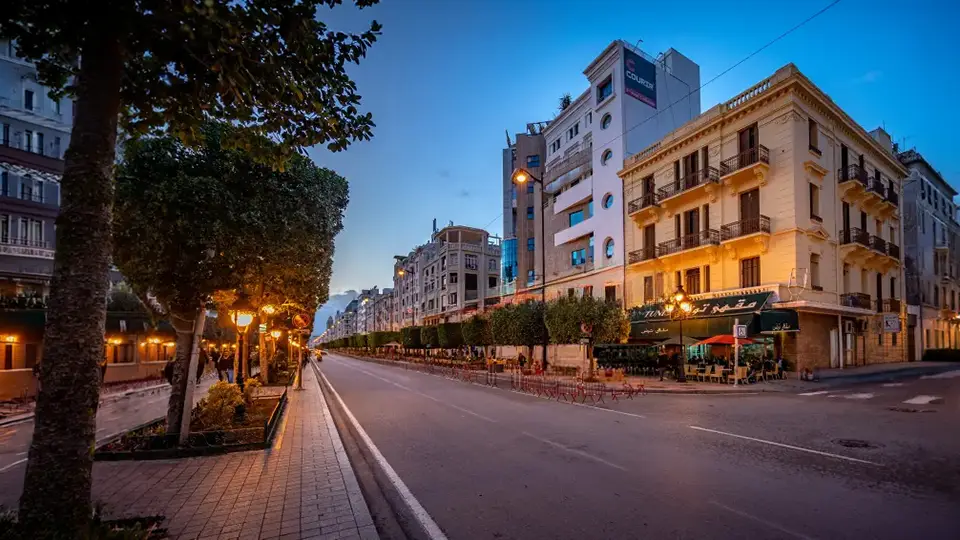
After leaving the medina, you suddenly enter an entirely different world. Avenue Habib Bourguiba feels more like southern France than an African metropolis. This is wide, tree-lined street is filled with cafés, restaurants, hotels, and shops. It is the modern centre of the city.
While walking along the avenue, you can admire elegant buildings dating from the French protectorate, most of them constructed in the late nineteenth and early twentieth centuries. Many have preserved their original balconies, stucco decoration and ornate façades.
At the same time, this was where I noticed the contrasts of modern Tunis most clearly. Beautifully restored buildings stand next to properties with crumbling plaster, damaged balconies and façades that seem to have been untouched since the colonial era. Some look as though they have not been renovated for decades.
Tunis and the Cathedral of St Vincent de Paul
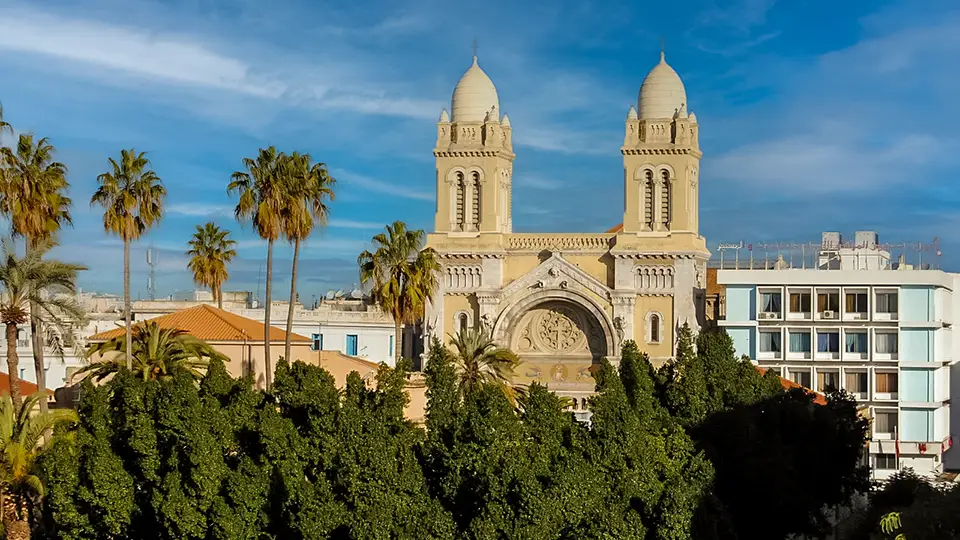
One of the most surprising landmarks on Avenue Habib Bourguiba is the monumental Catholic cathedral. It was built at the end of the nineteenth century for the city’s large European community.
The building combines Byzantine, Gothic, and Romanesque Revival elements. Its pale façade contrasts beautifully with the surrounding architecture and serves as a reminder of the city’s multicultural past. It is worth stepping inside, even for only a few minutes. The quiet interior offers a welcome break from the noise and bustle of the street outside.
Tunis and the Bardo Museum – one of the finest museums in the world
If I had to choose just one place that truly must be visited in Tunis, it would be the Bardo Museum. The building itself is impressive. A former beys’ palace has been transformed into a museum housing the largest collection of Roman mosaics in the world. I had not expected stone images created almost two thousand years ago to be so perfectly preserved.
Some mosaics cover several dozen square metres and still retain remarkably vivid colours. They depict mythological scenes, hunting, everyday life and animals.
Besides the mosaics, visitors can see Phoenician sarcophagi, Roman sculptures, Byzantine ornaments and priceless objects discovered in Carthage. It is worth allowing at least three hours to explore the museum properly.
Carthage – a journey into the world of Hannibal
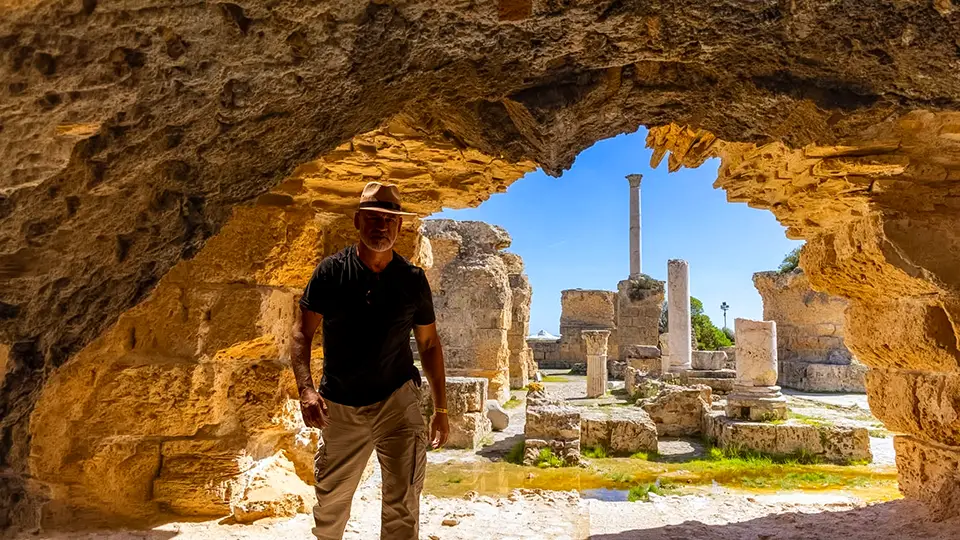
Although Carthage is now officially a separate city, most tourists consider it one of the greatest attractions of Tunis. It lies only a dozen or so kilometres from the centre.
Exploring the ruins took me almost an entire day. Byrsa Hill made the strongest impression on me, offering panoramic views over the Mediterranean Sea and the surrounding area. This was once the site of the citadel of ancient Carthage.
Nearby, you can see the remains of Punic houses, temple foundations and the ruins of the Roman forum.
Another remarkable site is the Baths of Antoninus, one of the largest bathing complexes ever built in the Roman Empire. Massive columns, underground corridors and fragments of vast halls have survived, making it easier to imagine the enormous scale of the original complex.
While exploring Carthage, it is difficult not to think of Hannibal and the Punic Wars. It was from here that he set out with his elephants across the Alps, beginning one of the most extraordinary military campaigns in world history.
Tunis and Sidi Bou Said – the most beautiful place near the city
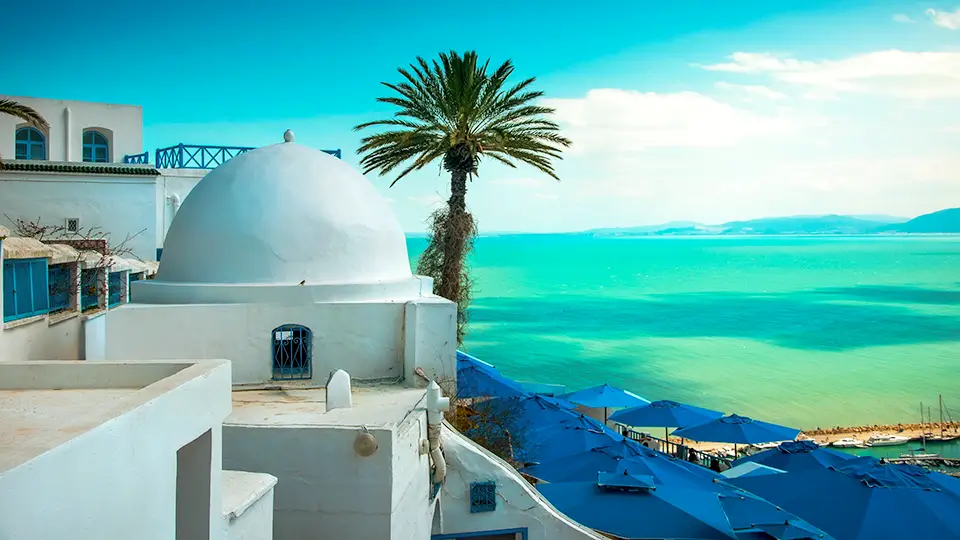
After an intense day of sightseeing, there is no better place to relax than Sidi Bou Said. This small town, perched on a cliff above the Mediterranean, looks as though it has been transported straight from a Greek island. White houses with deep-blue doors and shutters create one of the most recognisable views in Tunisia.
Walking along the cobbled streets is a genuine pleasure. There is none of the big-city noise or congestion found in central Tunis.
You can sit in one of the cafés overlooking the bay, drink mint tea and watch boats entering the harbour. This is the place I would most happily return to, and it entirely changed the way I viewed the area surrounding Tunisia’s capital.
Unlike many districts of Tunis, Sidi Bou Said is tidy, peaceful and exceptionally picturesque, making it the perfect place to end a day spent exploring historic monuments.
Visiting Tunis – practical information and my experience
Exploring Tunis requires a slightly different approach from visiting most European capitals.
This city moves at its pace. Not everything is clearly signposted, traffic can be chaotic, and a walk through the centre often turns into a genuine adventure. At the same time, it is precisely this authenticity that makes the Tunisian capital so memorable.
Before arriving, I had read many opinions about the city. Some visitors were delighted by its history, while others complained about the mess and neglect.
After several days in Tunis, I came to the conclusion that both sides were right.
Anyone expecting a city similar to Barcelona, Lisbon, or Rome will probably be disappointed. However, travellers who enjoy places filled with contrasts, history and the everyday life of residents will certainly find something here for themselves.
- How much time should you allow for sightseeing? – The centre of Tunis can be explored in one day, but that would definitely be too little. The ideal length of stay is three or four days. The first day should be devoted to the medina and the modern city centre. This allows you enough time to visit the most important souks, the Great Mosque of Ez-Zitouna, Avenue Habib Bourguiba and several historic buildings in this part of the city. On the second day, it is best to visit the Bardo Museum and Carthage. Both places are wealthy in historic monuments and require several hours to explore properly. On the third day, I recommend travelling to Sidi Bou Said and relaxing in one of the many cafés overlooking the Mediterranean. Anyone interested in ancient history or photography could easily spend an entire week in and around Tunis.
- How to get around the city – One of the greatest advantages of Tunis is its well-developed public transport system. The city has a light railway network that resembles a fast tram system more than a conventional underground metro. Services run regularly and connect most of the major districts. The easiest way to reach Carthage and Sidi Bou Said is by taking the TGM railway. The journey lasts only a few dozen minutes, and along the way you can enjoy views of the coast and the Gulf of Tunis. Yellow taxis are also a popular means of transport. Before setting off, however, it is worth checking that the driver has switched on the meter. Fares are usually inexpensive, although some drivers may try to overcharge tourists. The city centre is best explored on foot. Walking allows you to discover the most interesting alleyways, hidden courtyards and small shops that would be impossible to notice from a car window.
Interesting landmarks in Tunis that are easy to miss
Most tourists visiting Tunis focus on the medina, the Bardo Museum, Carthage and Sidi Bou Said. These are, of course, essential places to see, but Tunisia’s capital hides many more historic sites that remain outside the main tourist routes.
During relaxed walks away from the largest tour groups, you can discover remarkable palaces, historic gates, old mosques and places that recall the city’s rich history.
Some of them impressed me just as much as the most famous attractions, although they appear far less often in guidebooks.
- Dar Hussein – a palace filled with history – One of the most beautiful buildings in old Tunis is Dar Hussein. The palace was built in the eighteenth century as the residence of one of the country’s most important officials. It later became the seat of the Ottoman administration. Today, it houses the National Heritage Institute, which is responsible for protecting Tunisia’s historic monuments. The courtyard alone is extremely impressive. Marble columns, intricately decorated arches, colourful tiles and wooden ceilings show what the homes of the wealthiest residents of Tunis looked like several centuries ago. Unlike the noisy medina outside, the palace is quiet and peaceful. While walking through it, you can almost forget that one of the largest cities in Africa is bustling only a few metres away.
- Dar Lasram – Arab elegance – A few minutes’ walk from the Great Mosque stands another remarkable palace – Dar Lasram. Built at the beginning of the nineteenth century, it is still regarded as one of the finest examples of traditional Tunisian urban architecture. The building has an elegant courtyard surrounded by arcades, along with rich decoration made from marble, ceramics and carved wood. Many rooms have retained their original interiors, making it easy to imagine the lives of wealthy merchants and officials two hundred years ago. The greatest advantage of this place is its intimate atmosphere. There are no large crowds, so you can quietly admire architectural details that are easily overlooked at more popular attractions.
- Tourbet El Bey – the royal mausoleum – This is one of the most important yet least-known historic monuments in Tunis. Tourbet El Bey is a monumental mausoleum where members of the Husainid dynasty are buried. The dynasty ruled Tunisia from the eighteenth century until the abolition of the monarchy in the mid-twentieth century. Even from the outside, the building attracts attention with its distinctive domes. Inside, richly decorated chambers, marble columns and finely crafted stucco work create an impressive setting. The silence gives the place a unique atmosphere. While moving through the different rooms, it feels as though time stopped here several centuries ago.
- Bab el Bhar – the gateway between two worlds – One of the most symbolic places in Tunis is Bab el Bhar, meaning the Sea Gate. Europeans often refer to it as the French Gate. This is where the modern city centre ends and the medieval medina begins. As I passed beneath its arch, I felt as though I were crossing a border between two wholly different worlds. Behind me were wide boulevards, cars, and French colonial buildings. Ahead were narrow streets, bazaars, craft workshops and the smell of spices. Few places illustrate the contrast between the European and Arab faces of Tunis so clearly.
- Dar Othman – one of the oldest palaces in the city – Dar Othman is one of the oldest surviving palaces in the Tunisian capital. It was built at the end of the sixteenth century by Othman Dey, one of the country’s first Ottoman governors. Although the exterior appears relatively modest, the interiors are remarkably elegant. The distinctive black-and-white marble columns, wooden ceilings and geometric decoration are excellent examples of Ottoman architecture. This is a place that helps visitors understand just how strongly the Ottoman Empire influenced the development and appearance of Tunis.
- Place de la Kasbah – Tunisia’s political heart – Most tourists pass this square without realising how important it is. For centuries, the Kasbah was the administrative centre of the city. The citadel that protected Tunis once stood here, while today the square is surrounded by some of the country’s most important government institutions, including the office of the prime minister. Impressive public buildings and sections of historic walls frame the square. One of its most striking features is the tall flagpole bearing an enormous Tunisian flag, which can be seen from many parts of the city. The square also played an important role during the Jasmine Revolution in 2011. Some of the largest demonstrations calling for democratic change took place here.
- Hammouda Pasha Mosque – Although the Great Mosque of Ez-Zitouna attracts most visitors, it is also worth stopping at the Hammouda Pasha Mosque. The building was constructed in the seventeenth century and is distinguished by its characteristic octagonal minaret, which clearly sets it apart from most other Tunisian mosques. Its richly decorated façade and elegant courtyard reflect the influence of Ottoman architecture, which shaped the appearance of the city for centuries. While walking around the area, I felt that this mosque had retained a more local atmosphere than the crowded surroundings of the Great Mosque.
- Remains of the old city walls – Medieval Tunis was surrounded by a powerful defensive system of walls, towers, and gates. Although much of the fortification was demolished during the city’s expansion in the nineteenth century, fragments of the old walls and several historic gates can still be found. Looking at the massive stone blocks, it is easy to imagine a time when Tunis was one of the best-fortified cities in North Africa. Caravans arriving from deep within the Sahara, European merchants and envoys from distant countries all once entered the city through these gates.
- Lake Tunis – a quieter side of the capital – Few tourists take the time to walk beside Lake Tunis, which is unfortunate because it reveals an entirely different side of the city. The lagoon separating the centre from the Gulf of Tunis played an important role in the development of trade for centuries. Today, parts of its shoreline have been redeveloped with promenades and walking areas. In the evening, you can admire the city skyline reflected in the calm surface of the water. It is an excellent place to rest after an intensive day spent exploring the crowded medina.
These lesser-known places allowed me to view Tunis from a wholly different perspective.
The major attractions impress visitors with their scale and reputation, but only by exploring former palaces, the royal mausoleum, historic gates and quieter corners of the city can you fully appreciate how rich and multi-layered the history of Tunisia’s capital really is.
When you have more time, it is worth leaving the familiar tourist routes. Often, all you need to do is turn into one of the medina’s side streets to discover a place that is rarely mentioned in guidebooks but stays in your memory for a long time.
One-day sightseeing plan for Tunis – how to see the main attractions
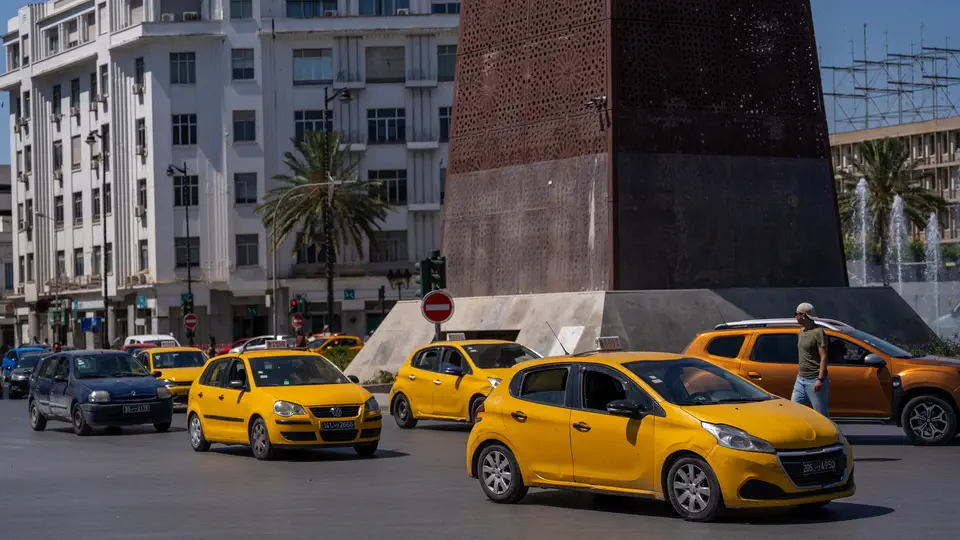
When you have only one day to explore the Tunisian capital, it is worth planning it carefully so that you can see the medieval medina, the modern city centre and, at least briefly, travel beyond the central districts.
The following itinerary allows you to visit the most important monuments without rushing too much, while still leaving time to rest over local food and a cup of traditional Tunisian tea.
- 8:00 – Breakfast in the city centre – The best place to begin the day is one of the cafés along Avenue Habib Bourguiba. It is an excellent spot to watch the city come to life over a cup of strong coffee or mint tea. Try some fresh bread, local pastries and dates, which are among the best-known symbols of Tunisia.
- 9:00–12:00 – A walk through the medina – The greatest attraction in Tunis is best explored in the morning, before the larger groups of tourists arrive and the temperature becomes too high. Begin at Bab el Bhar, the gate separating the modern centre from the historic part of the city. Then enter the maze of medina streets and visit the Great Mosque of Ez-Zitouna, Souk El Attarine, Souk Ech-Chaouachia, Tourbet El Bey, Dar Lasram and the many traditional craft workshops. There is no need to follow the map too strictly. The greatest pleasure comes from slowly discovering new alleyways and hidden courtyards.
- 12:00–13:30 – Lunch in the medina – This is the perfect time to rest in one of the restaurants housed in a historic palace. I recommend trying:
- couscous with lamb,
- brik with egg and tuna,
- ojja,
- freshly squeezed pomegranate or orange juice.
- After lunch, order traditional mint tea with pine nuts. It is one of the most characteristic drinks in Tunisia.
- 13:30–15:00 – Avenue Habib Bourguiba – After leaving the medina, walk along the grand Avenue Habib Bourguiba. Along the way, you can see:
- the Cathedral of St Vincent de Paul,
- the Municipal Theatre,
- colonial buildings dating from the French protectorate,
- Place de l’Indépendance.
- This is a good opportunity to compare the two wholly different faces of Tunis – Arab and European.
- 15:00–17:00 – The Bardo Museum – In the afternoon, it is worth heading to the Bardo Museum. Allow around two hours for a relaxed visit. The museum’s greatest attractions include:
- the largest collection of Roman mosaics in the world,
- artefacts from Carthage,
- Phoenician sarcophagi,
- Roman sculptures,
- objects dating from the Byzantine and Islamic periods.
- It is one of those places that helps visitors understand the history of Tunisia as a whole.
- 17:30–20:00 – Sidi Bou Said – At the end of the day, take the TGM train to Sidi Bou Said. A walk through this blue-and-white town is the perfect way to relax after an intensive day of sightseeing. Do not miss:
- the picturesque streets,
- the famous blue doors,
- viewpoints overlooking the Gulf of Tunis,
- local art galleries,
- cafés with terraces facing the Mediterranean.
- This is the best place to watch the sunset.
- 20:00 – Dinner overlooking the sea – The evening is best finished with dinner in one of the restaurants in Sidi Bou Said or nearby La Goulette. I recommend ordering fresh fish or seafood and trying a local dessert, such as baklava or makroud. After dark, the town becomes much quieter. Walking among the white houses illuminated by the warm glow of street lamps creates unforgettable memories.
When you have your car or use taxis, you can visit the ruins of Carthage instead of the Bardo Museum.
However, both Carthage and the Bardo deserve to be explored without haste, so it is better to devote a separate day to each of them.
This allows you to avoid rushing and fully appreciate the extraordinary historical wealth of Tunisia’s capital and its immediate surroundings.
Safety in Tunis – why are there so many soldiers?
This was one of the first things that caught my attention. As soon as I left the airport, I began noticing armed police officers and soldiers. The closer I got to the city centre, the more of them I saw.
Patrols carrying automatic weapons can regularly be seen outside ministries, embassies, hotels and museums, as well as at important junctions. At first, this can feel unsettling. After a while, however, you become accustomed to the sight.
These extensive security measures are a consequence of events that took place several years ago. Following the terrorist attacks that affected Tunisia, the government significantly increased protection around the most important public places.
The number of officers remains very high today. Paradoxically, this can make the tourist areas feel genuinely safe. I never encountered aggression or felt threatened by residents. Persistent shopkeepers trying to persuade me to visit their stores were far more noticeable than anyone presenting an actual danger. The greatest surprise for me was the appearance of the city itself.
Tunis can be captivating, but it can also be disappointing just as quickly. A walk of only a few minutes can take you from a beautifully restored street into a district that seems frozen in time.
Elegant buildings dating from the French protectorate stand in the prestigious areas of the centre. Only a few hundred metres away, you can see tenement buildings with cracked walls, broken windows, crumbling plaster and balconies supported by makeshift structures.
Some buildings appear completely abandoned, even though people still live in them. The amount of rubbish was even more striking. I do not mean an occasional piece of paper lying beside the road. In many places, you can see overflowing bins, bags of waste left beside pavements and plastic being blown through the streets. The problem becomes particularly visible outside the immediate centre.
This was a major disappointment for me. A city with such an extraordinary history undoubtedly deserves better care.
The people are the greatest strength of Tunis
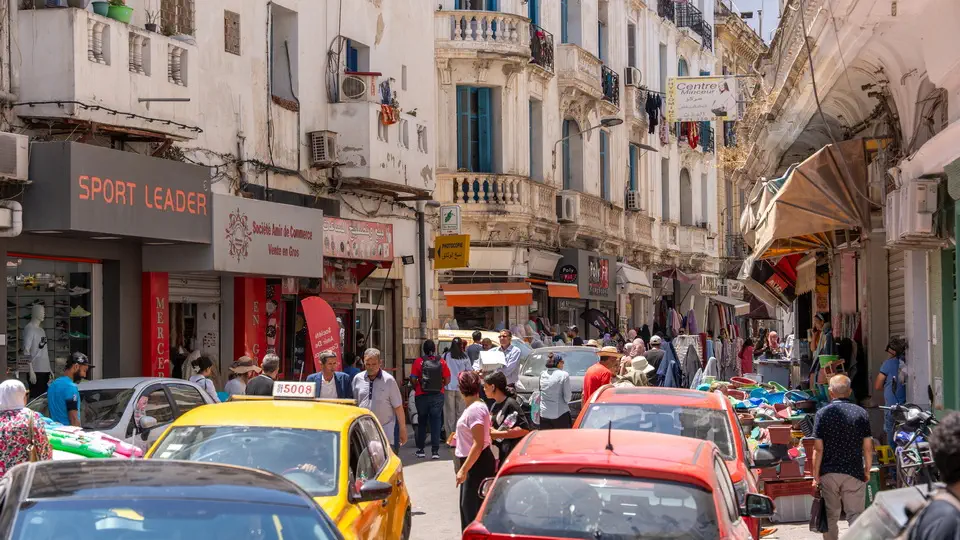
Fortunately, the people of Tunis left a wholly different impression. Most of those I met were friendly and helpful. I asked for directions several times, and almost every time someone tried to assist me, even when the conversation was limited to only a few words of French or English.
Shopkeepers naturally try to encourage tourists to buy something. That is a normal part of life in the medina. However, I never felt that they were especially aggressive or overly persistent. A polite thank you is usually enough before continuing on your way.
I also liked the fact that, despite the large number of tourists, the medina remains a place where local people continue their everyday lives rather than a carefully staged attraction created for visitors.
Alongside souvenir shops, you will find bakeries, craft workshops, schools, small businesses and ordinary grocery stores. As a result, walking through the old town feels like taking part in the genuine life of the city.
Is Tunis worth visiting?
After spending several days in the Tunisian capital, I thought carefully about the answer to this question. In my opinion, the answer is definitely yes, but with one important condition: you should not arrive expecting a perfectly maintained city.
Tunis impresses visitors with its history, monuments and atmosphere, but it also reveals the problems faced by a modern North African metropolis.
Dirt, neglected buildings and visible signs of economic difficulty are part of the overall picture and cannot simply be ignored.
However, when you stand on Byrsa Hill looking over the ruins of Carthage, wander through the streets of a medina more than a thousand years old, or sit in a café in Sidi Bou Said overlooking the blue Mediterranean, it becomes easy to understand why merchants, travellers, and conquerors have been drawn here for centuries.
Tunis is not a perfect city, but it is a real one – full of contrasts, history, scents, sounds, and emotions. That is precisely what makes it one of the most fascinating places I have visited in North Africa.
Where to stay in Tunis – the best districts and hotels
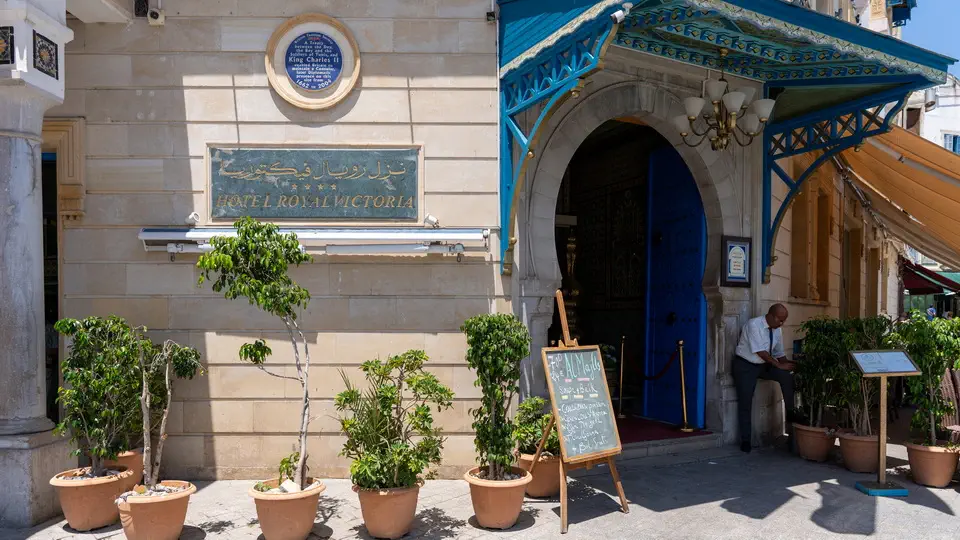
When choosing a hotel in Tunis, it is worth considering what kind of stay you are looking for.
The Tunisian capital offers everything from luxurious five-star hotels belonging to international chains and elegant boutique properties housed in historic palaces to small guesthouses run by local families.
After spending several days in the city, I came to the conclusion that location is far more important than the number of stars a hotel has. The differences between individual districts are considerable and can entirely change the way you experience your stay.
We spent several days at Dar Zyne – Maison d’Hôte, right in the heart of the medina, and were very pleased with our choice. This historic merchant’s house has been converted into a small hotel with several rooms arranged around a central courtyard.
Breakfast is included. It may not be spectacular, but it gives you the chance to have a coffee and something to eat before heading out into the streets of Tunis. I can certainly recommend the place.
- The city centre is the best choice for sightseeing – When you are planning an intensive sightseeing trip, the best option is a hotel near Avenue Habib Bourguiba or close to the medina. From here, most of the city’s major attractions can easily be reached on foot. The area contains many hotels located in buildings dating from the French protectorate. Some have retained their elegant marble entrance halls, wooden lifts and richly decorated staircases. The centre remains lively in the evening. Restaurants, cafés, and shops stay open, while plenty of residents continue to walk along the main streets. However, it is important to remember that the centre is also the noisiest part of the city. Traffic barely stops, and the sound of car horns is completely normal here.
- The medina offers accommodation with a unique atmosphere – For history lovers, the best option may be one of the traditional guesthouses located in former Arab palaces. These properties are often hidden behind unassuming doors leading off narrow streets. Only after stepping inside do you discover an internal courtyard decorated with marble, fountains and colourful mosaics. It feels like a wholly different world from the busy streets only a few metres away. The rooms are often furnished in a traditional Tunisian style. Hand-painted ceilings, colourful tiles, carved wooden doors and richly decorated furniture make the accommodation itself part of the sightseeing experience. The medina becomes quiet in the evening. Once the shops have closed, you can hear little more than the voices of residents and the calls of the muezzins drifting from the minarets. It is an unforgettable experience.
- Coastal districts offer comfort and tranquillity – Travellers hoping to combine sightseeing with relaxation often choose the areas around Carthage, La Goulette or Sidi Bou Said. These districts have modern hotels offering views of the Mediterranean, swimming pools and extensive leisure facilities. The atmosphere is much calmer than in the city centre. Evening walks along the promenade were among the most enjoyable moments of the entire stay. The centre of Tunis can easily be reached by TGM train or taxi.
Tunisian cuisine – one of the greatest attractions of the journey
Even before travelling to Tunisia, I had heard many good things about the local cuisine. After spending several days there, I can honestly say that it was one of the most enjoyable parts of the entire trip. Tunisian food is a fascinating combination of Arab, Berber, Turkish, French and Mediterranean flavours. The dishes are aromatic and full of spices, yet they are not always as hot as you might expect.
Harissa is, of course, the main exception. This famous chilli paste appears on almost every table and is added to soups, meat, sandwiches, fish, and even eggs. When you are not particularly fond of spicy food, it is worth being careful.
The first dish I ordered was couscous. In Tunisia, it is prepared in dozens of different ways. It is most commonly served with lamb, chicken or fish, together with plenty of vegetables. It is filling, aromatic and very different from the couscous usually served in European restaurants.
I also greatly enjoyed brik. This is a thin pastry similar to filo, filled with egg, tuna, potatoes, or meat and then deep-fried. The greatest challenge is eating it without allowing the runny egg yolk to spill all over the plate. Another local speciality is ojja. This thick dish is made with tomatoes, peppers, eggs and either merguez sausage or seafood. It may look rather simple, but it tastes excellent.
Fish lovers will also have plenty to enjoy. The proximity of the Mediterranean means restaurants serve fresh sea bream, sea bass, squid, octopus, and prawns.
They taste best in small restaurants mainly frequented by residents. It is difficult to resist dessert after a meal. Tunisian sweets are very sweet and wonderfully aromatic. Almonds, pistachios, dates, honey, and rose water are among the most common ingredients.
Baklava was my personal favourite. Although it can be found in many countries, the Tunisian version seemed lighter and less overwhelmingly sweet than the Turkish variety.
It is also worth trying makroud, traditional semolina pastries filled with dates. They go perfectly with strong coffee or mint tea. Most restaurants can be found along Avenue Habib Bourguiba and in the surrounding streets.
The area offers both modern establishments serving international cuisine and small family-run restaurants specialising in traditional Tunisian dishes.
I also have very fond memories of the cafés in Sidi Bou Said. Views of the blue sea, the white-and-blue houses and the peaceful atmosphere make even an ordinary cup of coffee taste exceptional. To experience the true atmosphere of the old city, however, it is worth visiting one of the restaurants hidden inside the medina.
They are often located in former palaces with internal courtyards filled with flowers and fountains. Dinner in such a setting becomes far more than just a meal.
My impressions after several days in Tunis
I left Tunis with very mixed feelings. On the one hand, I was enormously impressed by the history of the city. Walking through the medina, exploring Carthage, admiring the mosaics in the Bardo Museum and watching the sunset in Sidi Bou Said are memories that will stay with me for a very long time.
These are exceptional places and are genuinely worth visiting. On the other hand, it was difficult not to notice the problems faced by the modern city. Dirty streets, neglected tenement buildings, crumbling façades and a visible lack of investment in many districts mean that the Tunisian capital does not look as attractive as it could.
At times, I had the impression that the city’s enormous historical potential was not being fully used. What surprised me most, however, was the constant presence of the police and military. I regularly encountered armed officers outside museums, embassies, hotels, railway stations and government buildings, and even at larger road junctions.
At first, this was rather unsettling, particularly for someone accustomed to European capitals, where such a sight is relatively rare. Over time, however, I understood that this was part of the country’s security strategy rather than a sign of an immediate threat. Would I return to Tunis? Perhaps one day, although not to spend an entire week in the city itself.
I would return to walk through the medina early in the morning, revisit Carthage and the Bardo Museum, drink mint tea in Sidi Bou Said and use the capital as a base for discovering other remarkable parts of Tunisia.
Tunis is not a city that captivates everyone at first sight. It is a place that needs to be understood. The longer you walk through its streets, the more clearly you begin to see that beneath the layer of everyday chaos lies one of the most fascinating histories in the entire Mediterranean region.
That is precisely why I believe every lover of history, archaeology, and Arab culture should visit this extraordinary city at least once in their lifetime.
Legends and mysteries of Tunis – stories that have captured imaginations for centuries
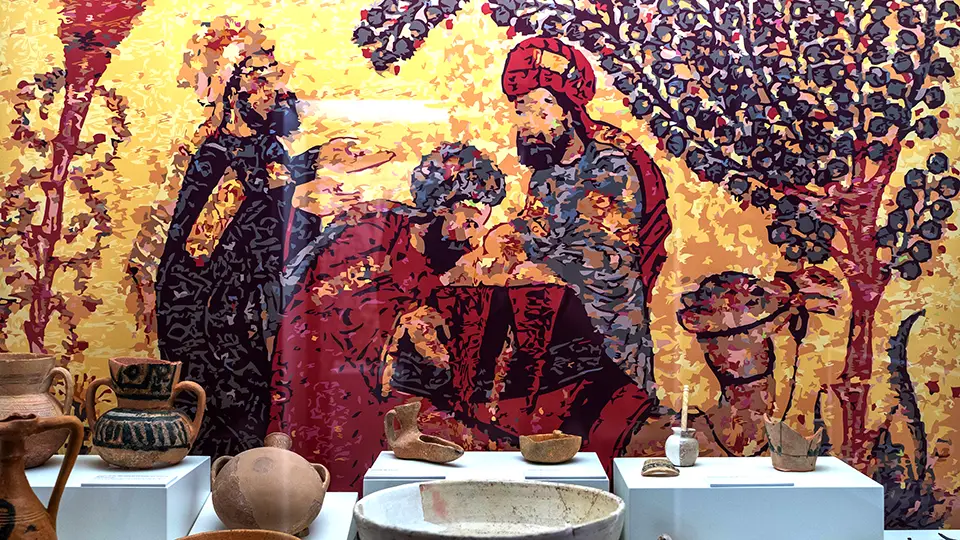
Tunis is not only the capital of Tunisia and one of the oldest cities in North Africa. It is also a place where history becomes intertwined with legend. During more than three thousand years of existence, the city witnessed the rise and fall of empires, bloody wars, corsair raids, secret conspiracies and major religious transformations.
It is therefore hardly surprising that countless stories have grown around its streets, palaces and ruins, passed down from generation to generation. While walking through the medina or the ruins of Carthage, it is difficult to resist the feeling that every old gateway and stone wall conceals a story that will never be found in a history book.
Some of these tales have their roots in real events, while others were created entirely by the human imagination. All of them, however, form part of the remarkable heritage of Tunis.
The legend of Queen Dido and the oxhide
The best-known legend in the region is connected with the founding of Carthage, located only a dozen or so kilometres from central Tunis.
According to ancient accounts, the Phoenician princess Dido fled her home city of Tyre after her greedy brother murdered her husband. Together with a group of loyal companions, she reached the coast of North Africa, where she asked a local ruler for a small piece of land.
The ruler agreed to give her as much territory as could be covered by a single oxhide. Dido, however, proved exceptionally clever. She cut the hide into very thin strips and joined them together to form a long cord, which she used to surround the whole of Byrsa Hill.
In this way, she acquired a much larger area than the ruler had expected. According to the legend, this was where Carthage was founded – the city that would later become one of the greatest powers in the Mediterranean.
Byrsa Hill remains one of the most important archaeological sites near Tunis today. The story of Dido reminds us that intelligence can sometimes be more effective than strength.
The mystery of the Tophet – were children really sacrificed there?
One of the most mysterious places near Tunis is the Tophet of Carthage. Archaeologists discovered thousands of urns there containing the cremated remains of infants and small animals.
For more than a century, scholars have debated what really happened at this site. Ancient Greek and Roman writers claimed that the Carthaginians sacrificed children to their gods, particularly during major crises and wars.
According to these accounts, young children were thrown into a fire as offerings to the god Baal Hammon and the goddess Tanit. Modern researchers, however, remain divided. A growing number believe that the Tophet was primarily a cemetery for children who had died from natural causes.
Infant mortality was extremely high in ancient times, so the number of burials may have been far greater than a modern visitor might expect. The truth will probably never be established with certainty. It is this uncertainty that makes the Tophet one of the most mysterious archaeological sites in the world.
Underground tunnels beneath the medina
For generations, residents of old Tunis have told stories about a vast network of underground passages running beneath the medina.
According to legend, the tunnels once connected the palaces of the beys with mosques, warehouses and former fortifications. During sieges, they supposedly allowed the city’s most important residents to escape or made it possible to bring food into Tunis in secret.
Some people even claim that certain passages led all the way to the port, allowing rulers to leave the city unnoticed.
Fragments of old cellars, cisterns, and underground passages have indeed been discovered during various archaeological works. However, there is no evidence that a single extensive network of tunnels, like the one described in local legends, ever existed.
Despite this, older residents of the medina can still point out places where, according to them, the entrances to these mysterious passages were sealed long ago.
The ghosts of the corsairs of La Goulette
For several centuries, Tunis was one of the most important corsair bases in the Mediterranean. Ships sailed from here to attack European merchant vessels and return to the city with valuable spoils.
According to local fishermen, on windless nights strange sounds can sometimes be heard coming from the direction of the old harbour. They resemble the creaking of wooden decks and ropes striking against ship masts.
Legend says these are the ghosts of corsairs who never returned from their expeditions.
Although it is difficult to take these stories literally, walking around the old harbour after dark certainly creates a special atmosphere. It is easy to imagine hundreds of sailing ships preparing for their next voyage.
We explored the area many times, both during the day and at night, but we did not encounter a single ghost. Perhaps one of you will be luckier.
The treasure of the last beys
One of Tunisia’s most popular legends tells of an enormous treasure hidden by the last beys before French troops entered the country in the nineteenth century.
According to the story, gold, jewels and priceless works of art were concealed somewhere beneath one of the medina’s palaces.
For decades, numerous treasure hunters attempted to find the hidden fortune. However, no convincing evidence of its existence has ever been discovered. Some historians believe that most of the valuables were simply taken abroad or confiscated by the new authorities.
Nevertheless, the legend of the lost treasure continues to capture the imagination of residents.
Mysterious symbols on the doors of the medina
While walking through the old city, it is worth having a closer look at its distinctive doors. Many are decorated with metal knockers in different shapes. This is not accidental. According to an old tradition, the number, and appearance of the knockers could provide information about the people living inside the house.
Men, women, and close relatives supposedly used knockers that produced different sounds. This allowed those inside to know who was standing at the entrance.
Many doors are also decorated with symbols such as the Hand of Fatima, crescents and geometric patterns. According to traditional beliefs, these symbols protected the household from the evil eye, jealousy, and misfortune. Even today, many residents regard them as effective protective charms.
Marabouts – the holy guardians of the city
In different parts of Tunis, you can find small white buildings crowned with domes. These are the tombs of marabouts – local saints and Sufi mystics. For centuries, residents believed that those buried in these places possessed exceptional wisdom and the ability to perform miracles.
Even today, people sometimes leave flowers beside the tombs or pray there for health, prosperity or a safe journey. Although modern Tunisia is a relatively progressive country, many traditional beliefs remain very much alive.
The medina’s secrets after dark
The medina feels most unusual after nightfall. When the shops close and the crowds of tourists disappear, the maze of streets becomes almost completely silent. Light from the street lamps reflects off the stone walls, while the only sounds are distant footsteps and the calls of the muezzins. Some residents claim that this is when the old city reveals its true face.
They tell stories about shadows moving between the houses, unexplained noises coming from abandoned palaces and mysterious figures that disappear as quickly as they appear. It is impossible to say how much truth there is in these tales. One thing is certain, however – walking through the medina at night certainly fires the imagination. In a place with more than a thousand years of history, it is easy to believe that the past is still present just around the corner.
These legends make Tunis something more than a collection of historic monuments. They add mystery to the city and remind us that not every historical puzzle has been solved. Do forgotten tunnels really exist beneath the medina? Were children genuinely sacrificed among the ruins of Carthage? Is the treasure of the beys still waiting to be discovered?
We will probably never know the answers to many of these questions. Perhaps that is precisely why Tunisia’s capital continues to fascinate travellers, archaeologists, and lovers of old stories. In a city whose history stretches back well over three thousand years, the boundary between history and legend can be remarkably thin – and that makes Tunis even more intriguing.
Tunis information and interesting facts
- Tunis is one of the oldest capitals in North Africa – The city’s history dates back to at least the ninth century BC, although the surrounding area was inhabited much earlier. Over more than three thousand years, Tunis came under Phoenician, Roman, Arab, Ottoman and French rule. Each civilisation left visible traces in the city.
- For centuries, Tunis remained in the shadow of Carthage – Although it is now the capital of Tunisia, Tunis was once a relatively small settlement beside the powerful city of Carthage. It only began to take over the role of the region’s most important centre after Carthage had been destroyed by the Romans.
- The medina of Tunis is a UNESCO World Heritage Site – The historic centre was added to the UNESCO World Heritage List in 1979. It contains more than 700 historic buildings, including mosques, palaces, madrasas, mausoleums and traditional merchants’ houses.
- It is effortless to get lost in the medina – The street layout was created many centuries ago and resembles a genuine maze. Narrow passageways often lead to dead ends, hidden courtyards or small squares, making a walk through the old city feel like an adventure.
- The Great Mosque of Ez-Zitouna is more than 1,300 years old – It is the most important mosque in Tunisia and one of the oldest in Africa. For many centuries, it was also an important centre of learning that attracted scholars from across the Islamic world.
- Many columns in the Ez-Zitouna Mosque came from ancient Carthage – The builders reused architectural elements taken from Roman and Byzantine structures. As a result, objects from several historical periods can be seen in one place.
- The Bardo Museum has one of the world’s finest collections of Roman mosaics – Its collection includes hundreds of exceptionally well-preserved mosaics depicting mythology, hunting scenes, animals, everyday life and sea voyages from almost two thousand years ago.
- Tunis was once an important Mediterranean corsair port – Between the sixteenth and eighteenth centuries, Barbary corsairs sailed from the city to attack European merchant vessels. Their expeditions brought considerable wealth to local rulers.
- A monumental Catholic cathedral stands in the city centre – The Cathedral of St Vincent de Paul is one of the largest Christian churches in North Africa. It recalls the period of the French protectorate and the multicultural history of Tunis.
- Avenue Habib Bourguiba is often called Tunisia’s Champs-Élysées – The broad avenue is lined with cafés, shops, hotels and elegant buildings. It was developed in the late nineteenth century according to French urban-planning principles.
- Tunis has its light railway system – Although it is commonly called a metro, it resembles a network of fast trams rather than a conventional underground railway. It connects the centre with many residential districts.
- Carthage lies only a short distance from central Tunis – One of the most famous cities of the ancient world is now effectively part of the wider Tunis metropolitan area. Its archaeological sites can easily be reached by TGM train, taxi, or car.
- Byrsa Hill offers one of the finest views in the area – According to legend, this was where Queen Dido founded Carthage. Today, visitors can admire views of the Mediterranean Sea, the ancient ruins and the modern suburbs of Tunis.
- The picturesque town of Sidi Bou Said is located nearby – Its white houses, blue doors and brightly painted shutters make it one of the most recognisable places in Tunisia. The town is particularly popular with photographers and artists.
- Traditional crafts are still practised in the medina – Jewellers, potters, leather workers, weavers, and makers of traditional fezzes continue to produce goods using techniques passed down through generations.
- The distinctive doors of Tunis often have several knockers – According to tradition, different knockers produced different sounds. This allowed the residents to recognise whether the visitor was a man, a woman or a close member of the family.
- Many doors are decorated with protective symbols – The Hand of Fatima, crescents and geometric patterns were traditionally believed to protect households against the evil eye, jealousy, and misfortune.
- Tunis reflects the influence of many cultures – The city’s architecture combines Phoenician, Roman, Arab, Ottoman and French elements. This makes Tunis one of the most culturally diverse capitals in the Mediterranean region.
- Tunis was an important centre of Islamic learning – For centuries, scholars travelled here from Andalusia, Egypt, North Africa and the Middle East to study theology, mathematics, astronomy, law, and medicine.
- Many streets in the medina are more than a thousand years old – Their routes have barely changed since the Middle Ages. Visitors can therefore follow the same paths used by merchants and craftsmen eight or nine centuries ago.
- The old city contains numerous historic palaces – Some have been converted into museums, cultural centres, galleries, restaurants, or boutique hotels. Others continue to serve administrative purposes.
- Tunis played a central role during the Arab Spring – Large demonstrations took place in the capital in 2011, contributing to the fall of the country’s long-serving president and inspiring political protests across the wider region.
- Police officers and soldiers are visible near many important buildings – Security was significantly strengthened following terrorist attacks in Tunisia. Armed patrols can often be seen near government offices, embassies, museums, hotels, and transport hubs.
- Tunisian mint tea is often served with pine nuts – The tea is usually strong and sweet, with fresh mint added for flavour. Pine nuts floating on the surface make it one of the country’s most distinctive drinks.
- The medina contains dozens of historic souks – Each market traditionally specialised in a particular product, including perfumes, spices, gold, carpets, traditional clothing, leather goods and handmade ceramics.
- Some of the Roman Empire’s largest baths can be found nearby – The Baths of Antoninus in Carthage were among the largest bathing complexes in the Roman world. Only a few bathhouses in Rome itself were larger.
- Lake Tunis is home to numerous bird species – At certain times of the year, visitors may see flamingos, herons and migratory birds travelling between Europe and Africa.
- The city has two wholly different faces – The medieval medina contrasts sharply with the wide boulevards and European-style buildings created during the French protectorate. Passing through Bab el Bhar is like crossing between two different worlds.
- Tunis and its surroundings have been used as filming locations – The well-preserved historic architecture, nearby ancient ruins and varied landscapes have made the region suitable for historical films, television productions and documentaries.
- Many traditional production methods have survived despite modernisation – Small workshops continue to make ceramics, textiles, jewellery, leather goods and decorative objects by hand.
- Tunis is a city that inspires very different emotions – Some visitors are captivated by its long history, monuments and Arab atmosphere. Others are surprised by its chaos, neglected buildings and visible differences between restored tourist areas and less well-maintained districts. These contrasts are precisely what make the Tunisian capital feel authentic and memorable.