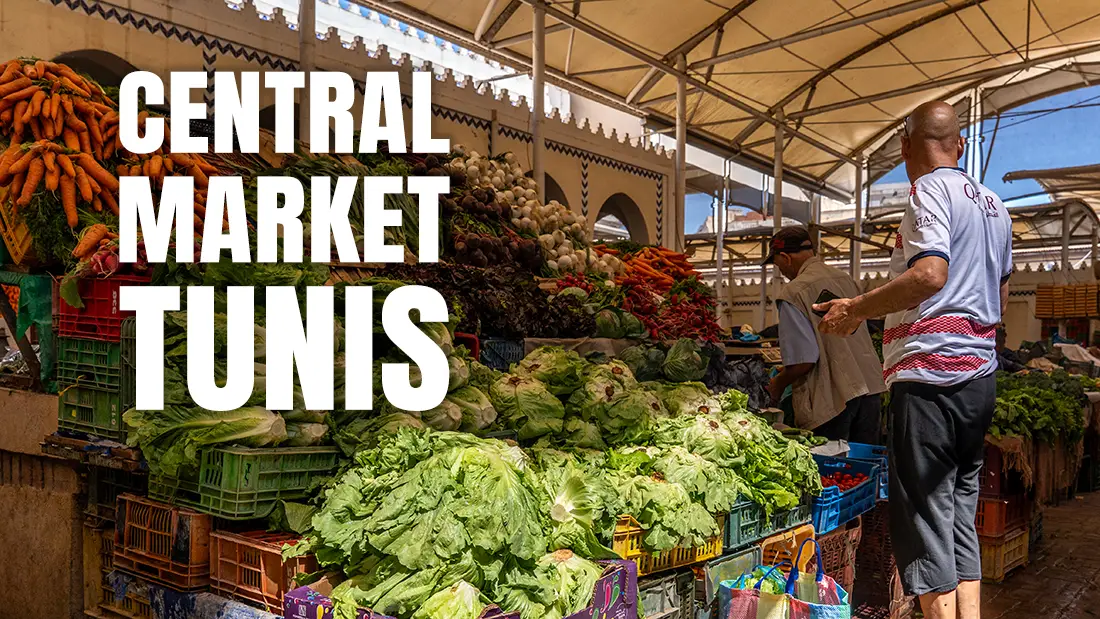
Central Market in Tunis may seem like an ordinary marketplace at first glance, but it only takes a few minutes wandering between the stalls to understand why locals call it the heart of the city. From the early hours of the morning until late afternoon, this place is full of life. It is far more than just a market – it is a living chronicle of Tunisia, told through aromas, colours and the lively conversations of traders. Here, fishermen from the Mediterranean meet farmers from the country’s fertile regions, spice merchants work alongside skilled craftsmen whose families have been running small stalls for generations.
As I wandered through the narrow aisles, I couldn’t help feeling that time passed differently here. Modern Tunis lies only a few steps away, yet inside the market hall the atmosphere feels almost unchanged from decades ago. Traders enthusiastically advertise their goods, customers bargain with smiles on their faces, and the rich aroma of freshly ground cumin, coriander and warm baked bread fills the air, making it almost impossible to simply walk past.
For visitors, Central Market is one of the best places to experience everyday life in Tunisia. There’s no need to spend money on expensive souvenirs because the greatest attraction is the atmosphere itself. It is here that you can discover what Tunisians really eat, which ingredients they buy every day, and how a market that has been at the heart of the capital for well over a century continues to shape daily life.
The History of Central Market in Tunis
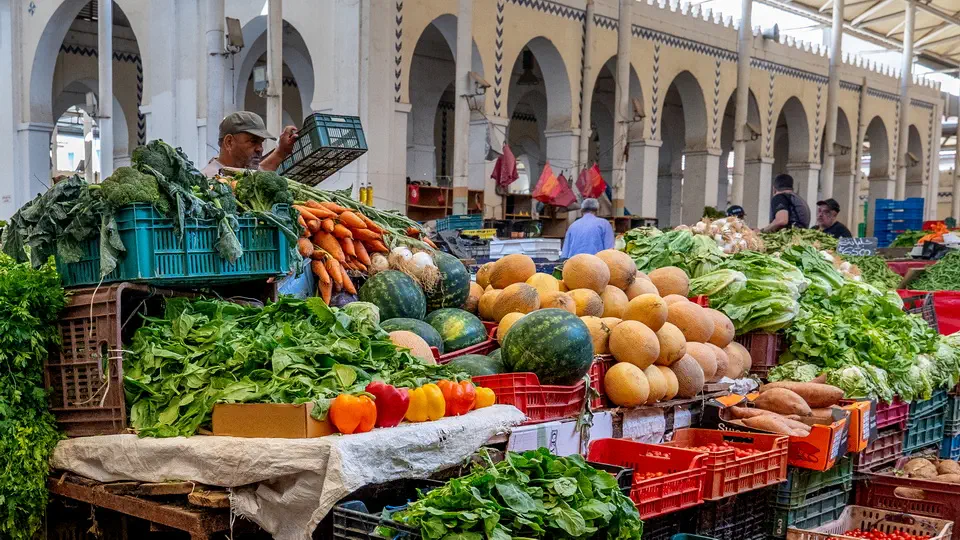
The history of Central Market (Marché Central de Tunis) dates back to the end of the nineteenth century and is closely linked to the period of the French Protectorate. After France established control over Tunisia in 1881, a large-scale programme of urban modernisation began. New streets, administrative buildings and elegant public squares transformed the city. One of the most ambitious projects was the construction of a modern covered market that would replace the scattered bazaars operating throughout the streets of Tunis.
Before that, most trade took place inside the medina. Merchants displayed their goods along narrow streets, with each profession occupying its district. There were separate streets dedicated to spice traders, jewellers, butchers, and olive oil sellers. Although this traditional system had served the city well for centuries, the rapidly expanding capital soon required a larger and more organised marketplace.
The French authorities decided to build a covered market, inspired by the fashionable market halls that had become popular across Europe. Construction was completed towards the end of the nineteenth century, and the new Central Market quickly became one of the symbols of modern Tunis. Even from the outside, the building stands out from its surroundings. It was designed in the industrial architectural style typical of late nineteenth-century France, featuring a steel framework combined with large glazed sections that allowed natural light to flood the interior.
Its most distinctive features include decorative brick façades, tall arched windows and elegant wrought-metal structures. At the time of its construction, it was considered one of the most advanced commercial buildings anywhere in North Africa. Although it has undergone several renovations during the past century, it has retained much of its original character. Walking through the market today, it is easy to spot the original steel beams supporting the roof and the layout of the aisles, which has remained almost unchanged since the early twentieth century.
Central Market has witnessed some of the most significant events in Tunisia’s modern history. It survived both World Wars, the struggle for independence, Tunisia’s independence in 1956 and numerous political changes. Perhaps its greatest challenge came during the Arab Spring in 2011. Demonstrations that eventually led to the fall of President Zine El Abidine Ben Ali took place only a few hundred metres from the market.
Despite the unrest, Central Market returned to normal remarkably quickly. For residents, it became a symbol of everyday life continuing despite difficult circumstances. Traders reopened their stalls even while protests continued elsewhere in the city. Today, many of them still describe that period as the most difficult chapter in the market’s long history.
Central Market in Tunis – A Meeting Place for the People of Tunis
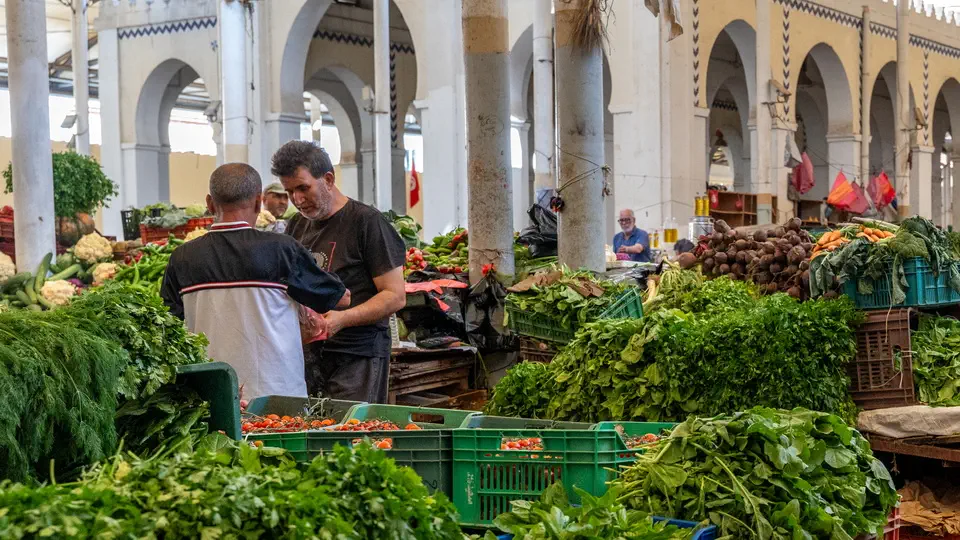
Although most tourists visit Central Market only once during their stay, for many Tunisians it is an essential part of daily life. Shortly before seven o’clock each morning, restaurant owners arrive to buy fresh fish, seafood, and vegetables. Soon afterwards, residents from nearby neighbourhoods appear, many of whom have been shopping at the very same stalls for years. Numerous traders know their regular customers by name. Some family businesses are now run by the third or even fourth generation. It is perfectly normal for a conversation about the weather or the latest football match to last longer than the actual shopping itself.
Central Market in Tunis Today
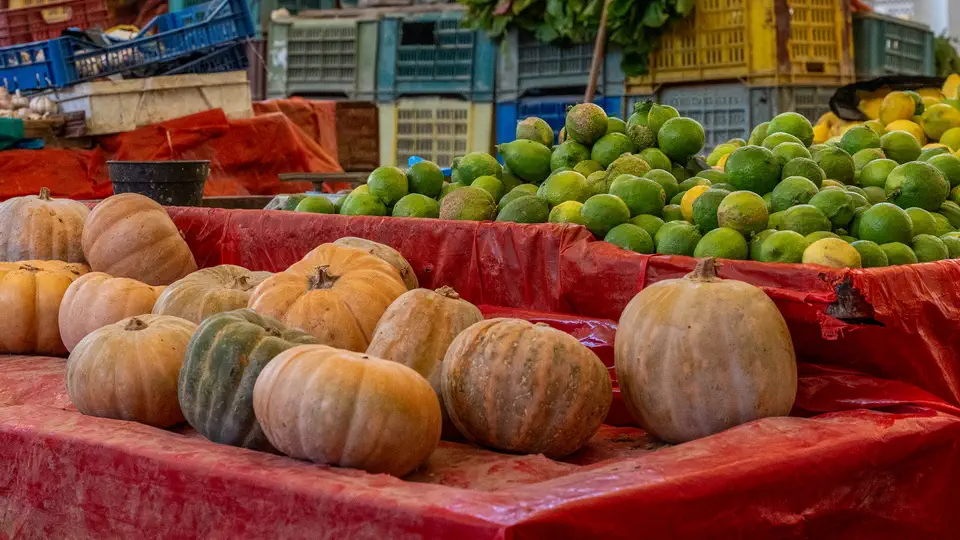
Today, Central Market remains the largest covered market hall in Tunis and one of the country’s most important trading centres. Every day, thousands of residents shop here, alongside an ever-growing number of visitors eager to discover the authentic side of Tunisia. The market has been divided into several clearly defined sections, making it surprisingly easy to navigate.
The largest area is dedicated to fresh food. Here you’ll find stalls selling fish, seafood, meat, fruit, vegetables, and spices. Separate sections specialise in local cheeses, olives, dates, honey and traditional Tunisian sweets. Around the edges of the hall are several small cafés and restaurants serving dishes prepared from ingredients purchased just a few metres away. Many locals stop here for a quick lunch, choosing grilled fish, a tuna sandwich or the classic Tunisian sandwich flavoured with harissa.
What stayed with me most after my visit was the incredible energy of the place. Every trader tries to catch your attention. Some greet visitors with a smile and invite them to sample olives, while others proudly display enormous tuna or encourage passers-by to try freshly squeezed pomegranate juice. Every few steps, the scent changes completely. One moment you smell fresh mint and coriander, the next roasted almonds, followed by fresh fish, citrus fruit and the unmistakable aroma of spicy harissa.
It is this combination of sights, sounds and smells that makes Central Market such an unforgettable experience. This is not a polished shopping centre designed purely for tourists. It is a genuine working market that has remained one of the most important parts of everyday life in Tunis for well over a century.
What Can You Buy at Central Market in Tunis?
If I had to choose one place that best showcases the richness of Tunisian cuisine and local produce, I wouldn’t hesitate for a second—it would be Central Market. This is not a tourist-oriented bazaar. The vast majority of customers are residents, which means the quality of the produce is genuinely excellent and, despite rising prices recently, costs remain very reasonable.
As I explored one aisle after another, I noticed that each seemed to specialise in something different. One was filled with the aroma of freshly ground coffee, another with fragrant spices, the next with citrus fruits, before leading directly into the impressive fish and seafood section. Even visitors with no intention of shopping often end up spending an hour or two simply taking everything in.
The Fish Market – The Pride of Central Market
The fish section is undoubtedly the market’s most famous area. It attracts not only residents but also chefs from some of the finest restaurants in Tunis. From the very early hours of the morning, fishermen deliver their fresh catches from Mediterranean ports. Many of the fish are displayed for sale only hours after being landed, ensuring exceptional freshness.
Among the seafood on offer are delicious sea bream, highly prized sea bass, red mullet, impressive-looking swordfish, tuna, shiny silver sardines, mackerel, squid and countless other species of fish and shellfish. The biggest attraction, however, is undoubtedly the enormous tuna, some weighing several dozen kilograms. Displayed proudly on the counters like museum exhibits, they attract almost every tourist passing by.
The traders are always happy to explain where the fish came from, demonstrate how they fillet them and, if you politely ask first, they will often allow you to take photographs.
Spices – The Aroma of Tunisia Captured in Small Bags
No visit to Central Market would be complete without exploring the spice stalls. Long before you reach them, the air becomes filled with the scents of cumin, coriander, cinnamon and dried mint. Colourful mounds of spices resemble miniature works of art.
Among the most popular spices sold here are powdered harissa, cumin, coriander, turmeric, precious saffron, fragrant aniseed, sweet and hot paprika, black pepper and many others.
Many traders sell their exclusive spice blends, prepared according to family recipes passed down through generations. If you decide to buy some, don’t hesitate to ask to smell several mixtures. Very often you’ll discover unique combinations that simply cannot be found anywhere outside Tunisia.
Olives, Olive Oil, Fruit, and Vegetables
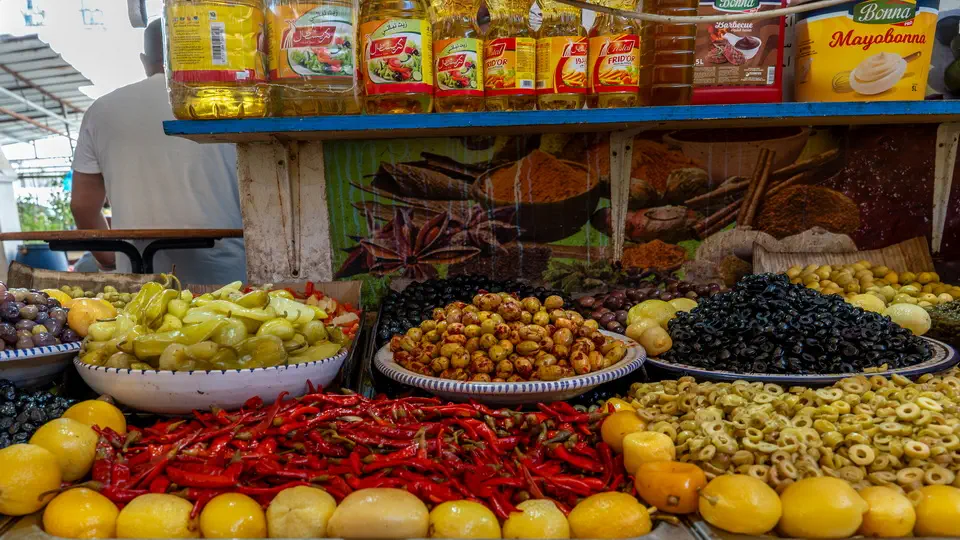
Tunisia is one of the world’s leading producers of olive oil, so it comes as no surprise that an entire section of the market is devoted to olives and olive oil. The stalls display dozens of different varieties, and sellers are usually more than happy to let you sample several before making your choice.
Next to them are stands selling excellent extra virgin olive oil. Many producers pour it directly from large stainless-steel containers into bottles of your chosen size. It’s a fantastic opportunity to buy olive oil that is often superior in quality to products commonly found in European supermarkets.
The fruit and vegetable section is an explosion of colour. Mountains of tomatoes, aubergines, courgettes, peppers, and bunches of fresh herbs fill every stall. Particularly eye-catching are the citrus fruits. Tunisia is well-known for its exceptional Maltaise oranges, juicy lemons, mandarins and fragrant grapefruit. During winter, this entire section glows with shades of orange. I also highly recommend trying the delicious pomegranates, figs, apricots, melons and, of course, the country’s treasured dates.
There is probably no product more closely associated with Tunisia than its dates. The most highly prized variety is Deglet Nour, whose name means “Finger of Light”. These dates are light in colour, almost translucent and exceptionally sweet. At Central Market, you can buy loose fresh dates by weight or beautifully packaged gift boxes that make excellent souvenirs. Some stalls also sell dates stuffed with almonds, walnuts or pistachios, coated in sesame seeds or filled with almond paste. Believe me, it had been a very long time since I’d tasted anything quite so delicious.
Traditional Sweets, Coffee, and Tea
Anyone with a sweet tooth will be in heaven here. The market is filled with traditional Tunisian desserts prepared using recipes that are hundreds of years old. You’ll find sticky baklava, makroud filled with dates, kaak warka, samsa, almond biscuits, halva and nougat. Most confectioners package their sweets in elegant boxes, making them easy to take home as gifts.
Coffee lovers will find themselves lingering beside stalls where beans are freshly ground in front of customers. With a little searching, you’ll discover high-quality Arabica coffee, Arabica-Robusta blends and aromatic coffee flavoured with cardamom and spices. Nearby, you’ll also find green tea used to prepare traditional Tunisian mint tea served with pine nuts.
Handicrafts and Souvenirs
Although Central Market is primarily known for its food, there are also several stalls selling traditional handicrafts. Among my favourite finds were beautifully crafted ceramic bowls, hand-painted plates, copper cookware, wooden mortars and pestles, traditional teapots, leather goods and embroidered tablecloths.
Magda, meanwhile, couldn’t tear herself away from the stalls selling cosmetics made from olive oil, natural soaps and fragrant orange blossom oils.
Prices here are often noticeably lower than in souvenir shops aimed exclusively at tourists. Even so, bargaining is still very much part of the shopping experience and is generally expected.
How Much Does Shopping at Central Market Cost?
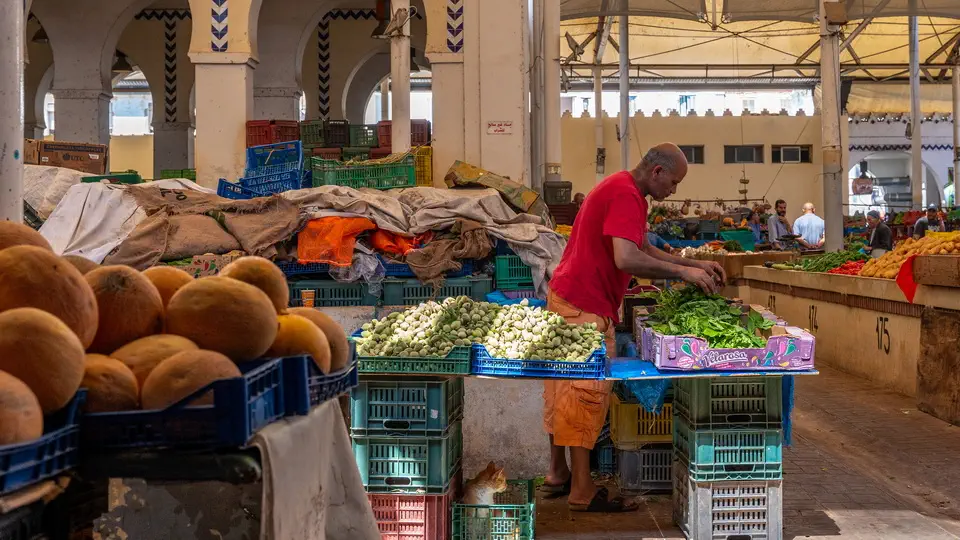
One of the main reasons why residents continue to choose Central Market over supermarkets is its competitive prices. Although costs vary depending on the season, weather conditions and harvest yields, many products remain noticeably cheaper than those found in modern retail chains.
During my visits, I noticed that prices can even change from one day to the next, especially when it comes to fish and seafood. Early in the morning, the selection is at its best and everything is exceptionally fresh. Later in the afternoon, some traders begin lowering their prices to sell everything before closing time.
Below are some example prices. Keep in mind that these are approximate and may vary depending on the season and current market conditions.
- Deglet Nour dates – around 10–25 TND per kilogram, depending on quality and the time of year.
- Olives – typically 8–20 TND per kilogram, with premium varieties costing more.
- Fresh oranges – approximately 2–4 TND per kilogram during the season.
- Tomatoes – usually 2–5 TND per kilogram, depending on the time of year.
- Harissa – from 5 to 15 TND per jar or package.
- Spices – small quantities generally cost between 2 and 10 TND, while rarer spices such as saffron are considerably pricier.
- Extra virgin olive oil – around 20–40 TND per litre, depending on quality and producer.
- Fresh fish – prices usually range from 15 to more than 80 TND per kilogram, while tuna, swordfish, and premium seafood may cost considerably more.
It is worth remembering that although many stalls clearly display their prices, traditional bargaining is still common at others. This is particularly true when buying larger quantities or shopping for handicrafts and souvenirs.
Practical Tips for Visiting Central Market in Tunis
After visiting Central Market several times, I realised that simply walking in and starting your shopping isn’t the best approach. The market has its rhythm and unwritten rules. The more you adapt to them, the more enjoyable your visit will be. You’ll avoid paying too much, find fresher produce, and experience the market much as residents do.
- What Is the Best Time to Visit? – The ideal time to arrive is between 7:00 am and 10:00 am. This is when the widest selection of fresh fish is available, every stall is fully stocked, temperatures are much more comfortable and the crowds of tourists have yet to arrive. Later in the afternoon, the atmosphere becomes noticeably calmer, but many traders begin reducing their prices to sell everything before closing. If you’re looking for the best bargains, visiting between 3:00 pm and 4:00 pm can be a good idea, although the selection will naturally be smaller.
- Bring Cash – Although some shops accept card payments, the majority of market stalls still operate on a cash-only basis. It’s a good idea to carry plenty of small banknotes and a few coins, preferably in a separate wallet used just for shopping. It makes paying much easier and avoids having to reveal large amounts of cash.
- Should You Bargain? – That depends on what you’re buying. Fresh food prices are generally fixed, leaving little room for negotiation. However, bargaining is completely normal when purchasing ceramics, handicrafts, larger quantities of spices or souvenirs. The golden rule is simple: always negotiate with a smile. Tunisians enjoy conversation, and spending a few friendly minutes chatting will often achieve a better price than trying to bargain aggressively.
- Don’t Buy from the First Stall – This is probably the single most useful piece of advice I can give. The first stall is rarely the best one. I always take a walk around the entire market first, comparing product quality, storage conditions, the attitude of the traders and, naturally, the prices. Only afterwards do I return to the stall that impressed me the most. More than once, I’ve found the same product just a few metres away for ten or even fifteen percent less.
- Take Advantage of Free Tastings – Many traders happily offer samples of olives, dates, honey, spices or traditional sweets. Don’t be shy about accepting. Sampling products is a normal part of Tunisian market culture. And with a little luck, you’ll enjoy enough free tastings that you’ll end up buying far fewer snacks than you originally intended.
- Be Careful with Chilled Products – If you’re planning to continue sightseeing after leaving the market, avoid buying fish, meat or fresh seafood too early. Temperatures in Tunis can become very high, causing perishable products to spoil surprisingly quickly. Leave these purchases until the very end of your day whenever possible.
- Ask Where the Products Come From – Most traders are genuinely proud of their produce and are more than happy to tell you its origin. You may discover that the olive oil comes from the Sfax region, the dates were harvested in the oasis of Tozeur, the oranges arrived from the Cap Bon Peninsula, or that the fish you’re looking at was caught near Bizerte only a few hours earlier. These conversations make shopping far more interesting than simply buying products from supermarket shelves.
- Photography – Central Market is incredibly photogenic. The colourful spices, towering piles of citrus fruit and enormous fish create fantastic photo opportunities. Before photographing an individual trader, however, it is polite to ask for permission first. Most people respond warmly, and some will even rearrange their products to help you capture a better picture.
- Safety – Central Market is generally considered a safe place to visit. As with any busy public area, basic precautions are advisable. Wear your backpack on your front in crowded areas, keep your phone in a secure pocket and never leave your wallet lying on a counter. Personally, I never experienced any unpleasant situations here, but common sense is always your best travel companion.
- What Should You Avoid Buying? – Not everything travels well by plane. It is best to avoid purchasing fresh fish, soft cheeses, chilled foods and very ripe fruit if you’re flying home. Instead, choose products that travel easily, such as spices, olive oil, dates, sweets or locally made handicrafts. These make excellent souvenirs and are far more practical to transport.
Is Central Market in Tunis Worth Visiting?
Without the slightest hesitation—yes.
Of all the places I explored in Tunis, Central Market is one of those I would happily return to again and again. It doesn’t impress with monumental architecture like the historic buildings of the medina, nor does it compete with the scale of modern shopping centres. Instead, it offers something far more valuable: authenticity.
This is where you’ll witness the city at its most genuine. You can watch traders going about their daily work, listen to the constant buzz of conversation, breathe in the intense aromas of exotic spices and discover just how important commerce remains in Tunisian culture. Even if you have no intention of buying anything, simply wandering through the market gives you a much more in-depth understanding of Tunis and its people.
If you enjoy discovering places beyond the usual tourist trail, tasting local specialities and experiencing everyday life in the countries you visit, Central Market certainly won’t disappoint. In my opinion, it is one of those rare places that reveals the true character of Tunisia—vibrant, colourful, fragrant and full of traditions that have been passed down through generations.
Legends and Mysteries of Central Market

Although the present market building was only constructed at the end of the nineteenth century, the site itself has been associated with trade for centuries. Unsurprisingly, countless stories have grown around it over the years. Some are loosely rooted in history, while others are colourful urban legends that add even more charm to this fascinating place.
- The Legend of the Honest Merchant – One of the best-known stories tells of an elderly spice trader who ran his stall long before the current market hall was built. According to the legend, he always weighed his goods honestly and never inflated his prices, even when other merchants took advantage of inexperienced visitors. Local people believed that his honesty was rewarded. His business flourished for decades, and his descendants inherited not only the family stall but also extraordinary good fortune in trade. Even today, some older traders repeat a popular saying heard around the market: ““”Honesty always returns to its owner faster than mone“y”.”
- The Mysterious Tunnels Beneath the Market – For many years, stories have circulated about hidden underground passageways beneath Central Market. According to local legend, these tunnels once connected the market with the medina, nearby palaces and ancient merchants’ warehouses. Historians do confirm that beneath modern Tunis lie the remains of older buildings and historic drainage systems dating from various periods of the city’s past. However, there is no evidence that an extensive network of secret tunnels was ever used by merchants. Nevertheless, the story refuses to disappear. Some residents still claim that during renovation work, bricked-up passageways leading into unknown directions have occasionally been uncovered.
- The Ghost of the Night Watchman – One of the lesser-known tales concerns a watchman who guarded the market hall every night for many years. After his death, several workers reportedly heard footsteps echoing through the building after dark, along with creaking doors and the rattling of metal gates, despite the market being empty. Most of the older traders tell the story with a smile. According to them, the loyal watchman’s spirit still patrols the market each night, ensuring that nothing disturbs the place to which he devoted his entire life.
- The Secret Spice Blend – Among the spice stalls, another long-standing legend continues to circulate. It tells of a family that has been selling its own unique spice mixture for well over a century. According to the story, only the eldest member of the family knows the complete recipe, passing it on to the next generation only shortly before death. Many customers believe this mysterious blend is the secret ingredient that gives traditional Tunisian couscous its unforgettable flavour. Whether the legend is true or not, many traders genuinely do create their own exclusive spice mixes and guard the recipes with remarkable secrecy.
- Cats – The Silent Guardians of the Market – Cats can be seen everywhere around Central Market and the surrounding streets. Local people often joke that they are the market’s true guardians. According to local folklore, their presence brings traders good fortune while protecting food supplies from rodents and other pests. Many stall owners feed them every day, treating them almost like fellow employees. The cats have become such a recognisable part of Central Market that many photographers deliberately seek them out among the stalls, capturing some of the market’s most atmospheric images.
Central Market in Tunis – Facts and Interesting Information
- Central Market has been operating continuously since the late nineteenth century. Since opening its doors, it has survived the French Protectorate, two World Wars, Tunisia’s independence and the Arab Spring, remaining one of the capital’s most important commercial centres.
- The building was inspired by European market halls. Its architects based the design on modern covered markets built in France and Belgium, making it one of the most advanced commercial buildings in North Africa at the time.
- Each section has its own unique atmosphere. Every part of the market offers different aromas, colours, and sounds—from fragrant spice stalls to bustling fish counters and colourful fruit displays.
- Top chefs shop here every morning. Many of Tunis’s finest restaurant chefs arrive before sunrise to secure the freshest fish, seafood and seasonal produce before anyone else.
- Fish often reaches the stalls only hours after being caught. This exceptional freshness is one of the reasons Central Market enjoys such an outstanding reputation among both locals and professional chefs.
- You can see some of the largest tuna in Tunisia. Certain specimens weigh several dozen kilograms and have become one of the market’s most photographed attractions.
- You’ll smell the spices before entering the building. The aromas of cumin, coriander, cinnamon, mint, and harissa drift through the surrounding streets long before visitors reach the entrance.
- Some family businesses have traded here for more than a century. Knowledge about spices, olive oil and seafood has been passed from one generation to the next for decades.
- Several languages can be heard throughout the market. Alongside the Tunisian Arabic dialect and French, many traders also speak English, Italian, and even a little German or Spanish to communicate with visitors.
- Dates are available in countless varieties. Although most visitors know only Deglet Nour, the market offers numerous local varieties differing in flavour, texture, colour, and sweetness.
- Central Market is a photographer’s dream. Colourful spice displays, shining fish, pyramids of citrus fruit and sunlight streaming through the tall windows create spectacular images throughout the day.
- Cats are part of everyday life here. Fed by traders and loved by locals, they help keep rodents under control and have become one of the market’s unofficial symbols.
- Not every price is fixed. While fresh food is generally sold at set prices, ceramics, spices, and handicrafts often leave room for friendly negotiation.
- Morning is the best time to visit. This is when the market is at its liveliest and offers the widest choice of fresh produce.
- Many traders offer free samples. Visitors are frequently invited to taste olives, dates, olive oil and traditional sweets before deciding what to buy.
- Excellent restaurants surround the market. Several nearby cafés prepare meals using ingredients purchased from the market only minutes earlier, guaranteeing exceptional freshness.
- The market is also a social hub. For many Tunisians, shopping is only part of the experience. Friends, neighbours, and families gather here daily to chat over coffee or while choosing olives and vegetables.
- Every season transforms the market. Winter brings citrus fruit, spring fills the stalls with fresh herbs, summer offers melons and watermelons, while autumn showcases dates and pomegranates.
- Central Market is one of Tunis’s finest culinary attractions. Although it isn’t the city’s most famous historical monument, many travellers consider it an essential stop for anyone wishing to experience authentic Tunisian cuisine and culture.
- No two visits are ever the same. Every day brings different traders, seasonal produce and new discoveries, ensuring that each visit offers a unique experience.