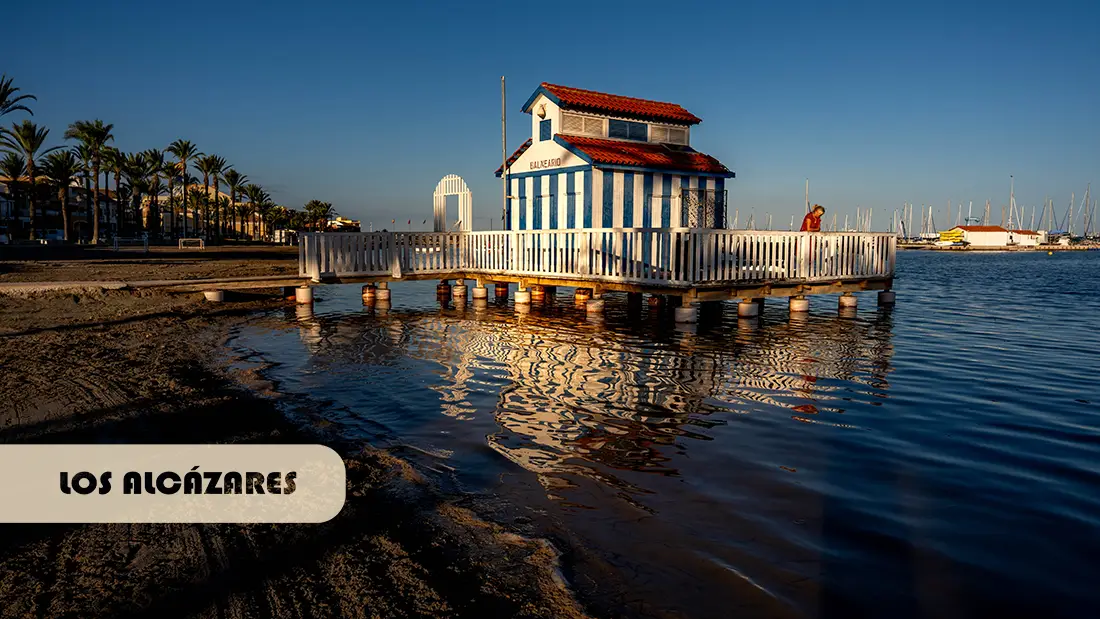
On Spain’s south-eastern coast, in the Region of Murcia, lies Los Alcázares, a small seaside town that has been attracting visitors for years with its relaxed atmosphere, sandy beaches and the warm waters of the Mar Menor lagoon. It is quite different from the crowded resorts of the Costa Blanca. You will not find the hustle and bustle of a large city or vast hotel complexes stretching for miles along the coast. Instead, there are attractive seafront promenades, small restaurants, palm trees, beach bars and the unmistakable rhythm of everyday Spanish life.
Los Alcázares is particularly appealing to people who enjoy spending time by the water, taking leisurely walks and discovering some of Spain’s less obvious destinations. However, the town has much more to offer than simply sunbathing and swimming. Its history stretches back to Roman and Moorish times, and during the 20th century it played an important role in the development of Spanish aviation. If you are planning a trip around the Region of Murcia, Los Alcázares is certainly worth adding to your itinerary. In this guide, I will explain why.
Los Alcázares – essential information at a glance
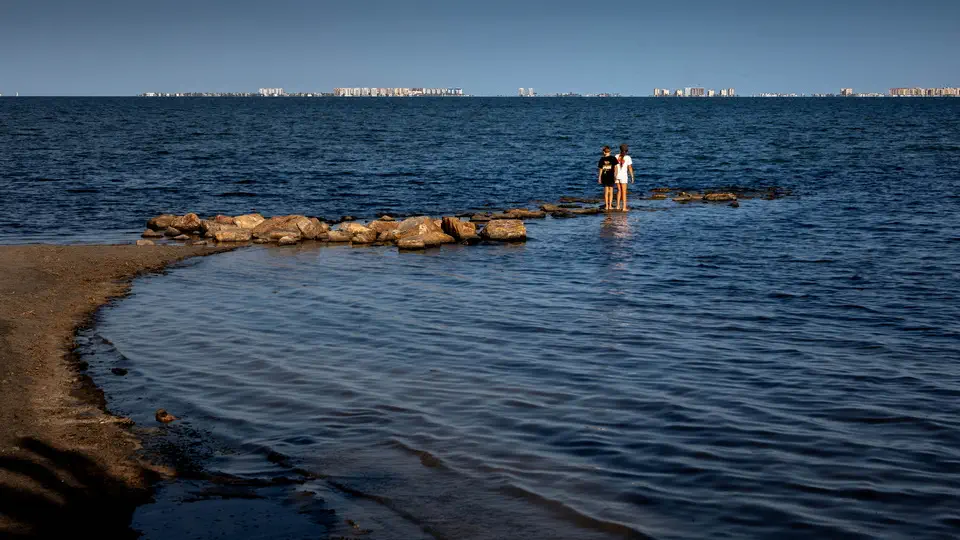
Los Alcázares is a seaside town in the Region of Murcia, in south-eastern Spain, situated on the shores of the saltwater Mar Menor lagoon.
It is best known for its sandy beaches, calm waters and long promenade, lined with numerous restaurants and cafés.
The town’s history dates back to Roman times, while its name comes from Arabic and means palaces or fortified residences.
Some of its most interesting attractions include the historic Hotel-Balneario La Encarnación, the aviation museum, the medieval Torre del Rame and the remains of Roman bathing pools.
Los Alcázares is also an excellent destination for water sports, including sailing, windsurfing and kayaking.
During your stay, it is worth sampling some local specialities, particularly caldero, a traditional rice dish cooked in fish stock.
The surrounding area is ideal for day trips to Cartagena, Murcia, La Manga and the San Pedro del Pinatar Regional Park.
Where exactly is Los Alcázares?
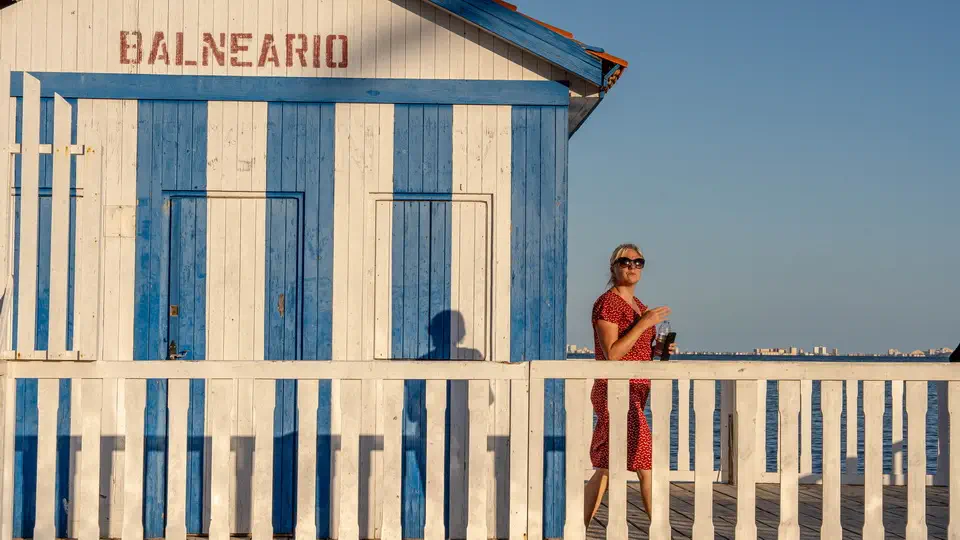
Los Alcázares is located in south-eastern Spain, in the autonomous Region of Murcia, on the western shore of the Mar Menor lagoon. The town lies between San Javier and Torre Pacheco and is one of the best-known holiday resorts on the shores of this unusual body of water.
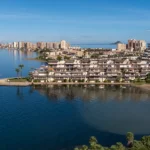
Mar Menor, meaning ‘Lesser Sea’, is a saltwater lagoon separated from the Mediterranean by a narrow strip of land known as La Manga. It is the largest saltwater lagoon in Europe, and its relatively calm waters have long been a major attraction for swimmers and water sports enthusiasts. Los Alcázares has approximately seven kilometres of coastline, with sandy beaches, promenades, and places to relax dotted along the shore. The landscape is almost entirely flat, making it easy to explore the surrounding area on foot or by bicycle.
The town also makes an excellent base for discovering the region. Cartagena, San Javier, Santiago de la Ribera and the famous La Manga spit are all within easy reach. You can also take a trip to Murcia, a city renowned for its historic architecture and beautiful cathedral.
The history of Los Alcázares – from the Romans to a modern holiday resort

Although modern-day Los Alcázares is primarily associated with holidays, beaches and tourism, its history is considerably older than you might imagine while walking along its modern promenade. Even in Roman times, people recognised the advantages of this stretch of coastline. In the 3rd century AD, an extensive seaside villa with a bathing complex stood here, similar to the one found in nearby Fortuna. It included rooms with cold, warm and hot water, as well as facilities for bathing in seawater. The remains discovered in the area indicate that this was already a place for relaxation and recreation nearly two thousand years ago.
The Arabs arrived later and also recognised the exceptional qualities of the lagoon. The town’s name is closely connected with their presence. The word al-Qasr means a palace or fortified residence. During the Middle Ages, buildings along the coast served both as places of leisure and as defensive structures.
Following the Christian conquest of the Kingdom of Murcia in the 13th century, the area came under Castilian rule. However, the coastline remained far from peaceful for centuries. One of the main threats came from Barbary pirates, who raided coastal settlements and attacked ships. Watchtowers and defensive structures were built to protect the inhabitants, and one surviving reminder of those troubled times is Torre del Rame.
The town’s real development began much later, towards the end of the 19th century and the beginning of the 20th. Residents of Murcia started visiting the area to relax and bathe in the waters of Mar Menor. So-called novenarios became popular, involving a course of nine consecutive bathing sessions. Another important milestone came in 1915 when a seaplane base was established here. It was the first facility of its kind in Spain. Military aviation helped the town develop, encouraged the growth of local services and attracted new residents. Los Alcázares eventually became an independent municipality on 13 October 1983. It is therefore one of the youngest municipalities in the Region of Murcia, despite having a settlement history stretching back many centuries.
Beaches in Los Alcázares – seven kilometres of seaside relaxation
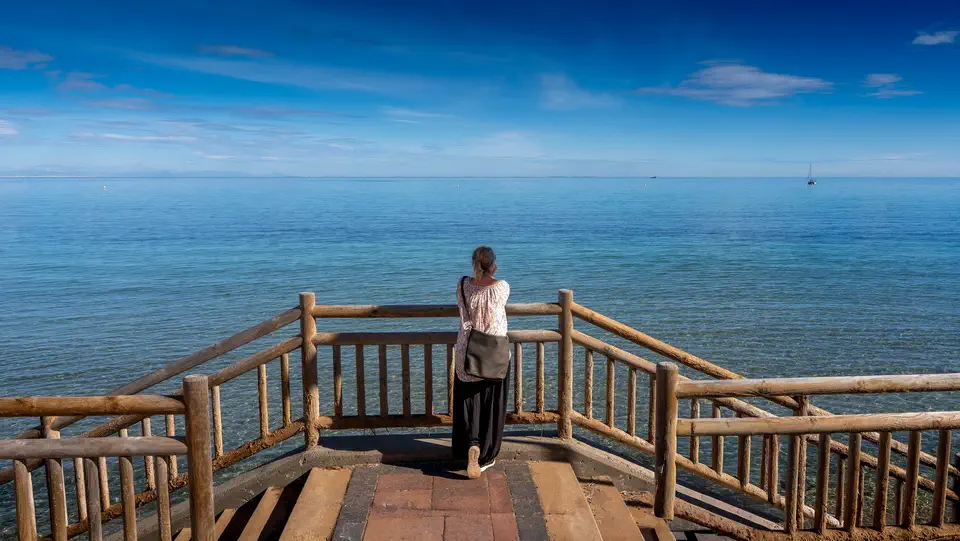
The greatest attraction of Los Alcázares is undoubtedly its beaches along the Mar Menor. Unlike the open Mediterranean, the lagoon’s waters are generally calmer, with extensive shallow areas close to the shore. This makes the town particularly popular with families with children and anyone who prefers swimming without large waves.
There are several beaches along the coastline, each with its character. One of the best-known and most extensive beaches is located in the northern part of the town, with a long promenade running alongside it. Restaurants, cafés, and beach bars line the waterfront, making it easy to spend an entire day here, enjoying the sunshine, going for a swim or sampling the local food.
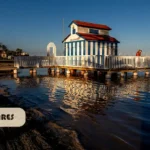
Another beach occupies a central position in Los Alcázares, close to many of the town’s main attractions. Its greatest advantage is its easy access to restaurants, shops, and the seafront promenade. It is a good choice if you want to combine a few hours on the beach with some sightseeing. La Concha beach has a more intimate atmosphere. One particularly interesting feature is the distinctive wooden structure of an old bathing platform extending out over the water. Such features are a reminder of the days when Los Alcázares was primarily a spa resort, attracting visitors for traditional summer treatments.
There are also quieter stretches of beach along the Mar Menor coastline, ideal if you want to get away from the busiest sections of the promenade. It is worth remembering that Mar Menor is a fragile ecosystem, vulnerable to pollution and environmental changes. Before swimming, it is advisable to check the latest information about water quality.
Mar Menor – the extraordinary lagoon that defines the character of the region
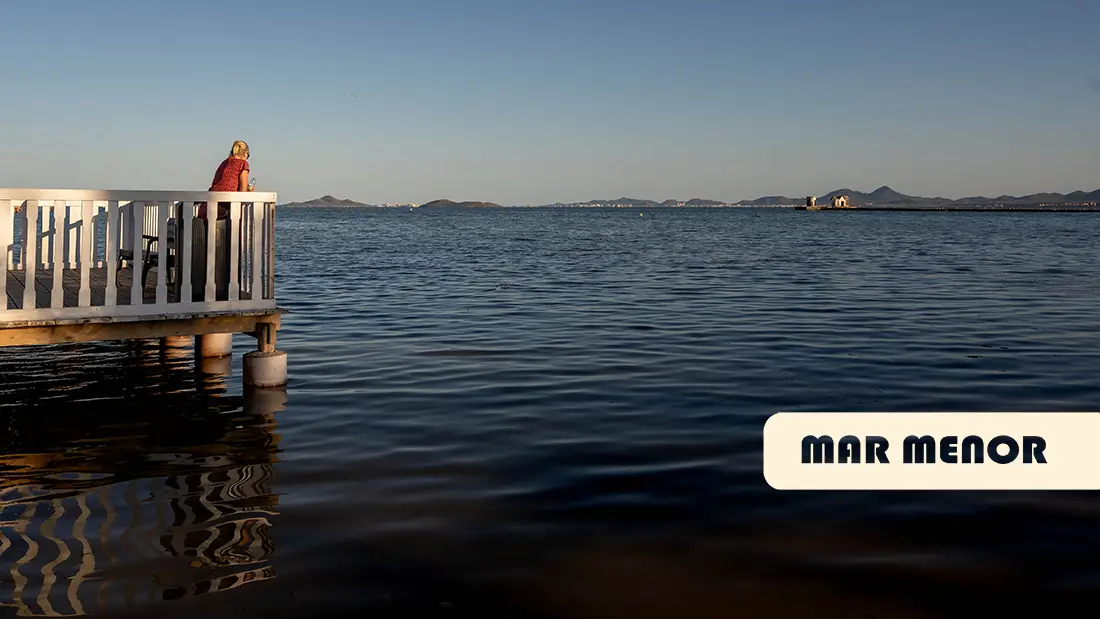
It is impossible to write about Los Alcázares without devoting a little more attention to Mar Menor. The lagoon is precisely what makes this town so distinctive on the Spanish coastline. Mar Menor covers an area of approximately 170 square kilometres, and its maximum depth is only a few metres. It is separated from the Mediterranean Sea by the La Manga spit, which is particularly narrow in some places. The waters of the two bodies of water are connected through natural channels known as golas.
The lagoon is salty, and during the summer months its water temperature can become very pleasant indeed. Shallow bays and sheltered shores make it ideal for swimming, sailing, kayaking and windsurfing. However, Mar Menor is much more than a holiday swimming spot. It is also an important natural habitat, home to numerous species of birds and aquatic wildlife. Flamingos, herons, gulls, and many other birds associated with coastal wetlands can be spotted here.
It is worth remembering that the lagoon has faced serious environmental problems recently, including eutrophication and a lack of oxygen in the water. This is an important reminder that such a remarkable natural environment needs protection.
If you would like to discover more about this unusual body of water and the surrounding coastline, have a look at our guide to San Pedro del Pinatar and the Mar Menor lagoon.
What to see in Los Alcázares – the most interesting attractions
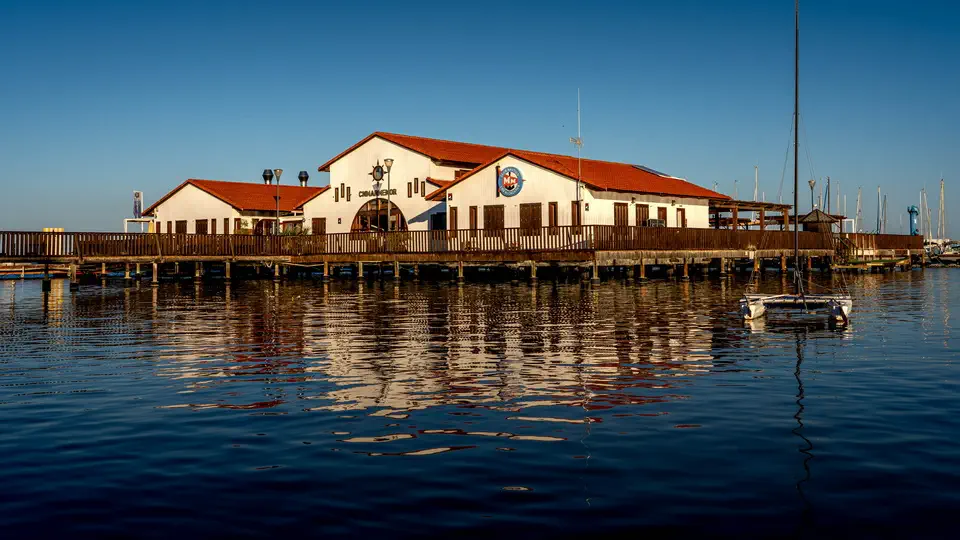
Although most visitors come here for the beaches, it is worth setting aside at least one day to explore the town itself. Los Alcázares is not a vast open-air museum, but there are several genuinely interesting places to discover.
- Hotel-Balneario La Encarnación – This is one of the most distinctive historic buildings in Los Alcázares. The hotel and former bathing establishment were built at the beginning of the 20th century, and the property has retained the atmosphere of traditional Spanish seaside resorts. During its heyday, it attracted visitors who came to enjoy bathing in the waters of Mar Menor. Among its famous guests was King Alfonso XIII. Today, the building is a reminder of the early days of spa tourism around the lagoon. Even if you are not planning to stay overnight, it is worth admiring its characteristic architecture and visiting the terrace, where you can enjoy views across the water.
- Museo Aeronáutico Municipal – the aviation museum – This is one of the more interesting attractions for anyone interested in the history of technology and aviation. The museum is dedicated to the history of the airbase in Los Alcázares, which played an important role in the development of Spanish military aviation. Inside, you can see photographs, documents, military equipment, aircraft components and memorabilia connected with the former airfield. What makes the collection particularly interesting is the extent to which aviation influenced the development of this small seaside town. It is not the sort of attraction you would normally expect to find in a traditional beach resort, which makes it all the more worthwhile.
- Torre del Rame – the medieval defensive tower – Torre del Rame is a reminder of the days when the coastline around Mar Menor had to defend itself against pirate raids. The tower has medieval origins, although its present appearance also reflects later alterations. In the past, it served as a lookout and defensive structure. From its surroundings, it was possible to monitor a considerable stretch of coastline and warn residents of approaching danger. It is particularly interesting for visitors who enjoy discovering lesser-known historic monuments along the Spanish coast.
- Balsas Romanas de Los Diegos – the Roman remains – In the Los Narejos district, you can find the remains of Roman pools which remained hidden for almost two thousand years. They were discovered by chance, and their exact purpose has not yet been fully established. It is thought that they may have formed part of a larger water complex associated with an ancient settlement or economic activity. They provide an interesting glimpse into the Roman presence in this area and demonstrate that the history of Los Alcázares began long before the arrival of modern tourism.
- The promenade in Los Alcázares – the perfect place for an evening walk – One of the things that makes Los Alcázares such a pleasant place to visit is its long seafront promenade. You can spend hours walking here, watching the calm waters of Mar Menor, boats gently rocking on the lagoon and people enjoying the Mediterranean lifestyle. Numerous restaurants, cafés, and bars line the promenade. During the day, you can stop for a coffee, while in the evening you can enjoy dinner overlooking the water. I particularly recommend taking a walk around sunset. The light reflecting off the lagoon creates a wonderful atmosphere, while the seaside town gradually turns into a lively meeting place for residents and visitors. It is also worth looking out for the Monumento al Pescador, a monument dedicated to fishermen. It commemorates the long-standing relationship between local people, the waters of Mar Menor and traditional fishing.
Water sports in Los Alcázares
The relatively calm waters of Mar Menor make Los Alcázares an excellent destination for anyone who enjoys an active holiday. Some water sports centres operate in the town, offering visitors the opportunity to try a range of activities. Sailing, windsurfing, kitesurfing and kayaking are among the most popular options. You can also hire equipment and explore the coastline independently of the water.
Mar Menor is particularly suitable for people who are just starting out in sailing or other water sports. The sheltered nature of the lagoon means that conditions are often gentler than on the open Mediterranean. It is also worth mentioning the Centro de Alto Rendimiento Infanta Cristina, a sports training centre located in Los Narejos. It is an important facility where athletes from various sporting disciplines come to train.
The cuisine of the Region of Murcia – what to try in Los Alcázares

During your stay in Los Alcázares, it is well worth sampling the local cuisine. The Region of Murcia is well-known for its excellent vegetables, fresh fish, seafood, and dishes prepared according to traditional recipes.
The most characteristic dish associated with Mar Menor is caldero. This is a rice dish cooked in an aromatic fish stock, usually prepared with locally caught varieties of fish. It is generally served with alioli sauce. If you enjoy Spanish food, I would definitely recommend ordering it at least once. There are also several other regional specialities worth trying:
- Michirones is a hearty dish made with large broad beans, garlic, paprika and other seasonings, often accompanied by meat.
- Zarangollo is a traditional vegetable dish prepared with courgettes, onions, and eggs. It is simple, but delicious.
- Mojama is salted and dried tuna, often served as a starter or snack with olive oil and almonds.
- Mar Menor prawns are another local speciality worth looking out for on restaurant menus.
As you stroll along the promenade, you will have no difficulty finding restaurants serving fish, seafood and traditional dishes from the Region of Murcia. If you would like to learn more about the country’s regional food, have a look at our guide to Spanish tapas and what to try in each region.
Murals in Los Alcázares – an extraordinary open-air street art museum and international festival

One of the most surprising attractions in Los Alcázares is the collection of murals covering the walls of buildings, houses and public facilities. I must admit that you would hardly expect to find such an extensive street art gallery in a small seaside resort. Yet, as you walk through the town, you come across enormous colourful paintings, realistic portraits, abstract compositions and works exploring important social issues.
Los Alcázares has created something special: the Museo Internacional del Mar Menor, an international street art museum. This is not a traditional institution with exhibition rooms and ticketed entrances. Instead, the gallery is spread throughout the town, and its works can be admired free of charge during an ordinary walk. The idea of developing street art in public spaces is connected, among other things, with the work of the local artistic collective La Compañía de Mario and its cooperation with the town authorities. Thanks to the festivals organised here, artists from different parts of Spain and around the world regularly visit Los Alcázares. They create works that do more than simply decorate public spaces: many tell stories and encourage visitors to reflect on the world around them.
The murals explore a wide variety of subjects. Some refer to Mar Menor, nature, local history, childhood, cultural diversity, tolerance and environmental protection. There are also works dedicated to science and modern technology. One of the best-known pieces is El Sueño de Turing, or ‘Turing’s Dream’. The mural refers to Alan Turing, the British mathematician regarded as one of the founding figures of modern computing. The artwork encourages visitors to think about artificial intelligence and the future of technology. In 2023, it received recognition in the international Street Art Cities competition, achieving a high position among the world’s best murals.
Another work worth looking out for is Orpelia, created by British artist Dale Grimshaw. It is an impressive, realistic portrait in which the gaze of the person depicted immediately catches your attention. The mural is among the most recognisable works along the town’s street art route. Another interesting example is La Tonta el Bote, while some of the more recent works include large-scale paintings of sea turtles, highlighting the importance of protecting the Mar Menor environment. Other murals address social issues and events taking place in different parts of the world.
The Festival Internacional de Arte Urbano plays an important role in developing this remarkable open-air gallery. During successive editions, artists from Spain, Portugal, France, Germany, Colombia, Venezuela, and other countries have travelled to Los Alcázares. For several days, they work directly on the walls of buildings, allowing residents and visitors to watch the murals take shape. During the festival’s fourth edition, held in May 2026, around 55 artists created 50 new works. These included both enormous wall paintings and smaller compositions. The event promoted diversity, social inclusion and environmental awareness.
The best way to discover the murals is to explore the town on foot or follow one of the organised tourist routes. The official street art trail includes works by Facte, Piratroska, Ze Carrión, La Tonta el Bote and Dale Grimshaw, among others. It is approximately three kilometres long and takes around two hours to complete. Free cycling tours are also available, allowing visitors to see more than 160 murals. This is a convenient option because the artworks are scattered across different parts of the town. Interestingly, a 360-degree virtual tour was also launched in September 2026, allowing people to view selected works without leaving home.
In my opinion, the murals are one of the main reasons to leave the seafront promenade and explore the streets further inland. Thanks to them, an ordinary walk becomes a search for unusual paintings, fascinating stories and artistic surprises. It is also a great opportunity to take some interesting photographs and discover a more contemporary side of this Spanish seaside town.
When is the best time to visit Los Alcázares?
Los Alcázares can be visited throughout most of the year. The Region of Murcia is one of the warmest parts of mainland Spain, and its mild climate means that you can enjoy the area even outside the traditional summer holiday season. The hottest months are July and August, when temperatures frequently exceed 30°C and the beaches are usually full of visitors. This is the best time for a traditional seaside holiday, swimming and water sports.
In my opinion, June and September offer an excellent compromise. The weather is still warm enough to enjoy the beaches, but visitor numbers are generally lower than during the peak summer holidays. Spring and autumn are ideal for exploring the surrounding area, going for walks and enjoying cycling trips. During winter, the town becomes considerably quieter, although you can still make the most of the sunshine and visit the nearby attractions.
What is worth seeing around Los Alcázares?
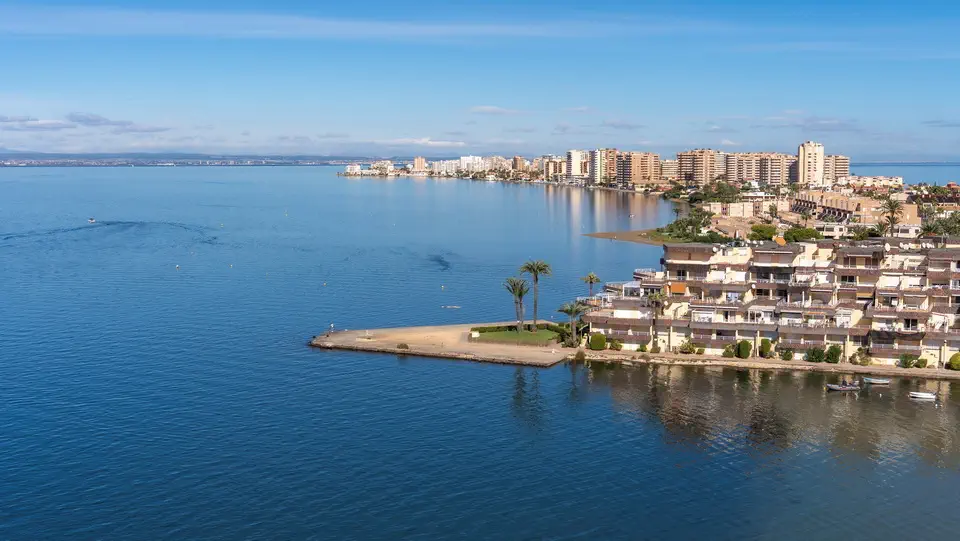
Los Alcázares makes an excellent base for exploring south-eastern Spain. There are plenty of interesting destinations within a few dozen kilometres, making it easy to organise several day trips during your stay.
La Manga del Mar Menor – This is one of the most remarkable geographical features along the Spanish coastline. The narrow strip of land separates the Mar Menor lagoon from the Mediterranean Sea. Here, you can experience two wholly different coastal environments, as well as discover beaches, marinas, and small holiday resorts. You can read more about this fascinating destination and its unusual history in our article about La Manga.
Cartagena – Cartagena is one of the most interesting historic cities in the region. Its attractions include the famous Roman Theatre, the remains of ancient fortifications, several museums, including the fascinating Naval Museum, and a beautiful historic centre. Cartagena is an excellent choice for a full-day excursion.
San Pedro del Pinatar – This town is best known for the Salinas y Arenales de San Pedro del Pinatar Regional Park. Visitors can watch flamingos, walk through the salt marshes and discover the remarkable natural environment of the coastline. On warm days, you can also cover yourself in the famous mineral-rich mud found in the area. If this sounds interesting, have a look at our guide to San Pedro del Pinatar, its mud baths and other attractions.
Murcia – The regional capital is famous for its historic architecture, beautiful squares, the impressive Royal Casino and its monumental cathedral. It is well worth visiting if you want to discover a different side of south-eastern Spain, away from the seaside resorts.
Legends and mysteries of Los Alcázares

Although Los Alcázares is now primarily associated with beaches and summer holidays, the town also has a darker and more mysterious past. For centuries, the area around Mar Menor was a meeting point for different cultures, and stories about ancient inhabitants, pirates and hidden treasures have survived in local tradition.
One of the most intriguing stories concerns the Barbary pirates. Between the 16th and 18th centuries, they raided the coastline of Murcia, looting settlements and capturing local inhabitants. Defensive towers such as Torre del Rame were built to warn people of approaching danger. It is easy to imagine signals being sent by fire from one tower to another during the night whenever suspicious sails appeared on the horizon.
Another mystery surrounds Torre del Rame itself. Research into its walls has revealed an interesting discovery: old graffiti left by people who visited the tower over several centuries. Among the markings, you can recognise ships, human figures, religious symbols, animals, and even aeroplanes from the Spanish Civil War period. It is an extraordinary historical record, almost like a diary written directly onto the stone walls.
Los Alcázares is also associated with a legend about the Baron of Benifayó. According to local tradition, he was exiled to one of the Mar Menor islands after killing Don Diego de Castañeda in a duel. He became so fond of his place of exile that, once he regained his freedom, he decided to buy the island and turn it into his private residence. The story is connected with Perdiguera Island and remains part of the region’s local folklore.
The history of pirate raids is still remembered today during the Fiesta de las Incursiones Berberiscas. During the celebrations, residents recreate historical attacks, dress up as pirates and organise theatrical performances. It is a fascinating way to bring the past back to life and imagine a time when the appearance of an unfamiliar ship on the horizon could signal genuine danger.
In my opinion, Los Alcázares is one of the more interesting destinations along the coastline of the Region of Murcia, particularly if you are looking for a peaceful resort with good tourist facilities and access to warm, sheltered waters. It is not a place packed with spectacular monuments that would keep you busy sightseeing for several days, but it certainly has its character and history.
The greatest attraction is Mar Menor itself. The calm lagoon, wide beaches and long promenade create ideal conditions for a relaxing holiday that requires very little planning. You could easily spend a week here enjoying the Spanish coastline, or simply treat the town as a stop along a longer journey through the Region of Murcia.
It is worth remembering, however, that Los Alcázares is primarily a holiday resort. If you prefer more intensive sightseeing, I recommend combining your stay with trips to Cartagena, Murcia, and La Manga. It is precisely this combination of beaches, history, nature and local cuisine that makes the area around Mar Menor well worth exploring.
Los Alcázares – facts, information and interesting things to know
- The name Los Alcázares has Arabic origins. It comes from the word al-Qasr, meaning palace or fortress. It refers to the leisure buildings that were constructed here during the period of Muslim rule.
- Los Alcázares has a history dating back to Roman times. As early as the 3rd century AD, an extensive seaside villa stood here, complete with baths, bathing facilities and areas designed for relaxation by the sea.
- The Romans enjoyed several types of bathing. The ancient thermal baths included rooms with cold, warm and hot water. This demonstrates that the area was already a popular place for relaxation long before modern tourism developed.
- The Arabs also regarded Los Alcázares as a destination for leisure and relaxation. They made use of the existing Roman baths and appreciated the properties of the Mar Menor waters, which were believed to have therapeutic benefits.
- Los Alcázares was once an important supply port for Murcia. Thanks to its location on the Mar Menor, the town played a role in transporting fish and other goods, and its importance increased particularly after the Christian conquest of the region.
- The Mar Menor coastline was vulnerable to pirate attacks. Between the 16th and 18th centuries, coastal settlements had to defend themselves against Barbary corsairs. This was why numerous watchtowers and defensive structures were built throughout the area.
- Torre del Rame is a reminder of the region’s pirate past. This medieval defensive tower formed part of the coastal protection system. It was partially rebuilt during the 16th century but has retained much of its historic character.
- Los Alcázares is one of the youngest municipalities in the Region of Murcia. It only gained administrative independence on 13 October 1983, despite the area’s settlement history stretching back many centuries.
- The town’s first municipal council was established as early as 1936. However, this was a short-lived attempt to achieve administrative independence, which came to an end with the outbreak of the Spanish Civil War. Los Alcázares finally became independent several decades later.
- A seaplane base was established here in 1915. It was the first facility of its kind in Spain. Aviation played an enormous role in the development of the town, attracting new residents and creating employment opportunities.
- The airbase contributed significantly to the development of local social life. During the interwar period, new shops, bars, cinemas, and clubs began to appear. More than a hundred local civilians also worked at the base.
- Los Alcázares has its aviation museum. The Museo Aeronáutico Municipal houses documents, photographs, and memorabilia connected with the history of the local airfield and Spanish military aviation.
- Hotel-Balneario La Encarnación was established in 1904. This historic building is one of the most important reminders of the early days of tourism around Mar Menor. Even today, it retains the atmosphere of traditional Spanish seaside resorts.
- In the past, so-called novenarios were particularly popular. These were courses of nine bathing sessions in the waters of Mar Menor. At the beginning of the 20th century, residents of Murcia travelled to Los Alcázares specifically to take advantage of these treatments.
- Los Alcázares has approximately seven kilometres of coastline. Its beaches stretch from the Los Narejos area towards Punta Brava. Along the lagoon, you will find promenades, bathing areas and facilities for various water sports.
- Mar Menor is the largest saltwater lagoon in Europe. It covers an area of approximately 170 square kilometres and is separated from the open Mediterranean Sea by a narrow strip of land known as La Manga.
- The waters of Mar Menor are generally calmer than those of the Mediterranean. This is due to the lagoon’s sheltered position. As a result, it is a popular destination for learning to swim, sailing, kayaking, and windsurfing.
- Flamingos can be spotted around Los Alcázares. The lagoon’s wetlands and nearby salt flats attract numerous bird species. Birdwatching is one of the more interesting natural attractions in this part of Spain.
- Water sports can be enjoyed in Los Alcázares throughout much of the year. The mild climate of Murcia creates favourable conditions for sailing, kayaking and windsurfing, even outside the traditional summer holiday season.
- The town is home to an important sports training centre. Centro de Alto Rendimiento Infanta Cristina, located in Los Narejos, provides training facilities for athletes and sports clubs representing various disciplines.
- One of the most characteristic dishes of the region is caldero. This traditional rice dish is prepared using an aromatic fish stock and is usually served with fish and alioli sauce.
- Los Alcázares has a long-standing fishing tradition. For generations, residents made their living from fishing in Mar Menor. One reminder of this heritage is the Monumento al Pescador, a monument dedicated to fishermen.
- The town hosts Semana Internacional de la Huerta y el Mar. This event celebrates the folklore, traditions, and culture of the Region of Murcia. Visitors can discover traditional costumes, music, dancing and local cuisine.
- Los Alcázares also has some unusual attractions connected with the history of technology. One of them is the historic Marqués de Bonarque mining locomotive, which recalls the region’s industrial past.
- Los Alcázares brings together the heritage of three different historical periods. Roman baths, Arab influences and the remains of the former aviation infrastructure combine to tell the story of a place that developed from a small settlement beside a lagoon into a popular Spanish seaside resort.