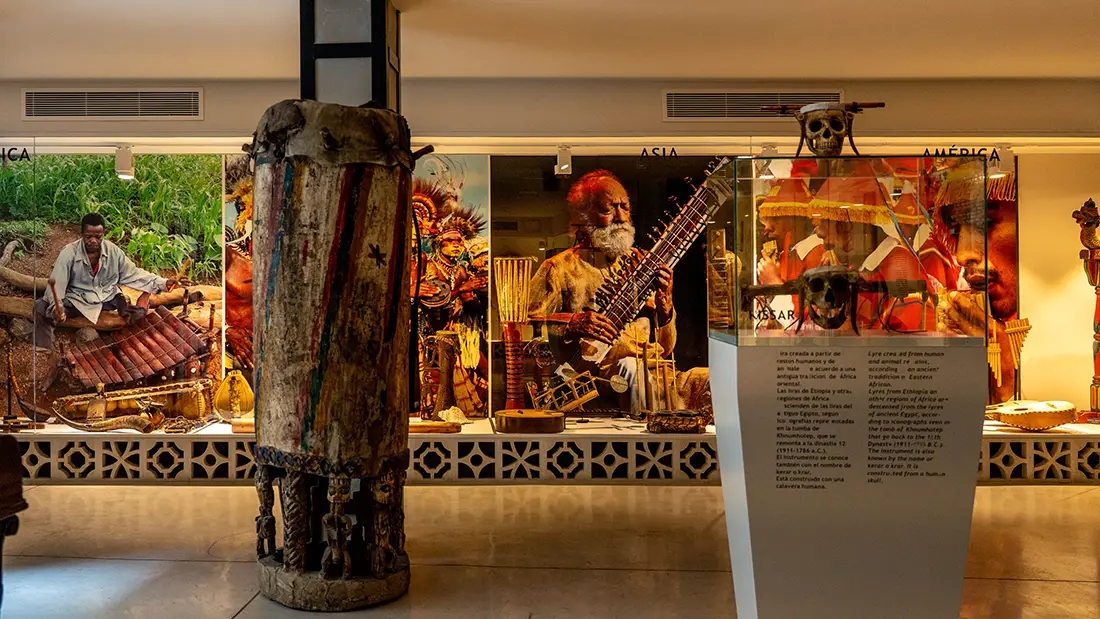
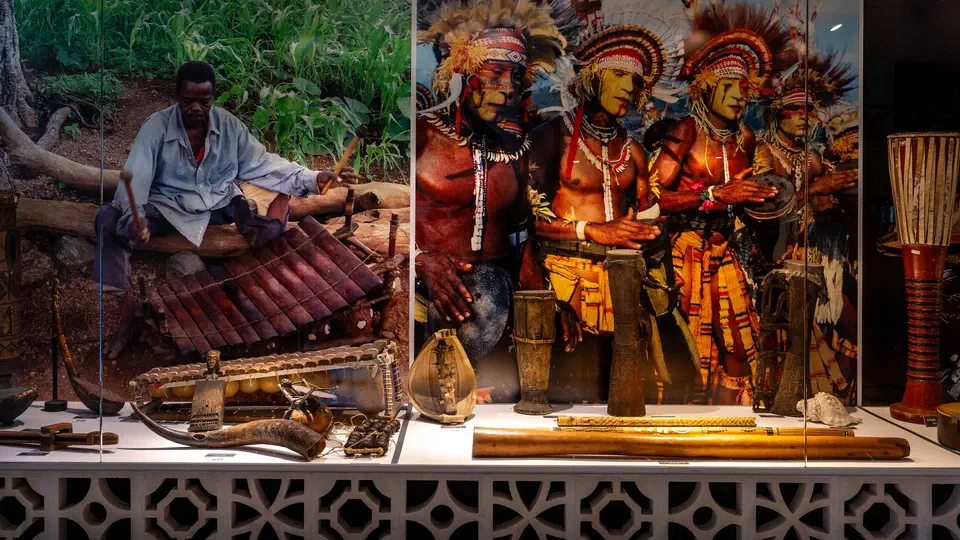
Busot, a small Spanish town near Alicante, is home to a place that can surprise even travellers like us, who have visited our fair share of unusual attractions over the years. The Museo de Música Étnica, or Ethnic Music Museum, offers an opportunity to discover musical instruments from different corners of the world and explore how much they can tell us about culture, traditions and everyday life.
The museum is one of those attractions that are easy to overlook during a holiday on the Costa Blanca. Most visitors come to Busot primarily to see the famous Cuevas del Canelobre caves, but it is well worth setting aside some time for the museum too. Particularly if you enjoy discovering places that are a little different and like to learn about local history and culture as you explore.
Where is the Ethnic Music Museum in Busot?
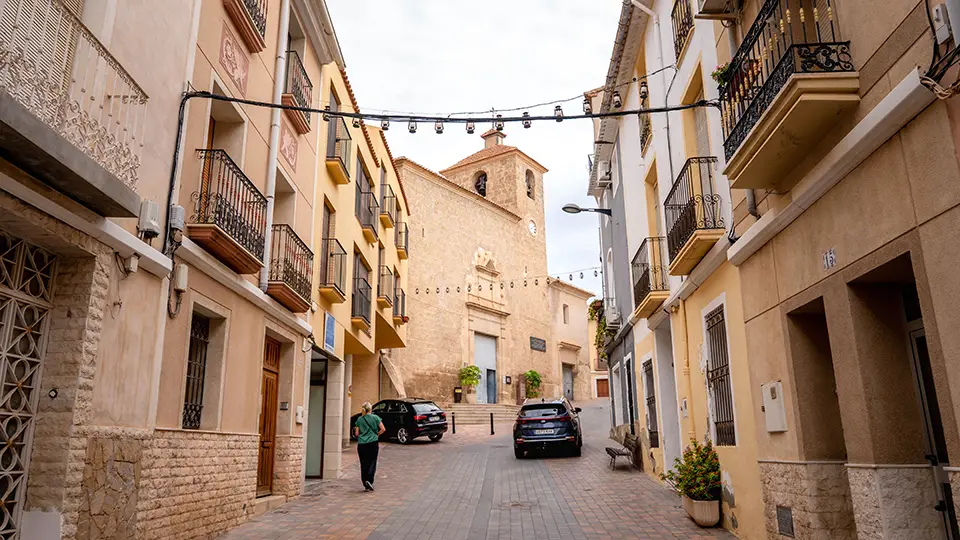
The museum is located in the historic part of Busot, at Carrer Major 4, in the province of Alicante, within the Valencian Community. Busot is a small inland town around 20–25 kilometres from Alicante, and it is easy to reach by car as part of a trip around the Costa Blanca.
Its location is particularly convenient for anyone planning to visit the Cuevas del Canelobre caves. The two attractions are only a few minutes’ drive apart, so you can easily combine them in a single day, especially as a ticket purchased for one attraction also allows you to visit the other. While you are there, it is worth taking a stroll through the streets of Busot itself and discovering a quieter, less coastal side of this part of Spain.
Ethnic Music Museum in Busot – a collection of instruments from around the world
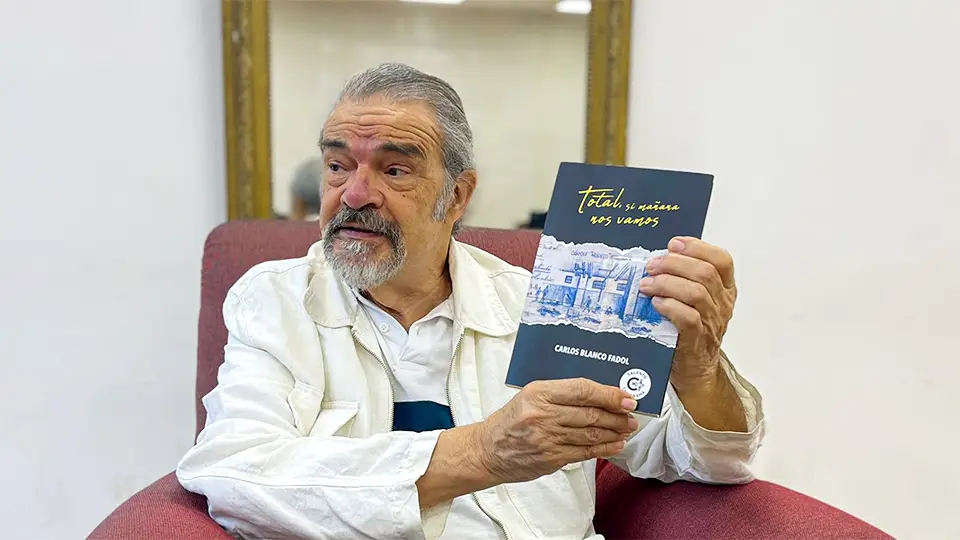
The museum’s greatest treasure is the collection assembled by Carlos Blanco Fadol, a musicologist, researcher and musical instrument collector. He spent decades travelling around the world, learning about local traditions and gathering objects connected with music. His collection contains more than 4,000 instruments from 145 countries across five continents, and visitors to the museum in Busot can see a selection of this remarkable collection.
These are not just familiar instruments that are easy to recognise, such as guitars, flutes and drums. The exhibits also include objects with surprising shapes, made from unusual materials and used in ceremonies, festivals and other events that are important to particular communities.
What makes the collection especially interesting is the way the instruments tell stories about the people who created them. They show how communities used the materials available in their surroundings, including wood, reeds, stone, bone and animal skins, to produce particular sounds. Music did not always require sophisticated technology; in many cases, ingenuity and an understanding of the properties of different materials were all that was needed.
One particularly interesting feature is the interactive system that allows visitors to listen to the instruments and, in some cases, watch them being played. You can hear what they sound like, see how they are used and learn about the musicians who play them. It is a simple but ingenious idea, and one I had not come across in a museum before.
Ethnic Music Museum in Busot – what instruments can you see?
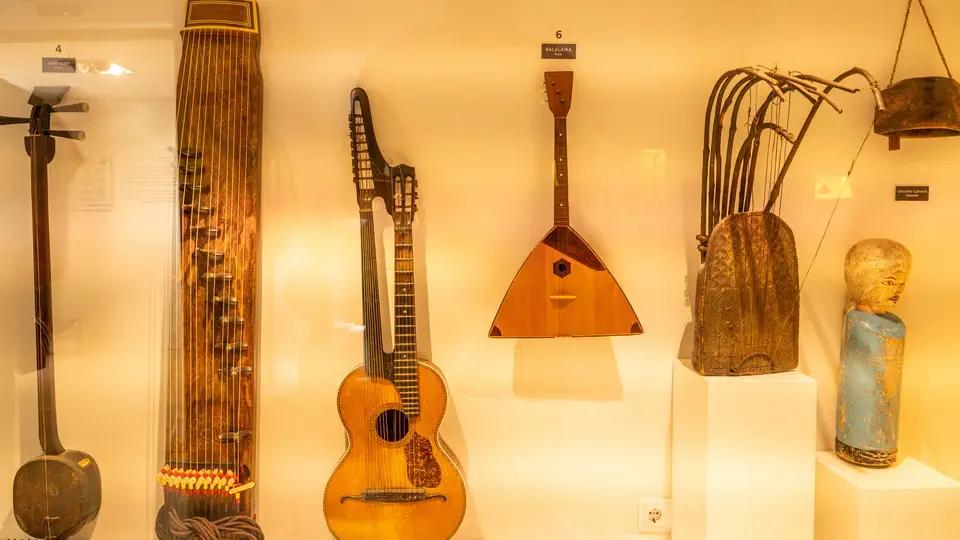
The exhibition introduces visitors to instruments from a wide range of cultures, each with its own origins and method of producing sound. The collection is organised partly by instrument type and partly by geographical region. The main groups include:
- String instruments – these produce sound through vibrating strings. They take different forms in different cultures and may be used either to accompany other musicians or for solo performances.
- Wind instruments – this group includes flutes and other instruments in which sound is produced by a vibrating column of air.
- Membranophones – drums and similar instruments, found in musical traditions around the world, produce sound through the vibration of a stretched membrane.
- Idiophones – sound is generated by the vibration of the material from which the instrument itself is made. Examples include bells, rattles and various percussion instruments.
This classification helps visitors understand that, although instruments developed independently in different parts of the world, people often arrived at similar solutions. The materials, shapes and construction techniques might vary, but the purpose remained much the same: to create sounds that accompanied work, celebrations, leisure activities and rituals.
Ethnic Music Museum in Busot – unusual instruments that leave a lasting impression
One of the reasons the museum stands out from more conventional exhibitions is its collection of unusually constructed instruments. Some were made from objects that, at first glance, would be difficult to associate with music. A fascinating example is the quijada, an instrument associated with certain Latin American musical traditions. It is made using an animal’s jawbone, with sound produced partly through the vibration of the teeth. It is a striking illustration of how objects from the natural world can be put to entirely new uses.
Another interesting instrument is the nun ut, also known as the nunut, a simple instrument traditionally made, among other materials, from reed and thin paper. Its construction demonstrates that you do not necessarily need expensive materials or complicated tools to create something capable of producing sound. Carlos Blanco Fadol’s collection also includes very large instruments, experimental designs and original inventions connected with his many years of research into music.
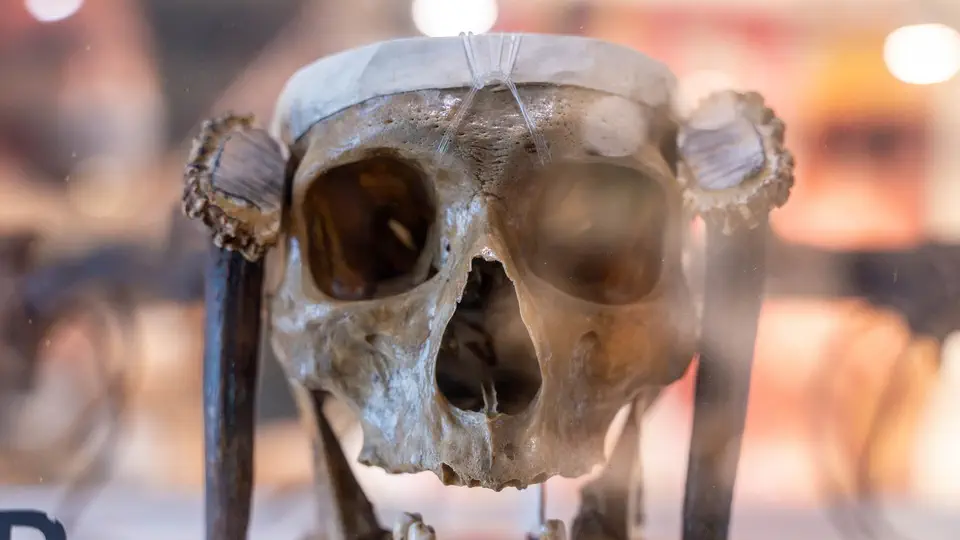
In one of the display cases, I spotted a ritual drum from Africa. It had been made from a human skullcap-less cranium, with a membrane made from human skin stretched across the opening and several strings made from tendons positioned above it. I have no idea what sounds this instrument might have produced, but its appearance alone must have made a powerful impression during rituals and ceremonies.
Music as part of culture and history
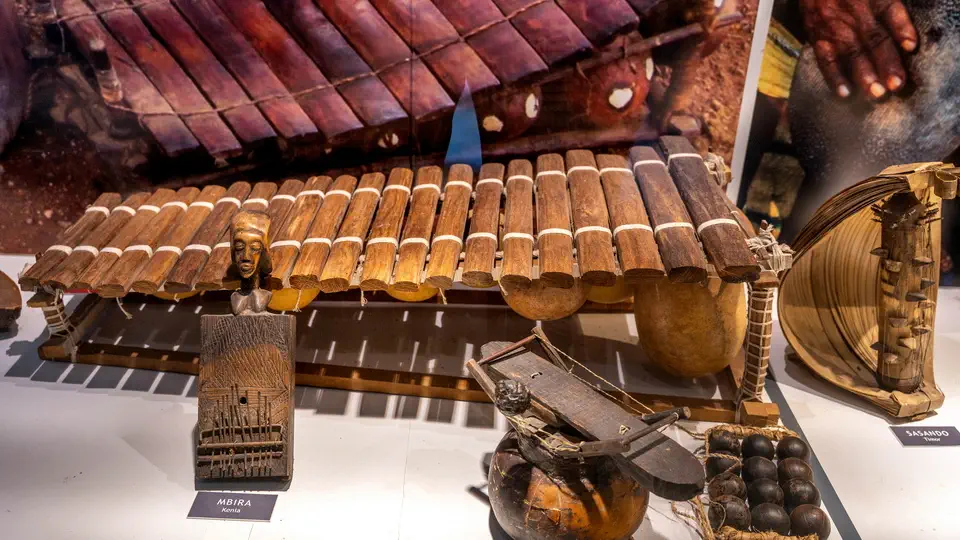
A visit to the Ethnic Music Museum is about more than simply looking at objects displayed behind glass. The exhibition helps visitors understand that musical instruments are an important part of cultural heritage. In many communities, they have played a significant role in religious ceremonies, festivals, family gatherings and events connected with the rhythm of local life.
Some instruments were passed down from one generation to the next, while others were created for specific celebrations or particular groups of performers. Over time, their forms evolved, and ideas and techniques travelled between regions with merchants, travellers and migrating populations. This offers a way of looking at music not merely as entertainment, but also as a means of communication and an expression of identity. It is this perspective that makes the museum appealing not only to music lovers, but also to anyone curious about the world and the diversity of human cultures.
Visiting the museum – practical information
The museum is relatively small, so it is easy to include in a day trip around Alicante. The best approach is to combine your visit with other attractions in Busot, particularly the nearby Cuevas del Canelobre caves.
Before setting off, it is worth checking the latest opening times and ticket prices on the town’s official tourism website. Combined tickets covering both the museum and the caves are also available, which can be a convenient option if you plan to visit both attractions.
Adres: Carrer Major 4, 03111 Busot, Alicante, Hiszpania.
Opening times: According to tourist information, during the autumn and winter seasons the museum is generally open from Tuesday to Sunday, with a break during the middle of the day. Opening times may vary depending on the season and public holidays, so check the current details before visiting.
What else is worth seeing in Busot?

If you are visiting Busot, it is also worth exploring the surrounding area and discovering attractions such as La Pasarela de Relleu, a wooden walkway suspended above a deep gorge. The Cuevas del Canelobre is one of the best-known natural attractions near Alicante. The caves impress visitors with their vast underground chambers and rock formations, which resemble a natural cathedral.
Afterwards, you can enjoy a leisurely walk through the town centre, having a closer look at its traditional buildings and the Church of San Lorenzo Mártir. Busot is much quieter than the popular seaside resorts, making it a good stop on a trip inland.
If you are planning a longer stay in the region, have a look at our guides to the Costa Blanca for inspiration on attractions, towns and interesting places to visit in this part of Spain. You can also find our ready-made seven-day Costa Blanca road trip itinerary, which will help you plan a longer journey through the region.
In my opinion, the museum deserves a place in your sightseeing plans, particularly if you are already heading to the Cuevas del Canelobre caves. It offers something different from the Costa Blanca’s more typical tourist attractions: instead of beaches and scenic views, it gives you a chance to step into the world of musical traditions from different continents.
Its greatest strength lies in the diversity of the collection and the opportunity to discover instruments that you are unlikely to encounter in an ordinary local museum. It is also an fascinating option for families with children, as the unusual shapes of the instruments and the different ways of producing sound can spark the curiosity of younger visitors.
However, I would not set aside an entire day just for the museum. It is better to treat it as one part of a trip to Busot, combining it with a visit to the caves, a short walk around the town and perhaps a meal at one of the local restaurants. That way, you can experience both the natural and cultural sides of this part of Alicante province.
Ethnic Music Museum in Busot – facts, information and interesting details
- The museum opened in 2015 – the Ethnic Music Museum is located in the historic centre of Busot, in Alicante province on Spain’s Costa Blanca.
- The collection was assembled by Carlos Blanco Fadol – a respected musicologist, researcher, and collector who spent decades travelling around the world searching for musical instruments.
- The collection contains more than 4,000 exhibits – Carlos Blanco Fadol’s complete collection includes thousands of instruments, although only a selection is displayed at the museum in Busot.
- The instruments come from 145 countries – the objects represent cultures from all five continents, allowing visitors to compare musical traditions from very different communities.
- The collection took decades to assemble – Carlos Blanco Fadol began his research and collecting activities in the second half of the 20th century. Each new journey introduced him to additional instruments and musical customs.
- Some exhibits are more than 2,000 years old – according to information provided by the museum, the instruments in the collection date from the 3rd century BC to the 20th century.
- Not all the instruments resemble modern ones – some exhibits have shapes and are made from materials very different from those of familiar instruments such as guitars, violins, and pianos.
- Some instruments are enormous – the collection includes objects measuring more than six metres in height, demonstrating that a musical instrument does not always have to be something that can be comfortably held in your hands.
- Their weight can be surprising too – some instruments in the collection weigh more than 500 kilograms. Transporting and displaying them requires quite unfamiliar arrangements from those needed for small flutes or rattles.
- Some exhibits are made from unusual materials – instruments were created using resources available in their regions of origin, including wood, bamboo, reeds, animal skins and other natural materials.
- The collection includes a kissar – this particular string instrument has a resonating body made from a human skull covered with skin. It is one of the most unusual examples in Carlos Blanco Fadol’s collection.
- The instruments can be divided into four main groups – the collection includes chordophones, aerophones, idiophones and membranophones. In simpler terms, these are string instruments, wind instruments, instruments that produce sound through the vibration of their material, and membranophones such as drums.
- There is a scientific basis for this classification – the division into these four groups is associated with the system developed by Erich Moritz von Hornbostel and Curt Sachs, published in 1914.
- Most of the instruments can still produce sound – according to the museum, almost 100 per cent of the instruments in the collection have retained their ability to play. They are therefore much more than historical objects that can only be admired behind glass.
- Music served purposes beyond entertainment – many instruments were used during religious ceremonies, festivals, rites of passage and other events that were important to local communities.
- The collection includes instruments from South-East Asia – this region has exceptionally rich musical traditions, in which bamboo instruments and percussion ensembles play an critical role.
- Visitors can explore African musical traditions – part of the exhibition is dedicated to instruments from sub-Saharan Africa, where rhythm and music have an essential place in social life and ceremonial practices.
- Spanish music is represented too – the exhibition includes instruments connected with the ethnology and musical traditions of Spain, including those associated with individual regions of the country.
- The museum is close to the famous caves – the drive to the Cuevas del Canelobre takes around five minutes, making it easy to combine both attractions on a day trip from Alicante or elsewhere on the Costa Blanca.
- Busot combines cultural discovery with family fun – visitors can obtain a passport for the El Tesoro de Busot town game at the museum or the caves’ ticket office. It offers a treasure-hunt-style way to explore the town and adds an interactive element to a family visit.
- Interesting cities near Costa Blanca:
- La Mata is a small town in the south of Spain, located on the Costa Blanca coast.
- Torrevieja is a coastal city and municipality located on the Costa Blanca in the province of Alicante.
- Attractions near Costa Blanca:
- Cuevas del Canelobre is located in the town of Busot, in the province of Alicante, approximately 25 kilometres from the centre of Alicante.
- Dino Park Algar on the Costa Blanca coast, is a land ruled by prehistoric dinosaurs.
- Terra Natura Benidorm – A beautiful zoo on the Costa Blanca.
- Aqua Natura in Benidorm is a large water park connected to the Benidorm Zoo.
- Algar Waterfall is a perfect idea if you want to get away from civilisation for a few hours and spend some time surrounded by nature.
- El Palmeral Park in Alicante, a place where you can relax and regain strength.
- La Pasarela de Relleu a walkway over a gorge near Alicante
- Las Salinas de Torrevieja is an industrial plant that extracts sea salt from a shallow but vast lake in Laguna Salada de Torevieja.
- Natural Park El Fondo, or as the Spanish say, Parque Natural el Hondo, is located in the beautiful region of Valencia, near cities such as Alicante, Valencia, La Mata, Torrevieja.
- Palm Grove of Elche largest palm grove in Europe.
- Rio Safari Elche is a zoo located on the Costa Blanca coast of Spain.
- Tetería Carmen del Campillo, a Moorish-style teahouse hidden between Crevillent and Albatera.
- The goal of our today’s trip is the Valor chocolate factory and museum.
- The Castle of Santa Barbara (Castillo de Santa Barbara), also known as the Alicante Fortress, looms over the city like an unconquerable defender.
- The Museum in Torrevieja is an interesting attraction in the port part of the city.
- Ethnic Music Museum of Busot, offers an opportunity to discover musical instruments from different corners of the world