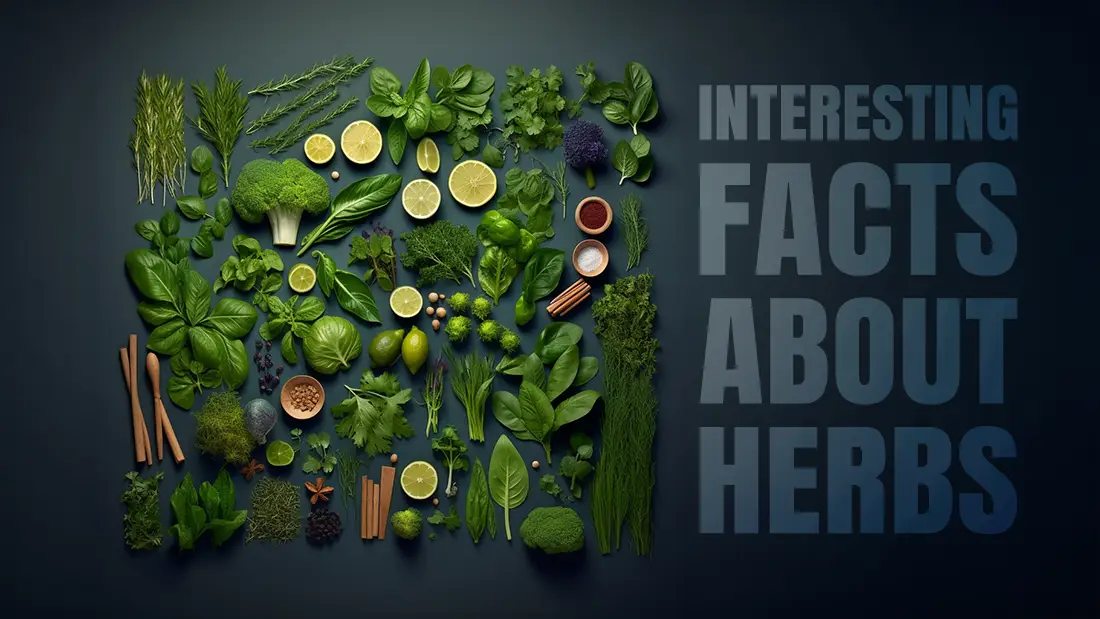
Interesting facts about herbs are part of our section where you can find plenty of interesting facts about the world around us.
Herbs have been part of human life for thousands of years. We have added them to food, prepared infusions, ointments, and tinctures from them, burned them during rituals, placed them under our pillows, and sometimes even attributed magical powers to them. In the past, the boundaries between cooking, medicine and magic were remarkably thin.
Today, basil, mint, and rosemary sit quietly in pots on our kitchen windowsills and rarely cause much excitement. Yet behind those seemingly ordinary leaves lie stories involving pharaohs, medieval herbalists, monastic gardens, witches, voyages of discovery and the birth of modern pharmacy.
The World Health Organization points out that traditional uses of plants played a role in the development of modern medicine. Around 40 per cent of today’s pharmaceutical products are linked to substances of natural origin or traditional knowledge. This does not, of course, mean that every herb is a medicine – some plants can be toxic, interact with medicines or simply fail to work in the way folk stories claim. Below, I have gathered interesting facts about herbs that show just how extraordinary the plants growing sometimes literally beneath our feet can be.
Interesting Facts About Herbs and Their History
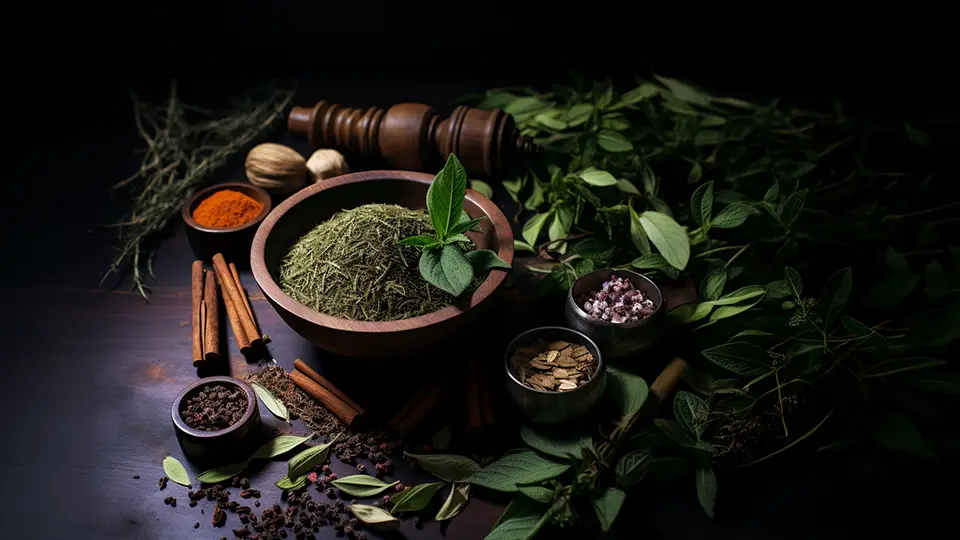
- People used medicinal plants long before the first pharmacies appeared. Knowledge about them was passed down from generation to generation and, for most of human history, was one of the main ways people dealt with illness and injury.
- Some of the oldest written records concerning herbs come from ancient Mesopotamia and Egypt. Clay tablets and papyri contain recipes using plants, oils, resins and various mineral substances.
- Willow bark was used thousands of years ago. The Sumerians and Egyptians used it, among other things, to relieve pain. Many centuries later, research into the compounds found in willow played a part in the history of aspirin.
- The ancient Greeks attempted to organise knowledge about plants. Theophrastus, a pupil of Aristotle, described their appearance, reproduction, and uses. For this reason, he is often regarded as one of the fathers of botany.
- Herb gardens were the predecessors of many botanical gardens. For centuries, Europeans established so-called physic gardens, where plants needed by physicians and apothecaries were cultivated. London’s famous Chelsea Physic Garden was founded in the 17th century for precisely this purpose.
- Medieval monasteries served as small centres of herbal knowledge. Monks cultivated sage, mint, dill, thyme and lemon balm, among other plants, and some monastery gardens were divided into separate beds dedicated to particular species.
- A herbarium did not originally mean only a book. In the 16th century, the Italian botanist Luca Ghini popularised the method of drying plants and attaching them to sheets of paper. This made it possible to preserve and study specimens throughout the winter.
- The earliest herbaria resembled enormous books. Dried plant specimens were attached directly to pages, labelled and stored in libraries much like books. Over time, huge scientific collections were created.
- Herbs were once extremely valuable commodities. Aromatic plants, spices, resins, and roots were transported over thousands of kilometres. Some reached Europe from Asia and the Middle East and could command remarkably high prices.
- It was not always possible to distinguish a herbalist from a doctor. Before the development of modern medicine, knowledge of plants and their effects was one of the most important tools available to people involved in healing.
- Herbal knowledge was often the domain of women. Particularly in rural communities, women knew where plants grew, how to dry them and which household remedies had been passed down from mothers and grandmothers.
- The same knowledge could inspire both respect and suspicion. A herbalist might be a highly valued member of a village who helped people with their ailments, but during periods of witch-hunting, knowledge of unusual plants could also cause serious trouble.
- Herbs were added to alcohol for more than just flavour. Alcohol can extract some compounds that dissolve in alcohol, while also helping to preserve the resulting preparation. This contributed to the long tradition of herbal liqueurs, tinctures, and bitters.
- Old pharmacies looked rather like a cross between a laboratory and a kitchen. Shelves were filled with jars containing dried roots, seeds, leaves and bark, alongside mortars, scales, and equipment for distillation.
- Many herbs had several uses at the same time. The same plant might end up in a cooking pot, a household medicine cabinet, cosmetics, perfumes, incense, or even insect repellents.
- Rosemary was a plant associated with memory. For centuries, European culture linked it with remembrance, loyalty and remembering the dead. It therefore appeared at both weddings and funerals.
- Lavender was used for more than its scent. Dried flowers were placed in chests containing clothes and bed linen, where they scented fabrics and helped repel some insects.
- Herbs played an important role in the development of perfumery. Rosemary, lavender, mint, sage and thyme contain essential oils, which attracted not only cooks but also cosmetics and perfume makers.
- The history of herbal medicine did not end with the arrival of modern pharmaceuticals. The WHO notes that various forms of traditional and complementary medicine are still used in many parts of the world, which is why modern research focuses heavily on the safety and effectiveness of such preparations.
- Some ancient plant-based remedies genuinely led scientists towards important discoveries. One of the best examples is artemisinin. Tu Youyou’s research into ancient Chinese texts describing the use of sweet wormwood helped lead to the development of a critical anti-malaria medicine.
Interesting Facts About Popular Herbs
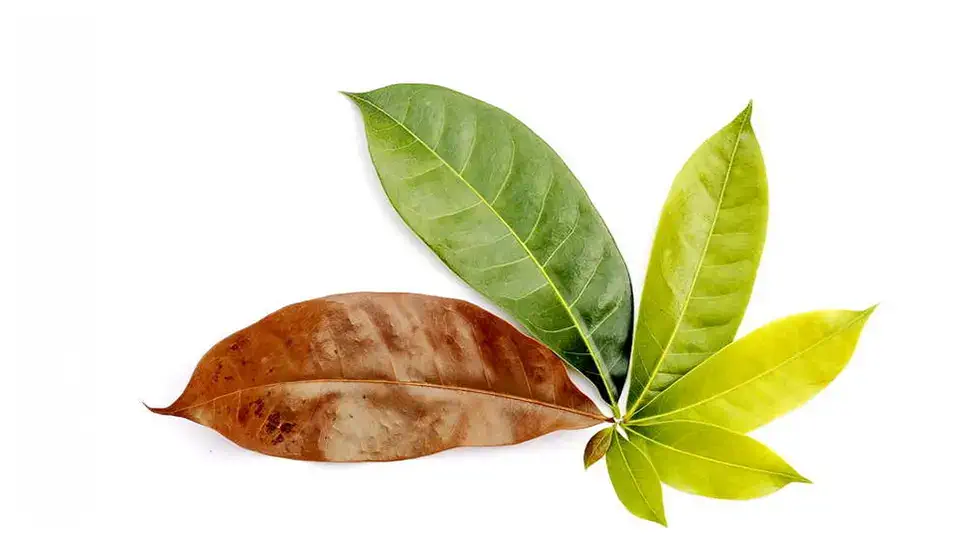
- Rosemary belongs to the same plant family as mint, basil, thyme, and sage. All of them belong to the Lamiaceae family, one of the most aromatic plant families found in our kitchens.
- Rosemary tolerates drought extremely well. It is adapted to the hot Mediterranean climate. Kew notes that drought conditions can even influence the intensity of its aroma.
- Basil comes in many varieties. Apart from the familiar basil with large green leaves, there are varieties scented with lemon, cinnamon, cloves, and anise.
- Basil does not like the cold. It is a warmth-loving plant, and temperatures that would not trouble parsley or mint can damage it.
- Mint can take over a garden. It sends out underground runners and can spread remarkably quickly. If planted without restricting its roots, you may find it surprisingly far from the original bed a few years later.
- There are an enormous number of mint varieties. You can find plants with aromas reminiscent of lemon, apple, chocolate and even pineapple.
- Thyme is small, but it can have an incredibly intense aroma. Its leaves contain essential oils whose components are responsible for its distinctive, powerful scent.
- Oregano and marjoram are close relatives. Their flavours are nevertheless different enough that European cuisine uses them in quite different dishes.
- Coriander has both passionate fans and equally passionate opponents. Some people perceive the flavour of fresh coriander as resembling soap. This sensation is partly linked to genetically determined sensitivity to certain aromatic compounds.
- Parsley was not always simply something added to soup. In ancient Mediterranean cultures, it had symbolic significance and was used during various ceremonies.
- Dill was known in antiquity. Its aromatic leaves and seeds were used both in cooking and in traditional remedies.
- Sage has a name associated with health. The Latin name of the genus, Salvia, is connected with words meaning to save or to heal. It reflects just how highly the plant was valued in the past.
- Tarragon has a slightly anise-like flavour. It has an especially important place in French cuisine, where it appears in sauces, poultry dishes and herb mixtures.
- Lovage can smell remarkably similar to popular soup seasonings. This is why many people assume that lovage is their main ingredient. In reality, the composition of commercial seasoning mixes is usually much more complicated.
- Lemon balm belongs to the mint family. Simply rubbing one of its leaves between your fingers releases its distinctive lemony aroma.
- Chives are related to onions and garlic. They belong to the same Allium genus, while their purple flowers are also popular with insects.
- Wild garlic has become very popular lately. However, care is needed when picking it in the wild because, before flowering, it can be confused with poisonous plants, including lily of the valley.
- Bay leaves come from a tree. The familiar ‘leaves’ we add to soup are dried leaves of the bay laurel, an evergreen tree or shrub native to the Mediterranean region.
- Turmeric is not technically a root. The edible part is a rhizome, which is an underground stem. The plant has been used in India for at least several thousand years.
- Not every plant called a herb is small. In everyday language, we use the word ‘herb’ for many aromatic or useful plants which, botanically speaking, may actually be shrubs, climbers or even trees.
Interesting Facts About Herbs in Cooking
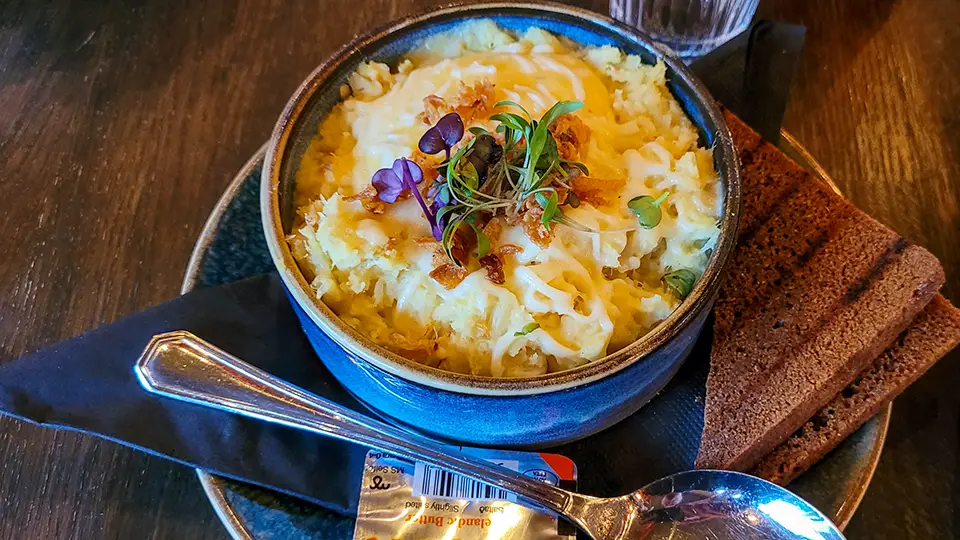
Below, I have gathered some interesting facts about herbs and their place in our kitchens.
- Fresh and dried herbs can taste wholly different. Drying changes the proportions of aromatic compounds, which is why dried oregano can seem stronger, while fresh basil has a distinctive aroma that is difficult to reproduce with its dried form.
- Not all herbs are best added at the beginning of cooking. Delicate basil and coriander often taste best when added just before serving, whereas rosemary and thyme tolerate longer cooking.
- Rosemary works particularly well with rich foods. Its distinctive flavour has made it a popular addition to lamb, meat and oily fish for centuries.
- A rosemary stem can replace a skewer. After removing most of the leaves, the firm stem can be used to thread small pieces of meat or vegetables.
- Herbs can be frozen. Chopped parsley, dill, and chives can be kept in the freezer, although they will lose some of their crispness after thawing.
- A popular way of storing herbs is to freeze them in ice cubes. Chopped leaves can be placed in an ice-cube tray and covered with water or olive oil.
- Pesto does not have to be made exclusively with basil. A similar sauce can be prepared with parsley, rocket, wild garlic, mint, or coriander.
- Herbs are one of the easiest ways to change the character of a dish. Potatoes with rosemary taste wholly different from potatoes with dill, even though the basic ingredient remains the same.
- Herbs can also find their way into desserts. Mint, lavender, basil, and rosemary appear in ice cream, chocolate, cakes, and fruit desserts.
- Basil goes surprisingly well with strawberries. Although the combination may sound rather unusual at first, fresh basil complements the sweetness of the fruit beautifully.
- Mint is an important ingredient in many cuisines around the world. It appears in Middle Eastern, North African, Asian, Mediterranean and European dishes.
- Coriander is a ‘two-in-one’ plant. Fresh leaves have an entirely different aroma from dried seeds, so in cooking they are almost treated as two separate spices.
- Seeds can also be used as herbal spices. Dill, coriander, caraway, and fennel provide aromatic seeds used in bread, marinades, and meat dishes.
- The flowers of herbs can also be edible. Chive, basil, and nasturtium flowers can be used as decoration and as an addition to dishes – provided, of course, that the plant has been correctly identified.
- Herb bread is not a modern invention. Aromatic seeds and plants have been added to bread for centuries. In historic Poland, caraway and other locally available spices were among those used.
- Herbal tea is not always actually tea. True tea comes from the leaves of Camellia sinensis. A drink made from mint, chamomile, or lemon balm is, botanically speaking, an infusion.
- Some herbs can be used to flavour vinegar. Tarragon, rosemary, basil, and thyme are particularly suitable.
- Herb butter can contain almost any combination of fresh herbs. A classic mixture consists of butter, garlic, parsley and a little salt.
- Herbs can reduce the need for heavy salting. Strong aromas and a wider range of flavours mean that a dish does not have to rely solely on salt for its character.
- The best herbs are often literally sitting on our windowsills. Basil, mint, thyme, oregano, and chives can all be grown quite easily in pots, giving us fresh leaves for much of the year.
Interesting Facts About Herbs, Ancient Beliefs and Magic

Before laboratories, antibiotics and modern pharmacies existed, nature was simultaneously a pantry, a pharmacy, and a place filled with mysteries. It is hardly surprising, then, that an enormous number of legends and superstitions grew up around herbs. Below you will find interesting facts about herbs and their place in traditional stories and legends.
- St John’s wort had a particularly strong reputation in Europe. It was gathered around the summer solstice and St John’s Day, when people believed it could protect them from evil forces.
- Mugwort was one of the most important plants in ancient rituals. In many parts of Europe it was used during midsummer celebrations, while wreaths and belts made from it were believed to protect people.
- Wormwood became associated with bitterness. Its exceptionally bitter taste was so characteristic that the plant’s name eventually appeared in literature as a symbol of suffering and sadness.
- Rue was believed to protect against evil. Ancient European traditions attributed considerable protective powers to it. It also appeared in rituals associated with marriage and virginity.
- Rosemary symbolised remembrance. Sprigs of rosemary appeared at funerals as well as weddings because the plant was associated with memory and fidelity.
- Lavender was believed to bring peace. Its scent led people to place it in bedding, sachets and cupboards, and eventually, it also became associated with protection from bad dreams.
- Sage was a symbol of long life. In medieval Europe, it had such a good reputation that sayings emerged suggesting that anyone with sage growing in their garden could expect to remain healthy for a long time.
- Garlic became one of the best-known plant-based amulets. European legends claimed that it could protect people from vampires and evil spirits, although its real uses were, of course, primarily culinary.
- Vervain was considered a sacred plant. The Romans used it during religious and diplomatic ceremonies, which helped surround it with a huge number of legends.
- Basil had a surprisingly contradictory reputation. In some cultures, it was a symbol of love and happiness, while in others it was associated with death, hatred, or danger.
- Mint already appears in Greek mythology. Its name is linked to the nymph Minthe, who, according to one version of the myth, was transformed into a fragrant plant.
- Mandrake became one of Europe’s most famous magical plants. Its forked root can resemble a human figure, which was enough to inspire legends about screaming roots and supernatural powers.
- Not all ‘magical herbs’ were harmless. Thornapple, deadly nightshade and henbane contain powerful substances and are poisonous. Historical stories about visions caused by them therefore have some basis in reality.
- Herbs were placed inside amulets. Small bags filled with dried plants were carried on the body or hung inside homes in the hope of attracting luck, love, or protection.
- The way a plant was collected could be considered just as important as the plant itself. According to traditional beliefs, some herbs had to be gathered before dawn, during a full moon or on a particular day of the year.
- Midsummer night was a true celebration of plants. People believed that herbs gathered around the summer solstice possessed special powers.
- Even ordinary kitchen spices were given magical meanings. Marjoram could symbolise marital happiness, basil love and rosemary remembrance.
- Scent was once believed to protect against disease. Before people understood bacteria and viruses, the theory that illness could spread through ‘bad air’ was widespread. Strong-smelling plants were therefore thought to provide a form of protection.
- The boundary between herbalism and magic often depended on the period in history. Preparing an infusion could be a perfectly ordinary part of everyday life, while using the same plant in a ritual might be considered witchcraft.
- Many old stories about herbs have survived to this day. Although few people now tuck mugwort into their belts to protect themselves from demons, we still elaborate on the ‘magical properties’ of plants and enjoy returning to old stories.
Interesting Facts About Herbs and Their Place in Nature
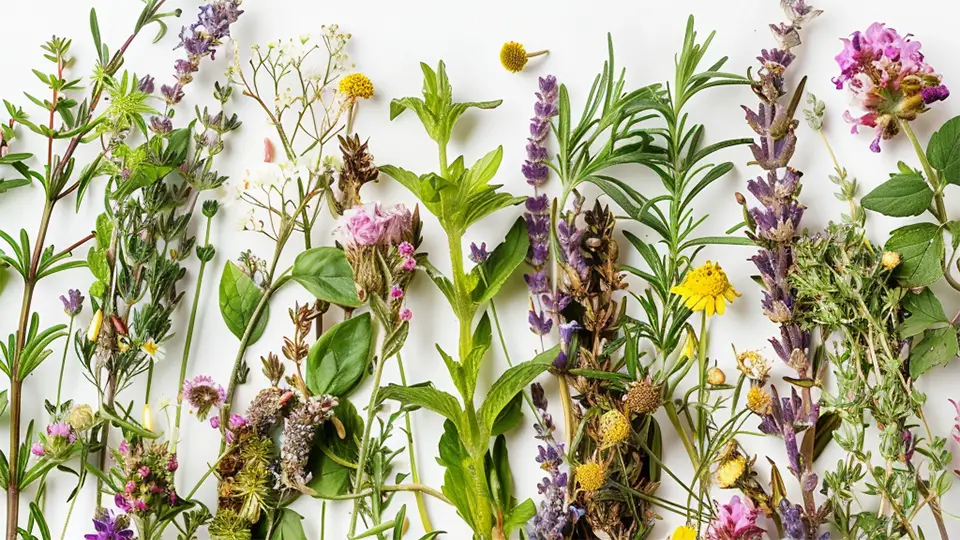
Below you will find interesting facts about herbs and their place in nature.
- The scent of herbs did not evolve to improve the taste of our dinner. Aromatic chemical compounds can help plants deter herbivores, limit the growth of certain microorganisms or communicate with their surroundings.
- What smells wonderful to us can be a warning to an insect. Plant essential oils perform many functions, and some help reduce attacks by pests.
- Herb flowers are important to insects. Flowering thyme, oregano, mint, and chives attract bees, bumblebees and other pollinators.
- Rosemary honey really exists. In regions where rosemary grows in abundance, bees can collect large amounts of nectar from its flowers.
- Some herbs cope extremely well with very dry soil. Thyme and rosemary come from regions where long periods without rain are perfectly normal.
- Small leaves can be a way of saving water. Many Mediterranean plants have small, tough or hairy leaves that reduce moisture loss.
- Mint uses a wholly different strategy. It prefers wetter conditions and, instead of conserving space, can spread aggressively through underground stems.
- Aromatic plants produce hundreds of different chemical compounds. It is the proportions of these compounds that determine whether a leaf smells of lemon, camphor, mint, or cloves.
- A plant’s scent can change. Variety, soil, sunlight, temperature, water availability and the time of harvesting can all influence it.
- A supermarket herb and a wild plant may smell different. Growing conditions can have a significant effect on the amount of essential oils produced.
- Herbs can have tiny hairs. Many aromatic plants have small structures on their surfaces where scented substances are produced or stored.
- That is why rubbing a leaf releases more scent. By damaging the surface of the leaf, we release aromatic compounds and suddenly notice a much stronger smell.
- Not every mint smells the same. Different species and hybrids contain different proportions of menthol and other compounds responsible for their aroma.
- One plant family has given us an extraordinary number of herbs. The Lamiaceae family includes mint, rosemary, sage, thyme, oregano, marjoram and basil, among others.
- Herbs do not always need rich soil. Some Mediterranean species can develop a particularly intense aroma when growing in relatively poor and dry soil.
- Over-fertilised herbs are not necessarily the best ones. A plant may then produce large leaves quickly, but these do not necessarily contain the same concentration of aromatic compounds.
- Many herbs can be propagated from a piece of the plant. Mint and rosemary, for example, root relatively easily from cuttings, allowing you to produce new plants from a single specimen.
- Turmeric practically does not need seeds for cultivation. It is mainly propagated using pieces of its underground rhizome.
- Humans have been changing herbs for thousands of years. We have selected plants with larger leaves, milder or stronger flavours and increasingly useful characteristics.
- Some cultivated plants are now hardly known in their wild form. Turmeric is a good example. Kew describes it as a domesticated plant that is widely cultivated in the tropics, but not known to occur as a contemporary wild plant.
Herbal Facts for Children
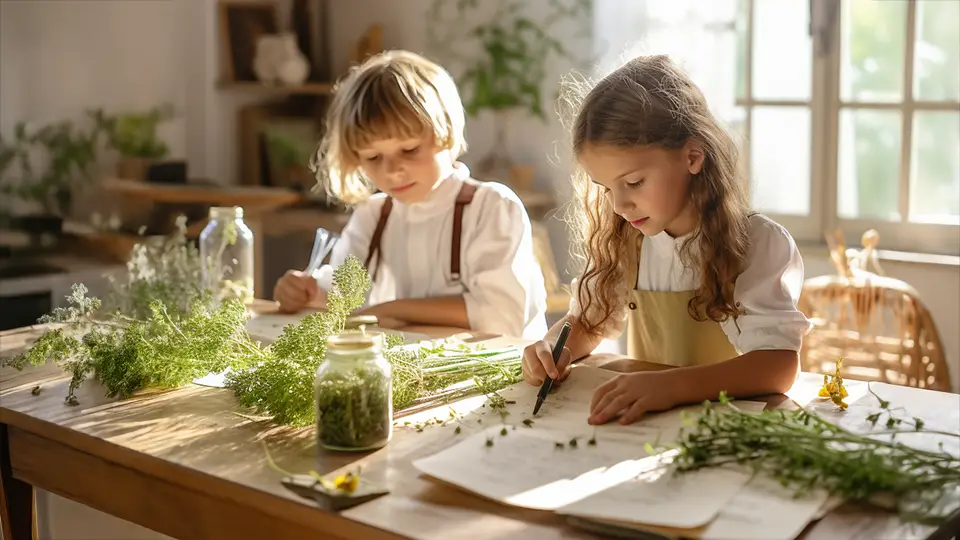
Herbs can be a fantastic way of getting children interested in nature. You do not even need to head into the countryside. A few pots on a windowsill, some soil and several familiar plants are enough. Below I have collected some interesting facts about herbs especially for children.
- Mint really can smell like chocolate. There are varieties of mint with aromas reminiscent of chocolate, lemon, apple, and pineapple.
- Basil can be purple. Not every variety has green leaves. Some are dark purple and look more like ornamental plants than culinary herbs.
- Chives have beautiful flowers. If you allow them to bloom, they produce purple spheres made up of many tiny flowers.
- Bees love flowering herbs. Thyme, oregano, mint, and chives can turn a balcony into a tiny food station for insects.
- Mint can escape from its pot. If planted in the garden, its underground runners can appear surprisingly far from where you originally planted it.
- A leaf can smell stronger after being rubbed. Gently rub the leaves of mint, basil, and rosemary between your fingers, and you will notice that each releases a wholly different scent.
- Herbs have their perfumes. Their aromas come from natural substances produced by the plants, so they can smell wonderful without any artificial perfume.
- Some herbs can be grown from a piece of a stem. A mint cutting placed in water will often produce roots.
- Herbs can grow on a windowsill. Basil, mint, chives, and parsley do not need a large garden.
- Rosemary looks a little like a miniature Christmas tree. Its narrow, tough leaves resemble needles.
- Bay leaves grow on a tree. The same dried leaves that parents add to soup were once green leaves growing on a bay laurel.
- Turmeric grows underground. The yellow spice comes from a rhizome that looks somewhat like ginger.
- Coriander can taste like soap to some people. It does not mean that it has gone bad. Some people simply perceive its aroma differently.
- The flowers of some herbs can be eaten. Chive and basil flowers are sometimes used to decorate dishes. However, you should never taste an unfamiliar plant without an adult’s permission.
- Basil likes warmth more than parsley does. If the temperature drops, it can quickly lose its healthy appearance.
- Thyme is small but remarkably hardy. It can grow in dry, sunny places.
- One type of plant can provide several seasonings. With coriander, both the fresh leaves and the seeds are used.
- Herbs can be frozen in ice cubes. Mint leaves frozen inside ice cubes look attractive and can later be added to water or lemonade.
- People once believed that herbs had magical powers. Rosemary was thought to help preserve memory, garlic to ward off evil forces, and some plants were only collected on particular days.
- Herbs are a great starting point for a little home garden. They grow relatively quickly, smell wonderful and allow children to observe the entire life cycle of a plant, from a tiny seedling to flowers and seeds.
Are Herbs Healthy?
It is easy to fall into the trap of thinking that because something is natural, it must also be completely safe. That is not the case. Some plants contain mighty substances, while herbal preparations can affect the way medicines work. Herbs used in normal quantities as culinary seasonings are very different from concentrated extracts, essential oils or supplements. For that reason, trying to treat serious health problems at home with randomly selected herbal preparations is not a particularly good idea. The WHO also emphasises the importance of quality, safety and scientific assessment when it comes to traditional medicinal products.
That does not make the history of herbs any less fascinating. Plants were part of our lives long before modern pharmacy appeared and will probably remain with us for a very long time to come. These days, however, rosemary is more likely to end up on roast potatoes than inside a magical amulet, which, personally, seems like quite a sensible development. As the interesting facts about herbs above show, these plants are remarkably useful in our everyday lives. For more fascinating facts from all sorts of subjects, have a look at our article packed with amazing and interesting facts.