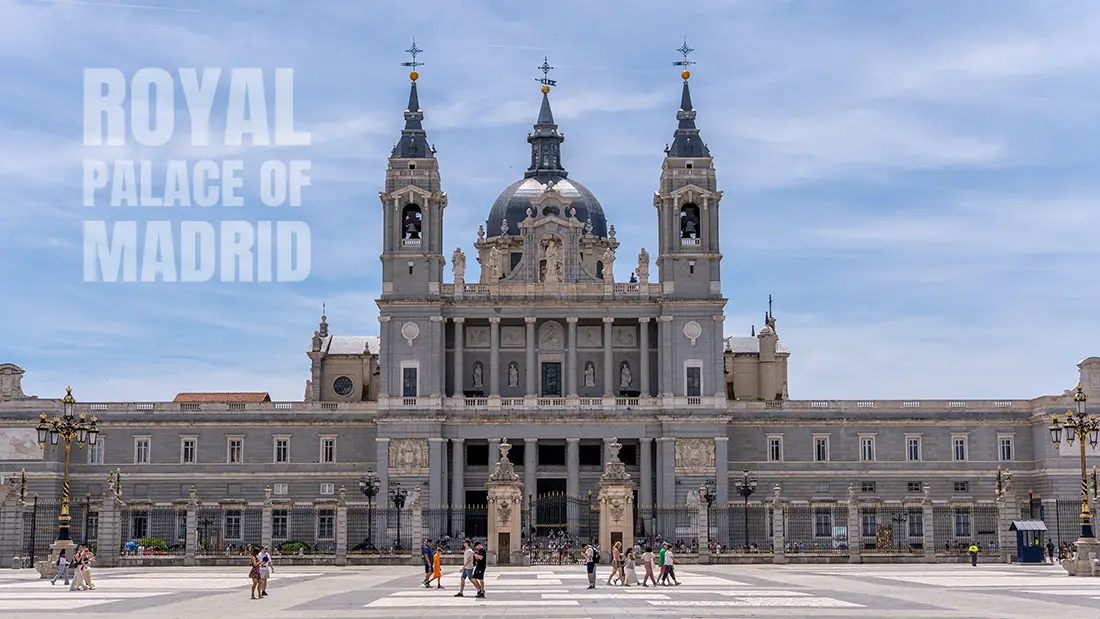
The Royal Palace of Madrid was one of the places I had been especially eager to visit. I had already seen its monumental façade in photographs, guidebooks, and materials about the Spanish capital, but it was only when I stood in the vast square in front of the building that I understood its true scale. The palace does not feel excessively ornate. It is powerful, harmonious, and dignified, as though it had been designed from the outset to remind every visitor that they were standing before one of Europe’s most important royal residences.
The interior made an even greater impression on me. The grand staircase, enormous rooms, silk-covered walls, crystal chandeliers, frescoes and masterfully crafted decorations create a place where history is not merely the subject of a museum exhibition. You can feel it almost everywhere you go.
Visiting the Royal Palace turned out to be one of the most enjoyable experiences of my stay in Madrid. I left impressed not only by the splendour of its interiors, but also by the skill of the people who designed, built, decorated and furnished this extraordinary residence over the centuries. Below, you will find an account of my visit, along with plenty of facts, practical information and interesting details.
The Royal Palace of Madrid – from an Arab fortress to the grand seat of the monarchy
Imagine that the site where the monumental Royal Palace of Madrid stands today was once occupied by a Muslim fortress. In the 9th century, Emir Muhammad I ordered it to be built on a hill overlooking the River Manzanares. Its purpose was to protect Toledo and control the surrounding routes. A settlement called Mayrit grew around the stronghold and eventually developed into Madrid.
After the city was captured by Christian forces, the fortress began to serve the kings of Castile. It was gradually enlarged and transformed into the Royal Alcázar of Madrid. A turning point came in 1561, when Philip II moved his royal court to Madrid. From that moment onwards, the city became the capital of Spain and the Alcázar its principal royal residence.
The most dramatic event in its history occurred on Christmas Eve in 1734. A gigantic fire broke out inside the palace and continued for several days. The building was almost destroyed, along with part of the royal collection. Some paintings were saved by being thrown through the windows. This is how several masterpieces survived, including Velázquez’s famous Las Meninas.
King Philip V decided to build a new residence on the ruins of the Alcázar. The foundation stone was laid in 1738. The palace was designed by Giovanni Battista Sacchetti, who developed earlier ideas proposed by Filippo Juvarra. It was constructed mainly from stone and brick to reduce the risk of another devastating fire. Charles III was the first monarch to live in the new palace, moving into the residence in 1764. It was later occupied by successive rulers and, during the Napoleonic occupation, by Joseph Bonaparte.
The last king to live in the palace was Alfonso XIII. He left Spain in 1931 following the proclamation of the Second Spanish Republic. Today, the royal family lives at Zarzuela Palace. Nevertheless, the Royal Palace remains the official residence of the Spanish monarch. It hosts state ceremonies, diplomatic meetings and royal receptions, while its magnificent rooms are open to visitors for most of the year.
The Royal Palace of Madrid, known in Spanish as the Palacio Real de Madrid, stands in the western part of the city’s historic centre. Plaza de Oriente lies to the east, Almudena Cathedral to the south and the Sabatini Gardens to the north. Although the building remains the official residence of the King of Spain, the royal family does not live there daily. Spain’s monarchs now use Zarzuela Palace, situated on the outskirts of Madrid. The Palacio Real is instead reserved for official ceremonies, diplomatic receptions, audiences, and major state occasions.
The palace covers approximately 135,000 square metres and contains 3,418 rooms, making it one of the largest royal palaces in Europe. Only part of the interior is open to visitors, but even the shorter sightseeing route takes you through more than a dozen ceremonial rooms, the Royal Armoury and temporary exhibitions. Either way, be prepared for a long walk.
My first encounter with the Royal Palace of Madrid
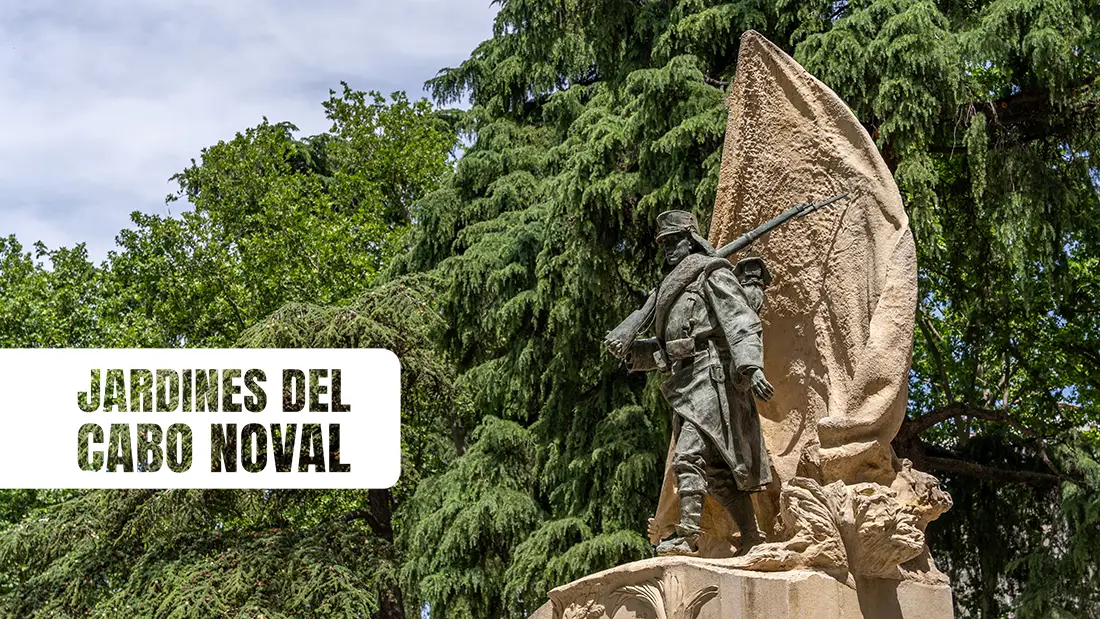
I approached the palace from Plaza de Oriente. In my opinion, this is probably the best direction from which to see the residence for the first time. The geometrically arranged gardens, rows of statues depicting former Spanish rulers and the equestrian monument to Philip IV provide an elegant introduction to everything waiting behind the palace walls.
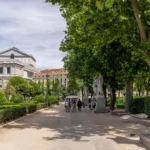
I stopped for a moment in Jardines del Cabo Noval. This small garden occupies the northern section of Plaza de Oriente and is a pleasant place to rest before entering the palace. Beneath the shade of old plane trees, you can admire the façade in peace and soak up the atmosphere of Madrid’s royal quarter.
The closer I came to the palace, the more impressed I was by its symmetry. The building is enormous, yet it does not feel heavy. Its pale stone, regular rows of windows and sculptural decorations give it a sense of elegance. Against Madrid’s intensely blue sky, it looked almost theatrical.
I stopped once again in the courtyard. This is probably the best place to appreciate the true scale of the entire complex. The wings surrounding the square resemble a monumental stage set, but none of it is merely decorative scenery. Events that shaped the history of Spain unfolded behind these walls for centuries.
The Grand Staircase and Hall of Columns – the beginning of the palace story
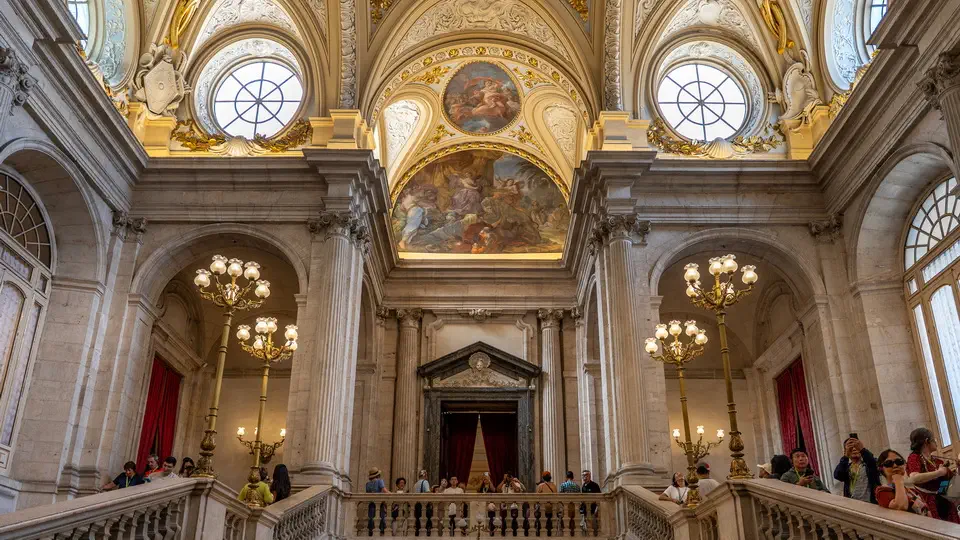
My tour of the interior began at the ceremonial staircase. At that point, I already knew the palace was going to live up to my expectations. The wide marble steps, enormous columns and space rising high above your head immediately create a sense of grandeur.
The main staircase was designed to ensure that arriving guests understood the importance of the Spanish royal court from the very first moment. As you climb the steps, you almost instinctively slow down. It is not because of the effort involved, but because you want to take in every new detail.
I was particularly impressed by the ceiling fresco depicting the triumph of religion and the Church. The decoration makes the architecture of the staircase appear to open towards the sky. Light entering through the windows reflects from the pale marble and gilded details, emphasising the ceremonial character of the space.
I stood beneath the staircase for a while, watching other visitors tilt their heads upwards, just as I had done. This is one of those interiors that instantly brings people to a halt.
The Hall of Columns is one of the palace’s grandest rooms. The original design envisaged a second monumental staircase in this space. The idea was eventually abandoned, and the room was transformed into a hall intended for ceremonies, receptions, and balls.
Its tall columns, floor and decorative details give the interior rhythm and a monumental quality. The hall is large, but it does not feel empty. Every element draws your attention towards another detail: sculptures, tapestries, paintings and elaborate ornaments.
Many important court and state events have taken place here. The hall was used for official ceremonies and, for a time, also served as a formal dining room. It is still used for special occasions today.
What moved me most was the realisation that I was not looking at an interior created solely for tourists. It remains a functioning state room where history continues to meet the present day.
The Royal Palace of Madrid and the Throne Room – the most regal room in the palace
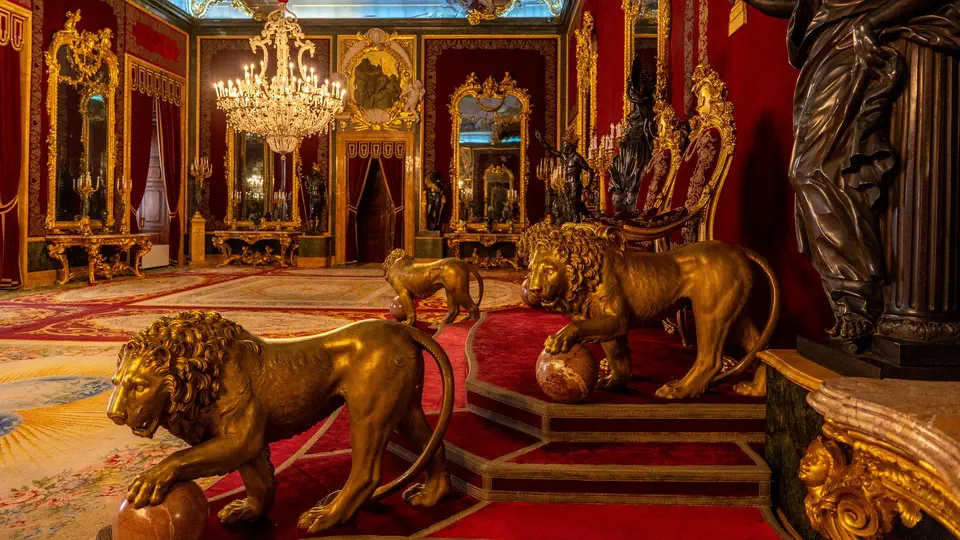
The Throne Room was the place I had been most eager to see, and I was not disappointed. The interior is exceptionally lavish, but all its elements form a carefully considered whole.
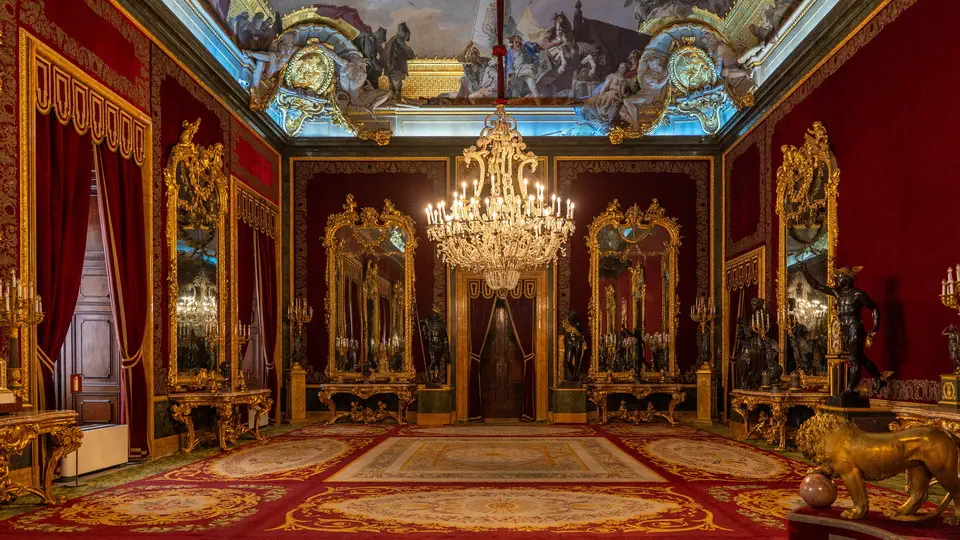
Red velvet wall coverings provide a backdrop for gilded decorations, enormous mirrors, sculptures and crystal chandeliers. Two thrones decorated with symbols of the monarchy stand on a raised platform. They are guarded by gilded lions, which give the composition an even more ceremonial appearance.
Above everything stretches a fresco painted by Giovanni Battista Tiepolo. It presents an allegory of the power of the Spanish monarchy. The figures floating above the room, the skilful use of light and the illusion of open space make the ceiling appear to disappear almost completely.
The room has retained the decoration created during the reign of Charles III. As a result, visitors can see a ceremonial interior looking very much as it would have appeared to royal guests in the 18th century.
I spent longer here than I had originally planned. It was difficult to leave when I kept noticing new details. One moment I was looking at the thrones, then at the lions, mirrors and chandeliers, before once again raising my head towards the fresco. It was inside the Throne Room that I felt the majesty of the Royal Palace most strongly.
The Gasparini Room – an interior filled with extraordinary details
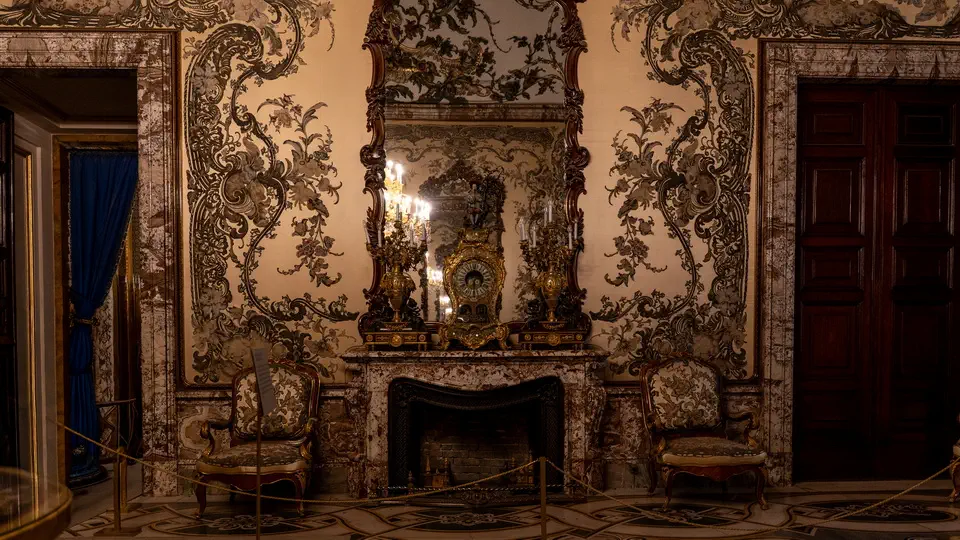
While the Throne Room impresses with its scale, the Gasparini Room captivates visitors with the remarkable consistency of its decoration. Its design was created by Mattia Gasparini, an Italian artist who came to Spain with Charles III.
The room represents an exceptionally lavish version of the Rococo style. The patterns covering the walls, ceiling, fabrics, furniture, and floor seem to flow into one another. Nothing here feels accidental. The entire interior resembles one enormous work of art.
At first, it is difficult to focus on any single feature. Every surface is decorated, while floral motifs and fanciful lines continue from one part of the room to another. Despite this abundance of decoration, the interior did not seem chaotic to me. Quite the opposite – I was impressed by its harmony.
This is one of the rooms where you can truly appreciate the skills of historical craftsmen. We often admire the names of architects and painters, forgetting about the plasterers, weavers, carpenters, stonemasons, and furniture makers. In the Gasparini Room, their talent is visible in almost every square inch.
The Royal Chapel
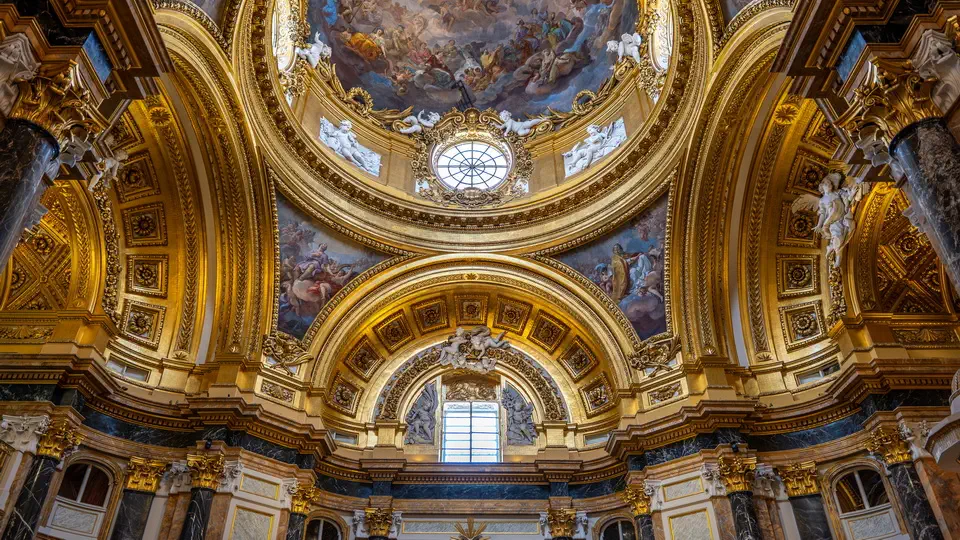
The Royal Chapel introduced a wholly different atmosphere. After passing through the exceptionally decorative flats, I entered a space that was still richly furnished, yet much calmer and more solemn.
The chapel played an important part in life at court. Religious services, ceremonies, and events involving the royal family were held here. Its architecture and furnishings emphasised the close relationship between the Spanish monarchy and Catholicism.
My attention was drawn above all to the dome and the way the architecture guides your eyes towards the altar. The interior encourages you to slow down for a moment. After rooms designed to demonstrate the power of the state, the chapel offers a reminder of the spiritual dimension of the lives of Spain’s former rulers.
The Royal Palace of Madrid and the Grand Dining Room
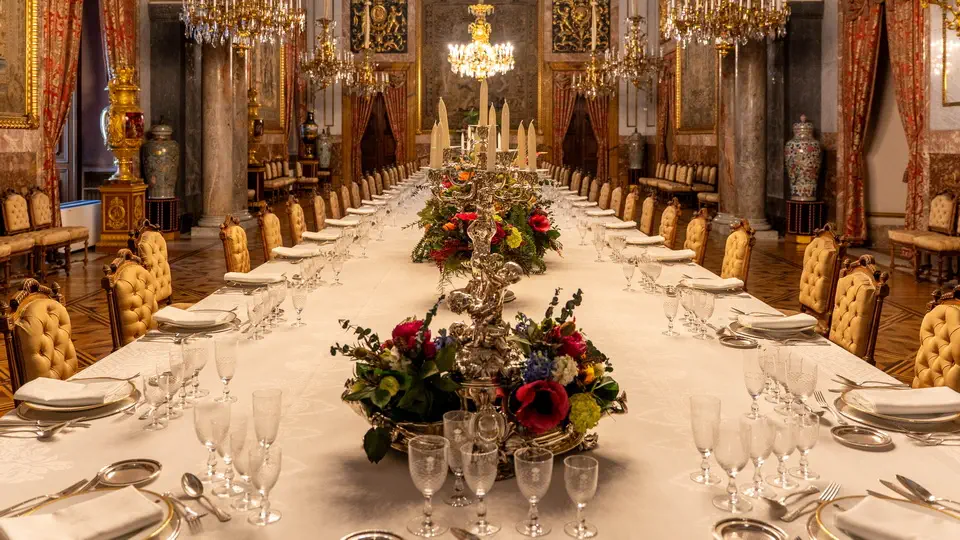
The Grand Dining Room is one of the largest and most impressive rooms in the palace. It was created between 1879 and 1885 by combining several earlier chambers. This was necessary to provide a suitably spacious setting for large official banquets.
The long table, which can accommodate dozens of guests during formal occasions, immediately draws the eye. Giant chandeliers hang above it, while the walls are decorated with tapestries, paintings, mirrors and ornamental clocks.
Looking at this room, I tried to imagine the preparations for a royal reception. Laying the table, polishing the silverware, arranging the table settings and coordinating the work of dozens of people must have been an incredibly complex operation.
The room is still used for official banquets. Once again, this made the palace feel like much more than an ordinary museum. Many of its rooms and objects continue to fulfil the purposes for which they were created.
The Royal Armoury
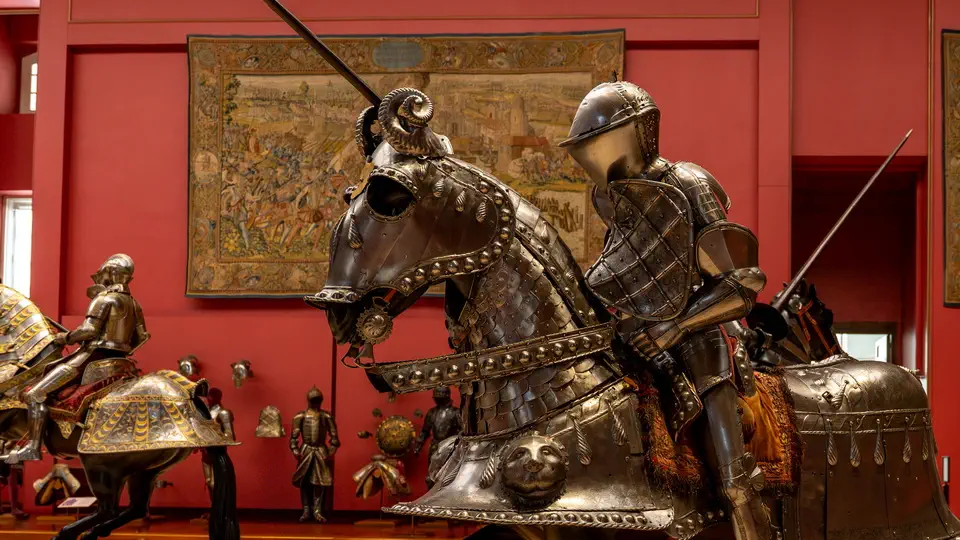
The Royal Armoury turned out to be one of the greatest surprises of my visit. Its collection includes armour, weapons, and equipment belonging to Spanish monarchs and members of their families.
The complete tournament and battle armour is particularly impressive. Some suits were made not only for people, but also for horses. Their intricately decorated surfaces show that armour served as protection, a symbol of status and a work of art at the same time.
The collection includes objects associated with Emperor Charles V and Philip II, among others. Looking at them, it is easy to forget that these are not theatrical props. They were made for specific rulers and were used during ceremonies, tournaments or military campaigns.
Following its reopening in April 2026, the Armoury gained new displays devoted to Madrid, the Bourbons, the Battle of Lepanto and relations with Japan. Admission is included in the standard palace sightseeing route.
The Royal Kitchen
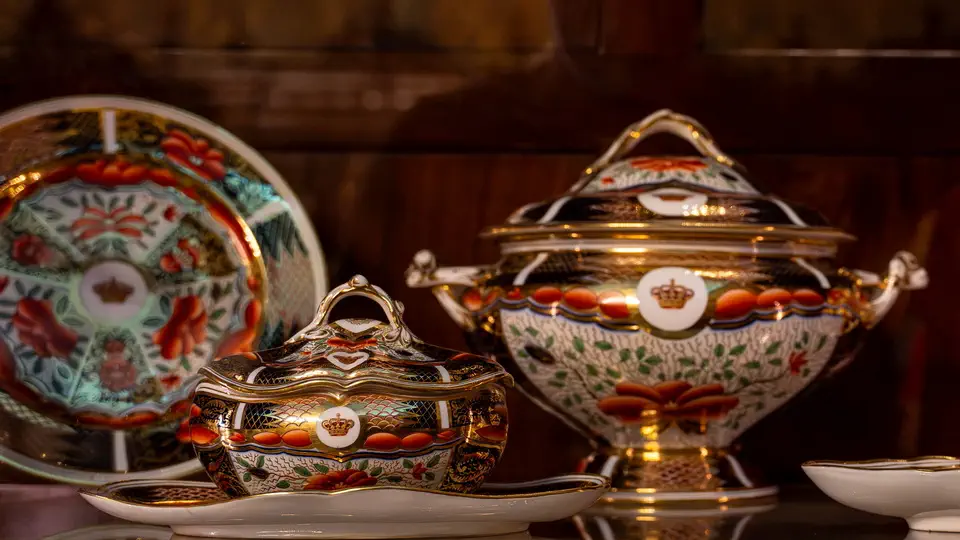
The Royal Kitchen is not included in the standard route and requires an appropriate additional ticket. In my opinion, it is worth considering, especially if you are interested in everyday palace life rather than just its grand ceremonial rooms.
Unlike the lavish royal flats, the kitchen reveals what went on behind the scenes at court. Its ovens, fireplaces, copper cookware, worktables, confectionery moulds and other equipment used to prepare meals have all survived.
What interested me most was the contrast between the splendour of the dining rooms and the enormous amount of work carried out beyond the sight of royal guests. Every banquet required the involvement of cooks, assistants, servants, and people responsible for transporting and storing ingredients.
The kitchen presents the palace from a more human perspective. It reminds us that this vast residence was not merely a stage for politics and ceremony, but also an enormous living organism in which hundreds of people worked every day.
Works of art and the royal collections
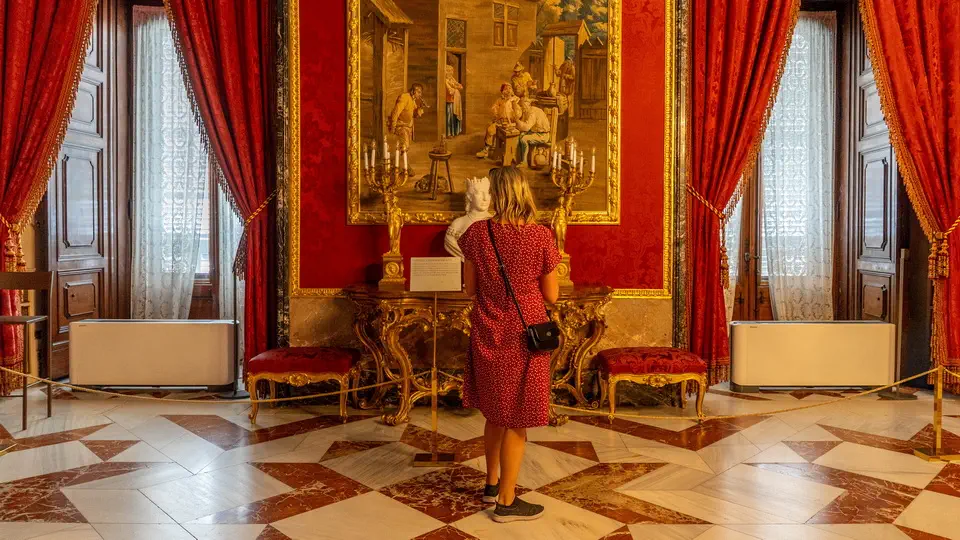
The Royal Palace is also a vast museum of decorative art. As you walk through its rooms, your attention is drawn to paintings, frescoes, tapestries, porcelain, clocks, furniture, musical instruments and sculptures.
The collections connected with the Spanish monarchy were assembled over centuries. Inside the palace, you can see works and decorations associated with artists such as Francisco Goya, Diego Velázquez, Caravaggio, Anton Raphael Mengs, Giovanni Battista Tiepolo and Corrado Giaquinto.
The collection of string instruments made by Antonio Stradivari is particularly valuable. The royal quartet is regarded as one of the world’s most precious surviving groups of historical instruments of its kind.
What impressed me most, however, was not any single work, but the way art fills the entire interior. A painting is not isolated on the white wall of a gallery. It is surrounded by historical furniture, fabrics, sculptures and architectural decoration. This makes it much easier to understand the setting in which the royal collections were originally displayed.
The Gallery of the Royal Collections stands beside the palace and Almudena Cathedral. This modern museum displays work gathered by Spanish monarchs over several centuries.
The gallery is a separate attraction, so you should allow additional time if you want to explore it properly. A combined ticket covering both the Royal Palace and the gallery is available. Admission to the second attraction remains valid for seven days before or after your palace visit, excluding certain free-entry periods.
If you only have a few hours, I would begin with the palace. If you have an entire day to explore Madrid’s royal quarter, it is worth visiting both attractions and taking a break between them in Plaza de Oriente or one of the nearby gardens.
The Courtyard and views across Madrid
After leaving the palace interiors, I was pleased to return to the open air. Following the richness of the decorations inside, the courtyard seemed almost austere. Yet this contrast allowed me to appreciate the building’s harmonious proportions all over again.
It is also worth walking to the nearby Mirador de la Cornisa, beside Almudena Cathedral. From this viewpoint, you can look towards Madrid’s western outskirts, Casa de Campo and the distant Sierra de Guadarrama mountains.
The landscape helps explain why the first fortifications were built on this particular site. The palace stands on high ground overlooking the Manzanares valley and the routes once leading into the city.
The Sabatini Gardens and Campo del Moro
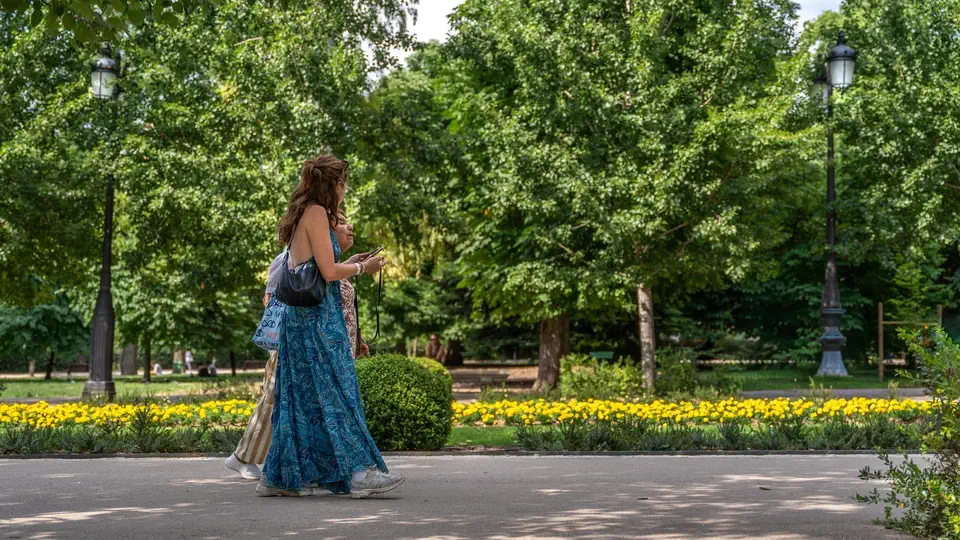
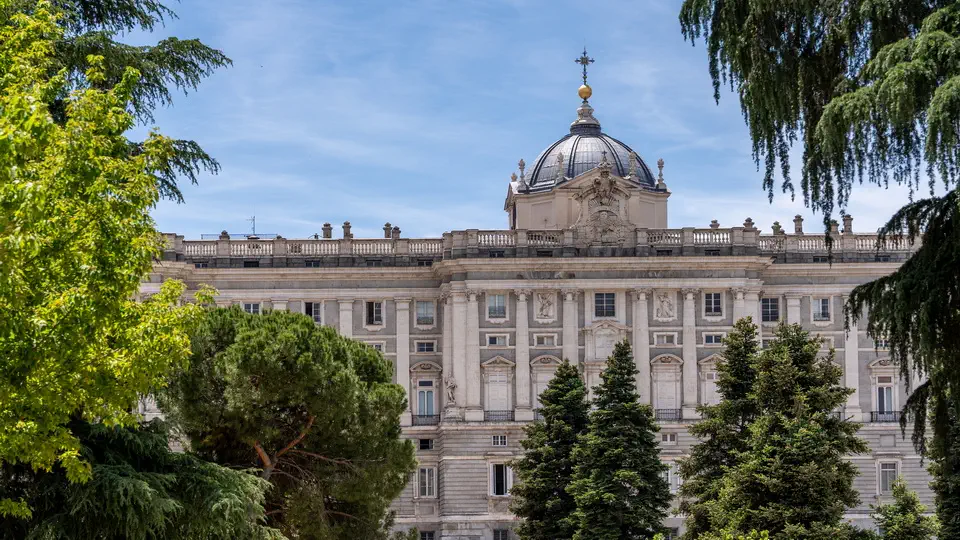
A visit to the Royal Palace is worth combining with a walk through the two neighbouring green spaces. The Sabatini Gardens lie on the northern side of the palace. They have a formal, geometric layout, with neatly trimmed hedges, fountains, and statues of Spanish monarchs. This is one of the best places from which to photograph the residence’s northern façade.
Campo del Moro stretches below the western side of the palace. It is considerably larger and has a more natural, landscaped appearance. While walking along its paths, you can see the palace from a perspective that emphasises the difference in height between the royal residence and the Manzanares valley.
After an intensive tour of the interiors, both gardens provide an opportunity to rest and reflect on everything you have seen. I particularly enjoyed the moment when I could look back at the palace from a distance. Only then did I begin to see it not as a succession of individual rooms, but as part of a much larger royal complex.
The Changing of the Guard at the Royal Palace
The Changing of the Guard can be an additional attraction during your visit. Shorter ceremonies take place regularly, while a grander Changing of the Guard is organised on selected dates, involving more participants, horses and musical accompaniment.
The schedule may change because of state ceremonies, weather conditions and the official use of the palace. You should therefore check the latest timetable on Madrid’s official tourism website before your visit.
If you manage to combine a tour of the interiors with the ceremony, the palace becomes even more impressive. The uniforms, commands, music, and courtyard allow you to imagine, if only for a moment, what official ceremonies at the royal court might once have looked like.
The Royal Palace of Madrid – how to plan your visit
You should allow approximately one and a half to two hours for a standard visit. Those who enjoy examining the interiors in detail or use an audio guide may need longer. If you are also planning to see the Royal Armoury, Royal Kitchen and Gallery of the Royal Collections, as well as walk through the gardens, it is best to reserve most of the day.
I recommend buying your ticket online in advance. The palace is one of Madrid’s most popular attractions, and long queues can form at the ticket office. Booking a specific entry time also makes it easier to plan the rest of your day.
The best time to visit is in the morning, shortly after the palace opens. It is usually quieter then, and you will still have plenty of time afterwards to explore the surrounding area.
Remember that the palace continues to serve an official ceremonial function. It may be partly or completely closed because of state events. It is therefore worth checking the latest announcements on the official website before travelling.
The Royal Palace of Madrid – tickets and opening hours
For an attraction as popular as the Royal Palace of Madrid, I strongly recommend purchasing tickets online. This will help you avoid spending a long time in the queue and trying to make your way inside among crowds of other visitors leaving the ticket office. Buy your ticket a few days in advance and enter the palace without waiting in the main ticket queue.
Admission costs several dozen euros, depending on the ticket and any additional attractions included. For the latest prices, I recommend checking the booking website I use whenever I need tickets for a tourist attraction.
Reduced-price tickets are available to several groups, including children and young people aged between 5 and 16, visitors over the age of 65 and students under 25 with valid identification. Other categories of visitors may also qualify for free admission, so it is worth reading the detailed terms and conditions before purchasing your ticket.
Citizens of the European Union and selected Latin American countries may enter free of charge from Monday to Thursday during designated hours. You will need to present a document confirming your citizenship, residence status or work permit. Be prepared for queues, as the number of free tickets may be limited.
From April to September, the palace is usually open from Monday to Saturday between 10:00 and 19:00. From October to March, it normally opens from Monday to Saturday between 10:00 and 18:00.
Different opening hours may apply on Sundays and public holidays. Last admission takes place before the official closing time, and the schedule may change because of state ceremonies.
The Royal Palace of Madrid – how to get there
The palace stands in the very centre of Madrid, so it is easy to reach on foot or by metro. Personally, I recommend walking. Exploring the streets of Madrid is an enjoyable part of the experience in itself.
If you decide to travel by metro, the nearest stations are:
- Ópera – lines 2 and 5, as well as the Ramal shuttle line;
- Plaza de España – lines 3 and 10;
- Príncipe Pío – lines 6 and 10, the Ramal shuttle line and suburban trains.
From Ópera station, Plaza de Oriente is only a few minutes’ walk away. This is the best route for anyone who wants to see the palace from its most impressive side.
It is better to leave your car outside the historic centre. Traffic restrictions apply in the area, while nearby car parks can be expensive. Madrid’s public transport system is convenient and saves you the trouble of searching for somewhere to park.
What is worth seeing near the Royal Palace?
Many interesting attractions surround the Royal Palace. Within a short walk of the residence, you will find plenty of places that would be a shame to miss:
- Plaza de Oriente;
- Jardines del Cabo Noval;
- Jardines de Lepanto;
- Teatro Real;
- Almudena Cathedral;
- the Sabatini Gardens;
- Campo del Moro;
- the Gallery of the Royal Collections;
- Plaza Mayor;
- Mercado de San Miguel with lovely tapas;
- the remains of Madrid’s old Arab walls;
- the Mirador de la Cornisa viewpoint.
You can also combine your palace visit with a longer walk towards the centre. From Plaza Mayor, it is easy to continue through Puerta del Sol towards Gran Vía and then explore more of Madrid’s attractions.
If you would like to understand how the Spanish capital developed over the centuries, I also recommend visiting the Museum of the History of Madrid, which we have described elsewhere on the website. After an intensive day of sightseeing, Retiro Park is an excellent place to relax. I was particularly impressed by its greenery, monuments and much calmer atmosphere.
The Royal Palace of Madrid – practical tips before your visit
- Buy your ticket online, especially if you are visiting at the weekend or during summer.
- Arrive at least 15 minutes before your chosen entry time.
- Bring identification if you are using a reduced-price ticket or claiming free admission.
- Allow a few additional minutes for the security check.
- Large bags may need to be left in the cloakroom or luggage deposit.
- Photography is prohibited in some rooms.
- Do not rush your visit – the palace is best explored at a leisurely pace.
- Before arriving, check whether any state ceremonies have been announced.
- Bring water in summer, as you may have to wait outside in direct sunlight.
- After your visit, take a walk through Plaza de Oriente and the Sabatini Gardens.
Is the Royal Palace worth visiting? My opinion
The Royal Palace of Madrid is no ordinary monument. Apart from being exceptionally beautiful and historically priceless, it is undoubtedly one of the places you should see during your first visit to Madrid.
Remember that it is not simply an enormous building filled with expensive objects. It tells the story of the monarchy, art, politics, and the people who shaped the history of Spain over the centuries.
What I enjoyed most was the variety of the interiors. Every room had its character. One impressed me with its size, another with its intricate details, while the next stood out because of its light, colours or remarkable furnishings. I never experienced the sense of monotony or tiredness that can sometimes arise while exploring huge royal residences.
The palace filled me with admiration, but also with enormous curiosity. I wanted to know who had lived in the different flats, what the ceremonies had looked like, who had sat at the long table in the Grand Dining Room and how many people had remained out of sight while ensuring that the royal court functioned smoothly each day.
I left the palace in a superb mood. I stopped once more in Plaza de Oriente and looked back at the façade. This time, I no longer saw only a monumental building. I knew how many extraordinary spaces lay hidden behind its regular rows of windows.
Visiting the Royal Palace was both a wonderful adventure and an encounter with beauty, history and masterful craftsmanship. It is one of those attractions that stays with you long after you have walked through the exit gate. The memory of its richly decorated rooms, marble staircases and elaborate ornamentation remained with me for a long time. I am certain that you, too, will find it difficult to remain indifferent to the charm of this remarkable place.
Mysteries and legends of the Royal Palace of Madrid

The Royal Palace of Madrid impresses visitors with its opulence, vast rooms and almost perfect symmetry. Yet beneath its marble floors and behind the heavy doors of its ceremonial chambers lies another story. It is darker and filled with unanswered questions, unexplained noises at night, ghosts, and secrets that have never been fully resolved.
It is important to remember that many of the stories associated with the palace belong to Madrid’s urban folklore. They are not confirmed historical events, but legends passed down by residents, tour guides and former employees of the royal residence.
The mysterious fire at the old Alcázar
The greatest mystery surrounding the Royal Palace began before the present building had even been constructed. The site was previously occupied by the Royal Alcázar of Madrid, an ancient fortress whose origins could be traced back to the city’s Muslim period. Over the centuries, the defensive structure was enlarged and transformed into a royal residence.
On Christmas Eve, during the night of 24–25 December 1734, a huge fire broke out inside the Alcázar. The flames quickly spread through its wooden ceilings, furniture, fabrics, and the works of art kept inside. The confusion was made even worse by the fact that the bells warning people about the danger were initially mistaken for a call to Midnight Mass.
The fire continued for several days. Valuables, documents, and paintings were carried out of the burning building, while some of the largest canvases were cut from their frames and thrown through the windows. Numerous works now belonging to the Prado Museum were saved in this way. Others disappeared in the flames forever, as confirmed by surviving inventories of the artworks rescued from the disaster.
The exact cause of the fire has never been established beyond all doubt. The most widely accepted explanation is that it began in rooms occupied by the court painter Jean Ranc. A poorly secured fireplace may have been responsible, or perhaps a servant accidentally started the blaze. However, a much darker version of events soon emerged.
Philip V was not particularly fond of the old Alcázar. Having grown up amid the grandeur of the French royal court, he knew the splendour of Versailles, while the Madrid residence seemed gloomy, cramped, and old-fashioned to him. Following the fire, he was able to build an entirely new palace in its place, one that reflected his ambitions and personal tastes. This was enough to make the people of Madrid whisper that the disaster had not been an accident at all. According to the legend, the king ordered the old Habsburg residence to be destroyed so that he could build his own symbol of royal power without obstruction.
Supporters of this theory pointed to the fact that the royal family was away from the Alcázar at the time of the fire. However, no evidence has ever been found to prove Philip V’s involvement. All that remained was suspicion, made particularly tempting by the fact that a magnificent new residence was indeed built upon the ruins of the old one.
Ghosts of the former Muslim fortress
The present Royal Palace stands on a hill once occupied by a Muslim fortress. According to one of the oldest legends, the spirits of its former inhabitants never left the site.
It is said that even while the new residence was being constructed, workers could hear screams, banging noises and voices speaking incomprehensible words beneath the ground. Some claimed to have seen shadows moving between the walls. Tools supposedly disappeared, while objects left in one place in the evening were found somewhere entirely different the following morning.
There were also stories of mysterious accidents and figures dressed in clothing from centuries past. The frightened builders began to suspect that they had disturbed the spirits inhabiting the ruins of the Alcázar. According to one popular tale, Philip V even ordered an exorcism to cleanse the building site and reassure the workers.
There is no convincing evidence that any of these events actually occurred. Nevertheless, the legend has survived to the present day and perfectly suits a palace built upon the ruins of a structure dating back to the earliest days of Madrid.
Footsteps in the palace corridors at night
Former guards and palace employees were said to have heard footsteps coming from locked rooms during the night. The sounds apparently occurred when nobody else was nearby. Occasionally, they were accompanied by the rustling of dresses, hushed conversations or the sudden creaking of a door.
Stories repeatedly mention ghostly figures walking through the palace galleries. They were said to disappear behind the doors of chambers which, when inspected, turned out to be empty. Some believed the apparitions were royal servants, ladies of the court, or even former monarchs returning to the place where they had spent part of their lives.
It is impossible to determine how many of these stories were based on genuine experiences and how many were created by the silence of the night and an overactive imagination. The palace covers more than 135,000 square metres and contains countless passageways and vast rooms. In a building of this size, an echo can travel an extraordinary distance, transforming an ordinary sound into something genuinely unsettling.
The queen’s dream and the cursed statues
The palace was originally intended to be decorated with a large collection of stone figures depicting the rulers of Spain. The statues were to be placed high upon the cornices, from where the kings would gaze down upon the city.
According to legend, Queen Elisabeth Farnese had a terrifying dream one night. In it, she saw one of the statues fall from the roof and kill her. Horrified by the vision, she supposedly demanded that the figures be removed.
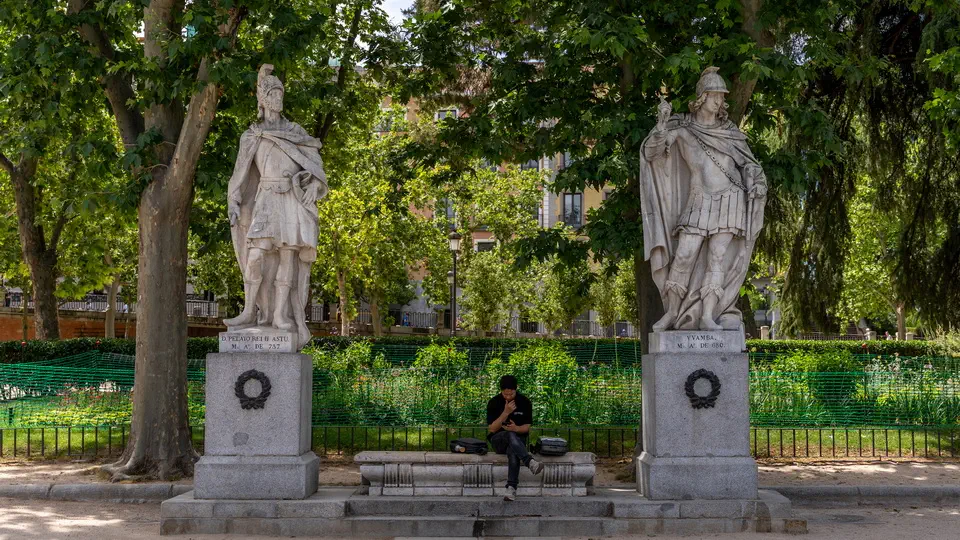
In reality, the decision may have resulted from concerns about the weight of the sculptures, the safety of the building or a change in its decorative design. The statues were not destroyed, however. Over time, they were installed in different parts of Madrid and other Spanish cities. Some of them can now be seen in Plaza de Oriente, Retiro Park and the Sabatini Gardens.
As you walk among these silent stone rulers, it is worth remembering the queen’s dream. Even if it never really happened, the story gives the statues a slightly sinister character.
Underground passages and hidden treasure
What kind of palace would it be without its legend of hidden treasure? Beneath the Royal Palace, there really are technical rooms, cellars and remains of earlier buildings. These have provided the basis for stories about an extensive network of tunnels leading to different parts of Madrid.
According to legend, secret passages once connected the palace with the Monastery of the Incarnation, other royal buildings and even areas on the opposite side of the River Manzanares. Monarchs could supposedly use them to escape, attend secret meetings or move around without attracting the attention of the city’s residents.
The most fantastical version of the story tells of treasure hidden underground before the fire that destroyed the Alcázar. It was said to contain coins, jewels, weapons, and objects belonging to former rulers. However, the treasure has never been found, and the existence of a vast network of secret tunnels has never been confirmed.
Underground passages and hidden treasure
During an ordinary visit, you can see only a small part of the enormous palace. The remaining rooms are used for state ceremonies, occupied by the administration, used as storage spaces or closed for conservation reasons. It is these locked doors that stir the imagination most strongly. What lies behind them? Forgotten portraits, old documents, royal treasures or perhaps corridors that do not appear on any of the plans available to visitors?
The truth is probably less sinister than the legends suggest. Even so, knowing that we are seeing only a fraction of this vast residence allows the Royal Palace of Madrid to retain its secrets. Even on a sunny day, you may get the impression that someone has just passed behind a closed door – and paused for a moment to listen to the footsteps of the tourists.
The Royal Palace of Madrid – facts, information and interesting details
- The history of the site occupied by the Royal Palace of Madrid began in the 9th century. Emir Muhammad I ordered a Muslim fortress to be built on the hill to guard the routes leading towards Toledo. A settlement developed around the stronghold and eventually grew into the city of Madrid.
- Before the present Royal Palace was built, the hill was occupied by the medieval Royal Alcázar of Madrid. The kings of Castile transformed the former Muslim fortress into a more comfortable residence. After Madrid became the capital, the building developed into the centre of the Spanish royal court.
- During the night of 24–25 December 1734, a huge fire broke out in the Alcázar. The flames continued to spread for several days, destroying a large part of the residence and many of the objects kept inside. The disaster ultimately led to the construction of the present palace.
- During the Alcázar fire, courtiers desperately tried to save the royal art collection. Valuable canvases were cut from their frames and thrown through the windows. Thanks to this extraordinary rescue operation, several masterpieces survived, including Diego Velázquez’s famous Las Meninas.
- One legend claims that the fire at the Alcázar was deliberately started by men acting on behalf of Philip V. The monarch, who came from the French Bourbon dynasty, supposedly wanted to replace the old residence with a palace resembling Versailles. However, historians have found no evidence to support this theory.
- The first design for the new palace, prepared by Filippo Juvarra, was so enormous that it would not fit on the hill previously occupied by the Alcázar. After the architect’s death, his pupil Giovanni Battista Sacchetti reduced the size of the building and adapted it to the available space.
- The foundation stone of the present Royal Palace was laid on 6 April 1738. An inscription expressing the hope that the new building would stand forever was placed beneath it. Construction and the furnishing of the ceremonial interiors continued over the following decades.
- The palace’s designers had not forgotten the catastrophic fire that destroyed the Alcázar. The new residence was therefore built mainly from stone and brick, with vaulted ceilings. The use of wood was largely restricted to doors and windows to reduce the risk of another devastating fire.
- Philip V decided to build the monumental palace, but he never lived there. Charles III was the first monarch to move into the completed residence. He officially took up residence on 1 December 1764.
- The Royal Palace of Madrid covers approximately 135,000 square metres. This makes it the largest royal palace in Western Europe in terms of floor area. Its monumental scale is difficult to appreciate fully when looking at it solely from Plaza de Oriente.
- There are around 3,418 rooms inside the Royal Palace. Visitors following the standard sightseeing route can see only a small part of this enormous complex. The remaining areas include storerooms, archives, offices, and conservation workshops.
- The Royal Palace of Madrid remains the official residence of the Spanish monarch, but Philip VI and his family do not live in its ceremonial flats. Their everyday home is the much quieter Zarzuela Palace, situated on the outskirts of Madrid.
- The last king to live in the Royal Palace was Alfonso XIII. He left both the residence and Spain in 1931 following the proclamation of the Second Spanish Republic. Interestingly, he departed without formally signing an act of abdication.
- The last head of state to live officially in the Royal Palace was not a king, but President Manuel Azaña. During the Second Spanish Republic, the building was renamed the National Palace. The new name was intended to emphasise the state’s break with its monarchical past.
- During the French occupation of Spain, the palace was home to Joseph Bonaparte, Napoleon’s brother and the king imposed upon the Spanish people. Madrid’s residents called him “Pepe Botella”. However, his supposed fondness for alcohol was most likely part of a hostile propaganda campaign.
- The Throne Room is one of the most important chambers in the Royal Palace. Much of the decoration created during the reign of Charles III has survived. Its ceiling is adorned with an impressive fresco by Giovanni Battista Tiepolo, depicting the power and glory of the Spanish monarchy.
- Spanish monarchs do not undergo the traditional coronation ceremony associated with several other European monarchies. A new ruler is proclaimed before parliament and swears an oath to uphold the constitution. The palace thrones therefore serve primarily a ceremonial and symbolic purpose.
- The Gasparini Room is one of the most lavishly decorated interiors in the entire residence. Its walls, ceiling, floor, fabrics, and furniture form an exceptionally harmonious Rococo composition. The room was designed by Mattia Gasparini, an Italian artist who worked for Charles III.
- The Grand Dining Room was created during the reign of Alfonso XII by combining three smaller chambers. Its extraordinarily long table can seat well over one hundred guests. The room is still used for official banquets held in honour of foreign dignitaries.
- The palace houses an exceptionally valuable collection of instruments made by Antonio Stradivari. Known as the Palatine Stradivarius collection, they are admired for their remarkable sound, history, and decoration. They are not merely museum exhibits, as they are still played during special concerts.
- Madrid’s Royal Armoury contains one of Europe’s finest historical collections of weapons and armour. Its displays include swords, helmets, shields and richly decorated suits of armour. The Renaissance pieces once belonging to Charles V and Philip II are particularly valuable.
- The palace complex contains a historic Royal Pharmacy, which once supplied medicines to the monarchs and their court. Its original cabinets, containers, recipes, and instruments have been preserved. The collection reveals how remedies were prepared for members of the Spanish royal family.
- The Royal Kitchen occupies a substantial part of one of the palace floors. Its preserved ovens, hearths, copper cookware, moulds, and utensils help visitors understand the enormous scale of preparations required for court banquets. Meals were prepared here for monarchs, courtiers and foreign guests.
- A ceremonial Changing of the Guard takes place in front of the Royal Palace, involving soldiers from the Royal Guard, a military band and horses. Held in Plaza de la Armería, the spectacle recreates elements of the military ceremony observed during the reigns of Alfonso XII and Alfonso XIII.
- The Royal Palace of Madrid is not merely a museum open to tourists. It continues to host state banquets, meetings with foreign leaders, military events and diplomatic ceremonies. For this reason, some of its rooms may occasionally be closed to visitors.