Jardines del Cabo Noval are easy to overlook. Most tourists arriving at Plaza de Oriente immediately turn their attention towards the monumental Royal Palace, the equestrian statue of Philip IV or the grand façade of Teatro Real. Yet on the northern side of the square, there is a small, shaded garden where you can take a welcome break from intensive sightseeing in central Madrid.
This is not a park worth crossing half the city specifically to visit. You will not find extensive paths, a lake or monumental pavilions resembling the attractions of El Retiro Park. Jardines del Cabo Noval have a wholly different character. They form a peaceful green enclave surrounded by the historic architecture of Plaza de Oriente. You can sit beneath mature trees, admire the Royal Palace, and learn the story of the young Spanish soldier after whom the garden was named.
What I particularly liked about this place was its location. Right in the heart of tourist Madrid, just a few steps from some of the city’s most important monuments, you can find a spot where everything seems to slow down. It is a welcome place to rest, especially on a hot summer’s day. The garden is worth visiting while exploring the Palacio district, even if you stop for only fifteen minutes. In this article, I will tell you about the garden itself, its history and the many attractions located nearby.
Where are Jardines del Cabo Noval?
Jardines del Cabo Noval occupy the northern section of Plaza de Oriente, beside Calle de San Quintín. They lie between the Royal Palace and Teatro Real, in one of the most frequently visited parts of Madrid’s historic centre. Plaza de Oriente actually consists of three connected areas:
- the central, geometrically designed garden surrounding the equestrian statue of Philip IV;
- Jardines de Lepanto on the southern side of the square;
- Jardines del Cabo Noval on its northern side.
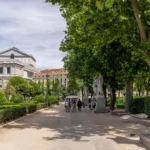
The two side gardens have a similar layout. Both are open, tree-lined areas intended mainly for walking, relaxation and recreation. According to information provided by Madrid City Council, Jardines del Cabo Noval are dominated by spreading plane trees, which provide plenty of shade. You can also see impressive Himalayan cedars, which certainly caught my attention, as well as lawns, carefully trimmed shrubs and a small children’s playground.
The nearest metro station is Ópera, served by lines 2 and 5, as well as the Ramal shuttle line running to Príncipe Pío station. It takes only a few minutes to walk from the metro exit to the garden.
Jardines del Cabo Noval – a brief history of the garden
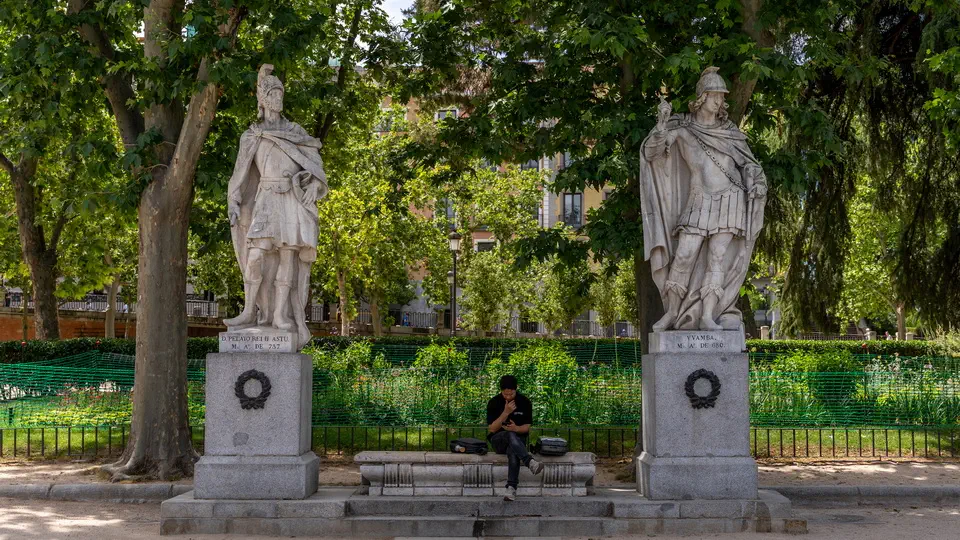
The history of this part of Madrid is inseparably connected with the creation of Plaza de Oriente. The area between the Royal Palace and Teatro Real did not always look as elegant and orderly as it does today. It was once densely built up, with narrow streets and houses dating from various periods in the city’s development.
The first plans to reorganise the area appeared during the reign of Joseph Bonaparte, who ruled Spain at the beginning of the 19th century. Some buildings in front of the Royal Palace were demolished at that time. However, the work did not immediately result in the square we see today. Its final development took place gradually over the following decades.
The central section of Plaza de Oriente was given a formal, geometric layout, with the famous equestrian statue of Philip IV as its main feature. More informal, shaded spaces were created on either side. The northern garden was named Jardines del Cabo Noval, while the southern one became Jardines de Lepanto.
During the 1990s, the area around Plaza de Oriente underwent a major redevelopment. An underground car park was constructed beneath the square, while some road traffic was redirected through a tunnel. The project was accompanied by archaeological excavations because remains of Madrid’s earlier buildings lay beneath the ground. The historic green spaces of Cabo Noval and Lepanto were preserved.
Reducing the amount of road traffic made the surroundings of the palace considerably more pleasant for pedestrians. Today, the garden forms part of a larger walking area connecting Plaza de Oriente, the Royal Palace, Almudena Cathedral and Jardines de Sabatini.
Who was Cabo Noval?
The garden’s name may seem rather mysterious, particularly to visitors from outside Spain. “Cabo” is not a first name but a Spanish military rank equivalent to corporal. The garden commemorates Luis Noval Ferrao, a young soldier who died in 1909 during Spain’s military campaign in northern Morocco.
Luis Noval was born in Oviedo, Asturias, in 1887. Before joining the army, he worked as a carpenter. He served in the 3rd Príncipe Infantry Regiment, which was sent to Africa during the fighting around Melilla.
On the night of 27–28 September 1909, Moroccan forces attacked Spanish positions near Beni Chiker. According to the account that later became widely known, Noval was captured and forced to approach the Spanish fortifications alongside his captors. He reportedly shouted to his comrades to open fire because the approaching soldiers were enemies. He was killed moments later during the fighting.
His actions were presented as an example of sacrifice and military heroism. Noval was posthumously awarded the Laureate Cross of Saint Ferdinand, one of Spain’s highest military decorations. At a time when the country needed heroes capable of raising public and military morale, the story of the young corporal quickly became widely known.
Streets, squares, and schools across Spain were named after him. The most prominent memorial, however, was the monument erected near Madrid’s Royal Palace.
The monument to Corporal Luis Noval
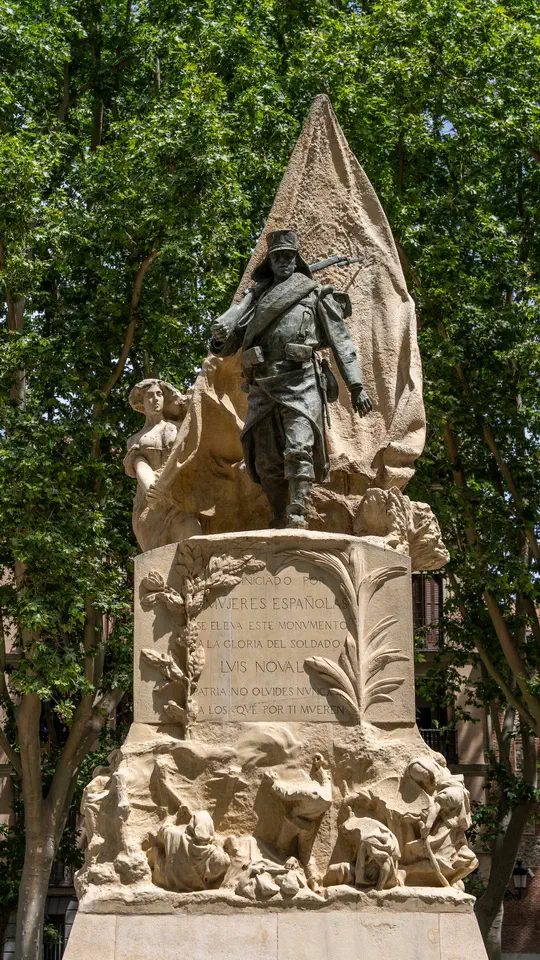
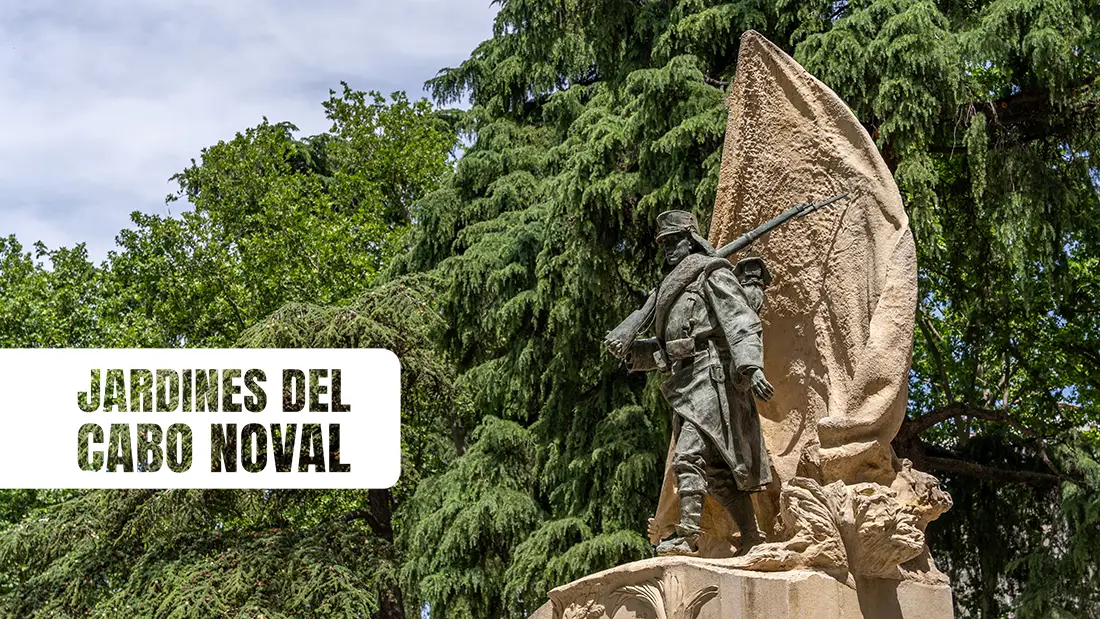
The garden’s most important monument is the memorial to Luis Noval, unveiled in 1912. It was created by Mariano Benlliure y Gil, one of Spain’s most distinguished sculptors of the late 19th and early 20th centuries. Madrid’s official heritage register confirms both Benlliure’s authorship and the date on which the monument was completed.
The memorial was funded through a public collection supported by King Alfonso XIII, who personally attended its unveiling. Its location was no coincidence. The monument was placed in a prestigious part of the capital, in front of the royal residence and close to buildings closely associated with the Spanish state.
The central figure is a young soldier portrayed in uniform. Rather than depicting a pompous commander or victorious general, the sculpture commemorates an ordinary corporal who was elevated into a symbol of courage and sacrifice. The composition also includes allegorical elements emphasising the significance of the soldier’s death.
The entire monument was crafted with the meticulous attention to detail characteristic of Mariano Benlliure’s work. The same artist created numerous other monuments in Madrid, including the statue of Goya standing outside the Prado Museum.
Restoration of the monument began in 2021. Conservators removed dirt caused by air pollution and birds before applying protective treatments to its surface. According to reports in the Madrid media, the work cost approximately €47,000.
The Julián Gayarre memorial
Jardines del Cabo Noval also contain a more modest memorial dedicated to Julián Gayarre, one of the finest Spanish tenors of the 19th century. The singer was born in the Roncal Valley in Navarre and performed on some of Europe’s leading opera stages.
Gayarre died in 1890 at his home on Plaza de Oriente. In the mid-20th century, the Tertulia Navarra association commissioned a commemorative plaque intended for a building connected with the final period of his life. However, the owner of the property refused permission for it to be installed.
Madrid City Council therefore proposed placing the plaque on a monolith in the nearby Cabo Noval garden. As a result, this small park became a place commemorating not only a young soldier, but also an artist closely associated with Teatro Real and Spanish opera.
What do Jardines del Cabo Noval look like?
Jardines del Cabo Noval do not resemble a large city park. They are more of an intimate garden, visually and functionally connected to Plaza de Oriente. Their greatest asset is the tall trees, whose broad canopies provide welcome shade. This is particularly valuable in summer, when temperatures in Madrid exceed 30°C and the stone squares and building façades continue to release accumulated heat well into the afternoon. At times like these, a bench beneath a plane tree may seem far more appealing than yet another museum gallery.
The garden contains walking paths, benches placed in the shade, lawns and neatly trimmed shrubs, spreading plane trees, Himalayan cedars, the monument to Luis Noval, the memorial to the singer Julián Gayarre and a small play area for children. It is best viewed not as a major attraction in its own right, but as part of the overall design of Plaza de Oriente. The trees provide a green frame for the monumental façade of the Royal Palace. You can see the royal residence on one side and Teatro Real on the other. It is difficult to find another place in Madrid that feels so peaceful while being surrounded by monuments of such importance.
Exploring the garden – my impressions
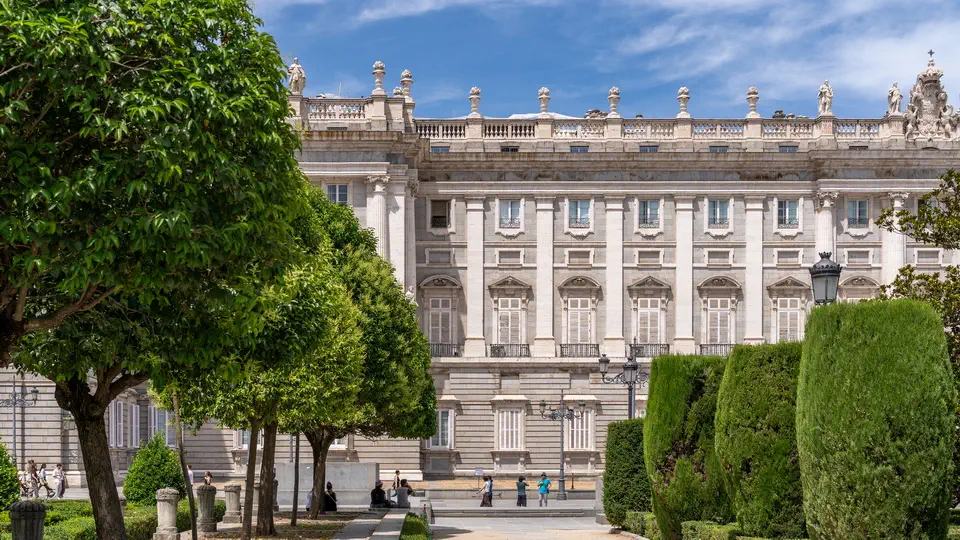
It is best to enter Jardines del Cabo Noval without expecting too much. Anyone hoping to discover a second El Retiro Park may be disappointed. The garden is small, and walking through it takes only a few minutes. You begin to appreciate its charm only when you stop rushing. Sit down on a bench and take a proper look at your surroundings. The Royal Palace dominates one side, Teatro Real stands on the other, while groups of tourists, street performers and residents walking their dogs pass between them.
This place reveals perfectly two different sides of Madrid. The first is grand, royal, and monumental. The second is every day and surprisingly peaceful. You only need to step a short-distance away from the main sightseeing route to find shade and a moment’s rest instead of yet another queue for an attraction. I particularly recommend Jardines del Cabo Noval to anyone exploring Madrid on foot. After several hours of walking around the city centre, this small garden may be precisely what you need before continuing your tour.
Jardines del Cabo Noval and El Retiro Park
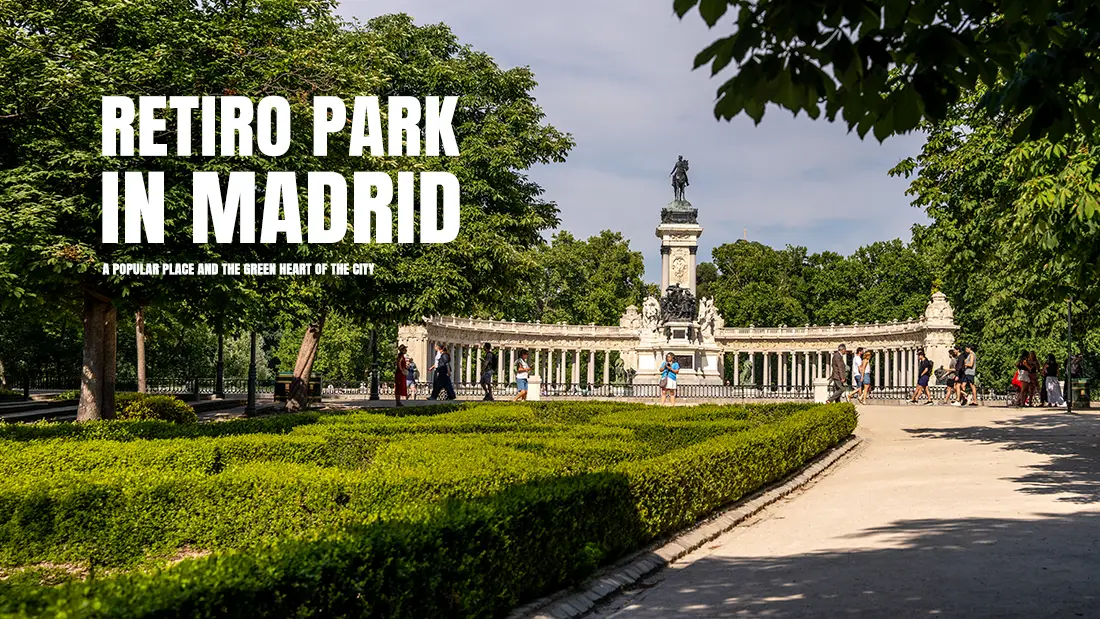
Both are green spaces located in central Madrid, but that is where the similarities largely end. El Retiro is enormous and ranks among the city’s most important attractions in its own right. You can easily spend many hours there, walking around the lake and visiting the Crystal Palace, fountains, gardens and exhibitions.
Jardines del Cabo Noval are considerably smaller. You do not come here for an entire day but for a short break while exploring Madrid’s royal quarter. El Retiro impresses with the variety of its attractions, while Cabo Noval appeals through its location, the shade of its mature trees and its views of the palace.
If you enjoy the quieter side of Madrid’s parks, read our article about El Retiro Park in Madrid as well. It covers the park’s history, its most significant attractions and legends, together with practical advice to help you plan your walk.
What is worth seeing nearby?
The greatest advantage of Jardines del Cabo Noval is their location. Several of Madrid’s most important attractions are only a short walk away.
Plaza de Oriente
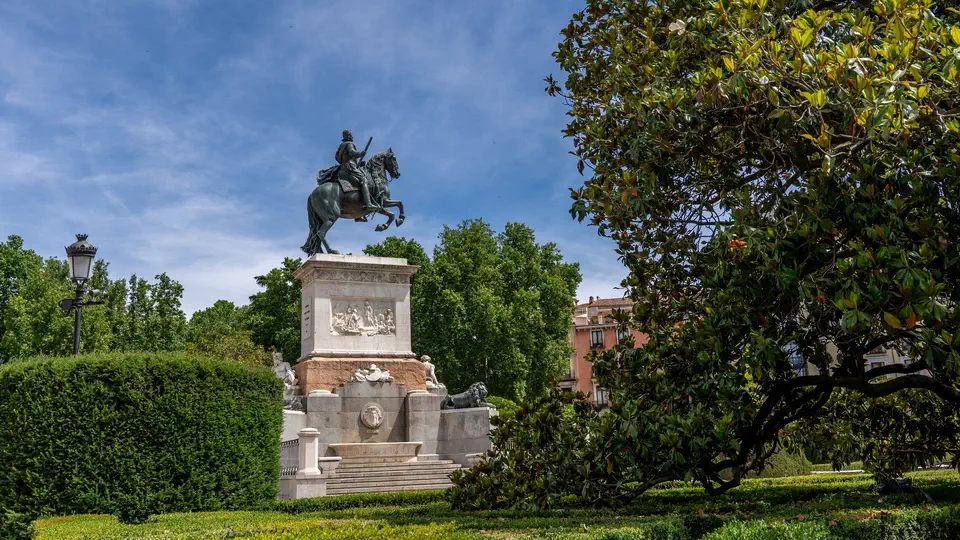
The garden forms part of Plaza de Oriente, so it is worth walking around the entire square. At its centre stands one of Europe’s most remarkable equestrian monuments, depicting Philip IV on a horse rearing on its hind legs.
Keeping such a structure balanced presented an enormous challenge in the 17th century. When creating the sculpture, Pietro Tacca used calculations attributed to Galileo. The rear of the bronze horse is heavier, while its front is hollow. This allows the monument to remain stable despite being supported only by the horse’s two hind legs and tail.
Royal Palace of Madrid
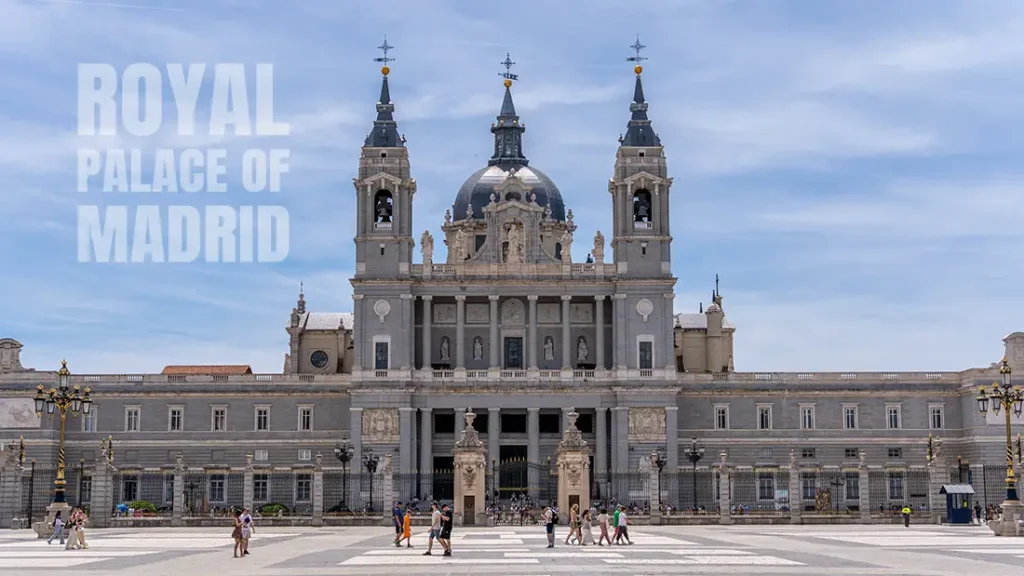
The Royal Palace stands on the western side of the square. It was built on the site of the former Alcázar, which was destroyed by fire in 1734. The palace covers approximately 135,000 square metres and contains 3,418 rooms, although visitors can explore only a small proportion of them.
Although it remains the official residence of the Spanish monarchs, the Royal Family does not live there daily. The palace is used primarily for state ceremonies and official events.
Teatro Real
On the opposite side of Plaza de Oriente stands Teatro Real, one of Spain’s most important opera houses. Its connection with the garden is reinforced by the memorial to Julián Gayarre. Even if you are not planning to attend a performance, it is worth seeing the building’s façade and checking whether guided tours of the interior are available during your stay.
Almudena Cathedral
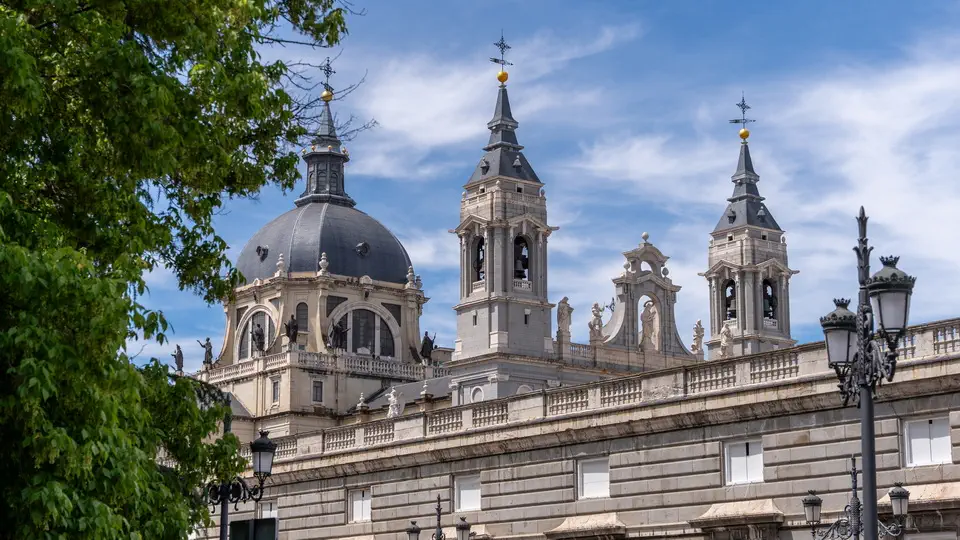
Almudena Cathedral, dedicated to the patron saint of Madrid, is only a few minutes’ walk from the garden. Its construction continued intermittently for more than a century, which is why the building combines several architectural styles. Its modern, colourful interior is particularly interesting and differs considerably from the decoration typically found in old Spanish cathedrals.
Jardines de Sabatini
The geometrically arranged Jardines de Sabatini extend along the northern side of the Royal Palace. This is another place worth visiting during your walk. The gardens offer excellent views of the palace’s northern façade, especially in the late afternoon and shortly before sunset.
Museum of the History of Madrid
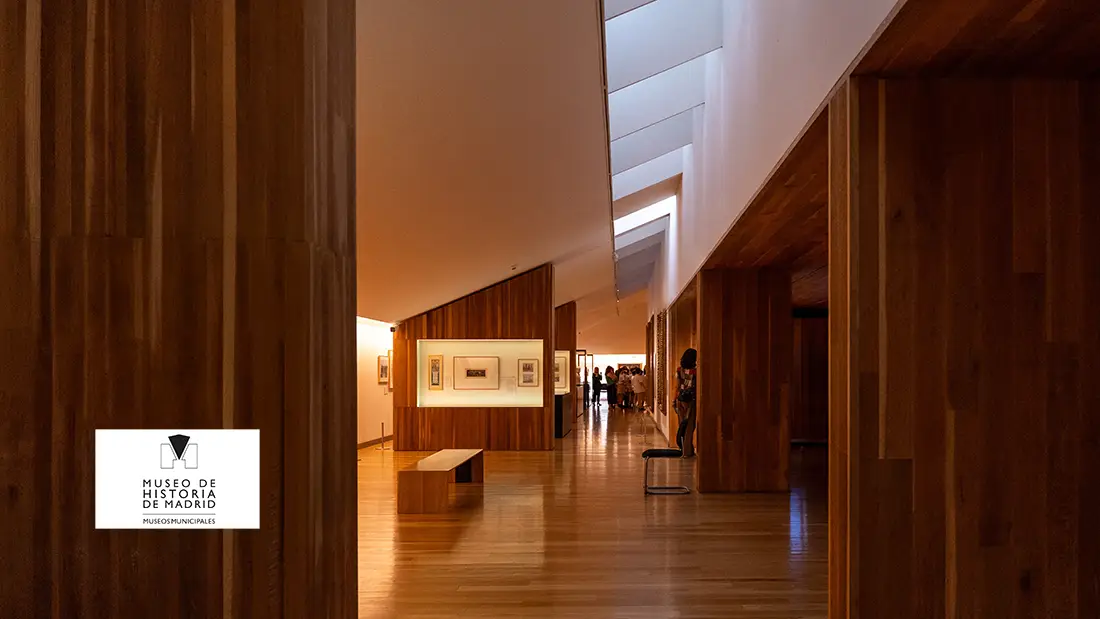
After exploring Madrid’s royal quarter, you can head towards Calle de Fuencarral, where you will find the Museum of the History of Madrid. It helps visitors understand how the Spanish capital developed from a relatively small town into a major European metropolis.
On Get Ready For Adventure, you will find a separate guide to the Museum of the History of Madrid. It includes the museum’s history, its most important exhibits, descriptions of the galleries and practical information for visitors.
Mercado de San Miguel in Madrid
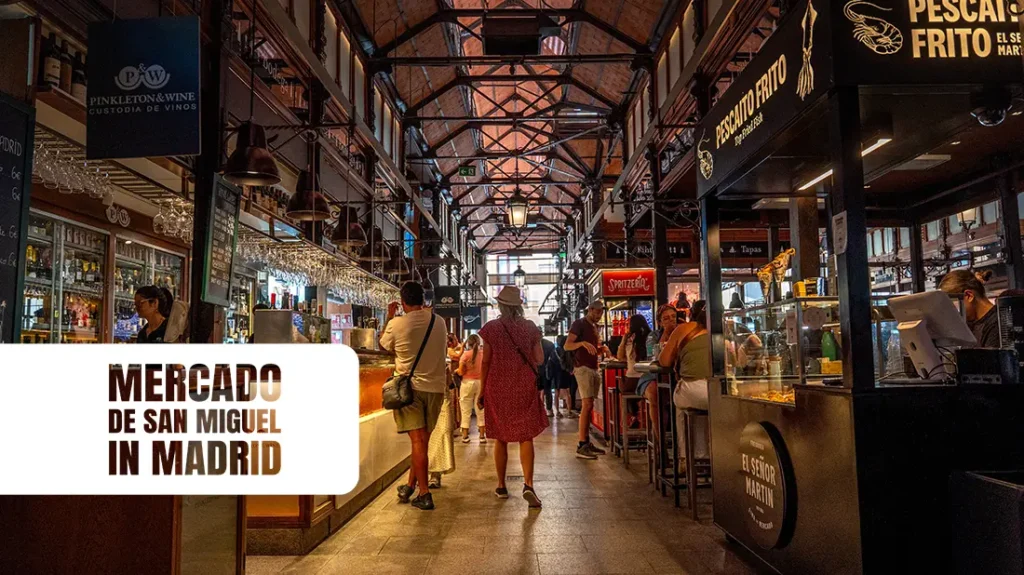
Mercado de San Miguel in Madrid is one of those places in Madrid that is difficult to miss. Even if you are not planning a proper meal, you will probably still step inside out of sheer curiosity. That is precisely what I did. I was only going to walk past, have a brief look at the historic market hall and continue towards the Royal Palace. As you can likely guess, I ended up having wine, tapas, and seafood—and feeling slightly surprised when I added up how much I had spent.
A suggested short route through royal Madrid
Jardines del Cabo Noval are best included in a walk lasting several hours, which is precisely how we visited them. Their location is almost perfect. You can rest beneath the beautiful trees while waiting to enter the Royal Palace, or catch your breath after exploring it. Below is the route we followed and can confidently recommend:
- Begin at Ópera metro station.
- Admire the façade of Teatro Real.
- Walk through Jardines del Cabo Noval.
- Stop beside the monument to Luis Noval.
- Explore the central section of Plaza de Oriente.
- Visit the Royal Palace.
- Step inside Almudena Cathedral.
- Continue to the Mirador de la Cornisa viewpoint.
- Finish your walk in Jardines de Sabatini.
Allow approximately two hours for this route if you do not plan to explore the palace interior. If you purchase a ticket for the Royal Palace, the entire trip may take four hours or longer.
Practical information
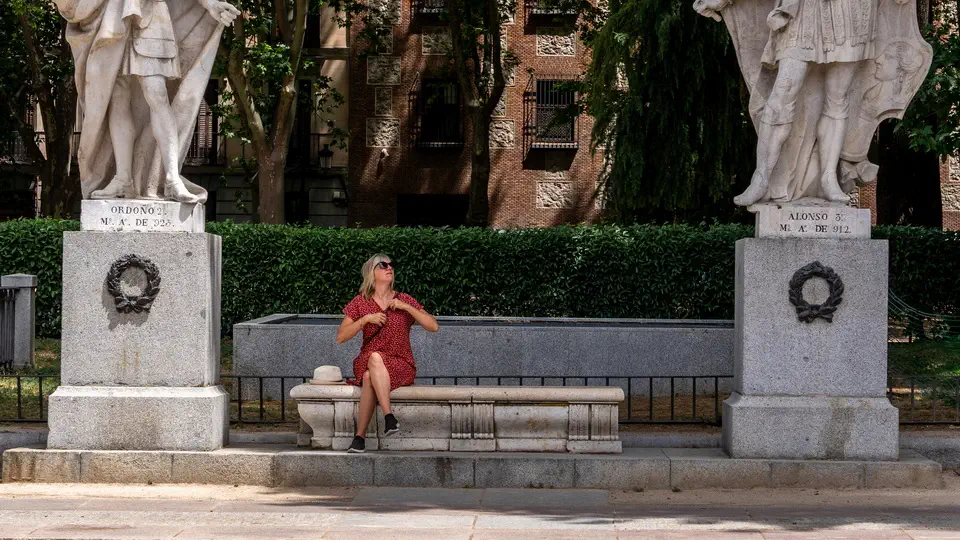
- Location: The northern section of Plaza de Oriente, beside Calle de San Quintín in Madrid.
- Nearest metro station: Ópera, served by lines 2 and 5, as well as the Ramal shuttle line.
- Recommended visiting time: Approximately 15–30 minutes. Allow longer if you would like to rest or take photographs of Plaza de Oriente.
- Admission: Free.
- Best time to visit: Morning or late afternoon. During summer, it is worth visiting when the heat is less intense.
- For families: The garden contains a recreational area for children, while its numerous benches and shaded spaces make it easy for families to rest.
- Accessibility: The main paths are relatively flat, and the garden forms part of the square’s publicly accessible space.
- Photography: Some of the best photographs can be taken by using the trees as a natural frame for the façade of the Royal Palace. In the evening, it is worth moving on to Jardines de Sabatini.
Outdoor events, including occasional concerts, are sometimes held in the surrounding area. However, they do not follow a regular schedule, so it is best to check Madrid’s official events calendar before your visit.
Interesting facts about Jardines del Cabo Noval
- The garden is not named after a headland or cape. In this context, the Spanish word cabo refers to the military rank of corporal.
- Luis Noval worked as a carpenter before joining the army and being sent to North Africa.
- The monument to the young corporal was funded through a public collection supported by King Alfonso XIII.
- The memorial was unveiled in 1912, only three years after the soldier’s death.
- It was created by Mariano Benlliure, the artist responsible for many well-known sculptures standing in Madrid’s streets and squares.
- The garden is the northern counterpart of Jardines de Lepanto, located on the opposite side of Plaza de Oriente.
- Its most distinctive trees are the spreading plane trees, although several impressive Himalayan cedars also grow here.
- The garden commemorates not only a soldier but also the celebrated Spanish tenor Julián Gayarre.
- The monument to Noval underwent conservation work in 2021. This included removing dirt left by birds and pollution from the city.
- Archaeological investigations were conducted in the area during the redevelopment of Plaza de Oriente in the 1990s. They focused on remains connected with Madrid’s earlier buildings.
- Jardines del Cabo Noval are occasionally used as a venue for concerts and small outdoor events.
- From the garden, you can reach the Royal Palace, Teatro Real, Almudena Cathedral and Jardines de Sabatini within just a few minutes.
Are Jardines del Cabo Noval worth visiting?
Yes, although it is best to treat the garden as part of a visit to Plaza de Oriente rather than the main destination of a separate trip. It is a small attraction whose appeal comes primarily from its location, history and peaceful atmosphere.
Jardines del Cabo Noval offer somewhere to rest in the shade, see an interesting monument and admire the Royal Palace from a slightly different perspective. In a city filled with monumental squares, busy streets and crowded museums, these small green spaces are surprisingly valuable.
If you are planning a thorough tour of Madrid, combine your visit to the garden with a walk around Plaza de Oriente, the Royal Palace, Almudena Cathedral and Jardines de Sabatini. For a longer break surrounded by greenery, choose El Retiro Park instead. This popular green heart of the Spanish capital is covered in a separate guide on Get Ready For Adventure.