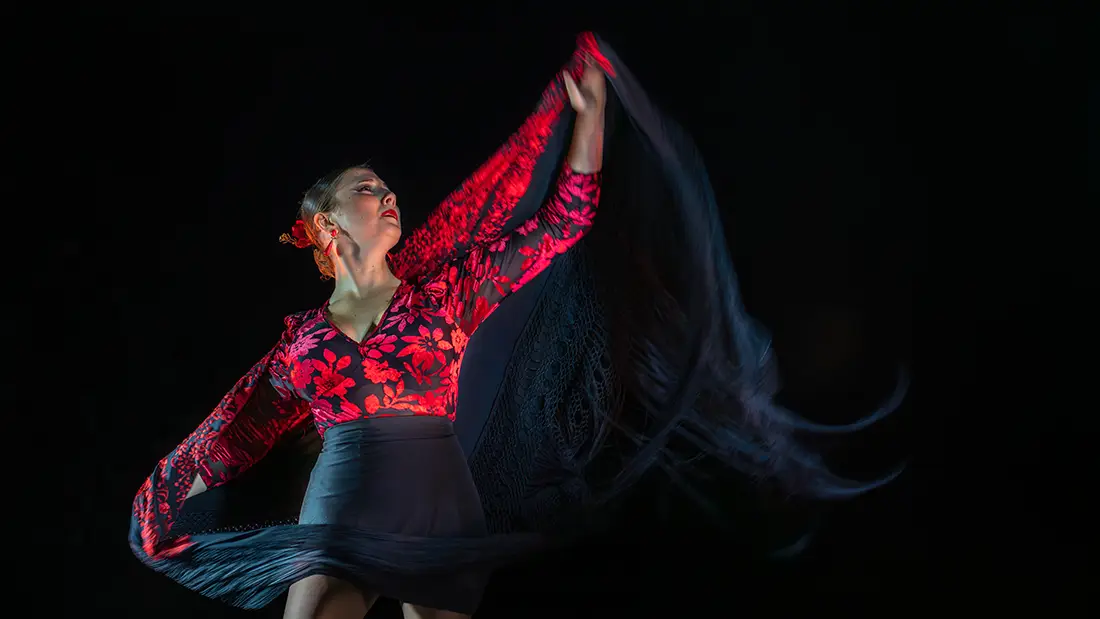
Flamenco is one of the most recognisable symbols of Spain. Just a few notes from a guitar, the distinctive rhythm beaten out by clapping hands and the powerful, sometimes almost shouted voice of a singer are enough to make this music difficult to mistake for anything else. The problem is that outside Spain, flamenco is very commonly reduced to an image of a woman in a red dress, a fan, castanets and the rapid tapping of heels. In reality, it is a far more complex world.
The more time I spend in Spain, the more convinced I become that flamenco is not simply a Spanish dance. It is music, singing, rhythm, poetry, a way of expressing emotions and an important part of the identity of people living in the south of the country. What is more, dancing does not even have to be the most important element of a performance. Occasionally, a singer, a guitar, and a few people keeping the rhythm with their hands can create something far more moving than the most spectacular choreography.
UNESCO describes flamenco as an art form combining three fundamental elements: cante, or singing, baile, meaning dance, and toque, instrumental performance, above all on the guitar. Andalusia is generally regarded as its birthplace, although flamenco traditions are also closely associated with Murcia and Extremadura. In 2010, flamenco was inscribed on UNESCO’s Representative List of the Intangible Cultural Heritage of Humanity.
The history of flamenco where did it come from and how did it develop?
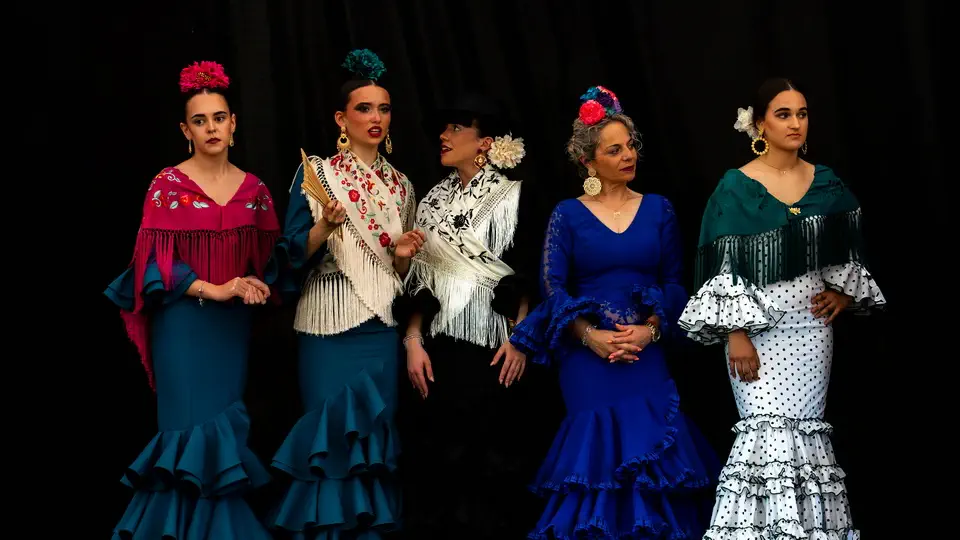
The history of flamenco does not begin in one specific place, nor can we point to one person who invented it. It is better understood as the result of a long process during which different musical and cultural traditions of southern Spain came into contact with one another. Over the centuries, Andalusia was inhabited or influenced by Phoenicians, Romans, Visigoths, Arabs, Berbers, Jews, and Christians. From the 15th century onwards, the Roma, known in Spain as Gitanos, also became an important part of local society. It was the Roma community that played one of the most significant roles in the creation and later development of flamenco, something UNESCO also clearly acknowledges.
That does not mean, however, that flamenco can be attributed exclusively to a single community. It emerged through a mixture of traditions and continued to change from one generation to the next. Official Andalusian sources generally speak of around two hundred years of flamenco history, while UNESCO notes that the art form began to emerge in something resembling its recognisable modern form at the beginning of the 19th century.
For this reason, I would be cautious about frequently repeated stories claiming that flamenco descended directly from Arab, Jewish or Indian traditions brought to Spain by the ancestors of the Roma. Musical similarities can certainly be found in all of these theories, but its exact genealogy can no longer be reconstructed with any certainty. If you are interested in just how culturally diverse Spain really is, have a look at my collection of interesting facts about Spain and Spaniards. Flamenco is an excellent example of the way successive cultures have left their mark on the Iberian Peninsula.
The earliest flamenco looked very different from the shows organised for tourists today. The most important element was cante, or singing. It was often performed without elaborate accompaniment and sometimes without instruments at all. The rhythm could be marked by clapping, snapping the fingers or beating on a table. Some of the oldest flamenco styles developed from these simple forms, including tonás and martinetes. The latter is traditionally associated with blacksmiths and the rhythm of work in a forge.
During the first half of the 19th century, important centres of flamenco developed in Triana in Seville, Jerez de la Frontera, Cádiz, and the towns surrounding the Bay of Cádiz. It was here that different singing styles took shape, with traditions passed down mainly by word of mouth within families and local communities.
From private homes to the stage
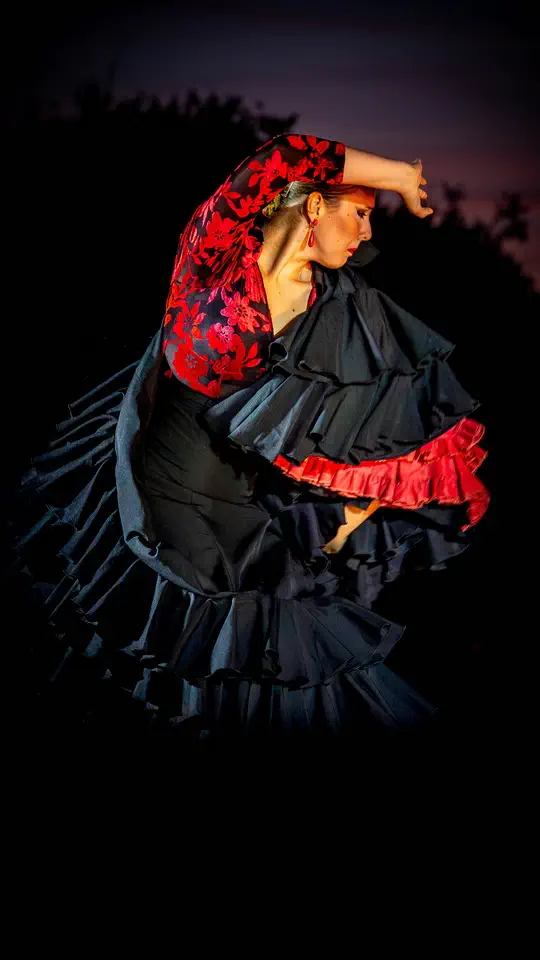
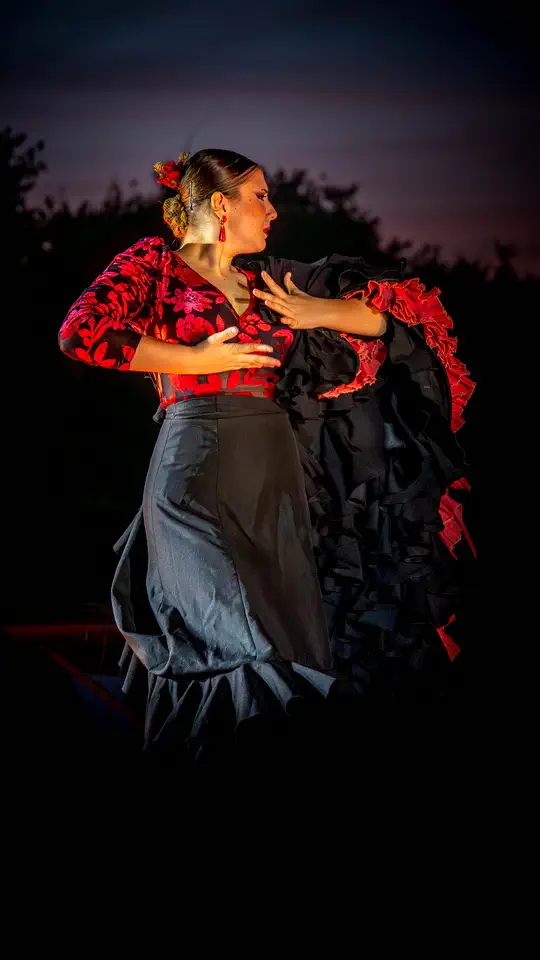
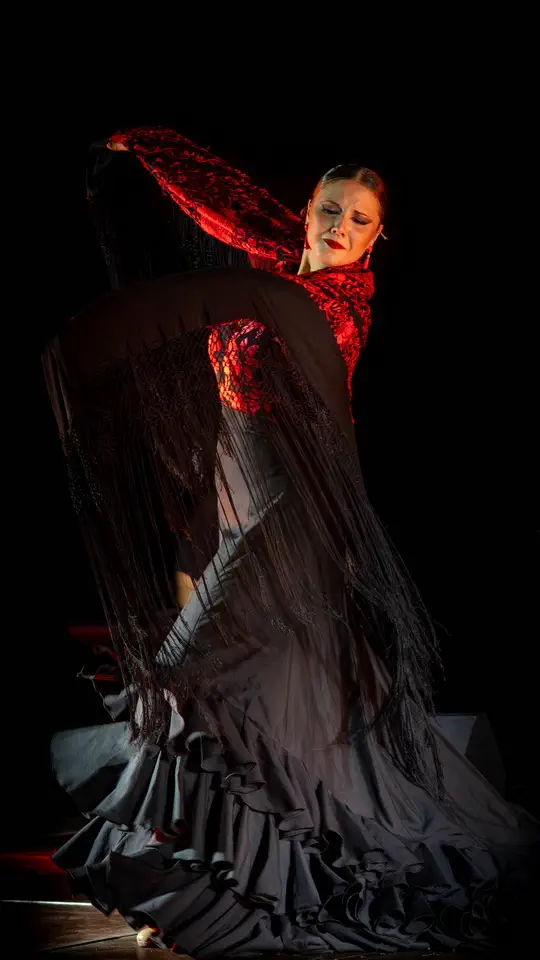
A major turning point came in the 19th century with the appearance of cafés cantantes. These were establishments where people could eat, drink and watch musical performances. Flamenco stopped being an art performed mainly during private gatherings and gradually became a professional spectacle. This changed virtually everything.
Professional singers, guitarists, and dancers appeared. Individual styles began to be organised and classified, performers competed with one another and audiences expected increasingly impressive shows. The guitar, which had previously served mainly to support the singer, gradually became much more important.
At the beginning of the 20th century, flamenco moved into theatres and onto large stages. During the 1920s, the period known as Ópera Flamenca began. The name can be misleading because this was not an attempt to combine flamenco with classical opera. The term had, among other things, commercial and tax-related advantages. Large-scale productions could attract thousands of spectators, while performers increasingly chose more melodic fandangos and other accessible styles rather than the raw soleá or seguiriya.
Purists did not always approve, but these performances helped flamenco reach a much wider audience. Further adjustments followed. Flamenco appeared in films, major theatres and on international stages. Carmen Amaya became one of the most famous dancers of the 20th century, while in later decades Paco de Lucía and Camarón de la Isla helped open flamenco to jazz, rock and world music. Modern flamenco can therefore sound deeply traditional or surprisingly contemporary.
Cante, baile and toque – the three foundations of flamenco
To understand flamenco, it is useful to remember three words describing the main elements of this art form.
- Cante – flamenco singing – Cante is, for me, the most difficult and at the same time the most fascinating part of flamenco. It is not about having a beautiful voice in the classical sense. A good cantaor may sing with a rough, hoarse, breaking voice that makes every phrase sound as though it requires enormous effort. That is precisely the point: emotion matters more than polish. The lyrics speak about love, death, loneliness, poverty, persecution, jealousy, family, and ordinary everyday life. UNESCO points out that flamenco can express sadness, fear, tragedy, joy, and elation.
- Baile – dance – Baile is the most visually spectacular part of flamenco, but the dancer does not move independently of the musicians. Quite the opposite: there is a constant conversation taking place between everyone on stage. Zapateado, the rhythmic footwork, plays a major role, alongside movements of the hands, arms and the entire body. This is why a good flamenco performance makes a far stronger impression when watched from only a few metres away than on a phone screen. You can hear every heel striking the wooden floor, the dancer’s breathing, the guitar and the hands keeping the rhythm.
- Toque – flamenco guitar – The third foundation is toque, the art of guitar playing. A flamenco guitarist is far more than an accompanist. They have to watch the singer and dancer, respond to their improvisation and maintain the rhythm. Over time, flamenco guitar also developed into a fully independent solo tradition. Its role has long since extended far beyond simply accompanying the singer.
Palmas – rhythm hidden in the hands
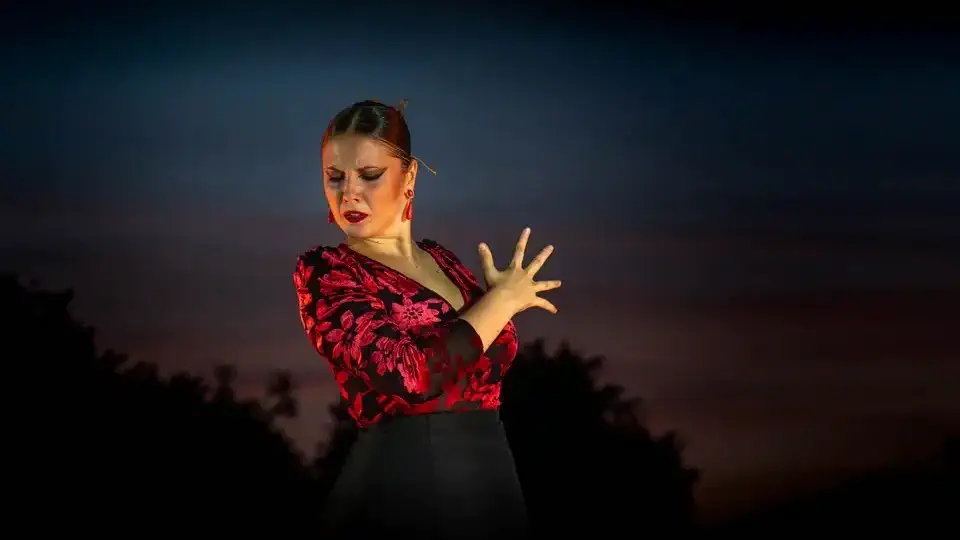
When you watch a good flamenco performance, pay attention to the people sitting to one side of the stage and clapping their hands. These are not ordinary applause. Palmas form part of the music and help maintain the complex rhythmic structure known as compás. Performers have to know exactly which beats to emphasise and where to leave silence. The compás is one of the fundamental elements that allows different flamenco styles to be distinguished from one another.
What are palos?
Flamenco is not a single musical style. It is divided into dozens of different forms known as palos. Each can have its rhythm, melody, mood, origins and characteristic method of performance. Andalusian sources list styles including soleá, seguiriya, bulerías, tangos, alegrías, tientos, tarantos and martinetes. It is worth becoming familiar with at least some of the most important ones.
- Soleá is one of the foundations of traditional flamenco and is sometimes described as its “mother”. It has a serious, reflective character. It is not as immediately spectacular as a fast bulería, but if you want to understand the deeper side of flamenco, soleá is an excellent place to begin.
- Seguiriya is among the most dramatic forms. Its lyrics often deal with death, despair, suffering, and loss. This is flamenco far removed from the postcard image of a permanently dancing, cheerful Spain.
- Bulería – At the opposite end of the scale is bulería. It is fast, energetic, and exceptionally rhythmic. It frequently appears during the more spontaneous and joyful parts of flamenco gatherings. If the atmosphere suddenly becomes more relaxed, performers begin playfully challenging one another and the audience joins in with rhythmic clapping, there is a good chance you are listening to bulerías.
- Alegrías – The name already tells you quite a lot, as alegría means joy in Spanish. This style is associated above all with Cádiz. It belongs to the cantiñas family and has a noticeably lighter character than soleá or seguiriya.
- Tangos flamencos – These should not be confused with Argentine tango. Flamenco tangos are among the oldest and most popular flamenco styles. They have a clear rhythm and work particularly well with dance.
- Tientos – Tientos belong to the same rhythmic family as tangos, although they are slower, more solemn and more serious.
- Fandango – Fandango exists in many regional variations and eventually became one of the most important sources from which other flamenco styles developed.
- Martinete – This is one of the rawest flamenco forms. Traditionally, it is performed without a guitar, while its name comes from the hammer used in a forge. Listening to styles such as martinete makes it easier to understand just how far early flamenco was removed from the colourful spectacle often prepared for groups of tourists.
- Saeta – Saeta is particularly associated with Semana Santa, or Holy Week. It can be heard during religious processions, when a singer performs an intense devotional song from a balcony or directly from the street.
Other questions about flamenco
- Are sevillanas flamenco? – This is an interesting question. Sevillanas are closely associated with flamenco and are often performed in similar surroundings, but they have their own folk origins. They are particularly popular during Andalusian fairs and pilgrimages. During Seville’s Feria de Abril, thousands of people can be seen dancing sevillanas. I would therefore regard them as a close relative of flamenco rather than one of its most traditional forms.
- What is cante jondo? – When people mention flamenco, the expression cante jondo, literally meaning “deep song”, frequently appears. It does not simply refer to all flamenco singing. Cante jondo is associated mainly with the most serious and emotionally intense forms, including soleá and seguiriya. Their purpose is not spectacle but the most direct possible expression of emotion. This brings us to a word without which it is difficult to discuss flamenco properly.
- Duende – something you cannot learn from a textbook – Spaniards use the word duende to describe a particular moment when a performer stops merely singing, dancing or playing correctly and begins to do something capable of genuinely moving the people watching. Duende is difficult to define because it is neither a technique nor a style. Someone may know every step perfectly and still have no duende, while another performer may sing only a few apparently simple lines and suddenly leave an entire room completely silent. These moments are one of the reasons flamenco is best experienced live.
Flamenco as part of Andalusian culture
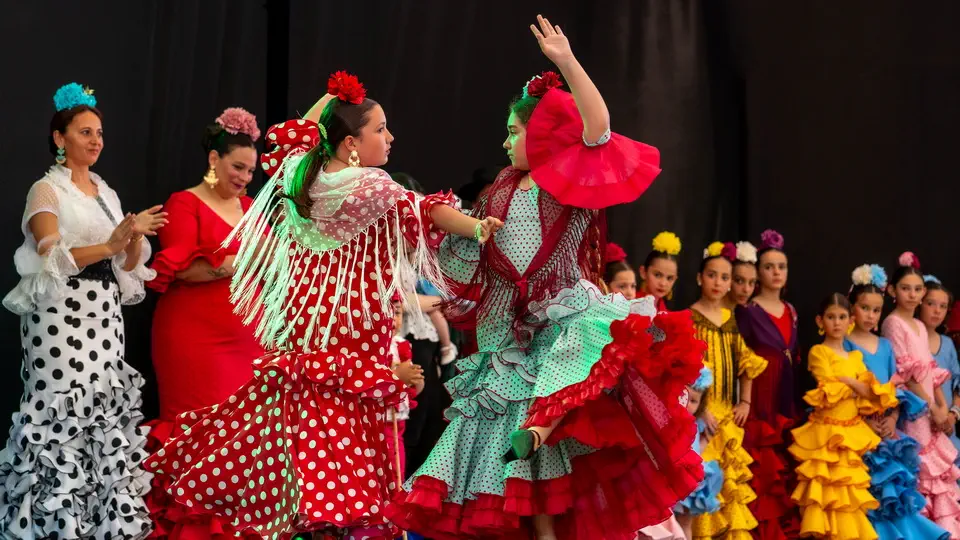
In Andalusia, flamenco is not simply a stage performance. It accompanies family celebrations, local festivals, pilgrimages and social gatherings. It also survives through peñas flamencas, clubs bringing together performers and enthusiasts of the art.
Families, local communities, artistic dynasties and peñas have passed flamenco traditions from one generation to the next. UNESCO regards this transmission of knowledge as one of the key reasons flamenco has survived. Although the art remains most strongly associated with Andalusia, it crossed the region’s borders a long time ago.
Flamenco in Madrid
Madrid is a good example. Although the Spanish capital is not the birthplace of flamenco, during the 19th and 20th centuries it became one of the most important centres for its professional development. Artists arrived from Andalusia, theatres and specialist venues opened, and flamenco reached a much broader audience.
Today, you can easily find tablaos offering evening performances while exploring Madrid. If you are planning a brief visit to the capital, flamenco can also be included in my three-day Madrid itinerary. After an entire day spent walking around museums and historic monuments, an evening performance reveals a wholly different side of Spanish culture.
Tablao flamenco – places where you can hear and watch flamenco
A tablao is a venue specialising in flamenco performances. In the most touristy cities, their quality varies enormously. Some resemble almost industrial-scale productions designed for coach tours, while others are small stages where excellent performers appear only a few metres from the audience. Before buying a ticket, I would pay particular attention to the size of the venue and the programme. As a general rule, the smaller the room and the closer you can sit to the performers, the better the experience tends to be.
I would not attach too much importance to the dinner packages often sold alongside the performance either. If the music is your priority, it is frequently better to eat beforehand and concentrate entirely on the stage once you arrive at the tablao.
A Spanish evening can, of course, begin in a very different way. A little tapas followed by flamenco make an excellent combination and reveal something of the social side of Spanish culture. I have written much more about regional variations and what is worth ordering in my guide to Spanish tapas and what to try in each region. If you are in Madrid, the historic Mercado de San Miguel is also an obvious place to discover just how varied Spanish food can be, although it is considerably more touristy and expensive than an ordinary neighbourhood bar.
Why is flamenco so important to Spanish culture?
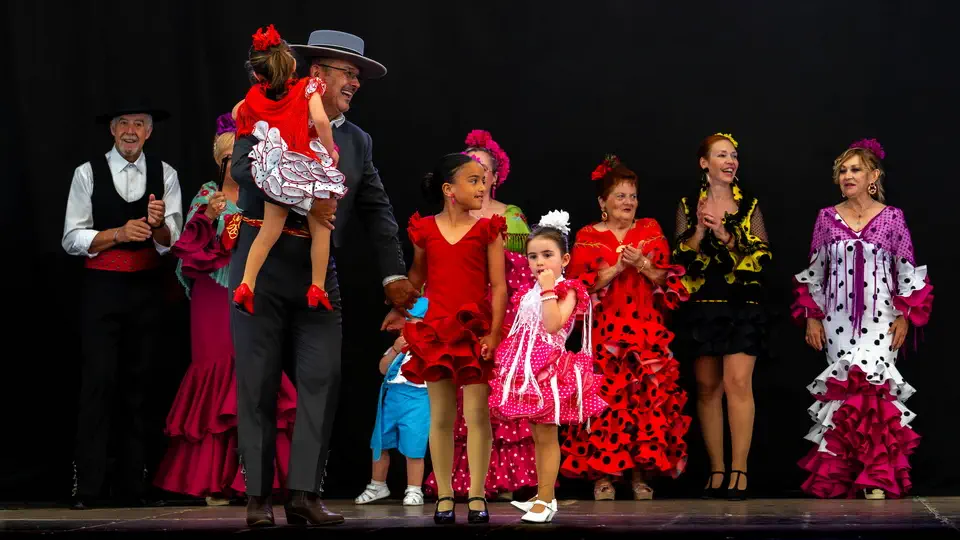
Today, flamenco is one of the most recognisable products of Spanish culture, but its importance reaches much further than its role as a tourist symbol. For many people in Andalusia, particularly within numerous Gitano families, it forms part of their history and identity. UNESCO explicitly describes flamenco as an important marker of identity for many communities.
It also tells the stories of people who for long periods lived on the margins of society. Poverty, hard work, imprisonment, death, unhappy love and exclusion repeatedly appear in traditional songs. At the same time, flamenco can be extraordinarily joyful, and it is precisely this contradiction that I find so fascinating. It can feel almost unbearably sombre one moment and transform into an exuberant fiesta shortly afterwards.
On 16 November 2010, flamenco was inscribed on UNESCO’s Representative List of the Intangible Cultural Heritage of Humanity. This obviously does not mean that flamenco should now be locked away in a museum and protected from all change. Quite the opposite. One of its greatest strengths has always been its ability to evolve.
Contemporary musicians combine flamenco with jazz, electronic music, Latin music, pop and rock. Some people welcome these experiments, while others argue that real flamenco should remain faithful to its traditional rules.
Similar arguments, however, were already taking place a century ago. Flamenco has been changing almost from the beginning of its existence. If there is only one thing you remember after reading this article, let it be this: flamenco is not the name of a Spanish dance. Dance is only one part of it. Flamenco is created somewhere between the voice of the cantaor, the sound of the guitar, the rhythm of clapping hands, shoes striking the floor and the reactions of the people gathered around the performers.
You can learn its history, teach yourself to distinguish soleá from bulerías and begin to understand its complicated compás. It is only when you see good performers standing a few metres in front of you, however, that you really begin to understand why this art has survived for more than two centuries and become one of the most important symbols of Spanish culture.
Flamenco facts, information and interesting details
- Flamenco is not simply a dance. It is a complete art form made up primarily of three elements: singing, known as cante, dance, or baile, and instrumental playing called toque. In practice, rhythm, handclapping and the reactions of the other performers are equally important.
- Andalusia is regarded as the birthplace of flamenco. It is particularly associated with Seville, Jerez de la Frontera, Cádiz and Granada, although its traditions also extend into Murcia and Extremadura. UNESCO identifies these regions as the principal areas connected with the development of flamenco.
- The exact origins of flamenco remain uncertain. Researchers point towards Andalusian, Arab, Jewish and Roma influences, as well as musical traditions brought back from the Americas. It is therefore safest to describe flamenco as an art form created through centuries of cultural interaction.
- The first well-documented forms of flamenco appeared in the 18th century. Earlier roots are the subject of numerous theories, but it is from this period onwards that clearer references to particular singing traditions and specialist performers begin to appear.
- The Roma played an enormous role in the development of flamenco. After settling in Andalusia, they absorbed local melodies and rhythms and interpreted them in their own way. Over time, Gitano communities became some of the most important environments in which flamenco developed and was passed on to subsequent generations.
- Early flamenco was often performed in homes and workplaces. Before it reached the stage, people sang at family gatherings, private celebrations and while working, and later in taverns as well. It was not originally a spectacle prepared specifically for an audience.
- The guitar was not always the most important flamenco instrument. In the earliest period, singing could take place without instruments or with only the simplest rhythmic accompaniment. The guitar became the main accompanying instrument later and eventually developed into an independent solo tradition.
- There are more than 50 different flamenco styles. They are known as palos. Each may have its rhythm, melody, character, lyrical themes and performance style. Among the best known are soleá, seguiriya, bulerías, tangos, alegrías and fandangos.
- Not every flamenco style is sad. Although flamenco is frequently associated with dramatic singing, some palos are extremely joyful. Alegrías and bulerías are good examples, as both can have an energetic, almost party-like atmosphere.
- Soleá is one of the foundations of flamenco. This serious and reflective style is considered by many artists and experts to be one of the fundamental forms of the tradition. Its slower pace gives the singer plenty of space to express emotion.
- Seguiriya is among the most dramatic flamenco styles. Its lyrics frequently deal with death, suffering, loneliness and loss. Performances like these make it easier to understand why flamenco can provoke such powerful emotions even in listeners who do not speak Spanish.
- Bulería is one of the most energetic palos. It has a fast and complex rhythm and often appears towards the end of gatherings and performances, as it gives performers plenty of room for improvisation, rhythmic experimentation and playful interaction on stage.
- Tangos flamencos are not the same as Argentine tango. Despite the similar name, they belong to entirely different musical traditions. Flamenco tangos are among the fundamental palos and have a distinctive rhythm that is relatively easy to recognise.
- Flamenco also contains influences from the Americas. Contact between Andalusia and Spain’s overseas territories contributed to the development of the so-called cantes de ida y vuelta, or “songs that went away and came back”. These include guajiras, milongas, colombianas and rumbas.
- Cafés cantantes played an enormous role during the 19th century. These establishments served drinks and hosted performances by singers, dancers, and guitarists. Their period of greatest popularity came during the second half of the century, and they helped transform flamenco into a professional art available to a broad public.
- Silverio Franconetti is regarded as one of the first great professional flamenco singers. The Andalusian Flamenco Institute describes him as the first professional cantaor recorded in flamenco history. He also ran the famous Café de Silverio in Seville.
- Wooden stages influenced the development of flamenco dance. During the era of cafés cantantes, specially constructed wooden platforms became increasingly common. They amplified the sound of the dancers’ feet and allowed zapateado to become much more spectacular.
- Night-time gatherings known as bailes de candil were once popular. These took place in tavern courtyards and caves and were illuminated with oil lamps. Triana in Seville, Cádiz and Sacromonte in Granada became important centres for these gatherings.
- Ópera Flamenca was not really opera. The term referred to large-scale flamenco productions staged in theatres and arenas. One reason for using the name was taxation: at one point, performances classified as opera were subject to significantly lower taxes than ordinary entertainment shows.
- Palmas require considerable precision. People clapping during a flamenco performance are not doing so randomly. Palmas form part of the rhythmic framework and must fit precisely into the compás. Incorrect clapping could disrupt an entire performance.
- Castanets are not an essential part of flamenco. Although they appear almost automatically in the tourist image of the art, many traditional performances take place without them. Guitar, palmas, hand movements and rhythmic footwork can be far more important.
- Duende is not the name of a particular step or style. It is a difficult concept to translate and describes a special state of artistic tension and emotion. Spaniards speak of duende when a performance moves beyond pure technical skill and genuinely affects the audience.
- Flamenco traditions are also passed down through families and peñas flamencas. Peñas are clubs and associations of flamenco enthusiasts that organise concerts, support performers and help preserve local traditions. Artistic family dynasties have also played an enormous role in keeping flamenco alive.
- Flamenco was recognised by UNESCO in 2010. It was inscribed on the Representative List of the Intangible Cultural Heritage of Humanity, emphasising its importance not only as a performance art but also as an element of identity and tradition for many communities in southern Spain.
- Flamenco continues to evolve and is not a frozen cultural monument. Contemporary performers combine it with jazz, rock, Latin music, pop and electronic music. These experiments sometimes provoke arguments among traditionalists, but flamenco has, in fact, been changing under the influence of new cultures and musical styles throughout almost its entire history.