The Musée des Beaux-Arts in Marseille is one of those museums you can walk into almost on a whim, only to realise later that you have spent far more time inside than you originally intended. That was precisely how I felt. Most people are initially drawn to Palais Longchamp by its monumental architecture, enormous fountain and surrounding park, but once you are standing in front of the palace, it really would be a shame not to step inside its left wing.
This is where the Musée des Beaux-Arts de Marseille, Marseille’s Fine Arts Museum, is located. It is the oldest museum in the city and also one of the first public museums established in France at the beginning of the nineteenth century. Official information states that it was founded in 1801 as one of fifteen museums created by the Consulate. Since 1869, it has occupied the left wing of Palais Longchamp. If you enjoy European painting, Baroque art, nineteenth-century works, or simply want to escape the noise and bustle of Marseille for a while, this is definitely somewhere worth adding to your sightseeing plans.
Musée des Beaux-Arts is part of Palais Longchamp
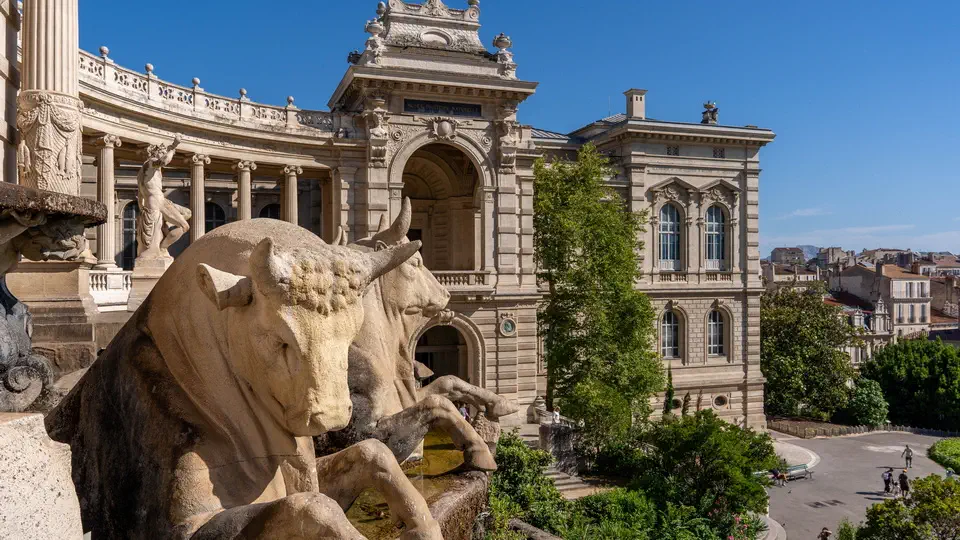
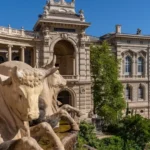
Before entering the museum, it is worth understanding exactly where you are. Palais Longchamp in Marseille is not an ordinary palace built for a king or wealthy aristocrat. It was created as a monumental celebration of the arrival of water in the city via the Marseille Canal. The entire complex was completed in the nineteenth century, with institutions devoted to culture and science installed in its two wings. Musée des Beaux-Arts occupies the left-hand side, while the Natural History Museum stands opposite it. Official information from the City of Marseille confirms that the two museums still occupy the opposing wings of the palace.
In my opinion, this makes an enormous difference to the experience. You are not walking into some anonymous modern exhibition building. The fountains, colonnades, monumental staircases and the approach to the museum itself immediately make you feel that viewing the art is only one part of something much larger.
The history of Musée des Beaux-Arts in Marseille
The history of Musée des Beaux-Arts begins considerably earlier than that of Palais Longchamp itself. The museum was founded as early as 1801 and was one of the fifteen first museums established in France by the Consulate. This makes it the oldest museum in Marseille and one of the oldest public art museums in the country.
The beginnings of its collection reflect the turbulent nature of the period rather well. Following the French Revolution, numerous works that had previously belonged to churches, monasteries and aristocratic families were taken over by the state. Some paintings originating from Marseille and Aix-en-Provence were transferred to the newly established museum. In 1802, the state also provided the institution with works by major masters, while throughout the nineteenth century the collection continued to grow as additional paintings were distributed among France’s most important provincial museums.
For the first few decades of its existence, however, the museum did not have the grand home we see today. That came only in the second half of the nineteenth century, when Marseille was undergoing a period of extraordinary development. The city was becoming increasingly prosperous thanks to its port and international trade and, at the same time, needed new public buildings that reflected its growing ambitions.
This was precisely when Palais Longchamp was being constructed, designed as a monumental setting marking the completion of the canal that brought water from the River Durance to Marseille. The complex, however, was intended to serve much more than a purely practical purpose. Beneath its colonnade, space was provided for two of the city’s most important institutions: the Fine Arts Museum and the Natural History Museum.
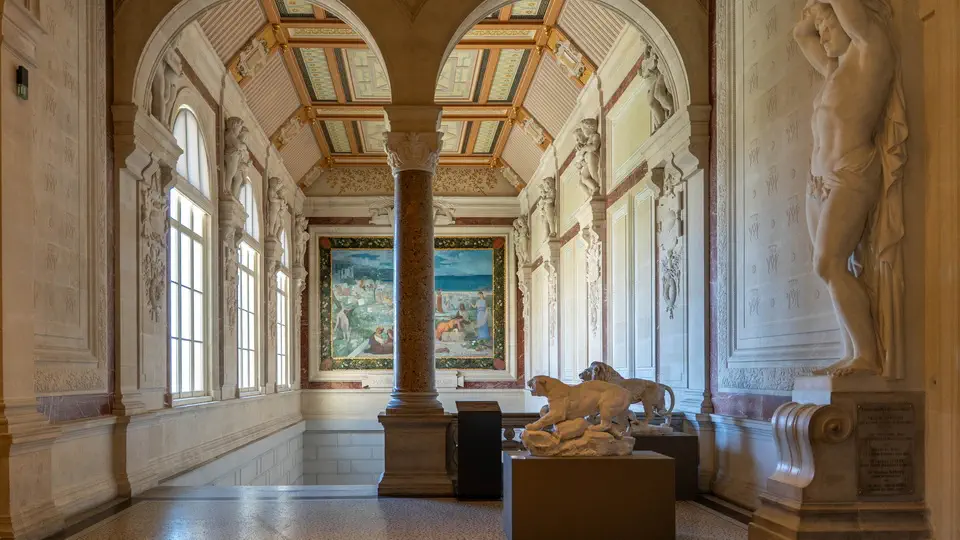
In 1869, Musée des Beaux-Arts moved into the left wing of Palais Longchamp, where it remains today. This was a turning point in the museum’s history, as its collection finally received a setting worthy of its importance. Monumental galleries, high ceilings and the imposing character of the building meant that visiting began to feel like stepping inside one of the grand nineteenth-century art galleries.
Over the following decades, the collections continued to expand through purchases, donations and private collections bequeathed to the museum. Works associated with Provence and Marseille became particularly important. Alongside Italian, Flemish, Dutch and French painting appeared works by local artists, allowing the museum to develop into something resembling an artistic archive of the region.
Today, the Musée des Beaux-Arts collection contains more than 8,000 works, including paintings, sculptures and drawings dating from the sixteenth to the nineteenth century. Artists represented here include Rubens, Courbet, Rodin, Pierre Puget and numerous painters connected with southern France.
Importantly, the museum is not an institution frozen in the past. Its collection continues to grow. A good example is Louis Finson’s Saint-Sébastien, donated in 2025 and considered one of the museum’s most important recent acquisitions.
When I walk through the galleries of Musée des Beaux-Arts today, this sense of continuity is one of the things I like most. The museum was born in Napoleonic France, later became part of Marseille’s vast nineteenth-century modernisation programme and continues to develop its collection today. It is therefore not merely a gallery filled with old paintings, but a part of Marseille’s history that has been evolving for more than two centuries.
What can you see at Musée des Beaux-Arts?
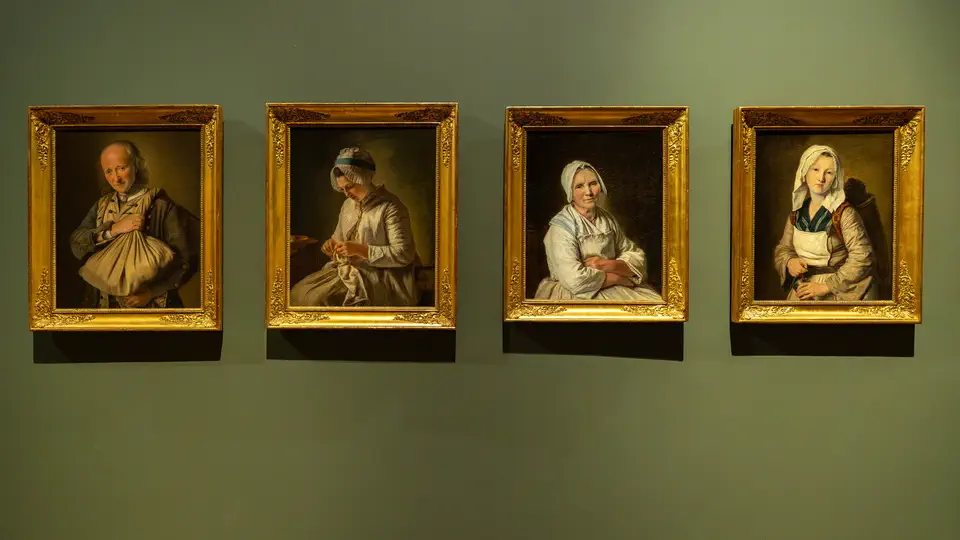
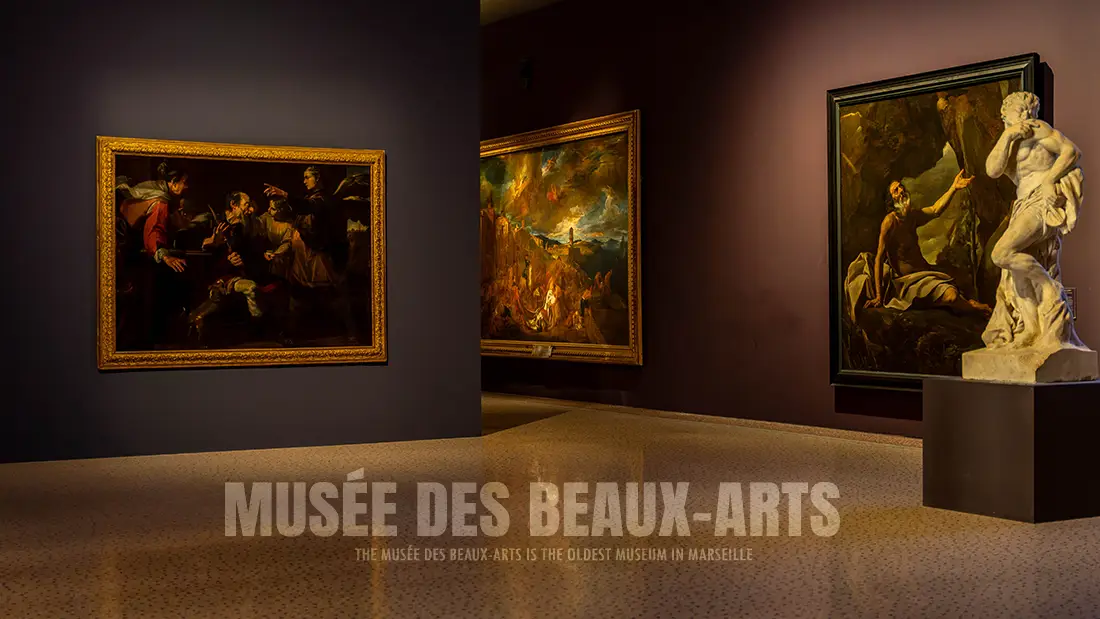
This is not a museum devoted to contemporary art or experimental installations. What you come here to see is primarily classical European painting and sculpture dating from the sixteenth to the nineteenth century. French, Italian, Flemish, Dutch and, naturally, Provençal schools are all represented. The museum’s official description lists artists including Lanfranco, Rubens, Philippe de Champaigne, Jacques-Louis David, Gustave Courbet and Adolphe Monticelli.
What I particularly enjoyed was that the collection does not try to imitate the Louvre in Paris. Instead of attempting to collect absolutely everything, the museum places considerable emphasis on the art of southern France and on artists associated with Marseille and Provence. As a result, when you leave, you genuinely feel that you have learned something about the history of the city itself. Below are several works and artists that, in my opinion, you should look out for.
Rubens and The Wild Boar Hunt
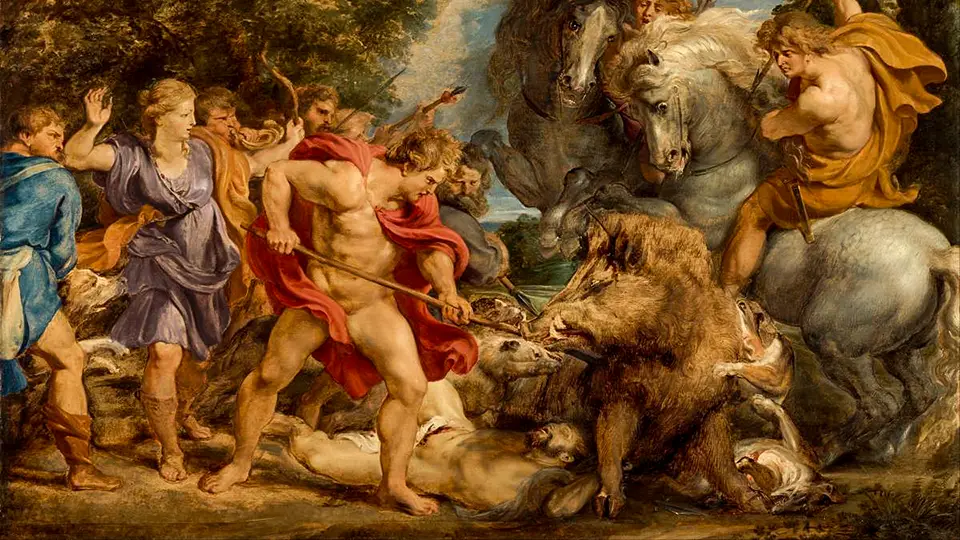
One of the most famous paintings in the collection is La Chasse au sanglier, or The Wild Boar Hunt, by Peter Paul Rubens. If you enjoy Baroque painting, it is difficult to walk past without stopping. Rubens had an extraordinary ability to squeeze so much movement, tension, muscle, horses, dogs and dramatic gestures into a single painting that, next to a calm Renaissance portrait, his works can look almost like a frame from an action film.
The Wild Boar Hunt also appears on the museum’s official list of its most important works. Paintings like this are worth viewing from different distances. Move closer and you begin noticing individual details, then take several steps backwards and the carefully constructed composition becomes much clearer.
Pierre Puget – an artist you encounter everywhere in Marseille
Another name worth remembering before you enter is Pierre Puget. Born in Marseille in 1620, he was a sculptor, painter, and architect and is now regarded as one of the most important French artists of the Baroque period. The museum owns an exceptionally rich collection of his paintings, sculptures, and drawings.
One particularly interesting work is the marble Faun. The sculpture originally belonged to Puget himself and stood in the garden of his Fongate residence in Marseille. It later passed through several collections, including that of the Borély family, before eventually entering the museum during the nineteenth century. His sculptures clearly reveal a fascination with classical art as well as Michelangelo. These figures do not stand quietly like marble mannequins; their bodies twist, muscles tighten and the stone sometimes appears considerably softer than marble has any right to look.
Auguste Rodin and La Voix intérieure
In the sculpture gallery, it is also worth looking for Auguste Rodin’s La Voix intérieure, or The Inner Voice. The history of this sculpture is quite unusual. The figure developed from an earlier representation of Eve created by Rodin and was subsequently used during his work on the monument to Victor Hugo. To make the figure fit the composition, the artist removed its arms and parts of its legs.
Yet it does not look like an unfinished work. Quite the opposite: the missing limbs draw even greater attention to the inclination of the body and the emotions expressed through the figure’s posture. Rodin donated the work to the museum in 1898.
Gustave Courbet
The collection also contains works by Gustave Courbet, one of the most important representatives of French Realism. Particularly interesting is Le Cerf à l’eau, also known as Le Cerf forcé. The City of Marseille purchased the painting directly from the artist in 1865.
I enjoy details like this because suddenly a painting stops being an anonymous object that somehow ended up hanging on a museum wall more than a century later. We know that it entered Marseille’s collection while Courbet was still alive.
Émile Loubon and nineteenth-century Marseille
If I had to choose the part of the collection that fits a journey through Provence particularly well, I would probably pick the works of local artists. One of them is Émile Loubon, a painter of enormous importance to the so-called Marseille school. The museum holds his Vue de Marseille prise des Aygalades un jour de marché, a view of Marseille from Les Aygalades on market day. The city purchased the painting directly from the artist in 1857.
These are exactly the kinds of works I most enjoy seeing when travelling. Once you leave the museum, you start looking at the modern city and trying to find traces of the landscape seen through the eyes of someone who lived more than 150 years ago.
Provençal art is one of the museum’s greatest strengths
One feature that distinguishes Musée des Beaux-Arts from many similar museums is its extensive collection devoted to Provence. During the seventeenth century, Marseille and the surrounding region became a meeting point for artists arriving from both northern and southern Europe. The museum displays works by Louis Finson, Jean Daret, Nicolas Mignard and Michel Serre, among others.
As you move through the galleries, the experience gradually begins to feel like a lesson in the history of Provence. Marseille was a port and trading city, so influences reached it from many directions, and that is also clearly reflected in its art.
The new Saint-Sébastien by Louis Finson
One of the museum’s most interesting recent acquisitions is Louis Finson’s Saint-Sébastien, painted in Naples in 1612. The work was donated to Marseille in 2025. According to the city, the painting was estimated to be worth around €500,000, and the donation was described as the most important gift received by Marseille’s museums since the major bequests of Jules Cantini and Marie Grobet in the early twentieth century.
Following a short public presentation, the painting was sent for conservation and, according to plans announced at the time, is expected to return permanently to the museum’s collection in autumn 2026. If you are visiting Marseille towards the end of 2026 or later, it will therefore be worth checking whether the painting is already back on display.
What is it like to visit Musée des Beaux-Arts?
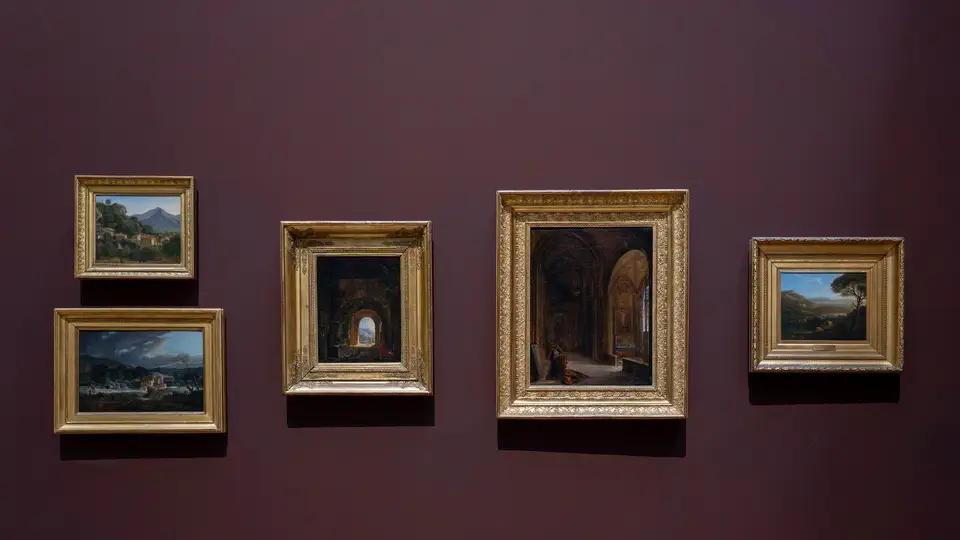
I would recommend exploring Musée des Beaux-Arts slowly rather than attempting to examine every painting one after another. I would begin by paying attention to the building and the arrangement of the galleries because the interiors of Palais Longchamp are an important part of the whole experience. High ceilings, large windows and the classical gallery layout suit the works displayed here extremely well.
At the beginning, concentrate on paintings from the sixteenth to eighteenth centuries and look out for names such as Rubens, Philippe de Champaigne and Pierre Puget. I would spend a little longer with Puget’s works in particular because of his strong connection with Marseille and the way his art helps explain part of the city’s artistic history.
I would then move on to the nineteenth-century section, where you should look out for Gustave Courbet, Adolphe Monticelli and Émile Loubon. Loubon is especially interesting if you are travelling around Provence, as his paintings offer glimpses of the landscapes and atmosphere of southern France more than a century ago.
I would not skip the sculptures, either. Among them are works by Pierre Puget and Auguste Rodin. Whenever the space allows, walk around a sculpture rather than looking at it from only one direction, as this makes it much easier to appreciate the movement of the figure and the way the artist worked with three-dimensional form.
I would allow around 1–1.5 hours for the museum. I would not, however, try to tick off every single exhibit. It is far better to choose a dozen or so works that genuinely catch your attention and spend a little more time with them. Afterwards, make sure you explore Palais Longchamp and its gardens because only then does the visit feel truly complete.
Musée des Beaux-Arts in Marseille – practical information for visitors
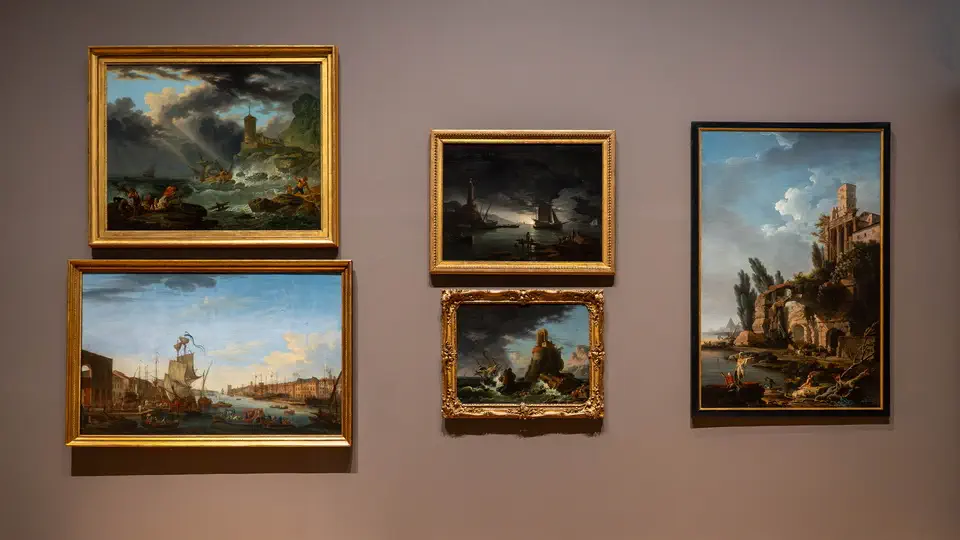
How much time should you allow for the museum? – If you tend to move through art galleries relatively quickly, around an hour should be enough. Personally, I would allow roughly 1.5–2 hours. If you are interested in art history and enjoy reading the descriptions beside individual works, you can easily stay longer. The best option is to combine the museum with the rest of Palais Longchamp, in which case I would allow at least three hours for the whole complex. You can start in the museum, admire the monumental fountain afterwards, walk beneath the colonnade and then relax in the park.
Is Musée des Beaux-Arts worth visiting with children? – A lot depends on their age. Younger children are unlikely to enjoy spending two hours looking at seventeenth-century paintings, so I would not attempt to turn the visit into a compulsory art-history lesson. It is much better to pick several of the most impressive paintings and sculptures before heading into the park. The Natural History Museum occupies the opposite wing of Palais Longchamp and may prove considerably more exciting for children. That means you can divide the visit rather neatly: parents get some Rubens and Rodin, children get dinosaurs, animals and a walk through the park, and everyone leaves happy.
Musée des Beaux-Arts ticket prices – I have excellent news here. The permanent collections of Marseille’s municipal museums are free to visit throughout the year, including Musée des Beaux-Arts. In my opinion, this is something well worth taking advantage of. There is no need to wonder whether the museum is “worth” spending another dozen euros on; you can simply walk in, look around and stay for as long as you like. Temporary exhibitions may require a ticket, although they can also be visited free of charge on the first day of an exhibition and on the first Sunday of the month.
Musée des Beaux-Arts opening hours – According to the current information, the museum is open Tuesday to Sunday from 9:00 am until 6:00 pm. It is normally closed on Mondays, except Easter Monday and Whit Monday. The ticket desk closes around 30 minutes before the museum itself. It is also closed on 1 January, 1 May, 1 and 11 November and 25 December. I would still recommend checking the official website before visiting, as individual floors or galleries can occasionally be closed.
Watch out for the Mistral and strong winds – This is probably one of the more unusual pieces of practical advice you will ever read in connection with an art museum. During periods of forceful wind, Parc Longchamp may be closed, which can also make access to the museum difficult or impossible. The museum’s official information specifically warns visitors about this and recommends contacting staff in advance during episodes of severe wind. In Marseille, this is not merely a theoretical problem. The Mistral can be incredibly powerful.
How to get to Musée des Beaux-Arts – The museum is located at Palais Longchamp, left wing, 13004 Marseille. Public transport is by far the easiest option. Cinq Avenues – Longchamp metro station is nearby, as are several tram stops. You can, of course, drive, but I would not recommend travelling between Marseille’s main attractions by car. Traffic and finding somewhere to park can quickly take much of the pleasure out of sightseeing.
Accessibility for visitors with reduced mobility – The museum provides facilities for visitors with reduced mobility. Official information indicates that access is possible from Boulevard Montricher, where there is a ramp, followed by a lift near the steps leading towards the museum. The city recommends contacting the museum beforehand to make sure all accessibility facilities are available on the day of your visit.
What else can you see in Marseille on the same day?
Palais Longchamp lies slightly outside Marseille’s most heavily visited tourist district, so I would treat it as a separate part of the day. After visiting the museum, make sure you walk around the entire palace, see its enormous fountain and spend some time in the park behind the building.
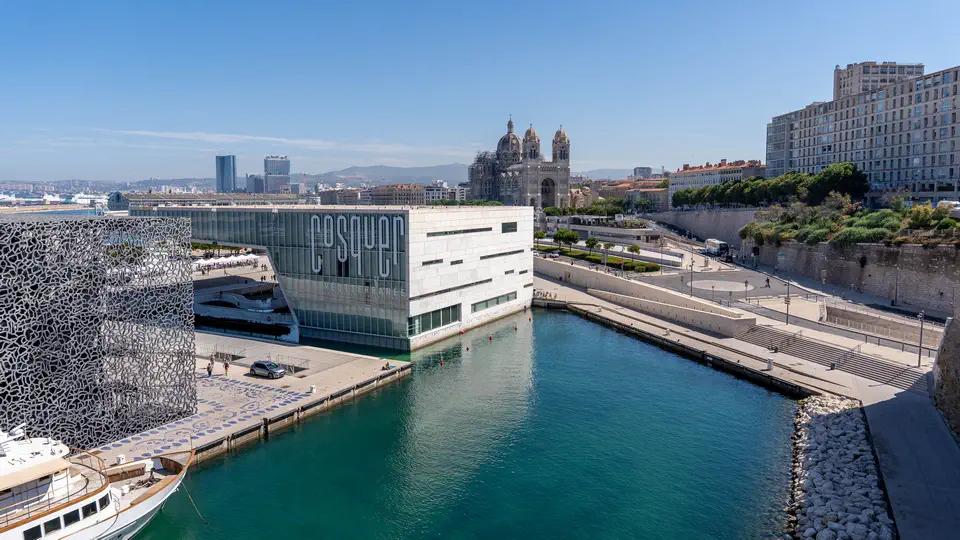
If you have several days in Marseille, I would move towards the waterfront on the following day. Several excellent attractions can be combined during a single walk. I would begin with MUCEM and Fort Saint-Jean, continue to the monumental La Major Cathedral, and then visit the extraordinary Cosquer Cave replica. At the end of the day, you can head up the hill to the Basilica of Notre-Dame de la Garde. The view from the top is one of the best ways I know to finish a day of sightseeing in Marseille.
Musée des Beaux-Arts in Marseille – a few final thoughts
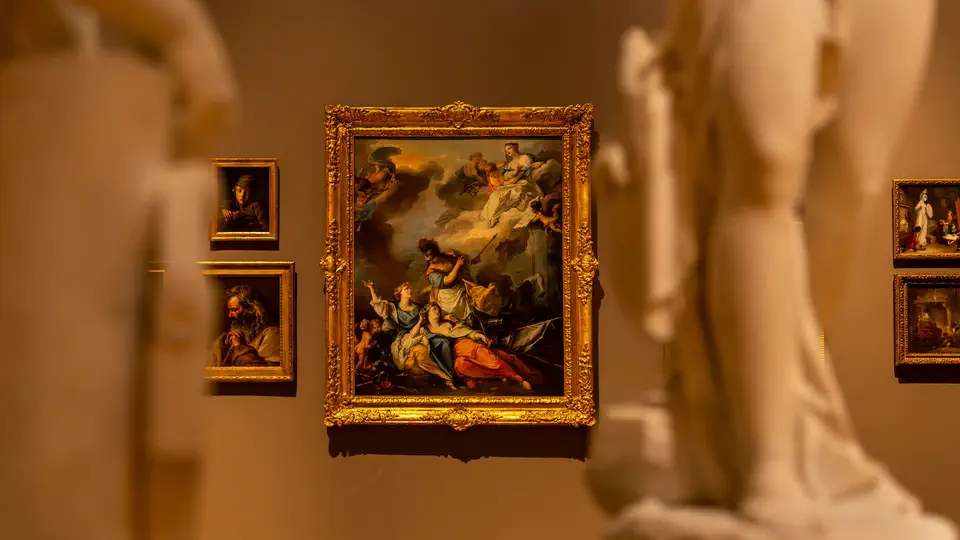
In my opinion, the Fine Arts Museum in Marseille is well worth visiting, particularly because admission to the permanent collection is free. I would not rank it ahead of MUCEM, Notre-Dame de la Garde or the Old Port if you only have a few hours for your first visit to Marseille. If you have at least two days in the city, however, Palais Longchamp and Musée des Beaux-Arts definitely deserve a place on your itinerary.
For me, one of the museum’s greatest strengths is its local character. You can see Rubens, Courbet, David and Rodin, but at the same time discover Pierre Puget, Émile Loubon, Monticelli and other artists closely associated with Provence. At that point, the museum stops being merely a collection of beautiful old paintings and becomes another chapter in the story of Marseille — and those are precisely the kinds of museums I enjoy most when travelling.
Musée des Beaux-Arts in Marseille – mysteries and legends surrounding the museum
Musée des Beaux-Arts does not really have its collection of famous ghost stories or curses, so I would rather not invent legends that nobody has ever told. The real mysteries associated with Palais Longchamp, where the museum is located, are far more interesting.
The most important of them is actually hidden in plain sight. The monumental palace looks like the residence of some enormously wealthy dynasty, while in reality it was created primarily as an extremely elaborate setting for a water tower and the system bringing water from the Durance to Marseille. Behind all those columns, sculptures, and the vast fountain lies a very practical piece of urban infrastructure.
A slightly darker atmosphere can be found in the park behind the museum. Marseille’s zoological gardens operated here for more than a century before finally closing in 1987. Remnants of some old enclosures and the giraffe pavilion can still be seen. Interestingly, some animals were preserved after their deaths and eventually entered the collection of the Natural History Museum in the opposite wing of Palais Longchamp.
Walking today among the peaceful paths and surviving structures of the old zoo, it is easy to imagine just how different this place must have looked several decades ago. For me, this unusual combination of art, a former zoo, monumental architecture and hidden water infrastructure creates a far more intriguing sense of mystery around Musée des Beaux-Arts than any invented story about ghosts ever could.
Musée des Beaux-Arts in Marseille – facts, information and interesting details
- Musée des Beaux-Arts is the oldest museum in Marseille. It was established in 1801 and belonged to a group of only fifteen museums created in France at the time by decision of the Consulate. Its history is therefore considerably longer than that of Palais Longchamp itself, even though the two places are now almost impossible to imagine separately.
- The museum was not originally housed inside Palais Longchamp. It moved into the left wing of the monumental complex only in 1869. Since then, the artwork and architecture of the palace have formed a single experience, and for me the building itself is almost as interesting as the paintings hanging inside.
- Palais Longchamp was not built as a royal palace or aristocratic residence. The monumental complex was primarily intended to celebrate the arrival of water in Marseille via a canal from the Durance. The art museum therefore occupies what is essentially an enormous monument dedicated to water, science and art.
- You can visit two completely different museums in the same complex. Musée des Beaux-Arts occupies the left wing of Palais Longchamp, while the Natural History Museum is located on the opposite side. In a single day, you can therefore move from Rubens and Rodin to natural-history collections.
- The museum’s collection contains more than 8,000 works. These include paintings, sculptures and drawings created between the sixteenth and nineteenth centuries. Naturally, only part of the collection can be displayed at any one time, so changing exhibitions mean that a future visit may look quite different.
- Four major traditions of European painting meet inside the museum. The permanent collection contains works by Italian, French, Flemish and Dutch artists. As you move between the galleries, you can observe just how differently painting developed in various parts of Europe.
- One of the museum’s greatest specialities is Provençal art. The collection places particular emphasis on the development of local art between the seventeenth and nineteenth centuries. I would therefore describe Musée des Beaux-Arts not simply as a gallery of European masters, but as somewhere that tells part of the artistic story of Marseille itself.
- During the seventeenth century, Marseille became an important meeting place for artists from northern and southern Europe. The museum recalls this period through works by Louis Finson, Jean Daret, Nicolas Mignard and Michel Serre. They remind us that this port city has long been a place where not only goods but also ideas and artistic styles were exchanged.
- Pierre Puget occupies a particularly important place in the museum. Born in Marseille, he worked as a painter, sculptor and architect, and the museum owns a significant collection of his works. His is definitely a name worth remembering before your visit, as Puget is one of the central figures in the history of art in Marseille.
- The collection contains a work by Auguste Rodin with an extraordinary story. La Voix intérieure developed from the figure of Eve that the artist created for his famous Gates of Hell. Rodin subsequently enlarged the figure and incorporated it into his work on a monument to Victor Hugo.
- The absence of arms in Rodin’s sculpture is not the result of damage. The artist deliberately removed the arms and parts of the legs from La Voix intérieure so that the figure could fit into the composition of the Victor Hugo monument. It is a perfect example of a work that can easily be misunderstood without knowing its history.
- The museum contains works by artists represented in some of the world’s greatest galleries. Its collection includes pieces connected with Rubens, Courbet, Jacques-Louis David and Rodin. It is therefore far more than a museum devoted solely to local painters, although its Provençal collection gives it a particularly distinctive identity.
- The museum underwent a major redisplay in 2019. To mark the 150th anniversary of its presence in Palais Longchamp, the presentation of the collection was reorganised and dozens of works that had spent many years in storage were returned to public view. In many ways, it represented the beginning of a new chapter for the museum.
- Some paintings returned to the walls after almost a century. During the reorganisation, works were restored and placed back on display after generations of Marseille residents had been unable to see them. It is a useful reminder of how little of a museum’s enormous collection we usually see during a normal visit.
- The museum continues to enlarge its collection. In 2025, it received Louis Finson’s Saint-Sébastien, painted in 1612. The donation was particularly important because Finson was one of the artists who played a significant role in the development of art in Provence.
- Louis Finson’s Saint-Sébastien was painted in Naples. It is an interesting example of just how international the careers of artists later associated with southern France could be. Finson worked in Italy and encountered the painting of Caravaggio there, whose influence subsequently spread across Europe.
- The museum’s permanent collection can currently be visited free of charge. Marseille introduced free access to the permanent collections of its municipal museums in January 2021. I think this is an excellent idea because you can drop into Musée des Beaux-Arts even when you have only an hour to spare.
- The museum building was designed by Henri-Jacques Espérandieu. The same architect was responsible for one of Marseille’s most recognisable landmarks, the Basilica of Notre-Dame de la Garde. If you visit both during your trip, compare their monumentality and Espérandieu’s fondness for dramatic decoration.
- A zoo operated behind the museum for more than a century. The zoological gardens in Parc Longchamp remained open until 1987. Today it is difficult to imagine that visitors could once admire exotic animals only a short distance from a gallery filled with classical paintings. Remnants of the former zoo can still be found while walking through the park.
- Visiting the museum also means exploring one of Marseille’s major architectural landmarks. After leaving the galleries, allow some time for the colonnade, enormous fountain and park surrounding Palais Longchamp. In my opinion, it is precisely this combination of art, monumental architecture and greenery that makes Musée des Beaux-Arts stand out among Marseille’s museums.