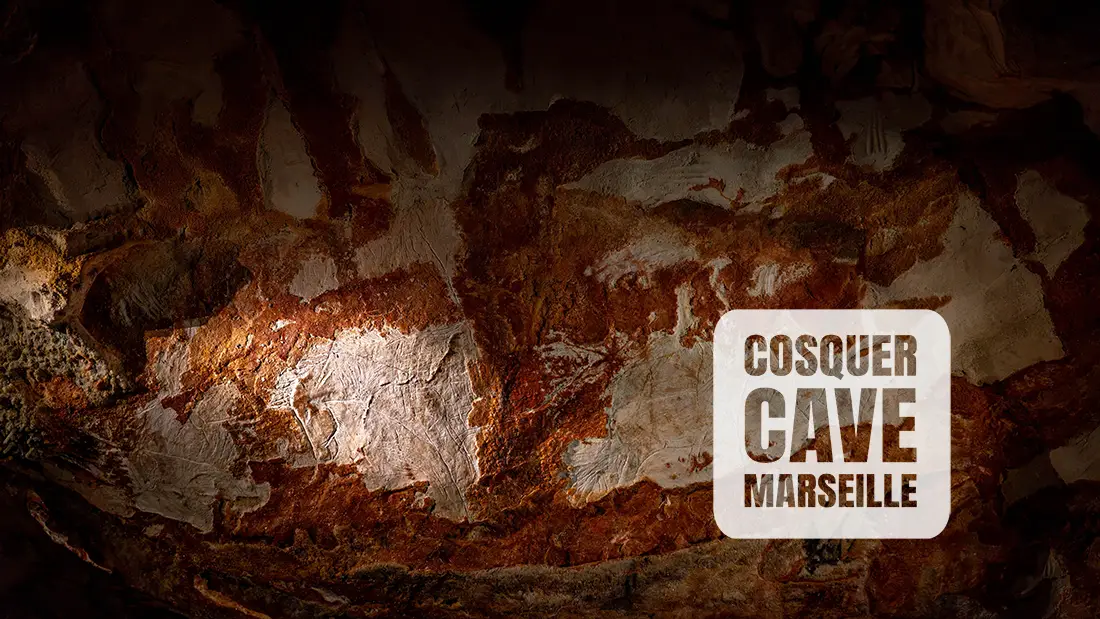
Cosquer Cave or rather its remarkably accurate replica – is an extraordinary place in Marseille that I can wholeheartedly recommend.
There are some attractions I approach with a certain amount of caution, and that was accurately the case this time. Whenever I hear the word “replica”, I immediately wonder whether I am about to walk into some plastic imitation pretending to be something that, for one reason or another, I cannot see for myself. Cosquer Méditerranée in Marseille, however, rapidly put those concerns to rest.
The original Cosquer Cave cannot be visited in the normal way, and it is probably an excellent thing that it cannot. Its entrance now lies around 37 metres beneath the surface of the Mediterranean Sea, and reaching the main part of the cave requires swimming through a long flooded tunnel. Hidden on the walls beyond it are hundreds of prehistoric paintings, engravings and traces left behind by people who lived here tens of thousands of years ago. Marseille therefore decided to create something that initially sounds slightly mad – an extremely detailed reconstruction of the cave, partly situated below sea level, which you descend into almost as if you were entering an underwater research base. I have to admit that the idea works brilliantly.
Cosquer Cave is one of Marseille’s more unusual attractions
Cosquer Méditerranée enjoys an excellent location right on Marseille’s waterfront, close to Mucem and Fort Saint-Jean. All of these attractions can easily be combined during a single day of sightseeing. The building itself is difficult to miss as well, because the replica was created inside the distinctive Villa Méditerranée, standing practically on the water’s edge.
If you are planning to spend a little longer in the city, I would definitely put Cosquer on your list of Marseille’s most interesting attractions. This is particularly true if, like me, you enjoy archaeology, ancient civilisations and places that allow you, even for a short while, to glimpse the world inhabited by people thousands of years before us. After visiting Cosquer, you can walk straight over to Mucem and later continue along the waterfront towards the Old Port. You can also combine the visit with nearby La Major Cathedral, which is only a short walk away.
The real Cosquer Cave and a little history – how it all began
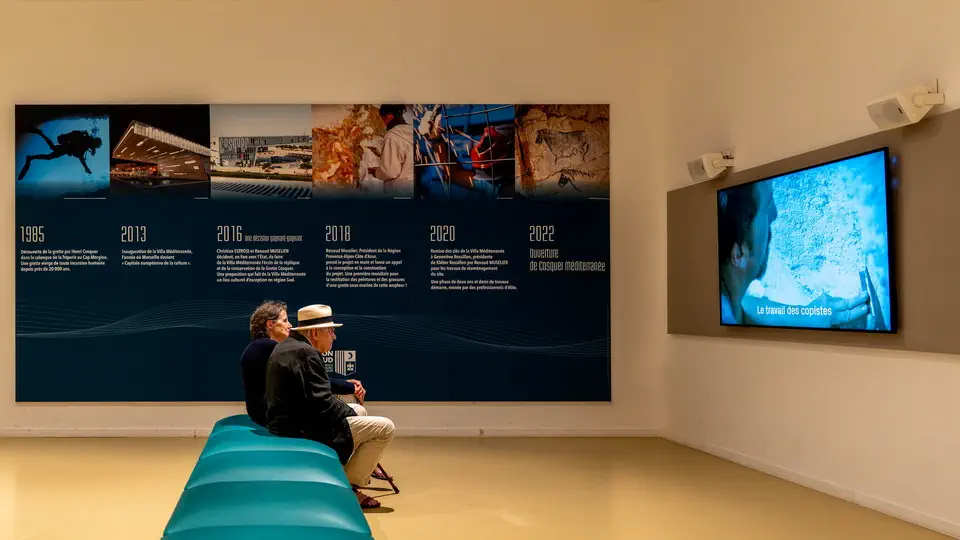
The story of this place reads almost like the script of an adventure film. In 1985, professional diver Henri Cosquer was exploring the underwater landscape of the Calanques near Cap Morgiou. Around 37 metres below the surface of the sea, he discovered an opening leading deep into the rock. Beyond it stretched a long flooded passage. Today we know that the underwater route leading to the dry section of the cave is approximately 175 metres long. Cosquer returned to the site over the following years, gradually exploring more of its interior. Only later did it become clear just how extraordinary his discovery really was.
Hundreds of drawings, engravings and other traces of Palaeolithic human activity have survived inside the cave. Official material about Cosquer Méditerranée currently refers to around 480 paintings and engravings created roughly between 33,000 and 19,000 years ago. That alone is impressive, but even more extraordinary is the fact that when prehistoric people were visiting the cave, it was not beneath the sea at all.
During the Ice Age, the level of the Mediterranean was around 120 metres lower than it is today. The coastline lay several kilometres farther away, which meant the cave could be entered from dry land. Try to imagine that for a moment. Where yachts and pleasure boats float today, there was once open land. People crossed a landscape wholly different from the one we now associate with the south of France.
Later, the climate began to warm, glaciers melted and sea levels rose. Water gradually flooded successive sections of the cave. For that reason, Cosquer is not simply an archaeological site. It is also an incredibly tangible story about climate change and the way the landscape of our planet has transformed over thousands of years.
What do the paintings in Cosquer Cave show?
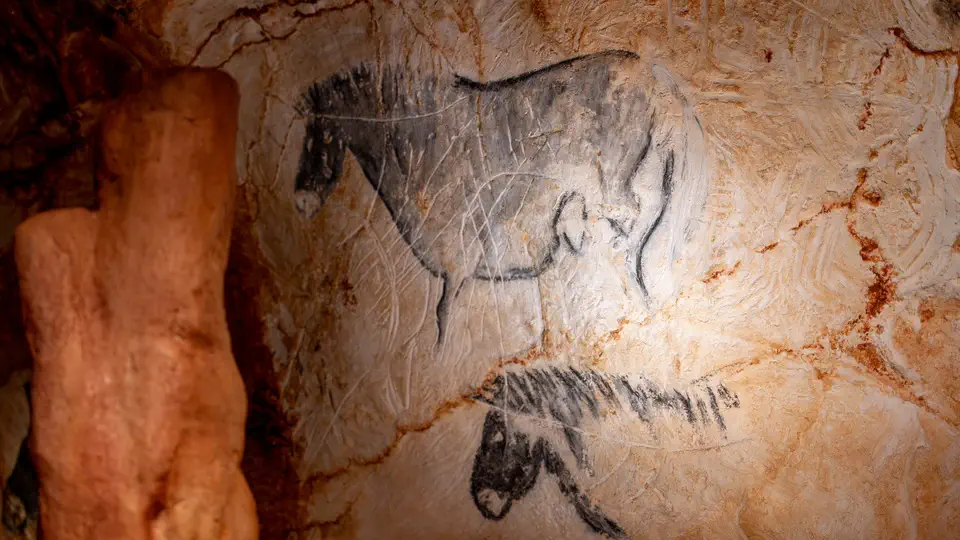
The images left behind by Palaeolithic people were naturally what interested me most. On the cave walls you can see depictions of horses, deer, ibex and bison, among other animals. There are also species that seem particularly fascinating from today’s perspective, including seals and great auks, extinct seabirds that looked relatively like penguins.
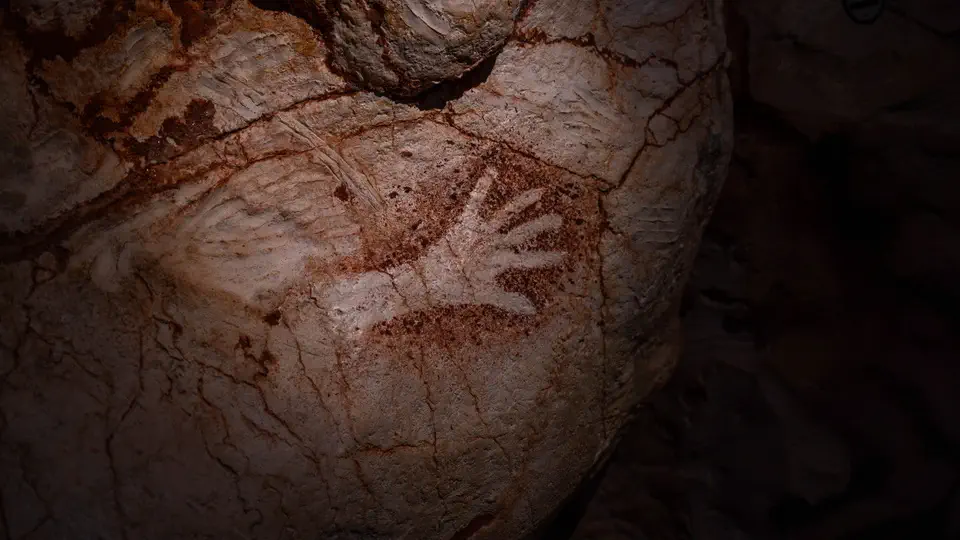
Then there are the unmistakable human handprints and hand stencils. These are always the traces that affect me most. I can look at an animal drawing almost as a work of art, whereas the outline or imprint of a hand feels wholly different. I look at it and immediately think that tens of thousands of years ago a real person stood in exactly that place. That person had a family, experienced fear, suffered from the cold, hunted, probably told stories and, one day, placed a hand against the rock. The mark has remained there ever since.
Why can’t you visit the original Cosquer Cave?
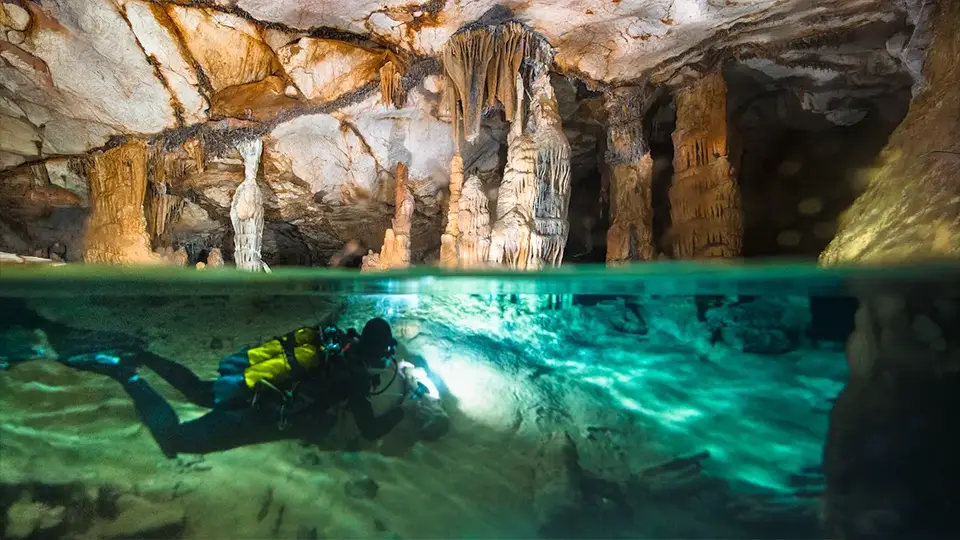
In this case, the answer is elementary: it would be dangerous both for visitors and for the archaeological site itself. The entrance lies deep beneath the sea, while the interior can only be reached through a long flooded passage. This is certainly not a place where groups of tourists could simply follow a guide inside. In addition, Cosquer Cave is extremely fragile.
Rising water levels are gradually damaging its interior, which is why archaeologists have spent years trying to document everything that still survives as accurately as possible. In 1992, the cave was classified as a historic monument in France, and research continued there over the following three decades. Rather than opening the original cave to tourists, the decision was made to build a precise reconstruction, and in my opinion it was an excellent solution.
The project began to take real shape in 2019, when Kléber Rossillon was selected to design and build the reconstruction and later operate the visitor centre. Cosquer Méditerranée opened to the public on 4 June 2022. The aim was never merely to create something vaguely resembling the original cave.
Its creators attempted to reproduce the rock formations, mineral deposits, paintings, and engravings using scientific documentation and research. The results were reviewed by a scientific committee, and this is precisely what distinguishes Cosquer from an ordinary entertainment attraction. It may be highly theatrical and immersive, but behind the spectacle lies serious archaeology.
Cosquer Cave and the descent underground
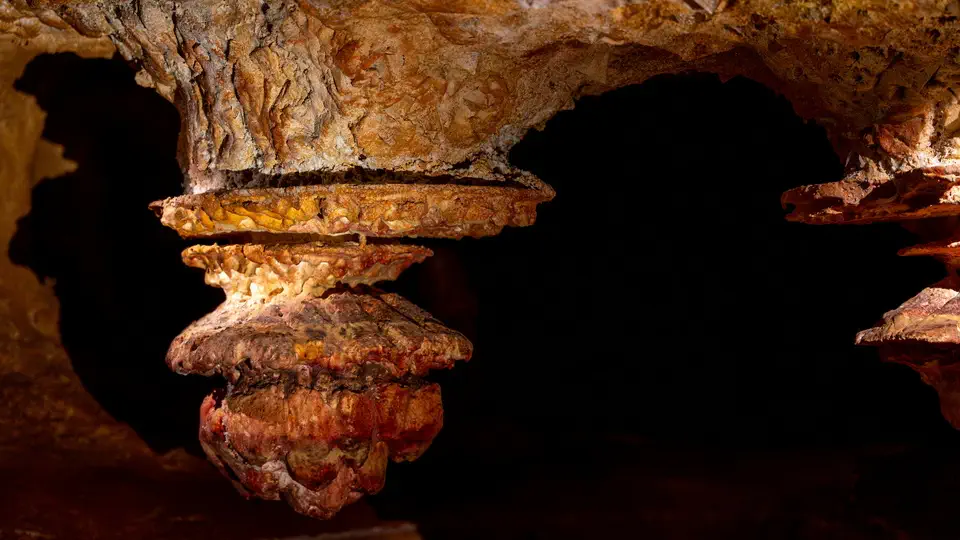
Before entering, my main concern was still that word – replica – but by the time I came out, it no longer bothered me. Of course, I would prefer to see the real Cosquer Cave. The problem is that doing so would not only be extremely difficult and dangerous but could also cause damage to one of France’s most valuable prehistoric sites. The reconstruction is therefore a sensible compromise. It allows visitors to see the paintings, understand the scale of the cave and discover the story of its exploration while leaving the original safely in the hands of archaeologists.
What is more, the story of the submerged cave is so extraordinary that Cosquer Méditerranée hardly needs any artificial tricks to make an impression. Someone left the mark of a hand on a rock wall more than 20,000 years ago. The climate then changed, the sea rose by more than a hundred metres, and the entrance to the cave disappeared far beneath the water.
Thousands of years passed until, in 1985, a diver entered an inconspicuous opening in the rock and rediscovered a world whose existence had been completely forgotten. For me, that story is the greatest attraction of Cosquer Méditerranée. If you are visiting Marseille, I would definitely come here either before or after Mucem.
The best part of the visit begins when you descend to the level marked -2. The reconstruction was built below sea level, so the atmosphere starts to build before you even enter the cave itself. You travel down by lift and emerge inside what has been styled to resemble an underwater research base. It sounds slightly like the opening scene of a science-fiction film. You then board a small vehicle described as an exploration module.
And this is where something happens that initially struck me as a little strange: you do not walk through the cave. Instead, you travel through it in a vehicle carrying no more than six people. After a few moments, I understood why the system works so well. The module moves slowly through successive chambers, stopping or turning at the right moments, while carefully controlled lighting highlights selected areas of the walls and the audio guide explains exactly where you should look. There is no need to squeeze past other visitors or try to see something over somebody else’s head.
The replica itself surprised me far more than I expected
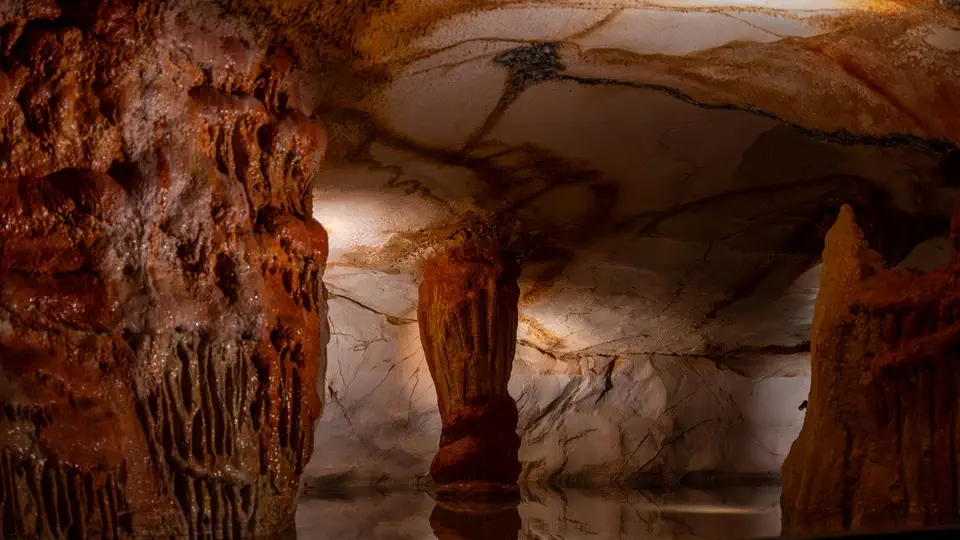
Cosquer Cave is dark, and in places it is genuinely very dark. That is precisely how it should be. If the entire interior had been illuminated like a shopping centre, the atmosphere would have vanished instantly. Instead, individual features of the cave gradually emerge from the darkness as they become part of the narration. First you notice mineral formations, then a section of rock. The light moves a few metres farther along, and suddenly the image of an animal appears.
I am not going to claim that after a few minutes I forgot I was inside a replica. I did not. I knew perfectly well that I was sitting in a small vehicle inside a modern building in the centre of Marseille. Even so, the reconstruction made an excellent impression on me. This is one of those cases where modern technology does not try to replace history but helps us understand it. If you are interested in real caves that are open to visitors, have a look at our guide to Nerja and its famous caves in Spain. It is a wholly different experience, but another excellent example of the extraordinary things that can remain hidden beneath the ground.
The journey through the reconstruction lasts around 35 minutes. That is long enough to absorb the atmosphere of the cave without being so lengthy that children are likely to become bored. The audio guide is available in six languages, and there is also a version designed especially for younger visitors. I particularly like the fact that the narration does not bombard you with dry dates. Much of it focuses instead on how the people who visited the cave might have lived and what we have managed to learn from the traces they left behind.
The visit does not end when the cave journey is over. A short film about the discovery of Cosquer is shown in the auditorium. According to the official website, it lasts around eight minutes and includes archive material. I think it is worth staying to watch it because afterwards it becomes much easier to understand just how remarkable the discovery was and how difficult the conditions are for researchers working inside the real cave.
There is also the Galerie Méditerranée on the third floor, and I would strongly recommend not skipping it even if, after the cave ride, you feel you have already seen the main part of the attraction. The gallery recreates the world that surrounded the people who once visited Cosquer. Here you will find life-size models of animals that inhabited the region during the Ice Age, including bison, aurochs, giant deer, saiga antelope, seals and great auks. Marseille’s tourist office refers to 11 animal species presented at natural scale. You can also see a reconstruction of a female Homo sapiens and displays explaining climate change and rising sea levels. It brings the whole story together extremely well.
Cosquer Cave practical information and my tips for visiting
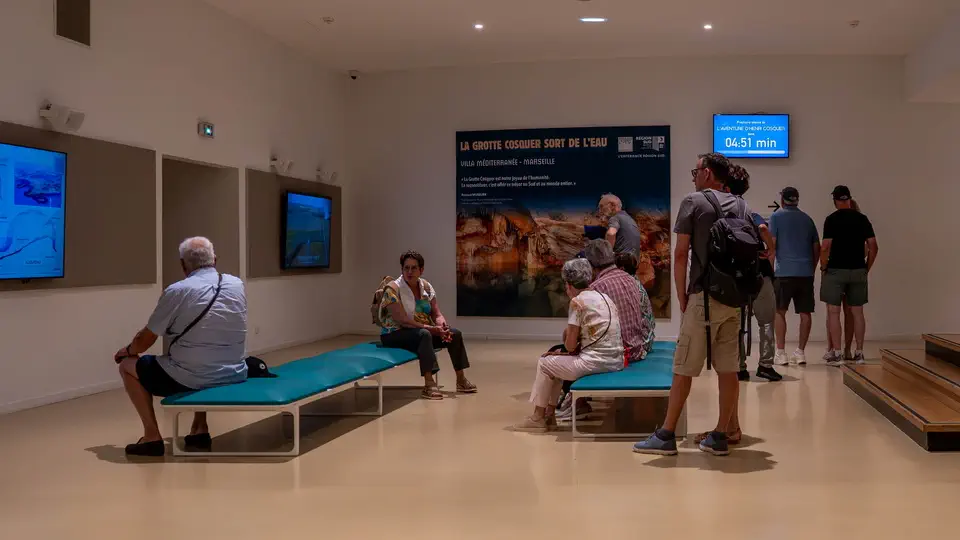
- How much time should you allow for Cosquer Méditerranée? – I would set aside around two hours for a relaxed visit. The cave experience itself lasts approximately 35 minutes, but there is also the film, the galleries, and the time required to move between different levels of the building. Marseille’s official tourism material also suggests roughly two hours for the complete visit. If you enjoy reading exhibition panels carefully and examining everything in detail, you could easily spend a little longer here.
- Visiting Cosquer Méditerranée with children – In my opinion, this is one of those museum attractions that you can recommend to children without too much hesitation. The most important reason is that you travel through the cave in a small vehicle rather than walking from one display case to another. It is dark, animals appear along the route, lights guide your attention from one prehistoric image to the next, and the whole experience feels much more like an adventure than a traditional museum. There is one important restriction, however: children under the age of three cannot take part in the ride through the cave reconstruction. They can still enter the other areas of the attraction, so if you are travelling with a very young child it is worth planning the visit in advance.
- Claustrophobia – something worth considering – This is one thing I would definitely mention before buying a ticket. If you do not feel comfortable in dark or enclosed spaces, Cosquer Cave may prove difficult. The attraction itself warns that the descent underground, limited space, low levels of light and exploration modules fitted with safety barriers can cause discomfort for people with claustrophobia. This is not an extremely narrow natural cave where you have to squeeze through gaps in the rock, but the environment has deliberately been designed to resemble real underground conditions.
- Cosquer Cave ticket prices – According to the current price list shown on the official Cosquer Méditerranée website, admission currently costs:
- adults – €19,
- children aged 10–17 – €11,
- children aged 6–9 – €6,
- children aged up to 5 – free.
- The admission price includes the journey through the cave reconstruction, the film about its discovery, Galerie Méditerranée and the audio guide. It is worth noting that Marseille’s tourist office still lists an adult price of €18, whereas Cosquer’s own website currently displays €19. When planning a visit, I would therefore rely on the price published directly by the attraction.
- Cosquer Méditerranée opening hours – Opening times can change during the season, so I would always check them shortly before visiting. As far as I remember, Cosquer Cave is open from 9:30 am until 7:30 pm during the main season, with the final admission slot beginning around an hour and a half before closing. Outside weekends, public holidays and school holiday periods, the attraction usually closes earlier. Marseille’s tourist information lists typical opening hours of 9:30 am to 6:00 pm. I would buy tickets in advance, particularly during the summer.
- How do you get to Cosquer Méditerranée? – The address is Villa Cosquer Méditerranée, Esplanade Robert Laffont, 13002 Marseille. If you are already in central Marseille, walking is by far the most pleasant option. It takes around 15 minutes from Vieux-Port. You can also travel to Joliette metro station or use bus routes 60, 82 or 82S and get off near Mucem-Saint Jean. Tram lines T2 and T3 stop around Joliette and République-Dames. If travelling by car, I would probably use the Indigo Vieux-Port-Mucem car park rather than circle the city centre looking for a random parking space.
What can you see after leaving Cosquer?
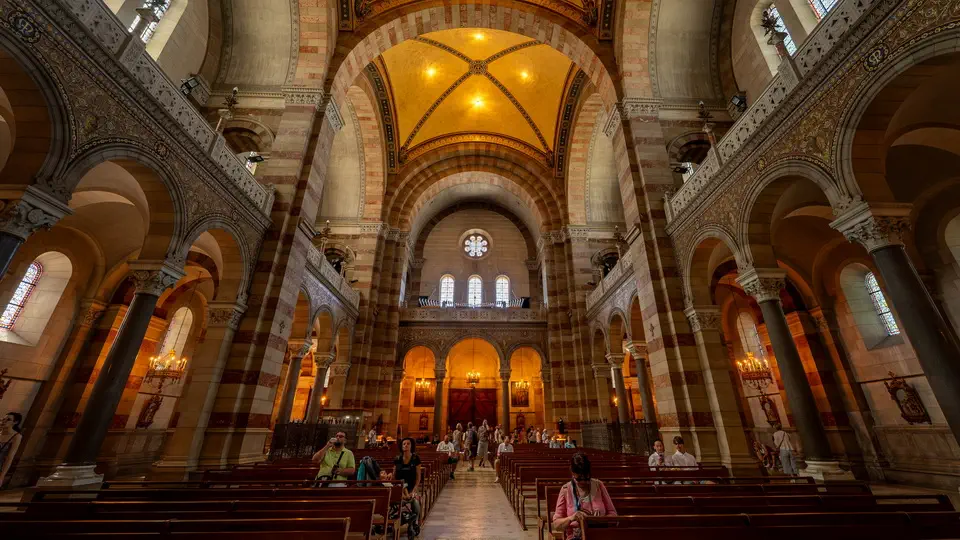
One of Cosquer’s biggest advantages is its location. Once you leave the building, there is no need to travel anywhere else. Mucem stands right next door, and the two museums complement each other extremely well. One takes you deep into the Palaeolithic world, while the other explores Mediterranean cultures. Afterwards, you can walk towards Sainte-Marie-Majeure Cathedral and continue towards the Old Port.
I would not, however, treat Cosquer as something to rush through. Give yourself those two hours and take the time to explore the galleries as well.
If the story of Cosquer appeals to you, and you enjoy places connected with ancient cultures, you may also like some of our other articles:
- Mysterious prehistoric monuments of Menorca
- Stonehenge and the prehistoric landscapes of southern England
- Avebury and its enormous stone circles
- Malta’s stone circles, prehistoric temples and ancient structures
- The Stone Circles of Odry in Poland
Cosquer Cave facts, information and interesting details
- Cosquer Cave was discovered accidentally. In 1985, French diver Henri Cosquer was exploring the underwater landscape around Cap Morgiou near Marseille. At a depth of around 36–37 metres, he noticed an opening in the rock and decided to find out where it led.
- A long underwater tunnel leads to the real cave. To reach its dry section, divers must travel through a flooded passage approximately 175 metres long. This is the main reason why ordinary tourists cannot visit the original cave.
- The entrance now lies around 37 metres beneath the surface of the Mediterranean Sea. When Palaeolithic people were visiting the cave, conditions were wholly different and it could be reached from dry land.
- The sea was once around 120 metres lower than it is today. During the Ice Age, enormous quantities of water were trapped in glaciers, leaving the coastline several kilometres farther away than the shore we see today.
- People visited Cosquer Cave over a period of thousands of years. Research suggests that Homo sapiens entered the cave during different periods between roughly 33,000 and 19,000 years ago.
- More than 480 painted and engraved images have been identified on the walls. This extraordinary concentration of prehistoric art makes Cosquer one of the most important Palaeolithic sites of its kind in the Mediterranean region.
- Human handprints have survived inside the cave. Prehistoric visitors left both negative hand stencils and direct handprints on the walls. For me, these are among the most moving features of Cosquer because they create such an immediate connection with individual people who lived thousands of years ago.
- The walls show animals that we would never associate with Marseille today. Images include bison, ibex, deer, horses, antelope, seals and great auks, providing a remarkable reminder of how dramatically the climate of southern France has changed since the Ice Age.
- The images of great auks are particularly famous. These extinct seabirds looked slightly like penguins and are often described that way to visitors. They have become something of a symbol of Cosquer Cave.
- There are also depictions of seals. Images of marine animals are among the features that distinguish Cosquer from many other European sites containing Palaeolithic art.
- Archaeologists also discovered traces of fires. This suggests that people did not enter the cave simply to create images. They used fire for light and were probably able to remain deep underground for extended periods.
- For around 20,000 years, the cave remained practically untouched by humans. Once the entrance had been flooded, it was effectively cut off from the outside world. Henri Cosquer’s underwater explorations finally ended that extraordinary period of isolation.
- Henri Cosquer did not immediately announce his discovery. He continued exploring the cave for several years, while the official declaration and scientific authentication of the site did not take place until 1991.
- The authenticity of the cave art was confirmed by respected prehistorians. Researchers involved in the investigations included Jean Courtin and Jean Clottes. Analysis of charcoal samples helped confirm the Palaeolithic origin of the site.
- Cosquer Cave was officially classified as a French historic monument on 2 September 1992. This happened only a year after the authenticity of its remarkable paintings and engravings had been officially confirmed.
- The cave takes its name from its discoverer. Henri Cosquer therefore secured a permanent place in the history of archaeology. It is unusual for a modern explorer to give his name to an archaeological site whose story stretches back tens of thousands of years.
- Henri Cosquer’s boat had an extraordinarily appropriate name – “Cro Magnon”. Considering that its owner would later discover one of the most important sites associated with Palaeolithic Homo sapiens, it is difficult not to smile at the coincidence.
- The real cave is threatened by water. Rising Mediterranean Sea levels and the processes taking place in the flooded sections mean that documenting the interior has effectively become a race against time.
- The Marseille replica was created using extremely detailed documentation of the original cave. The Cosquer Méditerranée reconstruction covers approximately 1,750 square metres and reproduces not only paintings and engravings but also rock formations, mineral deposits and the characteristic surfaces of the cave walls.
- The replica of Cosquer Cave opened on 4 June 2022. Visitors travel through it in small vehicles carrying a maximum of six people. The journey lasts around 35 minutes and allows you to see the most important parts of the cave without exposing the real archaeological site to damage.