Interesting facts about weather are another part of our series of articles about the fascinating things, phenomena, and creatures that surround us.
Weather can entirely change a journey. The same place can look like a peaceful postcard one day and a scene from a disaster film the next. I have experienced this many times myself. In Iceland, I went through sunshine, rain, fog and strong winds within the space of a single hour, while in the Spanish desert I watched pleasant warmth disappear almost immediately after sunset, replaced by the chill of the night. Over time, I became interested not only in the forecast for the following day, but also in the mechanisms behind thunderstorms, fog, snowfall and sudden changes in temperature.
Interesting facts about weather
Weather is much more than just a backdrop to a trip. Occasionally, it determines which route we choose, how safe we are, how far we can see, what our photographs look like and even whether we manage to visit a planned attraction at all. Below, I have collected a huge number of interesting weather facts and divided them into five themed sections.
Interesting facts about weather – temperatures and weather records
- The highest officially recognised air temperature ever recorded on Earth was 56.7°C. It was measured on 10 July 1913 at Furnace Creek in Death Valley, California. The record remains recognised by the World Meteorological Organization.
- The lowest temperature directly measured near the Earth’s surface was −89.2°C. It was recorded on 21 July 1983 at the Soviet Vostok Station in Antarctica, located at an altitude of around 3,500 metres.
- Satellite measurements have identified places in Antarctica that are even colder than Vostok Station. The surface temperature of the snow in small depressions may fall below −90°C, although these are surface readings rather than conventional measurements of air temperature.
- The temperature record for continental Europe is 48.8°C. It was measured on 11 August 2021 in Floridia, Sicily, and was officially confirmed by the World Meteorological Organization after detailed analysis.
- A temperature of 38°C has been recorded inside the Arctic Circle. It happened on 20 June 2020 in Verkhoyansk, Russia. It shows that even regions usually associated with permanent cold can experience exceptionally intense heat.
- The highest recognised temperature on the Antarctic continent is 18.3°C. It was recorded on 6 February 2020 at Argentina’s Esperanza Base on the Antarctic Peninsula.
- Deserts are not always hot. A desert is defined primarily by its extremely low precipitation, which means that Antarctica also qualifies. In fact, it is the largest desert on Earth.
- Temperatures in a desert can fall dramatically after sunset. Dry air and the lack of cloud cover allow the heat accumulated during the day to escape quickly. I experienced this obviously while spending the night in the Desierto de Abanilla.
- Black surfaces and asphalt can become much hotter than the surrounding air. On a hot day when the air temperature is around 35°C, dark asphalt can exceed 50°C and sometimes even 60°C.
- The temperature we feel is not necessarily the same as the actual air temperature. Wind, humidity, sunshine, clothing, and the rate at which our bodies can lose heat all influence how hot or cold conditions feel.
- High humidity puts additional strain on the body during hot weather. Sweat evaporates more slowly, making the body’s natural cooling system less effective, even when the temperature shown on the thermometer does not appear particularly alarming.
- Strong wind can make cold weather feel considerably colder. Moving air removes heat from the skin more quickly, which means the apparent temperature can be many degrees lower than the measured air temperature.
- Snow can protect plants from severe frost. A layer of fresh, fluffy snow contains plenty of trapped air and acts as natural insulation, slowing the cooling of the soil and protecting roots underneath.
- Valleys can be colder than slopes higher up the mountain. Cold, dense air flows downwards at night and settles in depressions, creating frost pockets. This can come as quite a surprise to people camping in mountainous areas.
- For every 100 metres of altitude, the temperature normally falls by roughly 0.6°C. This is not a fixed value, but it gives you a good idea of why a climb up a high mountain can take you from summer warmth into almost wintry conditions.
- Extreme temperatures are not limited to distant corners of the world. Southern Spain, Portugal, Greece, Italy, and Cyprus regularly experience summer heatwaves with temperatures exceeding 40°C.
- Large cities are usually warmer than the surrounding countryside. Concrete, tarmac, and buildings absorb and store solar energy, creating what is known as an urban heat island. The effect is particularly noticeable in the evening and at night.
- Standing in the shade and standing in direct sunshine can feel wholly different. Official air temperatures are measured in sheltered, ventilated conditions, which is why a thermometer left in direct sunlight can display a much higher reading.
- The greatest daily temperature variations are usually found in dry climates. With little cloud cover, the ground heats rapidly during the day and loses that heat just as quickly after sunset.
- The human body needs time to adjust to high temperatures. Acclimatisation may take several days or even a couple of weeks, so it is sensible to take things more slowly during the first few days of a trip to a hot country and avoid strenuous activity around midday.
- Official temperature records are collected and verified through the World Meteorological Organization’s archive of weather and climate extremes.
Interesting facts about weather – thunderstorms and lightning
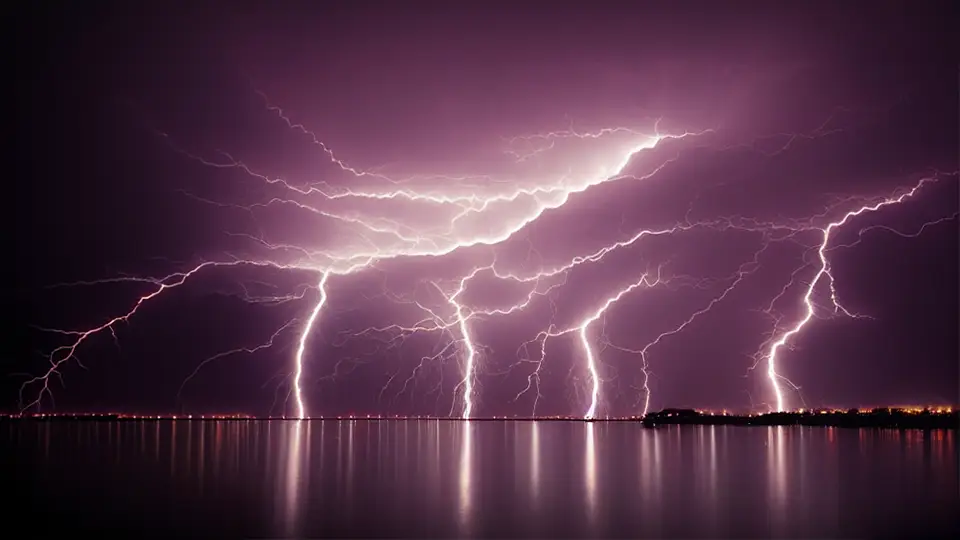
- As many as around 40,000 thunderstorms may develop around the world every day. This means that hundreds or even thousands of active storm cells may exist somewhere over the Earth at any given moment.
- Every thunderstorm contains electrical discharges. If you hear thunder, it means lightning has occurred inside a cloud, between clouds or between a cloud and the ground.
- Most lightning never reaches the ground. Discharges that remain inside clouds occur roughly five to ten times more frequently than cloud-to-ground strikes.
- Lightning can strike outside the area where rain is falling. Some discharges travel out from the side or top of a thundercloud and reach the ground many kilometres away from the main area of rainfall.
- There is no completely safe place outdoors during a thunderstorm. Isolated trees, mountain ridges, beaches, open fields and areas close to water are particularly dangerous.
- A car protects you during a thunderstorm mainly because of its metal bodywork. Electrical charge travels along the outside of the vehicle. Contrary to a common myth, the rubber tyres are not the main reason you are protected.
- The temperature inside a lightning channel can reach approximately 30,000 °C. That is hotter than the visible surface of the Sun, although the extreme temperature lasts for only a very short time.
- Thunder is caused by the sudden expansion of intensely heated air. Lightning heats the surrounding air so rapidly that it creates a shock wave, which then travels as sound.
- You can estimate the distance of a thunderstorm by counting the seconds between the flash and the thunder. Sound takes roughly three seconds to travel one kilometre, so a nine-second delay means the storm is approximately three kilometres away.
- Do not wait for the rain before looking for shelter. Lightning may strike before the main area of rainfall arrives, or after it has passed and the sky above you is beginning to clear.
- The longest officially confirmed lightning flash stretched for 829 kilometres. The discharge occurred in October 2017 over an area extending from eastern Texas towards the Kansas City region. The record was confirmed in 2025.
- Thunderstorms can occur during snowstorms. The phenomenon is known as thundersnow and involves lightning and thunder accompanying heavy snowfall.
- Lightning during a snowstorm can appear exceptionally bright. The flash reflects from falling snowflakes and the snow-covered ground, illuminating the entire landscape.
- Thunder can sound quieter during heavy snowfall. Snow absorbs some sound waves, which means thunder often does not carry as far as it does during a summer storm.
- Thunderclouds can grow to more than ten kilometres in height. The most powerful cumulonimbus clouds reach the top of the troposphere and develop their characteristic flattened, anvil-shaped tops.
- A thunderstorm requires moisture, unstable air and a mechanism that forces air upwards. This can be heating from the ground, an atmospheric front, mountains, or the meeting of different air masses.
- If you can hear thunder, you are close enough to the storm to be struck by lightning. The safest option is to shelter inside a substantial building or a closed vehicle.
- Lightning can strike the same place more than once. Tall buildings, towers, and masts may be hit repeatedly during a single storm, so the old saying that lightning never strikes twice is simply untrue.
- Lightning can start forest fires. Dry thunderstorms are particularly dangerous because they produce very little rain, or the rain evaporates before reaching the ground.
- Lightning is not always the greatest danger associated with thunderstorms. Torrential rain can cause flash flooding within minutes, especially in streets, valleys and normally dry riverbeds.
Interesting facts about weather – rain, clouds, and fog

- Clouds are made from tiny droplets of water or ice crystals. They are so small that movements of air can keep them suspended in the atmosphere for long periods.
- An average cumulus cloud can contain hundreds of tonnes of water. It does not fall to the ground all at once because that water is spread between an enormous number of microscopic droplets.
- The World Meteorological Organization recognises ten basic cloud genera. These include cirrus, cumulus, stratus, nimbostratus, and cumulonimbus.
- Cirrus clouds consist mainly of ice crystals. They form high in the atmosphere and can often indicate an approaching weather change or atmospheric front.
- Cumulonimbus is the classic thunderstorm cloud. It can bring torrential rain, hail, lightning, powerful wind gusts and, under suitable conditions, tornadoes.
- Fog is essentially a cloud at ground level. When you walk through fog, you are moving through tiny droplets of water suspended in the air.
- Meteorological fog reduces visibility to less than one kilometre. When visibility is greater, the phenomenon is generally described as mist, although exact terminology can vary depending on its use.
- Radiation fog usually forms on calm, clear nights. The ground cools and the moist air directly above it eventually reaches its dew point.
- Fog forms more easily close to lakes, rivers and other bodies of water. There is more moisture in the air in these locations, so less cooling is required before condensation begins.
- In the mountains, you can walk into a cloud without ever leaving the ground. Low cloud and fog frequently surround summits, mountain passes and higher sections of hiking trails.
- Rain does not always reach the ground. In very dry air, falling droplets can evaporate before reaching the surface, creating visible streaks beneath the cloud known as virga.
- The distinctive smell after rain has its name. It is called petrichor and is produced partly by compounds released from soil and plants, together with geosmin produced by microorganisms.
- Raindrops are not actually shaped like tears. Small droplets are almost spherical, while larger ones become flattened underneath as they fall.
- Huge raindrops break apart during their descent. Air resistance deforms them so strongly that they split into smaller droplets before reaching the ground.
- Some of the wettest places in the world are found on mountain slopes. Moist air is forced upwards where it cools and releases water in the form of heavy rainfall.
- Réunion Island holds several records for prolonged rainfall. During Cyclone Gamede in 2007, Cratère Commerson recorded 3,929 millimetres of rain within 72 hours.
- A single period of heavy rain can close tourist attractions for several days. I experienced this on Madeira, where rain, powerful winds and landslides led to the closure of hiking trails.
- A rainbow is actually a complete circle, even though we normally see only part of it from the ground. The horizon hides the rest. A full circular rainbow is easiest to see from an aircraft or a sufficiently high viewpoint.
- A double rainbow forms when light reflects twice inside water droplets. The colours of the outer rainbow appear in reverse order compared with those of the primary arc.
- Clouds can both cool and warm the Earth’s surface. During the day, they reflect some incoming sunlight, while at night they reduce heat loss. This is why cloudy nights can be warmer than clear ones.
Interesting facts about weather – snow, ice, and frost
- Snow is not frozen rain. It forms directly inside clouds when water vapour settles onto tiny particles and develops into ice crystals.
- Snow crystals have six-fold symmetry. This is a result of the molecular structure of water and the way its molecules arrange themselves when they freeze.
- In practical terms, no two snowflakes are identical. Each one passes through slightly different combinations of temperature and humidity, which influence its final shape.
- The appearance of a snowflake depends on air temperature. Different conditions produce thin plates, needles, columns, branching stars and more irregular shapes.
- Snow is not always perfectly white. It can appear pink, red, yellow, or brown because of dust, sand, soot or microscopic algae.
- So-called watermelon snow can even have a slightly fruity smell. Its pink colour is caused by algae adapted to cold environments that contain protective red pigments.
- Fresh snow is very effective at absorbing sound. Numerous pockets of air between the crystals absorb part of the sound waves, making snowy landscapes feel unusually quiet.
- Old, hard snow can have the opposite effect. An icy surface reflects sound, allowing footsteps, voices and vehicles to be heard from surprisingly far away.
- Snow is an excellent insulator. This is why shelters built from snow can maintain an interior temperature far higher than the air outside.
- Snow can fall even when the temperature is slightly above freezing. If the layer of warmer air close to the ground is thin enough, the flakes may not have time to melt completely before reaching the surface.
- Extremely low temperatures do not prevent snowfall. The problem is that freezing air holds little moisture, making intense snowstorms less likely.
- Freezing rain is one of the most dangerous types of winter precipitation. The droplets remain liquid even below 0°C and freeze immediately when they come into contact with a surface.
- Black ice can be almost invisible. A thin, transparent layer of ice on a road often looks like wet tarmac, making it particularly dangerous for both drivers and pedestrians.
- Frost can form without dew appearing first. Water vapour can change directly into ice crystals on surfaces that are below freezing.
- Ice floats because it is less dense than liquid water. As water freezes, its molecules form an ordered structure that occupies more space than the liquid.
- Water expands by around nine per cent when it freezes. This is why ice can burst pipes, crack rocks and enlarge gaps in roads and buildings.
- Avalanches can be triggered by much more than skiers and climbers. Fresh snowfall, windblown snow, rapid warming, rain and weakening layers within the snowpack can all cause an avalanche.
- During a snowstorm, wind may be a greater problem than the snowfall itself. Blowing snow can cover roads within minutes, dramatically reduce visibility and make an otherwise easy route difficult to recognise.
- Snow can reflect most of the sunlight that reaches it. This is why your eyes and skin may be exposed to intense radiation during a winter mountain trip, even when the weather feels cold.
- Snow can also fall in deserts. It occasionally happens in places such as the Sahara, where nighttime temperatures can fall below freezing, although lasting snow cover remains rare.
Interesting facts about weather – wind, tornadoes, and hurricanes
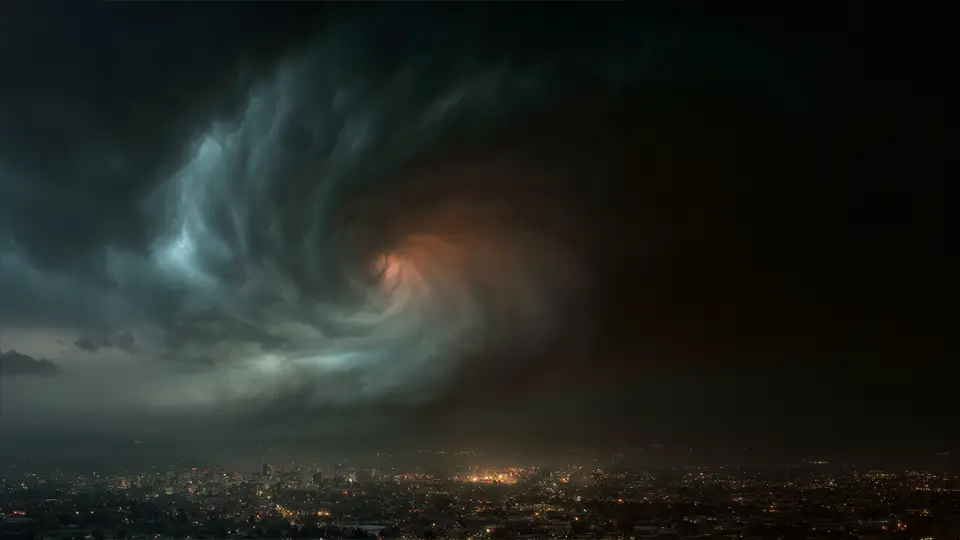
- Wind is created by differences in atmospheric pressure. Air moves from areas of higher pressure towards areas of lower pressure, while the Earth’s rotation and the shape of the landscape modify its movement.
- A wind is named after the direction it comes from. A westerly therefore blows from west to east, while a northerly brings air from the north.
- A sea breeze can reverse direction between day and night. During the day, cooler air from the sea flows towards the faster-heating land. At night, the pattern can reverse.
- Mountains can greatly strengthen the wind. Air forced through mountain passes and narrow valleys accelerates, producing powerful local gusts that may not be obvious from a general weather forecast.
- Foehn winds are warm and dry. Air loses moisture on one side of a mountain range and then warms as it descends on the other. Poland’s Haley is a local example of this type of wind.
- Strong winds can make walking difficult even when there is no rain. On exposed ridges and cliffs, gusts can knock you unbalanced, which is why wind speed matters just as much as temperature when checking the forecast.
- The weather in Iceland can change within a matter of minutes. During our trip, I watched conditions switch rapidly between rain, cloud and brilliant sunshine. You can read more about travelling there in our Iceland guide.
- Wind is often much stronger on the coast than farther inland. With fewer trees and buildings to disrupt the flow of air, powerful gusts can sweep across exposed coastal landscapes almost unhindered.
- Cornwall is a perfect example of a region shaped by Atlantic winds. Even an apparently calm day on the cliffs can suddenly become blustery, something worth remembering whenever you walk along the exposed coast.
- A tropical cyclone, hurricane, and typhoon are essentially the same type of weather system. The different terms mainly depend for the world in which the storm develops.
- The word ‘hurricane’ is used in the Atlantic and north-eastern Pacific. Similar storms are called typhoons in the north-western Pacific and are usually described as cyclones in the Indian Ocean.
- Tropical cyclones draw their energy from warm ocean water. Their development requires high sea temperatures, moist air and suitable atmospheric conditions at higher altitudes.
- The eye of a powerful hurricane can be surprisingly calm. Winds weaken in the centre and the sky may even partially clear. This does not mean the danger has passed because the second half of the eyewall will soon arrive.
- The Saffir–Simpson scale classifies hurricanes according to sustained wind speed. It has five categories but does not directly consider rainfall, storm surge height or flood risk.
- Even a Category 1 hurricane can cause serious damage. A lower category does not mean a storm is safe, particularly when it brings torrential rainfall and coastal flooding.
- A tornado is a rotating column of air connecting a thunderstorm cloud with the surface of the Earth. If the vortex does not reach the ground, it is usually described as a funnel cloud.
- The United States records around 1,200 tornadoes per year. The number varies from season to season, while historical comparisons are complicated by improvements in detection and reporting.
- Tornadoes are not limited to North America. They also occur in Europe, Asia, Australia, Africa and South America, although they may be less common or less thoroughly documented in many regions.
- The fastest winds close to the Earth’s surface probably occur inside powerful tornadoes. In the most violent examples, wind speeds may exceed 480 kilometres per hour.
- During extreme winds, one of the greatest dangers comes from falling and airborne objects. Branches, roof tiles, pieces of buildings and unsecured equipment can become dangerous projectiles, which is why sheltering away from windows is so important.
Interesting facts about weather for children

- Clouds can weigh hundreds of tonnes. They may look as light as candyfloss, but they are made from an enormous number of tiny water droplets or ice crystals.
- A rainbow is actually a circle. From the ground, we normally see only the upper part because the horizon hides the rest.
- Snow is not always white. It can sometimes look pink, red, or brown when it contains dust, sand or microscopic algae.
- Snowflakes have six arms. This happens because of the structure of water molecules, which arrange themselves into a characteristic six-sided pattern when they freeze.
- No two snowflakes are the same. Each one passes through slightly different layers of air and therefore grows in its own unique way.
- Fog is simply a cloud touching the ground. When you walk through fog, you can say that you are literally walking through a cloud.
- Thunder is caused by air heating rapidly. Lightning heats the air instantly, and its sudden expansion produces the loud noise that we hear.
- We see lightning before we hear thunder. This happens because light travels much faster than sound.
- Lightning is incredibly hot. The air inside a lightning channel can become hotter than the surface of the Sun, although only for a tiny fraction of a second.
- Wind is simply moving air. It develops when masses of warmer and colder air move between areas of different atmospheric pressure.
- Wind can carry sand over enormous distances. Dust from the Sahara sometimes reaches Europe and can leave a yellowish layer on cars and windows.
- Rain can produce a very distinctive smell. It is called petrichor and appears when raindrops release substances from the soil into the air.
- Raindrops are not shaped like tears. Small drops are almost round, while larger ones flatten underneath as they fall.
- Rain does not always reach the ground. When the air is extremely dry, droplets may evaporate before reaching the surface.
- The Sun can shine while it is raining. When this happens, there is a good chance of seeing a rainbow, particularly if the Sun is behind you.
- Hail can fall during summer. It forms high inside thunderclouds, where water droplets freeze and may repeatedly rise and fall within powerful air currents.
- Deserts are not always hot. Some, including Antarctica, are extremely cold. A desert is simply an area that receives very little rain or snow.
- In the mountains, temperatures normally fall as you climb higher. This is why it can be warm and sunny in the valley but cold, windy and snowy on the summit.
- Snow can help plants survive the winter. A fluffy blanket of snow insulates the ground and roots from severe frost.
- Weather can change within minutes. This happens particularly often in the mountains and beside the sea, so carrying a jacket on a trip is a sensible idea, even if the morning begins with sunshine.
Weather while travelling and why you should always take it seriously
After years of travelling, I have learnt that weather should never be treated as a minor detail in your plans. It can close a mountain trail, stop a ferry, hide a spectacular view behind cloud or turn a peaceful river into a dangerous torrent. That does not mean you have to abandon your trip every time the forecast looks less than perfect. I have had many fantastic adventures in rain, fog and strong winds. The important thing is knowing when a wet jacket is simply an inconvenience and when continuing along the route is becoming genuinely dangerous.
Before setting out, I check much more than the temperature and the little cloud symbol on my phone. I look at the probability and intensity of rainfall, wind gusts, visibility, official weather warnings and road conditions. In the mountains, I also check the forecast for the altitude at which I intend to walk because conditions in the valley may bear little resemblance to those at the summit.
When exploring cities, extreme heat can be just as exhausting as rain. In places such as Madrid, the middle of a summer day is often better spent having lunch or visiting a museum. The Museum of the History of Madrid is a particularly good place to escape the heat for a while. Alternatively, you can relax beneath the trees in Retiro Park and leave longer walks through the city for the morning or late afternoon.
Weather remains one of the most unpredictable elements of any journey. Occasionally, it ruins our plans, but it can also create views that would never exist beneath a perfectly blue sky. Fog hanging over a valley, a thunderstorm watched from the safety of a shelter or a rainbow appearing over a desert can stay in your memory far longer than yet another perfectly sunny day.