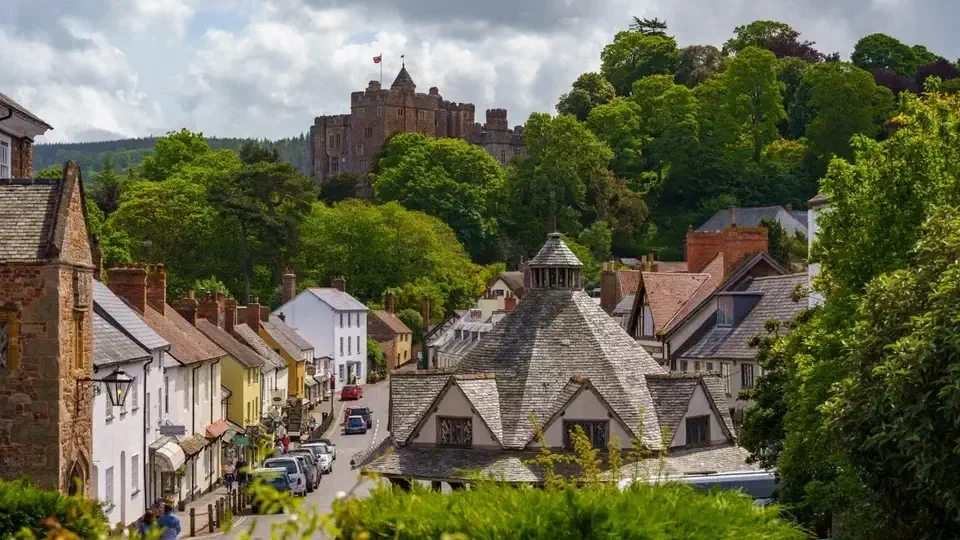
Dunster Castle is a mighty fortress towering over north-west Somerset, rising dramatically from a wooded hill. Even from a distance, the castle makes an enormous impression. Looking at it from the nearby village of Dunster, you might easily imagine that it has been carved straight out of solid rock. The castle is managed by the National Trust, an organisation that looks after historic buildings and places throughout the United Kingdom.
As you might expect, the location of the castle is no accident. Several factors influenced the choice of this particular hill, but one of the most important was the psychological effect it had on potential enemies. A castle standing high above the surrounding countryside looks far larger and more intimidating than it really is. Another obvious advantage was that a hilltop fortress was much easier to defend and gave its occupants military control over the surrounding area.
In the article below, I will tell you about Dunster Castle itself and the history of the people connected with it. You will also find plenty of tips and practical advice on how and when to visit, as well as my thoughts on whether it is worth making the extra journey to see this extraordinary place.
Dunster Castle the history of the castle and its owners
The history of Dunster Castle began in 1066, shortly after William the Conqueror was crowned King of England. The task of building the fortress was entrusted to William de Mohun, a knight who had served the Crown well.
He was ordered to construct a powerful castle that would protect the surrounding lands and the numerous trade routes passing nearby. A hill close to the small village of Dunster was chosen as the site, where an earlier Saxon fortification had once stood. Stone from local quarries became the main building material, while hard local oak and wrought iron were used to finish and strengthen the structure.
In the 14th century, the Mohun family sold the castle to the Luttrell family, and it remained in their hands until the second half of the 20th century. It was the Luttrells who were largely responsible for the appearance of the castle, its gardens and surrounding parkland that we see today.
During the 14th century, a network of defensive towers was built, and the castle was provided with new gates. The enormous oak doors reinforced with iron still serve their original purpose today, and you can see them when entering the estate.
During the English Civil War in the 17th century, the castle’s defensive walls and most of its buildings were destroyed. Oliver Cromwell, leader of the Parliamentary forces, personally ordered the complete destruction of the castle.
Eventually, however, the Luttrell family were allowed to retain the house. Dunster lost its military importance and was transformed into a comfortable family residence. Most of the interiors were rebuilt, while the façade and certain structural elements were also altered.
As a result, Dunster Castle gradually became a Jacobean-style residence, reflecting the second phase of Renaissance architecture in England.
In 1680, a major remodelling of the castle’s main hall began. One of the features installed at that time was the magnificent staircase made from dark, intricately carved wood. The famous sculptor Edward Pearce is believed to have created this remarkable piece of craftsmanship, although there is no surviving documentation confirming this beyond doubt.
Interestingly, the richly carved staircase you can see immediately after entering Dunster Castle was originally painted white. Along the entire length of the balustrades, you can spot hunting scenes and decorative plant motifs. I spent about half an hour walking up and down those stairs, simply because I couldn’t get enough of them. Absolutely fantastic!
The 20th century was another fascinating period in Dunster Castle’s history. The Luttrell family left the castle in 1910, and the enormous house remained empty until 1920, when Geoffrey Luttrell decided to renovate it and bring it firmly into the modern age.
Electricity was installed, the heating system was modernised and a polo ground was created within the estate. The property became extremely popular with friends of the family, and Dunster Castle gained a reputation for lively parties and noisy fox hunts organised in the surrounding woods.
During the Second World War, part of the castle was converted into a convalescent home for wounded US Navy officers.
After the death of the head of the family, maintaining the enormous property became increasingly difficult and the estate was sold to the Ashdale Property Company. However, in 1954 the Luttrell family bought Dunster Castle back.
It remained in their possession until 1976, when, following the death of the last member of the family to live there, the estate passed to the National Trust.
If you enjoy visiting historic houses managed by this organisation, you may also like Dyrham Park near Bristol or the wonderfully eccentric Snowshill Manor.
Visiting Dunster Castle in Somerset
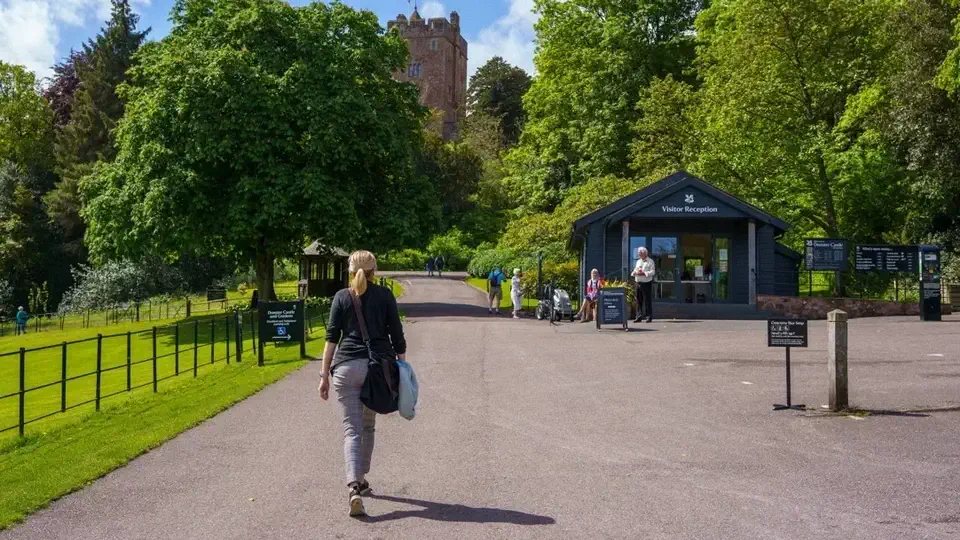
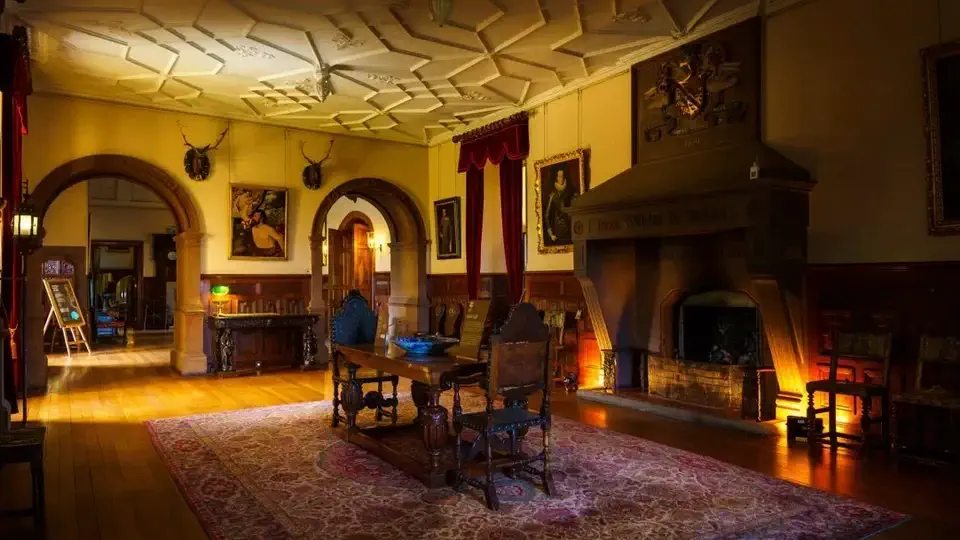
Your adventure inside Dunster Castle should begin in the hall, a huge entrance area leading to the other parts of the house.
The Outer Hall and Inner Hall at Dunster Castle
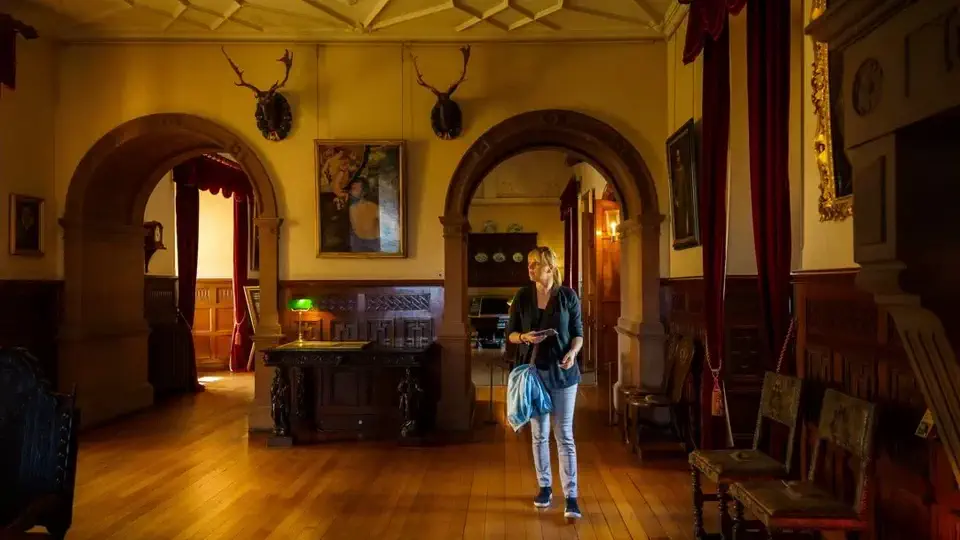
The large Outer Hall at Dunster Castle was created during the 17th-century rebuilding of the property. In 1870, Salvin, one of the most well-known architects of the Victorian period, designed and created the Inner Hall by combining three rooms from the old residence.
Old mezzanine floors were removed to create additional space. Previously, corridors led from the hall towards the castle chapel. During the reconstruction, however, the chapel was demolished and replaced by a tower containing a charming drawing room.
The Drawing Room
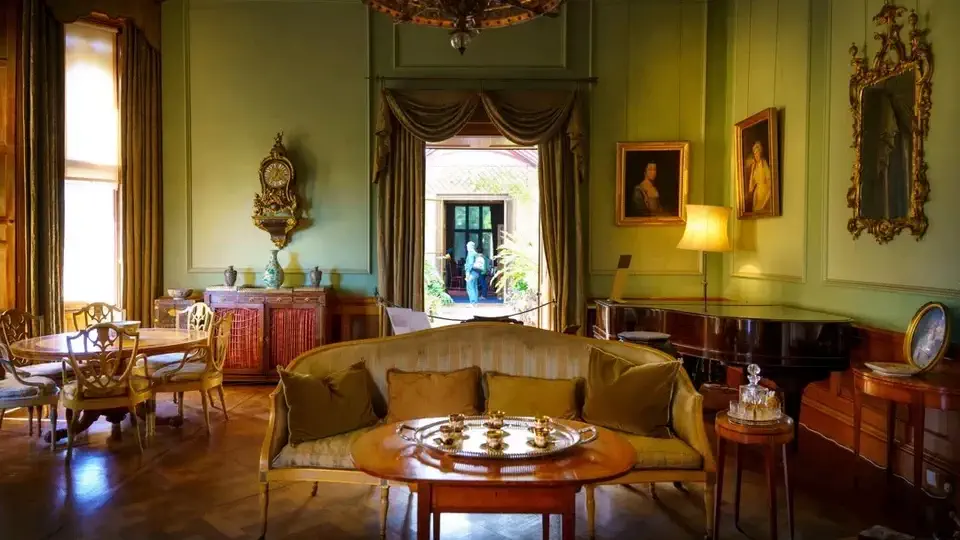
The Drawing Room was intended for members of the family and their guests. It was a place for relaxed conversation and also provided somewhere for women to spend their time while the men were occupied with activities in which ladies traditionally did not take part.
Look up and you will see the initials GL high on the decorated ceiling. They refer to George Fownes Luttrell, who commissioned the room. Beautiful brass gas lamps were installed on the walls at around the same time and were later converted to electricity.
Today, the walls are covered with panelling installed on the instructions of Alys Luttrell in 1935. Before that, the room had been decorated with Victorian wallpaper.
The Dining Room and Butler’s Pantry
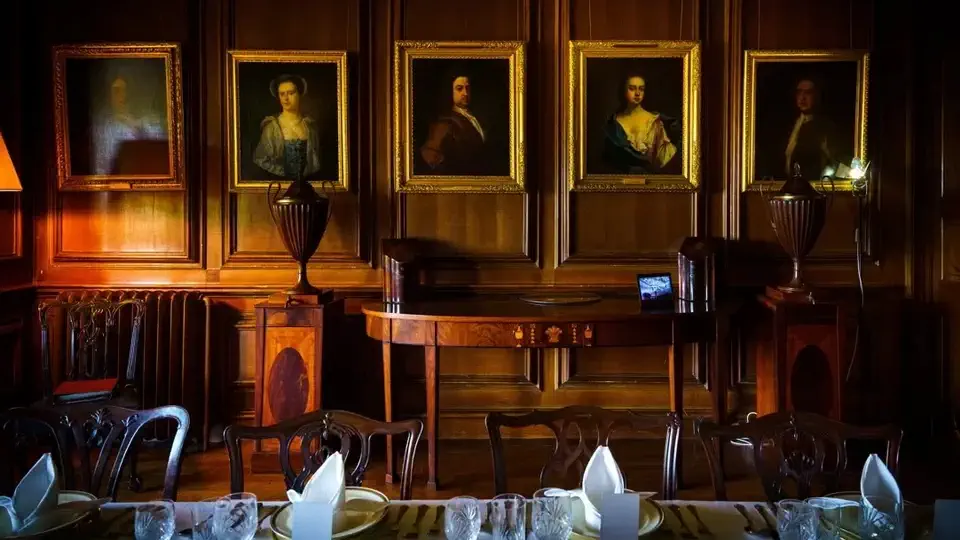
The Dining Room dates back to the 17th century and was designed for Francis and Mary Luttrell. Its walls are covered with expensive plasterwork, while ornaments and decorative friezes cover the ceiling. The room was very deliberately designed to demonstrate the high social status and wealth of the castle’s owners.
Next to the Dining Room is another room where Mary originally received particularly close friends and favoured guests. During later renovations, this room became the Butler’s Pantry, where some of the family’s most valuable ceramics and tableware are still kept.
While visiting the Dining Room, have a close look at the two coats of arms. The first, positioned above the fireplace, belongs to the Luttrell family, while the second, incorporated into the decorative friezes, represents Mary’s family.
Pantry and service rooms at Dunster Castle
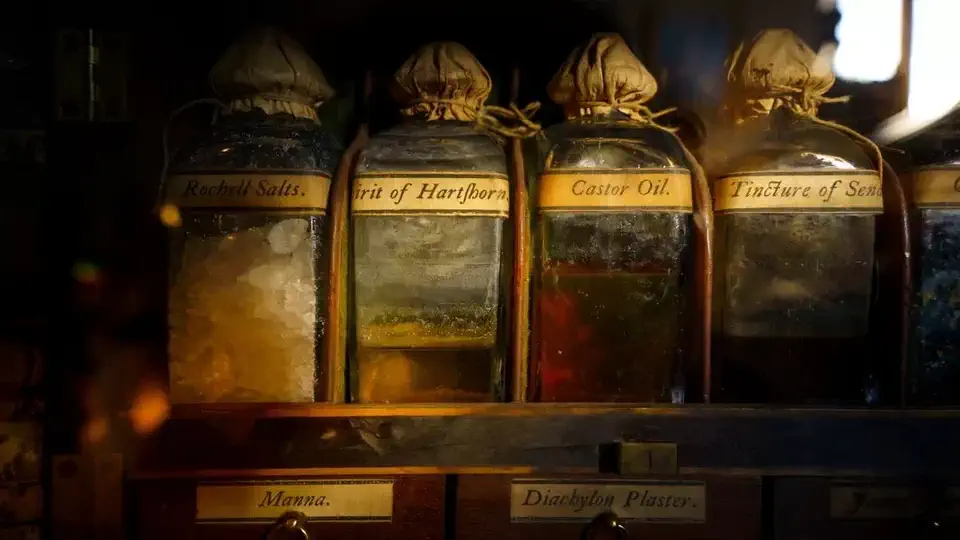
The pantry and several service rooms can be found on the ground floor of the castle. Originally, this part of the building was modest but extremely functional. During the 19th-century reconstruction, however, several innovations that were very modern for their time were introduced.
Gas lighting was installed first, followed later by electricity. A small lift was built into the wall so that hot dishes could be transported directly upstairs and onto the dining tables.
One of the rooms was effectively turned into a safe, where valuable silverware and decorations were kept and only brought out on important occasions. Specially trained servants were responsible for cleaning and maintaining them. Today, this part of the castle contains what is known as the New Kitchen.
The name comes from 1962, when Alys Luttrell ordered the room to be modernised with the latest appliances, including a dishwasher, refrigerator and modern oven.
Apparently, Alys loved cooking and frequently prepared much of the food served at the castle herself. According to one local legend, you can still occasionally hear – or even see – the former lady of the house moving around the kitchen.
The main staircase and its famous wooden carvings
The beautiful wooden staircase leading from the main hall to the first floor of Dunster Castle is one of the most valuable historic features in the entire building. For me personally, it is also one of the most beautiful.
Francis and Mary Luttrell commissioned the staircase towards the end of the 17th century. It is believed – although the attribution has never been fully documented – to have been made by Edward Pearce, one of the most celebrated woodcarvers in England at the time.
Each section of the balustrade was carved from one large piece of elm and connected to the next so skilfully that it is difficult to spot the joints.
The balustrades are decorated with plant motifs, hunting scenes and other symbols associated with country sports. These are not the only historic stairs inside the castle. Another staircase can be found upstairs, leading to the higher floors. Known as The Oak Staircase, it dates from the early 17th century.
As you climb towards the upper floors, have a look at the beautiful prints hanging on the walls. There are twelve of them, created by William Hogarth in the 18th century.
The Morning Room
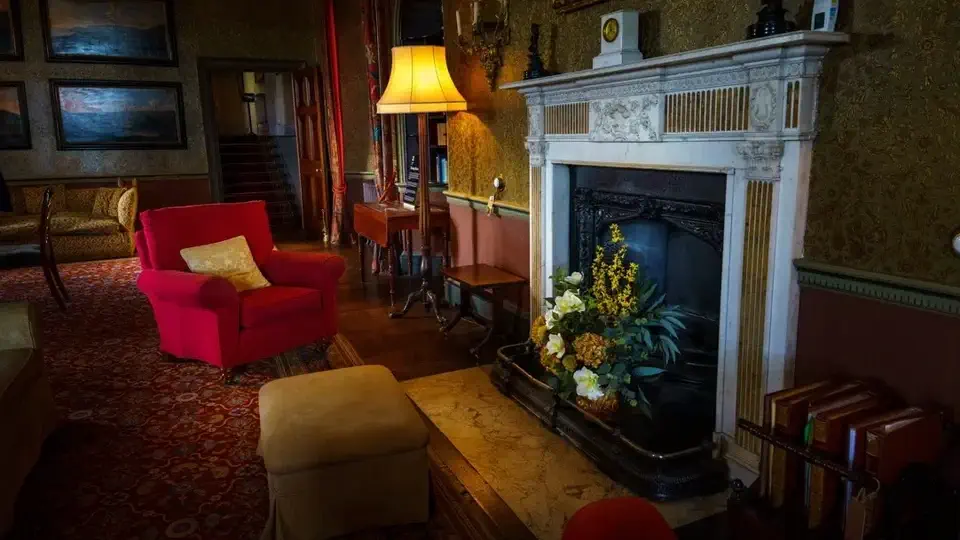
The Morning Room dates from the time of Henry Fownes Luttrell. It was decorated with richly carved wooden doors and panelling. The room also contains an enormous Georgian fireplace, which is a remarkable piece of historic stonework in its own right.
Alys Luttrell spent much of her time in this room during the 1960s. She even had a television and modern speakers installed here. The Morning Room is a particularly good place to learn more about the final generations of the Luttrell family.
Numerous photographs and documents displayed on the tables tell the stories of the last members of the family to live at Dunster Castle.
The Wisteria Bedroom
Nazwa sypialni pochodzi od rośliny glicynia, która oplata zewnętrzną ścianę pokoju. Podobno roślina ta jest tak stara, jak stara jest ta część zamku. W dokumentach sypialnia ta wymieniona jest jako Sypialnie Pana Luttrella. Prawdopodobnie zajmował ją George Luttrell, lecz po jego śmierci w roku 1910 została przemianowana na sypialnię gościnną. Do sypialni przylega łazienka z umywalką i wanną, co czyniło z niej luksusowe, jak na tamte czasy, pomieszczenie. Pozwalano w niej sypiać wyłącznie najważniejszym gościom. Zajmował ją, między innymi Maharadża Jaipuru, który gościł na zamku w roku 1935.
The East Quantoxhead
The East Quantoxhead is a bedroom named after Quantoxhead, where another property belonging to the Luttrell family was located.
In an inventory compiled in 1910, the room was described as Mrs Luttrell’s Bedroom. Together with an adjoining dressing room, it formed a flat known as Mrs Luttrell’s Sitting Room Suite.
During the great reconstruction of the estate in 1870, the flat was fitted with a large bathtub set into a beautiful mahogany surround. Until 1920, it was the only large bath in the entire castle.
Other bathrooms did have bathing facilities, but their bathtubs were considerably smaller and far less comfortable.
The Leather Gallery and its magnificent leather panels
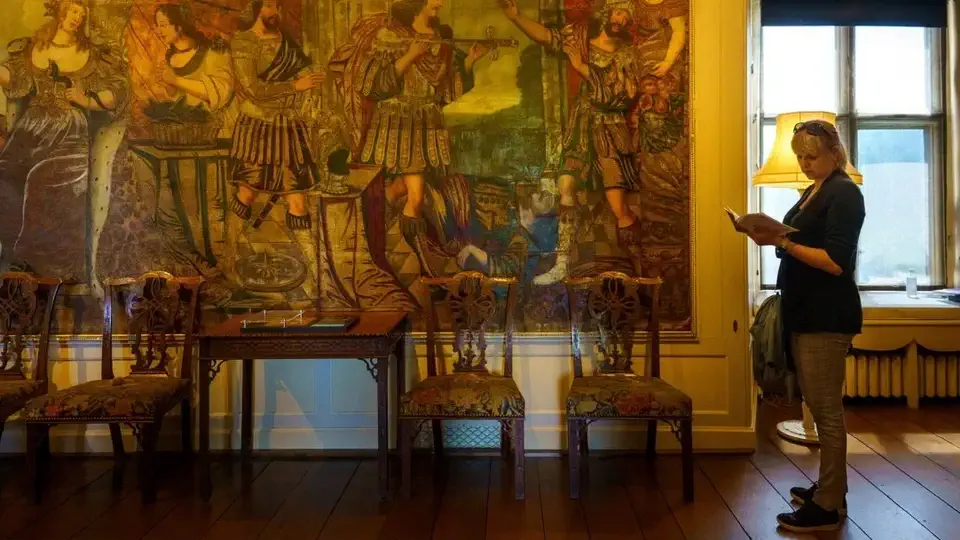
The Leather Gallery at Dunster Castle is considered one of the finest rooms of its kind and is particularly unusual in Britain. Its walls are covered with enormous decorative leather panels. The scenes painted on them tell the story of the love affair between the great Roman general Mark Antony and the beautiful Egyptian queen Cleopatra.
They form spectacular illustrations inspired by William Shakespeare’s Antony and Cleopatra. The paintings were created on calfskin. Before being painted, the figures and decorative elements were embossed into the leather to give the images an almost three-dimensional appearance.
The panels were made in the Netherlands during the 17th century and installed on the walls of Dunster Castle in 1741. Previously, the room had been used for balls and banquets.
The leather panels were initially intended simply as practical decoration for parties because, unlike fabric, leather does not absorb cooking smells and cigar smoke so easily.
However, once they had been installed, they proved so beautiful and valuable that the surrounding rooms were incorporated into the gallery.
The King Charles Room
One of the great events in Dunster Castle’s history was the visit of the future King Charles II in 1645. He was travelling around the kingdom looking for support for his father, Charles I, in his struggle against Parliamentary forces.
Castle records show that Charles occupied this part of the building for several days, which is why the bedroom assigned to him is still known as The King Charles Room.
The choice of bedroom was apparently not accidental. Hidden behind the large bed is a secret door that could have allowed its occupant to escape from the castle unnoticed if necessary. After the royal visit, the room became the principal bedroom and one of the most desirable chambers in the entire house.
The King Charles Room was remodelled and modernised in the 19th century. It was furnished with beautiful oak furniture, while modern wallpaper replaced the earlier painted decoration. The wallpaper was produced by the prestigious decorating company Crace & Son, which also worked on interiors at Windsor Castle.
In 1991, the wallpaper was reprinted using the original printing blocks and traditional pigments, which is why it looks remarkably fresh today. You should also pay attention to the beautiful stone fireplace dating from 1602. Its decorative elements and fire surround were created by local craftsmen.
The Gun Room
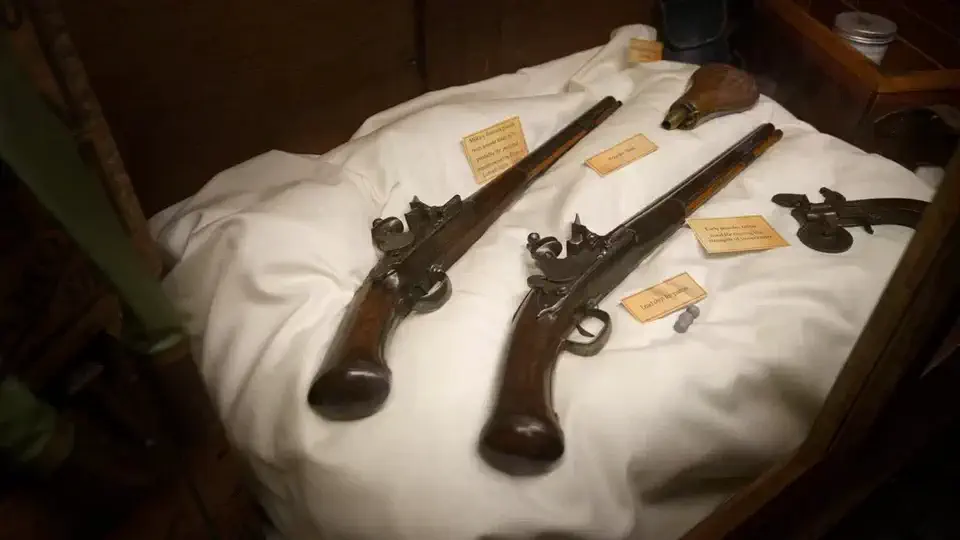
The Gun Room provides a perfect illustration of the Luttrell family’s enthusiasm for hunting and shooting. At the beginning of the 20th century, the room was frequently used because Geoffrey Luttrell was well-known for his passion for firearms and hunting.
His shooting parties in the surrounding countryside became well known and attracted many distinguished guests. The room contains a sizeable collection of weapons, some of which date back to the English Civil War.
Alongside 17th-century muskets you will find shotguns and rifles made by various manufacturers. Next to the Gun Room is the Powder Room, where dangerous explosive materials were once stored.
The Billiard Room
No respectable Victorian castle or English country house could possibly be complete without a billiard room. This was traditionally a place where men could meet, smoke cigars, drink a glass of whisky and discuss politics, business and the latest trends.
Dunster Castle was no different. Naturally, The Billiard Room contains a billiard table, scoreboard and other equipment connected with the game.
The furnishings were supplied by the well-known company Burroughes & Watts, which provided sporting equipment to grand houses throughout Victorian England.
Many of the items look almost like works of art and are exceptionally luxurious. The billiard balls were even made from ivory. They vary slightly in size and weight, making the game even more challenging.
Before the castle was remodelled, the old kitchen occupied the space where the Billiard Room stands today. Architect Anthony Salvin preserved certain elements of the earlier interior, including the stone arch of the old kitchen range.
A richly decorated fireplace was installed inside it, while parts of the former stone and cast-iron hearths were converted into comfortable seats. For me, this is one of the most beautiful rooms in the castle, second only perhaps to the Leather Gallery upstairs.
The Library
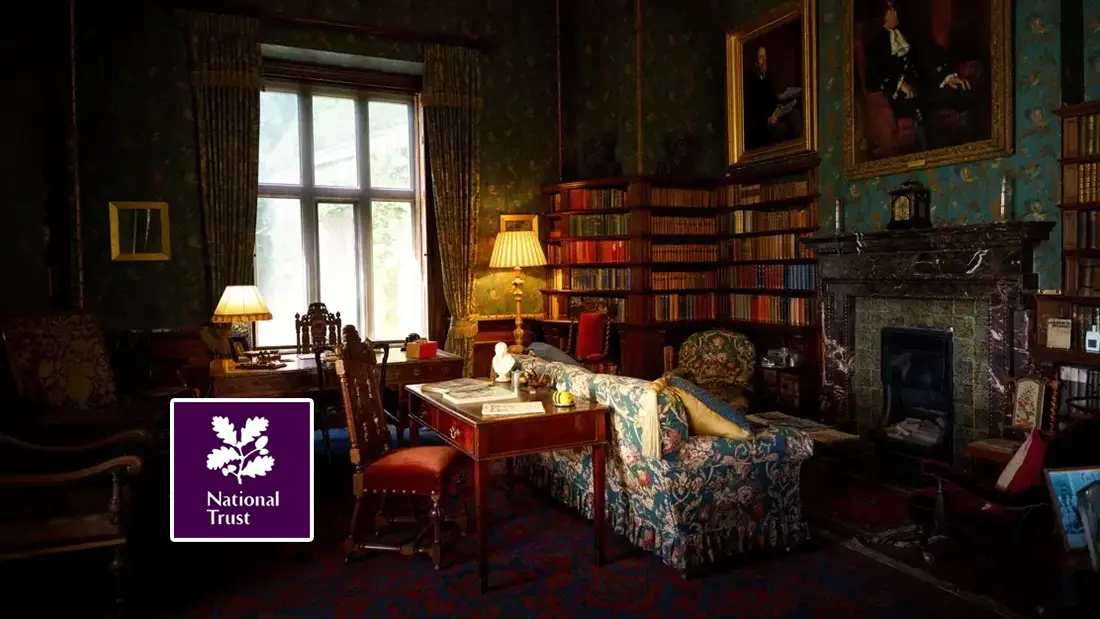
Like the Billiard Room, a library was almost an essential feature of a wealthy Victorian residence. The one inside Dunster Castle is beautiful and wonderfully atmospheric. In fact, I would go as far as saying that it is the room in which I would most enjoy spending a quiet afternoon.
The Library was furnished and decorated in accordance with Victorian fashion. Men tired after hunting or playing billiards could sit here and talk, play cards or chess. Reading the latest newspapers or popular books together and then discussing what they had read was another common form of entertainment.
The shelves are filled with beautifully bound books whose subjects reveal the surprisingly varied interests of the Luttrell family. You will find famous works of literature alongside volumes devoted to hunting, gardening, food preservation and biology. The walls are covered with embossed wallpaper dating from the late 19th century, when this type of decoration was particularly fashionable.
Portraits of members of the Luttrell family who lived during the 19th and 20th centuries also hang here. Among them is Francis, a one-eyed lieutenant colonel in the Foot Guards, while above the fireplace you can look directly into the eyes of Fownes, who inherited Dunster Castle in 1867.
There are portraits of Luttrell women too. One of the most striking is Annie Elizabeth Hood, George’s wife.
The Conservatory
Conservatories were extremely fashionable in wealthy English homes, so naturally Dunster Castle had to have one as well.
This Victorian winter garden cleverly connects the Library with the Drawing Room, providing a rather convenient neutral meeting place where women and men could socialise together.
The beautiful gardens at Dunster Castle

The grounds surrounding Dunster Castle are a wonderful example of the gardening traditions of Victorian England. Once the castle had lost its military role and appearance became more important than defence, the green areas around Dunster Castle were transformed into impressive gardens and parkland.
Gardeners carefully designed every part of the landscape, selecting interesting flowers, shrubs, and trees. Subtropical and Mediterranean species were planted alongside plants suited to the temperate British climate, many of which flourished around the banks of the River Avill.
As you walk across the green hills around Dunster, you will discover wonderful views across Somerset and towards the nearby Bristol Channel. If you enjoy landscapes like this, nearby Brean Down is another excellent National Trust destination overlooking the Bristol Channel. Heading downhill from the gardens immediately surrounding the castle, you eventually reach broad lawns and the grounds once used for polo.
Beyond them lie woodland and an old quarry from which much of the stone used to build Dunster Castle was extracted.
Dunster Castle and the Stables
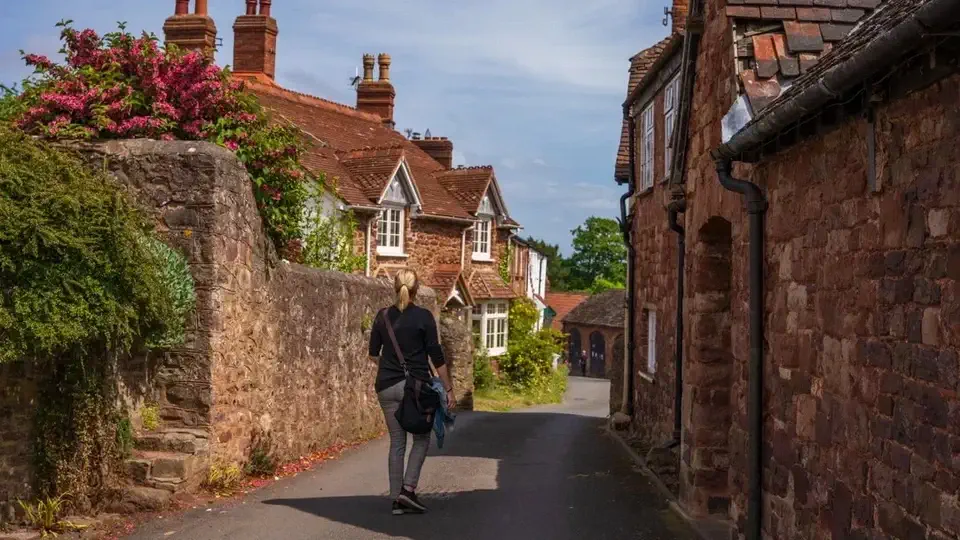
The stables at Dunster Castle are extensive and well worth seeing. Dating from the 17th century, they have survived in perfect condition.
Inside you can still see original stalls, partitions, and some equipment once used for looking after the horses. Close to the stables there is also a souvenir shop and somewhere to buy light refreshments.
Dunster Castle and the Watermill
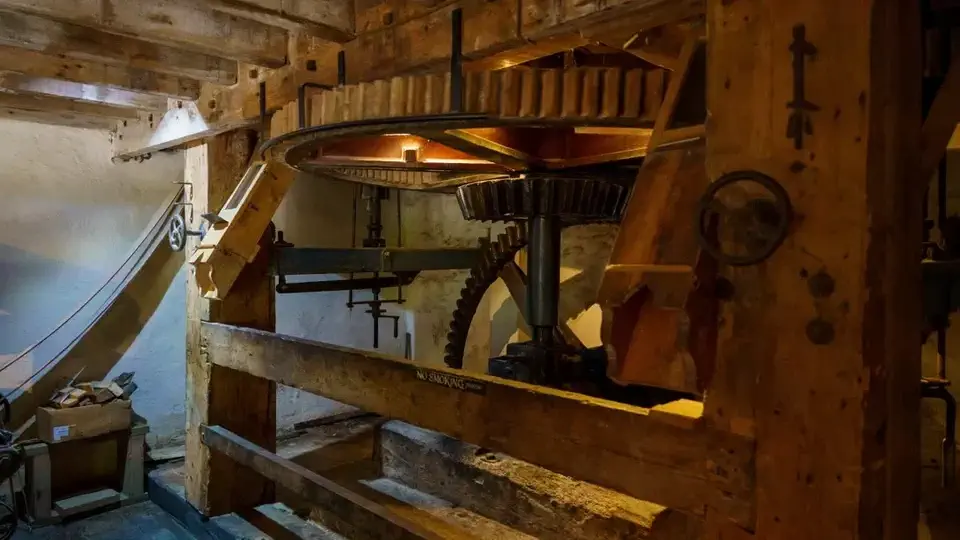
The existence of a mill in Dunster was recorded in the Domesday Book, the great survey of England ordered by William the Conqueror and completed in 1086.
The buildings you can visit today date mainly from 1779. At that time, most of the earlier structures were rebuilt, and the milling machinery was replaced. During the modernisation, some wooden mechanisms were replaced with iron components and new waterwheels were installed.
Remarkably, much of the machinery still works today. Dunster Watermill produces more than 18 tonnes of coarse bread flour each year, and naturally, you can buy some of it at the end of your visit.
The watermill at Dunster uses a relatively unusual arrangement with two overshot waterwheels. This means that water reaches the wheels through a specially constructed channel before dropping onto them from above. Both wheels have been restored and reinstalled during relatively recent renovation work.
Exploring the mill is a fascinating experience and gives you a much more profound understanding of how this type of machinery actually worked. The fact that flour is still produced here makes the visit even more interesting.
Apart from the milling machinery itself, you can also see numerous other pieces of equipment associated with traditional farming and baking. I highly recommend it!
Dunster Castle – practical information
- Dunster Castle is located in the village of Dunster at: Dunster Castle, Dunster, Minehead, Somerset, TA24 6NY.
- Dunster Castle is open to visitors from 10:00 am until 4:00 pm.
- The gardens can be explored until 5:00 pm.
- The car park closes at 6:00 pm.
- Unfortunately, from November and throughout the winter, the castle can usually only be visited at weekends.
- Ticket prices are:
- Adults – £13.00,
- Children – £6.50,
- Family ticket – £32.50,
- Parking – £5.50, or £11.00 if you arrive in a larger vehicle.
- Tickets are not particularly cheap, so if you intend to visit several historic properties in Britain, it may be worth considering National Trust membership. We have visited many estates run by the organisation, including Tyntesfield near Bristol and Lacock Abbey.
- Dogs and other pets are welcome in the castle gardens and parkland. Just remember that they should be kept on a short lead at all times.
Dunster Castle – facts, information and interesting details
- Dunster Castle represents almost 1,000 years of history.
- The fortress was built on the orders of William the Conqueror.
- It was constructed on a hill occupying the site of an earlier Saxon defensive structure.
- One of the oldest surviving features of the castle is the enormous oak door, made from exceptionally hard timber and reinforced with iron. It dates from the early 13th century and still performs its original function today.
- The castle was damaged during the English Civil War and narrowly escaped complete destruction.
- Soon after the Civil War, it ceased to function as a military stronghold and was transformed into an impressive country residence.
- A giant renovation of Dunster Castle began in 1868, and much of what you see today is the result of that work.
- Geoffrey Luttrell was famous for organising polo matches in the grounds of Dunster Castle. In 1935, he arranged a tournament in which the Maharaja of Jaipur and his team took part. A formal dinner was held at the castle and prepared by the Maharaja’s own cook. Geoffrey later wrote to a friend that it had been the most expensive dinner in the castle’s history because the guests had managed to drink almost the entire supply of wine stored in the house. Apparently, the cook had been extremely generous with the spices.
- During the Second World War, the Luttrell family provided part of the castle as a convalescent home for wounded officers.
- The final member of the family to live at Dunster Castle was Geoffrey’s wife. She remained there until 1974. After her death, her son Walter Luttrell transferred the Dunster Castle estate into the care of the National Trust.
- Today, in addition to exploring the castle, watermill and gardens, visitors can take part in various special events organised at Dunster, including ghost nights, treasure hunts and detective weekends.
- Deep inside the castle gardens, hidden beneath old trees, you can find a small pet cemetery where animals belonging to members of the Luttrell family were buried.