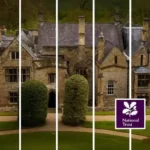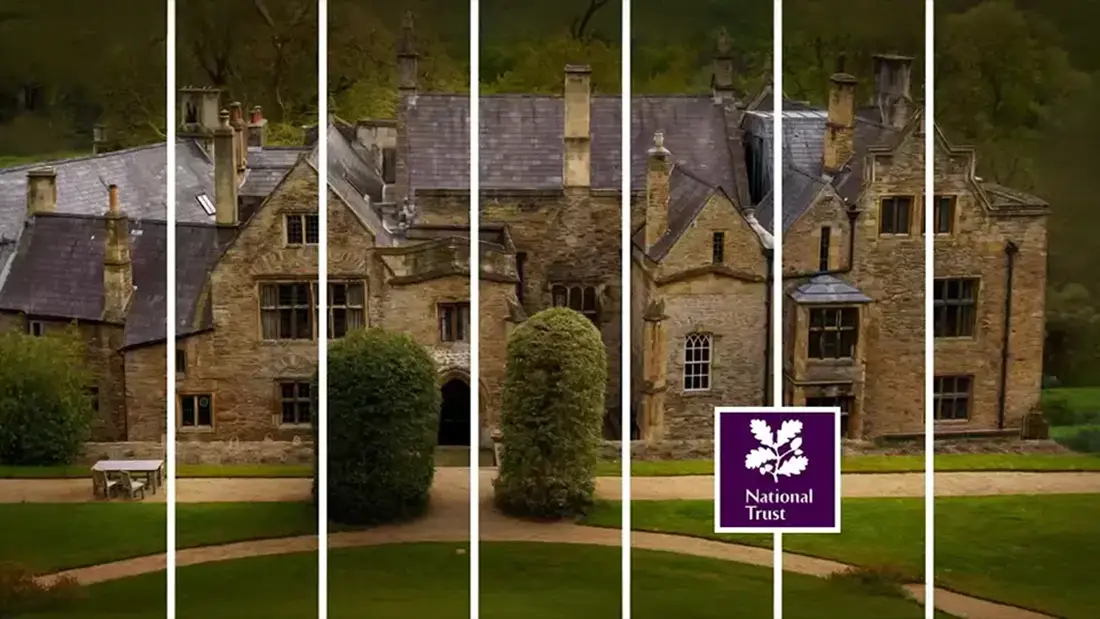
Clevedon Court is a country house with roots dating back to the 14th century. The estate was built on the foundations of an earlier structure which stood here around the turn of the 12th and 13th centuries. Today, the house is partly under the care of the National Trust, which manages the estate. In the article below, I will tell you about the history of this fascinating place and the people who once lived here. You will also find out whether it is worth going out of your way and spending a few pounds to see it.
Clevedon Court and its history
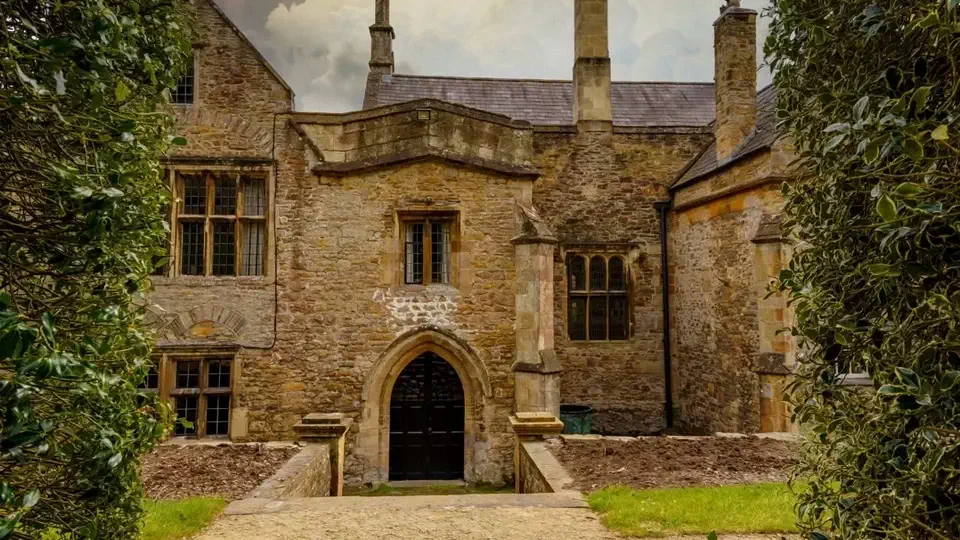
As I mentioned earlier, Clevedon Court was built on the foundations of a 12th-century military structure. The old defensive tower and parts of the walls became an integral part of the house and can still be seen when walking through the rooms open to visitors. Clevedon Court was rebuilt by Sir John de Clevedon, who transformed the old defensive buildings into a comfortable family residence in 1336. The house must have proved a rather pleasant place to live, as the Clevedon family remained here for several hundred years. During that time, the house was extended and altered on several occasions, and today it is easy to spot the differences in architectural style between its various sections. The next owner was the wealthy Bristol merchant Abraham Elton. Thanks to his money and connections at court, he was granted a baronetcy in 1717 and acquired the right to own land, allowing him to purchase large areas around what is now the town of Clevedon. It was then that Clevedon Court became the Elton family’s country home.
The estate was soon remodelled again, turning it into a fashionable country house. After Abraham’s death, his son Abraham III inherited the property and surrounded the house with extensive and beautiful gardens. Unfortunately, he was not a sufficiently astute businessman to preserve the family fortune, and the Eltons went bankrupt in 1745. Fortunately, they managed to keep the house, although it stood empty for years and gradually fell into disrepair. It was only Sir Abraham IV, Abraham III’s younger brother, who rebuilt the family fortune through his work as a lawyer and eventually managed to pay off the family’s debts.
In 1882, a fire broke out in the servants’ quarters and seriously damaged the house. It was, of course, a major tragedy, but it also provided an opportunity to remodel the building and introduce some of the latest inventions of the time, including mains gas and, naturally, electricity. Thanks to the quality of the design and workmanship, the house remains habitable to this day. Although the Elton family still lives in Clevedon and retains rights to part of the house, the estate as the National Trust manages a whole. Unfortunately, only part of the house is open to visitors. More than half of the rooms are used for administrative purposes or remain private areas belonging to the Elton family. On fine days, you may even see members of the family walking through the gardens or along the corridors of the house.
Visiting Clevedon Court
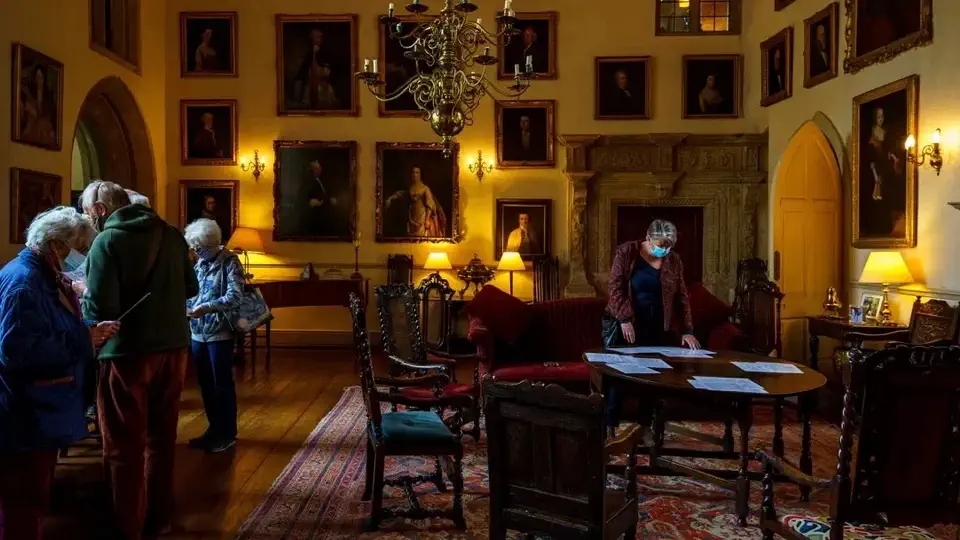
Before you begin your visit to Clevedon Court, one of the National Trust staff members will greet you at the entrance. It will most likely be an elderly volunteer who may well remember the days when its former owners still occupied the estate. They will give you a brief introduction to the layout of the house and explain which rooms are accessible to visitors. As you make your way around, you will meet many other people like them, all more than happy to share their knowledge and enthusiasm. They will tell you about the estate’s history as well as the people who lived here in the past.
The main entrance to the house is particularly interesting, together with the hall further inside, as these form one of the oldest parts of the building. Here you can still spot elements of a 13th-century Norman defensive tower. The main drawing room, on the left as you enter, is equally fascinating. It is a large room filled with antique furniture and dozens of paintings depicting people connected with the house. You will easily find portraits of successive owners of Clevedon Court, as well as members of their families. Each of these figures has a story to tell, so do not hesitate to ask one of the guides nearby about them.
Another intriguing feature is the canopy above the entrance to the drawing room. At first glance, it seems rather pointless and not particularly useful. However, the house looked quite different before the great fire of 1882. During the rebuilding and restoration, the shape of the roof was changed, which meant that the interior of the house had to be altered as well. Today, the gallery above the drawing room serves partly as a store for old documents and partly as a library. To go upstairs, you need a good reason and permission from the owners, as the space contains private family paintings, photographs, and documents dating back many centuries.
Another fascinating feature of the drawing room is the enormous stone fireplace, made using stones taken from an old Norman fortification which was dismantled during the construction of the house. The Normans believed that decorating defensive buildings with images of their heroes and legendary figures strengthened their power and resilience. At Clevedon Court, you can still find several figures and symbols carved into the stone, so keep your eyes open. From the drawing room, you can climb the stairs to see the old bedrooms, bathrooms, a sitting room and a small chapel. Visiting the house is a very pleasant experience, especially when there are not too many other guests around. Some rooms are rather cramped, particularly the staircases and corridors, so it does not take many visitors for things to become crowded. On the ground floor, you can also see the service rooms, kitchen, and pantry.
Glass and porcelain museum
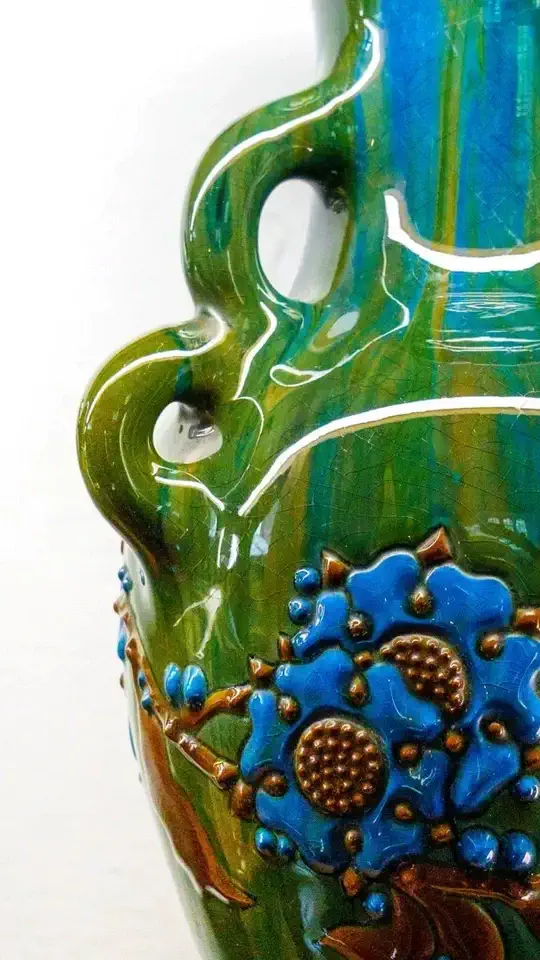
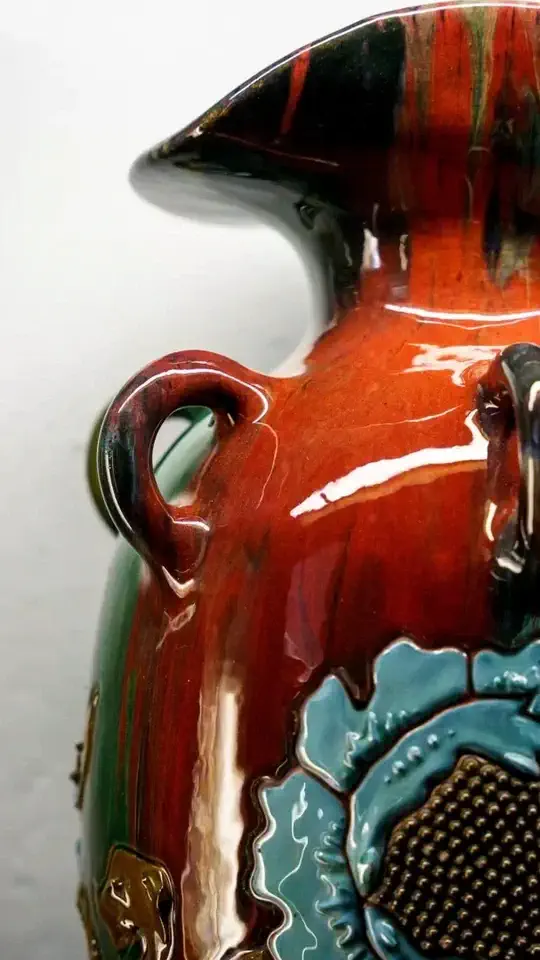
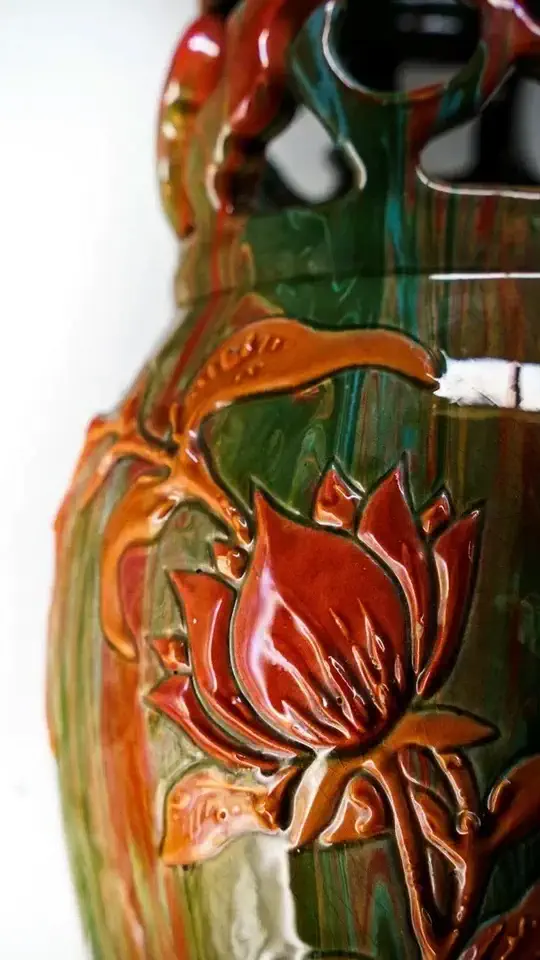
Wealthy families of the past, including the Eltons, were able to live comfortably from their substantial family fortunes. Some members of the household enjoyed a rather extravagant lifestyle, others travelled, while some devoted themselves to their own particular passions. One of these interests eventually led to the creation of a small museum at Clevedon Court, dedicated to ceramics and glass produced by local craftsmen. Some members of the family also tried their hand at this demanding craft, and evidence of their efforts can be found among the exhibits.
Among the most attractive pieces are the glass bottles, vases, and other small objects produced by Nailsea Glassworks. The manufactory operated from 1788 to 1873 and used various techniques which have long since disappeared. The museum also contains beautiful examples of pottery created by Sir Edmund Harry Elton, the eighth baronet of Clevedon. At the turn of the 20th century, he established a pottery studio where remarkably attractive household objects were produced. What made them stand out was an innovative decorative technique developed here. Gold, silver and platinum were used to decorate vases, pots, lamps, and other ornamental pieces. It is worth spending a little extra time in this small room, which is filled with all sorts of beautiful and intricate objects.
Park and gardens surrounding the old estate
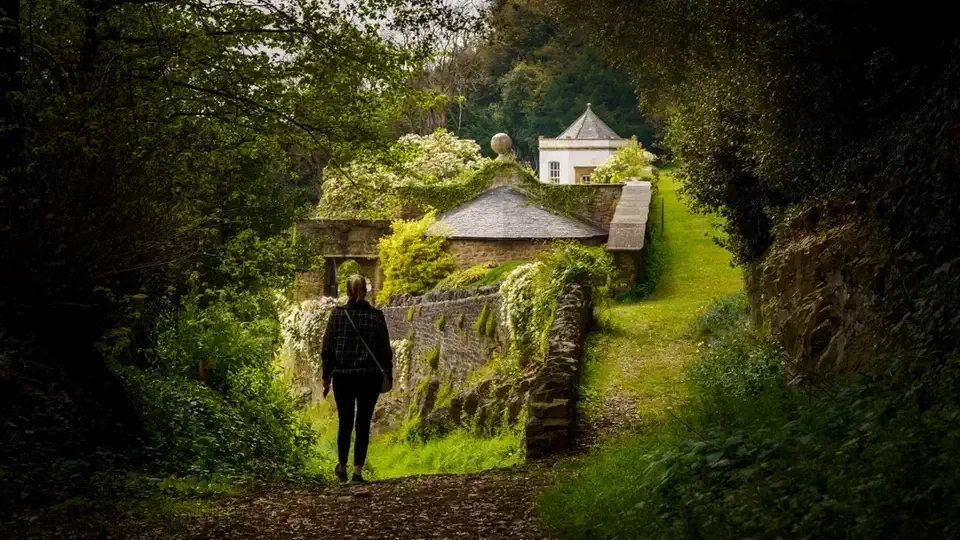
As we walked around Clevedon Court, we all agreed that the gardens and park surrounding the house are the greatest attraction of the estate. The large area behind the house has been laid out with flower beds, charming walls and little towers, together with benches and winding paths. The green terraces are equally attractive, rising towards a hill crowned by an old, dense woodland. There is also a mysterious tower within the park, connected to the wall surrounding the estate. I call it mysterious because its original purpose is unknown and it does not appear in any surviving documents. It is thought that it may have been built to help defend the part of the house bordering the woodland.
The walls surrounding the estate are also ancient, although their exact date of construction is unknown. Some of them probably date back as far as the 13th century. The later structures, meanwhile, were built in Georgian or Victorian styles. The stone barn standing next to the entrance gate is also ancient. It is enclosed by a stone wall, creating a charming little corner filled with flowers and an air of mystery.
Another interesting feature of the gardens at Clevedon Court is the white summer house standing on higher ground. It was built as a viewpoint and as a decorative feature of the garden. Unfortunately, it is no longer in use and clearly needs some restoration. There is also one rather less pleasant aspect of the gardens: the constant noise from the nearby M5 motorway. The sound is surprisingly loud and never seems to stop. Apparently, you can get used to it, but we never managed to.
Clevedon Court practical information
- The address of Clevedon Court is: Tickenham Road, Clevedon, North Somerset,BS21 6QU
- Getting there is very easy. Simply leave the M5 motorway at junction 20.
- There is free parking at the estate.
Opening times
Clevedon Court is open on:
- Wednesday from 2 pm to 5 pm
- Thursday from 2 pm to 5 pm
- Sunday from 2 pm to 5 pm
The estate is closed on all other days of the week. This is due to staffing difficulties and several other factors.
To make sure that you will be able to visit Clevedon Court, check their website before setting off.
Ticket prices
Tickets for the house and gardens at Clevedon Court:
- Adults – £13
- Children – £6.5
- Family – £32.5
Tickets for the gardens only:
- Adults – £6.5
- Children – £3.25
- Family – £16.25
Times are uncertain and prices rise like birds in flight, so before setting off for Clevedon Court, check their website to make sure that the prices are still current.
Clevedon Court facts
- Clevedon Court dates from the turn of the 13th and 14th centuries.
- The house was built on the site of earlier defensive structures, including a defensive tower whose remains are still incorporated into the house.
- The Elton family has owned Clevedon Court from the beginning of the 18th century to the present day.
- The eldest men in the family have traditionally all been named Abraham.
- The early Elton fortune came from the copper and glass trade. However, it was Abraham II’s investments in the slave trade, involving people transported from Africa to America and the Caribbean, that brought the family its real wealth.
- The height of the European slave trade came during the 16th and 17th centuries. This trade is sometimes referred to as the Triangular Slave Trade, a name derived from the routes followed by slave ships travelling from Europe to Africa to obtain enslaved people, then to the Americas and finally back to Europe.
- Sir Abraham IV was the first member of the family to build his fortune without involvement in the slave trade. He became involved in the abolitionist movement and campaigned for equal rights.
- The house and surrounding land came under the care of the National Trust in 1960.
- The Elton family still lives in the town of Clevedon and retains rights to part of the house.
- Clevedon Court is almost 700 years old – the present manor house was built around 1320 by Sir John de Clevedon, although parts of the structure are even older.
- Clevedon Court has a surviving medieval tower – its origins may date back as far as the 12th century. Building research suggests that the tower predates the main part of the manor house.
- The Great Hall is even older than the present building – its origins are associated with the 13th century, and it was later incorporated into the rebuilt manor house.
- Clevedon Court is a Grade I listed building – this is the highest category of heritage protection in England and is reserved for buildings of exceptional historical and architectural importance.
- The manor had a defensive character in the Middle Ages – the remains of perimeter walls discovered in the garden indicate that the earlier residence was considerably more fortified than its present appearance might suggest.
- Clevedon Court was substantially remodelled in the 16th century – around 1570, John Wake enlarged the windows, introduced new decorative features and added the west wing.
- The Wake family coat of arms can still be seen on the building – the distinctive bear and shield motif has survived on the gables of the house.
- Clevedon Court changed hands mainly through marriage and inheritance – after the male line of the de Clevedon family died out, the estate passed to the Wake family through marriage.
- In 1630, the manor was purchased by John Digby, 1st Earl of Bristol – he was an English diplomat and ambassador to Spain who attempted to arrange a marriage between Prince Charles and the Spanish Infanta Maria Anna.
- Clevedon Court was confiscated during the English Civil War – because Digby was a Royalist, his property was seized and given to Carew Raleigh, the son of the famous explorer and courtier Sir Walter Raleigh.
- The Elton family era began in 1709 – Abraham Elton purchased Clevedon Court together with around 1,000 acres of land. The Elton family has remained associated with the estate ever since.
- The wealth of the first Abraham Elton was connected with industry and trade – among other ventures, he operated glassworks and supplied raw materials to the Bristol Brass Company.
- The history of Clevedon Court is also connected with the transatlantic slave trade – Abraham Elton owned ships involved in the trade. His commercial activities were linked to the transportation of enslaved people from Africa to the Americas and the Caribbean.
- The Great Hall acquired its distinctive decorative ceiling in the 18th century – it was added during modernisation works carried out by the second baronet of the Elton family.
- The gardens at Clevedon Court impressed the renowned garden designer Gertrude Jekyll – she described the terraces here as “one of the noblest series of terrace walls in England”.
- The terraced gardens were largely created in the 18th century – they stretch down the southern slope of the hill and offer extensive views towards the Mendip Hills.
- Clevedon Court suffered a fire in 1882 – the blaze destroyed the west wing of the house, which was subsequently rebuilt to designs by the architect C. E. Davis.
- Clevedon Court was visited by figures associated with literature – among its notable visitors were the poet Samuel Taylor Coleridge and the writer William Makepeace Thackeray, who also produced drawings depicting the manor.
- Art pottery was produced at Clevedon Court in the 19th century – in 1879, Sir Edmund Elton established the Sunflower Pottery. The pottery produced there, known as Elton Ware, was even sold in New York at Tiffany & Co.
- Clevedon Court came under the care of the National Trust in 1961 – the estate was transferred as part of an arrangement concerning inheritance tax. The Elton family did not leave the house, however, and its members remain connected with the estate and continue to be involved in welcoming visitors.