Skałka Church or the Basilica of St. Michael the Archangel in Krakow, is a place that makes an impression even on those not seeking a religious experience.
Basilica of St Michael the Archangel has something extraordinary about it. You can visit the city countless times, walk along the same streets, and still keep discovering something new. Most tourists head straight for the Main Market Square, the Cloth Hall or Wawel Castle, but I have always been more interested in places that feel calmer and less obvious. That is how I ended up at the Basilica of St Michael the Archangel in Kraków, better known simply as Skałka Church.
I am not a religious person. I have never looked at churches purely through the lens of faith. What fascinates me are human stories, architecture, symbolism, and the way such places survive for centuries despite wars, fires and changing times. That is precisely why Skałka left such a strong impression on me. It is not just another old church. It is a fragment of Kraków’s history, a place filled with legends, drama and a remarkable atmosphere.
What I liked most was the fact that the basilica does not try to overwhelm visitors with grandeur. It is nowhere near as massive as Wawel Cathedral, yet it feels far more intimate. The moment you step into the courtyard, you sense that this place has lived through centuries. The stone walls, the silence interrupted only by church bells, and the nearby flow of the Vistula River create an atmosphere that is difficult to imitate.
Skałka Church and the history of the basilica – from a medieval tragedy to one of Kraków’s symbols
The history of Skałka is one of those stories that make old walls seem as though they are whispering. Walking through the grounds of the basilica, I had the impression that almost every brick remembered something important. The origins of this place go back a very long way. According to tradition, this was where Bishop Stanislaus of Szczepanów was murdered by King Bolesław the Bold in the 11th century. The event became one of the defining moments in the history of the Polish Church and one of the greatest political conflicts of medieval Poland.
Legend says that the bishop openly criticised the king for his cruelty and the way he ruled the country. The conflict escalated until tragedy finally struck. The king was said to have personally killed the clergyman during Mass. Today it is difficult to know how much of the story is historical truth and how much is medieval legend, but such tales are accurately what give places their character, even when viewed from a historical rather than religious perspective.
The first church at Skałka was Romanesque. Later it was rebuilt in the Gothic style, while the current basilica is largely the result of a Baroque reconstruction carried out in the 17th and 18th centuries. Walking through the interior, you can notice traces of different eras, and that is precisely what I love most about historic buildings. They are never frozen in one point. They are like a chronicle of the city itself.
The Pauline monks played a giant role in the history of the basilica and have cared for the site since the 15th century. Thanks to them, Skałka survived partitions, wars and political upheavals. Interestingly, the church was repeatedly damaged by fires and military actions, yet it was always rebuilt. Clearly, Kraków could never imagine itself without this place.
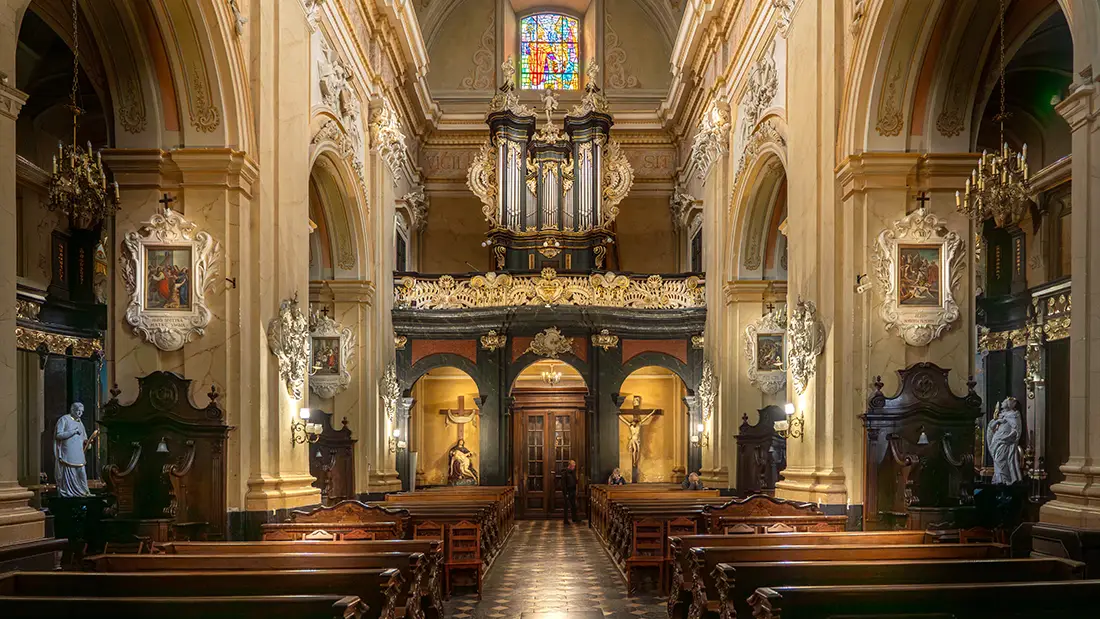
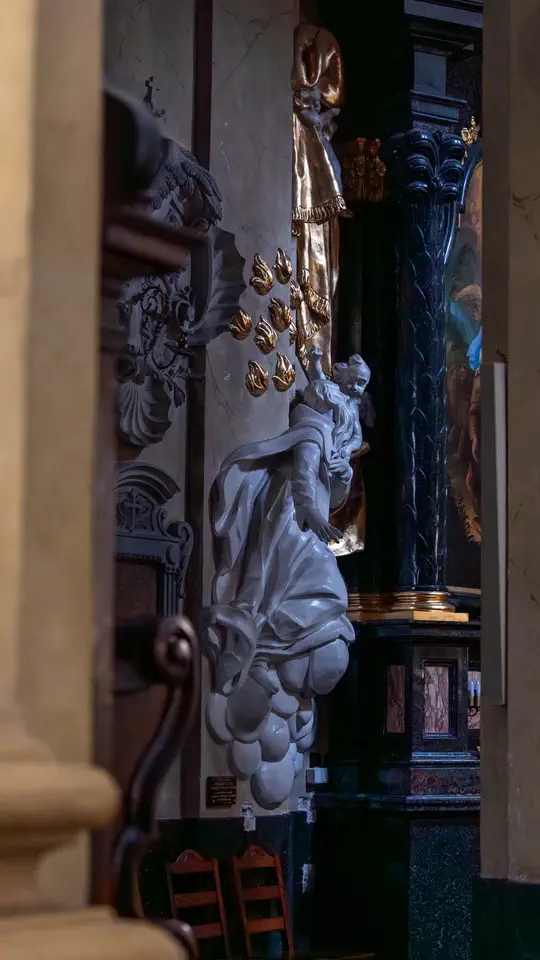
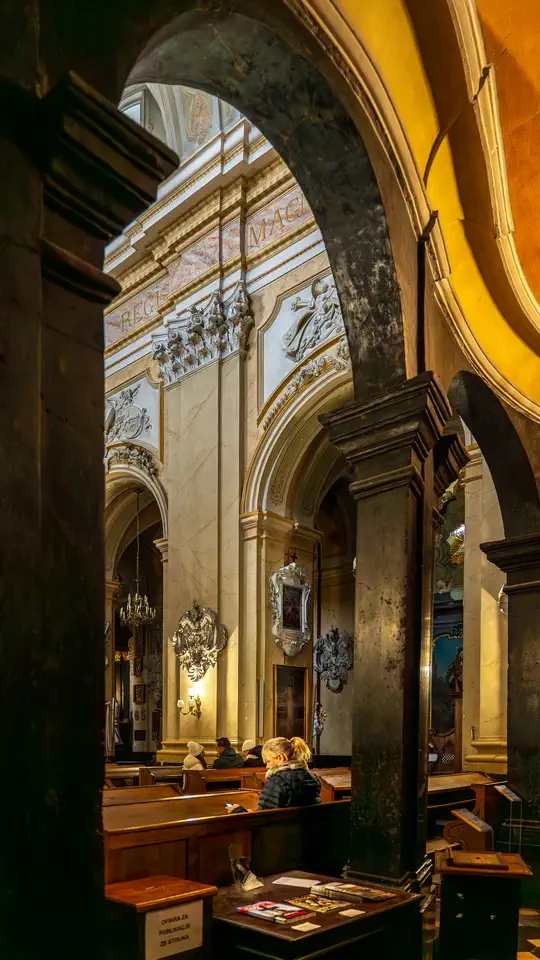
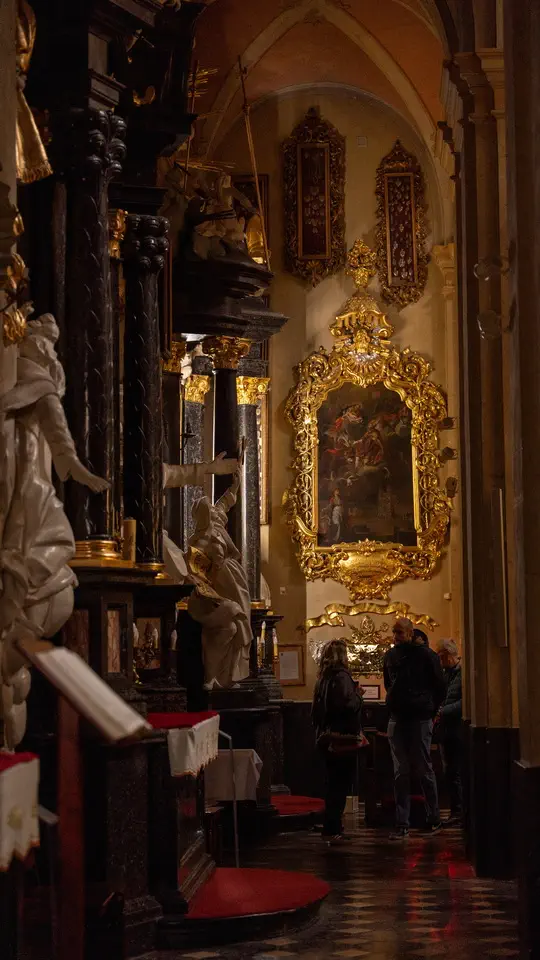
When I explored the interior, what struck me most was how different it felt from the austere Gothic churches of Northern Europe. Here, Baroque style dominates – gold, ornamentation, light and elaborate decoration. I am usually not fond of excessive splendour, but at Skałka everything somehow felt harmonious. It does not look like a random display of wealth. Instead, it feels like an attempt to create a place designed to inspire awe in visitors.
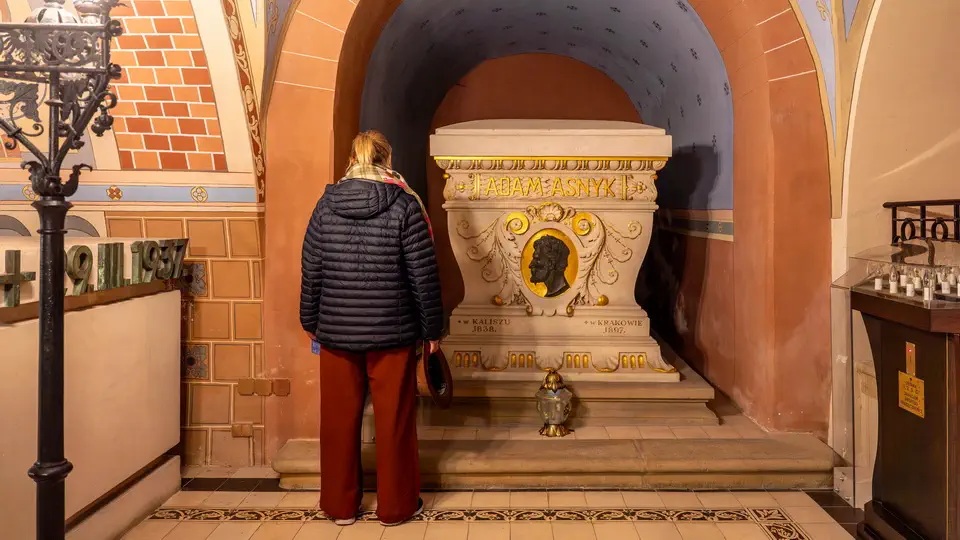
One of the most fascinating parts of the basilica is the Crypt of the Distinguished. This is an especially important place for Polish culture. Among those buried there are Stanisław Wyspiański, Jacek Malczewski, Józef Ignacy Kraszewski and Czesław Miłosz. That was the moment I realised that Skałka is not solely a religious site. It is also a monument to Polish art, literature, and history. In Kraków, religion, culture, and history seem impossible to separate. Even for non-believers, it is difficult to remain indifferent to a place that witnessed centuries of the city’s most essential events.
It is also worth remembering that Skałka was an critical pilgrimage destination for centuries. Polish kings visited it before their coronations at Wawel Castle. Even today, major religious and state ceremonies still take place here. Yet outside those occasions, the atmosphere remains calm and reflective. I enjoy visiting places like this early in the morning or late in the afternoon when the crowds are smaller. That is when you can truly feel the atmosphere of old Kraków. Sitting for a while in Skałka’s courtyard, looking at the Baroque façade and listening to the city in the background, I had the impression that time moved a little more slowly there.
Skałka Church and its importance to Kraków
Skałka Church is far more than just another historic monument. It is a symbol of Kraków itself. In many ways, it feels as though the city’s history would be incomplete without it. For centuries, the Basilica of St Michael the Archangel has been a place of important ceremonies, gatherings, and religious celebrations for the people of Kraków. Yet even those with no connection to the Church see it as part of the city’s identity, just like Wawel Castle or the Main Market Square.
Skałka is also deeply connected with Polish culture. The Crypt of the Distinguished serves as a reminder of how essential this place has been for artists and intellectuals. It is remarkable that one church can unite medieval political conflict, literature, art and modern Kraków in a single space.
The location of the basilica also adds to its appeal. It stands near the Vistula River, slightly removed from the busiest tourist crowds. For that reason, you can experience a calmer and less commercial side of the city. That is one of the reasons I ended up liking Skałka more than some of Kraków’s more famous attractions.
What to see while visiting the Basilica of St. Michael the Archangel in Krakow
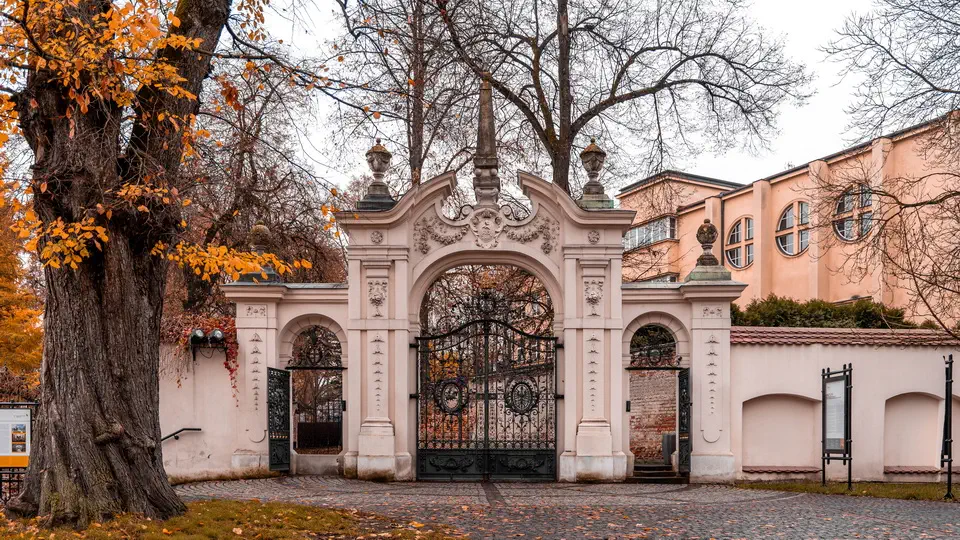
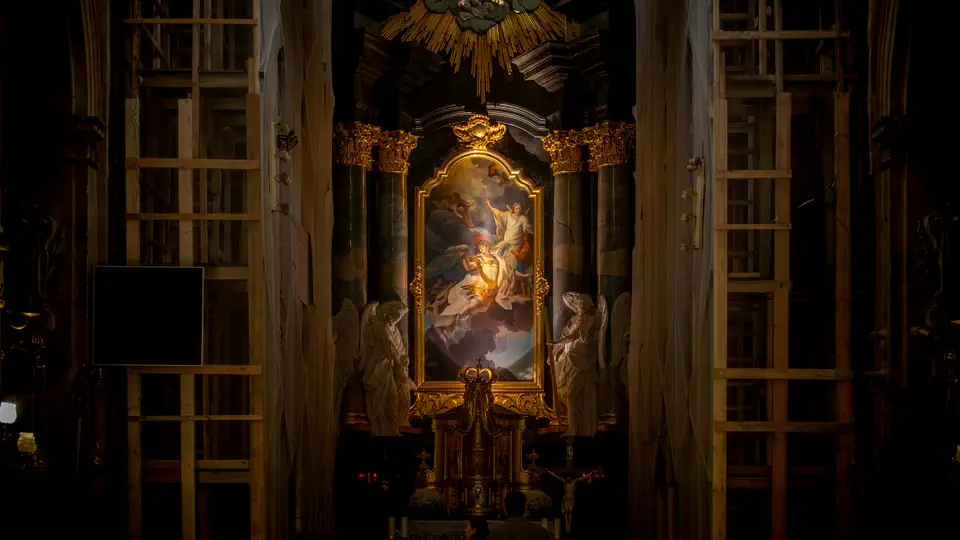
The façade of the basilica made the strongest impression on me. It is richly decorated in the Baroque style, yet still elegant. On a sunny day it looks genuinely spectacular. Inside, it is worth paying attention to the main altar and the ceiling decorations. Even people with no interest in religious art will probably appreciate the incredible craftsmanship involved. Every detail seems carefully designed.
A visit to the Crypt of the Distinguished is essential. It is one of those places where people instinctively begin speaking more quietly. The atmosphere there is unique, especially if you know even a little about Polish literature and history.
I also loved the courtyard with its pond and statues. It is a perfect place to sit down for a moment and escape the crowds of the Old Town. It is worth walking around the basilica as well because it looks wholly different from every angle. From one side it appears monumental, from another surprisingly intimate.
Skałka Church – secrets and legends connected with the basilica
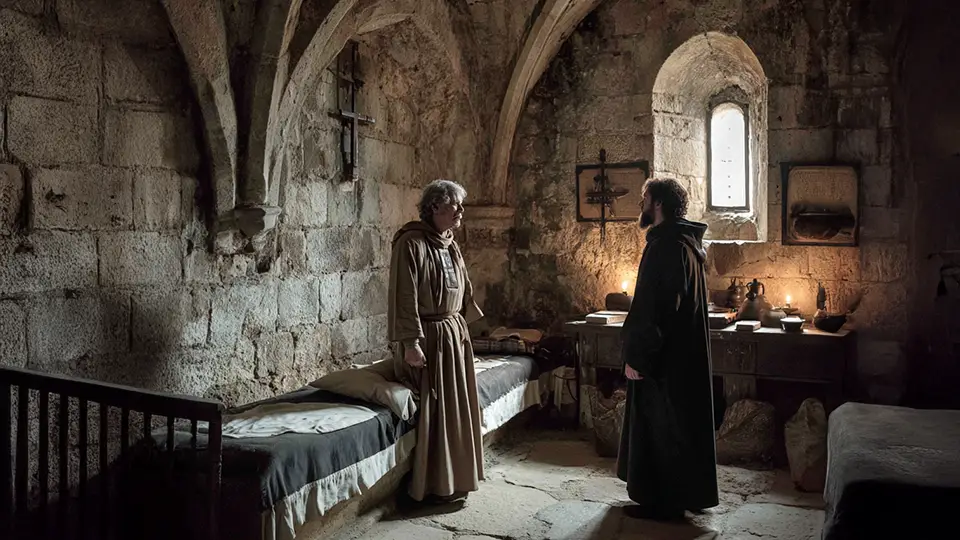
Like every old place in Kraków, Skałka has its legends. The most famous one concerns the death of Bishop Stanislaus. According to tradition, after he was murdered, his body was cut into pieces but miraculously became whole again. The story was said to symbolise the future reunification of Poland.
Another legend speaks of the spring beside the church. For centuries, people believed the water possessed healing properties. Even today, you may encounter visitors convinced that the place has unusual spiritual power.
There are also stories about secret tunnels leading from Skałka to Wawel Castle. It is impossible to know how much truth lies behind such tales, but they match perfectly the atmosphere of old Kraków. In the evening, the area around the basilica feels especially magical. With fewer people around, lantern light reflecting from the walls and the quiet streets nearby, it becomes easy to imagine medieval legends coming to life.
Skałka Church – how to prepare for a visit
The best time to visit is early in the morning or later in the afternoon. During the middle of the day, the basilica can become crowded with school trips and organised tour groups.
Comfortable shoes are a good idea because the area around Skałka is excellent for longer walks. You can easily combine a visit with a stroll along the Vistula boulevards or through the historic district of Kazimierz.
Even if you are not religious, it is important to respect the site. It is still an active church, so services sometimes take place and parts of the basilica may temporarily be closed to visitors.
I would also recommend spending a few quiet moments in the courtyard without rushing. It is one of those places best experienced slowly. If you enjoy photography, definitely bring a camera. In the evening especially, the basilica becomes incredibly atmospheric.
Facts, information and interesting details about the Basilica of St Michael the Archangel in Kraków
- Skałka Church was part of the coronation pilgrimage tradition of Polish kings – before being crowned at Wawel Castle, Polish monarchs visited Skałka to pay tribute to Saint Stanislaus. It symbolised the connection between royal and religious authority in historic Poland.
- Skałka stands on the site of an older Romanesque church – the current Baroque basilica is not the first building here. Earlier structures date back to the medieval period.
- Skałka is considered one of Kraków’s most important sanctuaries – although tourists more often visit Wawel Castle, many locals see Skałka as spiritually and historically more meaningful.
- Czesław Miłosz is buried in the Crypt of the Distinguished – his burial turned the basilica into an essential site for admirers of modern literature and Polish culture.
- The basilica is cared for by the Pauline Order – the monks have been connected with Skałka since the 15th century and helped rebuild it after fires and destruction.
- The interior is a fine example of Baroque architecture – rich decorations, gilding and elaborate ornamentation demonstrate how Baroque art aimed to inspire wonder through light and grandeur.
- Skałka lies close to the Vistula River – its location makes it easy to combine a visit with a walk along the riverside boulevards or through Kazimierz.
- The name “Skałka” has been used for centuries – although the church’s official title is much longer, most people in Kraków simply call it Skałka.
- The basilica was repeatedly damaged – fires, wars and political conflicts severely affected the church many times, yet the people of Kraków always rebuilt it.
- The Crypt of the Distinguished is often compared to a national pantheon – many important Polish artists and writers are buried there.
- A pond linked to the legend of Saint Stanislaus stands nearby – according to tradition, miraculous events took place there after the bishop’s death.
- Skałka has an unusually peaceful atmosphere – despite being close to the city centre, it feels far quieter than the areas around the Main Market Square or Wawel Castle.
- The church has appeared in countless works of art – painters, poets, and writers have been inspired by Skałka for centuries.
- Skałka played a critical patriotic role during the partitions of Poland – ceremonies held there helped maintain Polish national identity.
- The basilica has excellent acoustics – organ and choral concerts sound especially impressive within the church interior.
- Kraków escaped major destruction during the Second World War – thanks to this, Skałka survived in much better condition than many historic European churches.
- The courtyard is one of Kraków’s most atmospheric spots – especially in the evening when the lighting creates a unique mood.
- Skałka combines religious and secular history – few places in Kraków connect Church history so closely with Polish art and literature.
- The basilica frequently appears on historical walking tours – guides love telling stories there about medieval conflicts, legends, and old Kraków traditions.
- Even non-believers often appreciate Skałka – you do not need to be religious to feel respect for its history, architecture, and atmosphere.