Istanbul is one of those cities that cannot possibly be discovered during a single visit. Even if you spend several days exploring its most important landmarks, you will soon realise that you have only seen a small part of what it has to offer. This is a city where the history of Byzantium, Constantinople, and the Ottoman Empire intertwines with the everyday life of a modern metropolis. Monumental mosques stand alongside busy streets, underground cisterns lie hidden beneath the historic centre, and the palaces of former rulers rise above the shores of the Bosphorus.
Istanbul was one of the destinations I was particularly keen to visit when planning our trip to Turkey. I wanted to see the places most closely associated with the city’s history, especially the famous Hagia Sophia, the Blue Mosque and the palaces of the Ottoman sultans. Each of these landmarks tells a different story, and it is only by exploring them together that you begin to understand just how many civilisations have left their mark on this remarkable city.
During my visit, I also discovered that Istanbul is much more than a collection of historic monuments. It is a city with an extraordinary geographical setting and a distinctive rhythm of life, filled with the smell of spices drifting through the bazaars, the calls of the muezzins and ferries crossing the Bosphorus. It is worth allowing yourself enough time to discover Istanbul beyond its most popular attractions, including through ordinary walks along streets that are themselves an important part of its history.
Istanbul – a city on two continents
Istanbul lies in north-western Turkey, on the Bosphorus Strait, which connects the Black Sea with the Sea of Marmara. Its geographical position is particularly unusual because the city stretches across both sides of the strait, meaning that it occupies two continents – Europe and Asia.
The European side of the city is divided by the Golden Horn, a natural harbour that has been an important centre for shipping and trade for centuries. This is where the historic centre and many of Istanbul’s most important landmarks are located, including Hagia Sophia, the Blue Mosque and Topkapi Palace. On the opposite side of the Golden Horn lie districts such as Galata and Beyoğlu, associated with Galata Tower, Istiklal Avenue and the more modern face of the metropolis.
The Asian side of Istanbul has a slightly different character. Here, you will find residential neighbourhoods, traditional markets, waterfront promenades and places where you can observe everyday life away from the busiest tourist areas.
The Bosphorus is not simply a geographical boundary between Europe and Asia. It is one of the city’s most important transport routes. Merchant ships, tankers, passenger ferries and private boats regularly travel through the strait. Taking a ferry between the European and Asian shores is also one of the easiest ways to see Istanbul from a wholly different perspective.
The history of Istanbul – from Byzantium to modern Turkey
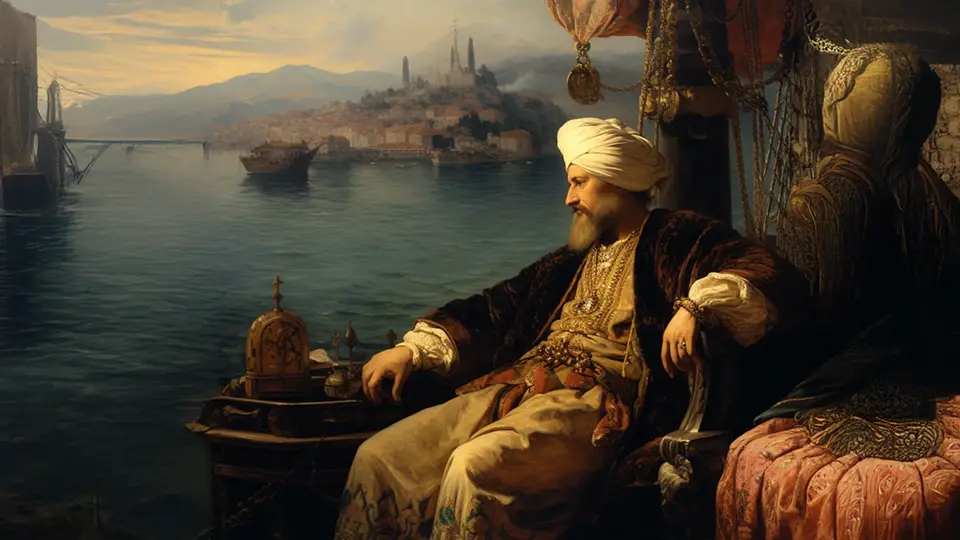
The history of Istanbul is so long and complicated that it could easily fill an entire guidebook of its own. Over the centuries, the city has changed its name, rulers, dominant religions and political importance. It has been the capital of powerful empires and a witness to wars, revolutions and religious transformations. Traces of these events can be found almost everywhere you look.
Byzantium – the origins of the city
The city’s origins date back to antiquity. Around 660 BC, Greek settlers from Megara established a colony here, which they called Byzantion. According to tradition, they were led by a man named Byzas, whose name supposedly gave rise to the settlement’s original name. The location proved exceptionally advantageous. Its position on the Bosphorus provided control over important trade routes connecting the Black Sea with the Mediterranean, while the natural harbours offered excellent conditions for shipping and the surrounding landscape made the settlement easier to defend.
Over the following centuries, Byzantion came under the influence of various powers until it was destroyed in AD 196 during a conflict with Emperor Septimius Severus. The city was subsequently rebuilt, but its real turning point came during the reign of Emperor Constantine the Great. In AD 330, he officially inaugurated a new capital of the Roman Empire, known as New Rome, although the name Constantinople eventually became more widely used. The city grew rapidly, and its political, economic and religious importance increased steadily.
Constantinople became one of the most important centres of Christianity. Monumental churches, palaces, squares and public buildings were constructed throughout the city. In the fifth century, during the reign of Emperor Theodosius II, an impressive system of defensive walls was built, protecting the city from invaders for many centuries.
Hagia Sophia – a symbol of Byzantine power
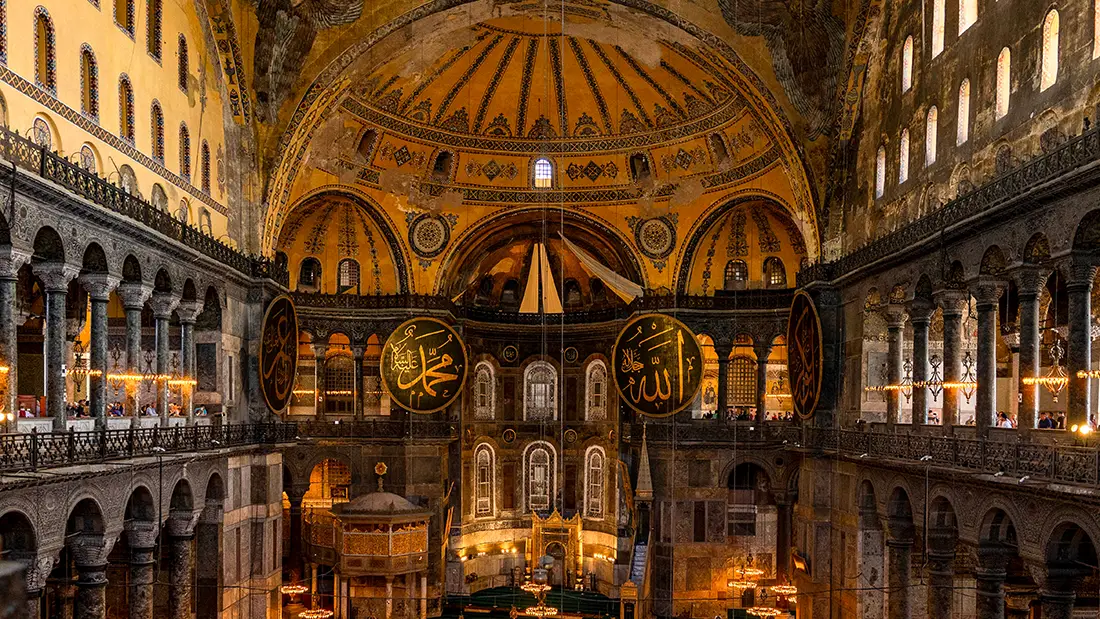
One of the most important landmarks reminding us of the city’s Byzantine past is Hagia Sophia. The church was commissioned by Emperor Justinian I and solemnly consecrated in AD 537. When I stepped inside, I was immediately struck by the age of the building, the enormous scale of the interior and the distinctive light entering through its windows. The interior is relatively dark, which makes the monumental dome, measuring approximately 32 metres in diameter, appear even more impressive. The semi-domes, massive marble pillars and surviving fragments of Byzantine decoration also deserve attention.
For almost a thousand years, Hagia Sophia was the most important Christian church in Constantinople. In 1204, during the Fourth Crusade, it was plundered by the Crusaders. In 1453, following the Ottoman conquest of the city, it was converted into a mosque. Over time, minarets, and other Islamic features were added, while some Christian imagery was covered.
In 1935, under the Republic of Turkey, the building was opened to the public as a museum. In 2020, its status changed once again and it returned to use as a mosque. Today, Hagia Sophia is a place where visitors can trace almost fifteen centuries of history. The surviving Christian mosaics represent only a small part of the original decoration, but their presence reminds us of the building’s earlier purpose. For me, this was one of the most important highlights of the entire trip.
If you would like to discover more about this extraordinary monument, have a look at my separate guide to Hagia Sophia in Istanbul, where I describe the interior, its famous mosaics and the fascinating history of the church.
Constantinople – the capital of Eastern Christianity
The history of Constantinople began in AD 330, when Emperor Constantine the Great established the former Byzantion as the new capital of the Roman Empire. The city was named Constantinople, meaning the City of Constantine. Its position on the Bosphorus, at the crossroads of Europe and Asia, provided excellent control over important trade routes connecting the Black Sea with the Mediterranean.
Following the division of the Roman Empire in AD 395, Constantinople became the capital of its eastern part, later known as the Byzantine Empire. It quickly developed into one of the most important political, economic and religious centres of the contemporary world. Monumental churches, palaces, aqueducts and powerful fortifications were constructed here. The Theodosian Walls were particularly important, protecting the city from invading armies for many centuries.
One of the most significant periods in Constantinople’s history was the reign of Emperor Justinian I in the sixth century. It was on his initiative that Hagia Sophia was built, with the church completed in AD 537. The monumental structure became a symbol of Byzantine power and one of the greatest architectural achievements of its time.
The city also experienced some extremely dramatic moments. In 1204, it was captured and plundered by the Crusaders during the Fourth Crusade, seriously weakening the empire. Its final downfall came on 29 May 1453, when Ottoman forces led by Sultan Mehmed II captured Constantinople. The last Byzantine emperor, Constantine XI, was killed, and the city became the new capital of the Ottoman Empire.
Today, traces of ancient Constantinople can be found in many corners of Istanbul. Hagia Sophia, the remains of the Hippodrome, underground cisterns and sections of the old city walls all remind us of the time when this was one of the most important centres of civilisation in the world.
The most decisive moment in the city’s history was the Ottoman conquest of Constantinople on 29 May 1453. The siege was led by Sultan Mehmed II, who went down in history as Mehmed the Conqueror. The city’s defence relied primarily on the formidable Theodosian Walls. However, the Ottomans possessed artillery that was considered highly advanced for its time, and the weeks of siege gradually weakened the defenders. Eventually, the sultan’s forces broke through the fortifications and captured the city.
The fall of Constantinople brought the Byzantine Empire to an end, while for the Ottomans it marked the beginning of a new chapter. The city became the capital of an empire that would extend its influence across three continents in the centuries that followed. Mehmed II began rebuilding and expanding the city, encouraging merchants, craftsmen, and representatives of different religious communities to settle there. Former churches were converted into mosques, while new religious buildings, palaces, schools, and bazaars were constructed. Constantinople gradually acquired its Ottoman character.
The Ottoman Empire and Istanbul’s golden age
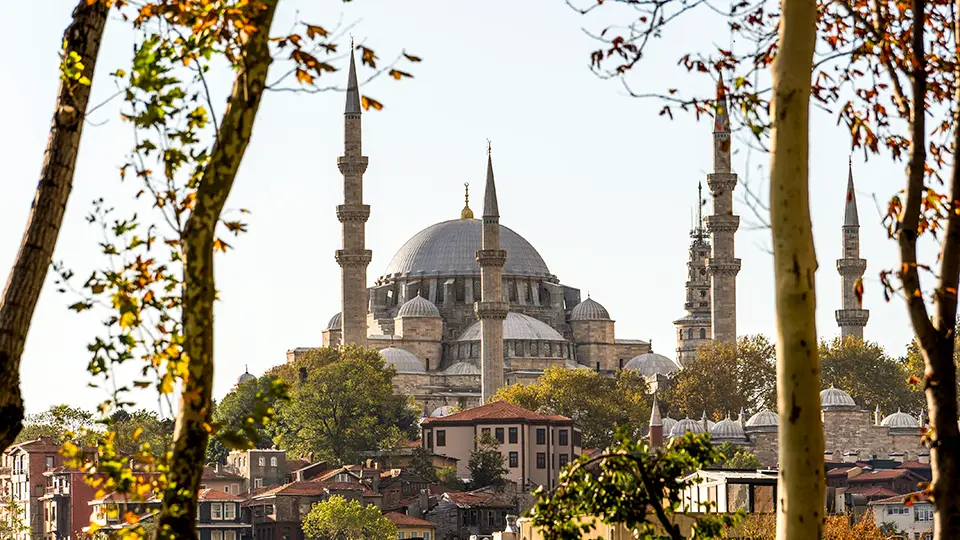
During the Ottoman period, the city became one of the most important political and cultural centres in the world. The sixteenth century was particularly significant, as the empire reached the height of its power during the reign of Sultan Suleiman the Magnificent. Mosques, religious schools, hospitals, bathhouses, and bridges were constructed on an impressive scale. Architectural complexes emerged that continue to define the appearance of historic Istanbul today. One of the most influential figures of this period was the architect Sinan, responsible for many monumental Ottoman buildings.
For almost four centuries, the sultans lived at Topkapi Palace. This enormous complex of buildings, courtyards, gardens, and pavilions was where the rulers governed their vast empire. I spent more than five hours exploring it, which might sound excessive, but the complex really is enormous and its individual sections contain countless fascinating objects, decorations, and stories. The Harem made a particularly strong impression on me. This was the private part of the royal residence, closely associated with the lives of the sultan’s family and the intrigues of the Ottoman court.
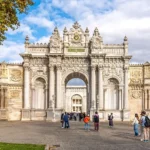
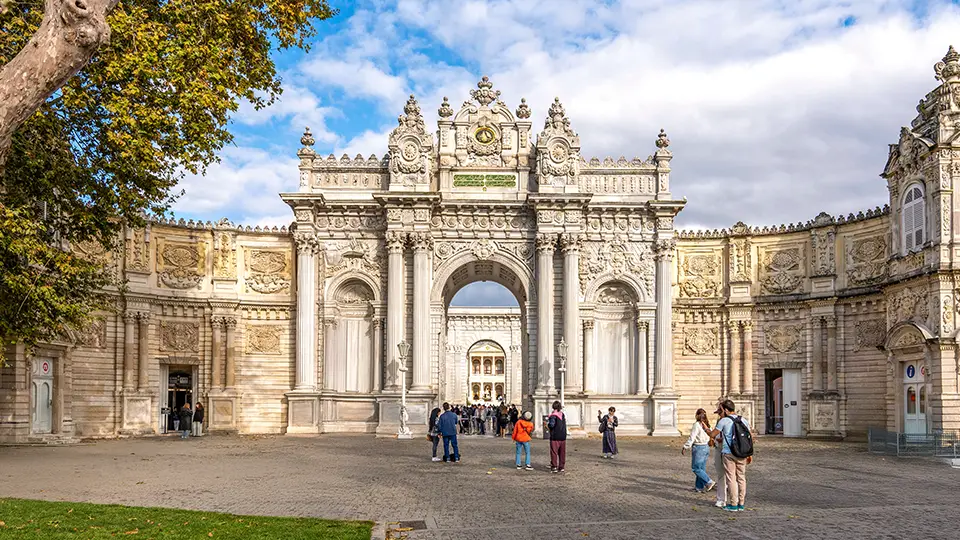
During the nineteenth century, the sultans increasingly moved to more modern residences along the Bosphorus. One of these was Dolmabahçe Palace, which symbolises changing tastes and the direction in which Ottoman architecture was developing.
The birth of the Republic of Turkey
At the turn of the nineteenth and twentieth centuries, the Ottoman Empire gradually lost its position as a major world power. Wars, political crises and economic difficulties eventually led to its collapse following the First World War. In 1923, Mustafa Kemal Atatürk proclaimed the establishment of the Republic of Turkey. Ankara became the capital of the new state, and Istanbul lost its centuries-old role as the political centre of the empire.
This did not mean that the city’s importance disappeared. Istanbul remained the country’s leading economic, cultural and tourist centre. Over the following decades, it expanded rapidly, attracting residents from different regions of Turkey.
Today, Istanbul is a vast metropolis with a population of many millions. Ancient walls, mosques, and palaces stand alongside modern districts, shopping centres and enormous transport hubs.
Istanbul – the most important attractions and places worth visiting
The best way to explore Istanbul’s historic centre is on foot. Many of the most important landmarks are located in the Sultanahmet district and its immediate surroundings. You can walk from one attraction to another without needing to use public transport. However, it is worth remembering that some places require considerably more time to explore than their position on the map might suggest.
The Blue Mosque – the Ottoman answer to Hagia Sophia
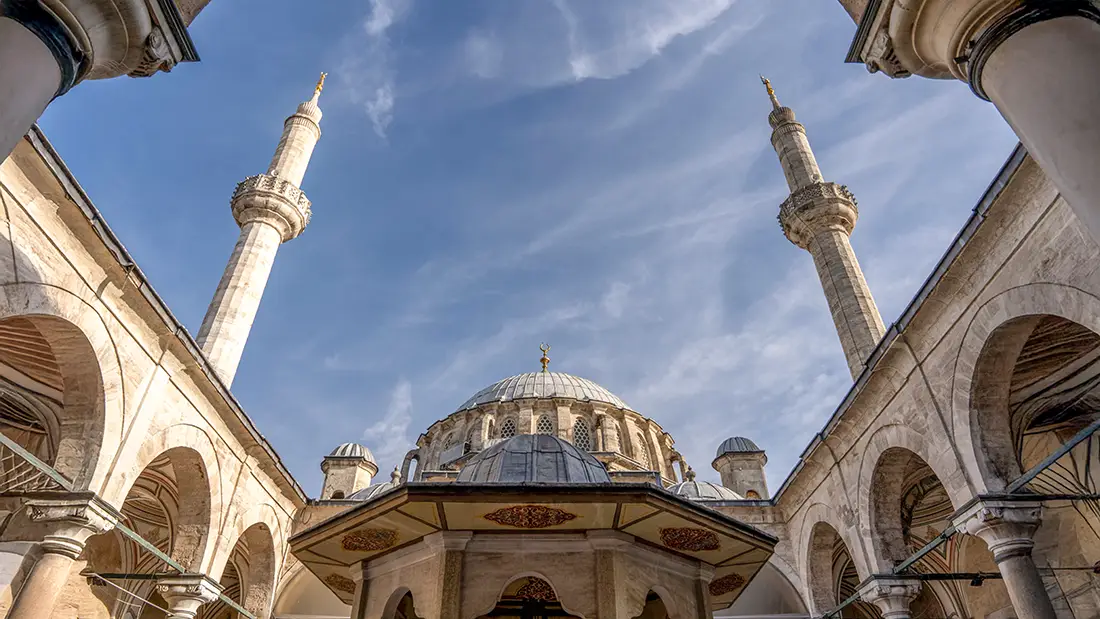
Standing directly opposite Hagia Sophia is one of the city’s most recognisable landmarks, the Blue Mosque. Its official name is the Sultan Ahmed Mosque, and its construction was commissioned by the young Sultan Ahmed I. Work began in 1609 and was completed in 1616. The building also had a symbolic purpose. The sultan wanted to create a structure that could rival the magnificence of Hagia Sophia while demonstrating the power of the Ottoman Empire. The design was entrusted to Sedefkar Mehmed Agha, a pupil of the well-known architect Sinan.
The name Blue Mosque comes from the distinctive ceramic tiles decorating its interior. There are approximately 21,000 of them, and their delicate shades of blue, white and turquoise create an extraordinary decorative effect. Around 260 windows allow coloured light to enter the building. During my visit, I paid particular attention to the enormous dome, supported by massive pillars often referred to as elephant feet. The red carpet covering the floor and the white marble of the mihrab and minbar also caught my eye.
The mosque has six minarets, which caused considerable controversy at the time of its construction. According to a popular story, the sultan requested minarets made of gold, but the architect supposedly misunderstood his words and interpreted them as an instruction to build six minarets instead. This is, however, an anecdote rather than a confirmed historical event.
The Blue Mosque remains an active place of worship, so visitors must respect religious customs. The tourist section is closed during prayer times, shoes must be removed before entering, and appropriate clothing is required.
I have written a separate article about my visit, including more details about the architecture and the interior. You can read it here: The Blue Mosque in Istanbul – sightseeing and interesting facts.
The Basilica Cistern – an underground palace hidden beneath the city

One of the most surprising places I visited in Istanbul was the Basilica Cistern. Also known as the Sunken Palace, it is located just a short walk from Hagia Sophia. From the outside, it is difficult to imagine that an enormous underground structure lies beneath the busy streets. The cistern was built in the sixth century during the reign of Emperor Justinian I. Its purpose was to store water delivered to the city through aqueducts. These reserves supplied water to the Great Palace and other nearby buildings.
After descending underground, you enter an enormous chamber supported by 336 marble columns. Each stands approximately nine metres high. Many of them probably came from earlier buildings, which explains the differences in their appearance and decoration. Visitors explore the cistern using specially constructed walkways suspended above the water. The atmosphere here is wholly different from that of Istanbul’s crowded streets. The dim lighting, illuminated columns, reflections in the water and distinctive coolness make it easy to forget that a busy metropolis lies just a few metres above your head.
The best-known features of the cistern are two stone heads of Medusa. One is positioned on its side, while the other is upside-down. To this day, there is no complete certainty about where they came from or why they were placed in these unusual positions. Another feature worth noticing is the so-called Weeping Column, whose surface is decorated with patterns resembling tears. It is one of the most distinctive elements of the entire structure.
I would allow approximately 30–45 minutes for a visit, although photography enthusiasts might easily spend much longer here. The floor and walkways can be damp, so comfortable footwear is genuinely useful. I have also prepared a much more detailed guide to the Basilica Cistern in Istanbul, including its history, Medusa heads and other interesting details.
Topkapi Palace – the centre of power of the Ottoman sultans
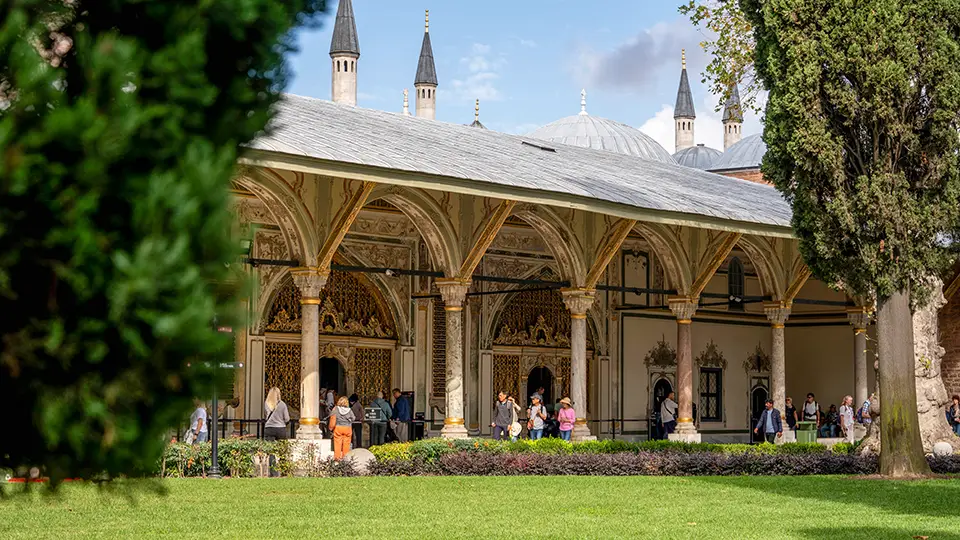
If I had to choose one place that best demonstrates the power of the Ottoman Empire, it would undoubtedly be Topkapi Palace. The complex was established on the initiative of Mehmed II following the conquest of Constantinople and served as the principal residence of the sultans for almost 400 years.
Topkapi does not resemble a typical European palace. Instead, it is an extensive collection of buildings arranged around a series of courtyards. Here, you will find ceremonial rooms, the private quarters of the rulers, pavilions, gardens, kitchens, treasuries, and the Harem.
Each courtyard had a different purpose, and access was governed by specific rules. The further you travelled into the complex, the more private the spaces became. In this way, the architecture reflected the hierarchy of the Ottoman court. I spent more than five hours exploring Topkapi, and I certainly do not consider that time wasted. The complex is enormous, and its individual exhibitions deserve to be explored without rushing. The Harem is particularly fascinating, as it was the part of the palace associated with the private lives of the sultan, his wives, concubines, children, and servants.
Other highlights include the treasury, collections of weapons, richly decorated rooms and pavilions offering views over the Bosphorus. Many rooms display objects made of gold, silver, precious stones and beautifully decorated ceramics.
Topkapi helps you understand that the sultan was much more than a monarch living in a beautiful palace. He ruled an enormous empire, and his residence served as its administrative, political and ceremonial centre. I recommend setting aside at least half a day for a visit. Anyone particularly interested in history and architecture may need even longer. You can find more practical information and photographs in my separate article: Topkapi Palace in Istanbul – the former residence of the Ottoman sultans.
Dolmabahçe Palace – the European face of the Ottoman Empire

While Topkapi Palace represents the classical Ottoman period, Dolmabahçe Palace demonstrates just how much the tastes and ambitions of later sultans had changed. Construction began in 1843 on the orders of Sultan Abdülmecid I. The new residence was intended to meet European standards of royal representation and demonstrate that the Ottoman Empire could compete with the greatest monarchies of Europe.
Unlike Topkapi, Dolmabahçe resembles a traditional European palace. Symmetry, elaborate decorations, monumental staircases, crystal chandeliers and grand reception rooms dominate the building. Its architecture combines Baroque, Rococo and Neoclassical influences with traditional Ottoman elements. One of its most impressive interiors is the Ceremonial Hall, where the most important court celebrations and official events took place. Its enormous proportions, lavish decoration and monumental chandelier demonstrate the ambitions of the rulers of that period.
The palace also has an important place in the modern history of Turkey. Mustafa Kemal Atatürk, the founder of the Turkish Republic, died here on 10 November 1938. The room associated with his final moments has been preserved inside the palace.
Dolmabahçe makes an interesting addition to a visit to Topkapi. Only a few centuries separate the two residences, yet their architecture and spatial organisation reveal just how dramatically the Ottoman state had changed. If you would like to explore the palace in greater detail, I recommend reading my article about Dolmabahçe Palace in Istanbul.
The Hippodrome of Constantinople – traces of the ancient city
Between Hagia Sophia and the Blue Mosque lies Sultanahmet Square, which preserves the remains of one of the most important places in ancient Constantinople. This was the Hippodrome, an enormous arena used for chariot races.
During Roman and Byzantine times, the Hippodrome served a purpose that went far beyond sport. It was also a place for public gatherings, state ceremonies and political demonstrations. Chariot races attracted enormous crowds, and rivalries between different groups of supporters sometimes developed into serious riots.
The most famous example was the Nika Revolt of AD 532, which caused widespread destruction throughout the city and indirectly contributed to the construction of the present Hagia Sophia.
Today, the most visible remains of the ancient Hippodrome are its original layout and several historic monuments. These include the Obelisk of Theodosius, the Serpent Column and the Walled Obelisk. Walking across the square is a good opportunity to appreciate that beneath modern Istanbul lies a history considerably older than the Ottoman Empire.
The Istanbul Museum of the History of Science and Technology in Islam

The Istanbul Museum of the History of Science and Technology in Islam offers a rather different perspective on the history of the city and the wider Islamic world. It is located within Gülhane Park, close to Topkapi Palace. The museum opened in 2008, and its establishment was closely connected with the work of Professor Fuat Sezgin, who devoted many years to researching the history of science in the Islamic world.
The exhibition includes hundreds of reconstructions of scientific instruments and devices used between the ninth and sixteenth centuries. Visitors can see astronomical instruments, clocks, mechanical devices, medical equipment and models of various machines.
The reconstructions of the designs created by Al-Jazari, a medieval engineer whose ideas were far ahead of his time, are particularly interesting. The exhibition reminds us that the development of science and technology was not exclusively the achievement of European scholars and that the Islamic world played a significant role in this history.
I recommend this museum to anyone interested in history, technology and early inventions. It also provides an excellent contrast to Istanbul’s monumental religious and royal buildings. You can find more information and photographs in my separate article about the Istanbul Museum of the History of Science and Technology.
The Grand Bazaar – the commercial heart of historic Istanbul

Istanbul has always been an important trading centre, so it is difficult to imagine visiting the city without exploring its traditional bazaars. The most famous is the Grand Bazaar, whose origins date back to the fifteenth century. It is an enormous-covered shopping complex containing hundreds, or rather thousands, of shops and workshops. You can find jewellery, carpets, ceramics, lamps, textiles, souvenirs and countless other products here.
The Grand Bazaar is much more than an ordinary marketplace. For centuries, it was an important part of the city’s economy, and its layout reflected the traditional division of trade into different crafts and commercial activities. In some sections, you can still recognise traces of this historic organisation.
It is worth remembering that shopping is not the only reason to visit. Walking through the narrow streets, looking at colourful shop windows and watching the traders at work is an important part of discovering Istanbul. If you are planning to buy something, be prepared to negotiate the price. Bargaining remains an integral part of local trading culture.
Istanbul beyond its historic monuments – the Bosphorus, neighbourhoods and everyday life
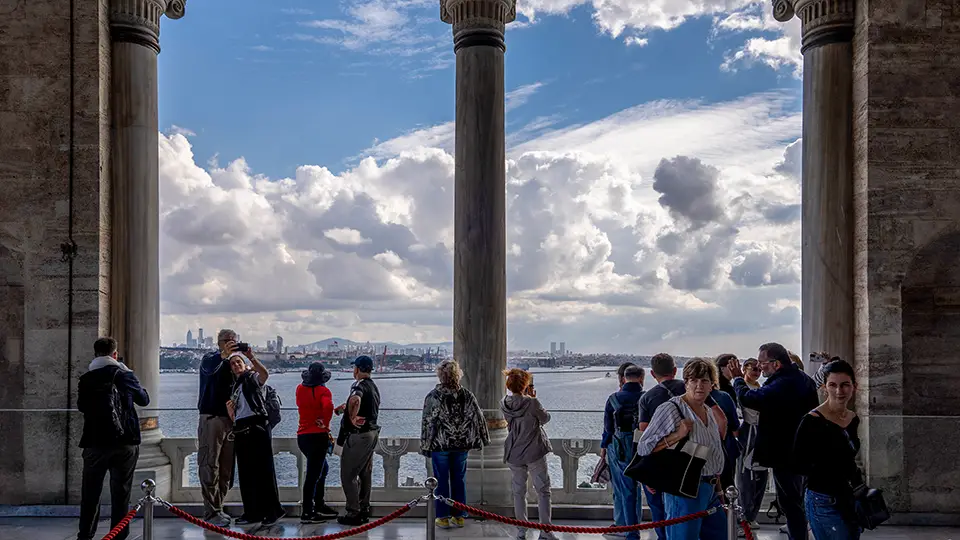
The major landmarks in the historic centre could easily fill several days with sightseeing, but I would not recommend limiting your visit to Sultanahmet alone. Istanbul is simply too large and varied to be explored only through a handful of monumental buildings. One of the experiences I particularly recommend is taking a ferry across the Bosphorus. This is not merely a means of transport but also an opportunity to see the city from the water. From the deck, you can admire palaces, mosques, bridges and the distinctive skyline of both sides of the metropolis.
It is also worth visiting the Galata district, home to the medieval Galata Tower. The surrounding area is full of cafés, restaurants, shops and charming little streets. Further along, Istiklal Avenue reveals a wholly different side of Istanbul – more European, commercial and modern.
Another interesting destination is Balat, a historic neighbourhood famous for its colourful houses and narrow streets. Representatives of different communities lived here for centuries, including Greek, Armenian and Jewish residents. Their presence has left its mark on the architecture, street layout and religious buildings.
Please keep in mind the Egyptian Bazaar, also known as the Spice Bazaar. It is an excellent place to discover the aromas and flavours of Turkish cuisine. Among the stalls, you will find spices, teas, dried fruit, nuts, sweets and local delicacies. Istanbul is also a wonderful place simply to sit in one of its small tea houses, order a glass of traditional Turkish tea and spend some time watching the city go about its business. Moments like these often help you understand a destination much better than another visit to a museum.
Istanbul – practical information to help you plan your trip
When is the best time to visit Istanbul? – The most pleasant conditions for sightseeing are generally found in spring and autumn. April, May, September, and October usually bring moderate temperatures, making walks around the city much more comfortable than during the summer heat. Istanbul can become extremely hot in summer, while high humidity makes exploring the city even more tiring. Winter, on the other hand, brings colder weather, rain, and winds blowing in from the Bosphorus. One advantage of visiting during the winter months is that some attractions may be considerably less crowded.
How do you get around Istanbul? – The city has an extensive public transport network. You can use trams, the metro, buses, ferries and suburban trains. In the historic centre, tram line T1 is particularly useful, connecting areas such as Sultanahmet with Eminönü and Kabataş. If you are staying for several days, it is worth considering an Istanbulkart, which allows you to use most forms of public transport. Fares and ticketing arrangements can change, so it is best to check the latest information before travelling. I would not recommend driving around the historic centre. Traffic is extremely busy, and finding a parking space can be difficult.
How much does sightseeing in Istanbul cost? – Istanbul is no longer among the cheapest destinations for tourists, particularly if you intend to visit several paid attractions. Tickets for palaces, museums and historic monuments can account for a substantial part of your budget. The Blue Mosque is an active place of worship, and admission to the visitor areas is free. For Hagia Sophia, the Basilica Cistern, Topkapi Palace and Dolmabahçe Palace, you should check the current admission arrangements and ticket prices. Some attractions charge separate fees for additional exhibitions or sections of their complexes. When planning your budget, remember to include public transport, meals and possibly a Bosphorus cruise. Prices can vary considerably depending on the standard of services and the time of year. I also recommend considering an Istanbul TouristPass, which provides access to many of the city’s attractions and may include free or discounted public transport, depending on the package selected.
What should you remember when visiting mosques? – Istanbul is a city where religion continues to play an important role in everyday life. When entering an active mosque, there are several rules you should keep in mind:
- Shoulders and knees should be covered.
- Women should cover their heads.
- Shoes must be removed before entering the prayer hall.
- Visitor access may be restricted during prayer times.
- Keep quiet and avoid disturbing people who are praying.
- Photography should be carried out respectfully and in accordance with the rules in force.
- It is also worth remembering that visiting hours for tourists may change, particularly during religious holidays.
A few final thoughts after visiting Istanbul
Istanbul is not a city that can be treated simply as another destination on a tourist itinerary. Its greatest appeal lies in the combination of history, architecture and everyday life. In a single day, you can admire Byzantine mosaics inside Hagia Sophia, wander through the rooms of an Ottoman palace and spend the evening watching ferries crossing between Europe and Asia.
Three places made a particularly strong impression on me during my visit. Hagia Sophia, because of its extraordinary history and monumental interior; the Basilica Cistern, which demonstrates the remarkable skills of Byzantine builders; and Topkapi Palace, which offers a fascinating glimpse into the world of the Ottoman sultans. Each is wholly different, yet together they tell the story of a city that stood at the centre of historical events for many centuries.
However, Istanbul has much more to offer. You can return many times and discover different neighbourhoods, monuments, markets and lesser-known corners on every visit. It is also an excellent destination for anyone interested in history who wants to see for themselves how different cultures and religions influenced the development of a single city.
If you are planning a trip to Turkey and have the opportunity to leave your seaside resort for a while, I would definitely recommend including Istanbul in your plans. It offers an entirely different experience of the country. It is more intense, noisier and more demanding, but at the same time full of places that will stay in your memory for a long time.
Istanbul and three legends I came across while exploring the city
If you follow Nasze Szlaki, you probably already know that we bring back much more than souvenirs and photographs from our travels around the world. One of the things we continually look for is local mythology, traditional tales and legends. And where better to search for ancient stories than in the famous city of Constantinople, where so many cultures met and traditions became intertwined?
Istanbul is not just a city of great empires, monumental mosques and Byzantine monuments. It is also a place where stories of love, prophecies, mysterious creatures and extraordinary events have been told for centuries. Some legends are associated with specific landmarks, while others date back to antiquity and have survived through local tradition. Below, you will find three popular Istanbul legends that I came across while exploring the city.
The legend of the Maiden’s Tower – love stronger than fate

One of Istanbul’s best-known legends is associated with a small tower standing on a rocky islet at the entrance to the Bosphorus. This is Kız Kulesi, also known as the Maiden’s Tower or Leander’s Tower. Its distinctive silhouette has become one of the symbols of the city.
According to a popular story, a ruler once heard a prophecy that his beloved daughter would die from a snake bite before reaching adulthood. Terrified by the prediction, the father decided to protect the girl at all costs. He ordered a tower to be built on a small island in the middle of the Bosphorus, far away from the mainland and any possible danger.
The princess moved into the isolated building, where guards watched over her to ensure that nothing unpleasant happened. Her father regularly arranged for food and other necessities to be delivered. One day, however, a basket of fruit arrived at the tower. Nobody noticed that a poisonous snake had hidden among the fruit. When the girl reached inside, the snake bit her, and she died, meaning that the prophecy came true despite all her father’s efforts.
There is another version of the story in which the princess fell in love with a young man, but their relationship was tragically interrupted by fate. The legend reminds us that it is not always possible to escape destiny, even if we surround ourselves with the highest walls and the strongest protection.
The tower itself really does exist, although its historical purpose was entirely different. It served various defensive and observation functions and was also used in connection with controlling traffic along the Bosphorus.
The legend of Medusa in the Basilica Cistern – a gaze that turned people to stone
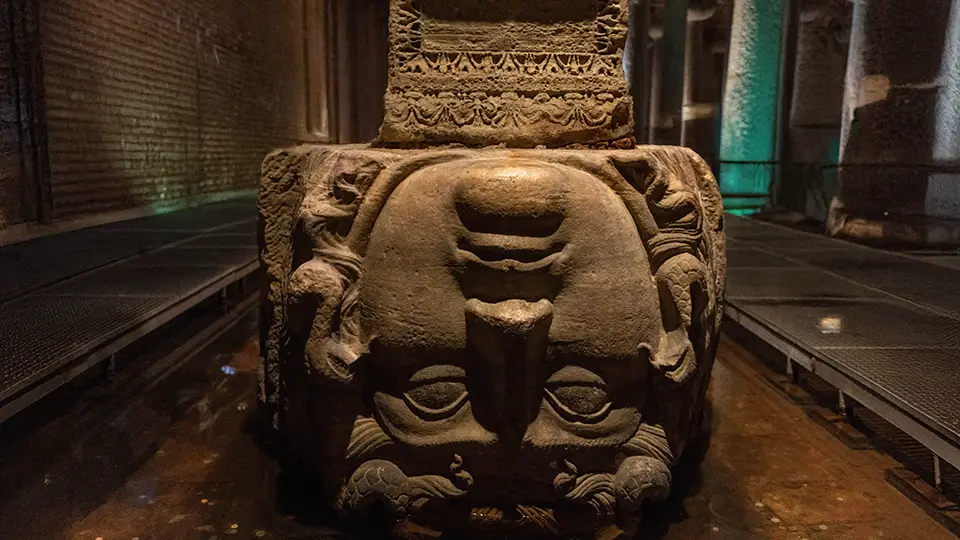
One of the most mysterious places in Istanbul is the Basilica Cistern, an underground water reservoir built in the sixth century during the reign of Emperor Justinian I. Among its hundreds of marble columns are two unusual bases decorated with the heads of Medusa. One is upside-down, while the other lies on its side. Their presence has fascinated visitors for centuries.
Medusa comes from Greek mythology. She was one of the three Gorgons, terrifying female creatures with snakes instead of hair. According to the myth, anyone who looked directly into her eyes would immediately turn to stone. She was eventually killed by Perseus, who used a polished shield to observe her reflection and avoid looking directly at her.
A legend has also developed around the presence of Medusa’s head in the cistern. According to one popular story, the builders deliberately positioned the stone heads sideways and upside down to deprive the monster of her power. It was believed that turning an image in the appropriate way could neutralise the dangerous gaze of the Gorgon.
However, there is no certainty that this was the builders’ actual intention. Historians believe that the heads were reused as structural elements, probably brought from earlier buildings. Their unusual positioning may simply have been a practical way of adjusting them to the height of the columns.
Regardless of the true origin of these sculptures, they are difficult to ignore. In the dimly lit cistern, surrounded by columns reflected in the water, they look genuinely mysterious. It is hardly surprising that they have become the subject of one of the best-known stories associated with Istanbul’s underground world.
The legend of Hezârfen Ahmed Çelebi – the man who flew across the Bosphorus
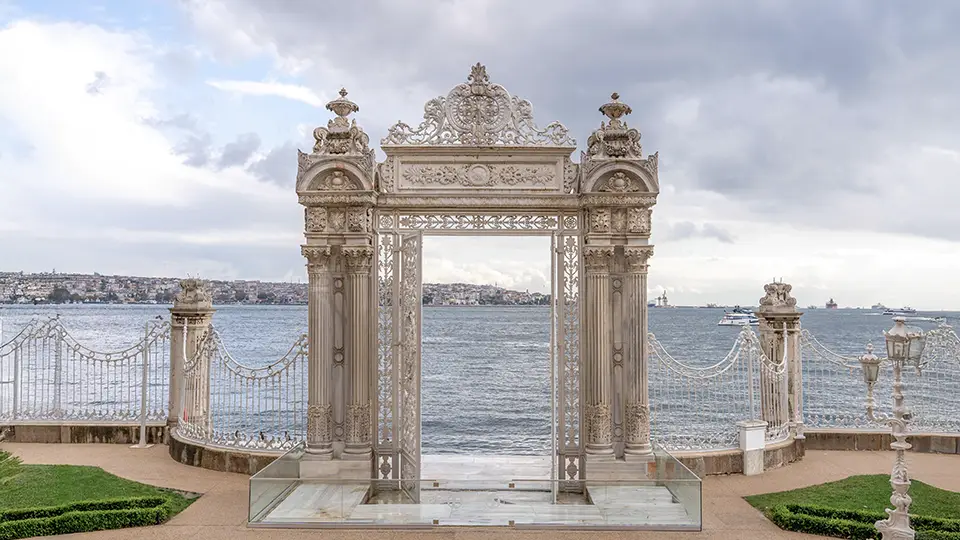
The next story takes us back to the seventeenth century, during the reign of Sultan Murad IV. Its central figure is Hezârfen Ahmed Çelebi, a man who, according to historical accounts, achieved an extraordinary feat: he supposedly took to the air using a pair of wings he had constructed himself and flew across the Bosphorus.
The legend says that Ahmed Çelebi spent many years studying the flight of birds and investigating the possibility of human flight. He observed their wings, analysed their structure and experimented with different designs. Eventually, he supposedly created a device resembling a pair of large wings that allowed him to make use of the wind.
He chose Galata Tower as the starting point for his experiment. According to the story, in 1632 he climbed to the top of the tower, spread his wings and launched himself towards the Bosphorus. Taking advantage of favourable gusts of wind, he supposedly flew across the strait and landed safely on the Asian side of the city, near Üsküdar.
News of this extraordinary achievement quickly reached Sultan Murad IV, who supposedly rewarded the daring inventor with gold. Over time, however, the ruler is said to have become concerned about Ahmed Çelebi’s unusual abilities. According to the same story, he considered him too unpredictable and sent him into exile in Algeria.
The story was recorded by the Ottoman traveller Evliya Çelebi in his famous work Seyahatname, or the Book of Travels. However, there is no independent evidence confirming that the flight actually took place. It is also uncertain whether the device described in the accounts could have enabled anyone to cover such a distance.
Today, the story of Hezârfen remains one of Istanbul’s best-known legends. Galata Tower, from which he supposedly began his flight, still dominates the historic part of the city. When you look towards the Bosphorus and the Asian shore from its upper levels, it is easy to understand why the story of a man who attempted to cross that distance on his wings has become such an enduring part of local tradition.
Istanbul – facts, information and interesting things about the city
- Istanbul is the only major metropolis in the world located on two continents – Europe and Asia. The two parts of the city are separated by the Bosphorus Strait.
- Over the centuries, the city has had several names. In antiquity, it was known as Byzantion, later becoming Constantinople. The name Istanbul had already become widely used long before it was officially adopted during the period of the Republic of Turkey.
- Constantinople was the capital of the Byzantine Empire for more than a thousand years. During this time, it was one of the wealthiest and most important cities of the medieval world.
- For almost a thousand years, Hagia Sophia was the largest Christian cathedral in the world. Its monumental dome represented an extraordinary architectural achievement of the sixth century.
- The Blue Mosque has six minarets. At the time of its construction, this was unusual because the Great Mosque in Mecca also had six minarets. Sultan Ahmed I eventually funded an additional, seventh minaret for the holy mosque.
- Beneath the streets of Istanbul are numerous ancient cisterns that were used to store water. The largest and most famous is the Basilica Cistern, supported by 336 marble columns.
- The two famous Medusa heads in the Basilica Cistern are positioned in unusual ways. One lies on its side, while the other is upside down. To this day, their origins remain uncertain.
- The Grand Bazaar is one of the oldest and largest historic covered markets in the world. Its origins date back to the fifteenth century, and today it consists of dozens of narrow streets and thousands of shops.
- Galata Tower is much older than it might appear. Its present stone structure was built in 1348, when the Galata district belonged to a Genoese trading colony.
- For centuries, Istanbul was an important centre for the silk and spice trade. Its geographical position meant that merchants from Europe, Asia, and the Middle East regularly met here.
- Topkapi Palace was the principal residence of the Ottoman sultans for almost 400 years. Decisions concerning an enormous empire stretching across three continents were made within its walls.
- The Harem at Topkapi Palace was not simply a place where the sultan’s wives and concubines lived. It was an extensive part of the palace that also accommodated the ruler’s mother, his children and numerous female servants.
- Dolmabahçe Palace has an impressive crystal chandelier in its Ceremonial Hall. According to information provided by the palace, it weighs approximately 4.5 tonnes and is among the largest decorative chandeliers of its kind in the world.
- Mustafa Kemal Atatürk, the founder of the Republic of Turkey, died at Dolmabahçe Palace. He passed away on 10 November 1938 at 9.05 am. The clocks in his room were stopped at that exact time.
- The Bosphorus is one of the world’s most important shipping straits. It connects the Black Sea with the Sea of Marmara and forms a natural boundary between the European and Asian parts of Turkey.
- Three major road bridges cross the Bosphorus in Istanbul, alongside a combined road and railway bridge and numerous ferry connections. These structures are among the most recognisable features of the city’s skyline.
- Istanbul has an enormous number of mosques. There are several thousands throughout the city, many of which are historic buildings dating back to the Ottoman period.
- Istanbul is home to one of the world’s oldest underground railway systems. The Tünel funicular, connecting the Karaköy area with Beyoğlu, opened in 1875. It is recognised as the second-oldest operating underground urban railway in the world, after the London Underground.
- Cats can be found almost everywhere in Istanbul. They are part of the local landscape, and residents often leave out bowls of food and water for them. The city has even acquired the unofficial nickname of the City of Cats.
- Istanbul is not the capital of Turkey. That role has belonged to Ankara since 1923, when Mustafa Kemal Atatürk established it as the capital of the newly founded republic. Nevertheless, Istanbul remains the country’s largest city and its most important economic and cultural centre.