Interesting facts about Germany are part of our section where you can discover a wealth of fascinating facts about the world around us.
Germany is a country with an extraordinarily diverse history, culture, and landscape. It is often associated with castles, motorways without speed limits, Oktoberfest, cars and engineering precision. However, there is much more to the country than these familiar associations. Germany has its own regional traditions, unusual customs, fascinating celebrations, rich cuisine and a history that has repeatedly influenced the course of European events.
Do you know anyone who has considered spending their summer holiday in Germany? Some friends and I once tried to think of someone who had, but we couldn’t come up with a single person. I find that rather surprising, as Germany has some wonderful holiday destinations, countless historic buildings, fascinating places of historical importance and natural wonders. Below, you will find plenty of interesting facts about Germany and the German people, including information and details you may have never come across before, as well as a few that might genuinely surprise you.
Interesting Facts About Germany – Geography, Nature and Remarkable Places
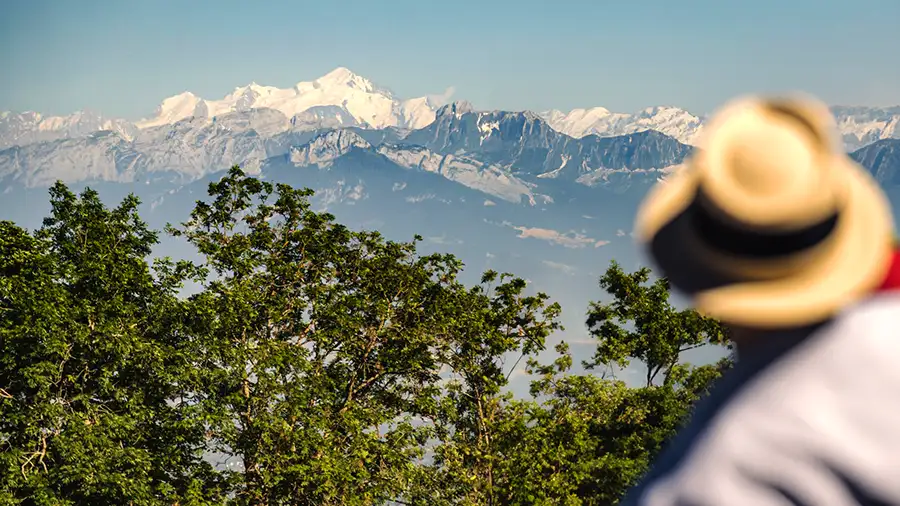
- Germany has a far more varied landscape than you might imagine. From the shores of the North Sea and the Baltic Sea, through vast forests and the valleys of great rivers, to the Alpine peaks in the south, the country offers a remarkable range of scenery.
- The highest mountain in Germany is Zugspitze, which rises to 2,962 metres above sea level. It is located in the Bavarian Alps, close to the Austrian border.
- Germany has coastlines on two seas: the North Sea and the Baltic Sea. Each has its own distinctive character, and the coastal regions differ considerably in their landscapes and traditions.
- The Rhine, one of Europe’s most important rivers, flows through Germany. Its valley is well-known for its castles, vineyards and picturesque towns.
- The Danube begins its journey in Germany’s Black Forest, known as the Schwarzwald. It then flows through several European countries before eventually reaching the Black Sea.
- The largest lake lying entirely within Germany is Müritz, in Mecklenburg-Western Pomerania. Lake Constance is larger, but it lies on the borders of Germany, Austria, and Switzerland.
- The Schwarzwald, or Black Forest, owes its name to its dense spruce forests, which appear almost black when viewed from a distance.
- The Frisian Islands lie off northern Germany, where the landscape is shaped by the tides. During low tide, it is possible to walk across exposed sections of the seabed, particularly around the Wadden Sea.
- The Wadden Sea, stretching along the coasts of Germany, the Netherlands, and Denmark, is a UNESCO World Heritage Site. It is one of the largest tidal systems of mudflats and sandflats in the world.
- The island of Rügen is the largest island in Germany. It is well-known for its white chalk cliffs, seaside resorts and distinctive Baltic coastal scenery.
- Jasmund National Park on Rügen protects the island’s famous chalk cliffs, including Königsstuhl, or the King’s Chair.
- Around one-third of the Harz National Park lies in Germany, and its best-known landmark is Mount Brocken. According to old beliefs, witches once gathered there for their legendary sabbaths.
- Bavaria is Germany’s largest federal state by area. It is home to numerous Alpine lakes, mountain valleys and traditional villages.
- Germany has more than 100 nature parks. They protect extensive areas of countryside where rare species of plants and animals can be found.
- Spreewald is an extraordinary region south-east of Berlin, criss-crossed by hundreds of natural and man-made waterways. Some farms and villages can be explored by boat.
- The German Alps occupy a relatively small part of the country, but they attract climbers, skiers, and anyone who enjoys walking in the mountains.
- Germany has several areas of volcanic origin. Eifel, west of Koblenz, is a region with a history of volcanic activity and distinctive lakes formed in volcanic craters.
- Laacher See in Rhineland-Palatinate is a lake occupying the caldera of an ancient volcano. The last major eruption in the area took place around 13,000 years ago.
- Germany shares its borders with nine countries: Denmark, Poland, the Czech Republic, Austria, Switzerland, France, Luxembourg, Belgium, and the Netherlands.
- Numerous cycling and walking routes cross Germany. Many former railway lines, agricultural tracks and paths following river valleys have been transformed into popular tourist trails.
Interesting Facts About Germany – From Germanic Tribes to the Modern Day
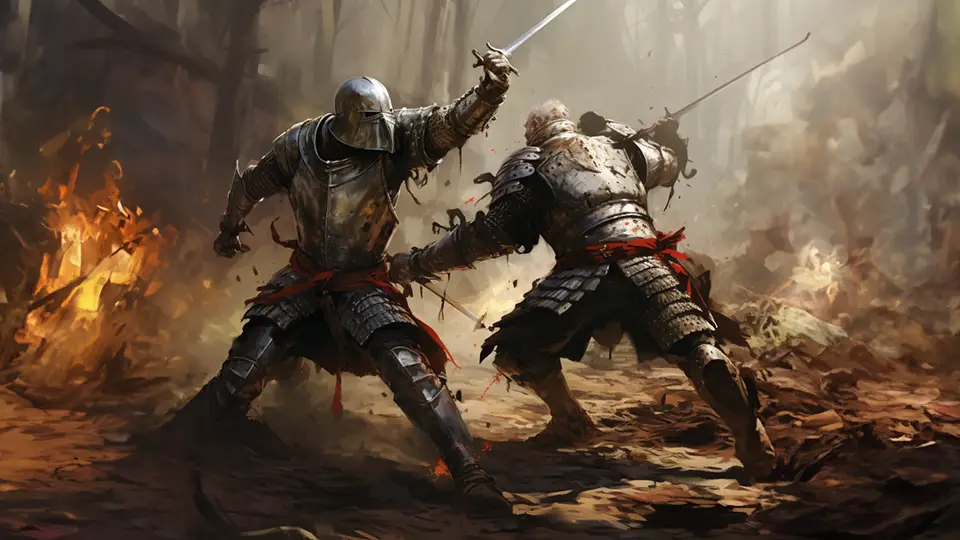
- German history is full of events that changed not only Europe but the entire world. For centuries, the lands that make up modern Germany were home to numerous duchies, kingdoms, and free cities before the present-day German state came into existence.
- The name Germania was already used in ancient Rome. The Romans applied it to vast territories inhabited by various Germanic tribes.
- In AD 9, the Battle of the Teutoburg Forest took place, during which Germanic tribes led by Arminius defeated three Roman legions. The defeat halted Roman expansion into much of the territory east of the Rhine.
- During the Middle Ages, the German lands formed part of the Holy Roman Empire. This political entity existed from the 10th century until 1806, although for most of its history it was a loose association of numerous territories.
- Charlemagne, crowned Emperor in 800, remains one of the most important figures in the history of Western Europe. His empire included large parts of present-day Germany, France and several other European countries.
- In 1517, Martin Luther published his 95 Theses, setting the Reformation in motion. This event brought about profound religious and political changes throughout Europe.
- Martin Luther translated the Bible into German, helping to shape the development of the modern written language. His translation had an enormous influence on German culture and literature.
- The Thirty Years’ War, fought between 1618 and 1648, caused widespread devastation across the German lands. Some regions lost a substantial proportion of their population.
- For centuries, hundreds of independent duchies, counties, cities, and other small states existed across the territory of modern Germany. Some had their currencies, armies and legal systems.
- In 1871, following Prussia’s victory over France, the German Empire was proclaimed. The ceremony took place in the Hall of Mirrors at the Palace of Versailles, just outside Paris.
- The first Emperor of unified Germany was William I, while the Prussian Chancellor Otto von Bismarck was one of the principal architects of German unification.
- Before unification, Germany was not a single country. The process was driven primarily by the growing dominance of the Kingdom of Prussia and Bismarck’s political strategy.
- Berlin became the capital of the German Empire in 1871. Before that, it had served as the capital of the Kingdom of Prussia.
- The Weimar Republic was established after the end of the First World War. Its name comes from the city of Weimar, where the new country’s constitution was adopted in 1919.
- In 1923, Germany experienced hyperinflation. Prices rose so rapidly that money could lose much of its value within a very short time, forcing people to carry enormous bundles of banknotes simply to buy everyday necessities.
- Adolf Hitler became Chancellor of Germany on 30 January 1933. Within a short period, he dismantled democracy and established a Nazi dictatorship.
- The Second World War began on 1 September 1939 with the German invasion of Poland. The conflict resulted in the deaths of tens of millions of people and caused immense destruction across the world.
- After the Second World War, Germany was divided into four occupation zones controlled by the United States, the United Kingdom, France, and the Soviet Union.
- In 1949, two German states were established: the Federal Republic of Germany in the west and the German Democratic Republic in the east.
- The Berlin Wall was built in 1961 and became a powerful symbol of Europe’s division for almost three decades. It fell on 9 November 1989.
- German reunification took place on 3 October 1990. The date is now celebrated as German Unity Day, or Tag der Deutschen Einheit.
Interesting Facts About Germany – Cities, Historic Buildings and Architecture

- German cities are wonderfully varied. Alongside modern metropolises, you will find medieval old towns, castles, Gothic cathedrals and small settlements where life seems to move at a much slower pace.
- Germany has more than 2,000 castles and palaces. Many are open to visitors, while others have been converted into museums, hotels or cultural institutions.
- Neuschwanstein Castle in Bavaria has become one of the most recognisable castles in the world. It was built at the request of King Ludwig II, and its appearance helped inspire later depictions of fairy-tale castles.
- Cologne Cathedral took more than 600 years to complete. Construction began in 1248 and was finally finished in 1880.
- Ulm Minster has the tallest church tower in the world, reaching a height of approximately 161.5 metres.
- Berlin is home to Museum Island, which brings together several important museum institutions. The complex is included on the UNESCO World Heritage List.
- The Brandenburg Gate in Berlin was completed in 1791. It was originally intended as a symbol of peace, but later became one of the most important symbols of a divided Germany and, subsequently, its reunification.
- Hamburg has one of the largest historic warehouse districts in the world. Speicherstadt is a complex of red-brick buildings standing alongside canals, and it is a UNESCO World Heritage Site.
- Miniatur Wunderland in Hamburg is an enormous model railway exhibition. It features miniature landscapes representing different parts of the world, as well as an airport with moving aircraft.
- Dresden is often called the Florence on the Elbe. The nickname reflects its wealth of Baroque architecture, museums, and art collections.
- Dresden is also home to the famous Frauenkirche. The church was destroyed during the bombing of the city in 1945 and later rebuilt using surviving fragments of the original structure.
- Rothenburg ob der Tauber is one of Germany’s best-known towns with a remarkably well-preserved medieval centre. Its defensive walls and cobbled streets attract visitors from all over the world.
- Nuremberg was one of the most important cities of the Holy Roman Empire. Imperial assemblies were held there, and its castle served as an important residence for rulers.
- The city of Trier contains several Roman monuments, including the Porta Nigra, one of the best-preserved Roman city gates north of the Alps.
- Aachen was one of Charlemagne’s favourite residences. Its cathedral is among the most important early medieval monuments in Europe.
- Lübeck is home to the Holstentor, a monumental 15th-century city gate. It remains one of the most recognisable symbols of the former power of the Hanseatic League.
- Germany has many towns with distinctive Fachwerk architecture, characterised by timber-framed houses. Their exposed wooden beams form decorative geometric patterns across the façades.
- Bamberg has an exceptionally well-preserved historic centre, which is included on the UNESCO World Heritage List. The town is also well-known for its smoked beer, known as Rauchbier.
- Sanssouci Palace in Potsdam was the summer residence of Frederick the Great, King of Prussia. Its name comes from French and can be translated roughly as ‘without worries’.
- The German Fairy Tale Route passes through places associated with the stories collected by the Brothers Grimm. The route includes Hanau, Kassel and Hamelin, among other destinations.
- Germany has numerous historic mines, steelworks and industrial sites included on the UNESCO World Heritage List. One example is the Zollverein Coal Mine Industrial Complex in Essen, sometimes described as the most beautiful coal mine in the world.
Interesting Facts About Germany – Culture, Customs, Traditions, and Celebrations
- German culture is far from uniform. Bavarians have different traditions from people living in Hamburg, Saxony, or the Rhineland. These differences can be seen in regional dialects, traditional clothing, cuisine, music, and the way local festivals are celebrated.
- Germany is a federal republic consisting of 16 federal states, known as Bundesländer. Each has its parliament and government.
- Oktoberfest in Munich is one of the largest folk festivals in the world. The first event was held in 1810 to celebrate the wedding of the Bavarian Crown Prince Ludwig and Princess Therese.
- The name Oktoberfest can be slightly misleading, as the festival usually begins in September. Its dates were moved forward to take advantage of the more favourable weather.
- Traditional Bavarian clothing includes Lederhosen for men and Dirndl dresses for women. Although these garments are associated with the everyday lives of people in the region in the past, today they are most commonly worn at festivals and special celebrations.
- Carnival in the Rhineland, particularly in Cologne, Düsseldorf and Mainz, has enormous social significance. The streets fill with colourful parades, fancy dress costumes and music.
- During Carnival in Cologne, you will often hear the cry ‘Kölle Alaaf!’. It is a traditional greeting closely associated with the city’s local identity.
- German Christmas markets are among the most famous in Europe. Many have a history stretching back several centuries, and one of the best-known is the Christkindlesmarkt in Nuremberg.
- St Martin’s Day, celebrated on 11 November, is particularly popular with children. Processions are organised with colourful paper lanterns, while roast goose is a traditional dish in many regions.
- In some parts of Germany, children receive presents not only from St Nicholas but also from the Christkind, or Christ Child.
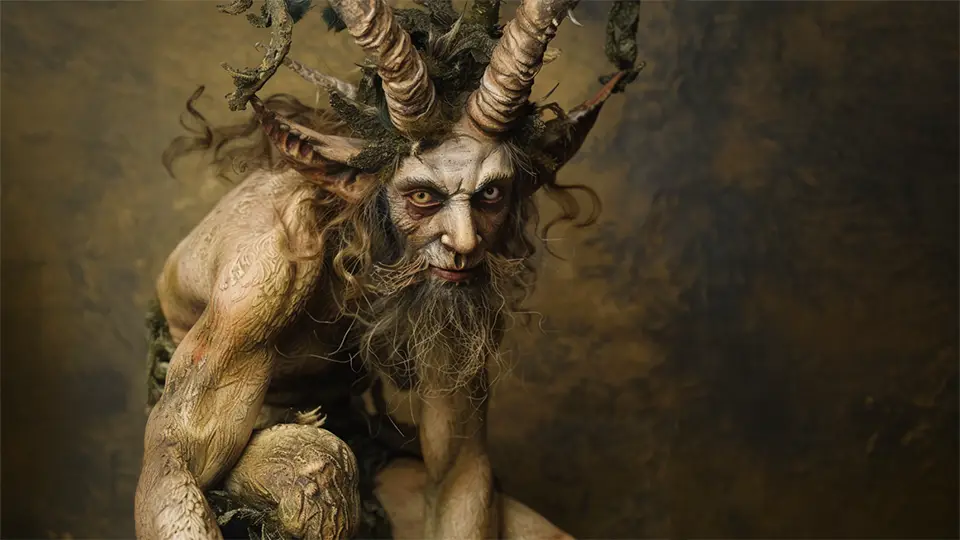
- Krampus is a mythical Germanic demon associated with Christmas celebrations. In Alpine traditions, this frightening figure accompanies St Nicholas and is said to punish naughty children.
- Germany has a tradition of giving children a Schultüte on their first day of school. It is a large, colourful cone filled with sweets, school supplies and small presents.
- Allotment gardens, known as Schrebergärten, are popular in Germany. In many cities, you can find entire communities of small plots with garden sheds, summer houses and carefully maintained vegetable patches.
- Germans are well known for their enthusiasm for sorting household waste. The recycling system uses different types of bins, while many drinks containers are covered by the deposit scheme known as Pfand.
- External roller shutters are common in German houses and flats. They can be lowered completely, providing additional security, blocking out light and helping to keep interiors cool during hot weather.
- Germany has a strong tradition of clubs and associations, known as Vereine. They operate in almost every area of life, from sport and music to gardening and local history.
- Labour Day, celebrated on 1 May, is associated in many German regions with the tradition of raising a decorated maypole, known as a Maibaum.
- In some parts of Germany, people practise New Year’s Eve fortune-telling using melted wax. Lead was traditionally used for this purpose, but health concerns have led to its replacement with safer materials.
- Germany has a rich classical music tradition. Well-known composers born in the country include Johann Sebastian Bach, Ludwig van Beethoven, Richard Wagner and Johannes Brahms.
- The Brothers Grimm did more than collect fairy tales; they also conducted important linguistic research. Their work made a significant contribution to the development of German philology.
- Germany has numerous opera houses and philharmonic orchestras, and classical music remains an important part of cultural life, even outside the country’s largest cities.
Interesting Facts About Germany – German Cuisine, Sausages, Beer, and Regional Specialities

- German cuisine is considerably more varied than the familiar image of sausages and beer might suggest. Every region has its dishes, baked goods and local products of which its residents are particularly proud.
- Germany has several hundred varieties of bread. Its baking tradition is so important that German bread culture was included in the country’s national register of intangible cultural heritage in 2014.
- Pretzels, known as Brezeln, are among the most recognisable German baked goods. They are particularly popular in Bavaria, where they are often served with white sausage and sweet mustard.
- Bratwurst is a popular German sausage, although its varieties differ from one region to another. One of the best-known examples is Nürnberger Rostbratwurst, a small sausage originating from Nuremberg.
- Currywurst is a sausage served with tomato sauce and curry seasoning. The dish originated in Berlin after the Second World War and became an icon of German street food.
- Germany is one of the world’s largest beer producers. The country has thousands of breweries, many of which are small, family-run businesses.
- The Bavarian Beer Purity Law, known as Reinheitsgebot, was introduced in 1516. It originally specified the permitted ingredients for beer, naming barley, water, and hops. Yeast was not included because its role in fermentation was not yet understood.
- Germany produces many varieties of wheat beer, known as Weizenbier or Weißbier. It is particularly popular in Bavaria.
- Pumpernickel, a traditional German bread, comes from Westphalia. It is dark, moist and made from coarsely ground rye, with traditional baking methods taking many hours.
- Schwarzwälder Kirschtorte, or Black Forest gateau, is a dessert made with chocolate, cherries, whipped cream and Kirschwasser, a cherry spirit. Its name refers to the Black Forest region.
- Spätzle is a type of soft egg noodle popular in southern Germany. It is often served as an accompaniment to meat dishes or prepared as Käsespätzle, a hearty dish with cheese and fried onions.
- Maultaschen are large parcels of filled dough, rather like oversized ravioli or dumplings. They originate from Swabia and can contain meat, spinach, onions, and breadcrumbs.
- Sauerbraten is a traditional German pot roast in which the meat is marinated in an acidic mixture for several days before cooking. There are numerous regional variations of the dish.
- Kartoffelsalat, or potato salad, comes in many versions in Germany. In the south, it is often prepared with stock and vinegar, while mayonnaise-based versions are particularly popular in the north.
- In Bavaria, people enjoy Weißwurst, a white sausage made from veal and pork with parsley and various spices. Traditionally, it is served before midday with a pretzel and sweet mustard.
- Rote Grütze is a popular dessert in northern Germany. It is made from red fruits such as raspberries, redcurrants and cherries, and is usually served with vanilla sauce or cream.
- The döner kebab, in the form familiar throughout much of Europe, was popularised in Berlin by Turkish immigrants. Kadir Nurman is one of the figures most frequently mentioned in accounts of the dish’s history.
- White asparagus is particularly popular in Germany. Its season, known as Spargelzeit, is eagerly awaited in many regions and usually runs from April until 24 June.
- Lebkuchen are spiced biscuits particularly associated with Nuremberg. Their history dates back to the Middle Ages, and they are sold at Christmas markets throughout Germany.
- Apfelstrudel, or apple strudel, is most commonly associated with Austria, but it is also popular in southern Germany. Thin pastry is filled with apples, raisins, and cinnamon.
- Germany has many regional varieties of mustard. Düsseldorf is particularly well-known for its strong mustard, while sweet mustard is a Bavarian favourite, traditionally served with white sausage.
Interesting Facts About Germany and the German People – Language, Inventions and Everyday Life
- Germany has made an enormous contribution to the development of science, technology, industry, and culture. Many inventions that changed the way we travel, communicate and explore the world originated in these lands.
- German is the most widely spoken native language in the European Union. It is an official language not only in Germany but also in Austria and Liechtenstein, among other countries.
- In German, all nouns are written with capital letters. This is one of the most distinctive features of German spelling.
- The German word Donaudampfschifffahrtsgesellschaftskapitän is often mentioned as an example of an exceptionally long word. It means the captain of a Danube steamship company.
- Germany has many regional dialects. The way people speak in Bavaria can differ considerably from the language used in the northern parts of the country.
- Johannes Gutenberg, who is credited with developing European printing using movable metal type, was born in Germany. His invention revolutionised the distribution of books and the spread of knowledge.
- Albert Einstein was born in 1879 in Ulm. He was one of the greatest physicists in history and developed the special and general theories of relativity.
- Karl Benz designed one of the first practical motor vehicles powered by an internal combustion engine. In 1886, he patented his vehicle, marking an important milestone in the history of the modern motor car.
- Germany is the birthplace of several famous car manufacturers, including Mercedes-Benz, BMW, Porsche, Audi, and Volkswagen.
- The first Volkswagen was intended to be a car affordable to a broad section of society. The brand’s name literally means ‘people’s car’.
- German inventor Rudolf Diesel developed the compression-ignition engine that bears his name. Engines of this type are used in cars, lorries, ships and industrial machinery.
- Werner von Siemens was one of the pioneers of electrical engineering. His surname lives on in the name of the global technology company Siemens.
- German engineer Otto Lilienthal was a pioneer of aviation. During the 19th century, he experimented with gliders and carried out flights that helped advance the development of aircraft.
- The Brothers Grimm were German scholars who collected and published many famous fairy tales, including Little Red Riding Hood, Snow White, Hansel, and Gretel and Rapunzel.
- Germany played an important role in the development of modern zoological gardens. Berlin Zoo, which opened in 1844, is the oldest zoo in Germany.
- Germany is home to many universities with centuries-old traditions. The University of Heidelberg, founded in 1386, is the oldest university in what is now Germany.
- Germany is one of the world’s most important exhibition and trade fair destinations. International industry events attracting exhibitors and visitors from across the globe take place in Hanover, Frankfurt, Berlin, and Düsseldorf.
- German motorways, known as Autobahnen, are famous for sections without a general speed limit. However, this does not mean that every German motorway is unrestricted. Many sections have mandatory limits, while the recommended speed on unrestricted stretches is 130 km/h.
- Germany is one of the countries with the highest numbers of football clubs. Football plays an important role in social life, and Bundesliga matches attract millions of supporters.
- Sunday walks and trips to the countryside are popular in Germany. Many families use their day off to go hiking, cycle or meet friends at local restaurants.
- Germans have a strong culture of planning and organising their time, although this should not be treated as a characteristic of every individual. Lifestyles and attitudes towards everyday responsibilities vary between regions, generations, and people.
Interesting Facts About Germany – Polish version