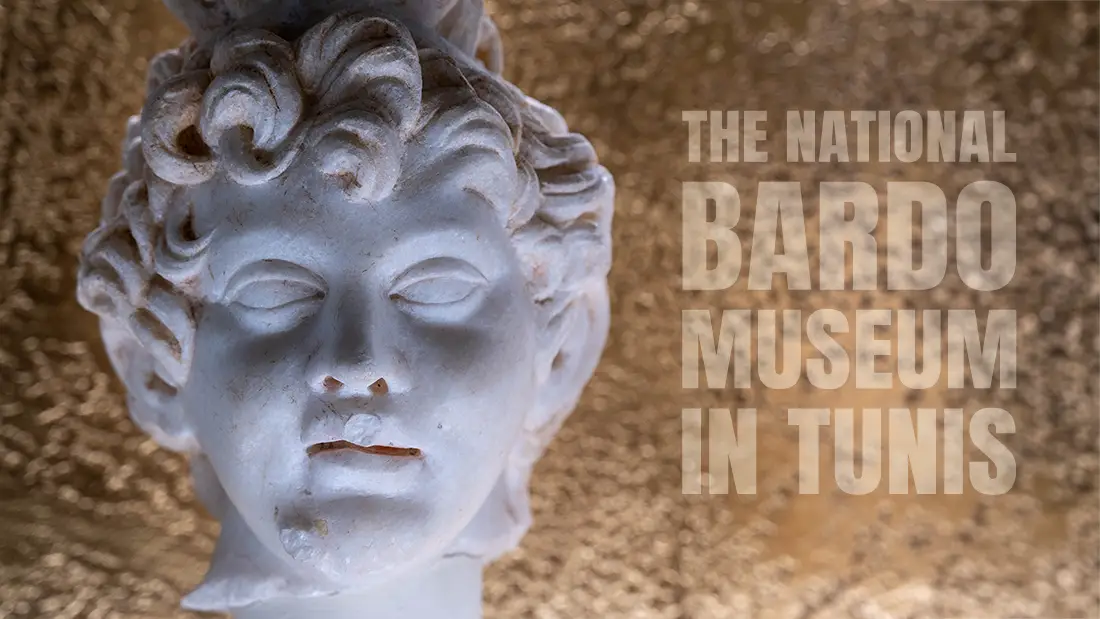
Tunisia is associated by many people primarily with sandy beaches, the Sahara, and the ruins of Carthage. During my latest journey through this fascinating country, however, I visited a place that impressed me more than many other museums in this part of the world. That place was the Bardo Museum in Tunis.
From the moment I entered, I knew that this was no ordinary museum. It occupies a former palace belonging to the beys of Tunis, while its collections rank among the most important anywhere in Africa. Although it cannot compete in terms of modern presentation and organisation with Europe’s greatest institutions, such as the Louvre or the British Museum, it possesses something immensely valuable: authenticity and a direct connection with the history of a region where numerous civilisations met over thousands of years. In the article below, I will tell you about the museum, its history and the stories behind the artefacts preserved within its walls.
The Bardo Museum in Tunis and its history
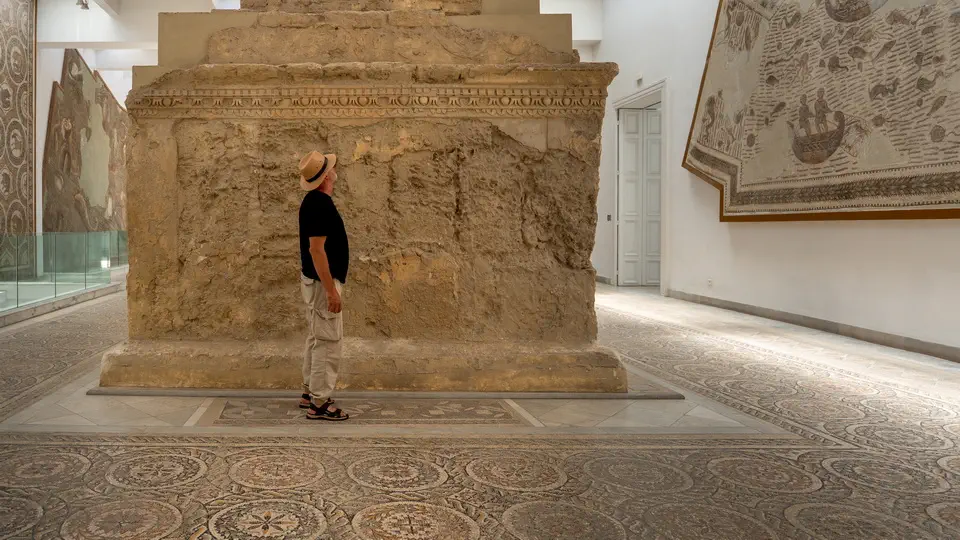
The story of the Bardo Museum began long before the institution itself was established. The building in which the museum is now housed formed part of an extensive palace complex constructed and expanded by successive rulers of Tunisia from the fifteenth century onwards. For centuries, the palace was one of the country’s most significant royal residences and a powerful symbol of the authority of its ruling dynasties.
During the nineteenth century, the Tunisian authorities began to recognise the need to protect the numerous antiquities being uncovered in archaeological excavations. Growing numbers of remains left behind by the Phoenicians, Carthaginians, Romans, Byzantines, and Arabs were being discovered across the country. Without proper protection, there was a genuine danger that many valuable artefacts would either be taken abroad or simply destroyed.
The decision to create a national museum was made in 1888. The institution officially opened several years later, and the Bardo soon became one of the first modern museums in North Africa. During the period of the French Protectorate, its collections expanded rapidly as archaeologists carried out excavations throughout the country. Many of the most essential discoveries were brought here, gradually transforming the Bardo into a genuine treasury of Tunisian history.
After Tunisia gained independence, the museum became even more significant. Successive extensions made it possible to create new galleries and display a much larger proportion of the growing collection. Particular attention was given to the heritage of Carthage and the Roman period.
Unfortunately, the museum’s history also includes a tragic chapter. In March 2015, it became the scene of a terrorist attack that shocked the world. More than twenty people were killed, most of them foreign tourists. The event had a profound impact on tourism in Tunisia and on the operation of the museum itself.
During my visit, the increased security measures were clearly noticeable. Despite this, the museum did not feel like a fortress. Quite the opposite – the staff were friendly and welcoming, while the atmosphere inside remained peaceful. Today, the Bardo Museum continues to be one of the world’s most important archaeological museums, attracting thousands of visitors interested in the history of the Mediterranean and North Africa.
The monuments and artefacts preserved in the Bardo Museum
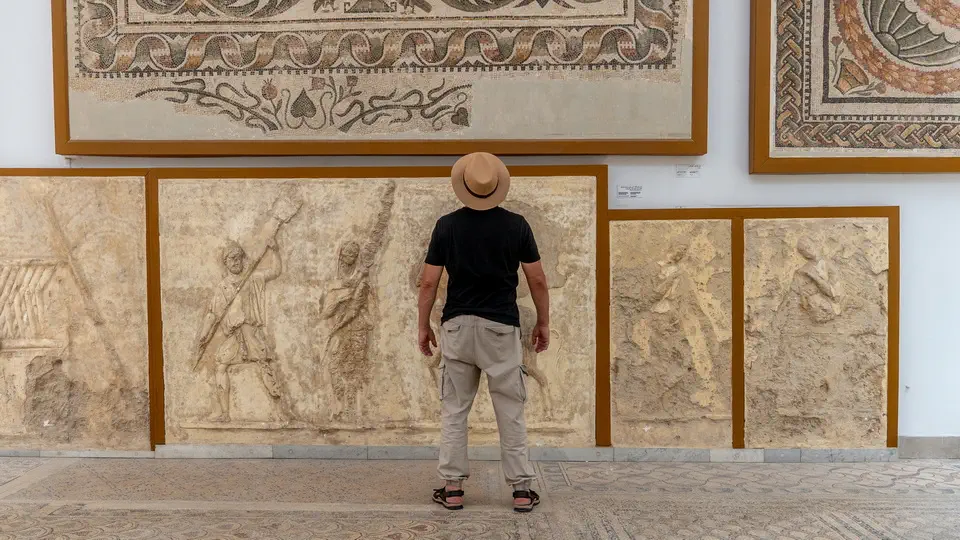
The museum’s greatest treasures are its archaeological collections, assembled over more than a century through excavations conducted across Tunisia. The Roman mosaics are undoubtedly the most famous part of the collection and the principal reason many visitors come to the Bardo. From the moment you enter the first galleries, it is difficult to escape the feeling that you are walking through an art gallery created two thousand years ago.
Roman mosaics were discovered in places including Carthage, Dougga, El Jem, Sousse, Bulla Regia and Utica. Many once decorated luxurious villas belonging to the wealthy inhabitants of Africa Proconsularis, as present-day Tunisia formed one of the richest provinces of the Roman Empire.
The mosaics depict mythological scenes, hunting expeditions, everyday life, gods, animals and historical events. Their survival borders on the miraculous. Some remain so vivid that they appear to have been created only a few decades ago rather than almost two millennia in the past.
Another important part of the collection consists of Carthaginian artefacts. Carthage was one of the greatest cities of the ancient world and Rome’s most dangerous rival. In the museum, you can see jewellery, ceramics, amulets, funerary stelae and everyday objects once used by its inhabitants.
The exhibits connected with Phoenician and Carthaginian religion are particularly interesting, providing an insight into the beliefs of the people who created one of antiquity’s greatest trading empires. A considerable part of the museum is also devoted to Islamic heritage, including manuscripts, architectural decorations, ceramics, textiles, and objects associated with the history of medieval Tunisia.
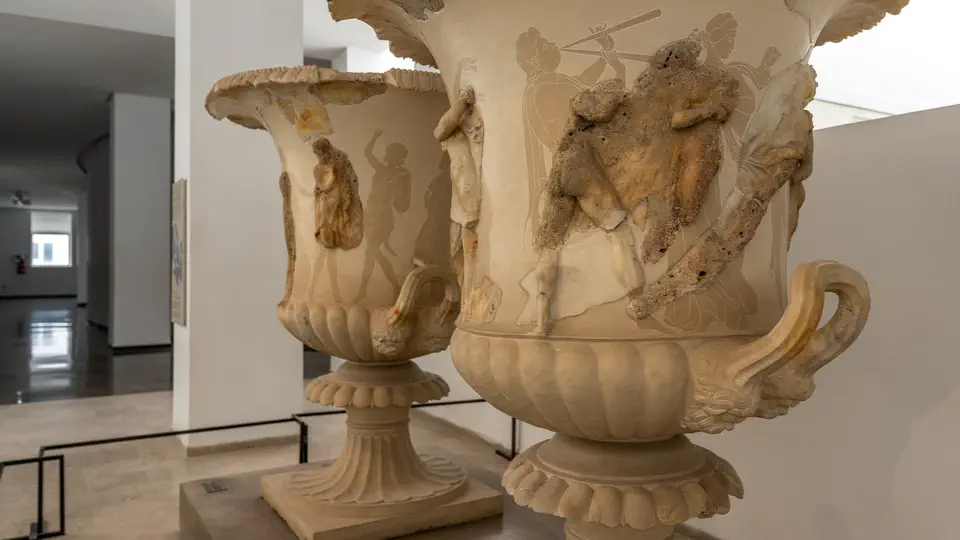
The museum also has an extensive Byzantine collection containing Christian mosaics, sarcophagi, fragments of churches and everyday objects. Its Roman sculptures are equally impressive. Marble busts of emperors, gods and local dignitaries demonstrate just how important the African provinces were to the Roman Empire.
As I walked through the galleries, I felt as though I was travelling across several thousand years of history. In just a few hours, you can pass from the world of Phoenician merchants and the age of Hannibal through Roman and Byzantine rule before finally entering the medieval Islamic world.
The most valuable exhibits in the Bardo Museum
- The Virgil Mosaic – This is undoubtedly one of the museum’s most famous exhibits. It depicts the Roman poet Virgil seated between two Muses. Created around the third century AD, it is regarded as one of the oldest surviving portraits of the author of the Aeneid. For literary historians, its value is almost impossible to overstate.
- The Triumph of Neptune Mosaic – This enormous work depicts the god of the sea travelling in a chariot through the depths of the ocean. The number of details, variety of marine creatures and excellent preservation of its colours are extraordinary. When looking at it closely, it is difficult to believe that it is almost two thousand years old.
- The Lady of Carthage Mosaic – This is one of the museum’s most mysterious works. It depicts a woman with an exceptionally expressive face, but historians still disagree about her identity. She may have been a goddess, an aristocratic woman or a symbolic personification of Carthage. Her gaze immediately captures the attention of almost everyone who sees her.
- The Baptistery from Kélibia – This is an exceptional example of Christian art from the Byzantine period. Decorated with elaborate geometric and religious designs, it shows how firmly established Christianity had become in North Africa before the Arab conquest of the region.
- The Chemtou Treasure – This collection of coins, jewellery and precious objects was uncovered during archaeological excavations. The items help historians reconstruct the lives of the elites who inhabited North Africa during antiquity and demonstrate the remarkable wealth of the region.
- The Priest’s Sarcophagus – This monumental stone sarcophagus belonged to a high-ranking religious figure. Its decorations include numerous religious symbols and scenes connected with the afterlife, providing an insight into the beliefs of the region’s ancient inhabitants.
- The collection of Carthaginian masks – These small clay masks are among the most mysterious objects in the museum. Their precise purpose has never been fully explained. Some researchers believe they were used in religious rituals, while others suggest that they served a protective or funerary function.
Legends and mysteries connected with the museum in Tunis
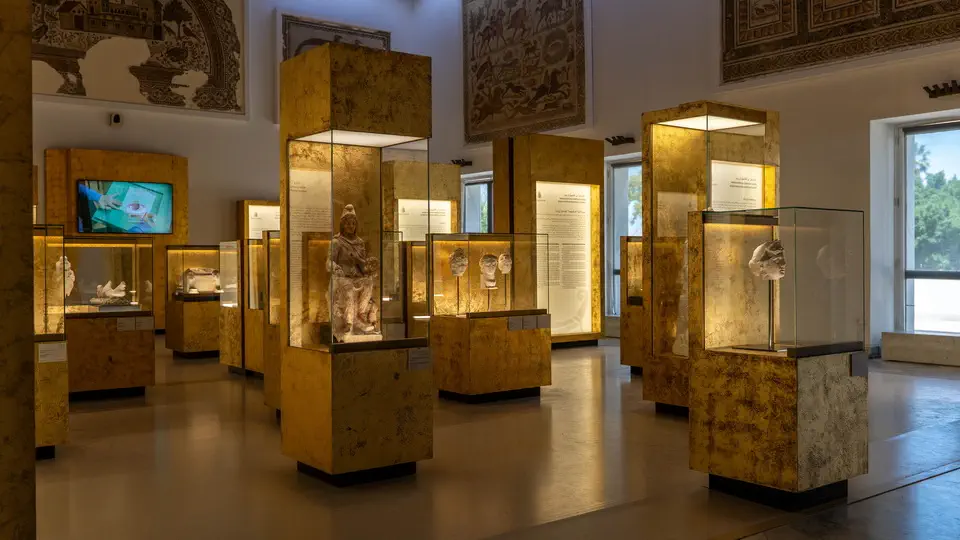
A place this old could hardly exist without attracting a collection of legends. One story tells of the spirits of the palace’s former residents, who are said to appear in the empty galleries after the museum has closed. Another concerns Carthaginian amulet associated with the goddess Tanit. According to local guides, some of these objects were believed to protect their owners against illness and misfortune.
Museum staff also tell stories about mysterious chambers and passageways beneath the palace. Some former corridors remain inaccessible to visitors, which only encourages the imaginations of history enthusiasts. There are also persistent tales of treasures hidden by the beys of Tunis. Although no such hoard has ever been found, the legend has survived to the present day.
The 2015 terrorist attack at the Bardo Museum
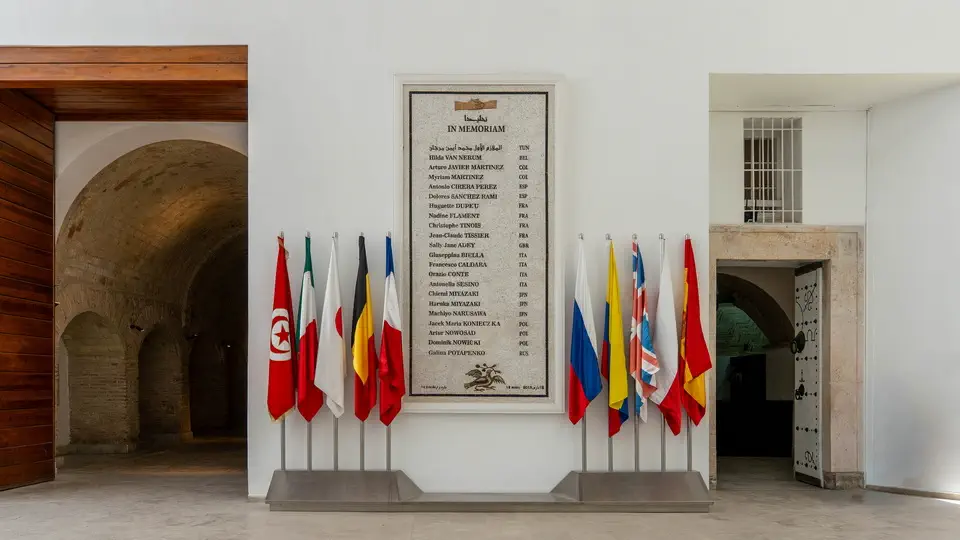
On 18 March 2015, the Bardo Museum became the scene of one of the most tragic events in Tunisia’s recent history. On that day, two armed terrorists attacked tourists visiting the museum. Their principal targets were foreign visitors who had arrived on excursions from cruise ships docked at the port of La Goulette.
The attackers first opened fire near the Tunisian Parliament before entering the Bardo Museum and shooting at visitors. Panic spread through the galleries as tourists and members of staff sought shelter among the ancient exhibits and inside rooms normally closed to the public. The security forces launched an operation to free those trapped inside, which ended with both attackers being killed.
Twenty-two victims died as a result of the attack, including twenty-one foreign tourists. Among them were three Polish citizens taking part in an organised excursion during a Mediterranean cruise. News of their deaths shocked the Polish public and prompted widespread expressions of sympathy for the victims’ families.
The group calling itself Islamic State later claimed responsibility for the attack. Its purpose was to frighten foreign tourists and damage the Tunisian economy, for which tourism remains one of the most important sources of income. The tragedy received worldwide coverage and led to a sharp decline in the number of people visiting Tunisia during the following months.
Today, memorial plaques and other places of remembrance inside the museum commemorate the victims. It is difficult to pass them without stopping for a moment. The Bardo Museum remains a symbol of Tunisia’s exceptionally rich history, but it is also a place that recalls the tragedy of March 2015 and the people who lost their lives there, including the three Polish tourists.
Visiting the Bardo Museum in Tunis
The scale of the museum was what surprised me most during my visit. It already looks large from the outside, but only once you enter can you appreciate the true extent of its collections. I recommend allowing the highest amount of time for the mosaic galleries. Even people who do not normally take much interest in archaeology soon begin to notice the extraordinary details hidden within these ancient works.
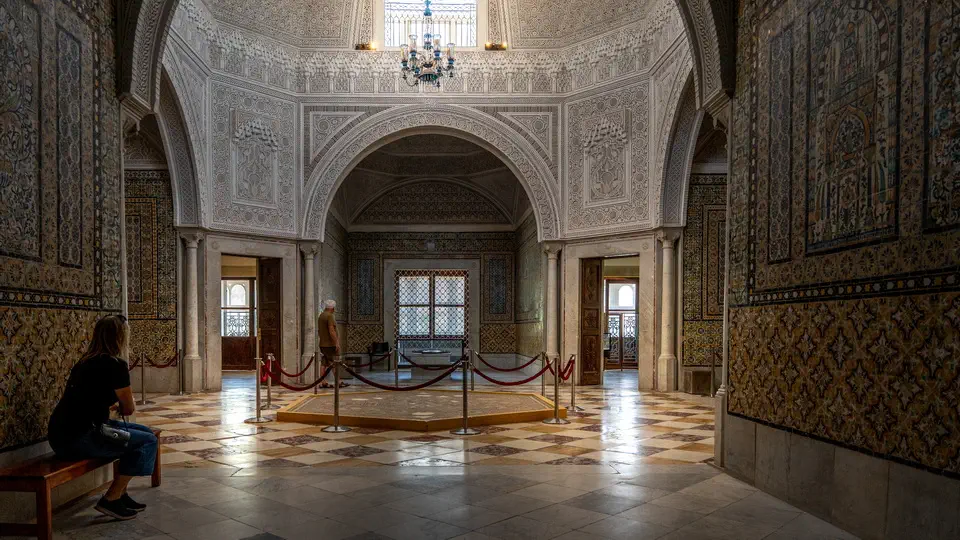
It is also worth paying attention to the building itself. The palace ceilings, elaborate decorations and courtyards are every bit as interesting as the objects displayed in the galleries. In my opinion, around three hours is the ideal amount of time for a visit, although anyone passionate about history could easily spend half a day here.
The Bardo Museum is not perfect. In some galleries, modern descriptions, interactive exhibitions and the solutions familiar from Europe’s largest museums are noticeably absent. Despite this, I left feeling that I had visited one of the most important places associated with the history of the Mediterranean.
This museum does not impress visitors with technological spectacle. It impresses them with history, and the stories preserved in its galleries can hold your attention for many hours. If I could recommend only one museum to visit during a journey through Tunisia, I would choose the Bardo without hesitation.
Practical information to help you plan your visit
The museum is located approximately four kilometres from central Tunis at: Bardo center, RN 7, Tunis, Tunezja. You can reach it by:
- Metro line 4,
- taxi,
- public bus,
- car.
Admission for foreign visitors is usually around 15 Tunisian dinars, although prices and ticketing regulations can change. The museum is generally open from Tuesday to Sunday, typically between approximately 9:30 am and 4:30 or 5:00 pm. Check the latest admission prices and opening hours before travelling, particularly during public holidays or Ramadan.
Below are a few practical tips that may help you organise your visit to the Bardo Museum:
- Arrive in the morning, when there are typically fewer visitors.
- Bring drinking water, particularly during the summer.
- Consider using a guide or audio guide.
- Do not rush through the mosaic galleries, as they contain the museum’s greatest treasures.
- Combine your visit with time in the Medina of Tunis and the archaeological sites of Carthage.
- If you are planning a longer stay in the capital, you can find further ideas in my guide to Tunis and its most important attractions.
The Bardo Museum in Tunis – facts and interesting information
- It is the oldest museum in Tunisia.
- It occupies a former palace belonging to the beys of Tunis.
- It is one of the largest museums in Africa.
- It contains one of the world’s finest and largest collections of Roman mosaics.
- Some of its mosaics are more than 1,800 years old.
- The collection includes thousands of artefacts.
- The museum preserves essential Phoenician antiquities.
- Many of its exhibits were discovered in Carthage.
- Visitors can see objects dating from the Byzantine period.
- The galleries also contain Islamic artefacts.
- Many exhibits were discovered during excavations conducted by French archaeologists.
- The Virgil Mosaic is known throughout the world.
- The museum building is a historic monument in its own right.
- The complex has been extended on several occasions.
- It contains unique Byzantine baptisteries.
- Its collections cover several thousand years of history.
- In 2015, the museum became the scene of a tragic terrorist attack.
- Security was significantly increased following the attack.
- It is one of the most frequently visited museums in Tunisia.
- For many travellers, it is the most important cultural attraction in the entire country.