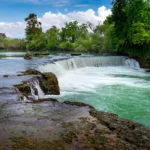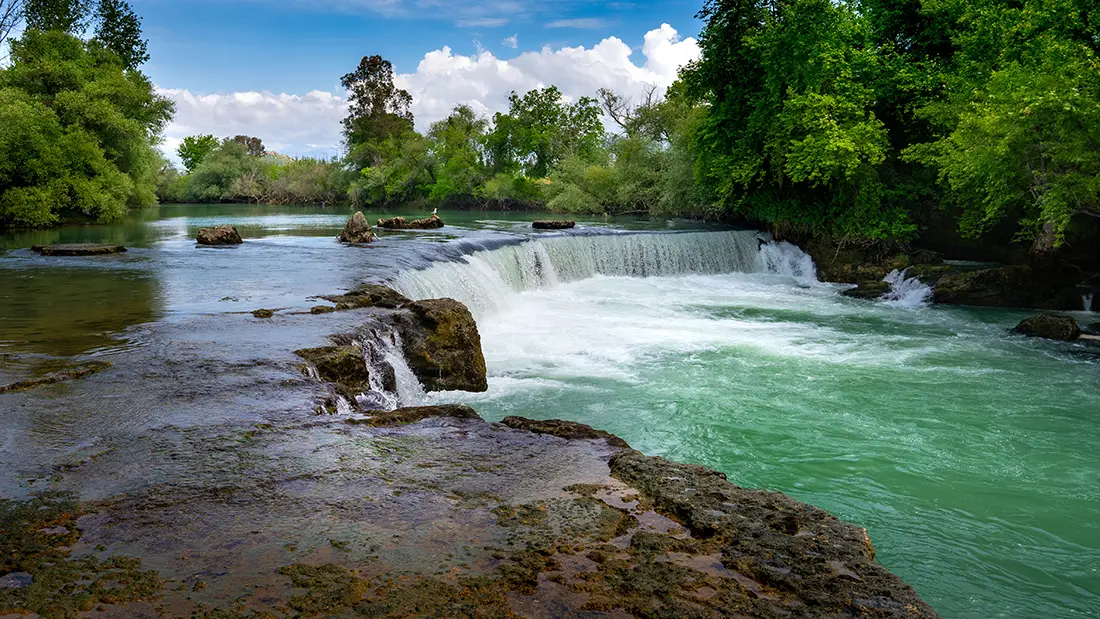
Manavgat Waterfall is one of the many attractions worth visiting in this part of the Turkish Riviera.
During a holiday on the Turkish Riviera, it is well worth making time to enjoy the natural beauty of the region. One place I particularly recommend adding to your travel itinerary is Manavgat Waterfall, located not far from the popular seaside resort of Side. The best-known cascade is Manavgat Şelalesi, although there are several other, smaller waterfalls along the river of the same name. While Manavgat Waterfall is not particularly impressive in terms of height, it more than makes up for this with its width, powerful current and beautiful surroundings.
Turquoise water spilling over a broad rocky ledge, lush green trees and small riverside cafés create a lovely setting in which to escape the hotel swimming pools and crowded beaches for a while. There are also lesser-known cascades in the surrounding area, giving the trip a more adventurous, nature-focused feel. In this article, I will tell you about our visit to the waterfall and help you decide whether it is worth setting aside a few hours of your holiday to explore it.
Manavgat Waterfall – Essential Information at a Glance
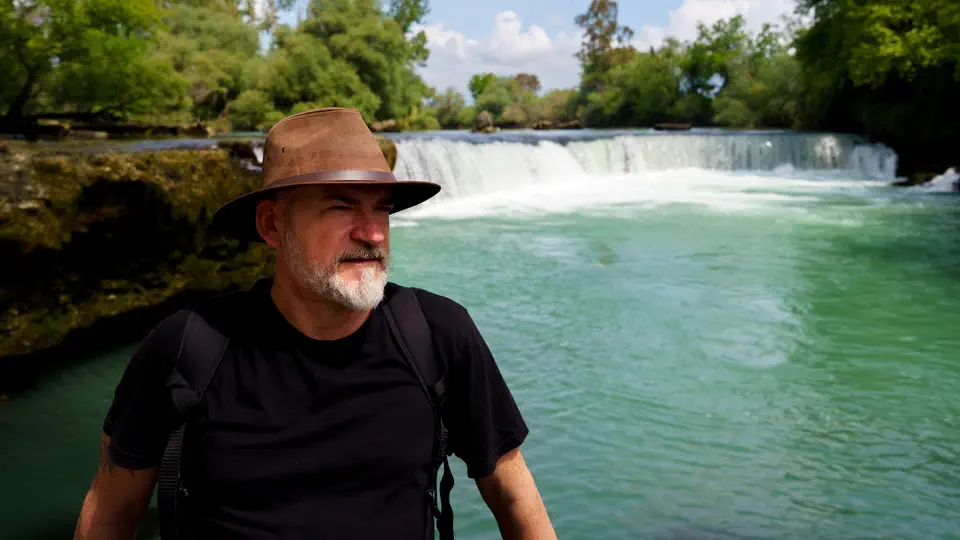
- Location: Manavgat Waterfall (Manavgat Şelalesi) is situated approximately 3–5 km north of Manavgat town centre, not far from the popular resort of Side on the Turkish Riviera.
- What the waterfall looks like: Water flows over a broad limestone ledge from a height of approximately 3–5 metres. The attraction is known for its width, turquoise water and lush green surroundings.
- Getting there: You can reach the waterfall by car, taxi, local minibus or as part of an organised excursion. The journey from Side is relatively short, while driving from Antalya usually takes around an hour.
- Entrance fees: There is an admission charge to enter the main waterfall area. It is worth checking the latest prices before setting off, as entrance fees may change.
- How long to spend there: Allow approximately 1–1.5 hours to see the waterfall, explore the surrounding area and enjoy a break at one of the cafés.
- Best time to visit: Early morning or late afternoon is ideal, as it is easier to avoid the hottest part of the day and some tourist crowds.
- Facilities: There are viewing platforms, walking paths, cafés, tea gardens and restaurants nearby, providing plenty of opportunities to relax to the sound of the river.
- Lesser-known waterfalls: You can also look for smaller cascades in the surrounding area, including Küçük Manavgat Şelalesi and Gizli Cennet, whose name translates as the ‘Hidden Paradise’. Before visiting, check the latest access information and whether these places are open to visitors.
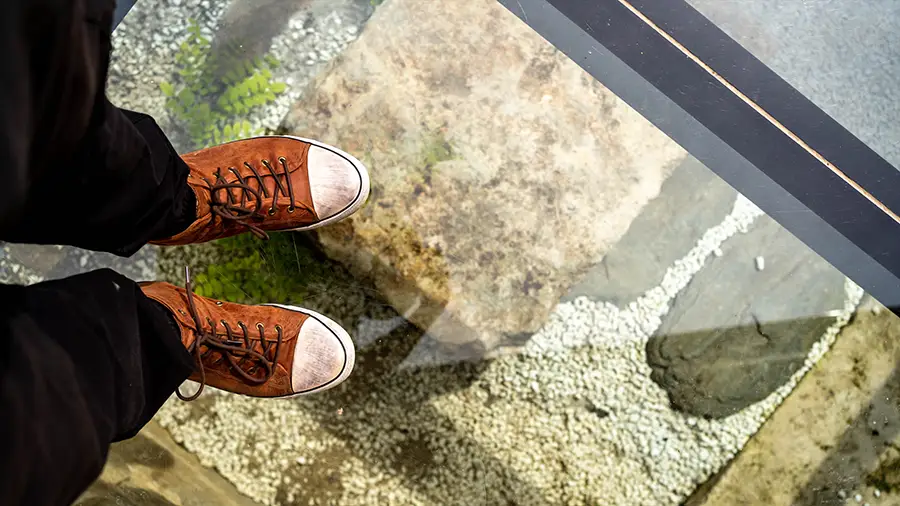
- Safety: Surfaces close to the water can be slippery. Wear comfortable shoes and avoid entering the strong river current or climbing onto unprotected rocks.
- What to see nearby: You can combine your visit with a trip to ancient Side, a wander around Manavgat’s local bazaar, a boat trip along the river or an excursion to the ancient city of Aspendos.
- Who is it for? Manavgat Waterfall is a good choice for families with children, couples, and anyone looking for a short nature excursion during a holiday on the Turkish Riviera.
- Practical tip: If you have a car, combine your visit to the waterfall with a trip to Side and the local bazaar. This will give you plenty to see and do throughout the day without having to rush.
What to do and see in Side and the surrounding area, and how much it costs
- Apollo Temple Side, Perge, Aspendos & Waterfalls Guided Tour; Journey into the past as you discover the ancient cities of Perge, Aspendos, and Side on this guided tour from Antalya. Explore the ruins of Roman architecture and go for a dip in a waterfall.
- An eSIM card that allows you to easily access the Internet throughout Turkey.
Manavgat Waterfall – The Main Natural Attraction in the Area
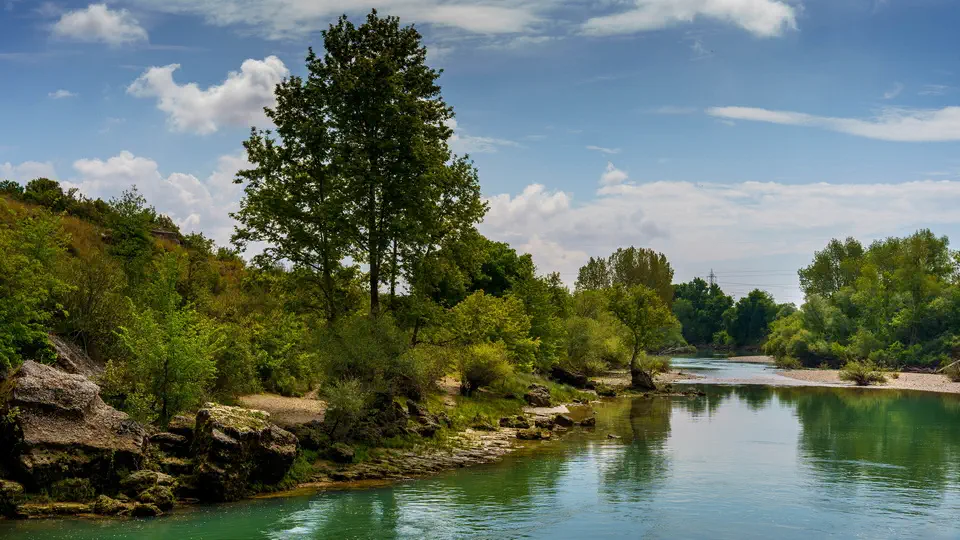
Manavgat Waterfall lies on the river of the same name, approximately 3–5 km north of the town centre. It is one of the best-known natural attractions in Antalya Province and a popular destination for visitors staying in Side, Kumköy and Titreyengöl. The first thing you notice when you arrive is the broad sheet of water cascading over a limestone ledge. The waterfall is only around 3–5 metres high, so it is nothing like the towering cascades found in mountain national parks. Its appeal lies elsewhere. The river flows in a wide channel, and the water rushes over the rocky steps, creating an impressive ribbon of white foam.
Viewing platforms have been built around the waterfall, allowing you to admire the rushing water from several angles. I recommend taking a little time to appreciate the river rather than limiting your visit to a few quick photographs. It is worth starting at the main viewing point, where you can enjoy a good view of the wide cascade and the foaming river. During summer, the area can become quite busy, particularly around midday, as this is one of the most popular attractions near Side. I would suggest arriving in the morning, when it is easier to find a quieter spot for taking photographs.
During a walk around the area, you may spot waterbirds, while smaller animals can sometimes be seen near the riverside cafés and among the surrounding greenery. Bear in mind, however, that the species you encounter will depend on the season and the particular location. The riverside setting itself provides a pleasant contrast to the hot, crowded beaches of the Turkish Riviera.
An interesting alternative to the main waterfall is the lesser-known Gizli Cennet, or ‘Hidden Paradise‘. If you have more time, you can also explore some quieter stretches of the river or take a boat trip along the Manavgat. Many visitors concentrate solely on the waterfall, but combining a visit to this natural attraction with a trip to the local bazaar or ancient Side gives you a much better opportunity to discover this part of Turkey. And please keep in mind the famous Manavgat Bazaar, one of the largest in this part of the country, where you can buy practically anything.
The Smaller Manavgat Waterfall and Hidden Cascades
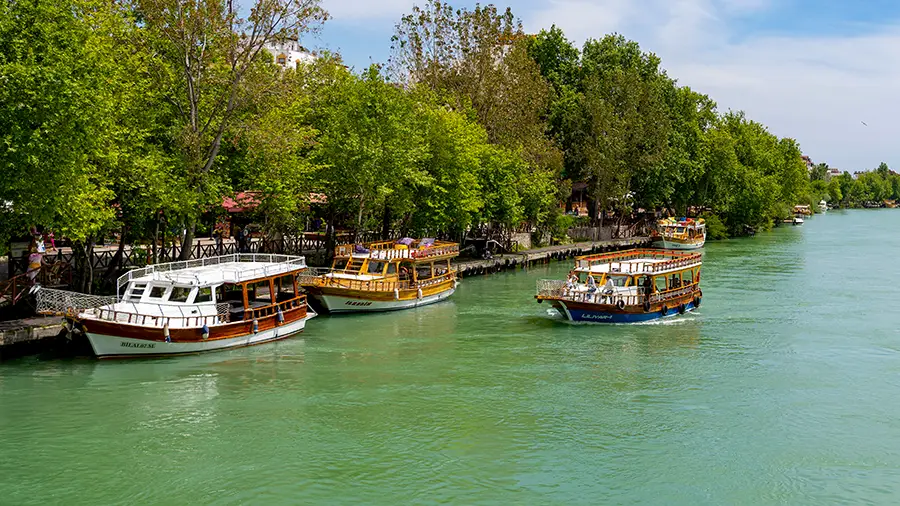
There is more to discover around Manavgat than just one waterfall. Tourist information about the region also mentions Küçük Manavgat Şelalesi, a smaller waterfall located further upstream. It is a suitable option for anyone who would like to explore somewhere beyond the best-known viewpoint.
Another place worth looking into is Gizli Cennet, whose name means ‘Hidden Paradise’. It is in a wooded part of the Manavgat district, near the village of Halitağalar. Here, the water flows down several cascades, forming small natural pools surrounded by rocks and greenery.
This is a wholly different kind of attraction from the main waterfall. Instead of a broad, easily accessible viewing platform, you will find a more intimate natural setting where the surrounding landscape and quieter atmosphere are the main attractions. Before setting off to explore these lesser-known cascades, check the current access arrangements, road conditions and whether the sites are open to visitors. Not all of them are equally well-equipped for tourists, and some may require a car or an additional walk.
Manavgat Waterfall – How to Get There
Getting to the main waterfall should not cause you any particular difficulties. The most convenient option is to travel by car, although you can also use local minibuses, take a taxi or join an organised excursion arranged by a travel agency.
- From Manavgat: The waterfall is just a few kilometres from the town centre.
- From Side: It is a short excursion that can easily be combined with a visit to the town and its ancient ruins. You can find more ideas in our guide to the Old Town of Side and its most interesting attractions.
- From Antalya: Driving usually takes around an hour, depending on traffic conditions.
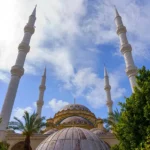
- From your hotel: It is worth asking at reception about excursions combining the waterfall, Manavgat Bazaar, The mosque in Manavgat and a boat trip along the river.
If you are planning a longer stay in this part of Turkey, have a look at our article about Side in Turkey and its most interesting attractions. You will find plenty of inspiration for exploring the surrounding area.
Manavgat Waterfall – Entrance Fees and the Best Time to Visit
There is an admission charge to enter the area around the main Manavgat Waterfall. Our entrance fee was included in the price of the excursion organised through our hotel. I have heard that prices may depend on the season, visitor numbers and even weather conditions, so the best approach is to check the latest admission fees before your visit or directly at the ticket office. Allow around an hour to an hour and a half to explore the main waterfall. If you are planning to have a meal at one of the restaurants, enjoy a leisurely walk and take photographs of the surrounding area, give yourself a little longer.
The best time to visit is early in the morning or later in the afternoon. Temperatures can become extremely high in the middle of a summer’s day, while popular attractions tend to attract considerable numbers of visitors. Spring and autumn can be more pleasant for walking, thanks to the milder weather. Remember to wear comfortable footwear, too. Surfaces close to the water can be wet and slippery. Do not climb over safety barriers or enter the strong river current, even if the water looks inviting.
What Else Is There to See Around Manavgat?
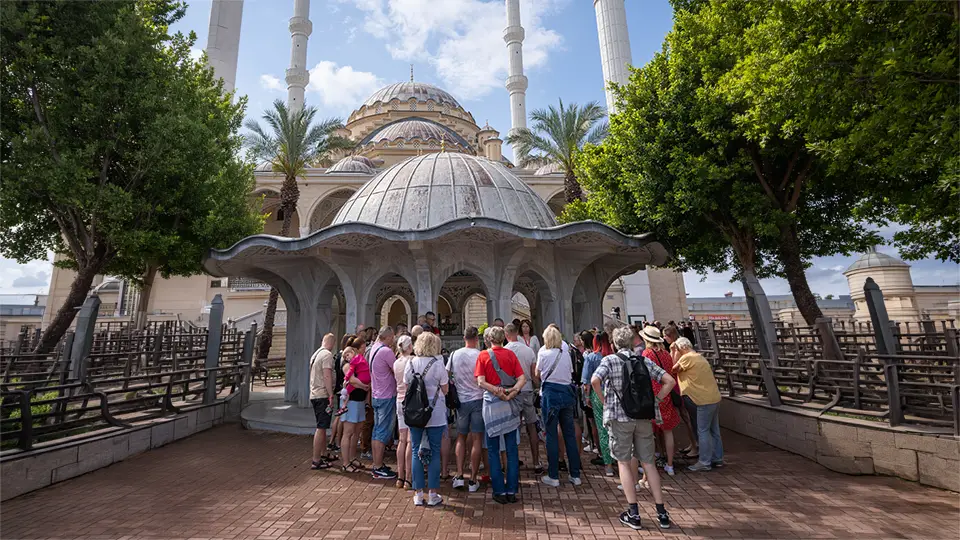
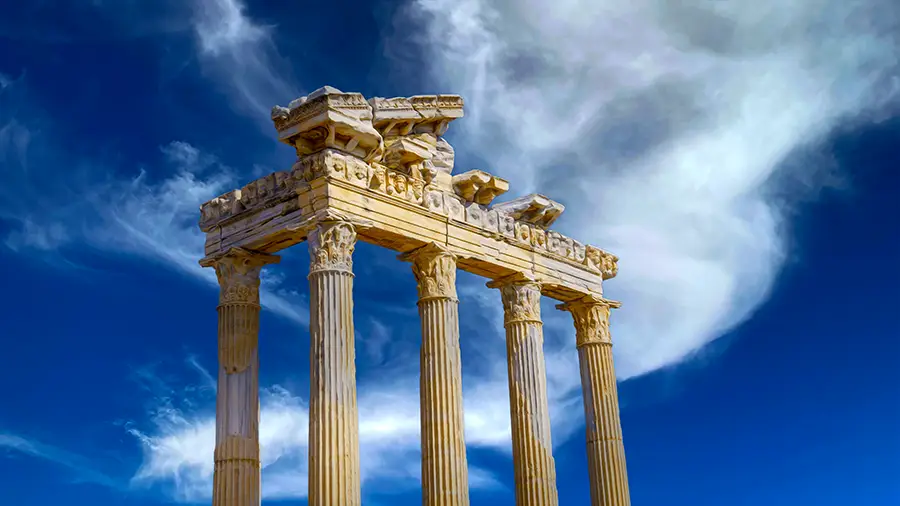
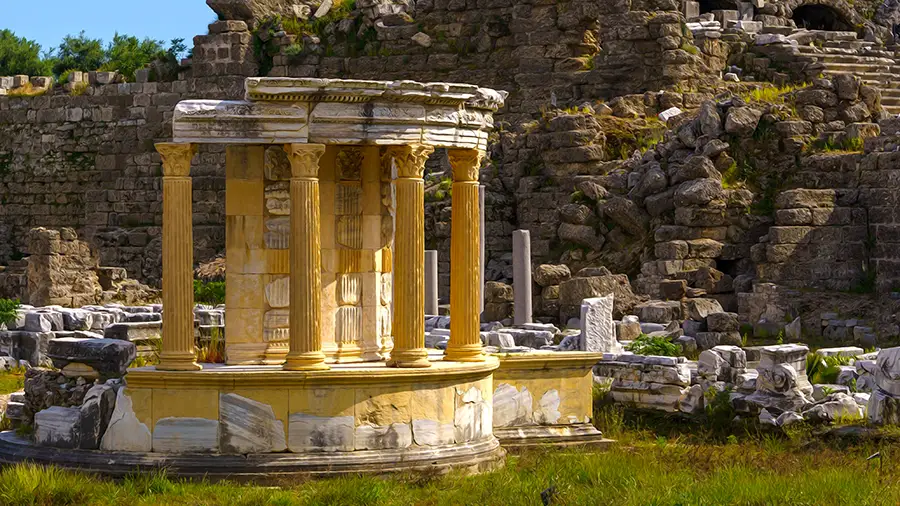
I would recommend treating the waterfall as just one stop on a wider sightseeing trip around the area. Manavgat itself and nearby Side offer more than enough attractions to fill an entire day. Beyond the places mentioned in this article and our other guides to Turkey, there are plenty of interesting destinations, both well-known and somewhat off the beaten track. If you come across somewhere particularly worthwhile, do get in touch. We would be delighted to mention it in our articles.
- Manavgat Bazaar – A wonderful place to experience everyday life in the town, buy local produce and sample traditional Turkish specialities. You can read more in our guide to Manavgat Bazaar, the commercial heart of southern Turkey.
- Ancient Side – Explore the ruins of temples, the ancient theatre, the remains of Roman buildings and the picturesque harbour. Our guide to the Old Town of Side will help you discover its most important historical attractions.
- Aspendos – One of the most interesting archaeological sites in the region, best known for its magnificent Roman theatre. If you enjoy exploring ancient history, our article about Aspendos and its remarkable Roman theatre is well worth reading.
- The mosque in Manavgat – This is another attraction you should not miss while staying in this part of the Turkish Riviera.
If you enjoy spending your holidays actively rather than staying in a hotel throughout your trip, this stretch of the Turkish coast offers plenty of opportunities. You can combine nature, history, local cuisine and shopping without having to travel particularly long distances. We had a wonderful time at the waterfall itself and exploring the surrounding area. I recommend taking a leisurely walk and stopping for a meal at one of the local restaurants.
If you were to ask me whether Manavgat Waterfall is worth visiting during a holiday in this part of Turkey, my answer would be yes, particularly if you want to discover a different side of the Turkish Riviera. It is neither the tallest nor the most spectacular waterfall you could imagine, but it has a character of its own. The broad cascade, turquoise water and green surroundings create a pleasant setting, while the facilities make it easy to explore, even for families travelling with children.
If you are staying in Side or Manavgat, I would definitely include this place in your sightseeing plans. It is best combined with a visit to the local bazaar or a walk around ancient Side. That way, instead of making a brief stop at the waterfall, you can enjoy an entire day filled with various attractions.
One final practical tip: do not restrict yourself to the main viewing platform. Take a look around, find somewhere to sit beside the river and spend a few minutes listening to the sound of the rushing water. Occasionally, these simple moments stay in your memory longer than yet another historic building.
Legends and Mysteries of Manavgat Waterfall

Standing beside the waterfall and listening to the roar of water rushing over the rocky ledge, it is easy to understand why rivers and waterfalls have inspired local stories for centuries. Water can be gentle and soothing, but it can also reveal its tremendous power. In Turkey, where ancient beliefs are intertwined with the history of classical civilisations, places like this are particularly good at capturing the imagination.
The Legend of Cleopatra and the Waters of Manavgat
Long ago, when Roman ships sailed across the Mediterranean and Cleopatra ruled Egypt, stories of her extraordinary beauty reached even the most distant corners of the known world. It is said that the queen once visited the Manavgat area and bathed in the cool waters of the river. She was looking for relief from the heat, while the sound of the cascading water was said to bring her a sense of peace that she could not find in royal palaces. According to the story, she was so enchanted by the place that she remembered its beauty for a long time afterwards.
You can still come across this tale in tourist accounts of the waterfall today. However, there is no reliable historical evidence that Cleopatra ever bathed here. Perhaps the legend emerged because her name has been associated with beauty, luxury and extraordinary places for centuries.
The Mystery of the Ribbons and Hidden Wishes
There is another story you may hear during a visit to the waterfall. In the past, people believed that places where water met rock with great force possessed a special power. Water symbolised purification, a fresh start and hope for a better future. According to local accounts, some visitors used to tie pieces of fabric to tree branches, entrusting their wishes to them. Each ribbon was said to hold a different secret: a prayer for good health, happy love or prosperity for the family.
As the wind moved the pieces of fabric and the waterfall roared in the background, it was easy to imagine that nature itself was trying to fulfil the wishes written on them. According to the tale, if a stronger gust of wind tore away one of the ribbons, the person who had tied it could expect the opposite of what they had wished for.
The Legend of the Waterfall Where Brides Used to Bathe
A little further away, within the Manavgat district, lies a lesser-known waterfall called Gelin Kavağı. Local people also refer to it as Gelin Hamamı, which can be translated as the ‘Bride’s Bath’. A particularly interesting legend is associated with this place. Imagine a time when weddings in small Anatolian villages required days of preparation. Amid the singing, family gatherings and celebrations, the bride-to-be was said to visit a natural bathing place to wash in the water flowing over the white rocks.
According to local tradition, future brides used to bathe here before their weddings. The water was believed to symbolise purity, leaving one’s former life behind and preparing for a new chapter. The waterfall therefore became something more than a beautiful natural spot. It was a place marking the transition between the familiar past and an unknown future. It is not clear how widespread this custom was or how old the story itself might be. Nevertheless, the legend has been recorded in the regional cultural heritage inventory of Antalya.
Manavgat Waterfall – Facts, Information and Interesting Trivia
- Manavgat Waterfall (Manavgat Şelalesi) is one of the best-known natural attractions on the Turkish Riviera. Every year, it attracts visitors staying in Side, Antalya, and the surrounding resorts, many of whom are eager to discover a different side of Turkey beyond its sandy beaches.
- The waterfall is located on the Manavgat River, which rises in the Taurus Mountains and flows through southern Turkey towards the Mediterranean Sea. The river plays an important role in the local landscape, and its waters are also used for various economic purposes.
- Manavgat Waterfall is relatively low, measuring approximately 3–5 metres in height, but it stretches across a broad rocky ledge. This gives it a very different appearance from the tall, narrow waterfalls found in mountainous parts of Europe.
- One of the waterfall’s most distinctive features is its bright, foaming water, which contrasts beautifully with the darker rocks and the greenery of the trees along the riverbank. In the right light, you can see different shades of turquoise and blue, particularly in the calmer sections of the river.
- The Manavgat area has been inhabited since ancient times. Nearby Side developed into an important trading port, while the river and access to fresh water played a significant role in the lives of the people living in this part of Anatolia.
- The waterfall became a popular excursion destination as tourism developed along Turkey’s Mediterranean coast. Before that, the river was primarily part of the local landscape and an important source of water, whereas today it is also a major tourist attraction.
- The name of the waterfall comes from the town of Manavgat and the river on which it is located. It is an example of a place whose name is directly connected with local geography rather than a legendary character or historical event.
- Manavgat Waterfall is sometimes confused with the nearby Köprülü Canyon and other water attractions in Antalya Province. In reality, these are separate destinations in different parts of the region, and it is worth keeping them in mind when planning your excursions.
- Viewing platforms have been built near the waterfall, allowing visitors to admire the cascade from close up. This makes it relatively easy to reach, even for people who have no plans to undertake a long mountain walk.
- The waterfall is surrounded by lush greenery, which is particularly noticeable during the hot summer months. The shade of the trees and the more humid air beside the river provide a welcome contrast to the scorching streets of Manavgat and the nearby beaches.
- The Manavgat River is approximately 93 km long and is fed, among other sources, by substantial underground water reserves. It is therefore an important natural feature of the region, with its flow creating the distinctive landscape around the waterfall.
- The river and its surroundings provide habitats for numerous fish and bird species. Fish found in the river include carp, trout, mullet and sea bass, while kingfishers, ducks, gulls and various species of heron can be spotted near the water.
- Willows, plane trees, poplars, and mulberry trees grow along the riverbanks. This vegetation creates naturally shaded areas that are particularly pleasant during the hot summer months. It also provides important habitats for birds and small animals.
- The Manavgat River is important for local agriculture. The fertile land in its valley is suitable for growing fruit and vegetables, and the surrounding area includes citrus orchards and greenhouses. The waterfall is therefore part of a much larger natural system that influences the everyday lives of residents.
- In ancient times, water from the Manavgat River supplied the city of Side. An aqueduct approximately 30 km long was built to transport water to the settlement, and remains of this impressive structure can still be seen in certain places. It is one of the most interesting examples of ancient water engineering connected with the history of the area. You can discover more about the city’s past in our guide to the ancient attractions of Side.
- The Manavgat River is also used for organised sightseeing cruises. During a boat trip, you can admire the green riverbanks, observe the local wildlife and discover the area from an entirely different perspective than the popular viewing platforms beside the waterfall.
- Kayaking and rafting are available on selected sections of the river. This does not mean, however, that these activities take place directly beside the waterfall itself. Water sports routes are organised on suitable stretches of the river, and their availability depends on conditions and the tour operator.
- Tourist facilities have been developing around the waterfall for many years. Walking areas, viewing platforms and recreational spaces have been created, making it possible to enjoy the rushing water without having to tackle difficult mountain trails. There are also several restaurants in the area serving fish dishes.
- Manavgat Waterfall is not the only water attraction in this part of Antalya Province. Regional guides also mention Gizli Cennet, or ‘Hidden Paradise’, along with other waterfalls and cascades. It is worth checking the precise location of each one, as not all of them are situated close to the main waterfall.
- Despite the waterfall’s popularity, there is no well-documented ancient legend that clearly explains its origins. The most interesting historical stories from the region are more closely connected with the river, ancient Side and the Roman aqueduct system. If you are interested in the past of this area, it is worth combining your visit to the waterfall with a trip to the ancient city and a search for the remains of Roman water engineering.
Manavgat Waterfall – polish version