Interesting Facts About Computers are part of our collection of articles exploring the fascinating world around us, where you can discover all kinds of interesting information about everyday objects, technology and much more.
Computers have become such an ordinary part of our lives that we rarely stop to think about just how remarkable these devices really are. We use them for work, watching films, shopping, planning trips and keeping in touch with people on the other side of the world. Yet, only a few decades ago, a computer could occupy an entire room, weigh dozens of tonnes and perform fewer operations than the device we now carry in our pockets. Data was stored on punched cards, programming sometimes involved physically reconnecting wires, and a hard drive capable of holding a few megabytes was the size of a large cupboard.
The history of computers is full of similar contrasts. Below, we have collected fascinating facts about the history of computing, computer components, programming, the internet, video games and some extraordinary applications of modern technology. At the end, you will also find a selection of computer facts specially prepared for children.
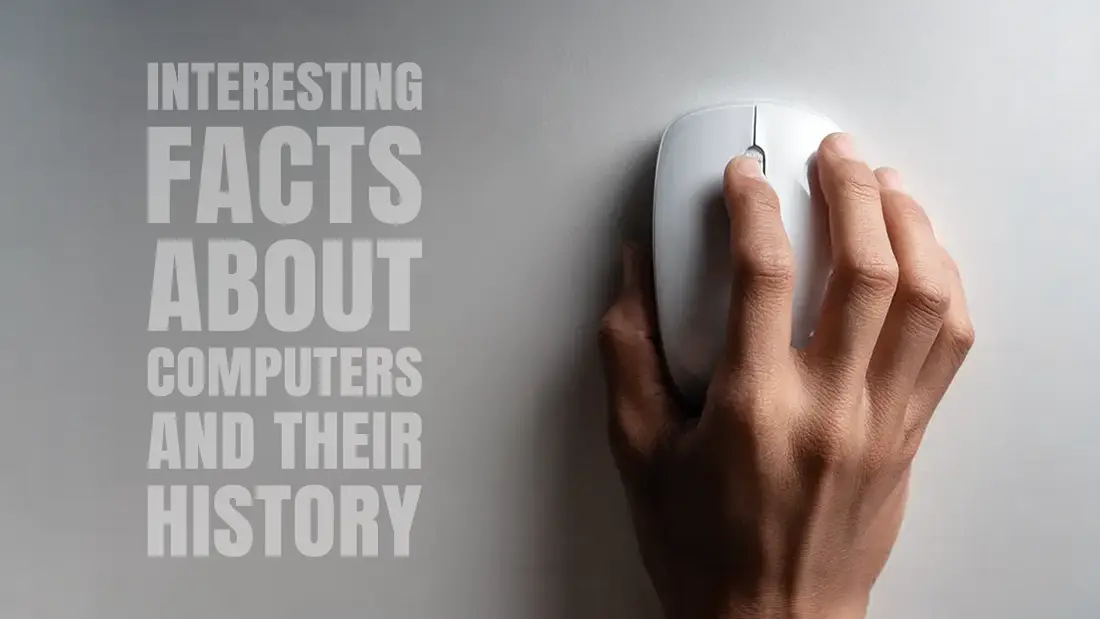
Interesting Facts About Computers and Their History
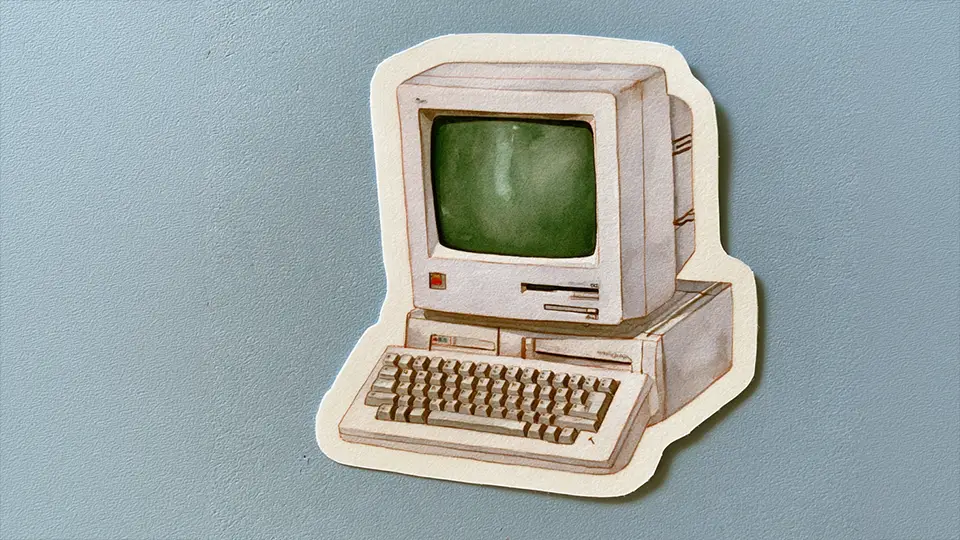
- The word ‘computer’ originally referred to a person. Long before electronic machines appeared, the term was used to describe people whose job involved performing calculations. They worked for astronomers, the military, universities and scientific institutions. Only later was the name transferred to machines capable of carrying out similar tasks.
- The first computers did not have monitors. For many years, computers were not devices that people sat in front of while looking at colourful screens. Data was entered using punched cards, paper tape, switches and wires, while the results were either printed out or displayed using a series of indicator lights.
- ENIAC weighed around 30 tonnes. One of the most famous early computers was officially unveiled in 1946. It occupied a large room, used approximately 18,000 vacuum tubes and consumed enormous amounts of electricity. A modern laptop is incomparably more powerful.
- Programming ENIAC involved reconnecting wires. Changing the task performed by the computer could mean manually adjusting switches and connecting the appropriate panels with cables. Preparing the machine for a new job could therefore take considerably longer than carrying out the calculations themselves.
- One of the first programmes stored in memory contained just 17 instructions. In June 1948, the Manchester Baby computer successfully ran a programme stored in its memory. That might sound unremarkable today, but this approach became the foundation of modern computing.
- The first commercial computers cost a fortune. The UNIVAC I weighed several tonnes and cost more than a million US dollars. Only large businesses, government institutions and the military could generally afford to purchase such machines.
- One of the first business computers helped make biscuits. The British company J. Lyons & Company developed the LEO I computer, which was used for tasks including planning deliveries, calculating costs and organising production for a business operating a chain of restaurants and tea shops.
- Computers began playing games as early as the 1950s. Programmes capable of playing draughts were among the experiments developed during this period. These were some of the earliest attempts to create machines that could make decisions by analysing a range of possible moves.
- One of the oldest computer games was displayed on an oscilloscope. In 1958, William Higinbotham created Tennis for Two, a simple tennis-like game designed primarily to entertain visitors to the Brookhaven National Laboratory.
- Spacewar! was created as early as 1962. In this game, two players controlled spaceships and attempted to destroy each other, while also having to contend with the gravitational pull of a star positioned in the middle of the screen.
- The first computer mouse was made of wood. The prototype developed by Douglas Engelbart was a small wooden box fitted with two wheels that measured the movement of the device across a surface.
- The name ‘mouse’ came from the device’s appearance. The cable extending from the small box resembled a tail. Interestingly, Engelbart’s original patent documentation did not initially use the word ‘mouse’.
- The Xerox Alto already resembled a modern personal computer in the 1970s. It featured a graphical user interface, a mouse, windows, icons, and networking capabilities. Many of the ideas developed at Xerox PARC laboratories subsequently became widespread around the world.
- Steve Jobs visited the Xerox PARC laboratories. In 1979, Apple employees saw, among other things, a graphical interface controlled using a mouse. These ideas later had a significant influence on the development of the Apple Lisa and Macintosh computers.
- The first Macintosh cost around $2,500. Introduced in 1984, it helped popularise controlling a computer with a mouse, icons and graphical windows rather than having to type every command using the keyboard.
- One of the first microprocessors was developed for calculators. The Intel 4004 was created as part of a project for the Japanese company Busicom. It soon became clear, however, that such a programmable chip could have many other applications.
- Intel acquired the rights needed to use the 4004 more widely. This decision proved critical, as microprocessors became the foundation of a vast proportion of the world’s electronic devices over the following decades.
- Early personal computers often had to be assembled by their owners. During the 1970s, many enthusiasts bought kits containing components that they had to put together at home. Knowledge of electronics and the ability to use a soldering iron were therefore particularly useful.
- The Apple II offered colour graphics as early as 1977. It was one of the computers that helped bring computing out of laboratories and large businesses and into ordinary people’s homes.
- The entire computer revolution took place within a single human lifetime. Someone born when computers occupied enormous rooms could later go on to use laptops, the internet, smartphones, satellite navigation and artificial intelligence.
Interesting Facts About Computers, Components, and Computer Memory
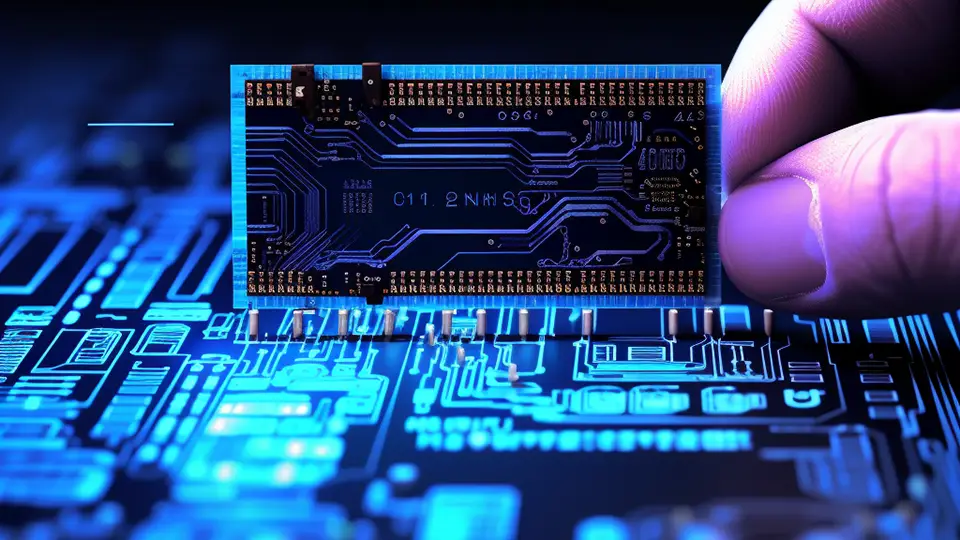
- The first commercial hard drive could store around 5 MB of data. IBM’s RAMAC system, introduced in the 1950s, occupied a huge amount of space. Today, a single photograph taken on a mobile phone can contain a similar amount of data.
- A 5 MB hard drive was once a remarkable technological achievement. Today, we measure storage capacity in terabytes, with one terabyte equivalent to approximately one million megabytes. It is a striking illustration of how quickly data storage technology has developed.
- The first floppy disks were around 8 inches in diameter. They were considerably larger than the later 3.5-inch floppy disks that many computer users still remember from the 1990s.
- A floppy disk could replace thousands of punched cards. Previously, a programme or collection of data might require entire boxes of paper cards. A small magnetic storage device was therefore a tremendous improvement.
- The familiar save icon depicts a floppy disk. Although many younger users have never handled one, its distinctive shape remains widely used in software to represent the ‘Save’ command.
- Traditional hard drives contain spinning platters. Data is recorded magnetically on their surfaces, while a specialised read/write head moves above the platters to access the information.
- SSDs have no moving parts. They store data in semiconductor memory, allowing them to operate faster and more quietly than traditional hard disk drives (HDDs), while also making them more resistant to physical shocks.
- RAM is not designed for permanent document storage. It is a fast working memory used by the operating system and applications while they are running. When the power is switched off, its contents are usually lost.
- Some memory used in Apollo programme computers was literally woven with wires. Known as core-rope memory, this technology stored programmes using wires threaded through or around small magnetic cores.
- A processor performs enormous numbers of basic operations. Adding numbers, comparing values and moving data may not sound particularly impressive, but the remarkable part is the speed at which a computer can carry out billions of these actions.
- The Intel 4004 was a 4-bit processor. Modern personal computers generally use 64-bit architecture, illustrating just how far processor technology has advanced since the early 1970s.
- A processor can be smaller than a fingernail yet contain billions of transistors. These tiny electronic switches are fundamental to modern computing, and their miniaturisation has been one of the main driving forces behind technological progress.
- Modern integrated circuits contain components measured in nanometres. A nanometre is one billionth of a metre, and at these incredibly small scales, processor design begins to encounter the limits imposed by physics.
- Processors generate considerable heat while operating. Computers therefore rely on heat sinks, fans, or liquid cooling systems to keep temperatures under control. Without adequate cooling, a processor could quickly become too hot to function properly.
- Graphics cards are no longer used solely to display images. Graphics processing units (GPUs) are perfect at performing many calculations simultaneously, making them useful in scientific research, simulations and artificial intelligence systems.
- The motherboard acts as a computer’s communications hub. It connects the processor, RAM, storage drives, graphics card and external devices, allowing them to exchange information.
- BIOS or UEFI starts working before the operating system. This small piece of software begins checking the hardware and prepares the computer to load Windows, Linux or another operating system.
- Computers use the binary system. At the most fundamental level, information is represented by two states, written as 0 and 1. Text, photographs, films and games can ultimately be represented as enormous sequences of these values.
- One byte usually consists of eight bits. Eight binary digits can produce 256 different combinations, making the byte a fundamental unit used when describing computer memory and storage.
- A small memory card can hold more data than entire computer installations from several decades ago. It is one of the clearest examples of how electronics have become smaller while storage capacity has grown enormously.
Interesting Facts About Computers, Programming, and the Internet
- The internet and the World Wide Web are not the same thing. The internet is the global infrastructure connecting computer networks, while the Web is one of the services that uses it. Websites are therefore part of the internet, but the internet exists independently of them.
- The World Wide Web was developed at CERN. Tim Berners-Lee proposed a system that would make it easier for scientists to share information. His work laid the foundations for websites, hyperlinks and browsing documents across a network.
- The first web server ran on a NeXT computer. A handwritten warning on its casing instructed people not to switch the machine off because it was being used as a server.
- The first website was elementary. It had no videos, animations, advertisements or impressive graphics. Its main purpose was to explain what the World Wide Web was and how people could use it.
- The first message sent over ARPANET was intended to be ‘LOGIN’. However, the system crashed after the first two letters had been transmitted. As a result, the first message sent over this important network was simply ‘LO’.
- ARPANET was one of the most important predecessors of today’s internet. Developed from the late 1960s onwards, it initially connected several American research centres and universities.
- Email is older than the World Wide Web. Electronic messages were being exchanged between networked computers long before websites were introduced.
- The @ symbol became part of email addresses thanks to Ray Tomlinson. He wanted a character that was not commonly found in usernames, and @ was a convenient choice for separating a user’s name from the name of the computer or system.
- The earliest programmes were not stored in the same way as modern applications. On the oldest machines, programming could involve physically setting switches, reconnecting cables or preparing punched cards.
- Punched cards have a history that predates electronic computers. Similar techniques were used much earlier for tasks such as controlling weaving looms.
- Programmers do not spend most of their time writing spectacular pieces of code. Much of their work involves analysing problems, checking documentation, correcting errors and figuring out why something behaves differently from the way it should.
- A programming error is called a ‘bug’ in English. The word also means an insect and was used in engineering long before modern computers existed, although its popularity in computing was boosted by a famous story involving a moth found inside a Harvard Mark II computer.
- One of the most famous computer ‘bugs’ really was attached to a logbook. In 1947, members of the Harvard Mark II team discovered a moth that had caused problems with a relay and placed it in their documentation.
- Not all programming languages look alike. Some are designed for websites, others for applications, data analysis, operating systems or controlling devices. They differ in their syntax, applications, and the way they work.
- FORTRAN was developed in the 1950s and is still used today. It remains particularly important in scientific computing, mathematics and simulations, although modern versions differ considerably from the earliest releases.
- COBOL is also more than 60 years old. Despite its age, financial, banking and administrative systems can still be found running code written in this language.
- A programme’s source code is not always what the processor executes directly. Often, it must first be translated by a compiler or interpreter into a form the computer can understand.
- An IP address is a bit like a home address on a network. It enables devices to locate one another and exchange data. Without a suitable addressing system, communication across a global network would be virtually impossible.
- Website names were introduced partly because words are easier for people to remember than numbers. The Domain Name System (DNS) translates domain names into the numerical IP addresses that computers use.
- A giant proportion of the internet runs beneath the oceans. Thousands of kilometres of fibre-optic cables lie on the seabed, connecting continents and carrying much of the data exchanged between Europe, America, Asia and other parts of the world.
- For another look at how science and technology shape the world around us, have a look at our article about the Science Museum in Valencia, where scientific principles and technological achievements are explored through interactive exhibits.
Interesting Facts About Computers, Video Games and New Technologies
- The first computer games were created mainly as experiments. Their developers were not necessarily trying to establish a huge entertainment industry; they often wanted to demonstrate what new machines could do or simply entertain their colleagues in a laboratory.
- Pong was not the first computer game, but it became one of the most recognisable symbols of the early video game industry. Its rules were remarkably simple: two vertical paddles bounced a moving dot across the screen.
- Pac-Man was designed partly to attract a wider audience. Its creator, Toru Iwatani, wanted to move away from the shooting games and combat-themed productions that dominated arcades at the time.
- Pac-Man’s shape was supposedly inspired by a pizza with one slice missing. Toru Iwatani has often recounted this story, although the character’s design was also associated with the Japanese character representing a mouth.
- Tetris was created in the Soviet Union. Its developer, Alexey Pajitnov, designed the game in 1984. The simple challenge of arranging falling blocks went on to become one of the most recognisable games in history.
- The name Tetris combines the Greek prefix tetra, meaning four, with the word ‘tennis’. Every standard piece in the game consists of four squares.
- Minecraft may look simple, but it can simulate remarkably complicated constructions. Using its redstone mechanics, players have built calculators, memory systems, clocks, and even basic computers inside the game.
- Computer games can contribute to genuine scientific research. Projects involving players have helped researchers analyse protein structures, astronomical images and other problems that require patterns to be recognised.
- A supercomputer does not have to resemble one enormous processor. Most supercomputers consist of thousands, or even more, individual computing components working together.
- Supercomputers help forecast the weather. Atmospheric models require enormous numbers of calculations, and the more detailed the model becomes, the greater the computing power it needs.
- Computers help engineers design cars without building every prototype. Simulations make it possible to test aerodynamics, structural strength and how a vehicle might behave during a collision.
- Computers are essential to modern aviation. They control many aircraft systems, assist with navigation, analyse flight parameters and support pilots during some of the most complex operations.
- A modern car may contain dozens of computers. These control the engine, brakes, air conditioning, safety systems and entertainment equipment, as well as increasingly sophisticated driver-assistance features.
- Computers are found inside many washing machines. A microcontroller manages washing programmes, temperature, water levels and the speed at which the drum spins. It may not resemble a laptop, but the underlying principle is similar.
- A smartphone is a fully fledged computer. It has a processor, working memory, storage, an operating system and applications. Its main differences lie in its shape and the way we interact with it.
- Artificial intelligence is not a single programme sitting somewhere inside a computer. The term covers a vast range of methods and systems used for tasks such as analysing text, recognising images, predicting outcomes and generating new content.
- Machine learning requires enormous amounts of computing power. Many modern artificial intelligence models are trained using large collections of graphics processing units or other specialised chips.
- Computers can defeat the world’s best human players in certain games. In 1997, IBM’s Deep Blue computer won a chess match against Garry Kasparov, the reigning world champion at the time.
- Defeating a human champion at Go seemed considerably more difficult than winning at chess. The number of possible positions in Go is enormous, but in 2016, AlphaGo defeated Lee Sedol, one of the world’s leading players.
- Computers have transformed scientific research. Rather than relying exclusively on laboratory experiments, scientists can now simulate climates, galaxies, molecules, chemical reactions and the behaviour of different materials.
- For a closer look at the technology behind some of our most fascinating discoveries, you can also read about the Museum of Engineering and Technology in Kraków, which features historic computers, early processors and the evolution of computer peripherals.
Interesting Facts About Computers for Children
- Computers do not think in the same way as people. They primarily follow instructions written by programmers or use models trained on data. Even the most advanced computer operates differently from the human brain.
- Computers fundamentally work with zeros and ones. Letters, photographs, films, and music must all be represented numerically, ultimately becoming enormous sequences of binary digits.
- A single photograph can consist of millions of coloured dots. These are called pixels, and if you look closely enough at a screen or magnify an image sufficiently, you can see how they are arranged.
- A monitor changes the image on the screen quickly. It may refresh the picture dozens or even hundreds of times per second, and our eyes perceive these changes as smooth movement.
- A computer mouse really did once look a little like an actual mouse. Early models had a simple shape and a cable extending from the casing like an animal’s tail.
- The first mouse was made of wood. It may be difficult to believe when looking at today’s colourful wireless gaming mice, but Douglas Engelbart’s original prototype had a wooden casing.
- Computer keyboards inherited their letter layout from typewriters. That is why the letters are not arranged alphabetically, and why the QWERTY layout is much older than computers themselves.
- The space bar is usually the largest key on a keyboard. This is because we use it extremely frequently when typing and can press it conveniently with either thumb.
- A robot can have a computer inside it. The computer receives information from sensors and determines how to control the motors, allowing the robot to move, pick up objects or avoid obstacles.
- Toys can contain computers, too. Interactive cars, robots, drones and talking toys often rely on small electronic circuits called microcontrollers.
- A phone is a computer in a tiny package. It has a processor, memory, a screen and an operating system, along with numerous sensors such as GPS, a gyroscope, an accelerometer, and a camera.
- Computers are found on other planets. Rovers sent to Mars have their own onboard computer systems, allowing them to follow instructions, take photographs, conduct experiments and communicate with Earth.
- A computer on Mars cannot be controlled exactly like a remote-controlled toy car. Radio signals take several or even more than ten minutes to travel between Earth and Mars, depending on the planets’ positions. A rover must therefore be capable of making some decisions independently.
- Computers help astronomers explore the Universe. Telescopes collect enormous quantities of data that must then be processed, and analysing many modern astronomical observations would be extremely difficult without computers.
- A computer can learn to recognise a cat in a photograph without someone describing every individual cat to it. Machine learning systems analyse large numbers of examples and identify features that help them recognise similar images.
- The world’s largest computers can occupy entire rooms. These machines are known as supercomputers and, in some respects, resemble the earliest computer installations, although their capabilities are incomparably greater.
- Not every computer has a screen. A computer can control a lift, a car, traffic lights or a washing machine without ever displaying a desktop resembling the one found in Windows.
- A computer can perform billions of operations in less time than it takes to blink. This extraordinary speed is what allows machines to carry out tasks that would otherwise be far too complicated or time-consuming.
- Video games are programmes, too. Whenever a character runs, a car turns or an opponent starts chasing a player, the action is controlled by instructions written by the game’s developers.
- Your computer is millions of times more powerful than many early machines. The pioneers of computing would probably have struggled to believe that so much processing power could fit on a desk, inside a backpack or even in a pocket.
Computers Have Changed the World Faster Than We Might Imagine
The history of computers is remarkable above all because so many of the changes described here took place within just a few decades. We have progressed from machines weighing dozens of tonnes to smartphones, smartwatches, and computers no larger than a credit card. Punched cards have given way to storage drives capable of holding trillions of bytes of data, while simple programmes containing a dozen or so instructions have evolved into artificial intelligence systems capable of analysing enormous quantities of information.
Even more fascinating is that this progress has not come to a halt. Quantum computers, artificial intelligence, robotics and increasingly powerful supercomputers all suggest that, in a few decades, today’s laptops may seem just as primitive to future generations as computers from the 1940s seem to us now.
Interesting Facts About Computers – Polish version