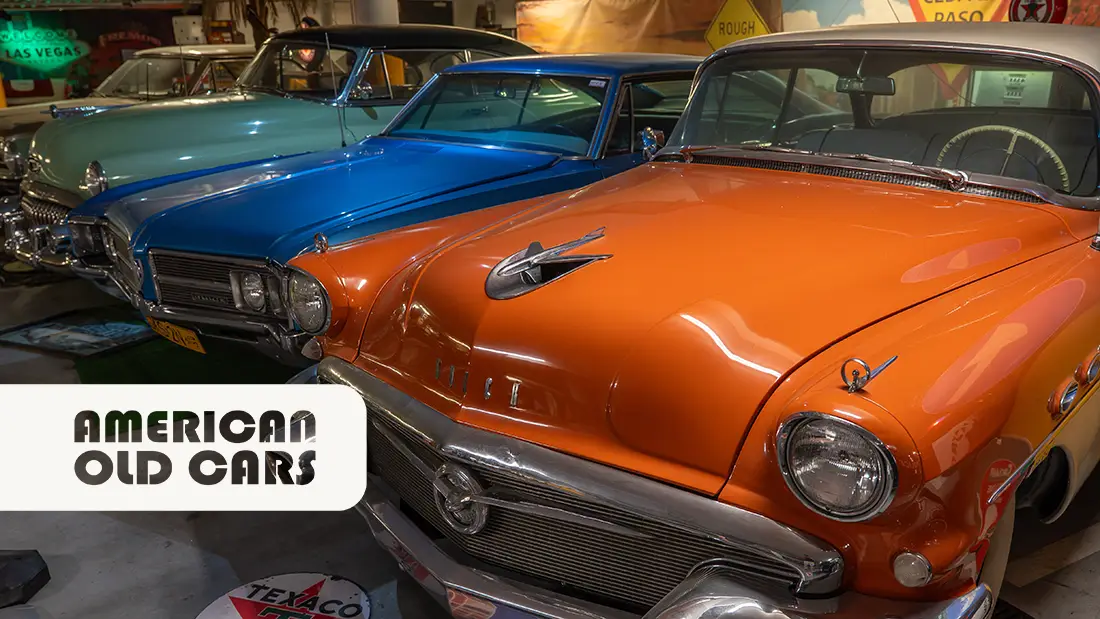
The American Old Cars Museum in Kościerzyna, home to a collection of classic American cars, is a great place for anyone who loves beautiful automobiles with enormous engines.
The famous American Dream of the mid-20th century is closely associated with giant cars covered in chrome. Luxury vehicles powered by enormous engines that seemed to drink petrol like there was no tomorrow appeared in countless adverts and films from the period. I have always been particularly fond of classic American cars, so visiting American Old Cars in Kościerzyna was quite an adventure for me. I truly enjoyed exploring the collection, so today I want to tell you what I saw and why I think this museum of classic American cars in Kościerzyna is worth visiting.
American Old Cars Museum in Kościerzyna – classic American cars up close
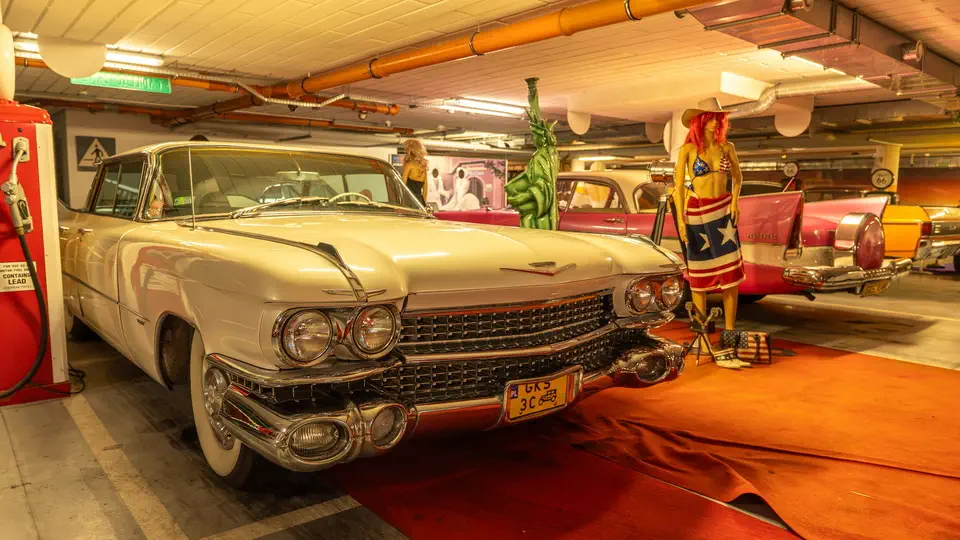
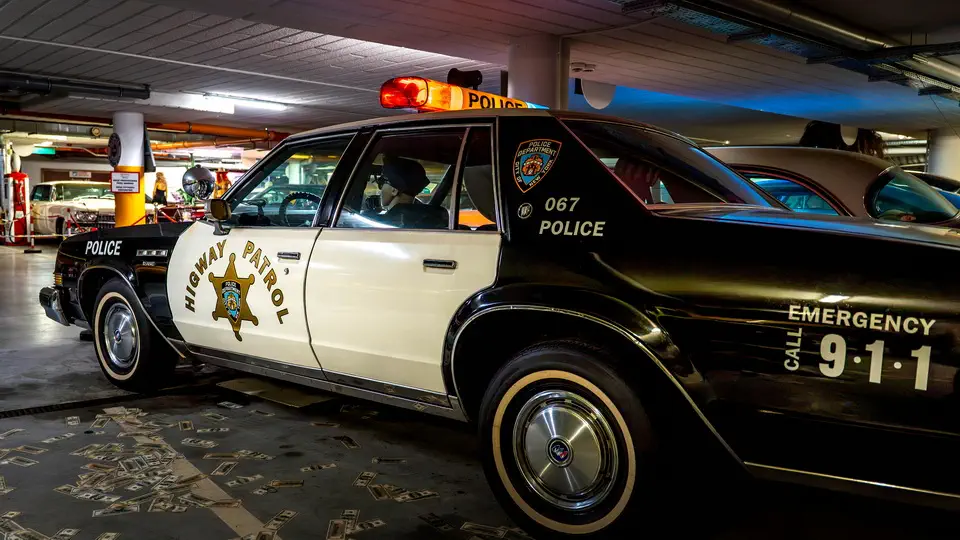
The museum is located in the underground car park of a shopping centre in Kościerzyna. At first, I thought this was a rather poor choice, as such beautiful cars surely deserve a more spacious and sophisticated setting. However, once I started exploring the collection, I began to appreciate the idea. The cars are simply parked there, almost as if somebody had left them in the car park and then forgotten about them. It creates a surprisingly realistic atmosphere and makes it particularly enjoyable to walk around these enormous metal beasts.
Another great thing is that you can approach every car and examine it from close up. Although visitors are not allowed to touch them, you can look through the windows into their spacious interiors. From close range, you can also appreciate the huge chrome bumpers, distinctive body shapes, enormous steering wheels, elaborate dashboards and all those details that are now almost completely absent from modern cars.
The most interesting cars at the American Old Cars Museum in Kościerzyna
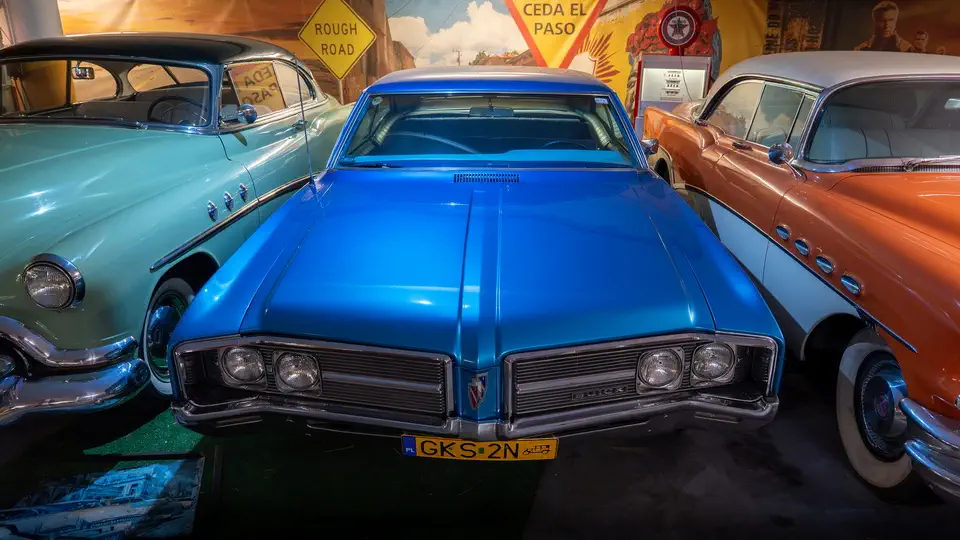
The most important part of the American Old Cars Museum is, of course, the car collection. There are around 30 American classics here, mainly dating from the 1950s, 1960s, 1970s and 1980s. Among them are huge Cadillacs, elegant Lincolns, distinctive Buicks, Fords, Chevrolets, Plymouths and other vehicles that perfectly demonstrate just how different American motoring was from its European counterpart.
The cars from the 1950s and 1960s make perhaps the greatest impression. Their enormous bodies, chrome bumpers, panoramic windscreens, long bonnets and distinctive tail fins bring to mind a time when a car was not simply a means of getting from A to B, but also a status symbol and an important part of the American way of life. There are several cars in the collection that deserve particular attention.
- 1968 Cadillac De Ville Convertible – one of the most distinctive cars in the collection. This is a large American convertible with a massive body, plenty of chrome and the unmistakable elegance associated with Cadillac. Interestingly, the burgundy 1968 Cadillac De Ville Convertible was the very first car acquired for the American Old Cars collection. According to information concerning the museum, the car had previously belonged to the female mayor of one of the US states.
- 1976 Cadillac Eldorado – one of the most spectacular cars in the collection. This enormous American land yacht is powered by an 8.2-litre V8 engine. The Eldorado from the mid-1970s is a perfect example of the sheer scale of American motoring during this period. The car is also used for driving experiences organised by the museum.
- 1960 Lincoln Continental – a luxurious limousine that perfectly demonstrates what the most prestigious American cars looked like at the beginning of the 1960s. The Continental was one of Lincoln’s most important models and was well-known for its enormous body and highly distinctive styling. The museum has a 1960 example on display.
- 1957 Plymouth Belvedere – a car representing one of the most distinctive periods in the history of American automotive design. The Belvedere featured huge tail fins, lots of chrome and styling heavily influenced by the contemporary fascination with aviation and the beginning of the Space Age. It is one of those cars that is almost impossible to walk past without stopping.
- 1954 Cadillac Fleetwood – an example of American luxury motoring from the middle of the 1950s. At the time, Fleetwood was virtually synonymous with prestige, while its large body, chrome details and distinctive styling illustrate perfectly the direction American cars were taking. This model is also included among the cars available for driving experiences organised by the museum.
- 1959 Cadillac De Ville – if I had to choose the car that best represents the sheer extravagance of American automotive design at the end of the 1950s, this Cadillac would be one of the first candidates. The year 1959 was one of the most distinctive moments in American car design. The enormous tail fins and abundance of chrome make the car look almost like something from the dawn of the Space Age.
- Ford Mustang – the Mustang is a wholly different type of car from the enormous luxury Cadillacs and Lincolns. It became one of the great symbols of American performance cars and the so-called pony car class. The museum’s materials mention a 1971 Ford Mustang, while the driving experiences also feature a 1966 Mustang. It is therefore worth checking the current line-up before visiting.
- Chevrolet Bel Air – one of the best-known American cars of the 1950s and 1960s. The Kościerzyna collection features a 1960 Chevrolet Bel Air. Cars from this series became symbols of post-war America and remain among the most sought-after classic Chevrolets.
- 1952 Buick Special – an elegant car from the early 1950s, representing a period when Buick was one of the most important American manufacturers of upmarket vehicles. It provides an interesting contrast with the far more extravagant models produced towards the end of the decade.
- 1956 Buick Roadmaster – another example of a large, luxurious American car from the middle of the 1950s. The Roadmaster stood out for its imposing body and the distinctive combination of elegance and size that Buick was known for. The model is also included among the cars used for driving experiences.
- 1969 Buick Skylark Custom – a car from a period when American motoring was increasingly moving towards sportier styling and powerful engines. The Skylark is an interesting example of a late-1960s Buick and illustrates the transition from traditional land yachts towards more dynamic designs.
- 1968 Buick LeSabre Sport Coupe – a large sports coupé combining the characteristic dimensions of American cars with a more dynamic silhouette. It is another example showing that late-1960s American motoring was about much more than enormous luxury limousines.
- 1977 Chrysler New Yorker Brougham – an enormous luxury car from a time when American limousines were still designed around maximum comfort and imposing dimensions. The New Yorker Brougham represents a thoroughly different era from the cars of the 1950s, making it interesting to compare it with the earlier vehicles in the collection.
- 1977 Lincoln Continental – an example of the large American luxury limousines of the second half of the 1970s. Comparing it with the 1960 Continental allows you to see how Lincoln’s approach to luxury-car styling changed over the course of just a few years.
- 1980 Plymouth Volaré Taxi – a particularly interesting exhibit because it is not a typical luxury classic. Preserved as a taxi, it shows the more everyday side of American motoring. Thanks to vehicles like this, the collection is not limited to expensive and prestigious cars.
- 1964 Ford Fairlane – a car from a particularly interesting period in American automotive history. The Fairlane was a large family model produced by Ford, and its styling fits perfectly with the distinctive American design of the early 1960s. The model appears on the museum’s current list of vehicles on display.
- 1950 Ford Custom – one of the oldest Fords in the collection. The car dates from the period immediately following the Second World War, when American motoring was beginning a period of extremely rapid stylistic development.
- 1988 GMC Suburban – a vehicle showing a wholly different side of American motoring. The Suburban was a large utility vehicle that became one of the forerunners of the large modern SUV. Set alongside the classic Cadillacs and Buicks, it demonstrates just how broad the range offered by American manufacturers really was.
- Dodge WC / Gaz – an interesting military-style vehicle that stands out among the luxurious American land yachts. Its presence means that the collection is not limited to American passenger cars, but also includes vehicles designed for wholly different purposes.
If classic American motoring is your main interest, I would pay particular attention to the 1968 Cadillac De Ville, 1976 Cadillac Eldorado, 1959 Cadillac De Ville, 1957 Plymouth Belvedere and 1960 Lincoln Continental. Each represents a slightly different period and demonstrates a different aspect of the American automotive industry.
It is worth looking beyond the most spectacular Cadillacs, however. One of the strengths of the Kościerzyna collection is precisely its variety. Alongside luxury limousines, you will find sports cars, family cars, utility vehicles, pick-ups, taxis and military vehicles. This means that a single visit can take you through several decades of American automotive development.
American Old Cars Museum in Kościerzyna and the atmosphere of mid-20th-century America
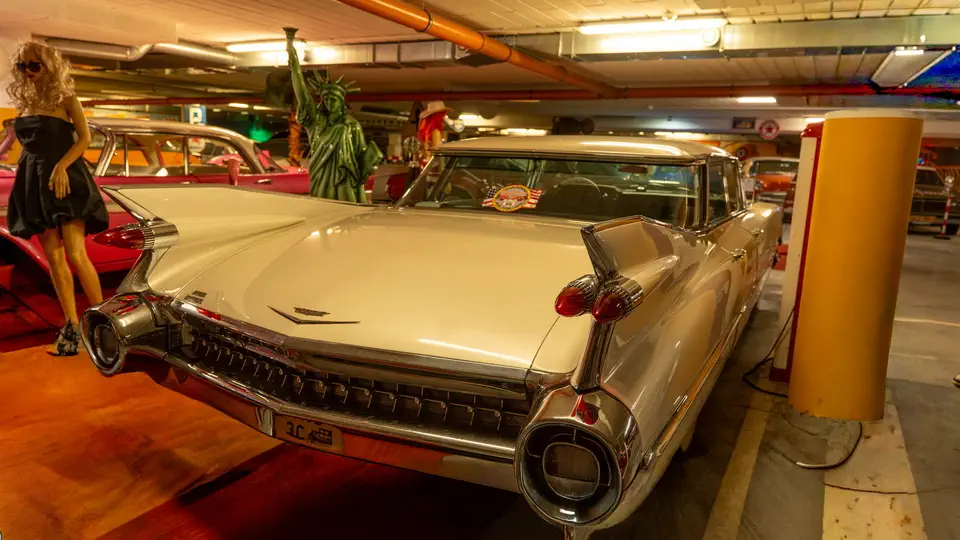
American Old Cars is more than just a collection of cars. The scenery and atmosphere also play an important role. The museum’s creators have tried to recreate the feel of old America, with the cars displayed in surroundings inspired by the period. The museum’s official materials also emphasise the use of music and period-style scenery intended to transport visitors back to the golden age of American motoring.
That is precisely why this place can appeal even to people who cannot tell one engine from another or identify a car simply by its model year. Even if you are not a serious motoring enthusiast, the colourful bodywork and enormous classic cars are bound to make an impression. If you are exploring the wider region, it is also worth seeing some other attractions of Kashubia. For example, the [Centre for Education and Regional Promotion in Szymbark] is one of the more unusual places in the area, combining Kashubian culture, history and several extraordinary attractions.
The Coca-Cola exhibition at the American Old Cars Museum
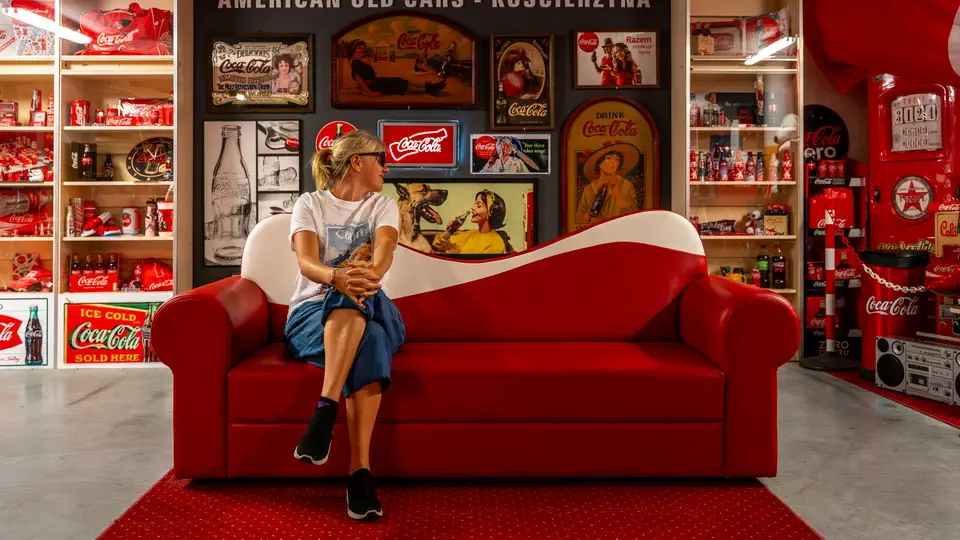
One of the more interesting additions to the car collection in Kościerzyna is the Coca-Cola exhibition. For me, this is an excellent combination because Coca-Cola, much like American cars, became one of the symbols of the golden age of the United States in the 20th century. Both brands are strongly associated with post-war America, advertising, road trips and the distinctive lifestyle of the country across the Atlantic.
The exhibition features various objects connected with the history and advertising of Coca-Cola, including old packaging, bottles, cans, adverts and promotional items. Particularly interesting are exhibits from different periods in the company’s history, as they show how the way Coca-Cola was marketed changed over the decades.
From the very beginning, Coca-Cola used advertising in ways that went far beyond newspapers and posters. Its logo appeared on signs, refrigerators, vending machines, delivery vehicles, cups, glasses and countless promotional items. As a result, many objects that were once simply advertising materials have become collectible memorabilia over the years.
The combination of this exhibition with the cars is particularly effective. As you walk between the enormous Cadillacs, Buicks and Fords while looking at Coca-Cola memorabilia, it becomes much easier to imagine America during the second half of the 20th century. Coca-Cola was everywhere at the time – in restaurants, bars, shops, petrol stations and along the roads. Cars were also far more than a means of transport. American land yachts became part of popular culture, while road trips across the USA became firmly embedded in the American imagination.
The advertising materials deserve particular attention. Old Coca-Cola adverts are interesting today not only to collectors. They also show how graphic design, fashion, and the way everyday life was portrayed changed over time. During the first decades of the 20th century, adverts often featured elegantly dressed people, family gatherings and scenes associated with leisure. Later, Coca-Cola increasingly focused on youth, music, sport, travel, and spending time with friends.
Another fascinating part of the exhibition is the collection of Coca-Cola bottles and packaging. To a modern visitor, an ordinary bottle may seem rather insignificant, but collectors are interested in its shape, markings, place of production and the period in which it was made. The same applies to cans and promotional items. Over the years, Coca-Cola produced an enormous range of promotional objects. Cups, glasses, bottle openers, trays, clocks, refrigerators, and metal signs bearing the familiar logo found their way into shops and restaurants all over the world. Today, many of these objects are sought after by collectors, while their appearance allows us to trace changes in the brand’s visual identity.
The Coca-Cola exhibition is also a good addition to a visit to the American Old Cars Museum for people who are not particularly interested in cars. While a motoring enthusiast might spend a long time admiring the Cadillacs and Fords, other visitors can explore the memorabilia associated with one of the world’s best-known drinks. As a result, a visit to American Old Cars is not simply about looking at cars. It is a small journey through 20th-century American culture, in which cars, advertising, music, lifestyle, and popular brands came together to create a distinctive image of the United States.
A section dedicated to Elvis Presley
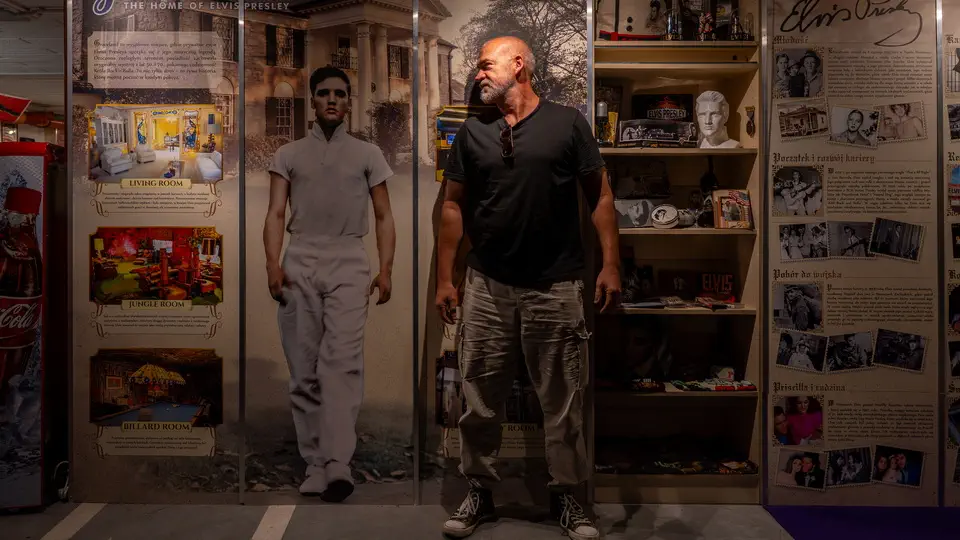
The American Old Cars Museum also has a section dedicated to Elvis Presley, one of the biggest icons of American music and 20th-century popular culture. It is a relatively small but atmospheric part of the exhibition, and it fits the character of the museum remarkably well. Elvis was, after all, more than just a musician – he became a symbol of the American way of life, and his image became permanently associated with the era of huge cars, rock and roll and the colourful culture of the 1950s and 1960s.
The exhibition refers to the artist’s life and career, with various elements helping to recreate the atmosphere of the period when Elvis was becoming a global star. Combined with the classic American cars and the Coca-Cola exhibition, it creates an interesting picture of America several decades ago. For me, it is precisely these seemingly small additions that make a visit to American Old Cars more than simply an opportunity to look at cars. The whole museum has been designed as a journey back to an America where cars, music, advertising and popular culture were closely intertwined.
You can also take a ride in a classic American car
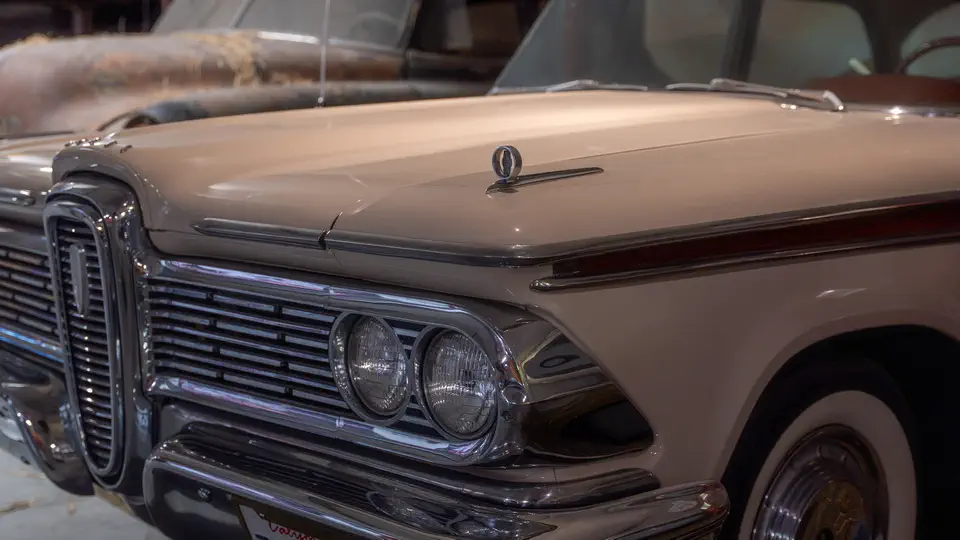
In my opinion, this is one of the more interesting things about American Old Cars. The collection is not simply there to be looked at. The museum also organises rides in classic cars, including the Cadillac Eldorado, Buick Riviera and Chevrolet El Camino. There are also packages combining a driving experience with a museum visit.
If you are interested in American motoring, this gives you a wholly different experience. Looking at an old Cadillac is fascinating, but actually sitting behind the wheel of a huge American classic and listening to its engine is an entirely different experience.
American Old Cars Museum in Kościerzyna – practical information
Below are a few tips to help you prepare for a visit to the American Old Cars Museum in Kościerzyna.
- How much time should you allow? – The museum itself is not particularly large. Around 45–60 minutes should be enough to see the cars at a relaxed pace. If you are interested in motoring and want to take your time looking at the vehicles, taking photographs – they are extremely photogenic – and visiting the Coca-Cola exhibition, it is worth allowing a little longer. The museum is also a good option for a rainy day in Kashubia, as the entire exhibition is indoors and the weather therefore makes little difference.
- American Old Cars Museum Kościerzyna and the Coca-Cola Exhibition are located at 4 Mazurka Dąbrowskiego Street in Kościerzyna. The private collection consists of around 30 American cars from the 1950s, 1960s, 1970s and 1980s. The brands represented include Cadillac, Buick, Plymouth, Ford, Dodge, and Lincoln.
- Telephone: +48 663 945 020
- Ticket: approximately PLN 20, with children under 6 admitted free of charge.
- Opening hours: according to the latest information, daily from 10:00 am to 6:00 pm.
- Before setting off, however, I recommend checking the current opening hours and ticket prices or calling the museum, as information published by different sources can change.
If you are looking for an unusual attraction during a trip around Kashubia, this is definitely somewhere worth adding to your itinerary. I particularly recommend it to people interested in American motoring, but families with children should also enjoy it. The collection is not huge, but the cars can be viewed from close up and the whole place has a much more relaxed atmosphere than a traditional motoring museum.
For me, the greatest strength of American Old Cars is precisely this relaxed atmosphere. It is not simply an exhibition of old cars. It is a small journey back to an America several decades ago – a time of giant engines, enormous bodies, chrome, and cars designed to turn heads. If you are planning to explore the region, it is worth combining your visit with other attractions in Kashubia, as the museum itself can easily be explored within an hour and treated as one stop on a larger day trip.
American Old Cars Museum in Kościerzyna – facts, information, and curiosities
- The museum grew out of a private passion for American cars. American Old Cars is not a large state-run museum, but a private collection developed by enthusiasts of American motoring. The cars are imported, restored and maintained in a condition that allows them to remain in use.
- Filip Kupper is behind the museum. The collection and American Old Cars services operate under the name American Old Cars Filip Kupper. The company is involved not only with the museum, but also with classic cars, their rental and other services connected with American motoring.
- The collection is worth more than PLN 2 million. According to information used in materials associated with the museum, the combined value of the cars exceeds PLN 2 million. In the case of a private classic-car collection, however, value is not determined solely by market price – the history and condition of individual vehicles are also critical.
- The museum features cars from several decades. The collection consists mainly of American cars from the 1950s, 1960s, 1970s and 1980s. This makes it possible to see how body shapes, equipment, and styling changed over several decades.
- The collection contains genuine American land yachts. The enormous Cadillacs, Lincolns and Buicks demonstrate the scale of American motoring at a time when a large car was a symbol of prestige. Many of these vehicles are considerably larger than the cars we are accustomed to seeing on European roads.
- One of the oldest cars is a 1952 Buick Special. This model represents the beginning of a period when American manufacturers started experimenting increasingly boldly with automotive design. The collection also contains other cars from the 1950s, allowing visitors to follow the rapid stylistic changes of the decade.
- The 1957 Plymouth Belvedere represents the height of 1950s styling extravagance. Huge tail fins, chrome elements and futuristic shapes were characteristic of American cars from this period. Automotive designers were increasingly influenced by aviation and the beginning of the Space Age.
- The collection includes a 1968 Cadillac De Ville Convertible. This is one of the most spectacular types of American car – a huge luxury convertible. According to materials concerning the history of the collection, the burgundy Cadillac De Ville Convertible was its very first car.
- You can see a 1976 Cadillac Eldorado. This is one of the cars that best demonstrates the sheer scale of American motoring during the 1970s. The Eldorado is powered by a huge 8.2-litre V8 engine and is also used for driving experiences organised by the museum.
- Some cars can be driven. American Old Cars is not limited to displaying vehicles behind barriers. Selected classics are used for driving experiences, including the Cadillac Eldorado, Buick Riviera and Chevrolet El Camino.
- The collection is not simply an exhibition of static objects. Some cars remain mechanically operational and can still appear on the road. This means the classics are treated not only as historical objects, but also as vehicles that are still meant to be used.
- The collection includes a 1960 Lincoln Continental. This is one of the most distinctive American luxury cars of the early 1960s. Its presence allows visitors to compare Lincoln’s styling with the other enormous limousines on display.
- The museum also has a taxi. The 1980 Plymouth Volaré Taxi shows a less glamorous side of American motoring. Not every American car was a luxury limousine – many were simply everyday vehicles.
- American Old Cars combines a museum with a wider motoring business. Filip Kupper’s activities include not only the collection, but also car rental and services relating to American vehicles. This means the museum forms part of a larger enterprise dedicated to classic motoring.
- Some classics can be hired for special occasions. Selected cars are available for driving experiences, events and other occasions. A vehicle from the museum collection can therefore also appear outside the exhibition.
- The museum takes part in events held in Kościerzyna. American Old Cars vehicles have been used during local events, including the European Night of Museums, when classic cars transported visitors between the museums of Kościerzyna.
- The collection has its own distinctive atmosphere. The cars are displayed in surroundings inspired by American culture, with neon signs, old adverts, number plates and elements styled like American diners or petrol stations. As a result, you do not feel as though you are simply looking at cars parked inside a hall.
- The Coca-Cola exhibition is another important part of the collection. The museum also houses an exhibition dedicated to this famous American brand. The cars and Coca-Cola memorabilia combine to tell a broader story about 20th-century American popular culture.
- The owner does more than simply display the cars. American Old Cars is also involved in importing, selling and servicing American vehicles. For anyone interested in buying a classic, this provides an opportunity to benefit from the company’s experience when selecting and importing a car from the United States.
- The most interesting thing about this museum is that the cars are still alive. When I visit places like this, what I enjoy most is seeing that the classics are not simply exhibits locked away behind glass. Selected cars are started, driven, taken to events and made available for driving experiences. That is what makes American Old Cars feel more like a collection created by a genuine enthusiast than a traditional motoring museum.