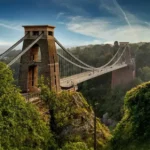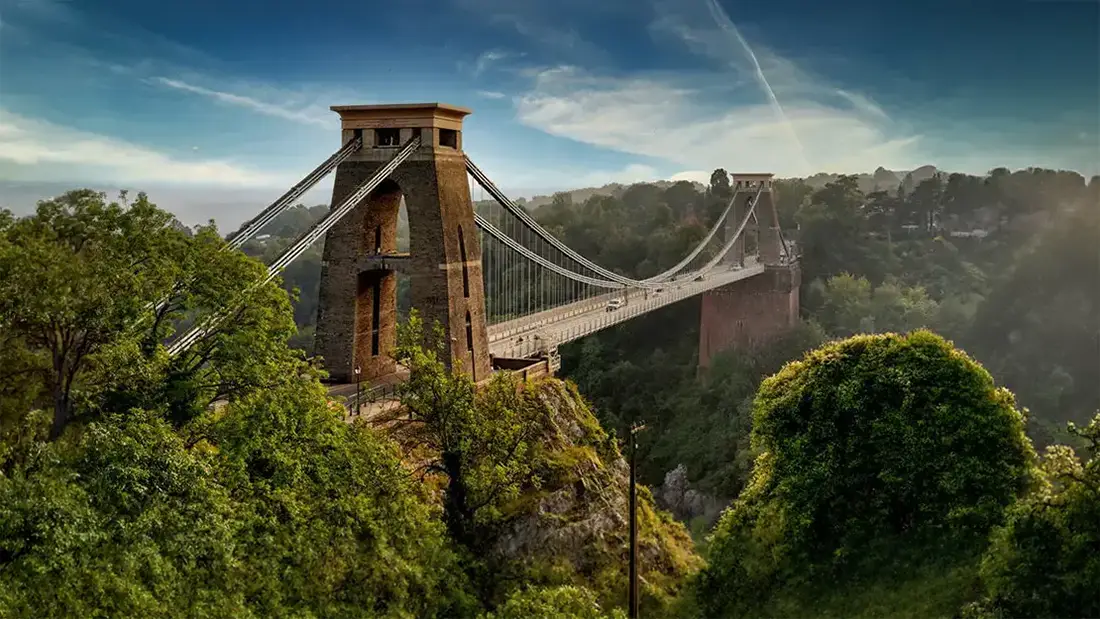
Clifton Suspension Bridge is one of the most recognisable landmarks in Bristol.
Bristol is the capital of South West England, a city filled with reminders of the United Kingdom’s former greatness and an impressive range of attractions. Visitors often comment on its abundance of greenery and numerous parks. Among the city’s best-known landmarks is the SS Great Britain museum ship, which stands in a dry dock in the historic harbour area. One particularly interesting detail is that, after years of maritime adventures and countless misfortunes, the ship eventually returned to the same place where she had originally been built.
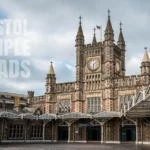
Alongside the magnificent SS Great Britain, another symbol of Bristol is the historic railway station, Bristol Temple Meads. Opened in 1840, it is the oldest railway station in this part of England. The city also boasts Cabot Tower, the picturesque harbour and several excellent museums, including M Shed Museum and Bristol Museum & Art Gallery. However, undoubtedly, the most important and recognisable symbol of the city of Bristol is the suspension bridge spanning the Avon Gorge: Clifton Suspension Bridge.
Clifton Suspension Bridge – a Victorian suspension bridge and symbol of Bristol
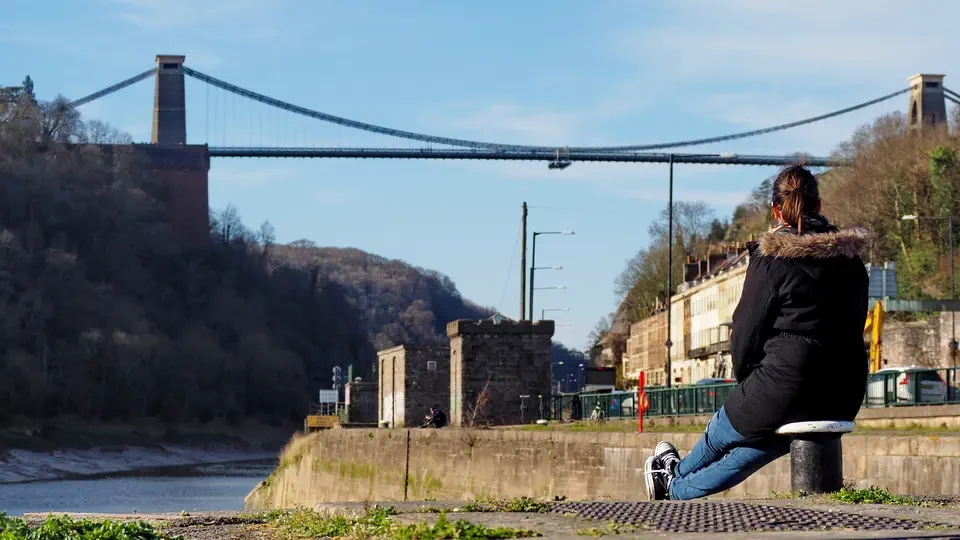
Clifton Suspension Bridge in Bristol is much more than simply a city landmark. It is also a remarkable example of engineering skill and the architectural ambition of Victorian England. When construction was first proposed, Suspension Bridge was intended to become one of the most advanced bridge structures in the world. It finally opened in 1864, connecting not only the two sides of the Avon Gorge but also two essential areas of Bristol: Clifton, from which the bridge takes its name, and Somerset.
Today, the neighbourhood immediately surrounding the bridge is regarded as one of the most prestigious parts of Bristol. Beautiful Victorian houses perched along the edge of the cliffs command extraordinary prices on the property market, while the surrounding streets attract both residents and tourists exploring the city.
Suspension Bridge and the River Avon in Bristol
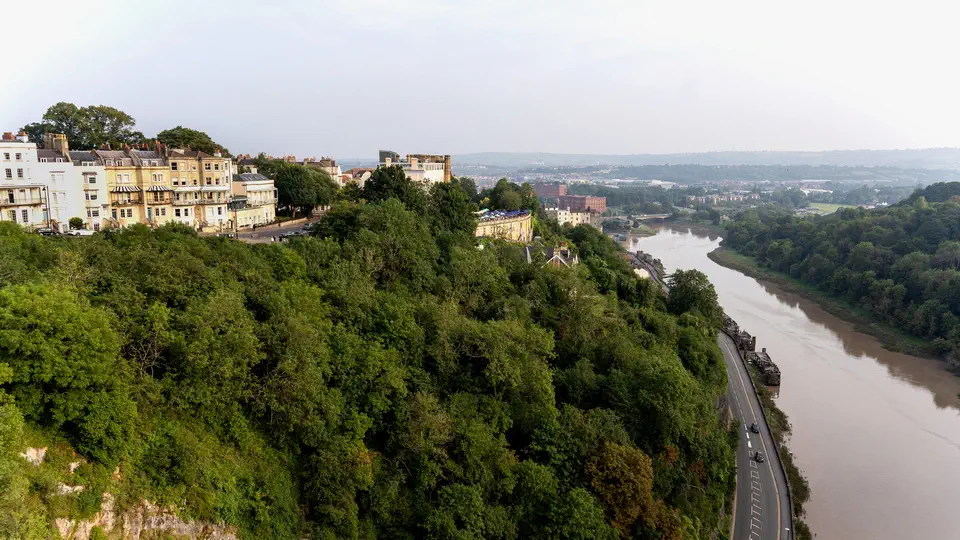
The River Avon, over which Suspension Bridge was built, is the nineteenth-longest river in England. Its name comes from the Welsh word afon, which simply means river. There are several rivers called Avon in Britain, so to distinguish this one from the others, it is commonly known as the Bristol Avon. Its source lies in the southern part of Gloucestershire. After travelling approximately 130 kilometres, the Avon joins the River Severn, which is the longest river in Great Britain. The Severn eventually collects water from numerous tributaries before flowing into the Bristol Channel. The Avon is fully navigable during high tide, but when the tide goes out and the water retreats towards the nearby Atlantic Ocean, the river can become little more than a muddy stream.
Long before bridges were built, the river was crossed using numerous ferry services. In Bristol alone, many dozen ferry connections operated between the two banks. The Avon also played an important role in the region’s water transport network. Barges carried goods upstream before returning loaded with food and agricultural produce from the countryside. Over the centuries, numerous mills, viaducts, pumping stations and hydroelectric power stations were constructed along its banks. Most of these structures are now valuable historical monuments, and we will tell you more about them in future articles.
Suspension Bridge – the idea and the need for a bridge over the River Avon
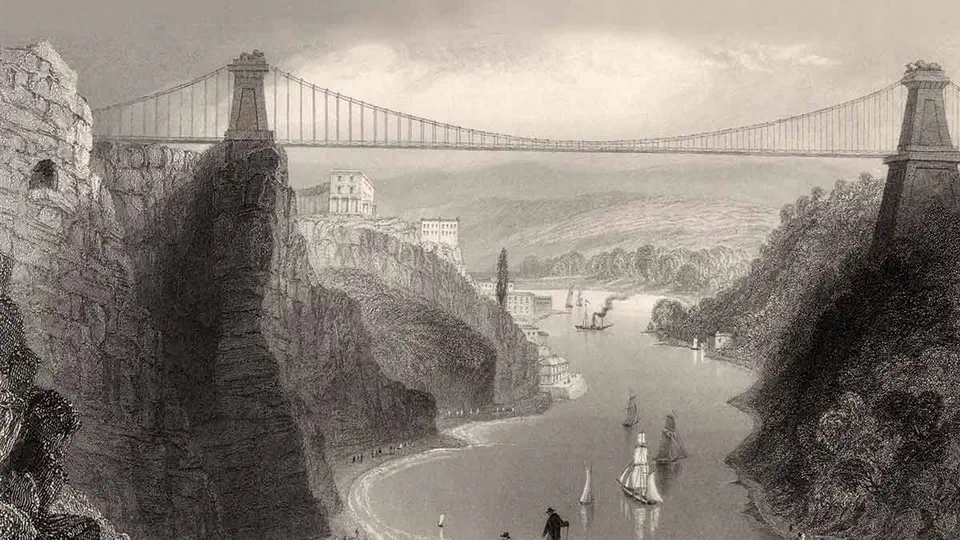
A bridge connecting the two sides of the Avon Gorge had been a dream of Bristol’s residents for hundreds of years. However, it was not until the late eighteenth century that advances in engineering knowledge and the development of new technologies made such an ambitious undertaking seem possible. The original idea came from William Wick, a wealthy merchant and one of the strongest supporters of the project. He understood better than most the importance of improving transport links across Bristol. He established an investment fund designed to grow his fortune until it contained enough money to finance the construction of the bridge that would finally connect the two sides of the divided city.
Several decades later, once the fund had accumulated a substantial amount, preparations began to turn William Wick’s dream into reality. Around the same time, the city authorities decided to proceed with the bridge project and introduce a toll for anyone wishing to cross it. The revenue collected would be used to maintain the structure and cover its running costs. Initially, a stone bridge was considered, but the arrival of new construction technologies changed the plans, and it was eventually decided that a metal suspension bridge would span the River Avon.
The first design selected was submitted by Thomas Telford, who had already built a suspension bridge across the Menai Strait. His remarkable structure connected mainland Wales with the island of Anglesey, famous for its ancient connections with Celtic priests and druids.
Ultimately, however, Telford’s proposal was rejected because it was considered insufficiently modern. It was replaced by a suspension bridge design presented by the shipbuilder and engineer Isambard Kingdom Brunel. We have written in more detail about this extraordinary engineer in our article about the SS Great Britain. This is the first ship of her kind to be powered by a screw propeller rather than the traditional paddle wheels used on earlier vessels.
Construction of Suspension Bridge in Bristol
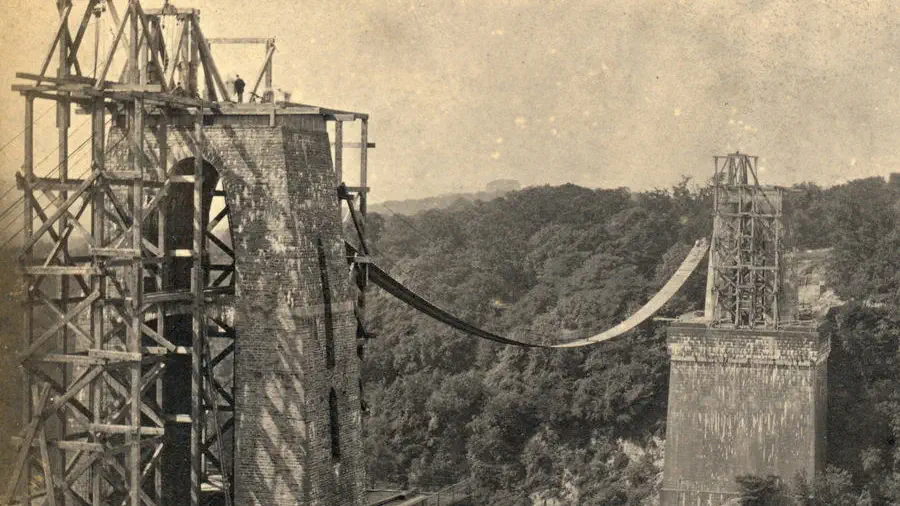
Work on the bridge began in 1831, but a series of unfortunate events eventually forced construction to stop. Work resumed in 1836, and it looked as though the project might finally succeed, had it not been for one significant problem: the money in the fund established by the merchant William Wick quickly ran out. Construction was suspended once again, and Brunel used some steel components intended for the bridge in his other engineering projects. Sadly, the engineer died unexpectedly before completing his ambitious design. The task was eventually taken over by his friends and fellow engineers, who had worked alongside Brunel on various other structures.
Some necessary money was raised through public contributions, while additional funds were donated by residents and investors. The construction materials remaining in storage were also recovered, allowing work on the Suspension Bridge in Bristol to resume in earnest in 1862. Two years later, the project was finally completed. Although Brunel’s original design was modified, with the structure reinforced and made wider and more flexible than he had initially intended, Clifton Suspension Bridge is still regarded as one of the greatest achievements of this extraordinary engineer.
So, when you are walking through beautiful Bristol, dear reader, make sure you visit this remarkable suspension bridge. After numerous setbacks and years of delays, it eventually connected the city and made everyday life considerably easier for its residents. Remember, too, that it was people like Isambard Kingdom Brunel who opened up entirely new possibilities in modern engineering, bringing extraordinary ideas to life and creating structures that changed the world.
Clifton Suspension Bridge in Bristol – interesting facts
- The bridge officially opened in 1864.
- Several thousand vehicles use the bridge every day.
- Despite its considerable age, the bridge remains in excellent technical condition, and it has never required a major structural renovation.
- The bridge is 414 metres long.
- The towers standing on either side of the Avon Gorge are 26 metres high.
- The bridge deck hangs 75 metres above the River Avon.
- The entire structure weighs approximately 1,500 tonnes.
- The chains supporting the bridge originally came from an earlier bridge designed by Isambard Brunel. They were taken from Hungerford Bridge, a suspension footbridge across the River Thames.
- Almost four million vehicles cross the bridge every year.
- Steel suspension bridges first appeared in the nineteenth century and are still being built today. However, bridges made from wood, stone, and ropes have existed for thousands of years in almost every part of the world.
- The world’s first bungee jump from an elastic rope was performed from Clifton Suspension Bridge in Bristol.
- Before safety barriers were installed along the bridge, 127 people had jumped to their deaths.
- The original plans included enormous sphinx sculptures on top of each bridge tower. However, the idea was never implemented, and both towers remain flat-topped.
- Vehicles weighing more than four tonnes are not permitted to cross the bridge.
- A £1 toll must be paid to drive across the bridge. Pedestrians can cross free of charge.
- The bridge administration, which consists of around a dozen members, takes pride in the fact that the structure receives no financial support from the government. Its maintenance is funded entirely through the tolls collected from motorists.
- At the beginning of the twenty-first century, thousands of people gathered on the bridge during the famous International Balloon Fiesta, watching hot-air balloons flying over the city. The enormous crowds placed such a strain on the structure that there were concerns about permanent damage. Since then, the bridge has been closed during similar large-scale events taking place in Bristol.
- The final flight of the famous Concorde supersonic aircraft took place directly over Clifton Suspension Bridge in Bristol. Both the aircraft and the bridge are regarded as symbols of British technological progress.
- The title of the world’s longest suspension footbridge belongs to the remarkable structure crossing the Paiva River in Portugal. It is designed exclusively for pedestrians, stretches for approximately half a kilometre and stands more than 170 metres above the ground.
- The longest and most expensive suspension bridge designed for road traffic is the Akashi Kaikyō Bridge in Japan. It connects the islands of Honshu and Awaji. The entire structure measures 3,911 metres, with its longest span stretching almost two kilometres.
River Avon – interesting facts
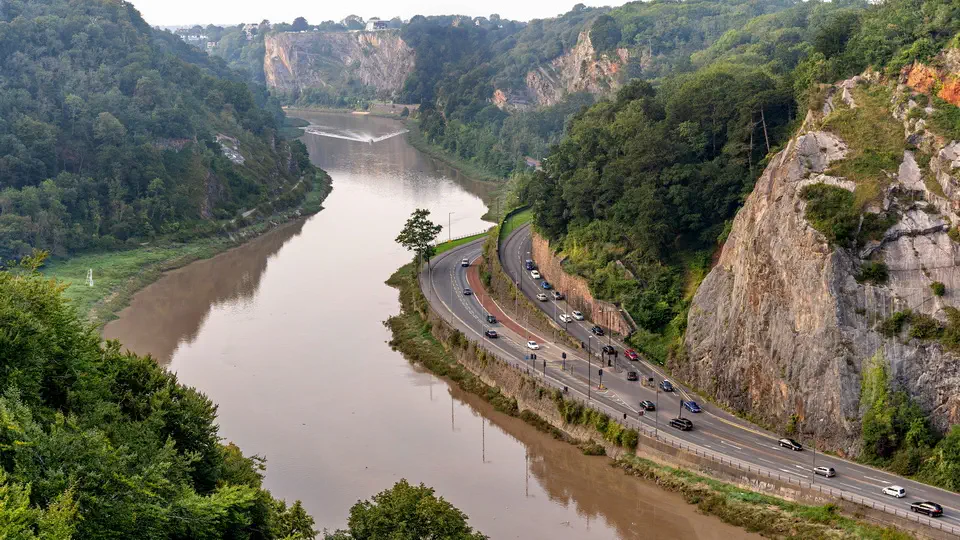
- The River Avon is 134 kilometres long and flows through the English counties of Gloucestershire, Wiltshire and Somerset.
- The river takes its name from the Welsh word afon, meaning river.
- The Avon is the nineteenth-longest river in the United Kingdom.
- The river begins its journey near the town of Chipping Sodbury. It then flows through Wiltshire towards Bristol, where it eventually joins the River Severn.
- Among the most interesting historic structures along the river are Clifton Suspension Bridge in Bristol, Bathampton Toll Bridge and the remarkable Pulteney Bridge in the city of Bath. Besides these better-known landmarks, there are dozens of other historical structures of varying importance along the river.
- The river is navigable and was once an important water transport route. Archaeologists have discovered evidence suggesting that it was already being used to transport goods during the Iron Age.