The Soap Museum and History of Dirt in Bydgoszcz – one of the most original museums in Poland.
I wondered where to take you today. Perhaps back to the Świętokrzyskie region, where plenty of attractions are still waiting to be described? Or maybe one of the lesser-known castles that have long been waiting their turn? In the end, however, the choice fell on the Soap and History of Dirt Museum in Bydgoszcz. A museum as surprising as it is interesting. Below, I will tell you about the museum itself, its history, and also share plenty of facts and useful information for your visit. At the end, I will gather some curiosities that will likely surprise you.
The Soap Museum – The history of dirt and soap in Bydgoszcz
Dirt is our eternal companion and, however much we might deny it, we know it very well. Apparently, the entire universe around us came into being thanks to the Big Bang, and I am certain that dirt appeared right afterwards. Grime has been with us since the dawn of time, even though we do everything possible to pretend it does not exist. Dust settles on shelves like an uninvited guest who has made itself at home, and stains appear at the least expected moments – usually just before a visit from your mother-in-law. You could say that dirt has a unique talent for choosing the worst possible time to show up.
And yet, it was not always treated as public enemy number one. In the past, people lived much closer to nature, and a bit of mud on the face or clothes was perfectly normal. Today, however, a single drop of sauce on your shirt is enough to make you feel like the victim of a culinary disaster. The modern world has taught us that cleanliness is not only a matter of hygiene, but also of image.
This does not mean that dirt is entirely bad. On the contrary – it has its advantages. Contact with microorganisms helps build immunity, and children who play in the mud are often healthier than those kept under a dome of sterility. The problem only begins when dirt takes control of our surroundings and we postpone cleaning until “later”.
It is therefore worth finding a balance. There is no need to wipe every surface five times a day or panic at the sight of a single crumb. Regular tidying and a bit of consistency are enough to maintain a healthy and pleasant environment. And if something gets dirty from time to time? Well, it is simply proof that we are truly living, rather than merely admiring spotless cleanliness from behind glass.
You will learn about all this and much more by visiting the Soap and History of Dirt Museum in Bydgoszcz. Although the institution may seem unappealing and the subject trivial, believe me – I have not had this much fun in a long time as I did while exploring this unusual museum.
The Soap Museum – Soap and its history
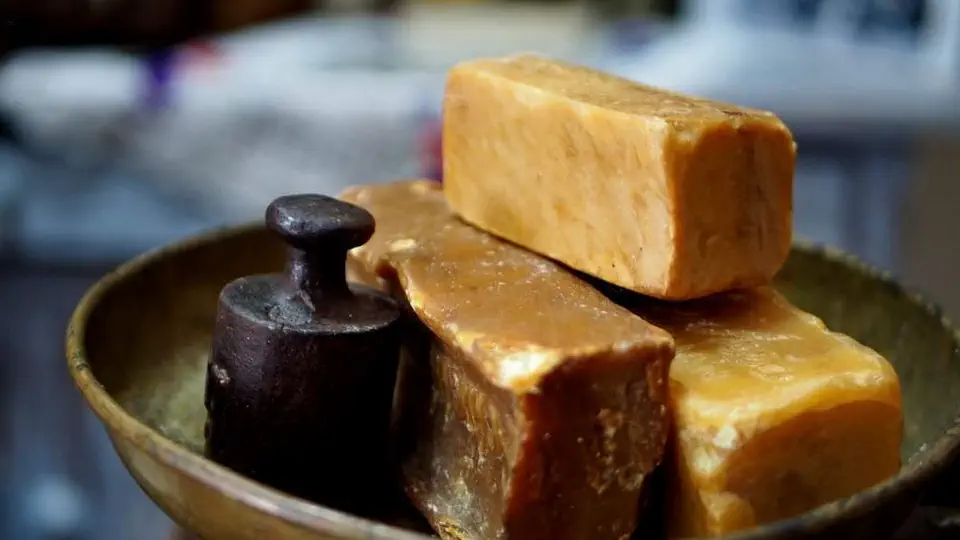
The history of soap begins – like many great inventions – with chance, mess, and a bit of… fat. Imagine ancient people roasting meat over a fire. Fat drips, the fire crackles, and afterwards a mixture of ash and greasy leftovers remains. Someone, probably out of boredom or curiosity, noticed that when this strange substance mixed with water, it did a rather good job of removing dirt. And that is more or less how the first primitive soap was born – a side effect of culinary chaos.
The first more “official” versions appeared thousands of years ago in the ancient Middle East. People there began deliberately mixing plant or animal fats with ash, creating something resembling soap. It was not lavender-scented or neatly packaged – it looked more like something you might find stuck to the sole of your shoe, but it worked!
Initially, soap was not used for washing hands before dinner (after all, dinner was often eaten with hands without much fuss), but mainly for washing clothes and treating skin. Only later did people realise that if it could remove dirt from a tunic, it might also work on… the owner of the tunic.
Soap gained popularity slowly because – let us be honest – hygiene was not fashionable for many centuries. In the Middle Ages, bathing could be viewed with suspicion, and some even considered it risky for one’s health. Soap therefore had a rather uphill struggle in its career. Only later, with the development of cities, medicine and public awareness, did people begin to appreciate its true value.
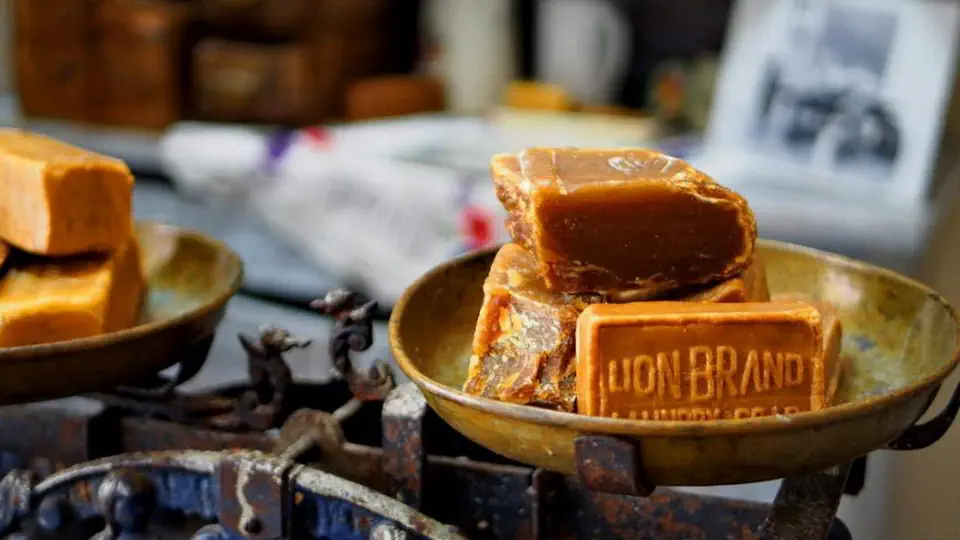
In the 19th century, a breakthrough occurred – soap production became cheaper and more widely available. Suddenly, everyone could have their bar of cleanliness, not just the wealthy. Fragrances, colours, and advertisements also appeared, convincing people that smelling like flowers was a better option than smelling like a fire after roasting meat.
And so soap, born from fat and ash, made a remarkable career. Today it is inconspicuous, but it is difficult to imagine life without it – unless someone truly longs for the atmosphere of an ancient campfire… just in a less fresh version.
The Soap Museum – The history of soap in Poland
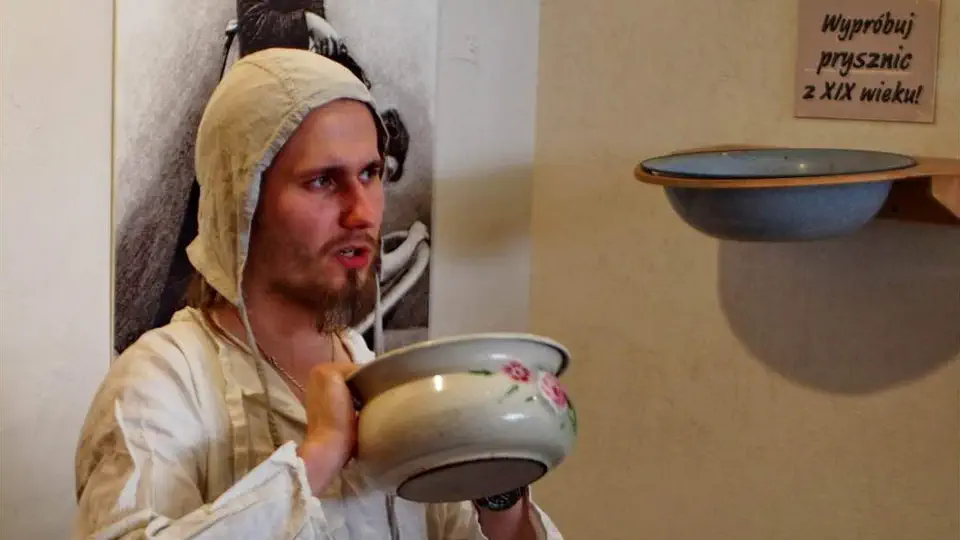
The history of soap in Poland is a story of how we moved from “that will do” to “wash your hands immediately!”. Long ago, when knights roamed Polish lands and roads were more mud than road, hygiene was not a priority. People did know about soap – it had reached us as early as the Middle Ages – but it was treated more as a luxury than a daily necessity. It was mainly used for washing clothes because after all, a shirt also deserves freshness.
In towns, soap makers began to appear – true artists of mixing fat and ash. Their products varied… quite a bit. Some smelled fairly pleasant, others resembled the scent of a meal from a week ago. Despite this, people slowly began to realise that soap was more than just a strange bar – it was an ally in the fight against dirt.
Then came times when bathing was considered suspicious, and washing too often could raise eyebrows among neighbours. Fortunately, Poland, like the rest of Europe, eventually discovered that cleanliness is not a whim, but common sense. A real revolution took place in the 19th and 20th centuries when soap became available to everyone. Factories, advertisements, and fragrances appeared, making people not only clean but also smelling like a walk in a garden rather than a day at the market.
Today, soap is so obvious that no one thinks about it. And that is a pity because this modest bar has come a long way – from luxury and curiosity to the everyday hero of our bathrooms. And thankfully so because thanks to it, the world is simply… more pleasant.
The Soap Museum and History of Dirt in Bydgoszcz
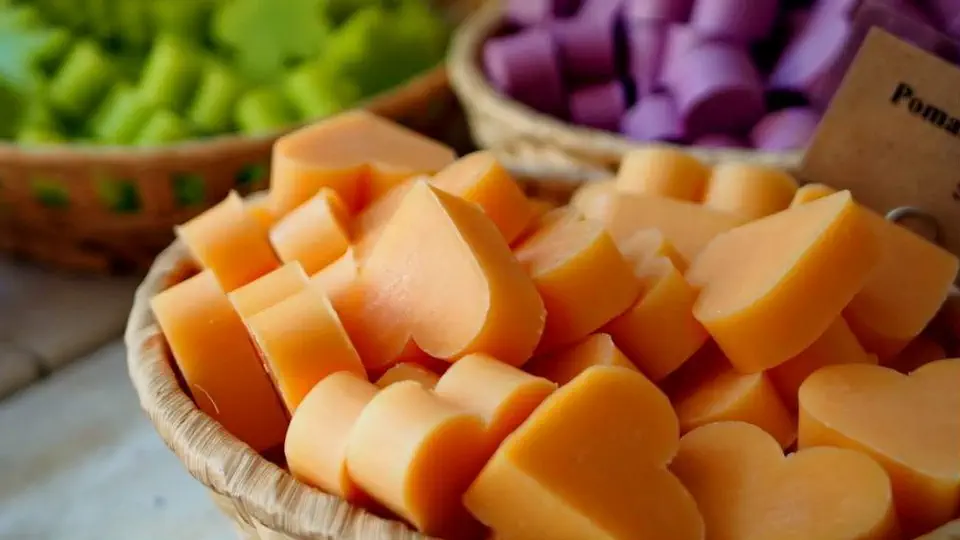
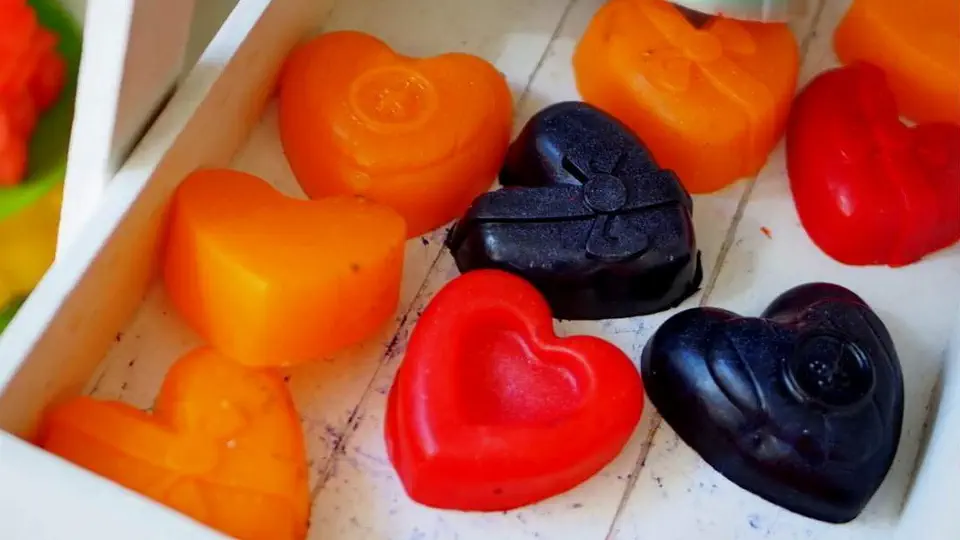
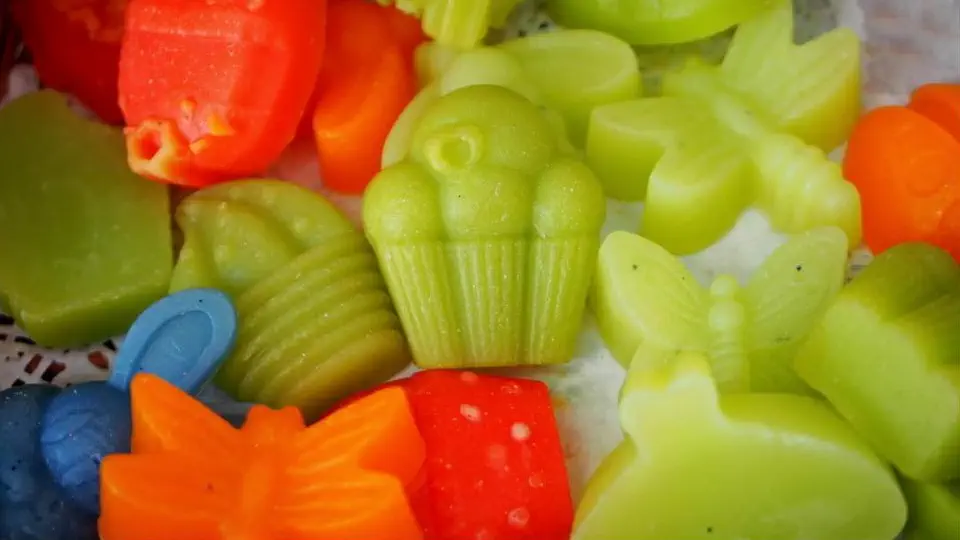
As a father of two children, I have learned one important thing – if something has “dirt” in its name, there is a good chance the kids will love it. So when I suggested a visit to the Soap and History of Dirt Museum in Bydgoszcz, I did not have to persuade either Małgosia or Marysia for long. One sentence was enough: “There will be dirt, and you can get messy.” Sold.
From the very entrance, I knew this would not be a typical museum where you walk on tiptoe and whisper like in a library. We were greeted by the scent of soap and… quite a generous dose of humour. The guide began by explaining that people throughout history were not particularly fond of washing. I looked at the children, they looked at me, and for a moment, we all wondered whether we are truly making progress as a civilisation.
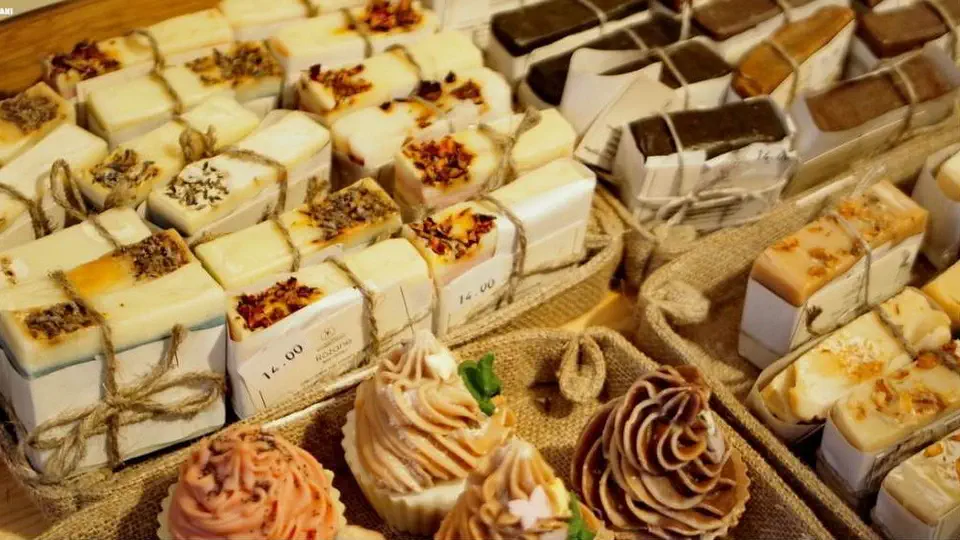
The workshop section turned out to be the biggest attraction. Each of us could make our own soap. It sounds innocent, but in practice it looked like this: Marysia tried to create “the smelliest soap in the world” by mixing everything she could, while Gosia approached it artistically and made something resembling a rainbow jelly. As for me, being a responsible father, I tried to create something elegant… and ended up with something between soap and a childhood dessert.
Along the way, we learned a few things which – I will admit – shocked us a little. For example, in the Middle Ages, bathing was not at all obvious. Quite the opposite – it was sometimes considered dangerous! When I heard this, I suddenly felt very grateful for a modern bathroom and hot water. The children, however, decided it was an excellent argument for not washing every day. I quickly had to explain that “history is history, but we live in the present”.
What amused us most was the exhibition about old toilets and ways of dealing with… well, natural needs. I will not go into details, but I will say this – modern plumbing is one of the greatest inventions in human history. The children laughed until they cried, while I tried to remain serious and sneak in a bit of education at the same time. A harder task than it sounds.
What surprised me most is that this museum not only entertains, but truly educates. It shows how people’s approach to hygiene has changed and how significant its impact on health is. Suddenly, washing your hands before dinner stops being a boring duty and starts to make sense. On the way back, the children held their handmade soaps like precious treasures. Marysia even announced that he “might actually wash more often if he uses his own”. I considered that a great parenting success.
To sum up – this trip turned out to be a perfect choice. It was funny, occasionally a bit disgusting (which is ideal for children), but above all educational. And I, as a father, came back with the feeling that besides having fun, I had also smuggled in a bit of knowledge. And maybe, just perhaps, reminding them to wash their hands will now be a little easier.
Summary of the visit to the Soap and History of Dirt Museum in Bydgoszcz
Well, I must say – it is brilliant. I love places where history is alive, the stories are engaging, and the guides speak with passion about what they know. The Soap and History of Dirt Museum in Bydgoszcz is definitely one of those places. So all I can do is encourage you to visit it in person. Get Ready For Adventure recommend it!
Interesting facts about soap
- In the 8th century, Greeks had to wash before praying and making offerings to the gods. A Greek would also bathe before setting off on a journey, and when hosting guests, it was good manners to first offer them a chance to wash their hands, followed by a bath.
- Romans soaked in soapy mixtures to try to cure elephantiasis (a disease caused by parasites living under the skin). Soap, of course, did not cure it.
- Two thousand years ago, the Gauls used soap and claimed that thanks to the version made from goat fat, they had thick and shiny hair.
- In the 18th century, soap was produced by mixing boiling fat and soda. The alkaline soda turned fat into soap. It worked perfectly – dirt disappeared along with the skin.
- Between 1911 and 1980 in England, soap consumption per person doubled annually.
- In Renaissance France, washing was so unfashionable that people commonly suffered from lice. To deal with it, instead of washing more often, they invented small hammers to kill parasites falling from their hair.
- Versailles, now associated with elegance and refinement, in its prime smelled like the worst sewer because the nobility relieved themselves wherever they pleased.
- A Frenchman, de Hauteville, visiting Poland in 1674, wrote with surprise: “Despite the great cold in Poland, baths are very popular there, and there is no decent house without a bathroom. Every town has public bathhouses, and ladies and their daughters bathe once a month. This custom probably comes from the fact that all children in Poland are bathed twice a day from birth until the age of two.”
- When the plague broke out in Europe, taking a heavy toll, quarantine was introduced at Poland’s borders. As a result, the number of cases in the country remained very low.
- In the 19th century, Victorian morality suggested bathing in clothing, and when washing intimate areas, one was expected to close one’s eyes.
- If you would like to learn more about this fascinating topic, I recommend the book “The Dirt on Clean” by K. Ashenburg.
The Soap Museum – Practical information for planning your visit
Opening and visiting times: Entry takes place daily at 10:30, 12:00, 13:30, 15:00, 16:00 and 17:00. In English: 11:30, 13:00, 14:30 and 16:30. Only a prior reservation guarantees entry. Reservations can be made by phone at (52) 515-70-15 between 10:00 and 18:00.
Ticket prices: standard ticket 39 PLN, concession 35 PLN. (Please note that prices may change, so treat this as a guideline rather than a certainty). For details, visit the museum’s official website.
Address: The museum is located at 13 Długa Street, in the Old Town area, right next to Mill Island.
Parking: Parking is not available on Długa Street during the museum’s opening hours. It is recommended to use car parks on Mennica Street, on Mill Island, or on Grodzka Street.
The Soap Museum – Facts, information, and curiosities
- It is one of the few – and according to many sources, the only – museums in the world dedicated to… dirt and hygiene.
- It was founded in 2012 by enthusiasts of history and collecting.
- It is located in the very heart of Bydgoszcz’s Old Town, on Długa Street.
- The visit begins in an unusual way – by… washing your hands in a basin.
- Every visitor can make their own soap and take it home.
- The museum presents as much as 5,000 years of the history of human hygiene.
- Inside, you can see, among other things, a medieval bathhouse and a 19th-century bathing room.
- Many exhibits can be touched, smelled and even… tested.
- There is a collection of soaps from various parts of the world.
- The museum reminds us that in the past, bathing was sometimes considered dangerous.
- You will learn about the character “Plugowy Tomasz Łaziebnik” – one of the colourful figures connected with hygiene.
- Bydgoszcz has a long soap-making tradition – the first factories were already operating here in the 18th century.
- In the museum, you can see old washing machines, mangles, and bathing equipment.
- The tour is guided and takes the form of a humorous story.
- The entire visit lasts around 50–60 minutes, so you will not have time to get… bored or dirty.
- The museum was nominated for the title of one of the “7 New Wonders of Poland”.
- In 2015, it was recognised as one of the most interesting museums in Poland.
- It received the “Best Tourist Product” certificate in Poland.
- It is a so-called “living museum” – instead of just observing, you actively participate in the visit.
- It is a great attraction for both children and adults – because everyone enjoys a bit of… controlled dirt.
Polish version