National Museum of Cambodia is the largest institution of its kind in the country
Phnom Penh, the capital of Cambodia, is one of the most important cities in the country. While exploring it, you’ll quickly come across a place proudly described in guidebooks as the National Museum in Phnom Penh. I have to admit right from the start that, despite its grand and rather imposing name, the place didn’t quite live up to our expectations.
Partly because when you see the word “National” in the name, you naturally expect something truly spectacular and deeply connected to the identity of the country. In this case, however, what you get is a museum like those you might find in many medium-sized cities.
The National Museum in Phnom Penh is rather small and not particularly spectacular
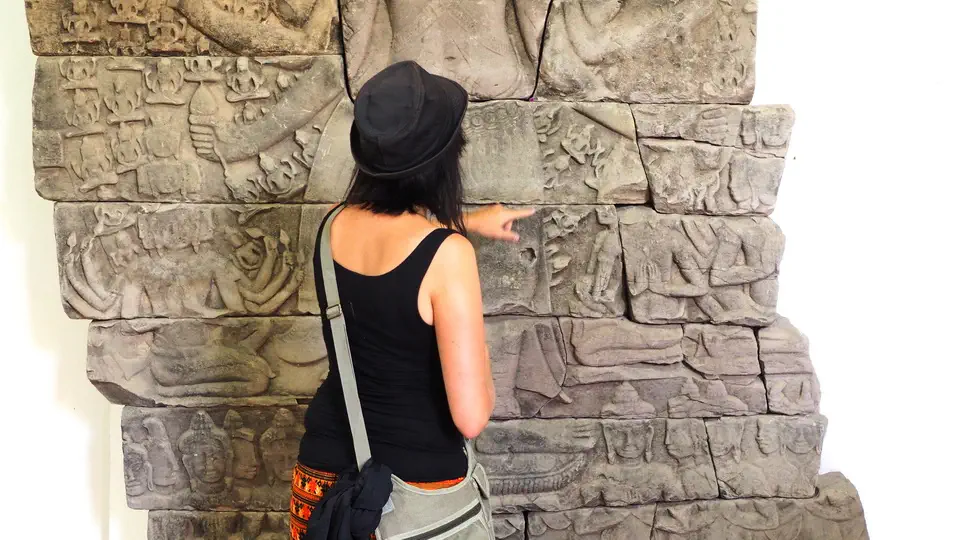
As you probably remember, we love wandering through places where history is stored and preserved. And that, I suspect, is another reason for our slight disappointment. Once you’ve visited the great museums of Europe or the world, it becomes difficult to find something that truly amazes and overwhelms you. That said, I have no intention of discouraging anyone from visiting. It is still part of Cambodia and, even if the museum feels partially modest, it tells the story of the Khmer people and their past. One thing that immediately stands out after stepping inside is how clean the place is – there’s none of the unpleasant smell of dirt and waste that accompanied us in other parts of the Cambodian capital.
Time to buy a ticket and start exploring
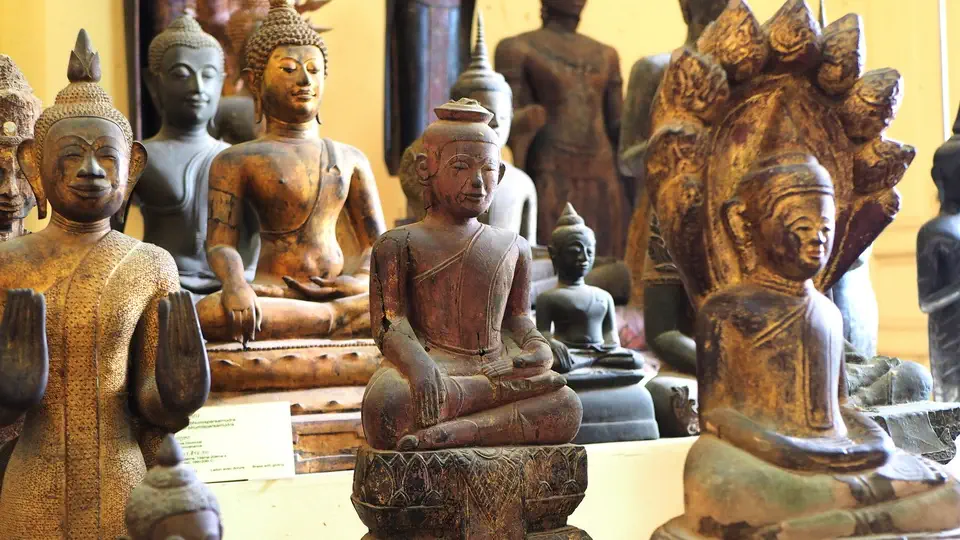
After paying around a dozen dollars per person, the National Museum opens its doors to you. Inside, you’ll find a building divided into several exhibition rooms. What you’ll see there is what has been gathered – or perhaps more accurately, what has been saved from looting – of Cambodia’s cultural heritage. The exhibits (we were told there are nearly fourteen thousand of them) are directly or indirectly linked to the Angkor period and mostly come from the famous temple ruins of Angkor Wat.
It’s a bit disheartening to realise that museums in Bangkok boast about housing some of the most valuable Angkor artefacts in the world. The famous Louvre Museum also holds an impressive collection of Khmer art taken from those ruins. After all, until the 1950s, the French ruled this country and had both the time and the means to select its treasures. I also remember seeing quite a few Cambodian artefacts in the British Museum. I’ve no doubt other major museums have their share as well. That is probably why here in Phnom Penh, the entire story of the Khmer civilisation fits into just a handful of rooms.
What you’ll see during your visit
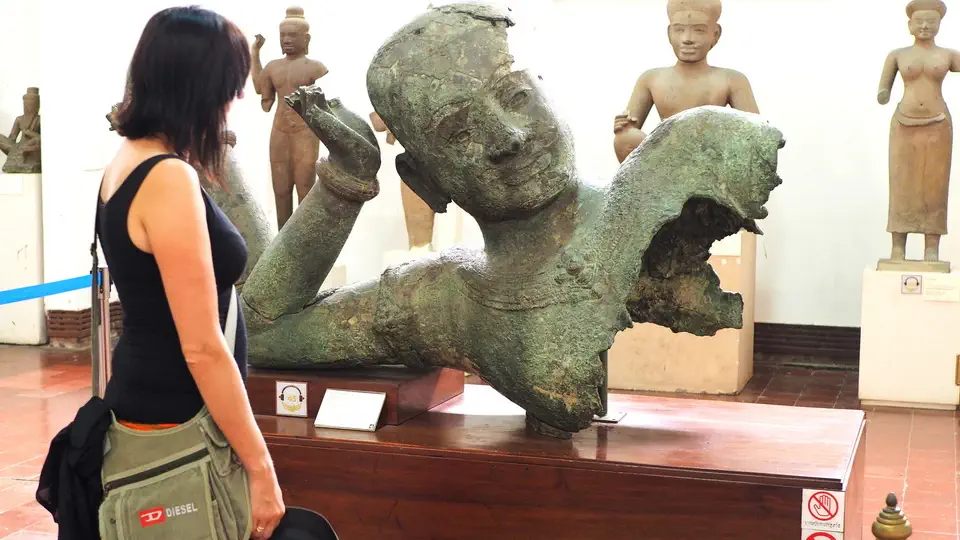
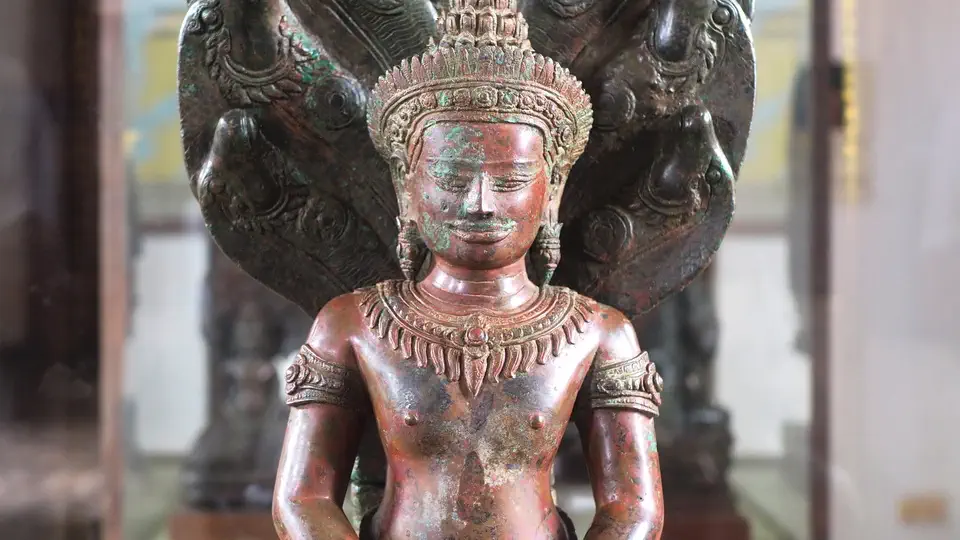
Despite its modest nature, the National Museum of Cambodia does have a few real gems. One of them is a bronze statue of the god Vishnu dating back to the 10th or 11th century. Unfortunately, only the torso has survived – the rest has been lost or destroyed somewhere in the darker chapters of history.
All around you’ll find statues of gods and deities worshipped by the Khmer over the centuries. Bronze figures of Shiva and Vishnu stand alongside countless stone heads of the Buddha. From the corners, the fierce faces of demons and mythical creatures peer out – once used to frighten the more gullible masses.
There are also numerous representations of animals and people made from bronze, gold, wood, and stone. If you enjoy admiring ancient sculptures and statues, you’ll certainly find something to appreciate in this unusual pantheon of mystical beings that, after their time of glory, ended up on the margins of history.
The collection of Khmer art and artefacts from Angkor Wat is undoubtedly the most valuable part of the museum. Beyond that, you’ll find some ceramics dating back to the Neolithic period, a selection of old weapons (many of which are little more than scrap left behind by occupying Japanese and Thai forces), and various decorative items donated by successive Cambodian kings. Jewellery, clothing, and everyday objects complete the collection.
What did we like most? The oldest statues in the main hall, a fascinating Japanese wooden house adapted to be mounted on a boat, and a very interesting traditional dance performance, which I’ll mention shortly. Before that, a few words about the museum’s history, which is just as turbulent as the country’s own past. If history isn’t your thing, feel free to skip ahead.
The museum and its history
The idea for the museum was born in the mind of the French historian George Groslier. A passionate admirer of Khmer art, he did a great deal to preserve its traditions and memory. Thanks to his efforts, and with the approval of the king at the time, the National Museum officially opened in 1920. The building itself was constructed specifically for this purpose, with sloping roofs and traditional decorative elements reflecting classic Khmer architecture.
The institution has endured a great deal since its creation. It survived occupations by Japanese and Thai forces, as well as frequent conflicts with Vietnam. However, the darkest chapter came during the rule of the Khmer Rouge.
The dark times of the Khmer Rouge
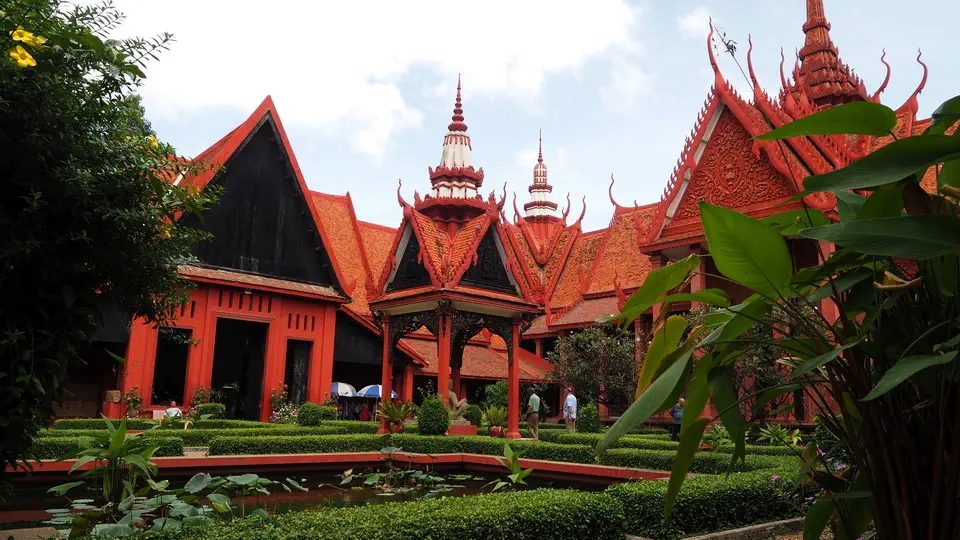
The museum was closed, and nearby parks and gardens were left unattended. After five years, the damage was severe – the main roof had collapsed, and the gardens were overtaken by wild jungle. After the fall of the Khmer Rouge in 1980, the museum was restored, the gardens revived, and the site reopened to visitors. As is often the case after such turmoil, a significant portion of the collection had disappeared, which helps explain the relatively modest number of exhibits today.
Outside the building, you can wander through the pleasant gardens or sit by the fountain in the shade of trees. There’s also a small café where you can grab a drink or a snack. To sum up, the museum doesn’t exactly blow you away, and we probably wouldn’t rush back for a second visit. That said, our cultural journey in Phnom Penh didn’t end there.
Cambodian Living Arts – Khmer dance and music school
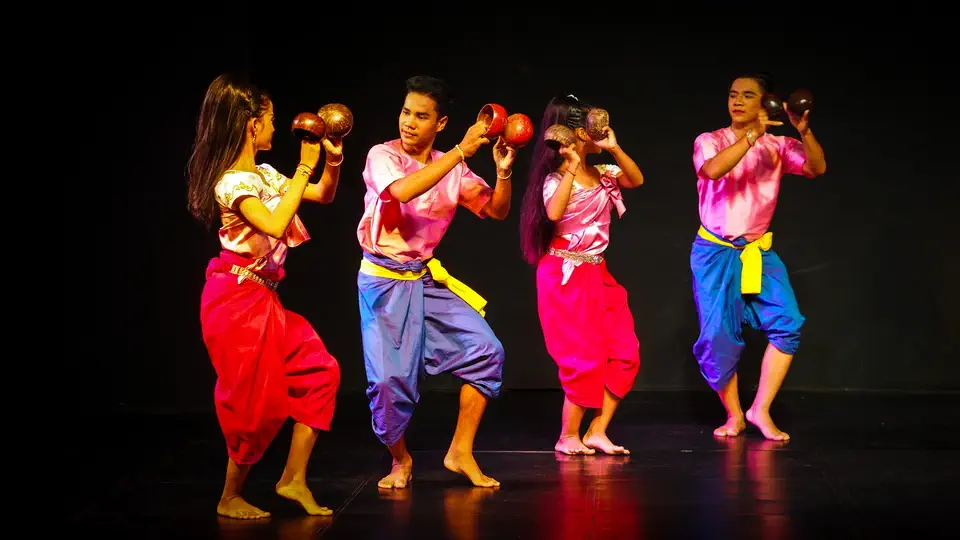
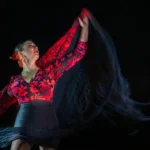
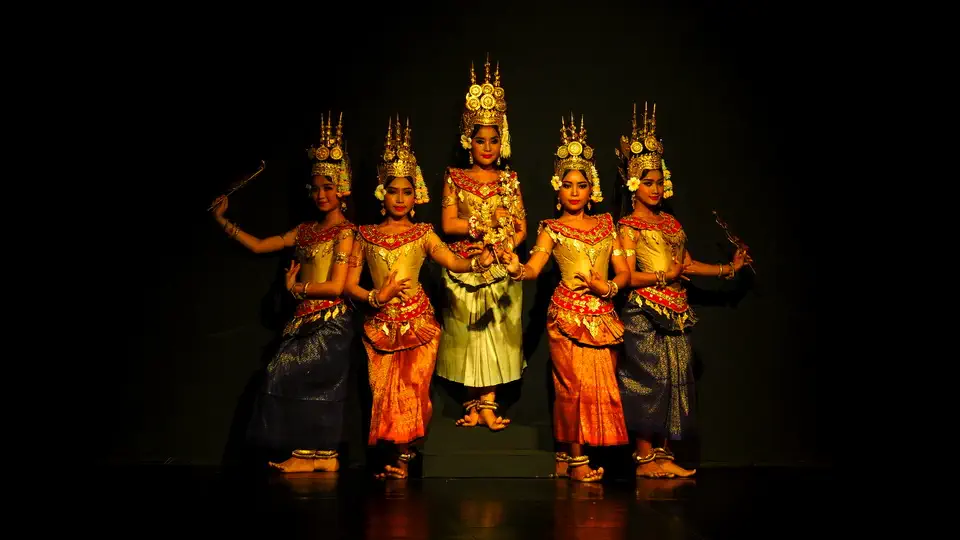
Three days a week, the museum hosts a very interesting event – performances by a traditional dance group associated with the National Museum. The organisation behind it, Cambodian Living Arts, was founded by Arn Chorn-Pond. He immigrated to the United States, built a career and reputation, and then returned to Cambodia to help revive its cultural heritage.
Before the performance begins, a short film tells the story of how difficult it was to find surviving masters who still knew how to play traditional instruments. The same applied to dancers who remembered the choreography. Even recreating costumes were a major challenge.
Thanks to the efforts of many people, it was possible to bring together a group of artists who had survived the purges during the rule of Pol Pot. He ruthlessly targeted intellectuals and artists, which makes it difficult to imagine how he expected to run a country without them.
Today, with the help of those few survivors, efforts continue to revive traditional dance and music. It’s not easy, especially in a world where younger generations are drawn to global pop culture. Learning these traditional dances requires dedication and discipline. Watching the dancers bend their hands, feet, and limbs in such unnatural ways is both fascinating and slightly painful – even for the audience.
Khmer dance – history and origins
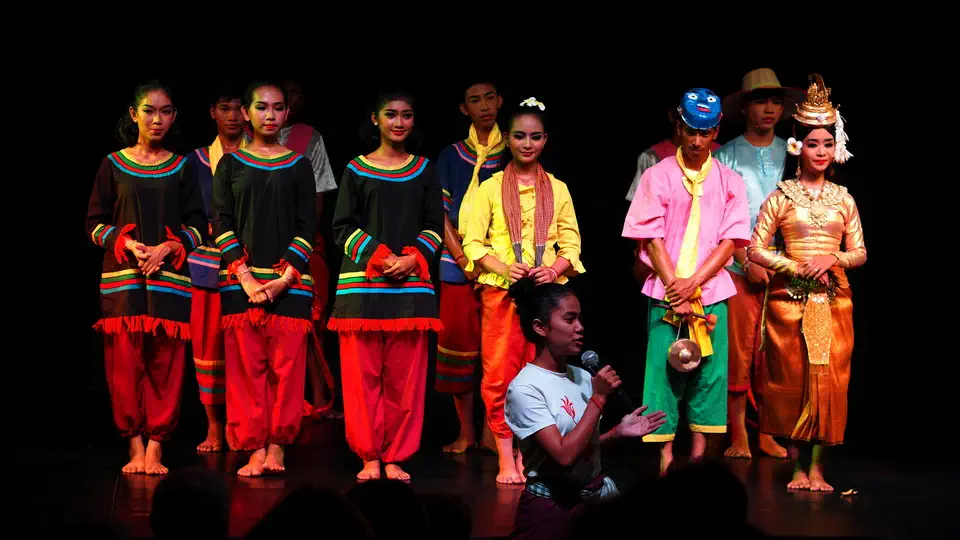
This dance can be divided into classical, folk, and social forms. The most fascinating is classical dance, believed to originate from the time when Angkor Wat was still a thriving city, where performances were held in honour of gods and spirits. Some researchers support this view, while others suggest that the modern form developed later, influenced by Thai traditions in the 19th century.
In the past, only a select few could witness these performances. They were held exclusively at the royal court, meaning only the king and his guests could admire the dancers. At the time, these performers were regarded almost as divine beings.
A few words at the end of the visit
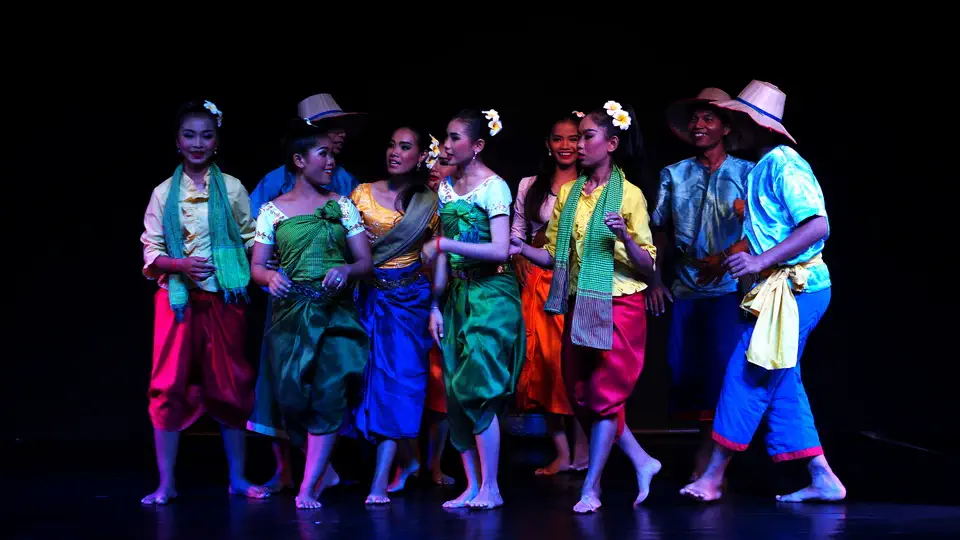
Today, you don’t need an invitation from the King of Cambodia to enjoy such a performance. For around 15 dollars, you can attend a show three times a week – on Mondays, Wednesdays, and Fridays at 6:00 pm.
I genuinely enjoyed the performance, and what’s more, so did Magda – which says quite a lot. If you’re spending time in Phnom Penh, I highly recommend experiencing this unique form of movement set to the delicate, bell-like music that accompanies the artists. It’s also a great idea to visit the museum before heading to Angkor Wat, as it provides useful context for what you’ll see there.
Practical information
Officially, photography inside the museum is not allowed (no one could really explain why). I decided to ask anyway if I could take a few photos for my blog, rather than sneaking around all day with a hidden camera like a schoolboy. Surprisingly, one of the staff members said it was absolutely fine, as long as I didn’t disturb other visitors. The expressions on the faces of others discreetly taking photos on their phones were priceless.
Ticket prices for the performances vary depending on seating – the closer to the stage, the more you pay. The cheapest seats at the back start at around a dozen dollars. The venue is small, though, so the view is good from pretty much anywhere.
Address: Street 13, Sangkat Chey Chumneas, Khan Daun Penh, Phnom Penh, Cambodia. The museum is located right next to the Royal Palace, making it easy to combine both visits. The most convenient way to get there is by tuk-tuk from anywhere in the city.
Opening hours: daily from 8:00 am to 5:00 pm, with the last entry at 4:30 pm. It’s best to arrive early – midday heat can be intense, and it tends to get crowded. A typical visit takes around two hours, though history enthusiasts could easily spend a full day there.
You can hire a guide on site or use an audio guide available in several languages (unfortunately not in Polish). The collection can feel a bit disjointed and modest, so having historical context from a guide can make a big difference.
Facts, information, and curiosities
- The largest museum in the country – It is the biggest institution dedicated to history and culture in Cambodia and plays a key role in preserving national heritage.
- Over 14,000 artefacts – The collection spans well over fourteen thousand objects, from prehistoric times to the post-Angkor period.
- One of the world’s largest Khmer art collections – The museum houses an extensive range of sculptures, ceramics, and bronzes.
- Architecture inspired by Angkor temples – The design reflects traditional Khmer temple styles, especially those of Angkor.
- Designed by a Frenchman – George Groslier, a historian and curator, played a crucial role in its creation.
- Construction began in 1917 – The museum was completed and opened in 1920.
- Opened during the Khmer New Year – A symbolic moment highlighting its cultural importance.
- Distinctive red colour – The terracotta tones are typical of traditional Khmer architecture.
- Four galleries around a courtyard – The layout creates a calm and almost meditative atmosphere.
- A peaceful inner courtyard – A quiet retreat from the busy streets of Phnom Penh.
- Famous statue of Jayavarman VII – One of the most important exhibits in the collection.
- Unique Hindu and Buddhist sculptures – Including depictions of Vishnu and Shiva.
- Covers multiple historical periods – From early kingdoms to the Angkor era and beyond.
- Also a place of worship – Some Buddha statues still hold religious significance.
- Linked to an art university – The nearby Fine Arts University supports cultural preservation.
- Closed during the Khmer Rouge era – From 1975 to 1979 the museum was abandoned.
- Left in ruins after the war – Even bats had taken over the building.
- Repatriation of artefacts – Many stolen works are gradually being returned.
- Exhibits travel abroad – Khmer art is showcased in museums around the world.
- A perfect introduction to Angkor – It helps visitors better understand the temples and their symbolism.