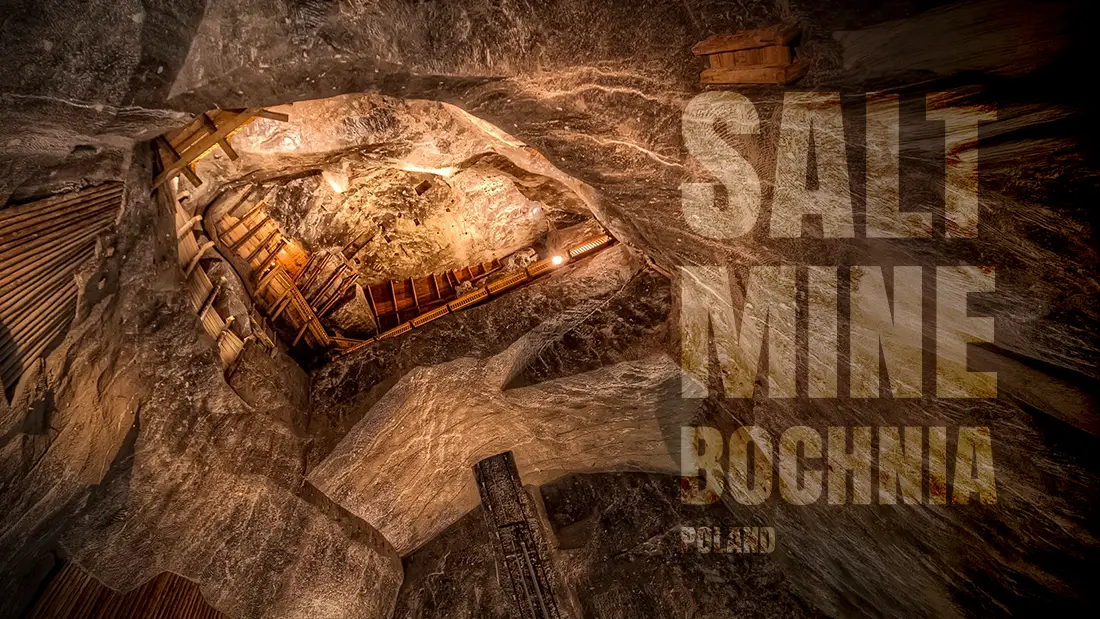
The Bochnia Salt Mine is located in the Lesser Poland Voivodeship and is a valuable Historic Monument, open to visitors as well as for therapeutic purposes.
Unfortunately, the holiday has come to an end and all that remains is a hazy memory of it. But that’s not the worst part. What’s worse is that my mood has taken a serious dive after the break. A dive so deep it nearly matches the depth of the mine shafts in Bochnia. To climb out of it, I’d definitely need a proper mining lift. But enough feeling sorry for myself – it’s time to reminisce.
Bochnia Salt Mine – a short history lesson
If anyone thinks salt is boring – just something that sits quietly in a shaker waiting to be accidentally spilled – it simply means they haven’t discovered the story of the Bochnia Salt Mine yet. And that story is longer, more winding, and at times saltier than many a historical drama. Let’s start at the beginning, back when Poland was only just taking shape and no one had even dreamed of mining lifts – unless they had particularly strange dreams. We’re talking about the 13th century. Around 1248, rock salt was discovered in the Bochnia area. Back then, salt was worth its weight in gold. Literally – it was used as a means of payment, a food preservative, and an absolute game-changer for medieval cuisine (meaning: meat didn’t go off after two days).
The official beginning of the mine dates back to the reign of Bolesław V the Chaste, who granted Bochnia town rights in 1251. And so began an adventure that continues to this day. The mine developed rapidly – the first shafts, tunnels, and chambers were created. Miners descended underground, although some of them probably wondered whether it was really a good idea. After all – dozens of metres below ground, dark, damp… does that sound like a perfect weekend destination? Not necessarily.
In the following centuries, the mine grew in strength and importance. During the reign of Casimir III the Great, there was a real boom. The king knew perfectly well that salt was a treasure, so he invested in the development of salt works (something like medieval “salt corporations”). New mining levels were created, infrastructure improved, and Bochnia together with the Wieliczka Salt Mine became the backbone of the royal treasury. You could say that without salt, many castles, wars, and royal feasts would never have happened.
Of course, a miner’s life was anything but easy – more sweat and salt than roses. The work was hard, dangerous, and required real courage. But the atmosphere… quite literally… was unique. Damp, salty, and impossible to replicate. Over time, however, technology improved. New mining methods appeared, better tools were introduced, and even the first “comforts” made underground work slightly less extreme.
The mine has survived a lot – fires, floods, wars – more drama than your average soap opera. During the partitions of Poland, it came under Austrian rule, and to be fair, they managed it quite efficiently. They introduced new technologies, organised the work, and supported further development. In the 19th century, further adjustments came. The Industrial Revolution left its mark – steam engines appeared, salt transport improved, and extraction became more efficient. Bochnia also faced challenges – growing competition and changing market demands – but it held its ground remarkably well.
The 20th century? That’s when things get even more interesting. Two world wars, shifting borders, new political systems – and the mine kept operating. During World War II, it was used by the occupying forces, and after the war it was nationalised. During the communist era, mining continued, though people slowly began to see the mine not just as a source of salt, but also… as a tourist attraction. And that turned out to be a brilliant idea.
In the second half of the 20th century, the mine developed its tourist and health-related functions. It turned out that the underground microclimate – all that humidity, salt, and silence – has a very positive effect on health, especially the respiratory system. So a place once associated with hard labour suddenly became something like an underground spa. Quite a transformation, isn’t it? In 1990, industrial salt extraction in Bochnia came to an end. And although it might seem like the end of the story, it was really the start of a new chapter. The mine became a tourist and museum site. Today, you can go underground, ride a mining train, explore vast chambers, and even… spend the night dozens of metres below the surface. For some, it’s the adventure of a lifetime; for others, a proper test of courage.
In 2013, the Bochnia mine, together with Wieliczka, was inscribed on the UNESCO World Heritage List. So officially – this is a place of global significance. And it’s no surprise, really, with over 750 years of history behind it. Today, the Bochnia Salt Mine is not just a monument, but a living story about the people who, for centuries, descended underground to extract “white gold”. It’s a place where history meets adventure, and where salt becomes far more than just something you sprinkle on your chips. So next time you reach for the salt shaker, remember – behind that innocent little “shake” lies a remarkably deep story. Literally and figuratively.
Visiting attractions in the Bochnia Salt Mine
My visit to the Bochnia Salt Mine began quite innocently – standing by the shaft and wondering whether voluntarily descending dozens of metres underground was really a good idea. But since I was already there, what was I going to do – back out like a horror film character before entering a haunted house? Of course not. So I stepped into the lift, which looked more like a metal cage for the brave than a means of transport, and moments later I was heading down at a speed that quickly reminded me gravity works perfectly well.
At the bottom, I was greeted by air that could easily be bottled and sold as “Eau de Salt & History”. A bit chilly, a bit damp, but what an atmosphere! After just a few steps, I felt like the hero of an adventure film – only instead of searching for treasure, I was looking for a guide and decent lighting.
First impression? It’s huge. The tunnels stretch out as if someone had built an entire underground city – just without traffic jams and traffic lights. And the atmosphere – walls shimmering with salt, creaking wood, the soft echo of every step. When we reached one of the larger chambers, I realised this was far more than just a “hole in the ground”. The chambers are so vast you could easily hold a small concert there… and in fact, they do.
The biggest impression on me was made by the Ważyn Chamber. This is no longer just a mine – it’s an underground entertainment centre. A sports pitch underground? Yes. A place to stay overnight? Also yes. And there I was wondering whether to bring a jumper. Had I known I could stay the night, I might have packed slippers and a thermos of tea as well. Although sleeping dozens of metres underground does sound like a test for the brave… or for very deep sleepers.
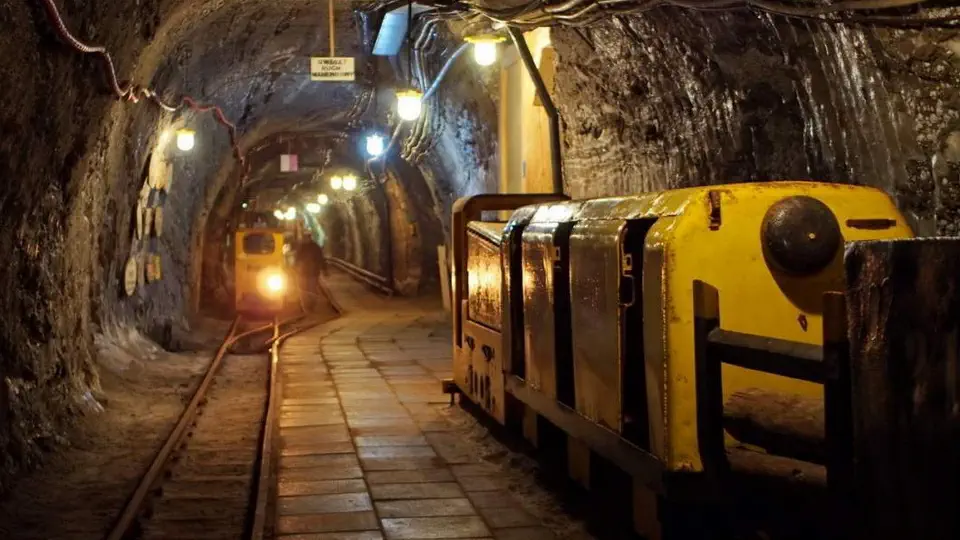
Along the way, we also came across the underground train. And I have to admit – I felt like a child at a fairground, except instead of candyfloss I was surrounded by salt and history. The ride was short, but great fun! Especially when you realise that these routes were once used to transport salt, and now they carry smiling tourists.
There were also more atmospheric moments – darker corridors, old tools, stories about miners who spent entire days (and sometimes longer) underground. Suddenly, you stop complaining about open-plan offices and the lack of coffee at work. Conditions here were… let’s say minimal. And yet people worked, created, and left behind something truly remarkable.
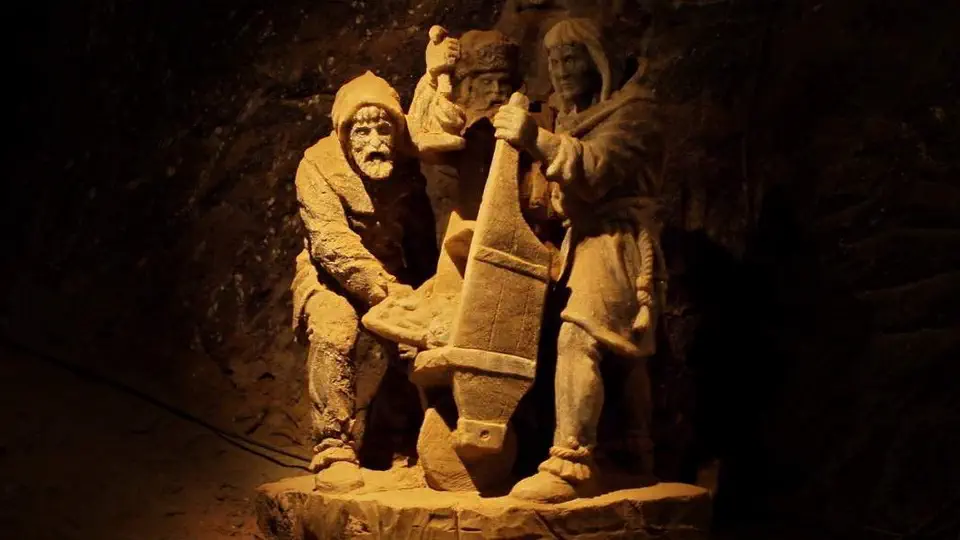
At some point, I found myself paying attention to the details – salt sculptures, wooden structures, traces of work from centuries ago. It felt a bit like travelling through time, without the need for a time machine. All you require is a lift and a bit of curiosity.
By the time I returned to the surface, I had the impression I’d spent far longer underground than I actually had. And most importantly – I didn’t really want to leave. Because the Bochnia Salt Mine is not just a place you visit. It’s a place you experience. Part adventure, part history lesson, and part unusual trip into an underground world where salt takes centre stage, and you leave with the feeling that you’ve discovered something truly special.
The Bochnia Salt Mine – legends and mysteries
Deep beneath the ground, where daylight never reaches and silence has its breath, stretches a labyrinth of tunnels – the Bochnia Salt Mine. This is no ordinary place – it is a realm where time flows differently, and every wall seems to whisper stories of the past. For centuries, Bochnia has hidden not only salt, but also secrets that were never written down in chronicles.
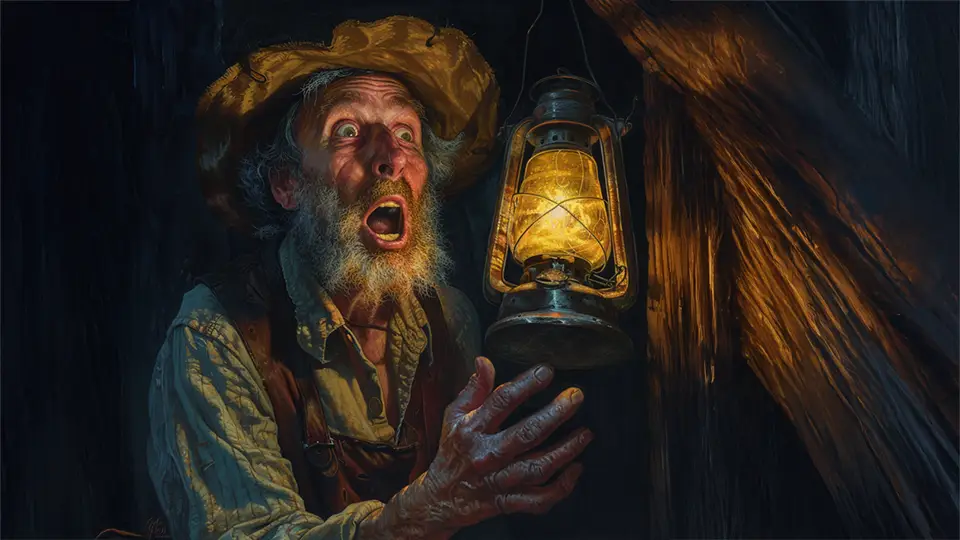
One of the oldest tales is that of the Skarbnik – the spirit of the mine, guardian of its underground treasures. It was said he appeared to miners in moments of greatest danger. Sometimes as an old, bearded man with a lamp, other times as a shadow moving across the walls faster than the eye could follow. Those who met him and showed respect survived their hardships. But woe to those who mocked him – some were said to perish in collapsed tunnels, as if the earth itself demanded humility.
In the darker corners of the mine, people also speak of mysterious sounds. Miners reportedly heard footsteps where no one was, the quiet tapping of tools in abandoned chambers, and whispers that fell silent the moment someone tried to locate them. Some believed these were echoes of past work, forever preserved in the salt walls. Others were convinced they were the souls of those who never left the mine.
There is also a legend about a hidden chamber that appears on no map. Somewhere deep underground, it is said, lies a hall filled with salt crystals that glow with their own pale light. Whoever finds it will learn the greatest secrets of the earth – but will never return to the surface. Many have tried to find it, but the mine seems to change its layout, as if it chooses who is allowed to uncover its secrets.
There are also tales of sudden gusts of cold air appearing unexpected. Miners believed it was the mine’s breath – a living entity watching over what it holds within. When calm, work was safe. When “angry”, accidents and unexplained events occurred?
The most extraordinary stories, however, are those about light. In the deepest parts of the mine, some claimed to see a faint glow, like a candle flame floating in midair. It gave no warmth and did not light the way, yet it drew the eye and stirred unease. It was said to be the souls of former miners, still wandering the underground world, searching for a way out.
Such are the legends of Bochnia – full of shadow, mystery, and unseen presences. And although today the tunnels are lit and tourists explore them with guides, one cannot shake the feeling that the mine is watching. Listening. Remembering everything that has ever happened within it. And perhaps even… waiting to add another story.
Bochnia Salt Mine – information and interesting facts
- A legend connected with the mine tells of Saint Kinga and her ring. According to the story, the salt deposits in Bochnia and Wieliczka are her gift to Poland. It was here that her engagement ring was found, after she had thrown it into a shaft in a Hungarian mine.
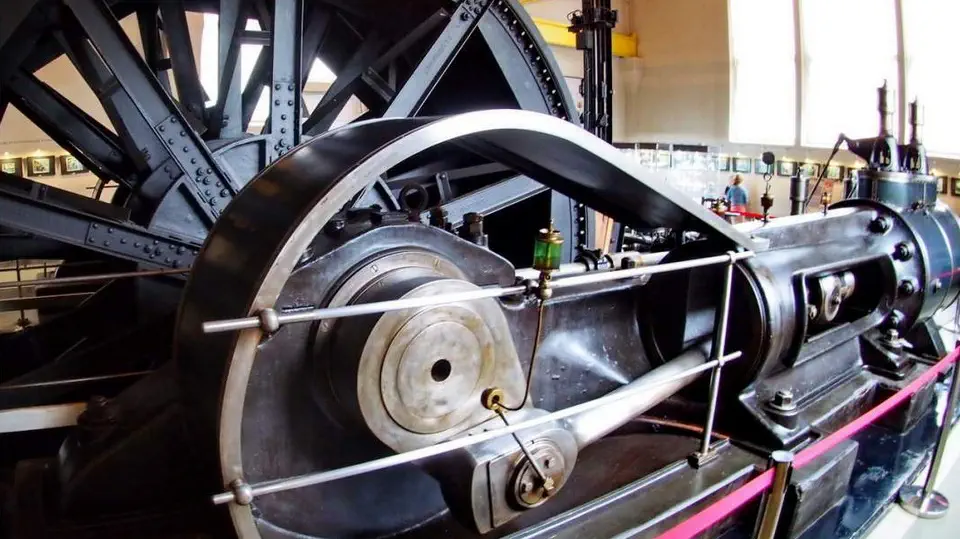
- A unique feature on a global scale is the still-operating lift mechanism powered by a steam engine. It is occasionally brought back to life.
- In 2017, around 117,000 tourists visited the Bochnia Salt Mine. In the same period, nearly 1.5 million people visited the Wieliczka Salt Mine.
- A major attraction is the “Kuba” train, which transports visitors. It was named after the last horse that worked in the mine. It runs at a depth of 176 metres underground and, interestingly, passes through the middle of a chapel – the only place in the world where a train goes through a church.
- The excavated chambers adapted for a basketball court, restaurant areas, and accommodation make an incredible impression. They are located 248 metres below ground and can be reached via a ramp or a 140-metre slide.
- Spending one hour in the mine means inhaling as much iodine as you would during a week by the sea. No wonder many people choose to stay overnight here.
- Even today, traces of the historical value of salt remain in language – for example, the expression “to pay a high price”.
- Salt was called “white gold”, and it truly had such value. Punishments for stealing it were severe – a miner caught taking even a small lump could lose his hands, or in the worst case, his life.
- Spilling salt is still considered bad luck in some regions, while welcoming someone with bread and salt is a sign of great respect.
- It is the oldest rock salt mine in Poland – dating back to 1248.
- The Bochnia Salt Mine operated continuously for over 750 years, until extraction ended in 1990.
- In the Middle Ages, Bochnia salt was so valuable it was called “white gold”.
- Together with the Wieliczka Salt Mine, it formed the foundation of royal wealth.
- The deepest level reaches around 261 metres below ground.
- The underground tunnels extend for over 240 kilometres – that’s several marathons back to back.
- The mine has 16 levels of excavation.
- One of the biggest attractions is the Ważyn Chamber – a vast space used today for recreation and accommodation.
- You can even play football there… dozens of metres underground.
- The mine’s microclimate has health benefits, especially for the respiratory system.
- The underground temperature remains constant at around 14–16 °C all year round.
- The mine has its railway, which you can ride during your visit.
- In the past, salt was extracted by hand using simple tools – it was extremely hard work.
- Original wooden structures from centuries ago are still preserved.
- In 2013, the Bochnia Salt Mine was added to the UNESCO World Heritage List.
- Cultural events, concerts, and gatherings are held underground.
- You can even spend the night there – one of the most unusual accommodation experiences in Poland.
- There are salt sculptures and artworks created by miners.
- Horses once worked in the mine, transporting loads – some spent their entire lives underground.
- Many legends are connected with the mine, including that of the Skarbnik – the guardian spirit of the tunnels.
A handful of practical information
- Ticket prices change so quickly that it’s difficult to keep up, so for current prices, it’s best to check the official website of the mine.
- Monday – Friday
- Tourist route descent: 9:15, 11:15, 12:15, 15:45, 16:30
- Tourist route with boat crossing: 9:30, 11:45, 12:45, 15:15
- Saturday – Sunday
- Tourist route descent: 10:15, 11:15, 12:15, 13:15, 14:45, 15:15, 16:30
- Tourist route with boat crossing: 10:45, 11:45, 12:45, 14:15, 15:45, 16:15
- Dress in layers – the temperature underground is a constant 14–16 °C. In summer, it’s pleasantly cool, in winter… a bit less so. A light jumper or jacket is a must.
- Wear comfortable shoes – there’s a lot of walking on uneven and sometimes damp surfaces. Leave the high heels for another day.
- Be prepared for the lift descent – the quick drop can be a surprise, especially if you’re sensitive to heights (or rather depths).
- Don’t rush – this isn’t a race. It’s worth listening to the guide and soaking up the atmosphere.
- Bring water – even in cooler conditions, you can get tired, especially on longer routes.
- Listen to the guide – besides interesting facts, they also provide important safety information.
- Watch your head – some ceilings are low.
- Be reasonably fit – routes may include stairs and longer walks.
- Consider booking in advance – especially in peak season.
- Check the available routes – there are different options to suit various preferences.
- If you suffer from claustrophobia – think carefully before visiting.
- Don’t touch everything – as tempting as it is, it’s better to preserve it for others.
- Bring a camera or phone – the photos are fantastic.
- Check photography rules – there may be restrictions or extra fees.
- Consider staying overnight underground – for a truly unique experience.
- Take the underground train – fun for both children and adults.
- Notice the microclimate – it can benefit your respiratory system.
- Arrive a bit earlier – avoid stress and prepare calmly.
- Leave large luggage on the surface – tunnels can be narrow.
- Most importantly: enjoy yourself – it’s not just a historical site, but a real underground adventure.