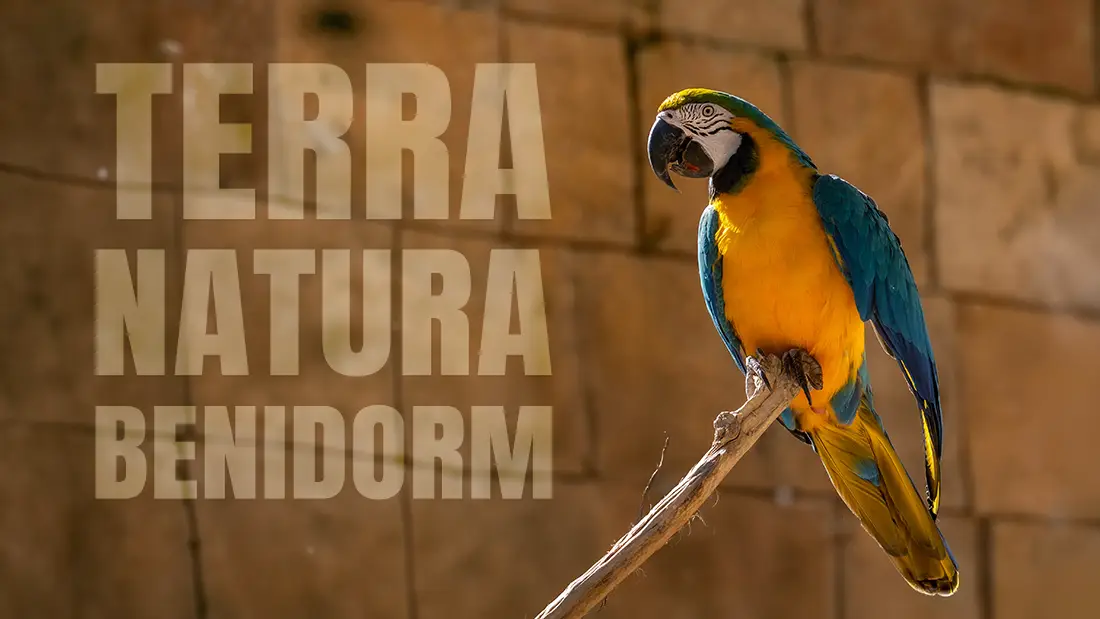
The zoo in Terra Natura Benidorm is a place where you can embark on an engaging and interesting journey. During your visit, you will encounter wonderful animals from all corners of the world, while also learning about the conditions in which they live the wild and the threats they face in our ever-changing world. In this article, you will find practical information to help you during your visit, details about the animals living in the Benidorm zoo, as well as a wealth of facts and curiosities.
Benidorm Zoo – practical information about Terra Natura
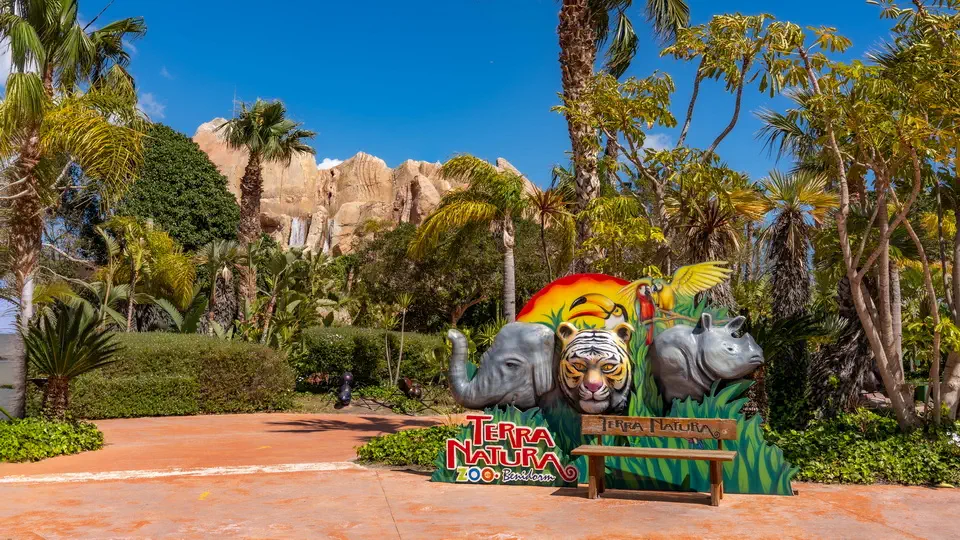
- Ticket prices for the zoo in Benidorm (Terra Natura Benidorm) vary and are as follows:
- Adults aged 13 and over – €38 (€29 if entering three hours before closing).
- Children aged 4 to 13 – €32 (€24 if entering three hours before closing).
- Children under 4 – free entry.
- Seniors over 60 – €32 (€24 if entering three hours before closing).
- An additional cost is parking, which is €7 for the whole day.
- I recommend purchasing tickets online – you will often pay less, avoid queues at the ticket office, and enter without waiting.
- Tickets for the water park Aqua Natura Benidorm can be purchased together with zoo tickets or separately:
- Adults aged 13 and over – €41 (€29 if entering three hours before closing).
- Children aged 4 to 13 – €35 (€24 if entering three hours before closing).
- Children under 4 – free entry.
- Seniors over 60 – €35 (€24 if entering three hours before closing).
- Again, I recommend buying tickets online to save money and avoid queues.
- Please note that ticket prices may change, so treat the above as a guideline rather than a certainty. For current prices, check online.
Terra Natura Benidorm and Aqua Natura are located just off the AP-7 motorway at: Avda. Alcalde Eduardo Zaplana, 03502 Benidorm in Costa Blanca. There is a huge car park in front of the attraction, so finding a space should not be a problem. I am unsure how busy it gets in peak season, as I avoid visiting such places in summer. You can also take bus line 42, which runs through the main districts of the city. If you are travelling from Alicante or Dénia, I recommend taking the train with a special fare – ask for details at the station.
Within the Benidorm zoo grounds, you will find restaurants, a café, and a souvenir shop. There is also a photography service whose staff can accompany you during your visit to capture memorable moments. However, this service is costly, and judging by the photos displayed, some photographers may only have basic training. In the age of smartphones with decent cameras, this service may not be worthwhile.
You can also hire pushchairs or mobility scooters within the zoo. A pushchair costs €12 per day, and an electric scooter €33 per day. Most paths are accessible for wheelchair users, although some areas may require assistance from a companion or staff.
Guided tours are available, offering an opportunity to explore the animal world in greater depth. The guide will share interesting stories and facts about wildlife. The tour lasts around 3 hours and costs €20 for visitors aged 13 and over. There is also an evening tour, when animals become more active or prepare for sleep – a very fascinating experience. The evening tour lasts 2 hours and also costs €20.
Terra Natura Benidorm – Attractions and visiting the Benidorm zoo
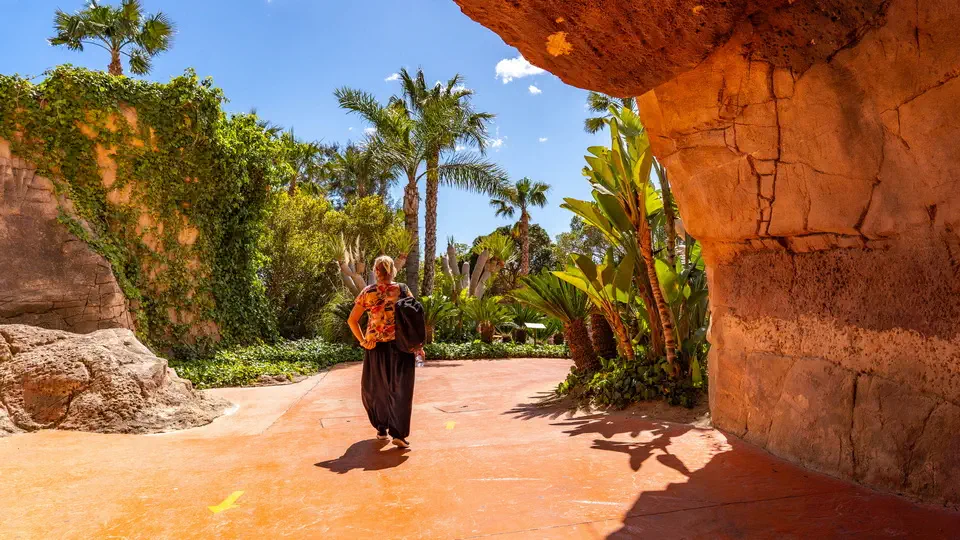
The zoo in Benidorm is a very intriguing place and a popular attraction that, in my opinion, appeals to all ages. However, keep in mind that depending on the time of year, it can be very crowded. We visited at the end of March, midweek, and there were already quite many visitors – I can only imagine how busy it gets in peak season. The first thing you will notice is the long queue at the ticket office, which surprised me. Nowadays, this can easily be avoided by purchasing tickets online.
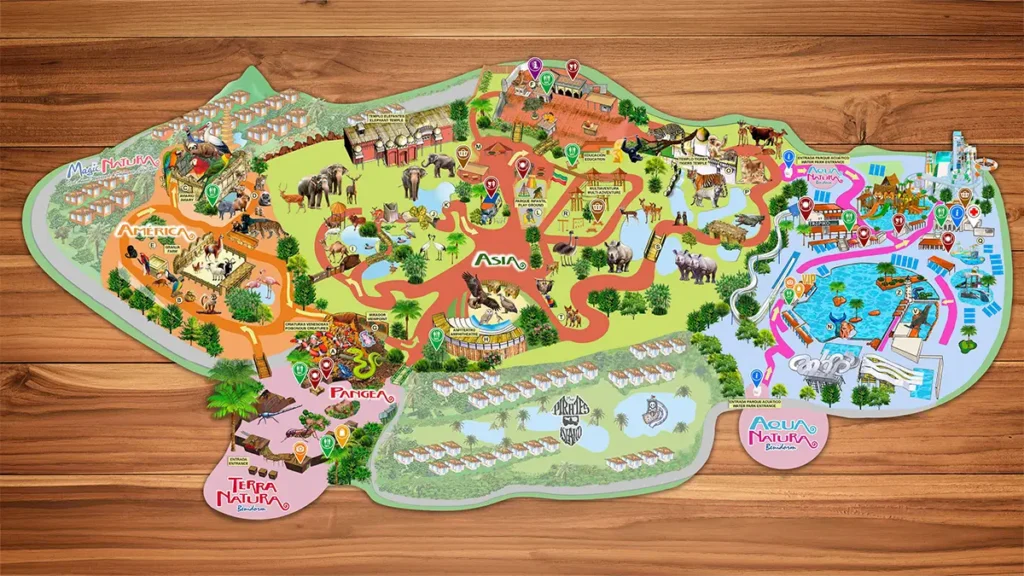
The zoo is divided into three main zones: Pangea, America, and Asia. There is also a falconry area where bird of prey shows are held several times a day. It is an excellent educational experience, especially for young visitors, who can interact with parrots, birds of prey, owls, and hornbills. Directional arrows on the paths guide visitors smoothly through all the attractions.
There are many bars and snack stands where you can take a break, which is especially important during hot weather. I also recommend the splendid coffee served from a snack bus near the elephant enclosure.
Pangea – the world of venomous creatures
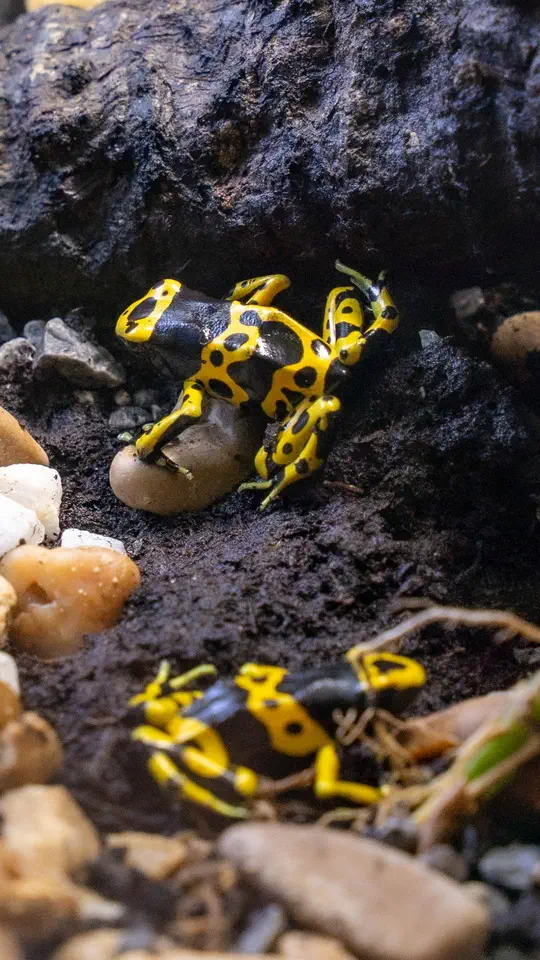
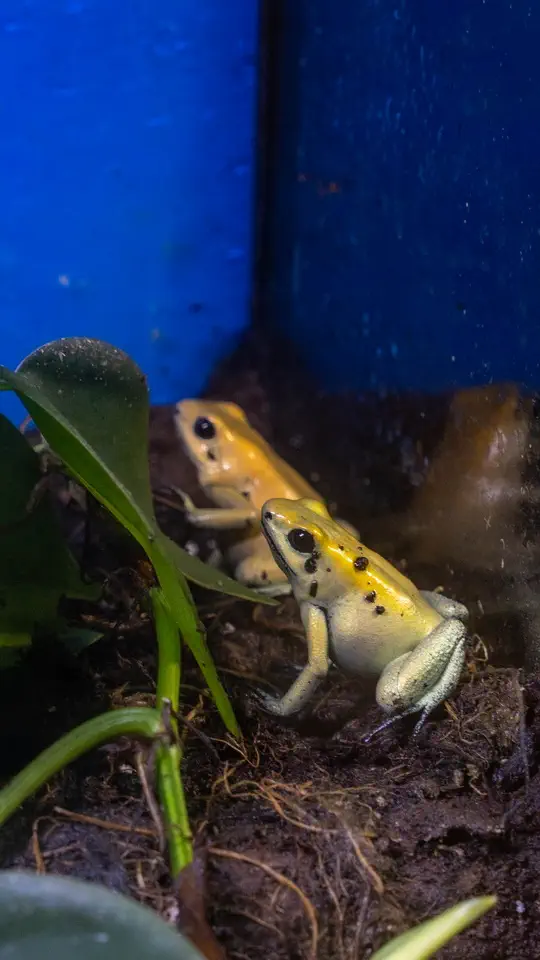
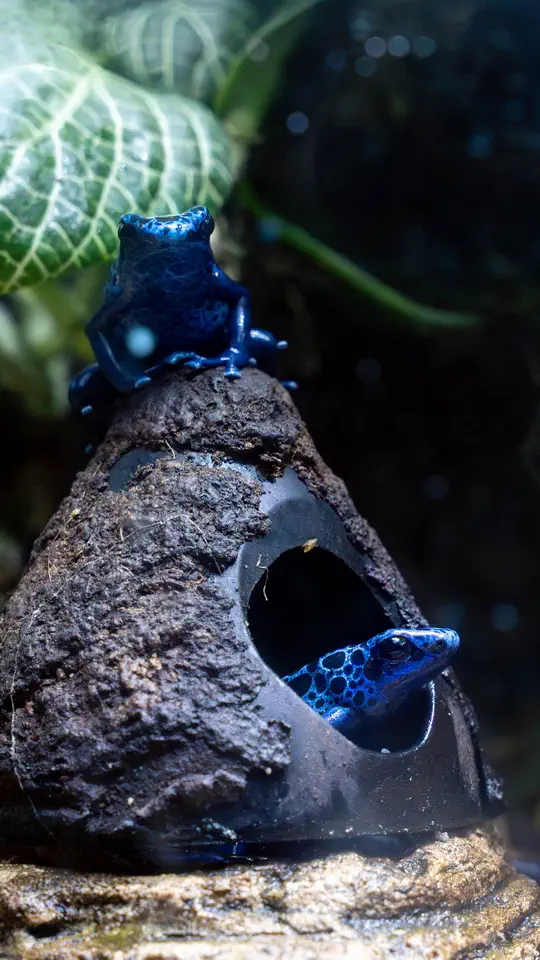
Pangea is a part of the zoo in Terra Natura Benidorm located opposite the park entrance. You can visit it at the beginning, although in my opinion it is best saved for last. The creatures you will see here prefer darkness and cooler conditions, so the area is dimly lit and pleasantly cool—especially when the sun is blazing outside.
In dozens of terrariums and glass enclosures live spiders, lizards, snakes, and frogs, including the dangerous poison dart frog (Dendrobates tinctorius)—a beautiful, tiny frog with a vivid blue colouring. Although it weighs only around 3 grams, its skin produces a toxic substance that causes nausea and vomiting in predators that attempt to eat it. It is from the secretion of this amphibian that indigenous peoples of Guinea and Guyana create poison for their darts.
A large part of the Pangea area is occupied by snakes and vipers, including the dangerous American rattlesnake (Crotalus culminatus), which can weigh up to 2 kilograms. A distinctive feature of this creature is the keratin rattle at the very end of its tail, the sound of which warns off potential predators—or people who might otherwise accidentally step on a resting snake.
In addition, you will encounter many other creatures such as spiders, predatory lizards, and scorpions. All of them are dangerous and possess natural venoms and toxins. The strength of these substances is described next to each enclosure, along with interesting facts about its inhabitants. Pangea is a fascinating place that should not be missed—despite their small size, the creatures living here can be more dangerous than lions or other large predators.
America – predators and prey
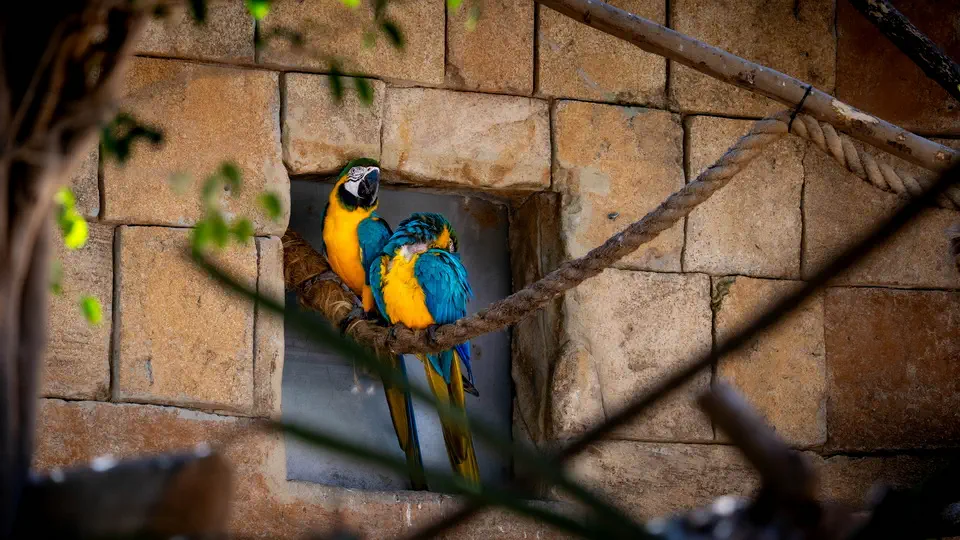
The environment in the American section of the zoo in Terra Natura Benidorm resembles a Central American rainforest. Below lush green canopies of dense vegetation and among the ruins of ancient cities and Mayan temples live remarkable creatures such as unusual toucans, colourful parrots, curious capuchin monkeys, and agile ocelots.
I recommend stopping by the jaguar enclosure. Here you will see two beautiful cats—one black with barely visible rosettes on its dark fur, and the other displaying the typical yellow-and-black spotted coat of a jaguar, with patterns as unique to each individual as fingerprints are to humans. These cats can weigh nearly 100 kilograms and are natural-born hunters. For that reason, it is relatively saddening to watch them wander aimlessly around their enclosure, longingly gazing towards a nearby paddock full of antelopes.
Another fascinating feline is the margay (Leopardus wiedii), an adorable animal slightly larger than a domestic cat, with a tiger-like coat. These animals are listed on the IUCN Red List, meaning they are close to extinction. The main threats to margays are poachers and the rapid loss of their natural habitats due to agriculture and deforestation.
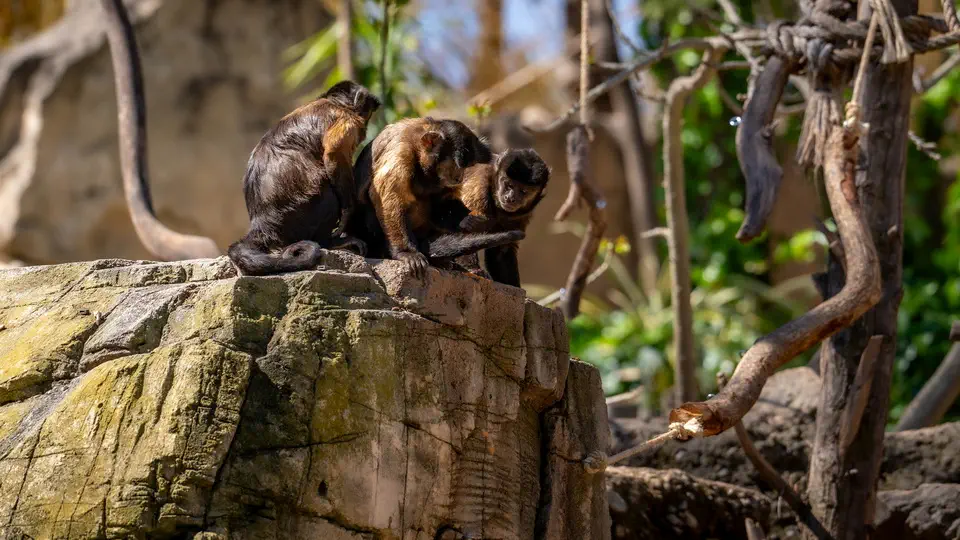
We spent a very pleasant time by the large enclosure of the small capuchin monkeys. These are entertaining creatures that have developed social structures resembling early human tribes. They are also highly intelligent—they learn quickly, can use tools, and possess excellent memory. Scientists working with them have managed to teach them very complex tasks and decision-making in demanding situations. Meanwhile, their young—of which there are currently several in the Benidorm zoo—behave much like human children: mischievous, playful, and constantly trying to engage others in games.
Capuchins are not the only monkeys living in the Benidorm zoo. You will also encounter tiny pygmy marmosets, beautifully coloured and lively lion tamarins, and the song-loving Goeldi’s monkeys. It is worth spending some time observing these fascinating animals—if you do, you may come to realise that their basic needs and behaviours are not so different from our own, and that, as the more advanced species, we should care for them as if they were our younger relatives.
In addition to monkeys and cats, this part of the zoo also features beautifully coloured birds such as scarlet ibises, various species of parrots, ducks, peacocks, elegant flamingos, and even the familiar storks. Beyond birds, take note of both small and larger mammals—guinea pigs, goats, tiny agoutis, llamas, prairie dogs, and the famously laid-back capybaras.
Asia and Europe
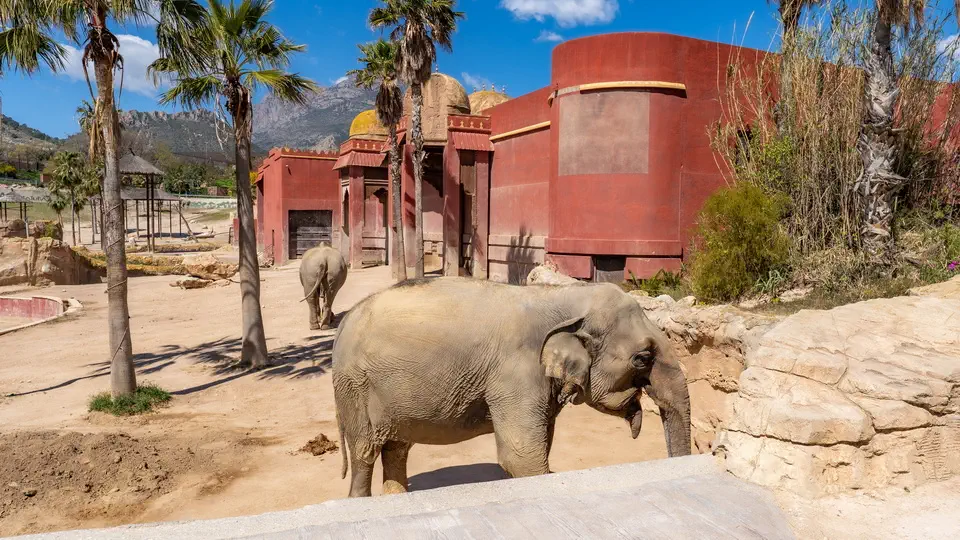
The Asian section of the zoo in Terra Natura Benidorm is a true feast for wildlife enthusiasts. Here you will find enclosures housing the largest land mammals on Earth—majestic elephants and nearly equally impressive rhinoceroses. This area is also home to magnificent Bengal tigers, Asiatic lions, large buffalo, and humped dromedary camels.
I recommend having a closer look at the enclosure of the Siamese crocodiles, especially during feeding time—the sight is truly impressive. These reptiles living in Benidorm weigh over 200 kilograms and look genuinely formidable. Equally, fascinating are the siamang primates, which form lifelong pairs and share domestic responsibilities fairly, including raising their young. Be sure to pay attention, as you explore, to the enclosure of the Malayan giant tortoises. These creatures are so endangered that there is a real concern future generations may know them only from books. Other inhabitants you will encounter in this part of the zoo include yaks, porcupines, otters, white-handed gibbons, and various species of antelope. In addition, there are beautiful birds, colourful koi carp, turtles, snakes, and vipers.
This is the largest section of the park, and exploring it takes the most time. Near the spacious enclosures, you will find plenty of picnic areas, as well as cafés and snack bars. If you are visiting the zoo in Benidorm with children, you can be sure they will, eventually, discover the ice cream stands and vending machines filled with sweets.
Vegetation from around the world
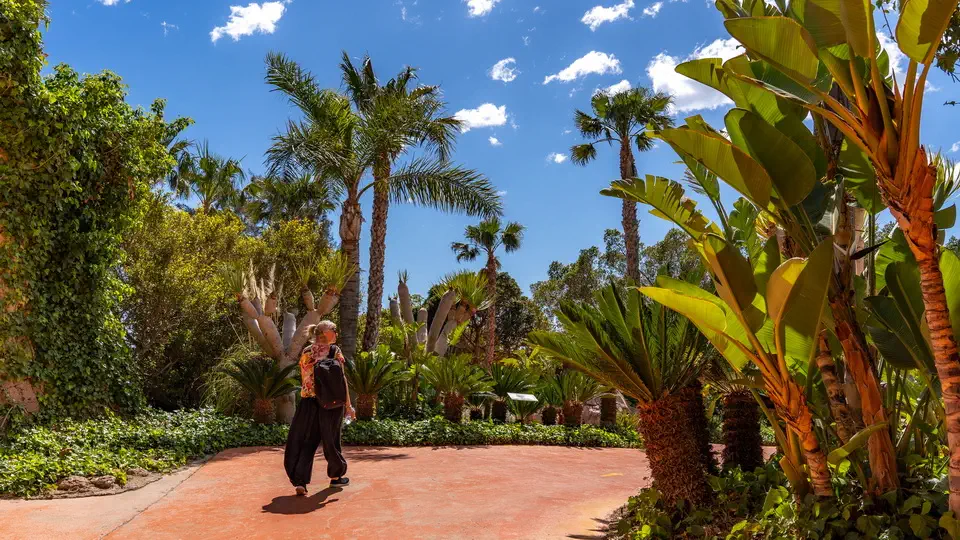
The zoo in Terra Natura Benidorm is vast, and as such there is space not only for animals but also for plants brought from all corners of the world. You will see beautiful species of slender tropical palms, bamboo, banana plants, fig trees, and ferns, which together create a humid environment reminiscent of rainforests.
In other parts of the park, you will find desert and semidesert plants such as cacti—there are thousands of them in all imaginable varieties—as well as agaves, aloes, and spurges. These are plants adapted to drought and high temperatures, which feel perfectly at home in Spain. Another ecosystem recreates a Central European climate, where olive trees, pines, cypresses, fragrant rosemary, and lavender grow. These are typical plants of southern Spain and the entire Mediterranean coast. Further on, you will encounter acacias, baobabs, and grasses straight from the African savanna, followed by ornamental exotic plants such as hibiscus, bougainvillea, orchids, and numerous flowering shrubs whose fragrance invites you to sit beneath them and relax.
Nearly 3,000 plant species from around the world grow in the park, carefully selected to recreate the natural habitats of the animals living nearby. Often, it is the plants themselves that act as natural barriers, replacing the much less appealing bars and steel fences. Interestingly, the entire irrigation system is managed by a specially designed computer system, which will soon be enhanced with dedicated artificial intelligence trained for this purpose.
Efforts to improve the fate of animals around the world
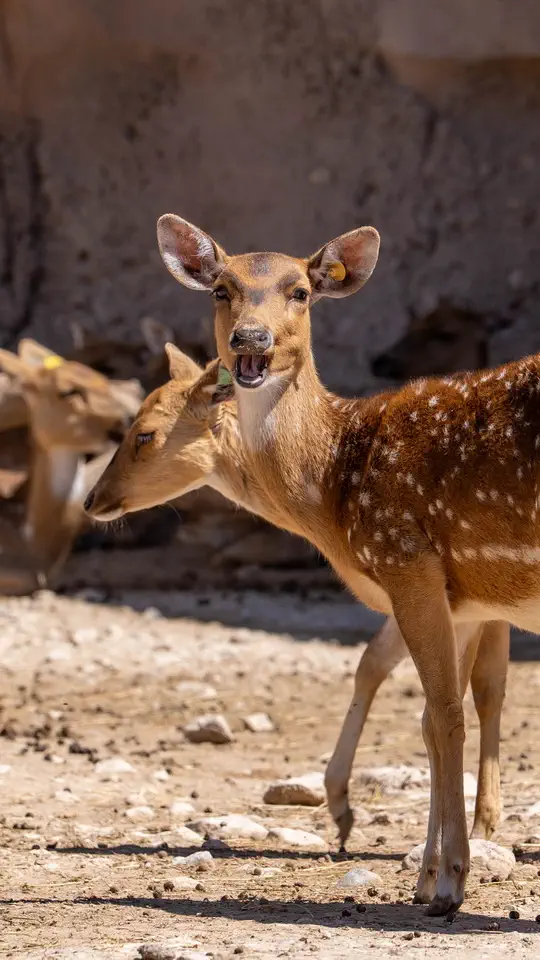
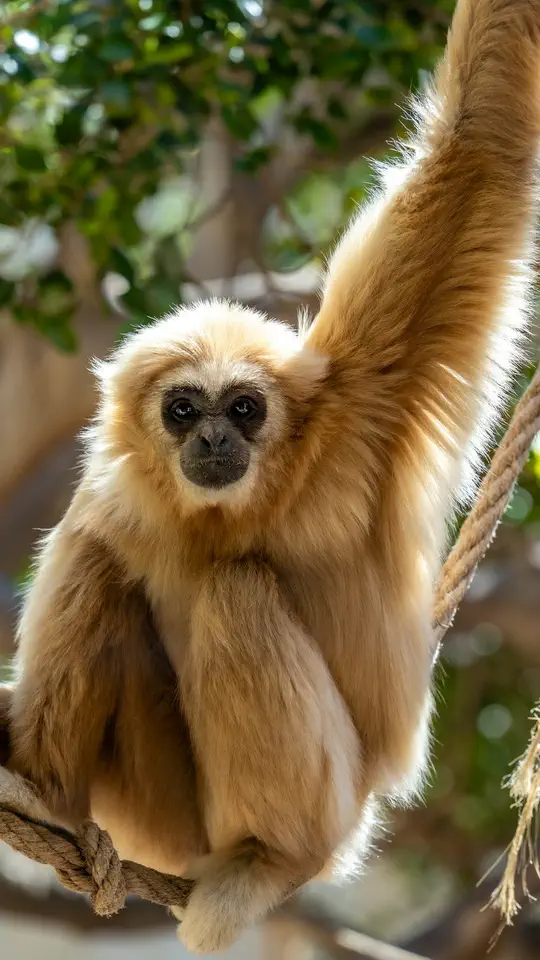
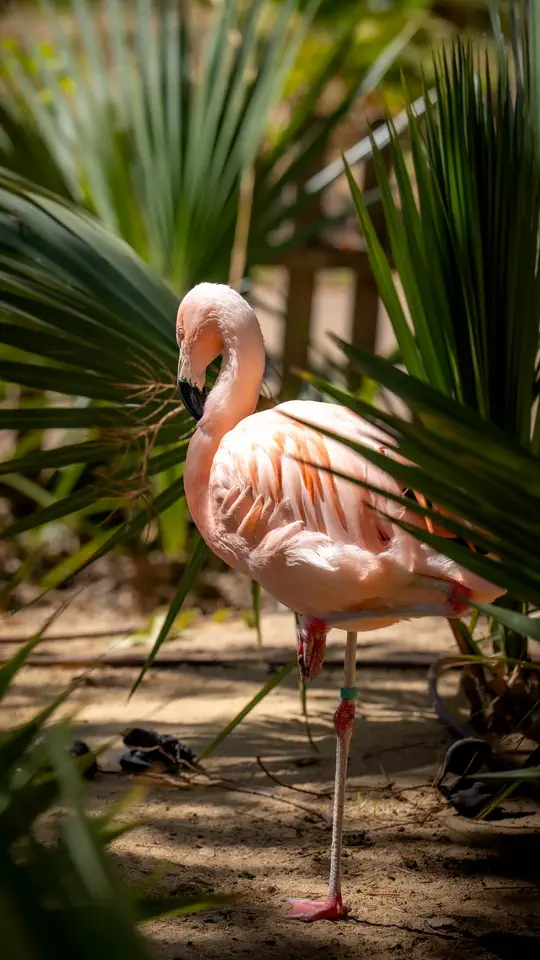
The park Terra Natura Benidorm is an ideal place to teach younger generations a love of wildlife, while reminding those of us a little older of the important role humans play in the natural environment. For thousands of years, we humans have explored and conquered even the most remote corners of the Earth, eventually becoming its unquestioned masters. However, such a role is not only a privilege, but also a responsibility. The fate of hundreds of endangered species, as well as the places they inhabit, lies in our hands. The zoo in Benidorm constantly reminds and explains that every individual can bring a measure of hope to the future of animals. Even small efforts—such as separating waste or avoiding plastic packaging—can make our human world a little more friendly to nature.
Beyond education, Terra Natura Benidorm actively works to protect endangered species by engaging in negotiations. It also trains and educates communities in remote regions of the world about the importance of using natural resources responsibly and maintaining a balance between the human and animal worlds. The park also participates in international conservation programmes aimed at preventing the destruction of habitats for animals such as ocelots, rhinoceroses, elephants, and many other species. An example of this is its financial and expert support for the IRV 2020 project, which focuses on protecting the breeding grounds of Indian rhinoceroses in the Pobitora Wildlife Sanctuary and Kaziranga National Park.
Benidorm Zoo facts and information about Terra Natura Benidorm Park
- The park opened in 2005 and was conceived from the outset as a “next-generation zoo.”
- Benidorm Zoo covers a vast area – approximately 320,000 m², making it one of the largest parks of its kind in the region.
- It is home to over 1,500 animals representing approximately 200 species.
- Over 50 species are endangered, highlighting its conservation role.
- The park is divided into four thematic zones: Pangea, America, Asia, and Europe.
- Each zone recreates the climate, culture, and architecture of a specific continent.
- The park’s main concept is “zooimmersion” – visitors see animals without visible barriers. This gives you the feeling of being on safari – the animals are separated by features like moats or glass, not bars.
- In addition to the animals, the park also houses over 2,500 plants from different continents. The park combines the functions of a zoo, an amusement park, and an educational centre.
- Among other things, you can see the park’s many fascinating creatures. Bengal tigers, jaguars, elephants, rhinos, and gibbons.
- The Benidorm Zoo boasts the birth of the first Indian rhinoceros in Spain, a major breeding success.
- The park participates in programs to protect endangered species and collaborates with zoological organizations.
- Rehabilitation programs for birds of prey are conducted here.
- Regular shows, such as bird of prey flights, are held.
- Terra Natura Benidorm Park offers live encounters with animals and talks with keepers.
- You can also see venomous animals here, such as snakes and tarantulas, in the Pangea zone.
- Next to it is the Aqua Natura water park, with which combined tickets are often sold.
- The park organizes themed events, such as Halloween and festivals inspired by world cultures.
- Benidorm Zoo is a family-friendly destination, combining entertainment, education, and contact with nature in one day.
- Another equally interesting zoo on the Costa Blanca is Rio Safari Elche.
Interesting facts about animals living in the Terra Natura Benidorm Park
- Bengal tigers are excellent swimmers and enjoy diving into the water on hot days.
- Elephants can recognize themselves in a mirror – a sign of high intelligence.
- Rhinos have thick skin, but it is very sensitive to the sun – which is why they regularly wallow in mud.
- Lemurs use their tails for communication – they raise them to show their position in the group.
- Gibbons move by swinging on their arms – this is the fastest way to move through the treetops.
- Birds of prey have eyesight that is several times better than humans.
- Snakes sense the heat of their prey using special receptors.
- Meerkats live in groups, and one group always acts as a guard.
- Jaguars have the strongest jaw grip of all cats.
- Elephants can “talk” over distances of many kilometres using low-pitched sounds (infrasound).
- Gibbons form lifelong pairs and “sing” together daily.
- Lemurs love to bask in the sun, sitting in a meditative position.
- Rhinos can run at speeds of up to 50 km/h, despite their mass.
- Birds of prey use air currents to conserve energy during flight.
- Tigers have a unique stripe pattern – like human fingerprints.
- Snakes have no eyelids – their eyes are always “open.”
- Meerkats can dig complex tunnel systems underground.
- Elephants use their trunks like hands – they can lift both heavy objects and small items.
- Jaguars are excellent tree climbers and often hunt by surprise.
- Many animals in the park are given toys and tasks to stimulate their minds.
- Birds of prey can dive at incredible speeds while hunting.
- Lemurs also communicate through various sounds and gestures.
- Rhinos have poor eyesight but magnificent hearing and smell.
- Tigers can jump several meters.
- Elephants remember locations and other individuals for many years.
- Gibbons have very long arms – longer than their legs.
- Snakes can swallow prey larger than their head thanks to their flexible jaws.
- Meerkats teach their young how to cope with their environment – for example, how to avoid danger.
- Jaguars frequently avoid people and are very secretive, making them difficult to see in the wild.
- The animals at Terra Natura Benidorm are accustomed to the presence of humans, but they still retain many of their instincts.
- Interesting cities near Costa Blanca:
- Cullera, located on the Valencia coast, is a resort town known for its beautiful beaches with light and fine sand.
- La Mata is a small town in the south of Spain, located on the Costa Blanca coast.
- San Pedro del Pinatar is a town located on the Costa Calida coast in the province of Murcia, southern Spain.
- Torrevieja is a coastal city and municipality located on the Costa Blanca in the province of Alicante.
- Attractions near Costa Blanca:
- Bodegas Luzon is one of the oldest and largest vineyards in the Spanish municipality of Jumilla, located in the Region of Murcia.
- Cullera Castle (Castell de Cullera) is, in my opinion, one of the most fascinating attractions of the city.
- Dino Park Algar on the Costa Blanca coast, is a land ruled by prehistoric dinosaurs.
- Terra Natura Benidorm – A beautiful zoo on the Costa Blanca.
- Aqua Natura in Benidorm is a large water park connected to the Benidorm Zoo.
- Algar Waterfall is a perfect idea if you want to get away from civilisation for a few hours and spend some time surrounded by nature.
- El Palmeral Park in Alicante, a place where you can relax and regain strength.
- L’Oceanogràfic is the Spanish name for the Oceanarium in Valencia, the largest aquarium in Europe, located in the southern part of Spain by the Mediterranean Sea.
- Las Salinas de Torrevieja is an industrial plant that extracts sea salt from a shallow but vast lake in Laguna Salada de Torevieja.
- Natural Park El Fondo, or as the Spanish say, Parque Natural el Hondo, is located in the beautiful region of Valencia, near cities such as Alicante, Valencia, La Mata, Torrevieja.
- Palm Grove of Elche largest palm grove in Europe.
- Rio Safari Elche is a zoo located on the Costa Blanca coast of Spain.
- Tetería Carmen del Campillo, a Moorish-style teahouse hidden between Crevillent and Albatera.
- The Science Museum in Valencia is part of a massive project called the City of Arts and Sciences.
- The goal of our today’s trip is the Valor chocolate factory and museum.
- The Castle of Santa Barbara (Castillo de Santa Barbara), also known as the Alicante Fortress, looms over the city like an unconquerable defender.
- The Church of the Virgin Mary in the Spanish city of Murcia is one of the biggest attractions of the city and an undeniable symbol of it.
- The Naval Museum in Cartagena is a fascinating attraction in the city that anyone with even a slight interest in European history
- The Museum in Torrevieja is an interesting attraction in the port part of the city.
- The Ducal Palace of Gandia is a tourist attraction in the city and a fascinating monument worth visiting during your stay on the Costa Blanca in Spain.