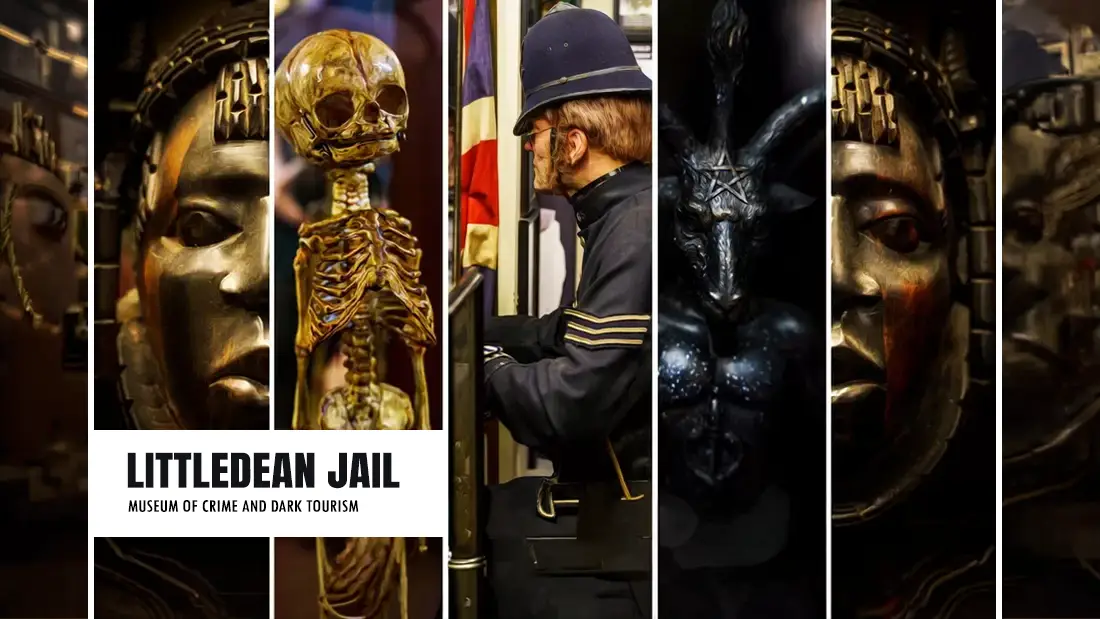
The destination of today’s journey is a highly unusual attraction and certainly not one for everyone. The former English prison of Littledean Jail, now home to the Crime Museum, is described by its owners as a place where good and evil collide. In my opinion, Littledean Jail is where an enormous collection of information about just how cruel people can be meets kitsch and an extraordinary cabinet of curiosities. Strangely enough, this unlikely combination has its charm and makes the museum genuinely fascinating. In the article below, I’ll take you on a tour of this remarkable place.
One of the World’s Darkest Tourist Attractions
Places like Littledean Jail are few and far between, which is precisely why it’s worth knowing about. This former prison in the village of Littledean is eerie, unsettling and intriguing enough to have earned a place on the famous Dark Tourist list.
The list was created by a team of documentary filmmakers from New Zealand, who later produced a documentary series in which journalist David Farrier travels the globe, visiting some of the darkest and most disturbing tourist destinations across every continent.
Among the places featured on the Dark Tourist list are:
- In Latin America, visitors can tour the former home of notorious drug lord Pablo Escobar and even speak to one of his former hired assassins. There are also opportunities to witness exorcisms and even take part in an illegal border crossing into the United States.
- Japan attracts travellers seeking darker experiences as well. The abandoned town of Tomioka, left deserted after the Fukushima nuclear disaster, is one of the featured locations. Another infamous destination is Aokigahara Forest, often referred to as Japan’s “suicide forest”.
- The United States offers several chilling attractions. One of the most unusual is the so-called Vampire House in New Orleans, inhabited by people who genuinely believe themselves to be real vampires. Visitors can also explore the former home of Charles Manson and even meet some of his old associates. In Tennessee, meanwhile, stands what many claim to be the world’s most terrifying haunted house.
- In Kazakhstan, dark tourism focuses on Semipalatinsk, the former Soviet nuclear weapons testing ground.
- Europe is filled with places whose tragic and disturbing histories could fill an endless list. Among them are Littledean Jail Crime Museum in England and the abandoned ghost town of Famagusta in Cyprus.
- Representing Asia is Cambodia, where visitors can learn about the sites connected with the atrocities committed by the Khmer Rouge.
- Africa also has much to offer those interested in humanity’s darker side, including voodoo rituals, the bloody Kokou ceremonies held on Lake Nokoué and several South African cities considered among the most dangerous in the world.
Dark tourism continues to grow in popularity. Although I, personally, struggle to understand the desire to visit places where unimaginable tragedies took place, more and more travellers are seeking these haunting destinations every year.
Littledean Jail – The History of the Former Prison and Crime Museum
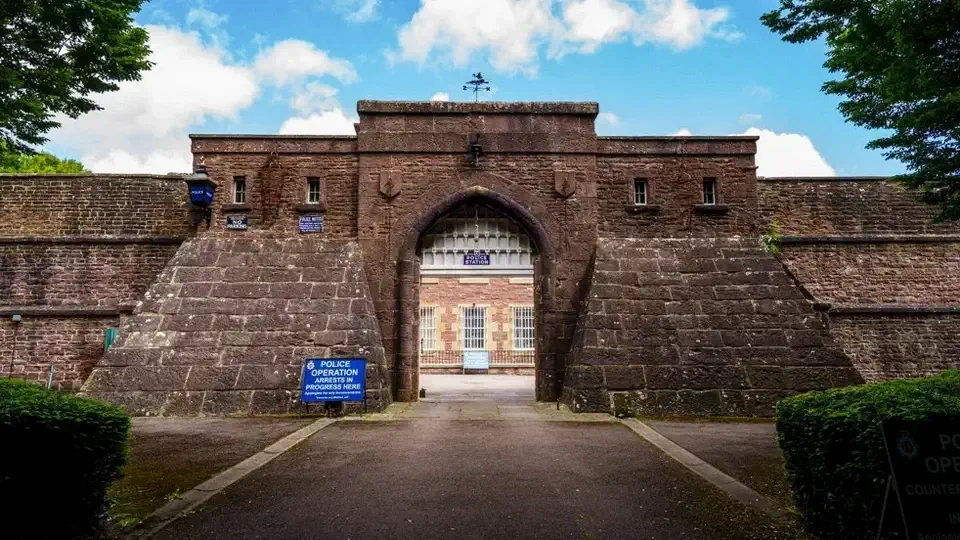
Construction of the prison began in 1788 in response to the rapidly increasing crime rate across western England. The chosen location was the small village of Littledean, situated on the edge of the beautiful Royal Forest of Dean.
The prison was designed by Sir George Onesiphorus Paul, one of Britain’s leading prison reformers and an architect responsible for numerous innovative correctional facilities. His vision was to create a modern prison that reflected new ideas about incarceration while providing greater safety for both staff and inmates.
After numerous setbacks, construction was finally completed in 1791. From the very beginning, Littledean Jail became a model for many other prisons. Exact copies of the building were later constructed in London and many other English cities. Eventually, the design was even replicated in the United States and elsewhere around the world.
Today, however, admiration has largely given way to unease. The cold stone walls, imposing entrance gate, guard towers, gallows and cramped prison cells make it all too easy to imagine what life behind these walls must once have been like.
Visiting Littledean Jail
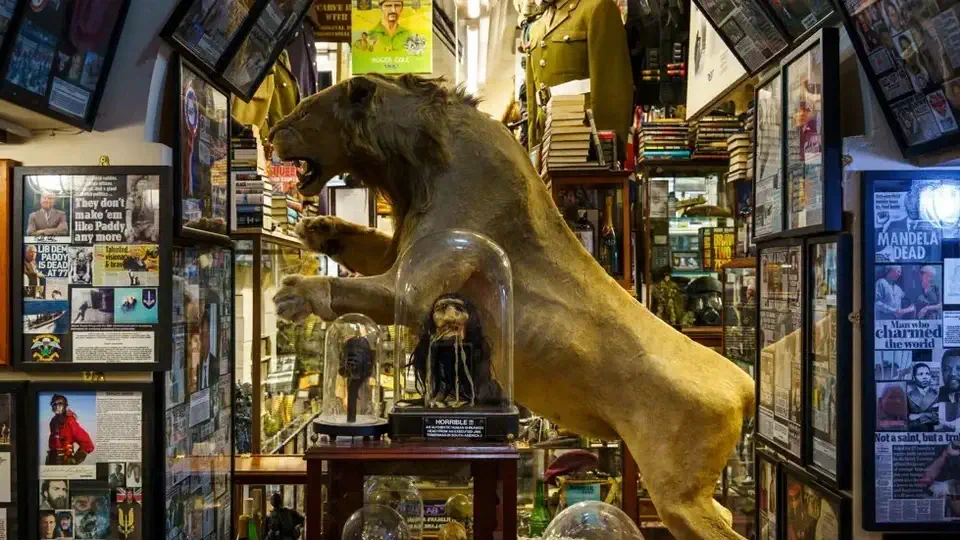
Littledean Jail is widely regarded as one of the most haunted buildings in the United Kingdom. We didn’t encounter any ghosts during our visit—although perhaps we simply weren’t paying enough attention. You’ll find plenty of accounts from visitors who claim to have experienced paranormal activity here. Whether you believe those stories or not, there’s no denying that the atmosphere inside the prison fuels the imagination and makes such tales seem almost believable.
Within the walls of this former prison, now transformed into a museum, you’ll discover countless exhibits exploring crime, hatred, obsession and the darker side of human nature. The displays focus on people whose lives were consumed by violence, cruelty or madness, turning them into some of history’s most notorious criminals.
Almost every wall and even many of the ceilings are covered with newspaper clippings, photographs, and interviews. The collection doesn’t only feature actors and musicians, but also infamous murderers, gangsters and mentally disturbed individuals whose names became known for all the wrong reasons. Every available corner has been filled with objects connected to crime, punishment, and the justice system. You’ll find historic uniforms, weapons, police equipment and countless smaller artefacts linked to the museum’s main themes.
As you would expect in a former prison, the majority of the building consists of cells. Each one has been transformed into a separate exhibition, usually dedicated to a particular criminal, historical event or notorious crime.
Crimes Against Humanity and Genocide
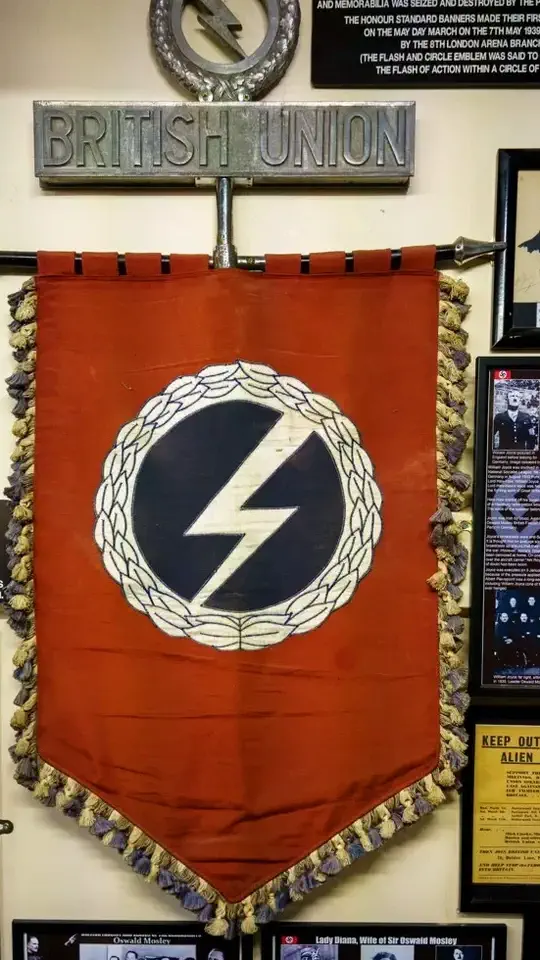
The museum’s largest section focuses on genocide and crimes against humanity. Unsurprisingly, the highest amount of space is devoted to Nazi and Communist atrocities committed during the Second World War and its aftermath.
The exhibitions include material from concentration camps, Soviet labour camps and prisons. Many of the photographs, documents and personal accounts are deeply moving and, at times, genuinely disturbing.
Another large section examines the brutality carried out by ISIS and other terrorist organisations. Testimonies from survivors, together with documentary footage and photographs of the atrocities they endured, leave a lasting impression that is difficult to forget.
The museum also contains a surprisingly extensive collection dedicated to racism and social division. Some events described took place only a few decades ago, making them all the more shocking.
Before stepping into this world of horror and human cruelty, it’s worth asking yourself whether you truly want to see such material. Personally, I chose to skip the museum’s most graphic exhibits. I didn’t need explicit images of human brutality, violence, and hatred to remind me that evil exists.
Magic and Occultism at Littledean Jail
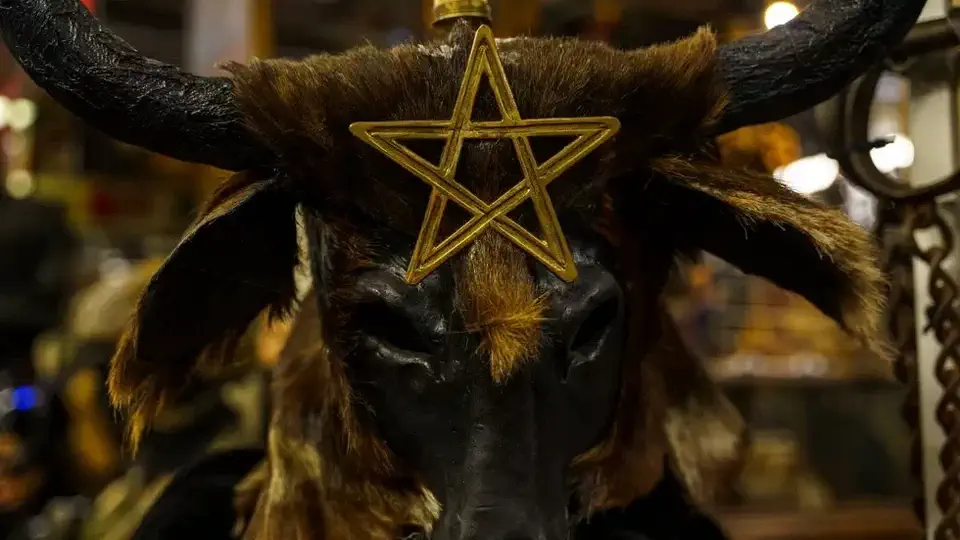
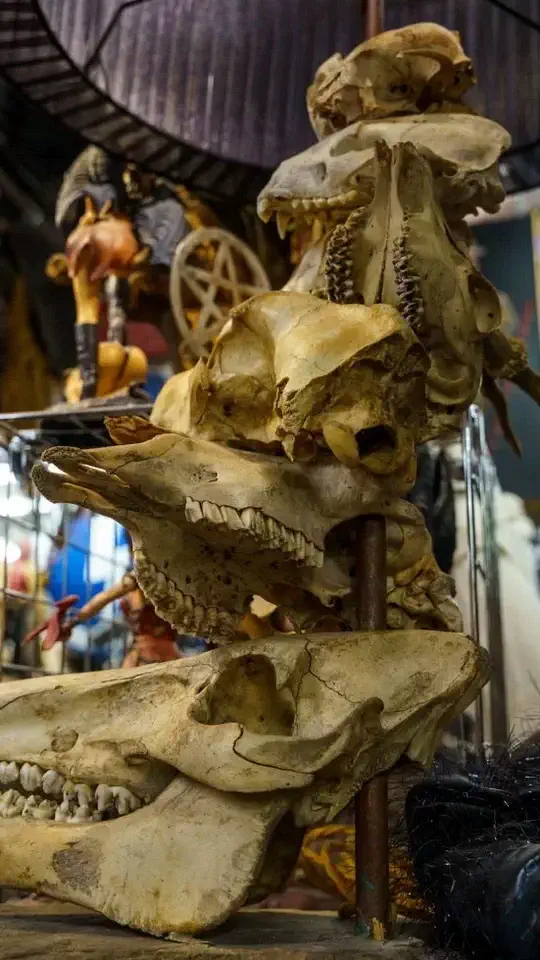
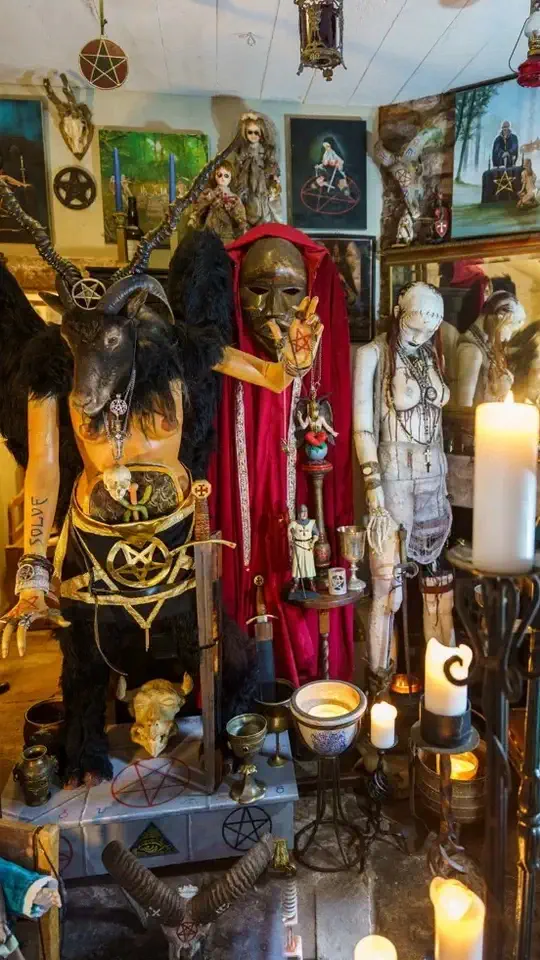
This is probably one of the museum’s most fascinating sections, although it is also the most eccentric and, at times, rather theatrical. Animal skulls decorated with occult symbols, mannequins dressed as devil worshippers and various ritual props are more likely to raise a smile than genuine fear. However, the historical documents displayed alongside them are an entirely different story.
The museum houses court records, police reports and historical accounts relating to alleged witchcraft, occult practices and followers of dark religions. Among the exhibits are stories of ritual murders and individuals whose lives became consumed by esoteric beliefs and sinister ceremonies. Interestingly, many of the investigations involved members of the English aristocracy. Yet, as was so often the case in those days, it was rarely the wealthy who paid the price. Instead, shopkeepers, milkmen, hunters, and other ordinary people frequently found themselves accused of terrible crimes and sentenced to the gallows.
One particularly intriguing figure was a Victorian-era performer known simply as GOV, who claimed to be both a magician and Satan’s favourite servant. He was eventually arrested and imprisoned on charges relating to witchcraft and bloody rituals.
According to prison officers’ reports, strange objects and mysterious substances repeatedly appeared inside his cell despite there being no obvious way for them to get there.
On one occasion, GOV reportedly spent the entire night shouting and chanting in several voices. The guards became convinced that multiple prisoners were locked inside the cell, yet every inspection revealed only one man.
The following morning, during a search of the cell, officers allegedly discovered animal bones and a human skull covered in fresh blood that did not belong to the prisoner himself.
Stories like these appear throughout the museum. Whether they’re entirely factual or have grown with retelling is impossible to say, but many originate from official witness statements recorded at the time, making them all the more intriguing.
Film, Music, and Celebrity Scandals
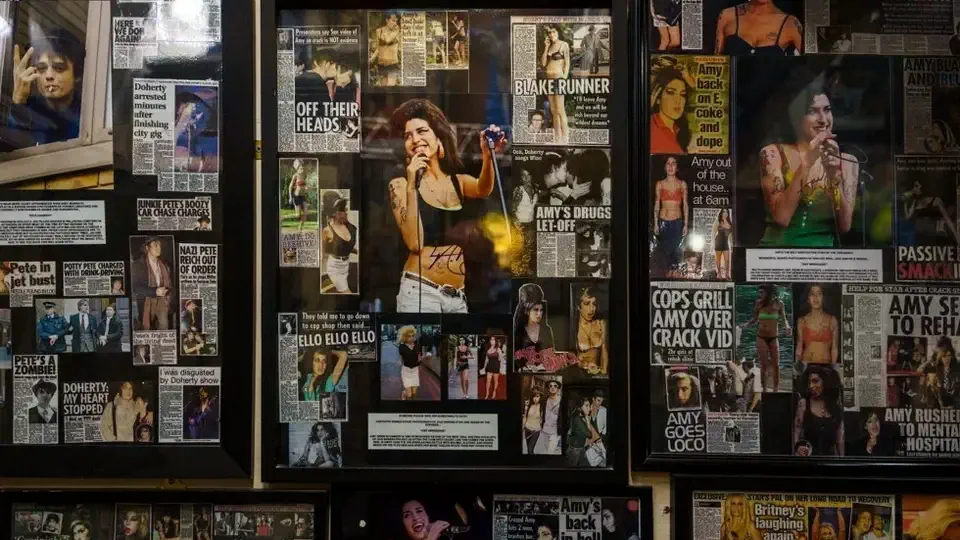
A surprisingly large part of Littledean Jail is devoted to the world of entertainment. Unsurprisingly, the exhibitions rarely focus on the achievements of actors, musicians, or celebrities. Instead, they concentrate on scandals, controversies, addictions, criminal offences and spectacular personal failures.
If you look hard enough, you’ll probably find something negative about almost every famous person.
One exhibition that particularly caught my attention was devoted to every actor who has portrayed James Bond. I was disappointed to read old newspaper stories describing inappropriate behaviour, controversial remarks and poor personal decisions involving two of my favourite Bond actors—Roger Moore and Sean Connery. Some things, perhaps, are better left unknown. What do you think?
Thousands of photographs showing famous people drunk, half-naked or behaving outrageously create an unsettling contrast with the polished public image they carefully present to the world. In many ways, that collection is almost as disturbing as the museum’s displays documenting horrific road accidents.
The exhibition serves as a reminder that the glamorous world we see on cinema screens and television is often little more than carefully constructed illusion.
Littledean Jail also houses an enormous collection of film and music memorabilia. Figures of famous characters stand alongside vintage posters, promotional items and countless collectibles covering every available surface. Anyone passionate about collecting pop culture memorabilia could easily spend hours exploring this section alone.
A Cabinet of Curiosities and Nature’s Oddities
The final exhibition at Littledean Jail that deserves a mention is its extraordinary collection of curiosities and natural anomalies. Here you’ll find the mummified remains of animals born with a wide variety of physical deformities. Hidden among the museum’s overcrowded displays, I came across a two-faced cat, two goats sharing a single head, a two-headed calf, conjoined rats and even a dried “mermaid”, allegedly recovered from Bristol Harbour.
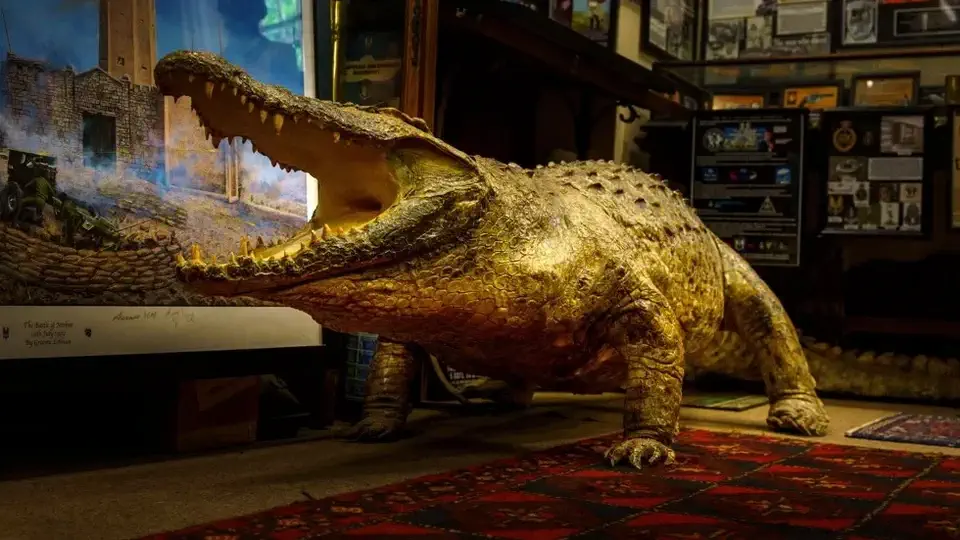
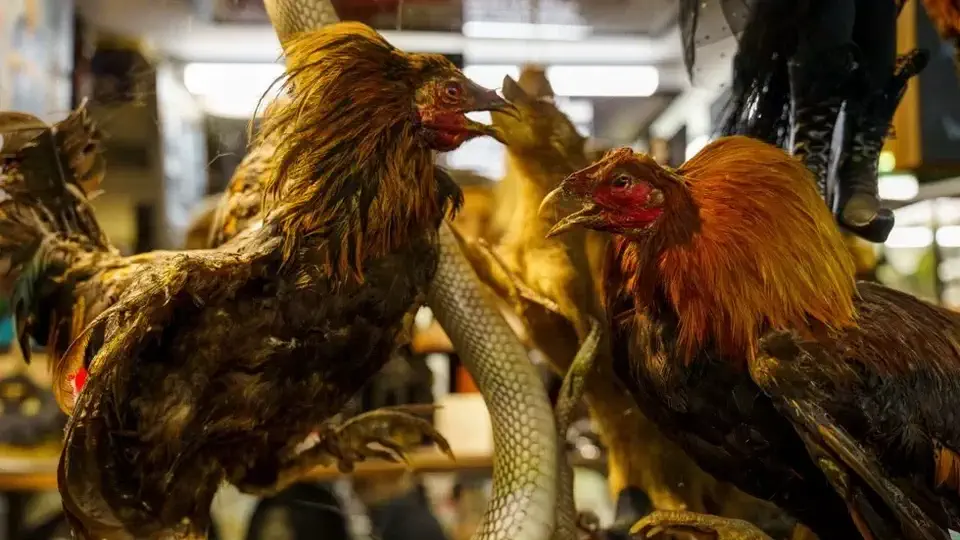
And that’s only the beginning. The collection also includes preserved shrunken heads, stuffed lions, tigers, and crocodiles. In one large glass jar sits an object that bears an uncanny resemblance to an enormous human penis. According to the label, it is supposedly the preserved genitalia of the infamous Russian mystic Grigori Rasputin.
Dusty shelves are lined with jars filled with preserved animals and anatomical specimens suspended in liquid. Some appear perfectly ordinary, while others display severe deformities. Scattered among these unsettling exhibits are old books and publications describing many other bizarre creations of nature.
The sheer number of artefacts is overwhelming. In truth, the museum’s owners have made little attempt to organise the collection in any logical way. Exhibits seem to have been placed wherever there was space, often with no obvious connection between them. The result is a chaotic yet strangely fascinating atmosphere, as though history’s darkest relics had been gathered in an enormous attic filled with forgotten treasures.
Personally, I enjoy places with this kind of character. Old, dusty curiosities have always fascinated me, which is why I came away with a positive impression of Littledean Jail. That said, I fully appreciate that this unusual museum won’t appeal to everyone.
Practical Information
- Littledean Jail is located in the village of Littledean at: Littledean Jail, Church St, Littledean, Nr. Cinderford, GL14 3NL.
- The museum is open from April to October, daily between 10:00 am and 5:00 pm.
- Admission Prices
- Adults: £10
- Senior citizens: £9
- Children over 3 years old: £9 (although, personally, I wouldn’t recommend bringing young children here).
- Visitors aged over 100: Free of charge! 😊
Littledean Jail – Interesting Facts
- When it opened in 1791, Littledean Jail was considered one of the most advanced prisons in the world.
- The prison cost £1,650 to build.
- The museum’s central theme explores crime, punishment and the darker side of human nature.
- The largest exhibitions focus on Nazi war crimes, terrorism, infamous criminals and the excesses of celebrities.
- During its most active years, the museum acquired numerous artefacts from military surplus sales. As a result, visitors can see a substantial collection of British Army uniforms alongside memorabilia connected with the SAS and military operations carried out around the world.
- Littledean Jail also houses an impressive collection of taxidermy. The most striking exhibits include a gigantic white tiger and an equally enormous Nile crocodile.
- The museum’s owner personally met and interviewed several notorious prisoners held in prisons around the world, including Charles Bronson and the infamous Kray twins.
- Visitors can see dozens of authentic autographs signed by murderers, rapists, and other notorious criminals.
- Among the more unusual exhibits is a collection of Victorian vibrators. These were not intended as household devices but were used as medical instruments. During the Victorian era, doctors believed that stimulating female patients could cure ailments such as depression and the condition then known as “hysteria”. Looking back today, those treatments seem deeply unsettling, particularly as they were often arranged by the women’s own husbands or families.
- The museum is also home to one of the largest collections of police memorabilia in England, including uniforms, badges, weapons and countless other historical items.
- There is a sizeable collection of banned toys and games containing themes of violence, sex, and other controversial material.
- One of the museum’s most famous artefacts is the execution rope prepared for John Babbacombe Lee, often remembered as “the man they couldn’t hang”. Several attempts were made to execute him, but the gallows repeatedly malfunctioned. Eventually, his death sentence was commuted to life imprisonment, and his extraordinary story became part of British folklore.
- Remarkably, the museum’s owners still live within the prison walls, making them the only people in England who permanently reside inside a former prison.