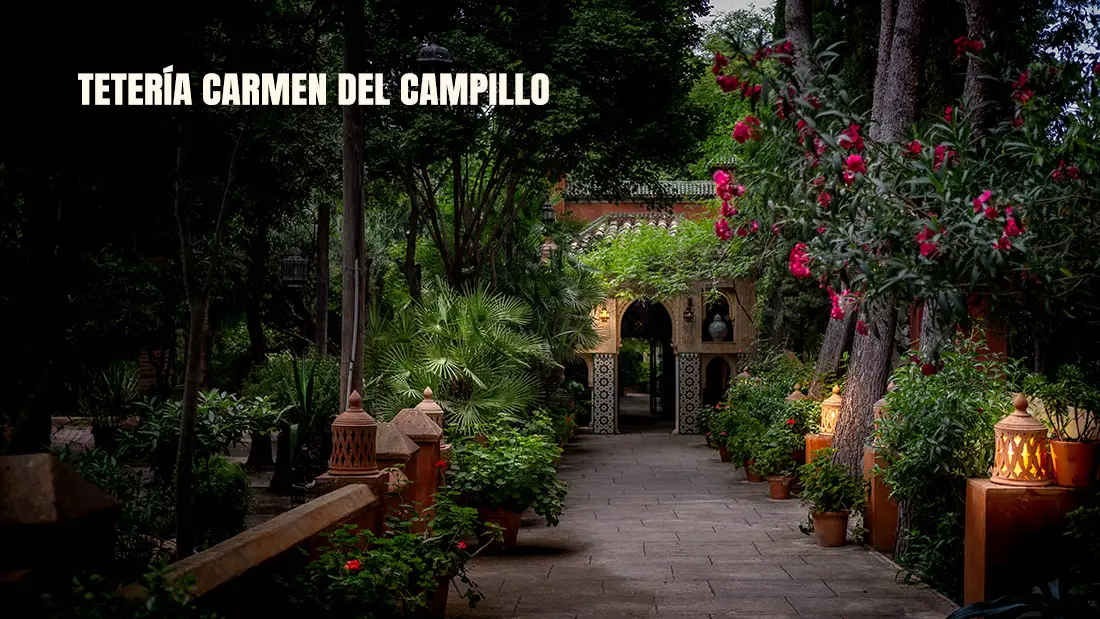
The Costa Blanca is associated primarily with beaches, turquoise waters and seaside resorts. However, you only need to drive a few dozen kilometres inland to discover places that look as though they have been transported here directly from Morocco. One of them is Tetería Carmen del Campillo, a Moorish-style teahouse hidden between Crevillent and Albatera.
This is not an ordinary café where you simply stop for a quick cup of tea. Carmen del Campillo feels like a combination of an Oriental palace, a mysterious garden and scenery from One Thousand and One Nights. You can wander among palm trees, relax beside fountains, explore richly decorated rooms and, of course, enjoy a cup of aromatic tea. If you fancy something wholly different from yet another beach, seaside promenade or crowded restaurant during your holiday on the Costa Blanca, this place is certainly worth considering.
Where is Tetería Carmen del Campillo?
The teahouse is located within the municipality of Crevillent in Alicante Province, close to the small village of Barranc de Sant Gaietà. It lies between Crevillent and Albatera, in a peaceful, partly agricultural area away from the largest seaside resorts. The address most commonly provided by the owners and tourist websites is:
Tetería Carmen del Campillo – N-340, 03330 Barranc de Sant Gaietà, Crevillent, Alicante
Travelling by car is by far the most convenient option. The journey from Elche takes around 20–30 minutes, while the drive from Alicante takes approximately 35–45 minutes, depending on traffic. If you are coming from Torrevieja, allow around 40–50 minutes for the journey.
The final section of the route follows quieter roads where the signposting is not always particularly clear. It is best to enter the full name of the teahouse into your satnav rather than relying solely on the address. There is a large car park beside the property, so finding somewhere to leave your vehicle is not usually a problem.
My first impression – I suddenly found myself in another world
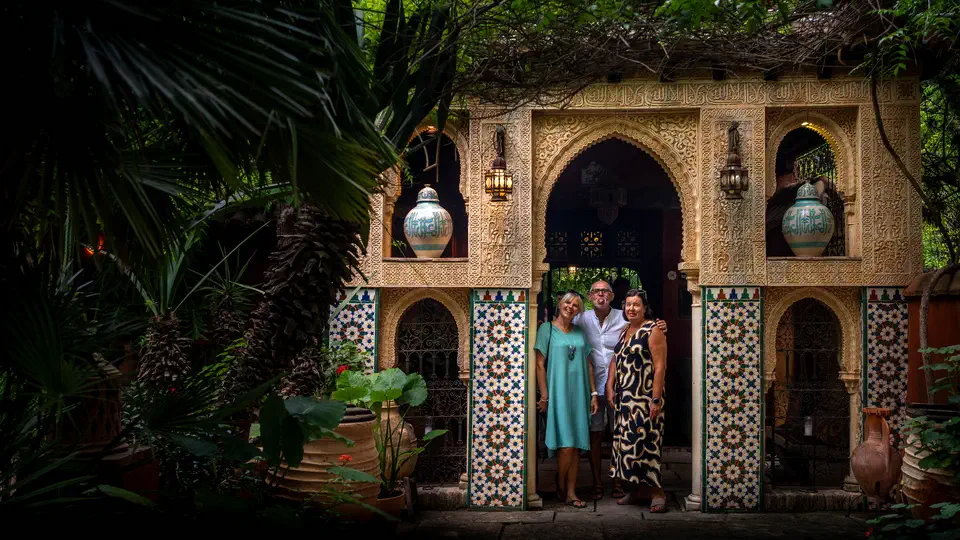
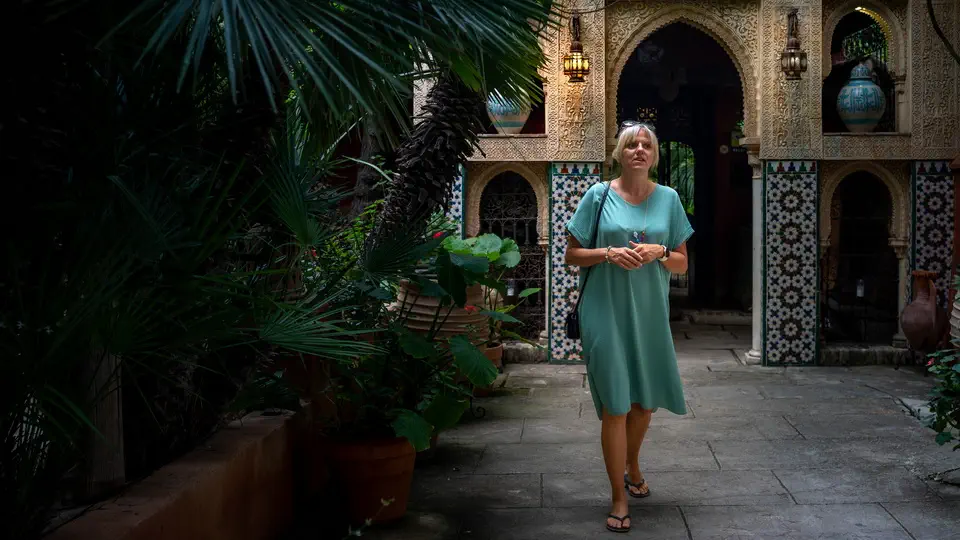
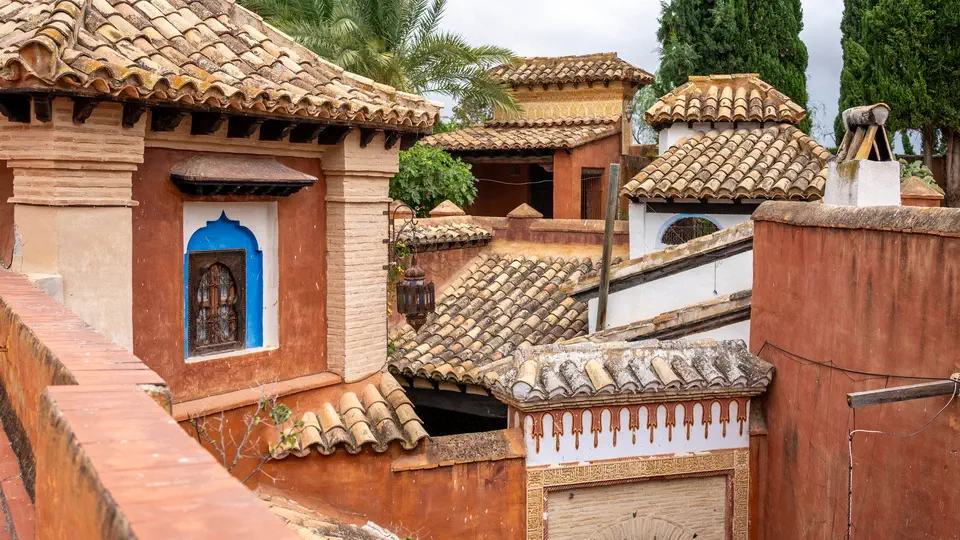
As soon as I reached the entrance, I could tell that this was no ordinary café. Behind the walls lies a small Oriental world filled with narrow passageways, hidden corners, terraces and plant-covered courtyards. From the outside, the property gives little indication of everything concealed within. It is only after passing through the gate that you begin to notice the arches, mosaics, ceramic tiles, heavy wooden doors, colourful cushions and low tables.
The air is filled with the fragrance of herbs, incense and sweet pastries. Somewhere in the background, water trickles gently while calm Oriental music plays through the speakers.
What I particularly liked about Carmen del Campillo was the freedom to explore it. You do not need to sit down at the first available table. It is worth wandering through the gardens, looking inside the different rooms and finding a place where you genuinely feel comfortable.
You can choose from open courtyards, intimate rooms, terraces, gazebos, and tables hidden among the plants. Some areas are bright and spacious, while others feel mysterious even in the middle of the day. Each part of the property has been decorated slightly differently, but they are all united by the same Moorish style.
Believe it or not, I was genuinely lost for words at first, much to the amusement of Magda, who had already visited the place before. The gardens and buildings make an enormous impression, while the adorable kittens running around and the proud, noisy peacocks only add to the charm.
A Moorish house surrounded by palm trees and gardens
Carmen del Campillo is often described as a casa morisca, or Moorish house. However, it should not be treated as an authentic medieval palace or a historical monument dating from the period of Arab rule on the Iberian Peninsula. It is a modern space inspired by the architecture and culture of Muslim Spain.
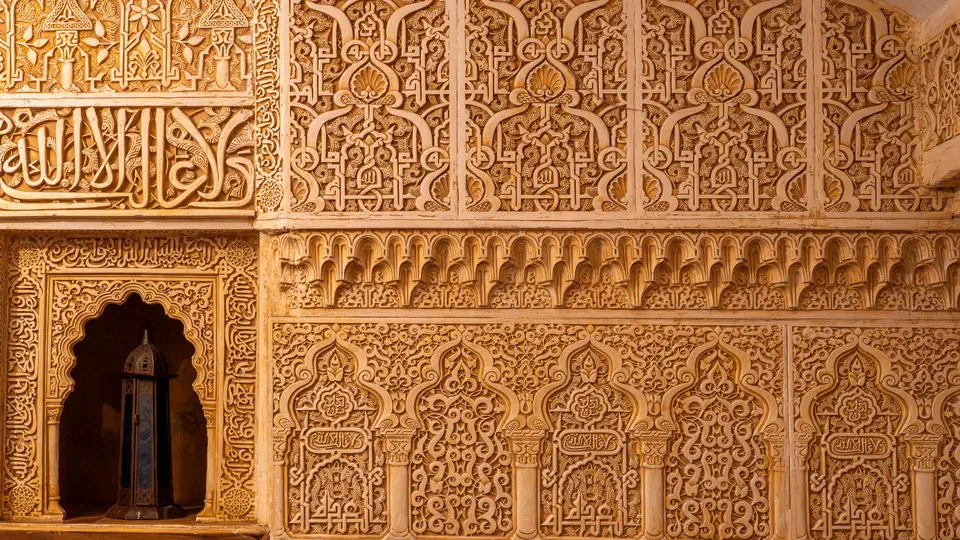
Despite this, the overall effect is remarkably convincing. The character of the place is created by ceramic mosaics, decorative lamps, fountains, carved furniture, horseshoe arches and an abundance of fabrics and ornamental objects. Some rooms resemble the interiors of a Moroccan riad, while others may remind you of the great palaces of Andalusia.
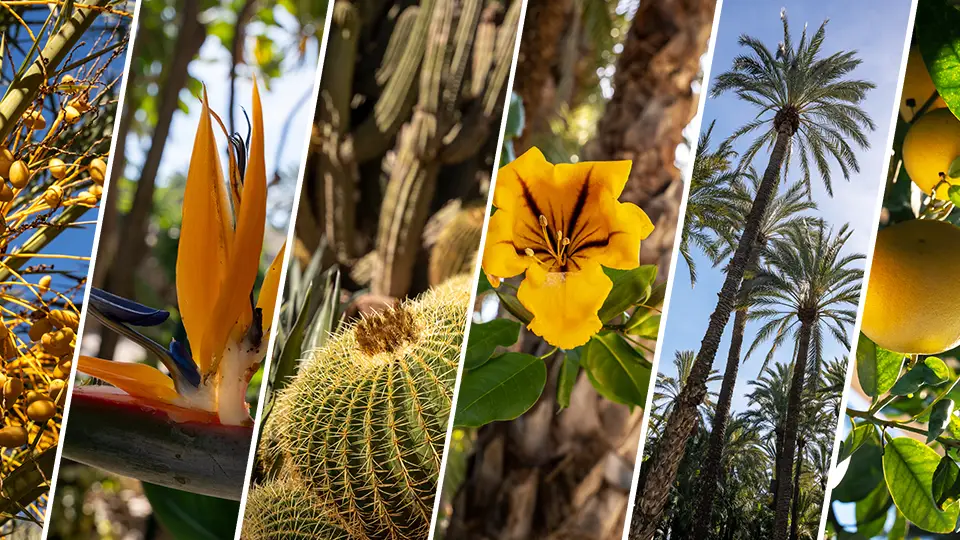
Its location close to Elche strengthens the teahouse’s Oriental character even further. In this part of Alicante Province, palm trees are not exotic decorations placed in pots but a natural feature of the landscape. The finest example can be seen in the nearby Palmeral of Elche, whose origins are linked, among other things, to the development of Arab irrigation systems.
The gardens of Carmen del Campillo
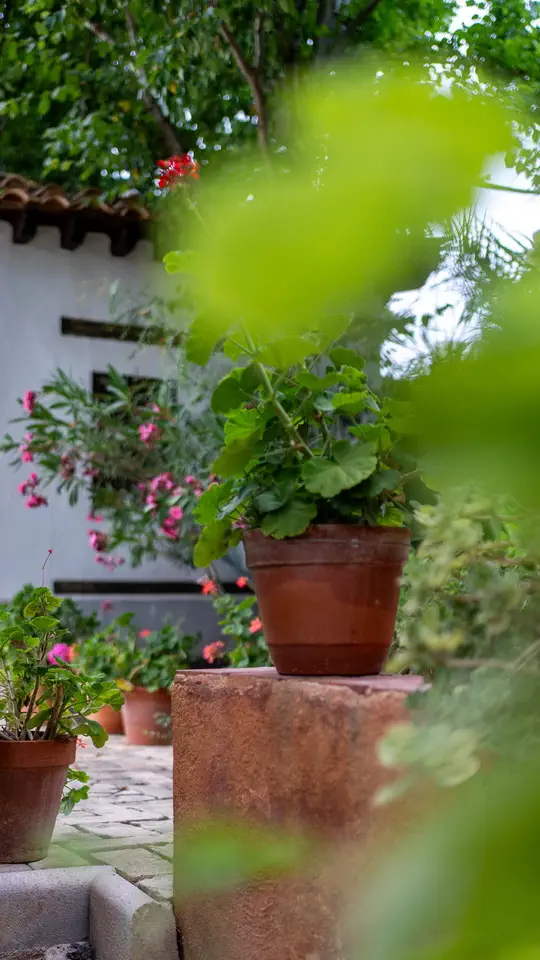
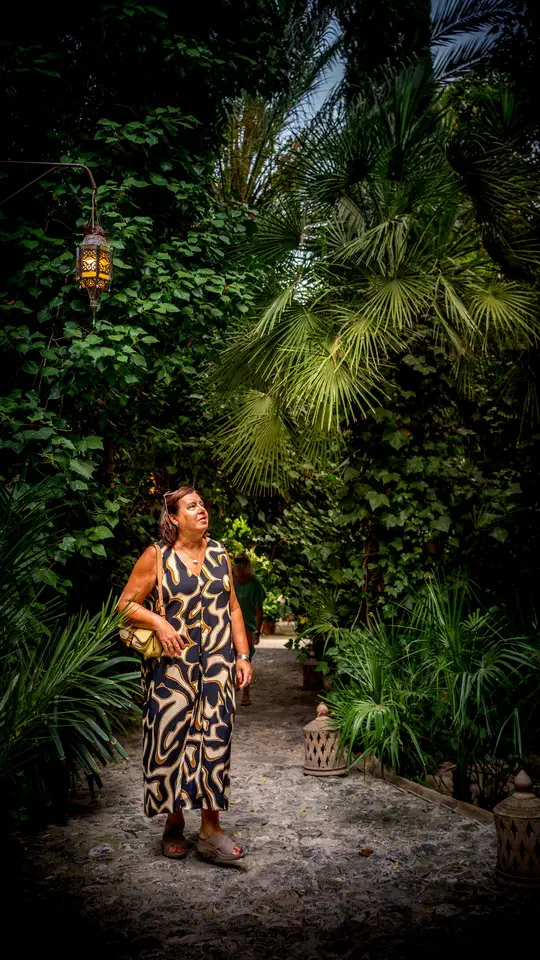
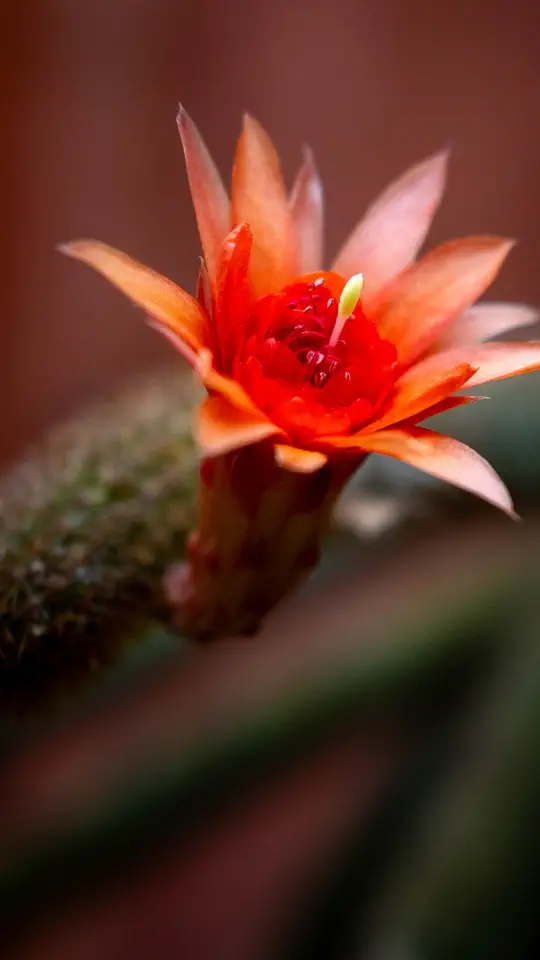
In many cafés, the garden is merely an attractive addition. Here, I had the impression that it was the most important part of the entire place. Paths lead between palm trees, citrus trees, shrubs, flowers and small pools of water. Every so often, another little square, fountain, or table hidden in the shade appears before you. It is worth walking slowly, as some of the most beautiful corners are located away from the main paths.
The plants are not perfectly trimmed everywhere, and the decorations do not always look as though they have just been taken out of a box. In my opinion, that is precisely what gives this place its character. It does not resemble a sterile hotel garden, but rather a private estate that has grown and evolved over many years.
If you enjoy photography, allow yourself plenty of time. The colourful mosaics, decorative lamps, reflections in the water and sunlight filtering through the leaves create wonderfully photogenic scenes. However, it is worth remembering that this is also a place where people come to relax, so I would avoid disturbing other guests while searching for the perfect photograph.
What kind of tea can you order?
The drinks menu is extensive and certainly not limited to traditional black tea. It includes blends with mint, cinnamon, jasmine, fruit, vanilla, spices and aromatic herbs. Traditional sweet mint tea suits the atmosphere of the place particularly well. It is strong, fragrant and usually very sweet. If you normally avoid sugar, it is worth asking whether a less sweet version is available or choosing a different blend.
Coffee, soft drinks and milkshakes are also available. The admission charge typically includes one drink, while additional orders must be paid for separately. Small Arabic pastries and sweets are sold on the premises as well.
However, I would not arrive expecting a full meal. Carmen del Campillo is a teahouse, not a restaurant. Do not come here starving and hope for a multi-course lunch or dinner. It is best to eat beforehand and treat the Oriental sweets as an accompaniment to your tea. Alcohol is not served here, either.
As for our teas, I ordered one called The Warm Taste of the Orient, while Magda picked Desert Wind. Both were tasty and sweet. The friends who joined us selected fruit teas and were equally pleased with their choices. There are also milk-based options and teas served with various additions, including nuts, almonds, and chocolate.
My suggestion is not to spend too long thinking about it. Simply choose the drink whose name appeals to you most. If you discover a tea you particularly enjoy, be sure to let us know.
The best time to visit
If you can choose what time to arrive, I recommend getting there roughly an hour before sunset. This allows you to see the gardens in daylight and then watch as the entire place gradually changes.
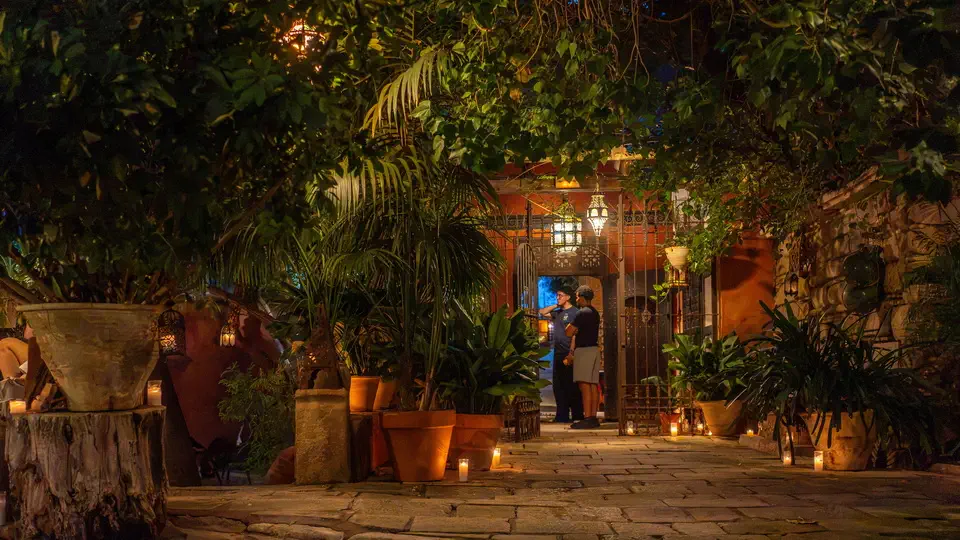
After dark, lanterns, candles and small lights hidden among the plants are switched on. Colourful reflections shimmer in the fountains, while the passageways and courtyards begin to look even more mysterious. Carmen del Campillo is at its most impressive in the evening.
During summer, it can become extremely hot in the middle of the day, so late afternoon is also much more pleasant in terms of temperature. In winter, it is worth bringing a warmer jumper. The Costa Blanca may be associated with sunshine, but temperatures can fall surprisingly quickly after sunset, especially away from the coast.
I would allow around two or three hours for a relaxed visit. You can, of course, drink your tea much more quickly, but you would miss much of the atmosphere that makes the journey here worthwhile.
Opening hours and admission price
Carmen del Campillo’s opening hours vary depending on the season. According to the information currently available, the teahouse usually opens in the afternoon at around 4.00 pm, although during the summer months it may open later. On Fridays and Saturdays, it sometimes remains open longer than on other days. Monday is often its day off.
The most recently published admission price was approximately €8, which included one non-alcoholic drink. However, prices and entry conditions may change. Before setting off, I recommend checking the current opening hours on the teahouse’s social media accounts or contacting it by telephone. The number provided by the venue is +34 613 33 49 46.
I would not plan the entire day around old opening hours found on a random blog. In Spain, small privately owned attractions sometimes change their schedules depending on the season, weather, or number of visitors.
Do you need to reserve a table?
Individual visitors do not normally need to make a reservation. Larger groups are the main exception. However, weekend evenings can become fairly busy, so it is worth arriving a little earlier and taking your time to find a suitable place.
Not all the tables and seating areas are equally comfortable. The low seats and cushions look wonderful in photographs, but after an hour they may become uncomfortable for anyone with knee or back problems. Fortunately, more conventional chairs are also available.
Parts of the property have stone surfaces, steps and uneven paths. Visitors with limited mobility should bear this in mind. Exploring every corner with a pushchair may also require a little patience.
What can you see near Carmen del Campillo?
A visit to the teahouse is best combined with sightseeing in Elche and the surrounding area. This makes it possible to plan a full-day trip ending with an evening cup of tea in an Oriental garden. The nearest places I particularly recommend are:
- El Fondo Natural Park – an extensive wetland area between Elche and Crevillent. It is an excellent destination for nature lovers, walkers and birdwatchers, with opportunities to see species including flamingos.
- The Palmeral of Elche – the largest concentration of palm trees in Europe and one of Spain’s most important historic agricultural landscapes. A walk among the palms provides the perfect introduction to the Oriental atmosphere of the teahouse later in the day.
- Pantano de Elche – a historic dam on the River Vinalopó and an interesting destination for a walk. It is at its most impressive after heavy rainfall, when larger quantities of water flow over the structure.
- The Vinalopó Valley – the countryside around Elche offers walking trails, rocky landscapes, historic irrigation systems and views that are completely different from the coastal areas of the Costa Blanca.
- El Palmeral Park in Alicante – a green park filled with palm trees, waterfalls and walking paths. It makes a pleasant stop if you are travelling to Carmen del Campillo from Alicante.
If you are travelling with children, you could also consider visiting Rio Safari Elche and its Splash Park. However, this attraction can take up a large part of the day, so I would leave the teahouse until the evening.
If you are staying closer to the coast, you may also find our guide to the most interesting attractions on the Costa Blanca useful. It will help you combine a visit to the teahouse with a longer route through Alicante Province.
If I were planning a day in the immediate area, I would begin in Elche. First, I would take a walk through the city centre and the gardens belonging to the Palmeral of Elche. I would then drive to Pantano de Elche or El Fondo Natural Park.
In the afternoon, it would be worth having lunch in Elche or Crevillent. I would not postpone the meal until arriving at Carmen del Campillo, as the teahouse mainly serves drinks and sweets.
I would arrive at the teahouse around an hour before sunset. First, I would explore the gardens and interiors, then choose a table and end the evening with a relaxing cup of mint tea. This plan allows you to experience the property both during the day and after dark.
Practical advice before your visit
Before arriving, it is worth remembering a few things:
- Check the current opening hours immediately before setting off, as the timetable changes depending on the season.
- Travel by car and use the car park beside the property.
- Plan your visit for shortly before sunset so that you can see the gardens both in daylight and after the lanterns have been lit.
- Do not arrive starving, as the teahouse does not operate as a full restaurant.
- Bring an extra layer if you are visiting in autumn, winter or early spring.
- Wear comfortable shoes. There are steps and uneven surfaces throughout the gardens.
- Allow at least two hours for your visit.
- At weekends, arrive early before the largest number of guests appears.
- Respect the peaceful character of the property and the privacy of people relaxing in the gardens.
- Do not assume that every part of the property can be easily accessed with a pushchair or wheelchair.
Is Tetería Carmen del Campillo worth visiting?
Finally, let me answer a question I am frequently asked: is Tetería Carmen del Campillo worth visiting?
In my opinion, it certainly is, especially if you have grown tired of similar-looking seaside promenades and are searching for something unusual. Carmen del Campillo is neither a historic palace nor a museum dedicated to Arab culture. Above all, it offers a carefully created atmosphere in which light, plants, fragrances, music, and architecture all play an important role.
You do not come here solely for the tea. The admission price also gives you the opportunity to wander through the gardens and spend an evening in surroundings you would hardly expect to find between Elche and Crevillent.
The best way to experience this place is without rushing. Put your phone away, find a quiet table and allow the evening to unfold at its pace. The Costa Blanca has no shortage of spectacular attractions, but Carmen del Campillo stands out for a different reason: it allows you to forget, for a while, that busy beaches and crowded resorts stretch along the coast just a few dozen kilometres away.
Tetería Carmen del Campillo interesting facts
- The Tetería Carmen del Campillo wasn’t created as a typical teahouse. Initially, it was a private home and family estate, where friends were primarily invited. Only growing interest in this extraordinary place led to it being opened to the public.
- The Moorish house was designed by Harun, a Muslim originally from Granada. In the 1970s, he moved with his family to the Crevillent area. He dreamed of creating a property reminiscent of traditional Granadian houses surrounded by gardens.
- The name “Carmen” doesn’t come from the owner’s name. In Granada, the word “carmen” refers to a traditional estate consisting of a house, garden, and living space. “Del Campillo,” however, refers to the neighborhood in which the building was built.
- The Carmen del Campillo was built gradually over several decades. It wasn’t built according to a single, precisely drawn plan. Additional rooms, staircases, passageways, courtyards, and nooks were added as time and the family’s financial resources permitted.
- Some rooms were created by utilizing natural recesses and cave-like spaces. The owners gradually selected materials, expanded the interiors, and then adorned them with arches, ceramics, fabrics, and Moorish-style decorations.
- The Haruna family still occupies a private section of the estate. Visitors are free to wander the accessible gardens and rooms, but not the entire complex is a teahouse. Some sections remain the residents’ home.
- The Tetería Carmen del Campillo is located between Crevillent and Albatera. It lies away from the city center, nestled among fields, olive groves, and agricultural land. Access via a narrow road can give the impression, on first visits, that navigation leads nowhere.
- Behind the high wall lies an entirely different world. From the outside, the estate appears rather unassuming, but once through the gate, palm trees, fountains, mosaics, colorful fabrics, decorative lamps, and numerous courtyards reminiscent of Moroccan riads emerge.
- The teahouse is not a medieval monument from the Moorish era. Although it is called a Moorish house, its current form is contemporary. The architecture, furnishings, and gardens are a tribute to the Muslim culture of Spain, not a preserved historical residence.
- A visit is not limited to sitting at a single table. Guests can stroll through the gardens, explore the accessible rooms, and choose their relaxation spot. Guests can enjoy both quiet interiors and terraces, courtyards, and tables nestled among the plants.
- Each part of the property has a slightly different look. Ceramic tiles and fountains dominate one area, while heavy rugs, wooden furniture, or colorful cushions dominate another. The lack of a uniform floor plan is part of the property’s charm and encourages exploration.
- The most spectacular transformation occurs after sunset. Candles and oriental lanterns are lit in the gardens, reflecting the light from the fountains and mosaics. For this reason, the best time to visit is late afternoon, which allows for a glimpse of the house’s daytime and nighttime appearances.
- The entrance fee includes a tour of the grounds and a first drink. According to visitor reports from 2026, the cost was around €8. Guests can usually choose from tea, coffee, or a soft drink. However, prices can change, so it’s worth checking before visiting. Current visitor reports
- The menu offers dozens of aromatic infusions. In addition to traditional mint tea, there are fruit, floral, herbal, and milk teas, as well as those seasoned with cinnamon, vanilla, and other spices. Coffees, cocktails, and cold drinks are also available.
- Carmen del Campillo is not your typical restaurant. Arabic pastries, baklava, and other small sweets are available on-site, but don’t expect a full dinner. It’s best to eat something in Crevillent or Elche beforehand, and treat the visit as an afternoon snack.
- The teahouse doesn’t serve alcohol. The atmosphere of the place is based on a quiet retreat, tea, coffee, and soft drinks. This creates an atmosphere more reminiscent of a tranquil oriental garden than a noisy bar or club open late into the night.
- Much of the furnishings are items collected by the owners over many years. Lamps, ceramics, rugs, wooden doors, furniture, and handicrafts don’t look like a set of decorations bought in a single day. It’s the accumulation of diverse elements that creates the unique character of the interiors.
- The property is surrounded by lush vegetation, despite being located in the arid region of Alicante province. Palm trees, flowers, shrubs, fruit trees, and small ponds create the impression of a green oasis. The contrast with the surrounding agricultural land is especially noticeable during the summer months.
- The place became popular mainly thanks to recommendations from visitors. Over the years, its reputation grew through word of mouth, and later through travel blogs.
- Interesting cities near Costa Blanca:
- Cullera, located on the Valencia coast, is a resort town known for its beautiful beaches with light and fine sand.
- La Mata is a small town in the south of Spain, located on the Costa Blanca coast.
- San Pedro del Pinatar is a town located on the Costa Calida coast in the province of Murcia, southern Spain.
- Torrevieja is a coastal city and municipality located on the Costa Blanca in the province of Alicante.
- Attractions near Costa Blanca:
- Bodegas Luzon is one of the oldest and largest vineyards in the Spanish municipality of Jumilla, located in the Region of Murcia.
- Cullera Castle (Castell de Cullera) is, in my opinion, one of the most fascinating attractions of the city.
- Dino Park Algar on the Costa Blanca coast, is a land ruled by prehistoric dinosaurs.
- Terra Natura Benidorm – A beautiful zoo on the Costa Blanca.
- Aqua Natura in Benidorm is a large water park connected to the Benidorm Zoo.
- Algar Waterfall is a perfect idea if you want to get away from civilisation for a few hours and spend some time surrounded by nature.
- El Palmeral Park in Alicante, a place where you can relax and regain strength.
- L’Oceanogràfic is the Spanish name for the Oceanarium in Valencia, the largest aquarium in Europe, located in the southern part of Spain by the Mediterranean Sea.
- La Pasarela de Relleu a walkway over a gorge near Alicante
- Las Salinas de Torrevieja is an industrial plant that extracts sea salt from a shallow but vast lake in Laguna Salada de Torevieja.
- Natural Park El Fondo, or as the Spanish say, Parque Natural el Hondo, is located in the beautiful region of Valencia, near cities such as Alicante, Valencia, La Mata, Torrevieja.
- Palm Grove of Elche largest palm grove in Europe.
- Rio Safari Elche is a zoo located on the Costa Blanca coast of Spain.
- Tetería Carmen del Campillo, a Moorish-style teahouse hidden between Crevillent and Albatera.
- The Science Museum in Valencia is part of a massive project called the City of Arts and Sciences.
- The goal of our today’s trip is the Valor chocolate factory and museum.
- The Castle of Santa Barbara (Castillo de Santa Barbara), also known as the Alicante Fortress, looms over the city like an unconquerable defender.
- The Church of the Virgin Mary in the Spanish city of Murcia is one of the biggest attractions of the city and an undeniable symbol of it.
- The Naval Museum in Cartagena is a fascinating attraction in the city that anyone with even a slight interest in European history
- The Museum in Torrevieja is an interesting attraction in the port part of the city.
- The Ducal Palace of Gandia is a tourist attraction in the city and a fascinating monument worth visiting during your stay on the Costa Blanca in Spain.