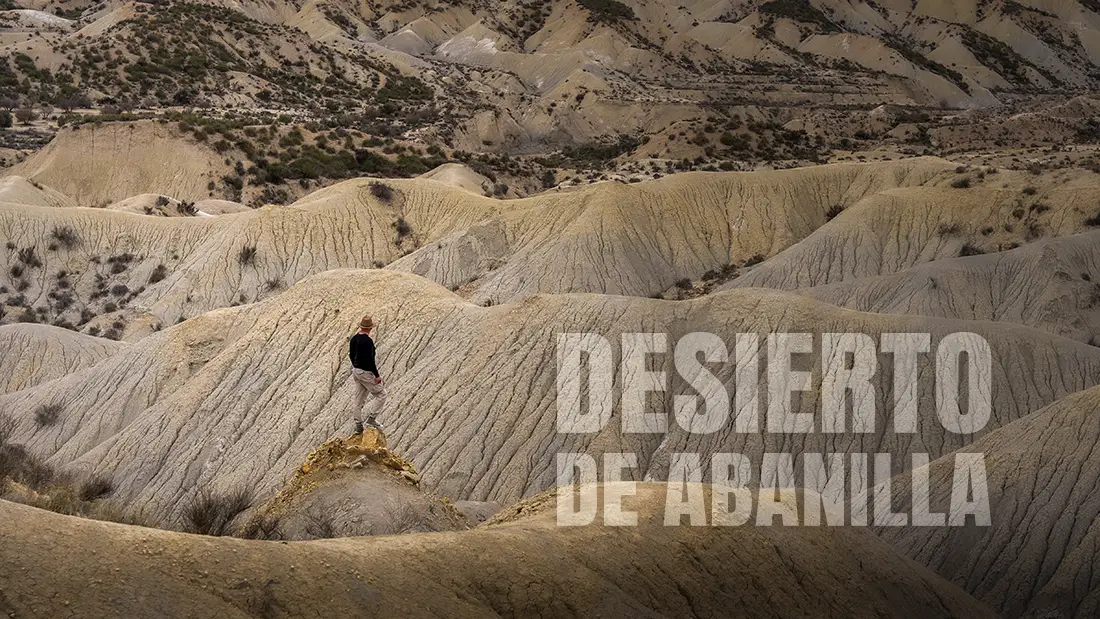
Few people visiting Costa Blanca or the Murcia region realise that just a few dozen kilometres from the beaches lies a landscape that looks remarkably like the deserts of Arizona. Desierto de Abanilla, located between the towns of Abanilla and Fortuna, is one of the most extraordinary places in south-eastern Spain. This harsh, sparsely vegetated land, sculpted by wind and water, appears as though it has been transported from another planet. I spent several nights here, sleeping in a Jeep Grand Cherokee, exploring the dry valleys by day and wandering across the wilderness after dark. It is a place capable of inspiring awe, but also commanding respect. The silence is so profound that after a few hours you begin to hear your footsteps echoing from the rocky slopes.
Where is Desierto de Abanilla?
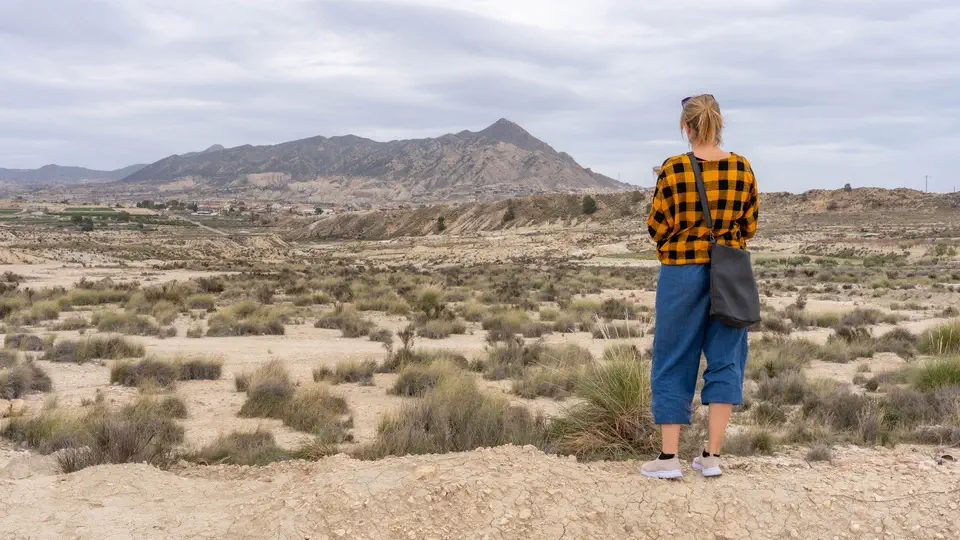
The desert lies in the Region of Murcia, close to the towns of Abanilla and Fortuna. It is around an hour’s drive from Alicante and less than 40 kilometres from the city of Murcia. Although it is commonly referred to as a desert, geographically it is a semi-arid area. Even so, the landscape is so dry and rugged that the word “desert” perfectly captures its character. The best-known feature of the region is its badlands formations – deeply eroded hills and valleys carved over thousands of years.
How Was the Abanilla Desert Formed?
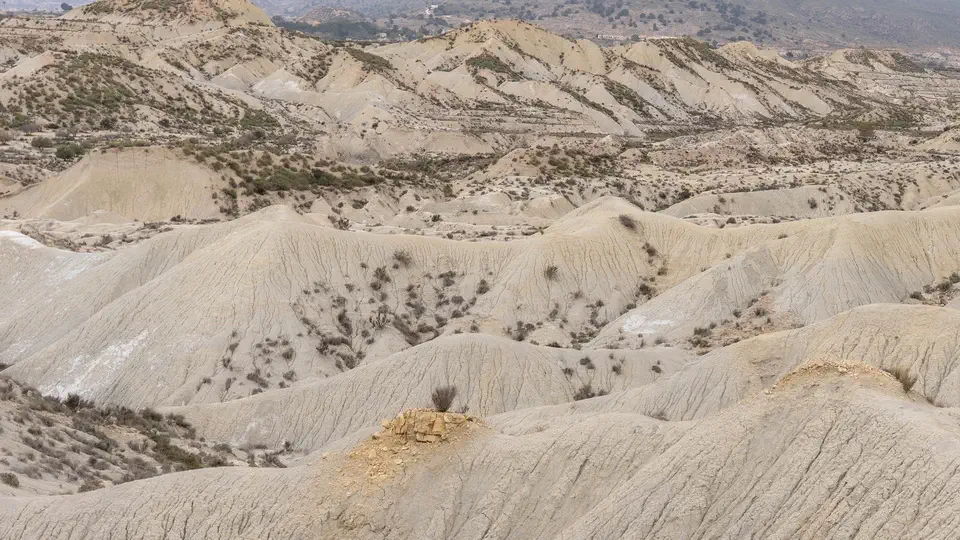
The history of this remarkable landscape stretches back millions of years. In the distant past, much of what is now the Province of Murcia lay beneath the sea. The area formed part of a shallow marine basin that gradually disappeared due to tectonic movements. Layers of clay, sand, marl, and limestone sediments accumulated on the seabed.
When the sea eventually retreated, vast deposits of soft sedimentary rock remained. Over millions of years, wind, occasional torrential rainstorms and flash floods began to shape the terrain. These processes created the distinctive badlands landscape. Water carved hundreds of gullies, canyons, and ridges that resemble giant waves frozen in stone.
Another important factor was the extremely low rainfall. The region receives less than 300 mm of rain annually on average. Vegetation is unable to protect the soil effectively from erosion, which means the landscape continues to evolve even today.
What Does Desierto de Abanilla Look Like?
The first impression is unforgettable. Standing at one of the viewpoints, it is easy to imagine Martians appearing over the next ridge or cowboys riding across the horizon as if from a classic Western film. The colours are muted and weathered, dominated by shades of ochre, yellow, red, beige and countless tones of grey.
During the day, the sun highlights every detail of the terrain. Deep gullies cast dramatic shadows, while the hills resemble enormous natural sculptures. At night, the desert undergoes a complete transformation. As the sun sets, temperatures drop rapidly. The sky becomes one of the region’s greatest attractions. With few large towns nearby, light pollution remains minimal. During one of the nights I spent in my Jeep, I watched the Milky Way shining as clearly as I had previously seen it only in Iceland. The stars seemed close enough to touch from the tops of the desert ridges.
Desierto de Abanilla – Tourist Attractions
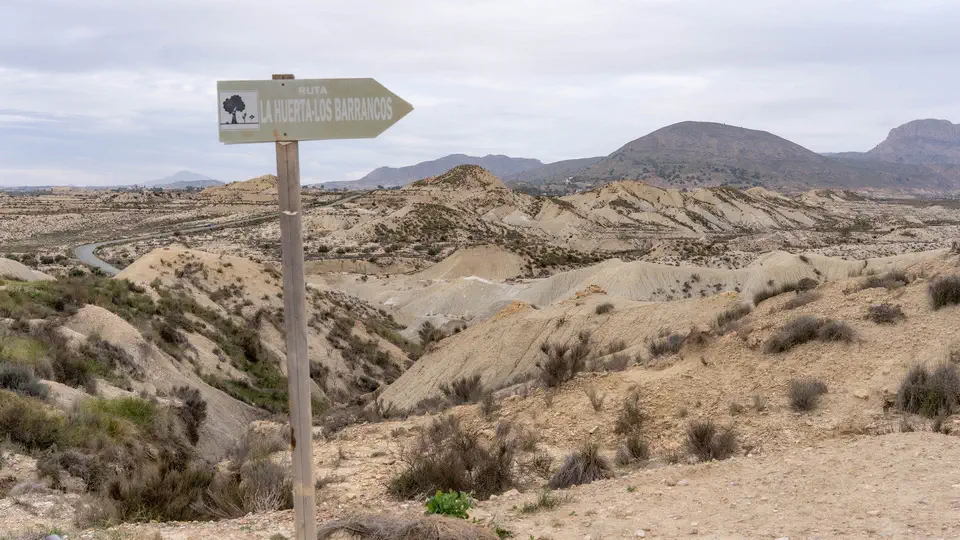
- Hiking Trails – The best way to experience the desert is on foot. Numerous routes pass through dry valleys and between rocky ridges. Some paths are barely visible, creating a genuine sense of exploration. The most spectacular moments come at sunrise and just before sunset, when the changing light produces extraordinary contrasts.
- Landscape Photography – This is one of the finest photography locations in the Murcia region. The soft rock formations create shapes resembling castles, waves and giant mushrooms. After rainfall, the scenery becomes even more dramatic as the damp earth takes on vivid shades of red and orange.
- Stargazing – Desierto de Abanilla is a paradise for astronomy enthusiasts. On clear nights, the Milky Way, meteor showers and several planets can be observed with the naked eye.
- Cycling and Gravel Routes – The dry dirt tracks attract cyclists from across Europe. The terrain can be challenging, but the scenery more than rewards the effort.
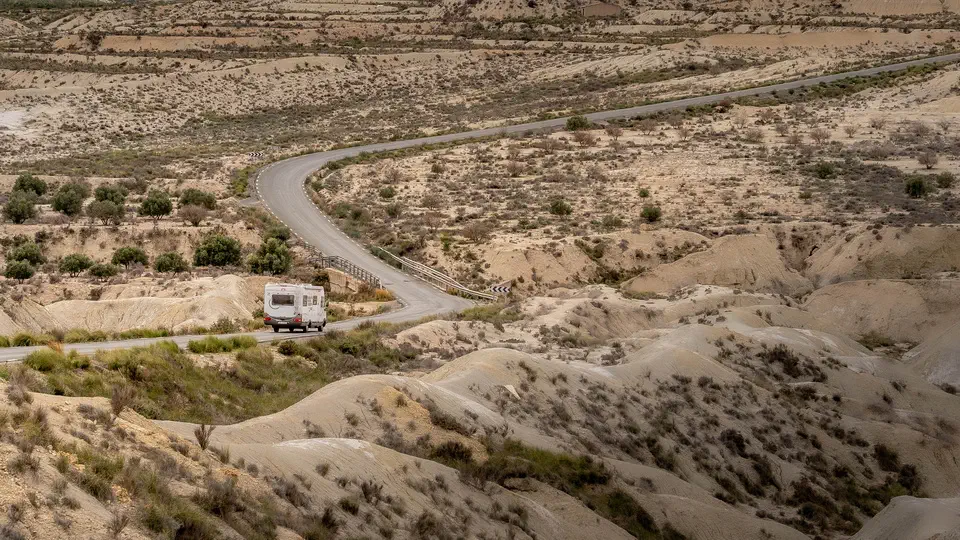
- Off-Road Driving – Although many roads are accessible by ordinary cars, some routes are far better suited to vehicles with higher ground clearance. That is precisely why the Jeep Grand Cherokee proved such an excellent companion while exploring the desert.
Desierto de Abanilla is one of those places that is difficult to compare with anywhere else in Europe. Rugged hills, deep canyons, unusual rock formations and star-filled night skies combine to create a landscape that stays with you long after you leave. It is an ideal destination for travellers seeking something beyond beaches and seaside resorts. Spending a few days here reveals an entirely different side of Spain – wild, mysterious and exceptionally beautiful.
What Is Worth Seeing Near the Desert?
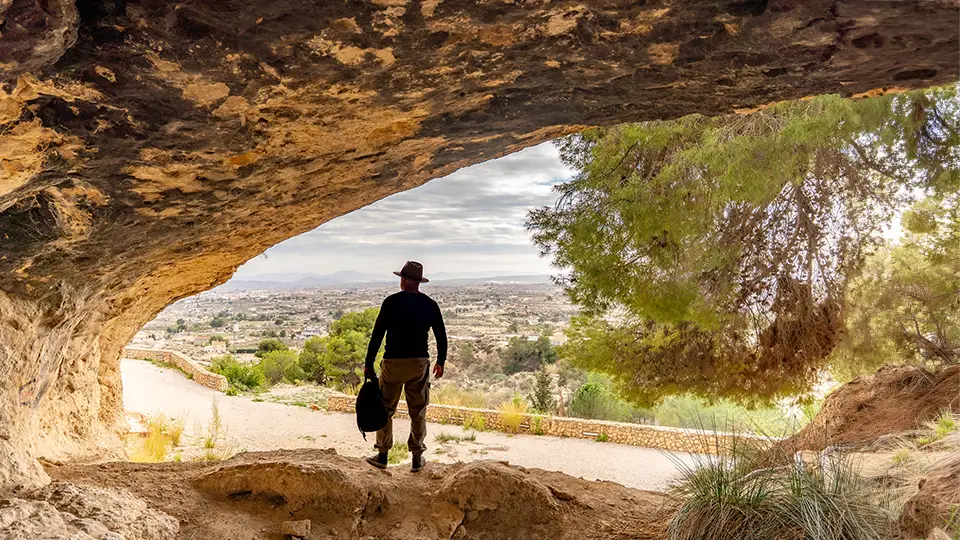
- Fortuna and Its Hot Springs – The town of Fortuna has been well-known for its healing thermal waters since Roman times. After a long day spent exploring the desert, a soak in the warm springs feels like the perfect reward.
- Santuario de la Cueva Negra – One of the most fascinating archaeological sites in the region. Ancient inscriptions dating back to Roman times have been discovered within the cave.
- Abanilla – This small town has retained its traditional Spanish character. Narrow streets, peaceful squares and local restaurants provide a welcome contrast to the harsh desert landscape.
- The Ricote Valley – A complete contrast to the desert. Palm groves, green fields and historic villages showcase the incredible diversity of the Murcia region.
Mysteries and Legends of the Abanilla Desert on Costa Blanca

The desert landscapes have fuelled the imagination of local people for centuries. It is therefore no surprise that numerous mysteries and legends surround Desierto de Abanilla. One of the most famous stories tells of a hidden Moorish treasure. According to local tradition, during the Reconquista, fleeing inhabitants of Arab settlements concealed vast quantities of gold and valuables somewhere within one of the inaccessible valleys. The treasure was supposedly hidden so well that it has never been found. Nevertheless, treasure hunters still arrive occasionally convinced they have discovered the correct location.
Another legend concerns mysterious lights that appear above the desert. Residents of nearby villages have spoken for generations about unexplained flashes visible at night. Some attribute them to unusual atmospheric conditions, while others believe they are connected to ancient spirits said to inhabit the region. During my own nocturnal walks, I also noticed strange reflections appearing on the horizon. They were most likely lights from distant settlements distorted by warm air currents, yet in the overwhelming silence of the desert it is easy to believe more extraordinary explanations.
Local people also speak of the “singing hills”. When the wind blows with the right strength and direction, sounds resembling whistles or distant moans can be heard among the gullies and canyons. In earlier times, these noises were believed to be the voices of souls wandering through the wilderness. There are also stories of hermits and monks who sought solitude here. The harsh environment encouraged meditation and isolation. According to local accounts, some lived for years in nearby caves, almost entirely cut off from the outside world.
There are also tales of lost travellers. As recently as a century ago, crossing these lands during the intense summer heat could be extremely dangerous. A lack of water, high temperatures and vast empty landscapes often caused people to lose their bearings. Stories of missing wanderers remain part of local folklore today.
Although most of these legends probably have rational explanations, spending even a single night alone among the desert ridges helps illustrate why such stories emerged. The atmosphere here is unlike anywhere else. The silence, the immense sense of space and the strange rock formations encourage the imagination to work far more intensely than in everyday life.
Desierto de Abanilla Facts and Interesting Information
- The landscapes of Desierto de Abanilla are often compared to those of Arizona in the United States.
- The area was once the floor of an ancient sea.
- Marine fossils have been discovered within the surrounding rocks.
- Some geological formations are several million years old.
- The region is among the driest areas in Spain.
- Rainfall can be so scarce that months pass without a single drop of rain.
- Summer temperatures frequently exceed 40°C.
- Winter nights can be surprisingly cold.
- The terrain is constantly changing due to ongoing erosion.
- Temporary rivers and streams appear after heavy downpours.
- Foxes, rabbits and numerous reptile species inhabit the area.
- Some sections of the desert closely resemble the surface of Mars.
- The region is highly popular among landscape photographers.
- It offers exceptionally dark skies for stargazing.
- The badlands are among the most distinctive geological formations in Murcia.
- Ancient archaeological sites can be found nearby.
- The area was already inhabited during Roman times.
- Desierto de Abanilla is increasingly being used as a filming location.
- In spring, following heavier rainfall, parts of the desert become covered with wildflowers.
- The sunrises and sunsets are considered among the most beautiful in south-eastern Spain.