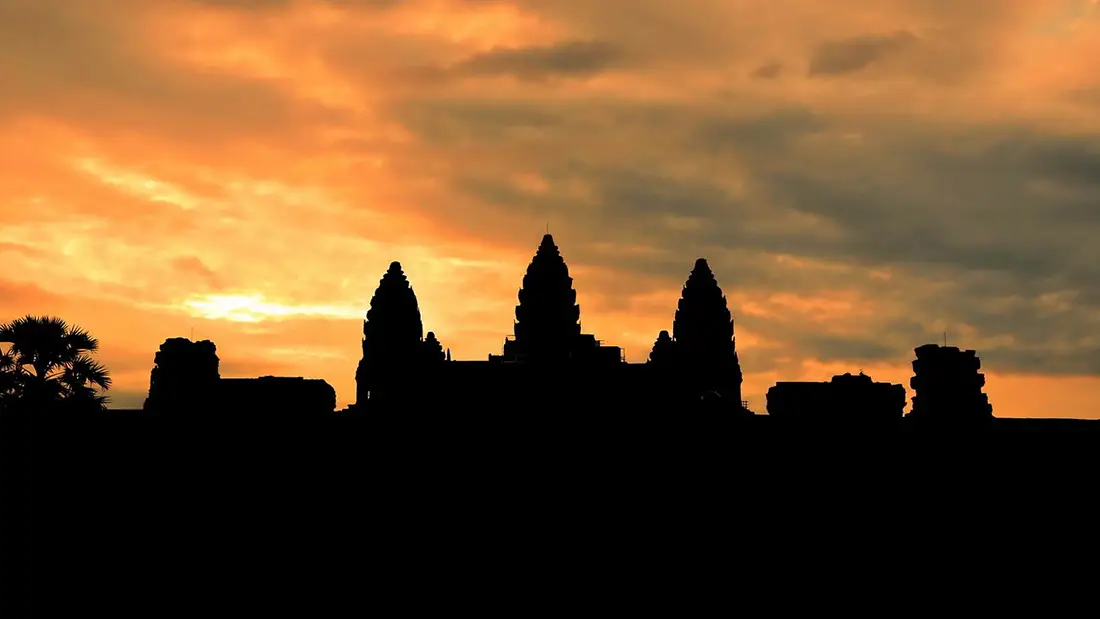
Angkor Wat in Cambodia is one of the most fascinating sites among the surviving Khmer monuments and lies close to the city of Siem Reap.
I have been meaning to write about our journey to the legendary ancient city of Angkor for a very long time, yet I still do not really know where this story begins. To be honest, I am not even sure when it truly started.
Was it the moment the wheels of our aircraft touched the runway at Siem Reap airport, the town sitting beside the ancient ruins? It was already dark, heavy rain hammered the ground, and we spent two hours on a wooden bench waiting for transport to our hotel. At that time of day the city seemed hopelessly congested, while battered tuk-tuks buzzed around the airport like angry bees circling a hive.
Angkor Wat in Cambodia – where does the story begin?
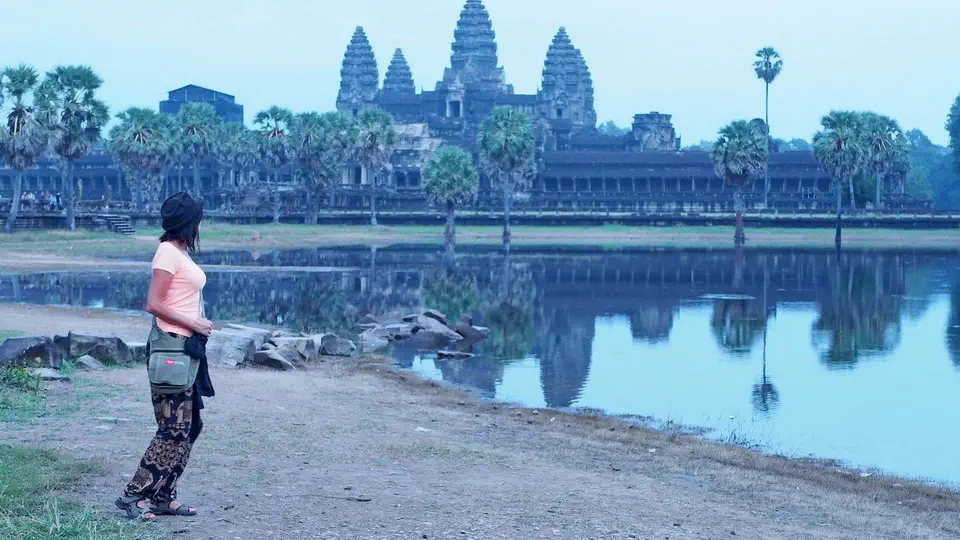
Perhaps the story truly began much earlier, while we were resting on one of Thailand’s tropical islands and planning our journey into Cambodia. The Thai islands encourage dreams and impossible ideas. When you sit quietly watching fishermen returning slowly from the sea, living from one day to the next with no visible concern for the future, you begin to feel that anything can happen. For those people, only today truly matters, tomorrow matters a little, and the day after tomorrow simply does not exist. There is no reason to worry about things that far away.
Living among them and looking at their calm, weathered faces, you begin to feel part of something larger. Something you never understood before. You start believing that every wild idea can become reality — and our idea was Angkor Wat. Yet even that was not the true beginning.
The first time I ever heard about the lost city hidden deep inside the Cambodian jungle was while reading books by Lucjan Znicz. As a child in gloomy 1980s Poland, I devoured every mysterious story that could add colour to an otherwise grey reality. Perhaps it was back then, many years ago, that the road to Angkor truly began.
Arrival at Siem Reap Airport
In Cambodia, it is common practice for hotels to collect their guests directly from the airport. Unfortunately, on the evening of our arrival something clearly went wrong, and we sat abandoned like two forgotten suitcases.
We must have looked rather pitiful because even local beggars sleeping beneath dirty blankets occasionally approached us carrying old bread rolls, apparently worried we might starve to death before the driver arrived.
Strangely enough, I did not mind waiting. Watching the constant movement of people in an unfamiliar environment felt fascinating in itself.
Siem Reap airport is nothing like airports in Europe. It feels more like a large provincial railway station where, instead of boarding trains, people climb into enormous aircraft.
Eventually, our driver appeared, apologised repeatedly, and moments later we were flying through the crowded streets of Siem Reap at terrifying speed. Wanting to make up for the delay, he overtook other tuk-tuks with centimetres to spare and avoided collisions by pure instinct.
Even while gripping the seat in terror, I somehow understood that the man was doing everything possible to protect his vehicle. In numerous instances, a tuk-tuk is the only valuable possession its driver owns.
How to visit the ruins of ancient Angkor
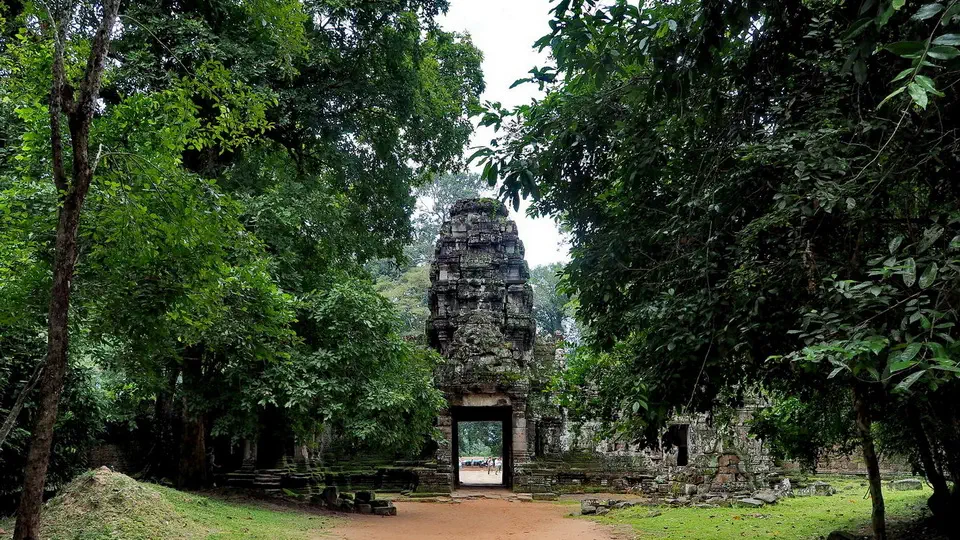
Getting into Angkor is not quite as simple as many travellers imagine. Cambodians are not always known for carefully protecting their historical treasures, yet Angkor is treated differently.
Tickets are personalised, numbered and linked directly to the visitor. Before entering the complex, your photograph is taken and printed onto the pass itself. The entire system exists to discourage vandalism and disrespect towards one of the world’s greatest archaeological sites.
At first, I found the strict rules unnecessary. Then I watched a large group of tourists climbing directly onto delicate carvings inside Bayon.
Bayon – the perfect beginning
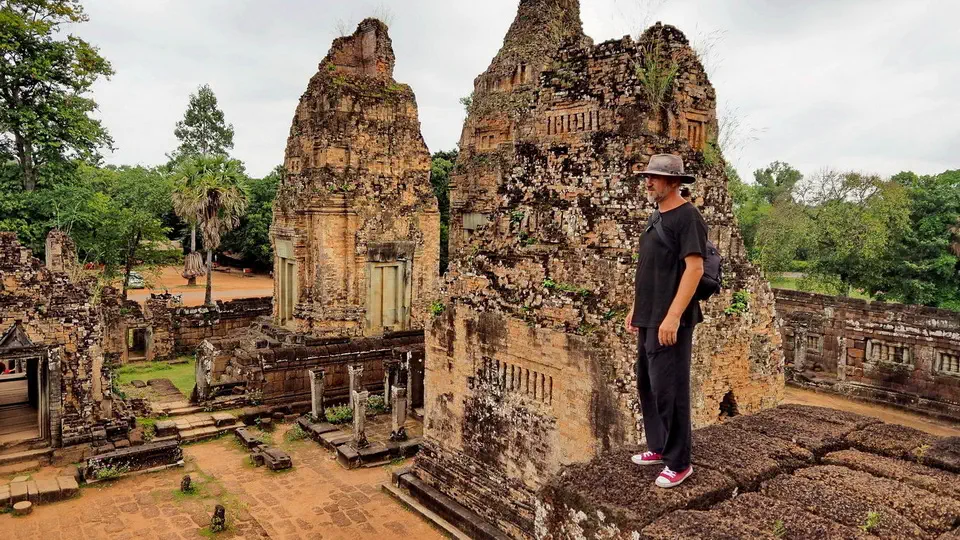
Bayon is a Buddhist temple standing at the heart of Angkor Thom. Built during the 11th and 12th centuries, it resembles a giant stone pyramid crowned with towers. At its peak, there were more than sixty towers, each decorated with enormous human faces staring silently across the jungle.
Its walls are covered in astonishing bas-reliefs. Centuries ago, every carving would have been painted in brilliant colours, while the tops of the towers shimmered with gold above the ancient forest canopy.
The craftsmanship is extraordinary, which made the sight of tourists scrambling across the carvings genuinely painful to watch. Thankfully, the guards reacted quickly and removed them before serious damage was done.
The lost metropolis of Angkor
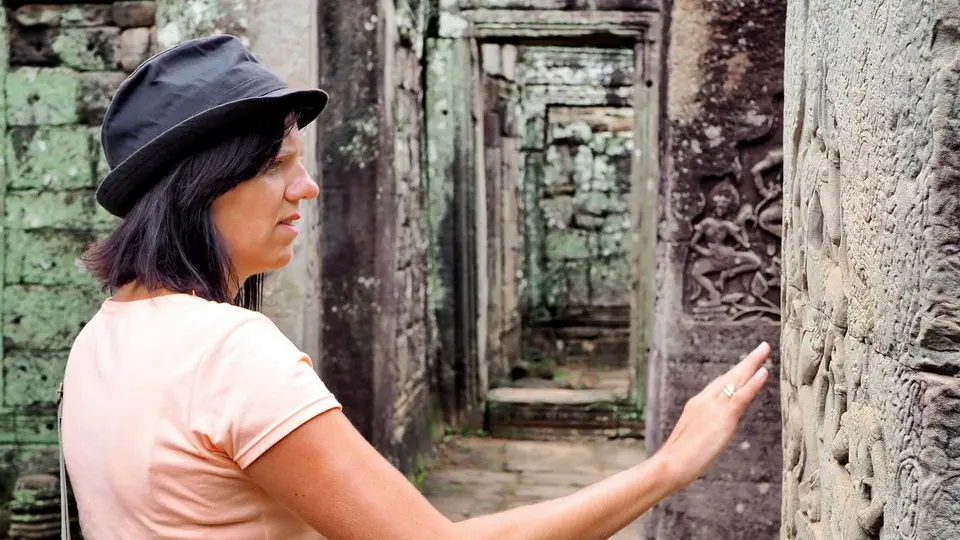
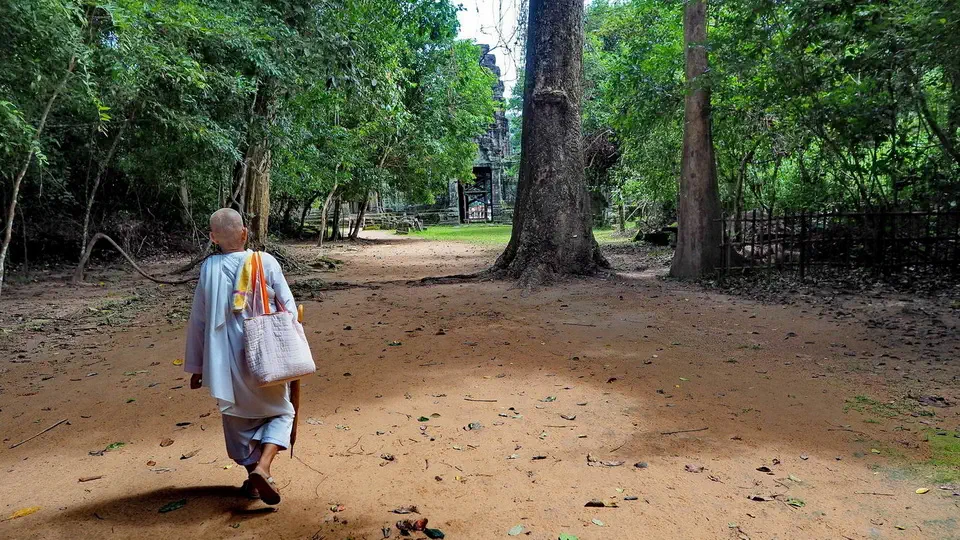
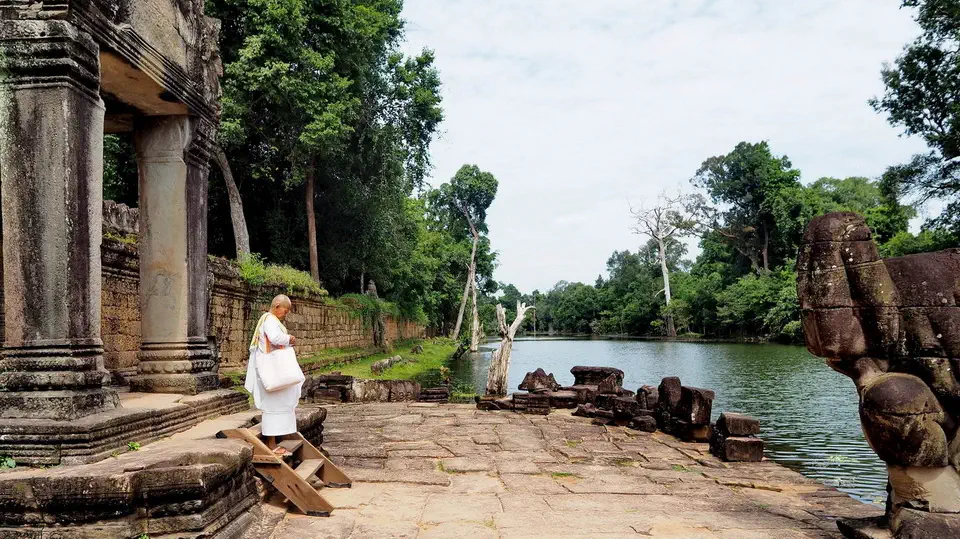
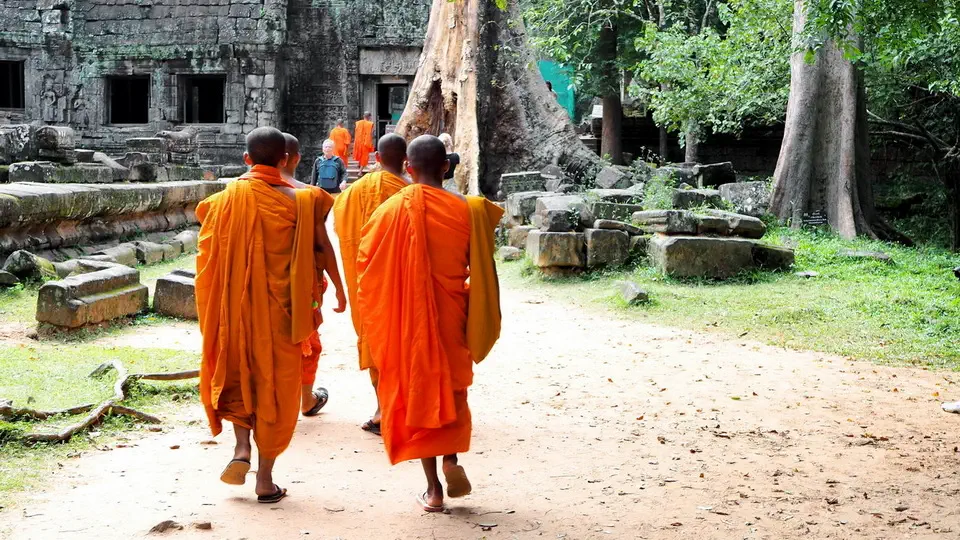
Angkor leaves a powerful and strangely mystical impression. It is the largest religious complex on Earth. Spread across nearly 400 square kilometres of forest, reservoirs and ancient roads stand beyond one hundred temples and royal buildings constructed over several centuries.
Between the 9th and 15th centuries, Angkor served as the capital of the mighty Khmer Empire, which once controlled huge areas of present-day Cambodia, Thailand, Laos, and Vietnam.
At its height, the city held more than a million inhabitants — more people than London and Paris combined at the time.
The civilisation possessed advanced irrigation systems, organised food distribution, drainage networks and even forms of public transport. Compared with neighbouring kingdoms, the Khmer Empire appeared almost impossibly advanced, leading many outsiders to describe it as a magical civilisation. Yet the most mysterious thing about Angkor is not its rise, but its collapse.
The mysterious fall of Angkor
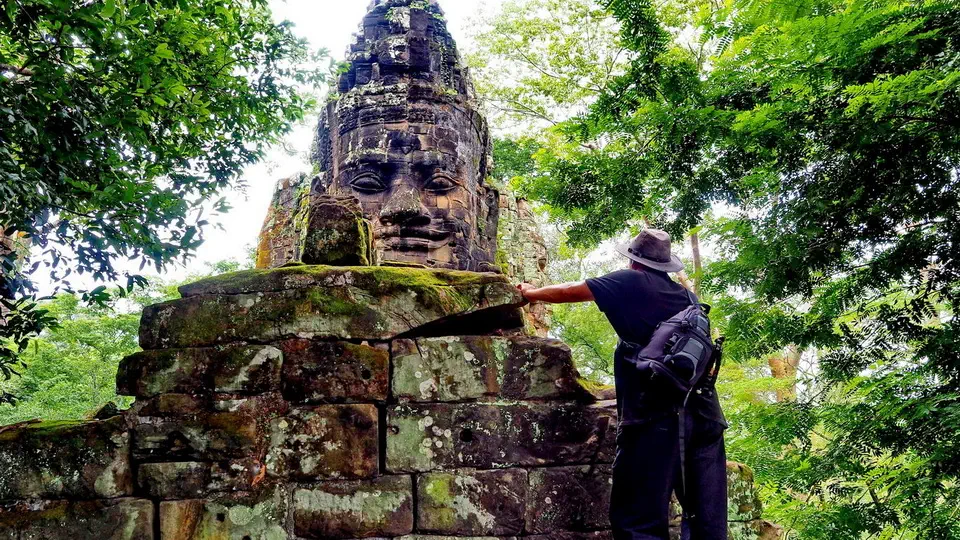
Sometime during the 15th century, the enormous city was suddenly abandoned. Streets emptied, temples disappeared beneath jungle growth, and nature slowly reclaimed the empire.
For centuries, only legends survived. Portuguese missionaries later carried stories back to Europe describing a vast city hidden inside the Cambodian wilderness, guarded by ghosts and ancient spirits protecting unimaginable treasures.
In 1861, the French explorer Henri Mouhot reached Angkor and introduced the ruins to the wider world. Unfortunately, his discovery also attracted treasure hunters and looters, who stole or damaged countless priceless artefacts.
Only towards the end of the 19th century, after Cambodia entered French protection, did proper archaeological restoration begin. Even today, excavations continue, and many historians believe large parts of the ancient civilisation remain undiscovered beneath the jungle.
The most fascinating places in Angkor
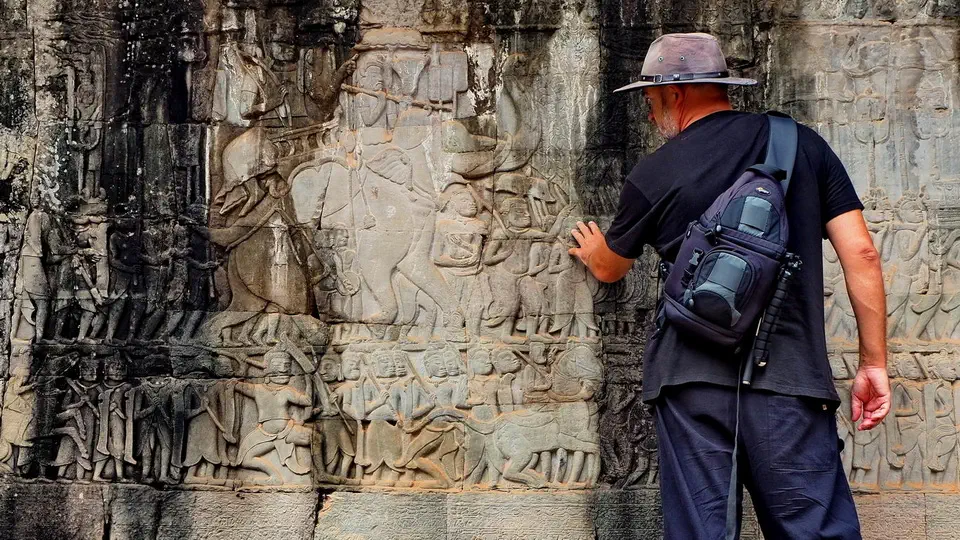
We spent entire days travelling from one temple to another, completely absorbed by the atmosphere of the ruins. Every path seemed haunted by echoes of the past. It was easy to imagine monks chanting prayers, craftsmen carving stone, or nobles crossing courtyards beneath golden banners.
Two days in Angkor felt nowhere near enough. As the legendary Polish traveller Tony Halik once said:
“Only a person without imagination wants to see everything during the first visit.”
If somebody asked me where to begin exploring Angkor, I would probably suggest climbing the hill crowned by Phnom Bakheng. The route leads uphill through humid jungle trails, but the reward at the top is unforgettable. From the ancient stone terrace you can watch Angkor Wat rising above endless greenery while the sun slowly disappears behind the horizon. Standing there, I genuinely felt like Indiana Jones.
East Mebon – elephants and forgotten crocodiles
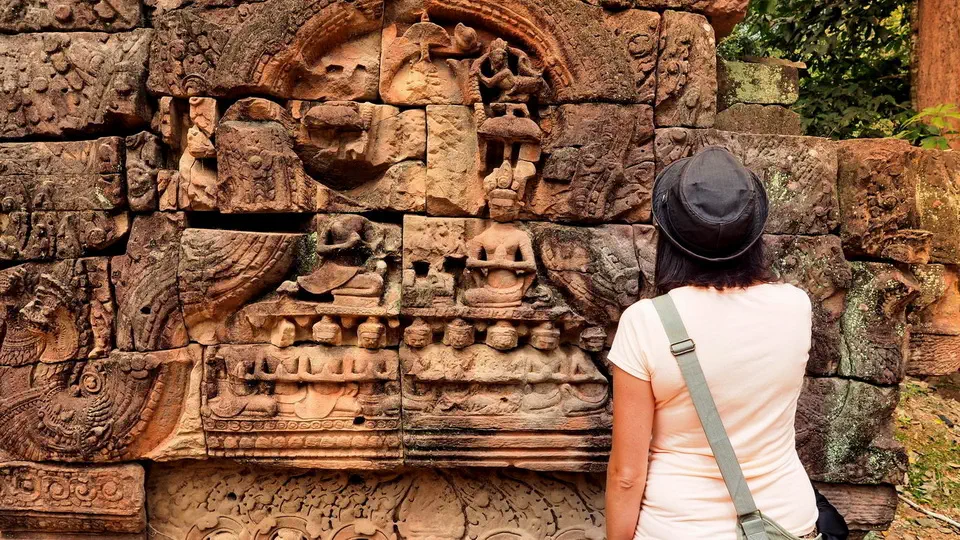
East Mebon is an excellent place to start a longer temple route. Decorated with serpent motifs, elephant statues and guardian lions, the temple once stood surrounded by water-filled moats supposedly inhabited by crocodiles.
Today the water is gone, but the atmosphere remains extraordinary. Visitors must be careful here because the steep stone staircases and damaged surfaces make East Mebon one of the more accident-prone temples within the complex.
Ta Som – guarded by stone faces
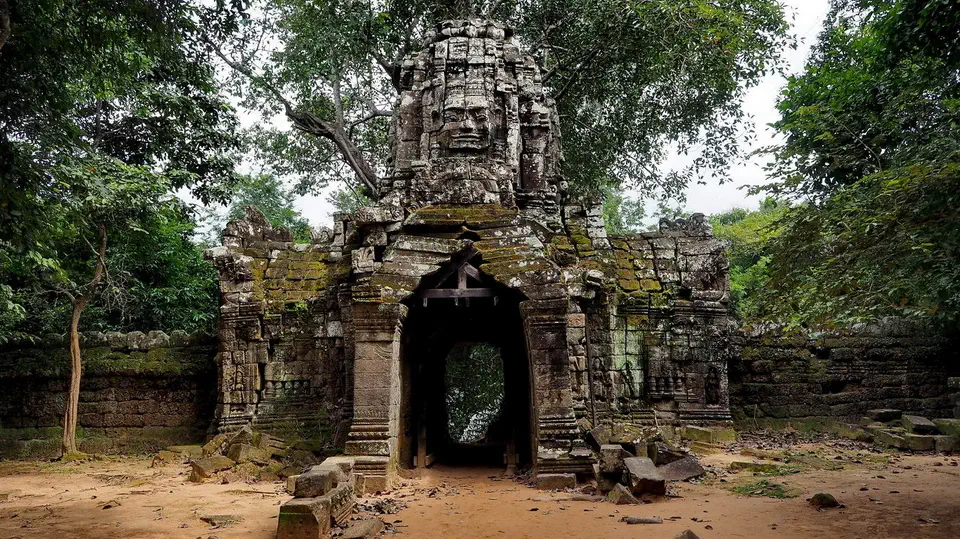
Ta Som is guarded by giant carved faces watching silently over the entrance gates. Ancient Khmer people believed nobody with evil intentions could pass safely beneath their gaze.
Fortunately, we survived the visit, which clearly proves Magda and I possess exceptionally pure souls. The temple may be weathered and partially ruined, yet it remains one of the most atmospheric locations in Angkor.
Neak Pean – the temple on the water
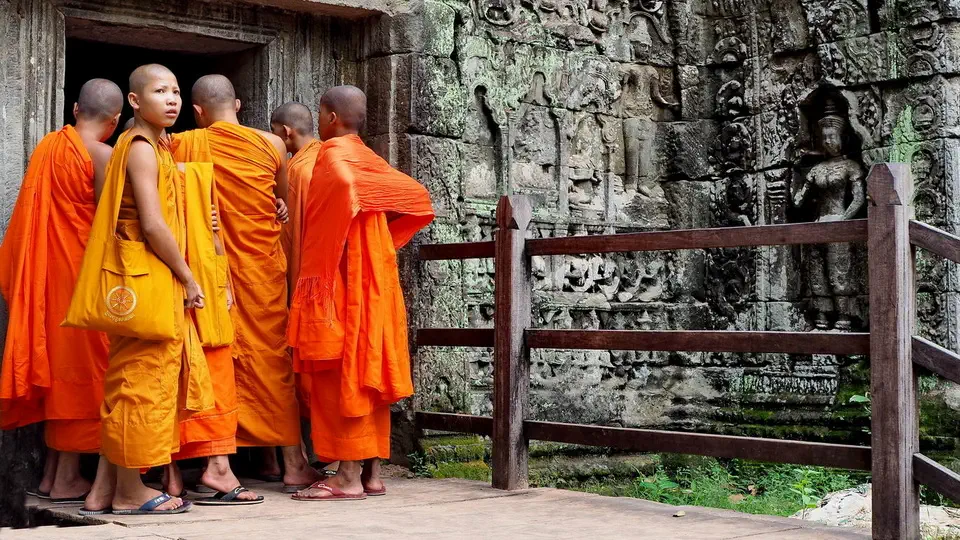
According to Magda, Neak Pean was the most beautiful place in the entire complex — and I struggle to disagree. Built in the 12th century on an artificial island, the temple is considered an engineering masterpiece. Even today, constructing such a structure on swampy terrain would not be easy.
The central pool symbolises the mythical Lake Anavatapta, whose waters supposedly healed all illness. Four smaller surrounding pools represented the natural elements, and Khmer pilgrims believed bathing in them restored perfect balance to the body.
Preah Khan – medicine and knowledge in the ancient empire
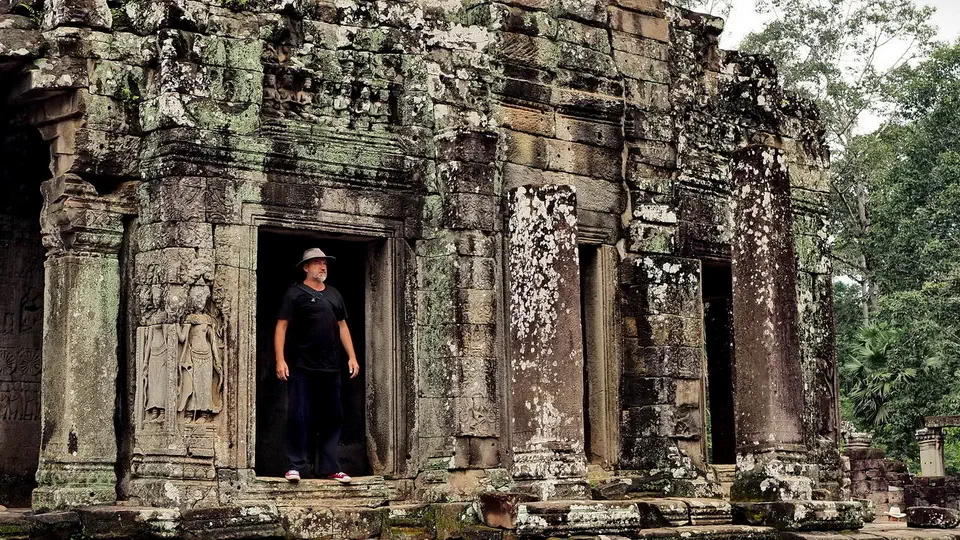
Preah Khan once formed the intellectual and medical centre of Angkor. At its height nearly one hundred thousand people lived nearby, while the complex contained hospitals, schools and religious buildings. Archaeological discoveries even suggest advanced surgical procedures may have taken place here, including operations involving the skull.
The approach to the temple crosses a dramatic stone bridge lined with demons pulling the body of a giant serpent. It feels less like entering a hospital and more like stepping into a forgotten fantasy kingdom.
Giant trees now grow directly through the ruins, crushing walls beneath gigantic roots and giving the place an almost supernatural atmosphere.
Ta Prohm – the temple reclaimed by the jungle
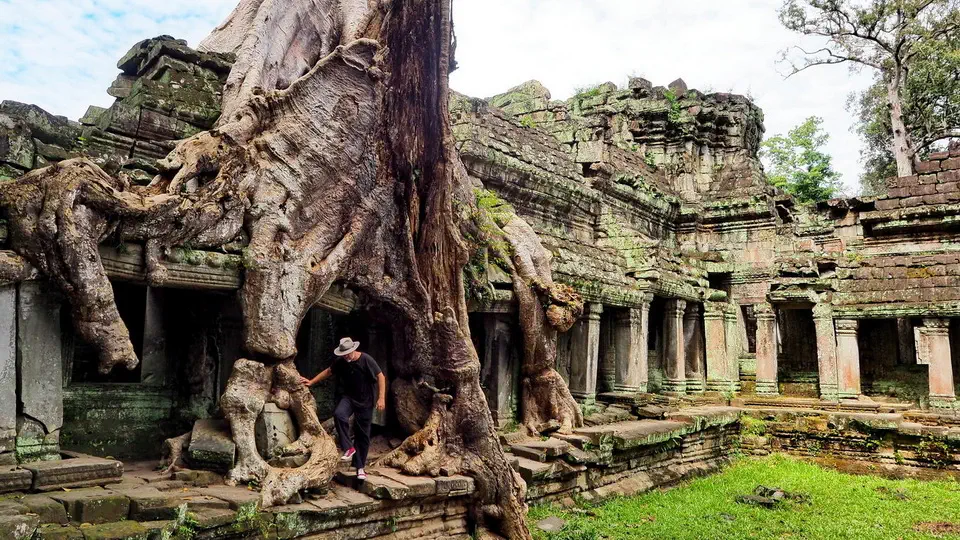
Unlike many other sites, Ta Prohm was left largely untouched after its rediscovery. Minimal restoration work means visitors can experience the ruins almost exactly as explorers first encountered them.
Massive tree roots wrap around walls and towers, slowly crushing stone beneath their weight. The temple became internationally famous after appearing in the movie Lara Croft: Tomb Raider, starring Angelina Jolie. Since then, Ta Prohm has become one of the busiest locations in Angkor.
Banteay Srei – the quiet temple of women
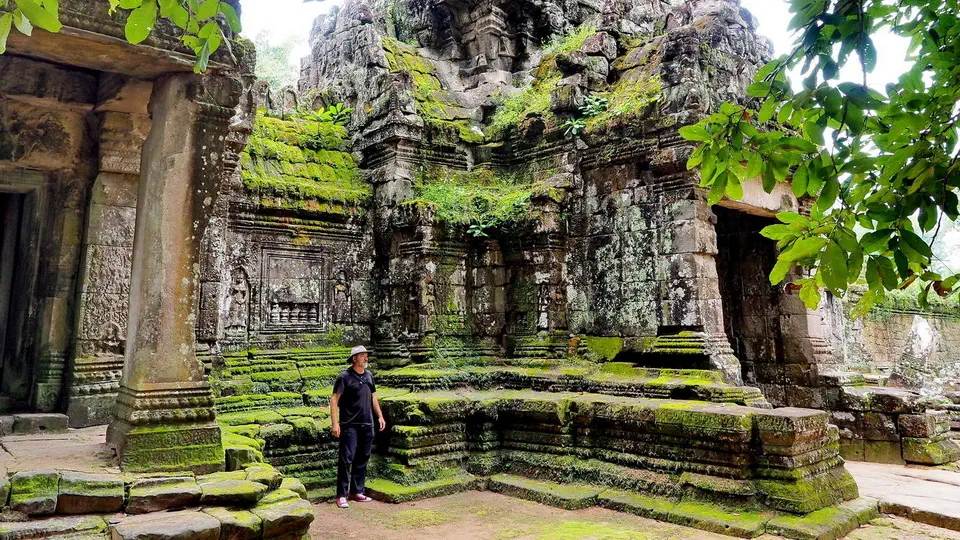
If you seek silence rather than crowds, visit Banteay Srei. Known as the “Citadel of Women”, the temple lies further away from the main tourist routes. Built from reddish stone, it glows beautifully in afternoon sunlight.
Although smaller than many other temples, its intricate carvings and delicate ornaments make it one of the most visually stunning places in the entire Angkor region.
Angkor Wat – the symbol of Cambodia
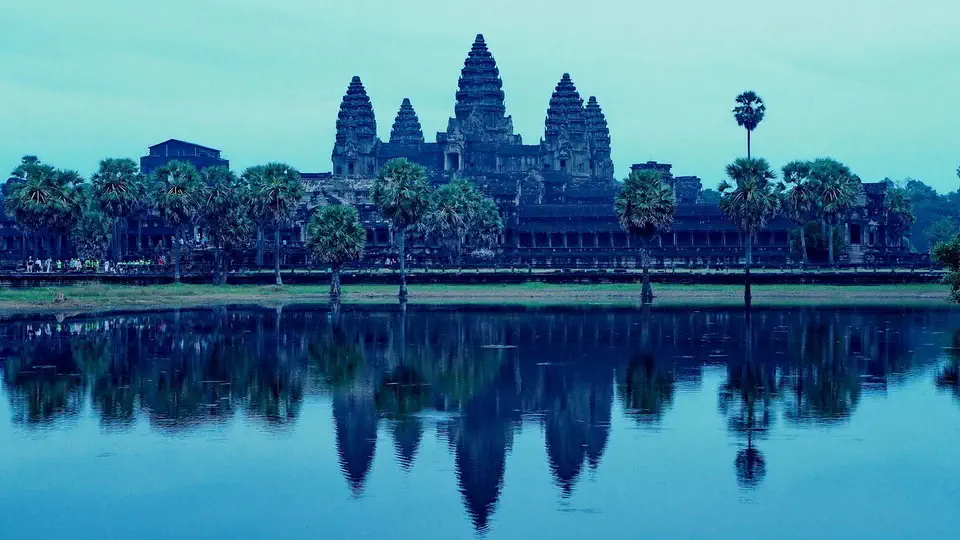
And finally — the great Angkor Wat itself. The central tower rises more than 65 metres into the sky and can be seen from many kilometres away. Walking beside the enormous carved galleries feels surreal. One particularly famous relief depicts gods and demons churning the mythical Ocean of Milk searching for immortality.
Inside the temple once stood a gigantic golden statue of the god Vishnu riding Garuda, a mythical creature combining human and bird features.
Throughout history the temple repeatedly shifted between Hindu and Buddhist use depending on the beliefs of successive rulers. Sadly these religious changes often resulted in destruction of earlier artwork and sacred symbols.
Crowds at Angkor Wat
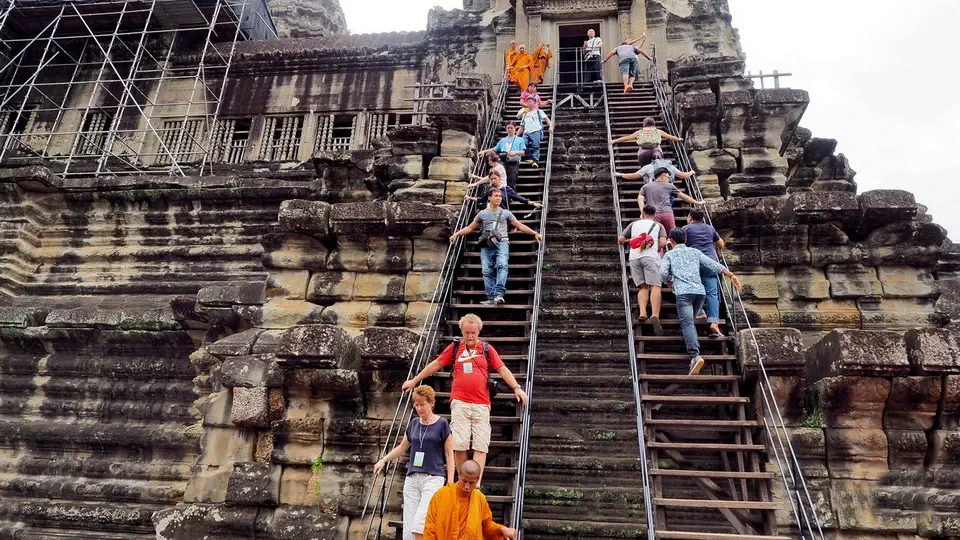
If you are lucky, you may arrive on a relatively quiet day, as we did. Otherwise, the crowds can become exhausting.
The staircases leading to the upper levels are incredibly steep and are often listed among the world’s most dangerous historic stairs. Naturally, we climbed them anyway.
At sunset, the atmosphere changes completely. Golden light floods the temple, the jungle grows silent, and the guards slowly begin clearing visitors from the site.
That brief moment of emptiness allowed us to explore quieter jungle paths beyond the main complex.
The hidden and forgotten temple
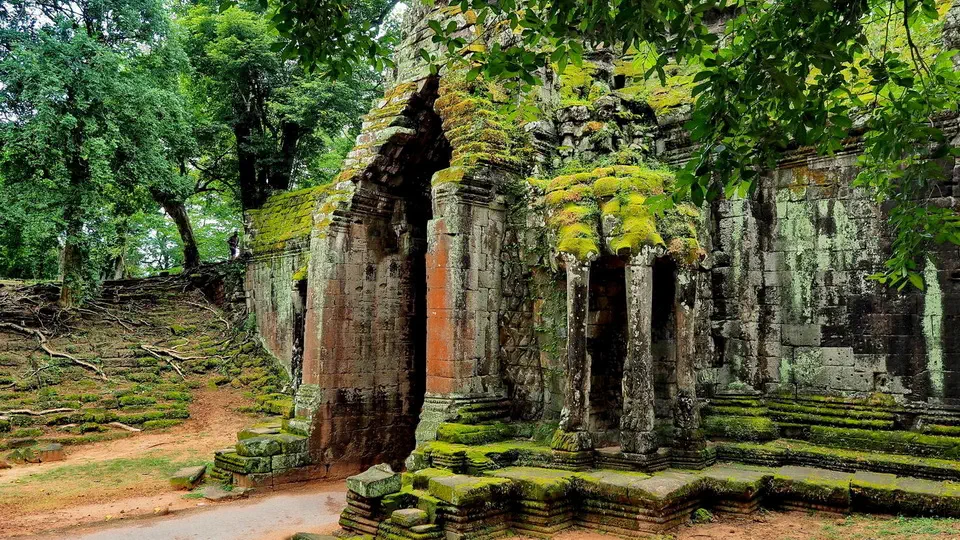
Deep in the jungle beyond the tourist routes stands a ruined temple not marked on ordinary maps. Local workers avoid discussing it openly, though our tuk-tuk driver eventually told us about the place. According to local stories it belonged to a mysterious Hindu sect worshipping dark spirits.
The building has effectively vanished from official tourist information. Inside we found collapsed corridors, thick dust and staircases disappearing underground into darkness. Without proper equipment we did not dare continue. We promised ourselves we would return one day and explore further.
Final thoughts on Angkor
Our adventure in Cambodia ended where it had truly begun many years earlier — in the pages of childhood books about forgotten mysteries and lost civilisations.
Angkor did not answer every question, nor reveal all its secrets. Yet standing among those ancient ruins, surrounded by jungle and silence, I felt closer than ever to the stories that had once fuelled my imagination. It remains one of the most unforgettable journeys of our lives.
Facts and curiosities about Angkor Wat
- Angkor Wat is the largest religious monument on Earth.
- The Angkor complex covers more than 400 square kilometres.
- Angkor was once home to over one million inhabitants.
- The entire archaeological area is protected by UNESCO.
- Angkor Wat appears on the national flag of Cambodia.
- The temples were built without modern machinery.
- Many structures were assembled without mortar using perfectly fitted stone blocks.
- Stones used for construction weighed millions of tonnes and were transported from quarries over 35 kilometres away.
- Around half of all tourists visiting Cambodia travel there specifically to see Angkor Wat.
- Ta Prohm became globally famous thanks to Lara Croft: Tomb Raider.