Weston-super-Mare is a relatively small seaside town located on the southern shore of the Bristol Channel. It is well known throughout this part of England and attracts large numbers of visitors during the warmer months of the year. Weston-Super-Mare lies only a few miles west of Bristol, which is why many Bristol residents — ourselves included — visit the town regularly.
It is actually difficult to explain why people fell in love with Weston-Super-Mare as a holiday destination. The waters of the Bristol Channel are hardly crystal clear — quite the opposite, in fact. What washes onto the beach is mostly mud and silt churned up by the tides. Yet despite the lack of turquoise seas, tropical weather or endless luxury attractions, Weston-Super-Mare has something strangely charming about it. There is an atmosphere here that keeps drawing people back time and time again.
The Early History of Weston-Super-Mare
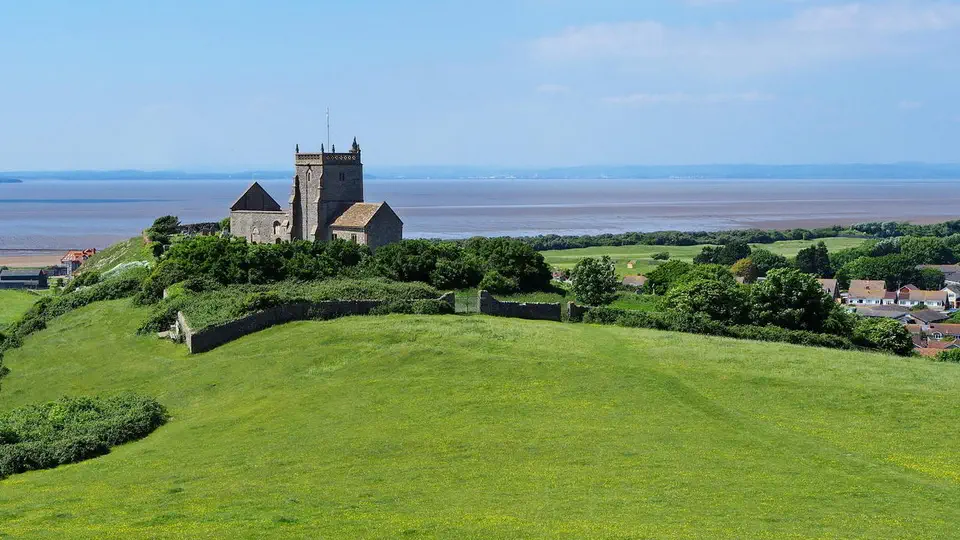
The earliest traces of settlement in the area date back to the Iron Age. One of the few surviving medieval landmarks is St John the Baptist Church, although even this building was partly demolished and rebuilt during the early nineteenth century.
In Anglo-Saxon records, the town appeared under the name Weston-juxta-Mare, which roughly translates as “the place by the sea”. Later references shortened the name simply to Weston, while the modern name Weston-Super-Mare came into use during the seventeenth century.
For centuries, very little happened in the town. Until the Victorian era, Weston-Super-Mare remained a quiet coastal settlement. Everything changed during the early nineteenth century when seaside holidays suddenly became fashionable across England.
Weston-Super-Mare During the Victorian Era
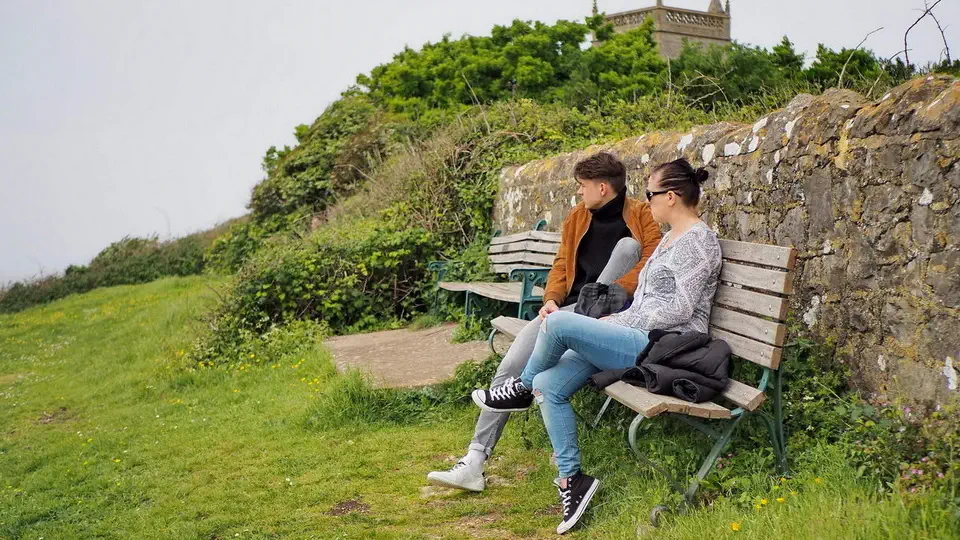
At the beginning of the nineteenth century, Weston-Super-Mare consisted of only a few dozen houses belonging mostly to poor farmers and fishermen. For generations, settlers avoided places such as Weston and nearby Burnham-on-Sea because the Bristol Channel was famous for dangerous tides and unpredictable waters.
The tidal range here is enormous. Water levels can rise several metres within only a few hours, regularly flooding nearby land and destroying homes, fields, and livelihoods. Every major storm or period of heavy rain terrified residents. Unsurprisingly, few people wanted to live in the area permanently.
Eventually, sea defences were constructed to protect the coastline from flooding. Today, much of the coast stretching west from Bristol is lined with reinforced flood barriers.
Weston-Super-Mare and the Birth of English Tourism
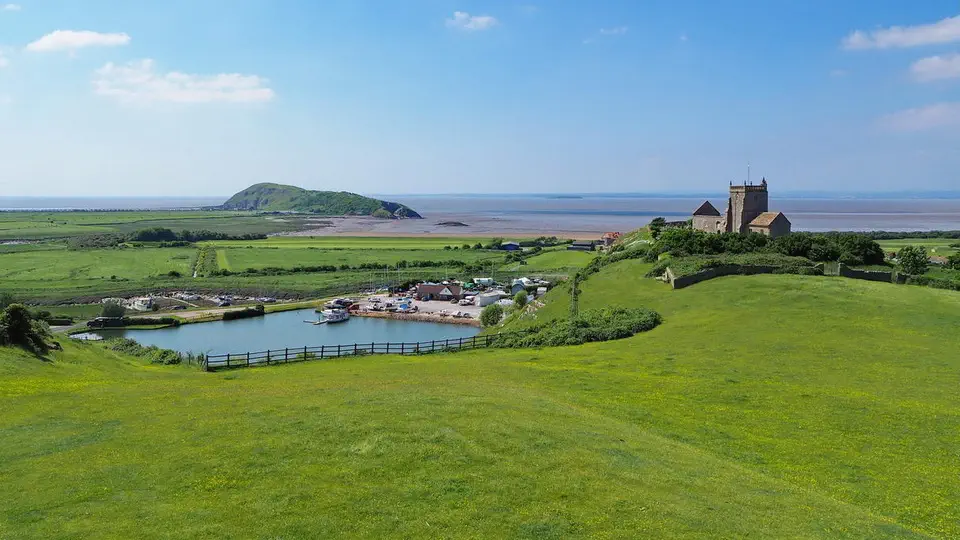
The real development of Weston-Super-Mare began in 1806, when a local lord decided to build a summer residence by the sea. Other wealthy Victorians soon followed his example, especially during the rapid growth of the Industrial Revolution.
The same nobleman also recognised a business opportunity. More and more English families were travelling to the coast for leisure and relaxation. By 1808 construction had begun on one of the first seaside hotels and resorts in this part of England. It was a bold project, as there were few similar examples to follow at the time.
The hotel turned out to be a giant success. Even more interestingly, the building still operates as a hotel today, although in a modernised form. Anyone who has visited Weston-Super-Mare will almost certainly recognise the famous Royal Hotel, originally known as Reeves Hotel.
Investment in Weston-Super-Mare accelerated rapidly afterwards. In 1820, there were even plans to build an artificial harbour similar to the docks in Bristol, although the idea was never completed.
In 1867, the town opened its first wooden pier — Birnbeck Pier. Like many Victorian piers, it featured tearooms, small restaurants, arcades, and entertainment attractions. One of the most unusual rides was a giant carousel powered by donkeys walking in circles. The pier also became home to the area’s first commercial photography studio.
The arrival of the Bristol and Exeter Railway transformed Weston-Super-Mare even further. Suddenly, the town became easily accessible from Bristol and much of central England. Crowds of day-trippers arrived to stroll along the seafront, relax on the beach and enjoy the growing number of pubs, cafés, and hotels.
It is fair to say that this was the period when modern tourism truly began in England. Before then, people generally travelled only when absolutely necessary. Exploration was reserved mainly for merchants, scientists, and adventurers seeking trade, knowledge, or conquest.
Isambard Kingdom Brunel and Weston-Super-Mare
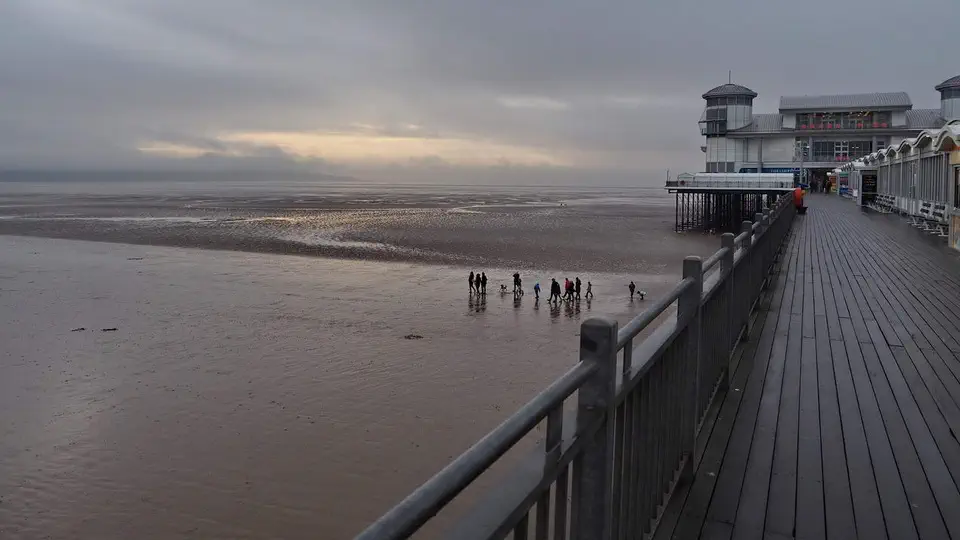
One of the most famous figures connected to Weston-Super-Mare is Isambard Kingdom Brunel — the legendary engineer responsible for many of the railway projects across western England.
Brunel designed some of Britain’s greatest engineering achievements, including the famous SS Great Britain and the magnificent Clifton Suspension Bridge spanning the Avon Gorge in Bristol.
As the son of a renowned French engineer, Brunel grew up surrounded by ambitious technical ideas. Some concepts discussed by his father were so advanced that they would still challenge engineers today. One example was the early proposal for a tunnel beneath the River Thames.
Brunel later became recognised as one of the greatest Britons in history, second only to Winston Churchill in one famous public poll.
Although Brunel’s story deserves an article of its own, Weston-Super-Mare is really about something much simpler — the rise of seaside holidays and the Victorian love of escaping to the coast.
Weston-Super-Mare Today

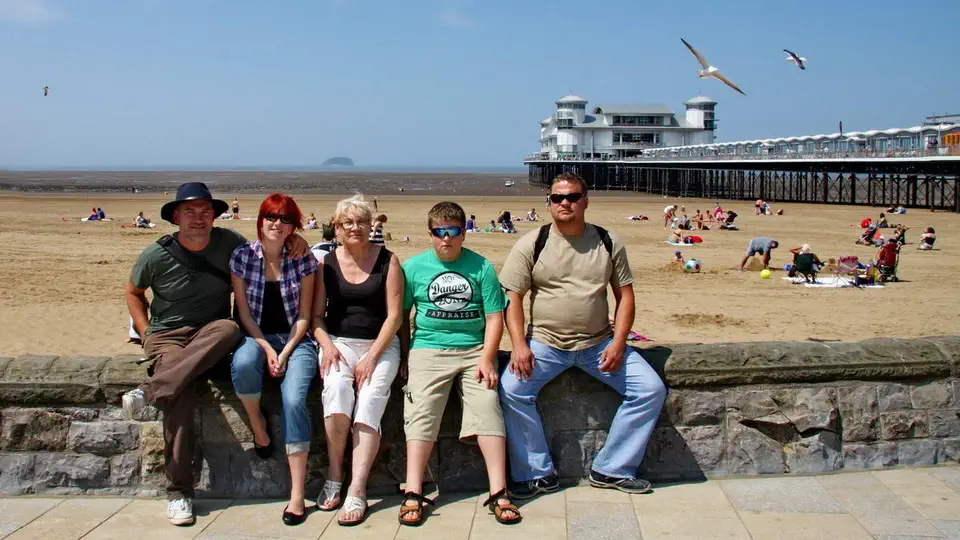

Most of the seafront buildings in Weston-Super-Mare date from the Victorian era. Their elegant façades give the town a distinctive atmosphere that still feels wonderfully nostalgic. Walking along the promenade can genuinely feel like stepping back into the age of England’s first holidaymakers.
Many of the large Victorian houses have since been converted into hotels and guesthouses. Accommodation close to the sea tends to be expensive, so it is often worth looking slightly further inland for better prices.
At the beginning of the twentieth century, local authorities realised that many visitors stayed around Birnbeck Pier and rarely ventured into the town centre. To solve the problem, a second pier was built directly opposite the main promenade.
For many decades, Weston-Super-Mare had two piers — Birnbeck Pier and the newer Grand Pier. After Birnbeck Pier closed in 1994, it gradually became a historic landmark, visible mainly from a distance.
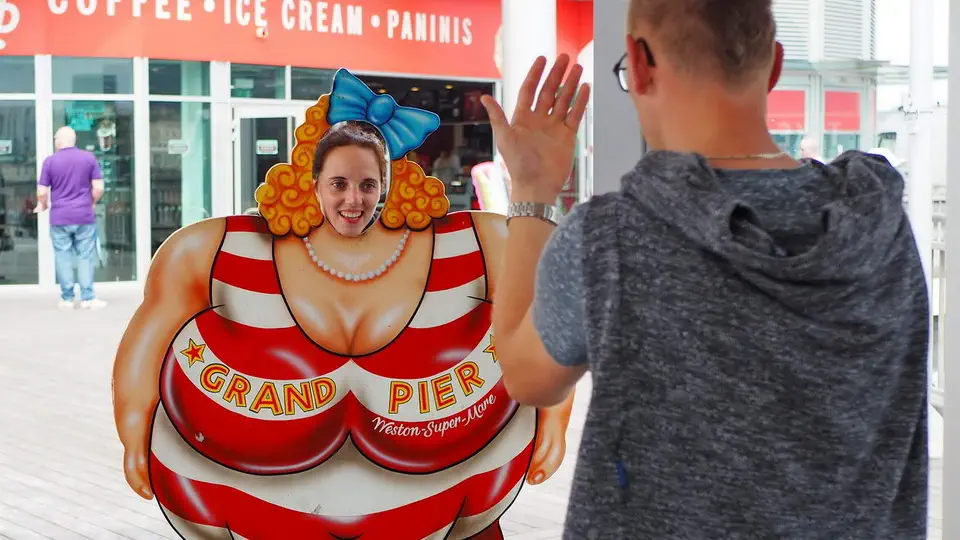
Grand Pier, however, was modernised and rebuilt after a devastating fire in 2008. The current structure reopened in 2010. At the far end of the 366-metre pier stands a large modern pavilion filled with arcades, rides, go-karts, and family attractions that entertain both children and adults alike.
Attractions in Weston-Super-Mare
Grand Pier is undoubtedly one of the town’s most recognisable landmarks. During summer, the pier becomes packed with street performers, snack stalls, souvenir stands and families enjoying the seaside atmosphere.
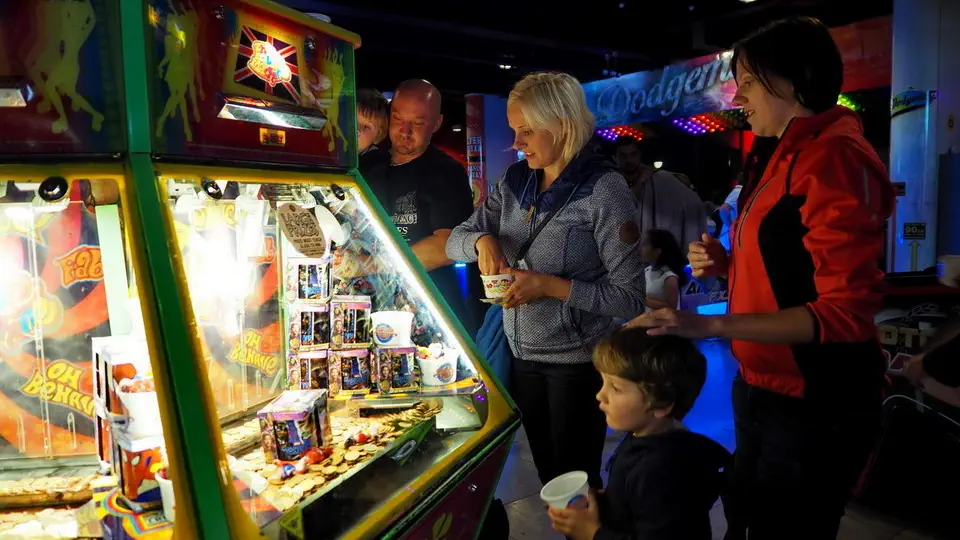
Inside the pavilion visitors will find arcades, fairground rides, a ghost train and a huge robotic arm ride for thrill seekers. Entry to the pier itself is inexpensive, and the atmosphere captures everything people imagine when thinking of a traditional British seaside resort.
Grand Pier
Marine Parade, Weston-super-Mare, North Somerset, BS23 1AL
Grand Pier is undoubtedly one of the town’s most recognisable landmarks. During summer, the pier becomes packed with street performers, snack stalls, souvenir stands and families enjoying the seaside atmosphere.
Inside the pavilion visitors will find arcades, fairground rides, a ghost train and a huge robotic arm ride for thrill seekers. Entry to the pier itself is inexpensive, and the atmosphere captures everything people imagine when thinking of a traditional British seaside resort.
Weston-Super-Mare Beach
Marine Parade, Weston-super-Mare, North Somerset, BS23 1AL
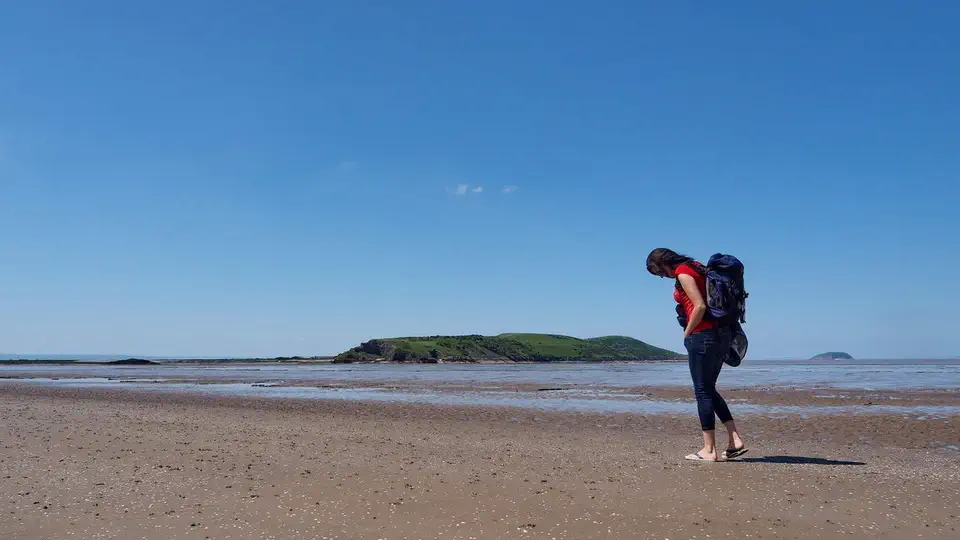
The beach in Weston-Super-Mare is one of the widest sandy beaches in England. At low tide, it stretches endlessly towards the horizon. While the Bristol Channel may not offer crystal-clear water, the beach itself has a unique beauty and atmosphere.
Throughout the year Weston-Super-Mare hosts concerts, sporting events and air shows along the seafront. Yet for us, the greatest attraction is simply walking westwards away from the crowds until the noise disappears completely and only silence, sea air and open space remain.
The Winter Gardens Pavilion
Royal Parade, Weston-super-Mare, North Somerset, BS23 1AJ
The Winter Gardens Pavilion has been an entertainment venue since 1927. During the Second World War the building even served as a BBC broadcasting station.
Today it hosts concerts, theatre productions, comedy shows, dance events and cultural festivals from around the world. It is an excellent place to visit in Weston-Super-Mare when the weather turns rainy.
Brean Down
Brean, Somerset, TA8 2RS
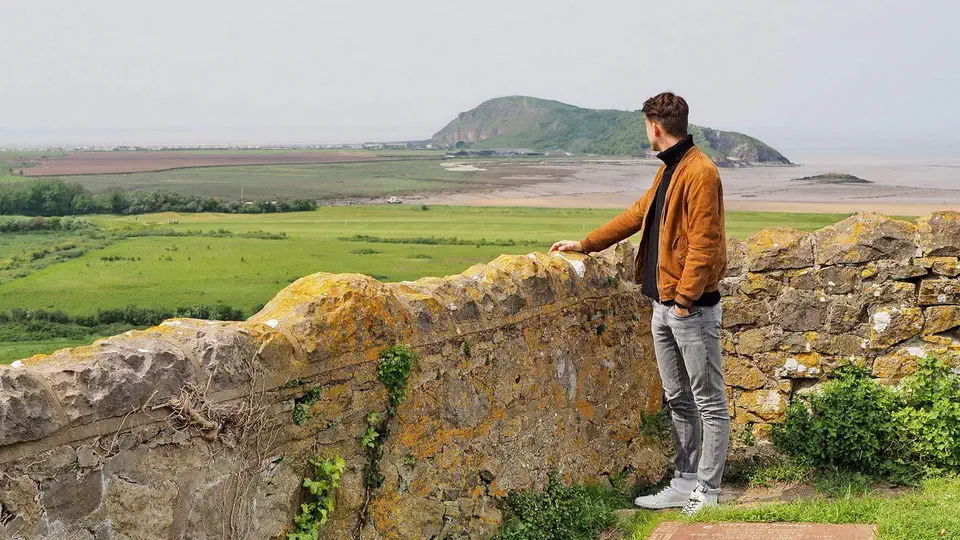
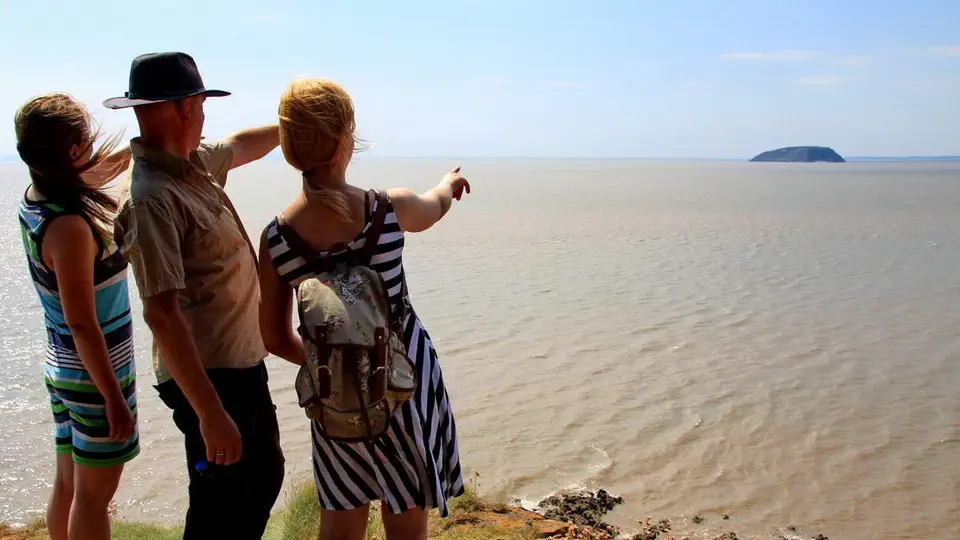
Located close to Weston-Super-Mare, Brean Down offers dramatic cliffs, sweeping beaches and a Victorian military fort at the tip of the peninsula. It is one of the most scenic places anywhere along the Bristol Channel coastline.
The Blakehay Theatre
Wadham Street, Weston-super-Mare, North Somerset, BS23 1JZ
Today’s Blakehay Theatre is housed in a former Baptist church, built in 1850. The building wasn’t particularly well-received by the local community, and after just a few years, a local architect designed it to be converted into a theatre. However, the church survived until World War II, when a well-aimed German bomb almost destroyed it.
It wasn’t until 1985 that the idea of converting the ruins into a theatre was revived. The central part of the church was converted into an auditorium with nearly 300 seats. Since then, the Blakehay Theatre has been a home for local artists who showcase their work. In addition to performances, it also hosts concerts and cultural events. It also houses yoga, tai chi, and other classes. Most events are free, so you can see if the subject interests you. Visit their official website to see what they have to offer.
Pucton Park
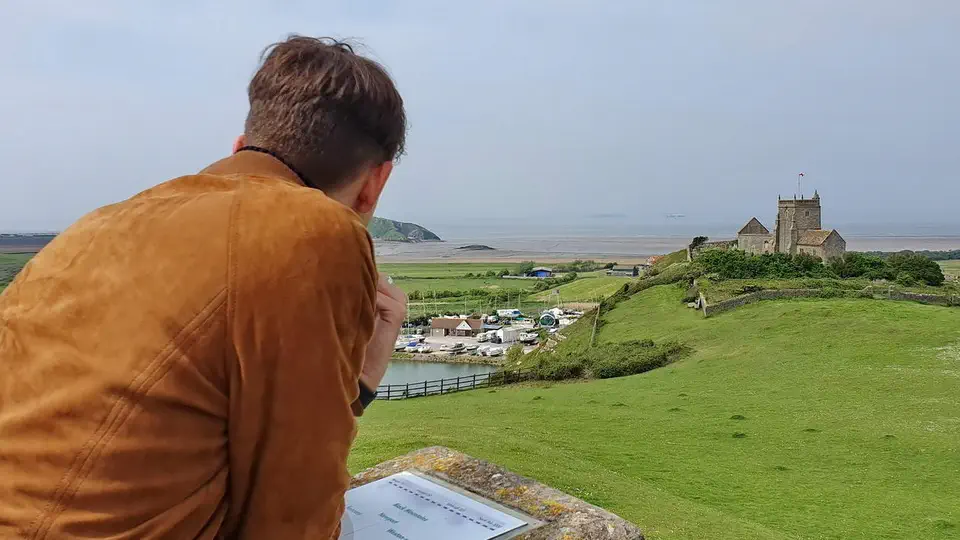
Cowslip Lane, Hewish, Weston-super-Mare, North Somerset, BS24 6AH
Pucton Park is the perfect place for kids. You’ll find attractions like horseback riding, climbing areas, and running on special terraces suspended between trees. You can take a boat ride, ride a small locomotive, or see how huge machines like an excavator, crane, or tractor operate. Kids will love the variety of activities planned for almost any weather.
Helicopter Museum
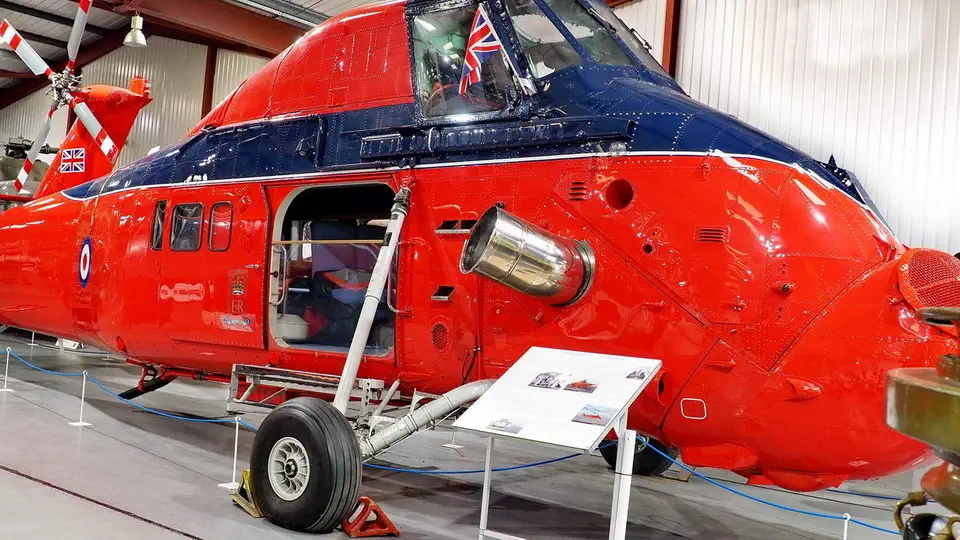
Locking Moor Road, Weston-Super-Mare, North Somerset, BS24 8PP
The Helicopter Museum sits near the entrance to Weston-Super-Mare and contains one of the world’s largest collections of helicopters. Some aircraft served in military transport roles only recently, while others are historic Cold War machines.
One of the most fascinating exhibits is the Soviet-built Mil Mi-24 attack helicopter, famously seen in the film Rambo III.
Theatre Tropicana
Marine Parade, Weston-super-Mare, North Somerset, BS23 1BE
The Tropicana Theatre is an icon of Weston’s waterfront district. It’s an open-air venue hosting various cultural and entertainment events. You can watch performances by renowned artists or listen to live music. It also hosts celebrity meet-and-greets and art exhibitions. Visit the Theatre Tropicana website for upcoming events and schedules.
Places Worth Visiting Near Weston-Super-Mare
There’s also no shortage of attractions around the city, including historical and entertainment venues.
The Bishop’s Palace and Gardens
Off Market Place, Wells, Somerset, BA5 2PD
The Bishop’s Palace and Gardens is over 800 years old and offers a fascinating glimpse into medieval England. The ruins, gardens and historic buildings make it a perfect destination for history lovers.
Wookey Hole Caves and Attractions
Wookey Hole, Wells, Somerset, BA5 1BB
Wookey Hole Caves combines natural caves with family-friendly attractions. Visitors can explore underground rivers, watch live performances and enjoy everything from mirror mazes to fantasy-themed exhibits. It remains one of the most popular family attractions near Weston-Super-Mare.
Clarence Park
Clarence Road North, Weston Super Mare, North Somerset, BS23 4AT
Besides the typical attractions of places like Weston-Super-Mare, there are also green spaces and parks. One of our favourites is Clarence Park. It’s close to the beach, and you can stroll in the shade of the trees or enjoy a pretty good coffee. If you enjoy bowling, there’s also the option.
Final Thoughts on Weston-Super-Mare
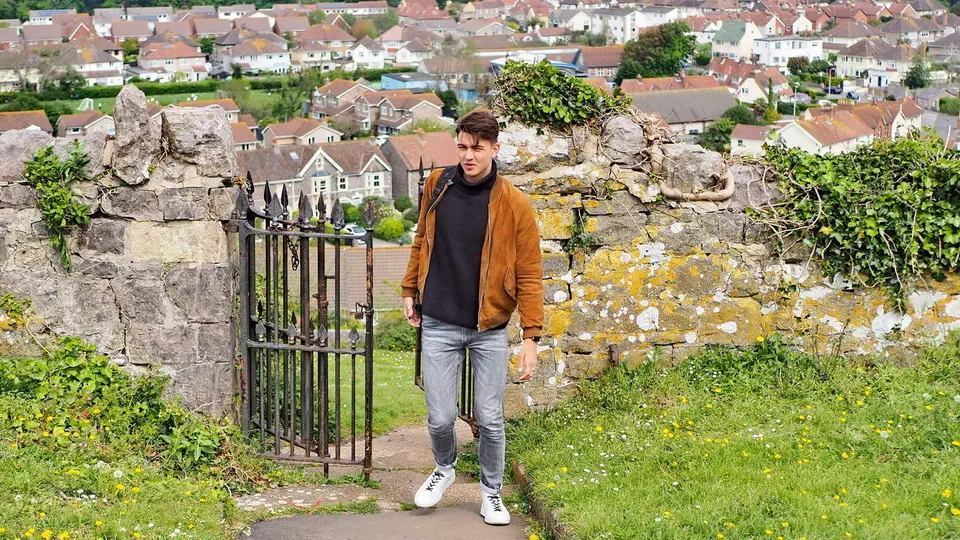
Weston-Super-Mare may not be the most glamorous seaside resort in the world, but that is exactly part of its charm. It feels authentic, nostalgic, and unmistakably British.
For us, the greatest pleasure is simply walking along the beach, climbing the nearby hills and looking out across the Bristol Channel towards the distant Welsh coastline. Weston-Super-Mare is a town that quietly grows on you with every visit.
Weston-Super-Mare Interesting Facts and information
- Banksy has strong links to Weston-Super-Mare and has organised several famous exhibitions in the town.
- Weston-Super-Mare beach is one of the widest sandy beaches in England.
- The town once operated the longest-running open-air swimming pool in England.
- The Bristol Channel near Weston-Super-Mare has one of the largest tidal ranges in the world.
- During low tide, the sea can retreat more than a kilometre from the promenade.
- Locals jokingly nickname the beach “Weston-Super-Mud” because of the thick mud brought in by the tides.
- Actress Diana Dors won a beauty contest in Weston-Super-Mare in 1944 before later becoming known as the “English Marilyn Monroe”.
- The first transatlantic telegraph cable between Britain and the United States entered the sea from Weston-Super-Mare beach.
- Famous astrophysicist Arthur Stanley Eddington grew up in Weston-Super-Mare and received his first telescope while attending school there.
- Famous People from Weston-Super-Mare
- Jeffrey Archer — novelist and politician
- Ritchie Blackmore — legendary guitarist and founding member of Deep Purple
- John Cleese — actor and member of Monty Python
- Rupert Graves — actor and producer
- Bob Hope — actor, comedian, singer and writer