The Wieliczka Salt Mine is a major attraction, visited by millions of tourists from around the world. In this article, I’ll tell you what you’ll see in this historic mine and provide a wealth of information and interesting facts.
The Wieliczka Salt Mine is visited by approximately 2 million tourists annually, and this number is growing year by year. This popularity is easy to understand when you explore the dark corridors and deep tunnels carved deep underground over the centuries. Today, I’ll explore what the Wieliczka Salt Mine has to offer and answer whether it’s worth dedicating a day to an underground expedition where almost everything you touch is made of salt. In the following article, I’ll answer a few questions and provide a wealth of information, along with, as usual, plenty of interesting facts.
Wieliczka Salt Mine – The history of salt mining in the Wieliczka Salt Mine
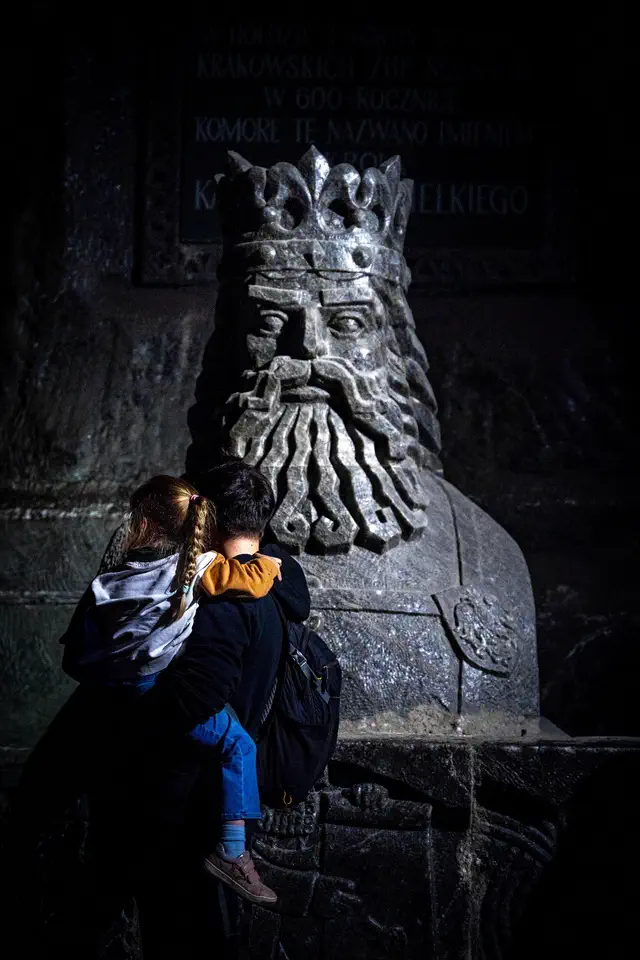
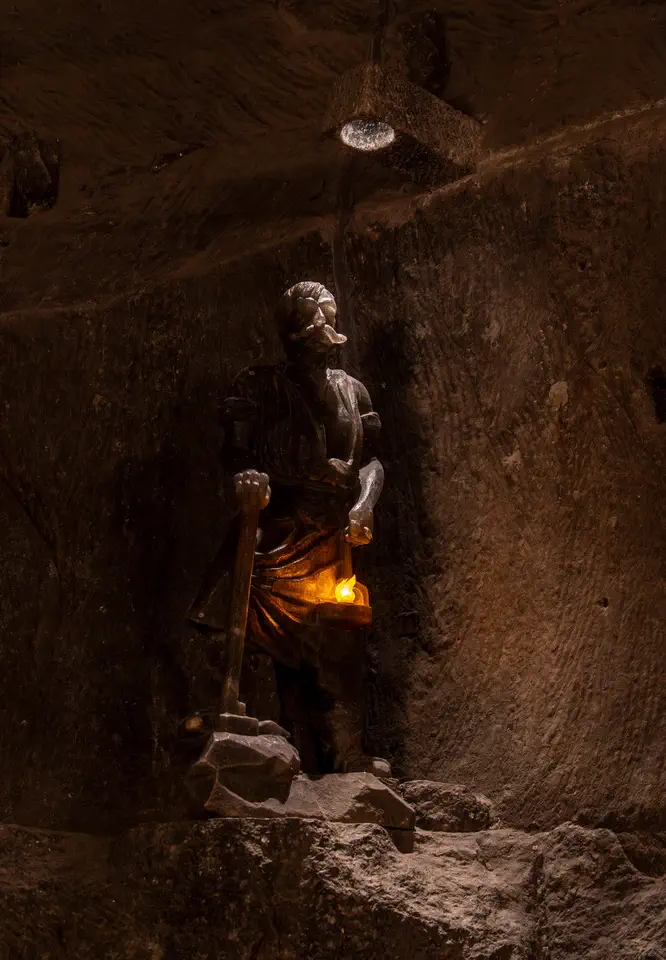
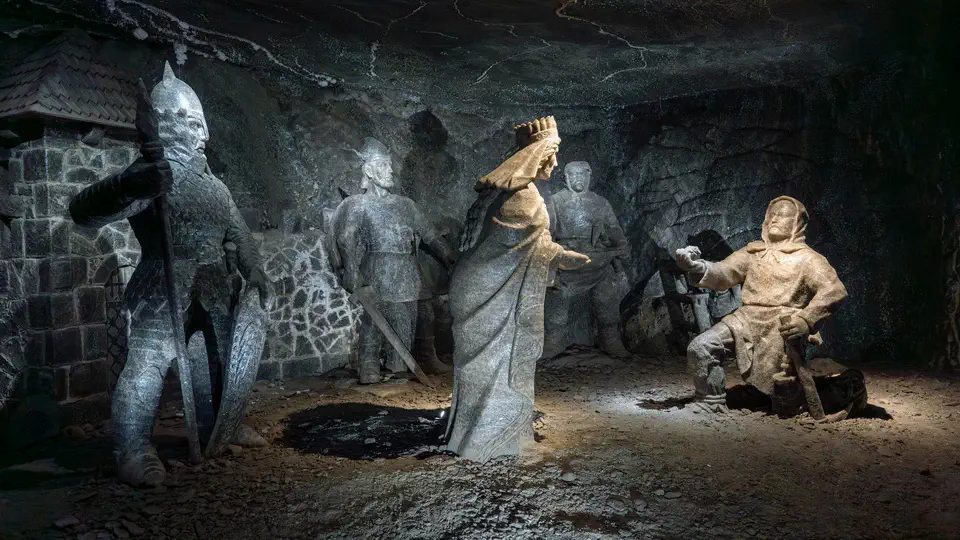
According to legend, the person responsible for all the excitement surrounding the extraction of “white gold” in Wieliczka and Bochnia was Princess Kinga. This Hungarian beauty, after marrying Bolesław the Chaste, received a salt mine in Máramaros (located in present-day Romania) as part of her dowry from her father. This gift did not bring her much joy—after all, it is difficult to take a mine with you to a new place of residence.
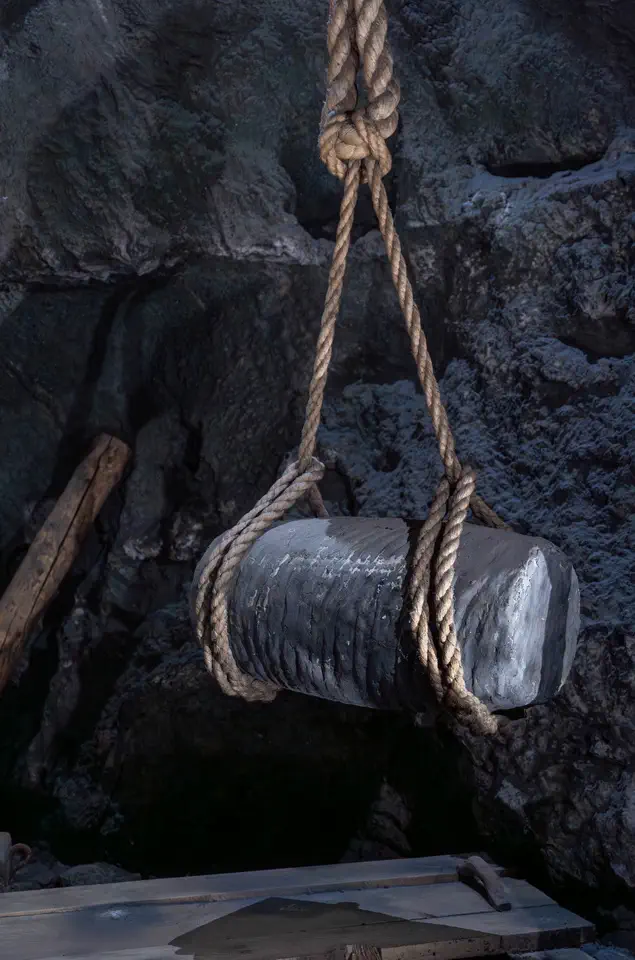
Before leaving, heartbroken, she took her engagement ring and threw it into a deep shaft of the mine in Máramaros. And here comes the twist: after her arrival in Wieliczka, someone accidentally dug up a lump of salt in which a ring suddenly gleamed—identical to the one that should have been lying far away in Romania. By the power of magic, the salt was said to have followed the princess from distant Máramaros all the way to the lands near Kraków. It was at the spot where the ring was found that today’s Wieliczka Salt Mine came into being.
Legends are one thing, history another. According to archaeologists, salt had been extracted in the area of present-day Wieliczka thousands of years ago. In the village of Barycz, artifacts have been discovered proving that the local population obtained salt through evaporation as early as prehistoric times (salt boiling is a process based on evaporating salty water). However, this method was laborious and inefficient, and the saline springs gradually began to dry up. Therefore, in the early Middle Ages, as the demand for salt increased, people decided to dig deeper into the ground. At the beginning of the 11th century, wells were dug to extract brine.
In the 13th century, during the construction of another well, the first blocks of rock salt were discovered—and this was a breakthrough. Just a few years later, the first mining shaft was created, proving to be a true gold mine. King Casimir the Great himself benefited from this discovery, as the royal treasury soon began to overflow. From that moment until today, the Wieliczka Salt Mine has grown to enormous proportions. A single shaft transformed into a nine-level underground giant, where people, like ants, carved out countless tunnels. Salt extraction continued uninterrupted until 1996. Nevertheless, the mine is still considered operational, as salt is obtained in a special facility using the evaporation method—by boiling brine.
Wieliczka Salt Mine – a wonderful place full of attractions
I first visited the Wieliczka Salt Mine about 20 years ago. As far as I remember, it was during my final year of secondary school. A lot of time has passed since then, and a few grey hairs have appeared on my head, but some memories have stayed with me. One of them is the old, shaky multi-level lift that took visitors back to the surface in complete darkness. The clatter of the engine and the grinding metal parts, mixed with the quiet squeals of my classmates, is something I will remember for the rest of my life.
You can imagine my surprise this time when it turned out that the old lift was gone. Instead, a new, shiny and completely silent lift was waiting for tourists. Although the ride in the new cabin was very comfortable, I couldn’t help but miss the old hoist a little. I do understand, however, that the number of visitors grows every year, and their safety and comfort must come first.
This year, I took my kids on an underground adventure. Before that, we had visited the salt mine in Bochnia, the gold mine in Złoty Stok, and the Big Pit coal mine in Wales, where the girls had a fantastic time. So I expected the Wieliczka Salt Mine to appeal to them as well. After the changes introduced recently, the underground passages and all their hidden corners—though still dark—have become noticeably safer and more child-friendly. This is especially visible in the secured passages and the numerous staircases, now equipped with comfortable handrails and anti-slip surfaces.
Visiting the Wieliczka Salt Mine
Before you set off to explore the seemingly endless tunnels and mining shafts, it’s worth deciding what you want to see. The mine offers two routes that provide wholly different experiences and showcase different parts of the underground world. One route allows you to admire what is most valuable in the mine—beautiful sculptures, vast historic chambers, and salt lakes. The other route is more raw and authentic, showing what underground mining work really looked like.
Wieliczka Salt Mine and Tourist Route – sculptures, chambers and beautiful decorations
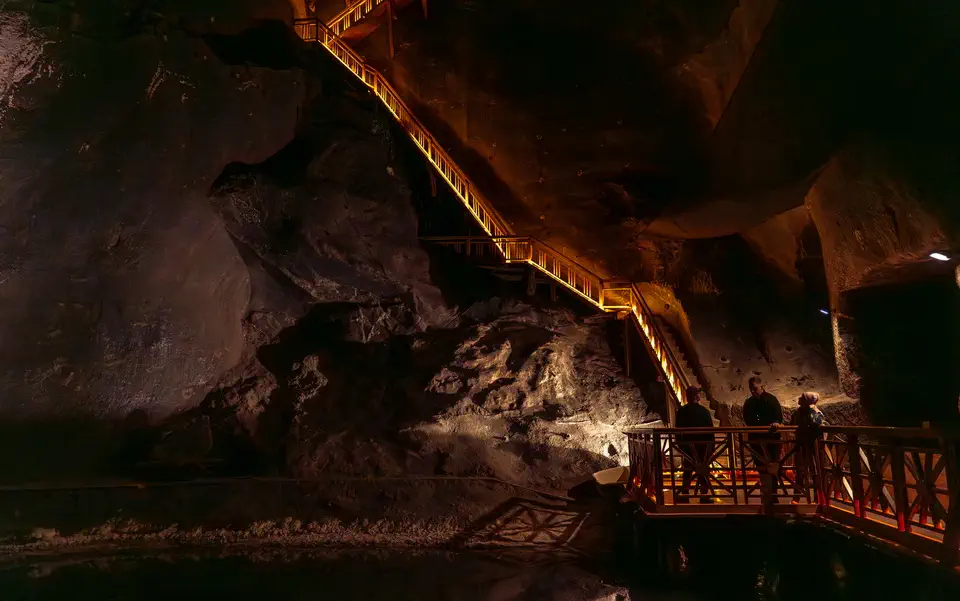
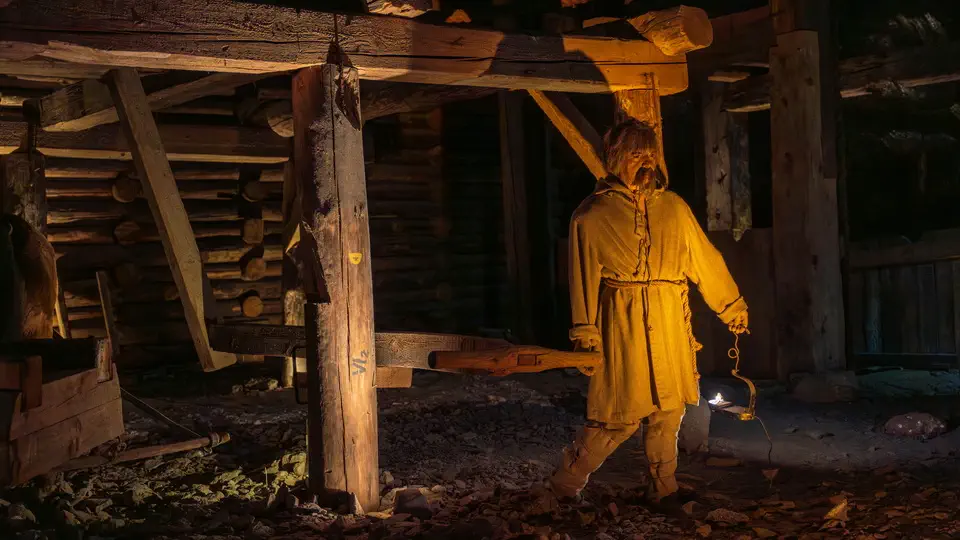
The tourist route begins with a descent of 372 steps—at least that’s the number mentioned by the guide. If you count them and get a different result, please let me know. The constant march down the spiral staircase means that after just a few levels your head may start to spin. Looking through the railing doesn’t help either, especially for those with a fear of heights. A narrow gap between the barriers runs down into pitch-black nothingness, and the bottom is nowhere to be seen.
Only after descending several dozen meters do you reach Level I of the mine, and it is here that your underground adventure truly begins. Of course, this is not the end of the stairs—the next-level lies far below your feet, so be prepared for yet another downward journey.
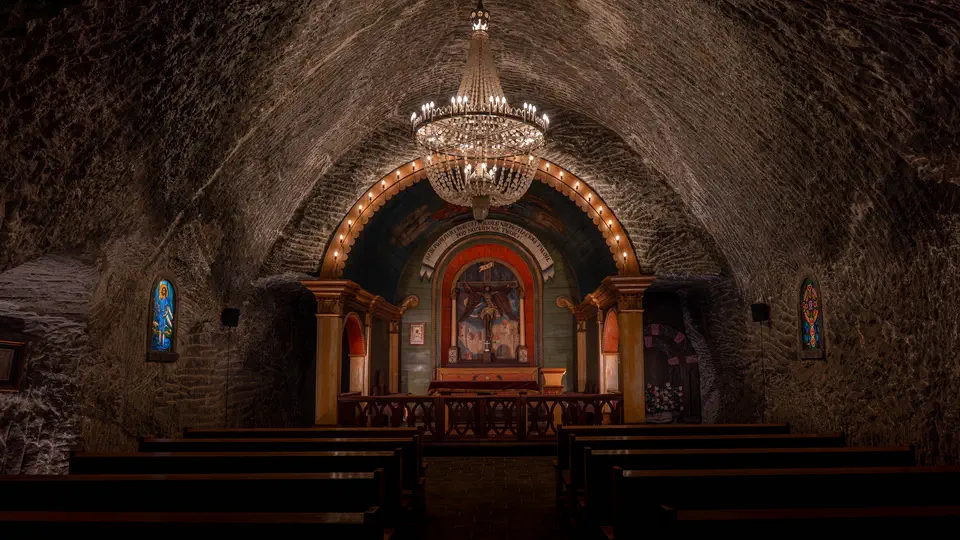
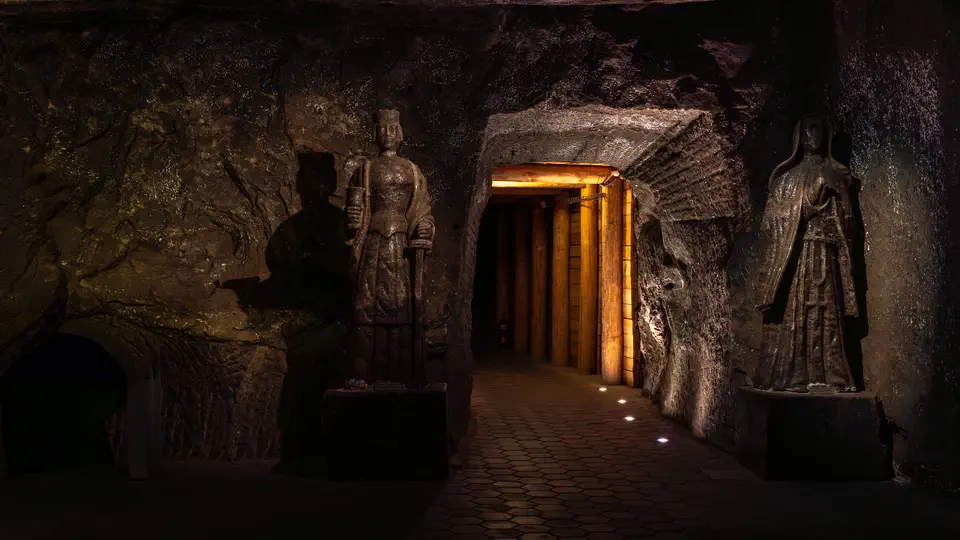
As you descend, you will constantly pass more chambers and corridors that seem to have no end. Carefully designed lighting makes the chapels, majestic sculptures, and vast salt chambers you encounter along the way look as if they came straight out of a fairy tale—as though it weren’t people who carved the rock over centuries, but Tolkien’s dwarves. The Wieliczka Salt Mine has corners that resemble the cinematic Mines of Moria. In fact, if you pay close attention, you may spot small dwarf-like figures lurking in the shadows, guarding their secrets and, the moment you look away, continuing to carve out new tunnels.
Wieliczka Salt Mine and the Miners’ Route – austerity, helmets, and flashlights
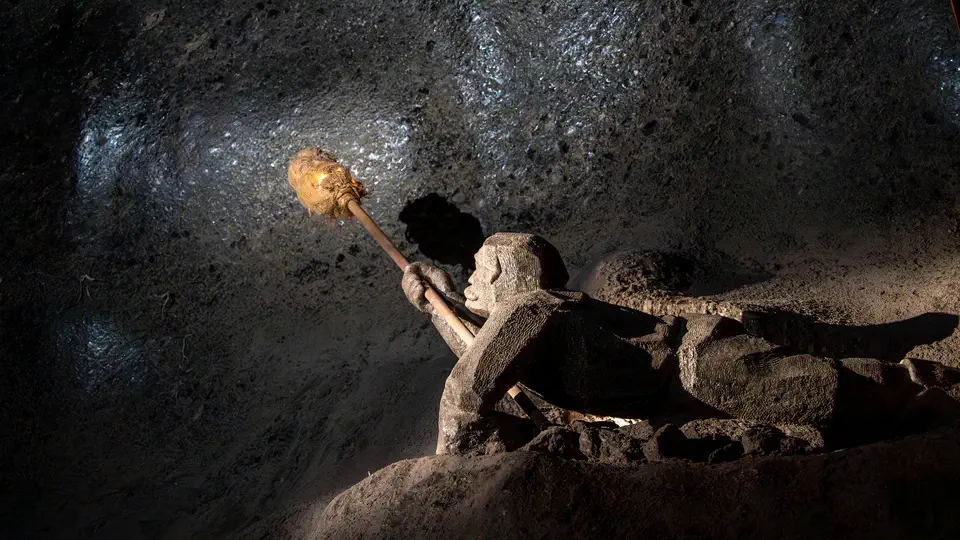
The mining route is a wholly different experience. There are no intricate sculptures and no beautiful lighting here—only darkness, pierced by the faint beams of headlamps. As you make your way through the dark corridors, you are treated not as a tourist, but as a Śleper—an unskilled worker equipped with a protective suit, helmet, and headlamp, following the guide through the workings. Occasionally, the guide assigns tasks: measuring methane levels to check for explosive mixtures, extracting a lump of salt using nothing but your strength, or finding your way through a gloomy underground labyrinth.
It is this interactivity that turns the descent underground into a true adventure—one you will remember for a long time. I experienced something similar while visiting the Big Pit coal mine in Wales, and it left a strong impression on me. Moving through narrow, unlit tunnels sent shivers down my spine. The stories told by the guides—many of whom had once worked underground themselves—were especially fascinating and offered a glimpse into the hard, demanding life of miners below the surface.
Wieliczka Salt Mine and the Kraków Saltworks Museum Route – don’t miss it!
If you think this is the end of the route and the tour, you are very much mistaken. The Wieliczka Salt Mine offers one more extraordinary attraction—the Kraków Saltworks Museum, and you should make sure to visit it. At this stage, many visitors are already tired after walking through the mining corridors, so they skip the museum, hop into the lift, and end their adventure. I strongly recommend staying underground a little longer and joining a guide who will take you on a journey deep into the past.
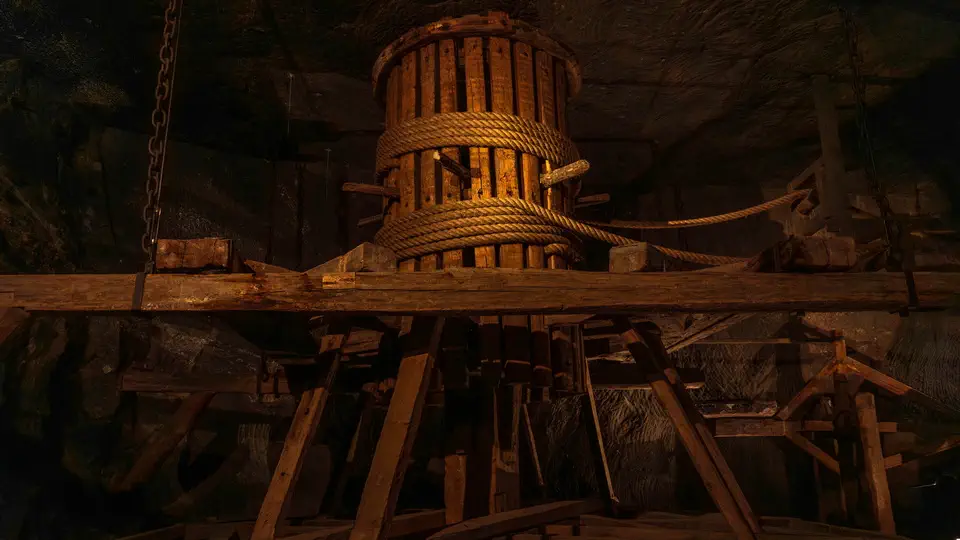
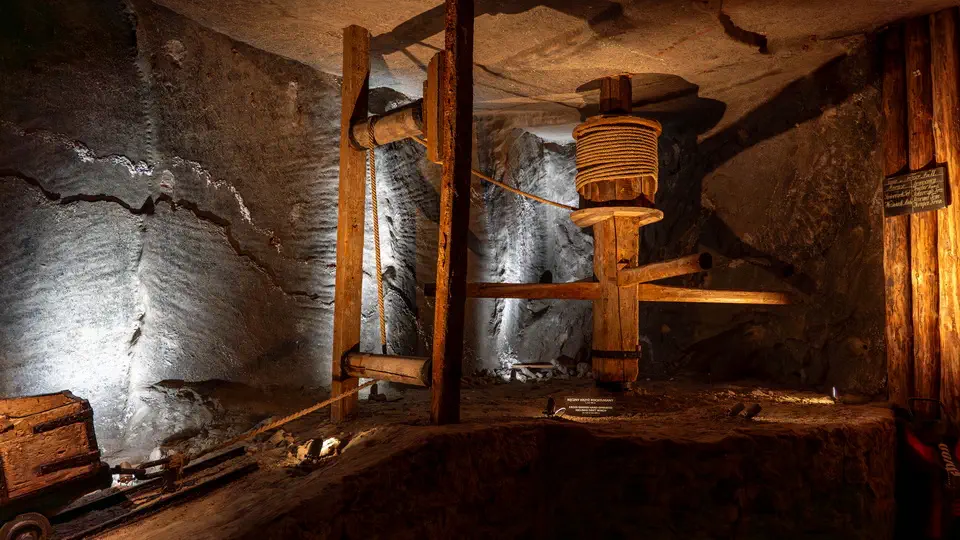
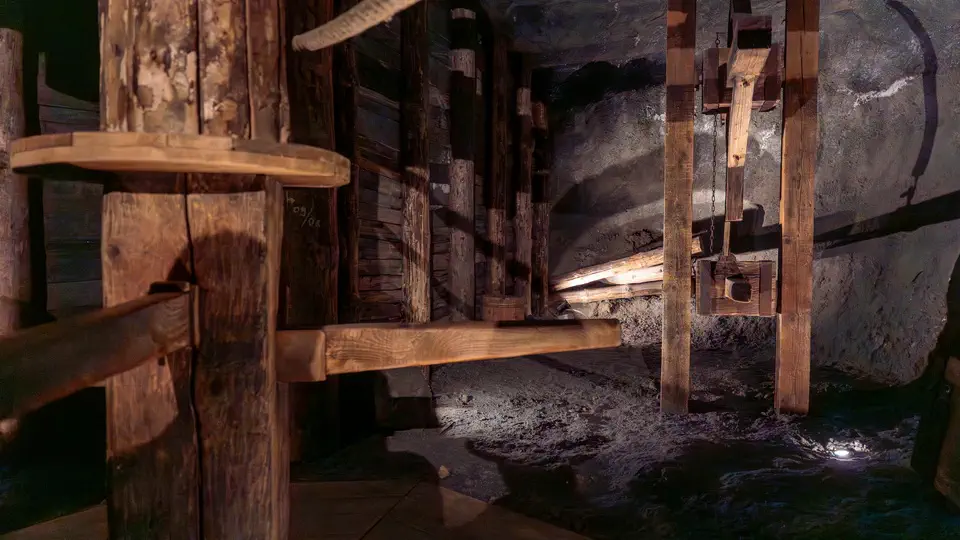
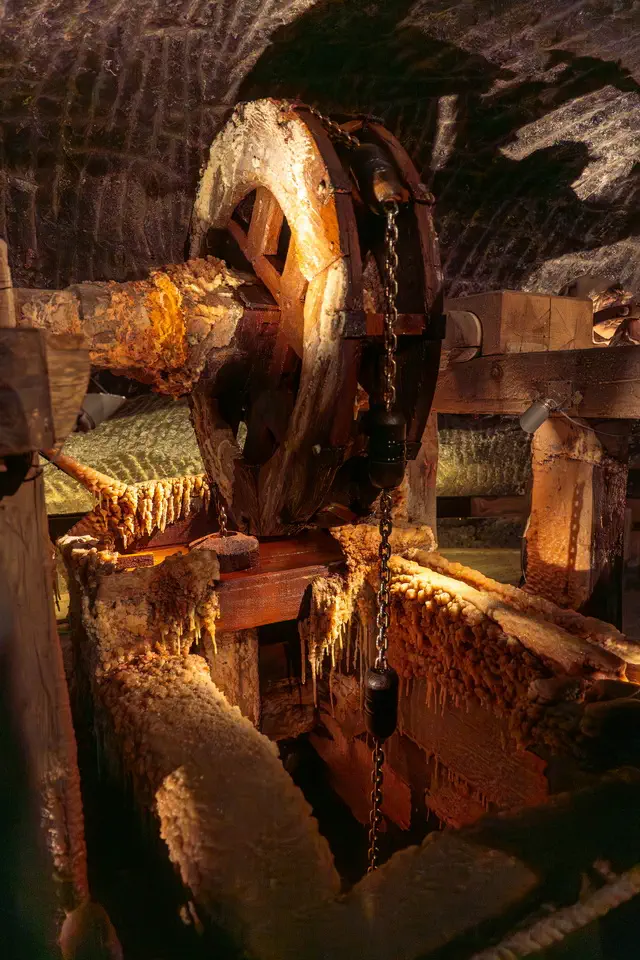
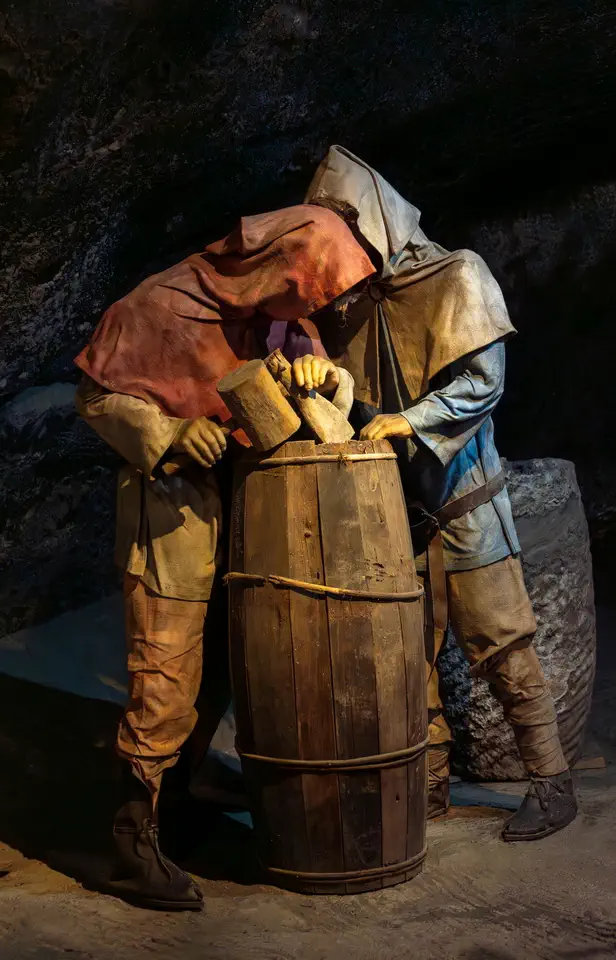
The museum is located in 14 chambers, and each one of them is worth the time spent there. You will see tools that were used for centuries to extract and mine salt. The gigantic treadmills make the greatest impression. One of these wooden machines is the largest structure of its kind in the world. Believe me, this place leaves a stronger impression than the entire earlier walk through the mine’s tunnels. Interestingly, it was only here that our kids truly felt like they were in a real mine—full of mysterious equipment, machines, and unbelievably large, colourful blocks of salt of various types.
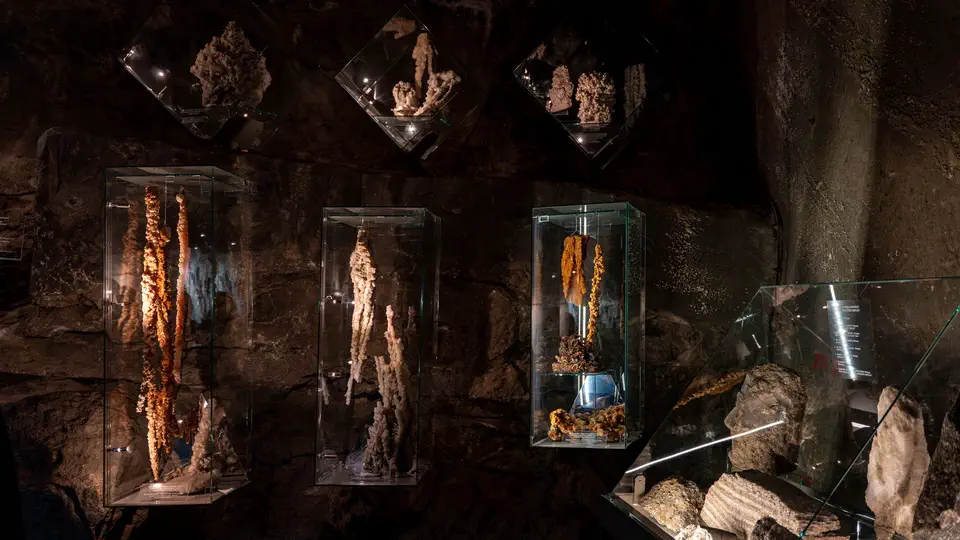
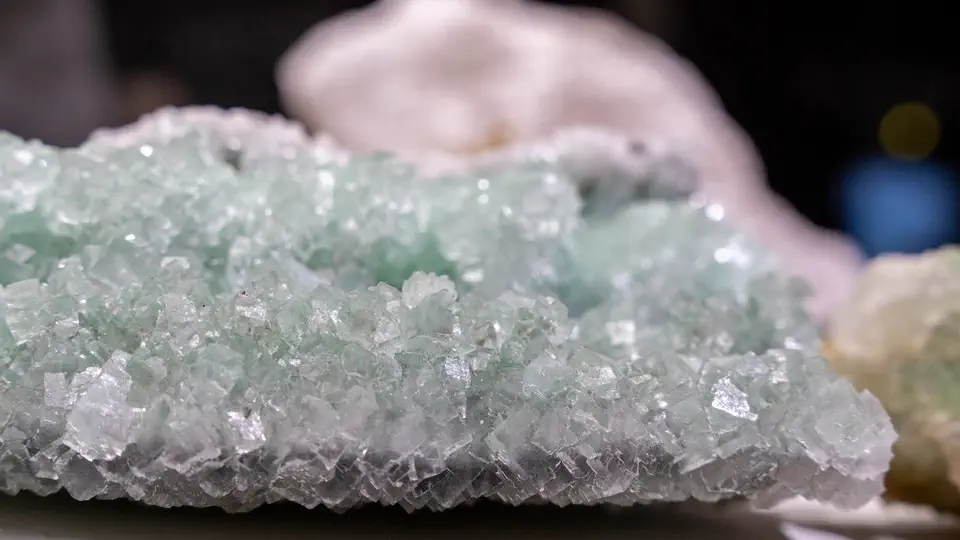
Another surprise awaits in the form of original paintings by the master Jan Matejko, including a portrait of Saint Kinga. There are holographic maps of the mine’s corridors, the beautiful Horn of the Brotherhood of Miners made in 1534 from the horn of an ancient aurochs, and finally the breathtaking salt crystals from the famous Crystal Caves. I’ll say it once again—make sure to visit the Kraków Saltworks Museum. You won’t regret it!
Wieliczka Salt Mine practical information
Tourist route:
- The route is guided: this is hardly surprising, as wandering the mine’s cavernous labyrinth alone could leave you completely speechless.
- Ticket Purchase: We recommend purchasing tickets online, which allows you to skip the lines at the traditional ticket office. After purchasing, you must print your tickets. This can be done at the dedicated ticket office right at the entrance to the mine.
- Tour Starting Point: Daniłowicz Shaft – After purchasing your tickets, you will be ushered into the mine at the appropriate time.
- Difficulty Level: There is no age limit on the tourist route. The overwhelming darkness can be challenging. Not recommended for those suffering from claustrophobia.
- Tour Hours: The route is open from 8:00 AM to 5:00 PM.
- Duration: Approximately 2 hours.
- Distance: 3.5 kilometres.
- Depth you will reach: 135 m.
Mining route:
- The route is guided: identical to the tourist route.
- Ticket Purchase: As before, we recommend purchasing online. This will avoid the long lines at the ticket office.
- Ticket Prices: Unfortunately, ticket sales are currently suspended.
- Tour Start: Regis Shaft – after purchasing tickets, you will be escorted into the mine at the appropriate time.
- The difficulty level can be rated as moderate: There is an age limit for the route; participants over 10 years of age are welcome.
- Visiting Hours: Due to the current epidemiological situation, the route has been closed until further notice.
- Duration: approximately 3 hours.
- Distance to Cover: 1.9 kilometres.
- Depth Reached: 101 meters.
Krakow Saltworks Museum route:
- The tour is guided: and it’s a good thing that it is. It would be hard to guess what we were seeing on our own. I must honestly say that our guide was excellent. Interesting stories, well-prepared. There was nothing to complain about!
- Ticket prices: FREE! The Kraków Saltworks Museum is included in the entry fee for the tourist or mining tour.
- Tour hours: The tour is open from 8:00 AM to 5:00 PM.
- Tour duration: approximately 1 hour.
- Distance: approximately 1.5 km.
*I’m deliberately not providing prices, as they can change daily. For up-to-date information, please visit the mine’s official website.
Thoughts and summary of the Wieliczka Salt Mine tour
As I mentioned earlier, we have visited many mines. Some were typical industrial sites that were later transformed into museums and tourist routes. Others were places that, thanks to carefully designed exhibitions, provided a thrill of excitement and encouraged visitors to explore the world of mining more closely. The Wieliczka Salt Mine is different from all of them. First and foremost, it is an art gallery hidden deep underground, constantly surprising visitors with something new—and only then a mine.
Everything here feels magical, as if taken straight from another world. Massive sculptures, illuminated by soft light, seem to observe us with the same curiosity with which we observe them. Vast brine lakes, like gigantic mirrors, visually enlarge the chambers and make us feel incredibly small. Their dark surfaces send shivers down the spine, as if something were alive just beneath the water, ready at any moment to stretch its tentacles above the surface. It comes as no surprise that the Wieliczka Salt Mine is visited by millions of tourists— I would gladly return here again myself.
In the end, there is nothing left for me to do but recommend visiting Wieliczka once more. After all, it is a Polish national treasure we can proudly present to the entire world… even if I still miss that old, noisy lift.
Wieliczka Salt Mine information and curiosities
- The Wieliczka Salt Mine operated continuously from the 13th century until 1996, making it one of the oldest salt mines in the world.
- Its history dates back over 700 years, with the first mention of salt mining in this area dating back to the Middle Ages.
- The mine is located approximately 14 kilometres from Kraków and has been one of the most important economic centres of Małopolska for centuries.
- In the Middle Ages, Wieliczka salt was called “white gold” and was a major source of income for Polish kings.
- For many centuries, the mine belonged to the royal Kraków Saltworks.
- It is estimated that at its peak, it generated as much as one-third of the state treasury’s income.
- Salt mining ceased only in the late 20th century due to geological hazards and flooding of the workings.
- The mine’s underground corridors have a total length of over 245 kilometres.
- The entire complex consists of approximately 2,500 chambers of varying sizes and purposes.
- The mine has nine levels, reaching a depth of approximately 327 meters underground.
- Only a small section of the entire underground network is open to tourists.
- The temperature underground remains around 14–16°C year-round.
- Wieliczka is not just a mine, but a true underground city with chapels, sculptures, and ceremonial halls.
- The most famous site is the Chapel of St. Kinga, carved entirely in salt.
- Its construction took several decades and required the extraction of thousands of tons of salt.
- The chandeliers in the chapels are made of salt crystals, which, when polished, resemble glass.
- The mine contains numerous sculptures depicting historical figures, saints, and biblical scenes.
- The chapels in the mine served as places of prayer and spiritual refuge for miners.
- To this day, the Chapel of St. Kinga remains a sacred site. Masses, concerts, and wedding ceremonies are held at St. Kinga Cathedral.
- One of the oldest chapels dates back to the 17th century and has retained its original character.
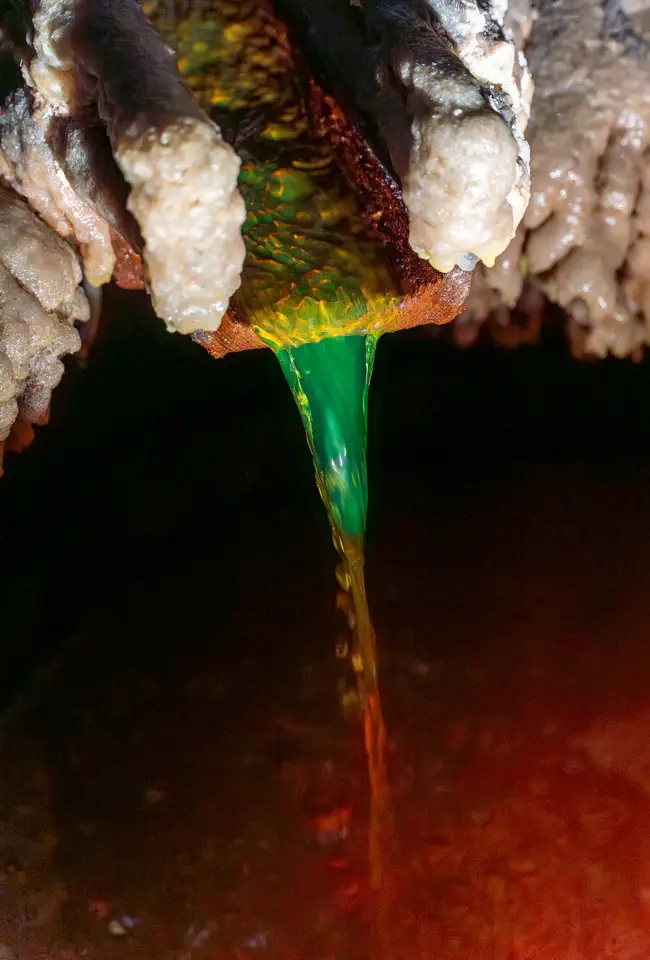
- The underground contains salt lakes with an extremely high salinity.
- In some chambers, bodies can be seen floating on the surface of the water, similar to the Dead Sea.
- The mine’s microclimate favours the treatment of respiratory diseases, which is why an underground health resort operates here.
- The mine was visited by famous historical figures, including Nicolaus Copernicus.
- The first tourists began to visit it as early as the 18th century.
- Currently, various tour routes are available, including a classic tourist route and a more demanding mining route.
- The tour involves climbing hundreds of steps, primarily at the beginning of the route.
- Old mining tools and equipment have been preserved in good condition thanks to the preservative properties of salt.
- The mine has hosted unusual events such as balls, concerts, and exhibitions.
- The Wieliczka Salt Mine was one of the first sites in the world to be added to the UNESCO World Heritage List.
- Nicolaus Copernicus and other famous figures – the beautiful underground spaces have long attracted tourists. Nicolaus Copernicus, Fryderyk Chopin, Karol Wojtyła, J. W. Goethe, and Bolesław Prus, among others, have descended underground.
- Number of tourists – in 2019, the mine was visited by over 1,863,000 tourists. Of these, 154,000 were British, 87,000 Italians, 79,000 Germans, and 75,000 French.
- Inscription on the UNESCO List – The Wieliczka Salt Mine was honoured to be added to the World Heritage List in 1976.
- Polish Horse-Wheel – The largest wooden mining machine in the world stands at the Kraków Saltworks Museum. It is the 17th-century horse-drawn “Polish” horse-wheel.
- Horses in the Mine – The first horses were brought into the salt mine in the 17th century. The last representative of the species to work in Wieliczka was Baśka. She retired in 2002. She was 16 years old at the time.
- The total length of the workings – approximately 3,000 chambers from which salt was extracted over the centuries – stretches for a total of approximately 300 km.
- Modern Mining – Today, no one extracts salt from the underground corridors. Now, according to the guide, the mine is engaged in extracting money from tourists’ wallets. In 2016, revenue reached a mere 166 million złoty.
- Employment – The mine employs approximately 400 workers, who, in addition to serving tourists, also perform mining work, including maintaining and securing the workings.
- Crystal Caves Nature Reserve – Poland’s first underground reserve has operated within the mine since 2000. It protects natural underground voids with unique accumulations of halite crystals.
- Windsurfing in a mine? Why not! – In 2004, Olympic champion Mateusz Kusznierewicz fulfilled his dream of sailing in a body of water never before sailed. This happened in a brine lake at a depth of 104 meters.
- The first underground bungee jump – a 36-meters jump on a rope – was successfully completed in the Stanisław Staszic Chamber (at a depth of 125 meters). This was achieved by the pioneer of bungee jumping in Poland – Bogdan Kopka.
- Record-breaking balloon flight – the Staszic Chamber also witnessed an above-ground balloon flight that was entered into the Guinness Book of Records. The balloon, 18 meters tall and 13 meters wide, rose to a height of 2 meters 13 centimetres. The flight lasted several minutes.