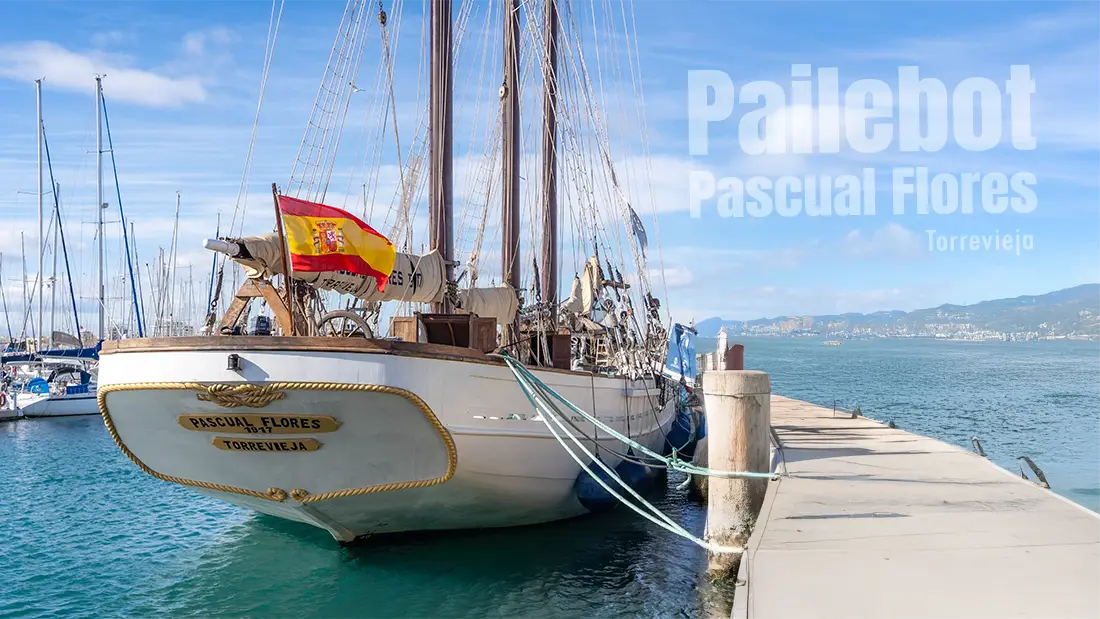
The sailing ship Pascual Flores is moored at the quay in Torrevieja on the Costa Blanca in Spain.
Pascual Flores is a beautiful and majestic schooner that you can visit in the port of Torrevieja on the Costa Blanca. It is an unusual floating museum whose mission is to promote the tourism and culture of the city of Torrevieja and to present the history of the world’s largest fleet of pailebotes. At the turn of the 19th and 20th centuries, they traded across the entire Mediterranean basin.
Pascual Flores – practical information to help you plan your visit
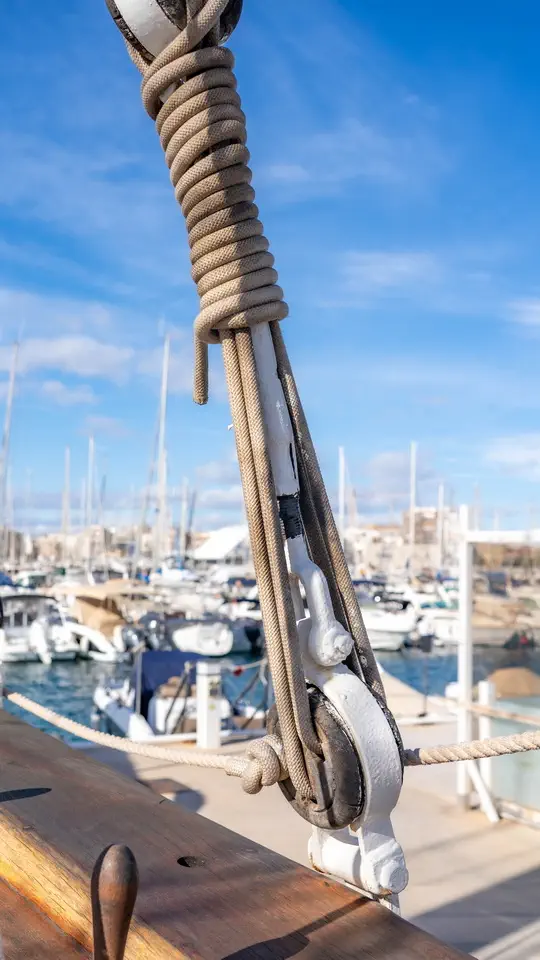
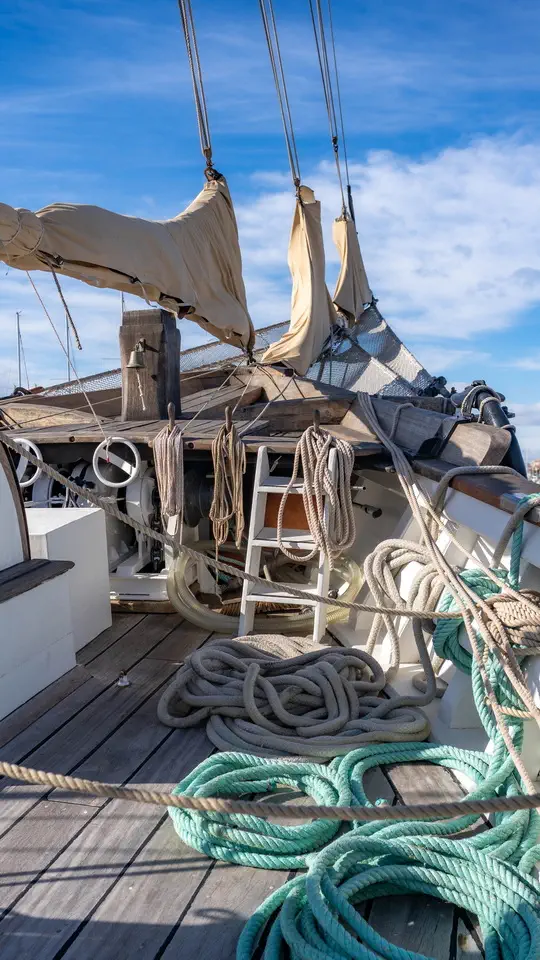
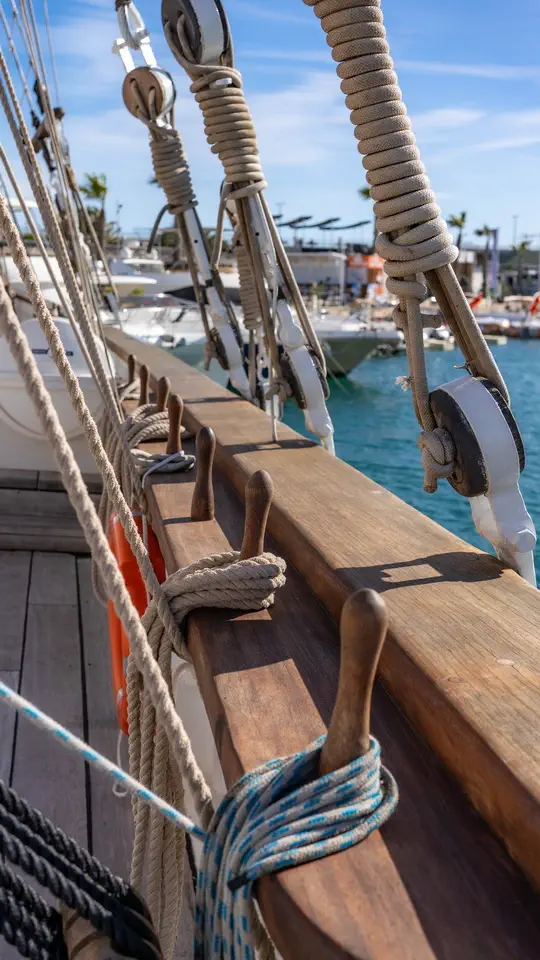
The Pascual Flores has been docked at the Marina Salinas quay in the port of Torrevieja since November 9, 2025. Previously, the sailing vessel embarked on a multi-month Mediterranean cruise and visited numerous European ports.
You can board the sailing ship from Thursday to Sunday from 10:00 a.m. to 6:00 p.m.
The ticket price is a symbolic €5. You can purchase tickets on board the ship or online at www.fundacionnaovictoria.org.
The history of pailebote schooners in Torrevieja
Since ancient times, Torrevieja has played an important role as a centre for salt exports, extracted from the warm lagoons surrounding the town. The enterprise proved so profitable that at the beginning of the 19th century, by order of the King of Spain, a company was established to manage the numerous salt works, warehouses and the expanding port. From here, hundreds of ships set sail carrying salt to the largest ports of the Mediterranean, as well as to the distant Caribbean.
The salt trade developed in Torrevieja at an extraordinary pace — so much so that at the beginning of the 20th century, the town could boast the largest fleet of sailing vessels in the entire Mediterranean. The number of seaworthy ships exceeded 200, which is all the more impressive considering that the town had a population of only around 6,000 at the time. The fleet consisted of both small boats with a displacement of several dozen tonnes and impressive pailebotes — schooners with distinctive triangular sails.
The greatest flourishing of maritime trade in Torrevieja took place in the 1920s. In the following decades, sea traffic gradually gave way to rail and road transport. Nevertheless, until the 1950s many vessels were still leaving the port of Torrevieja, heading towards various corners of the Mediterranean.
Pascual Flores — a beautiful sailing ship and her history
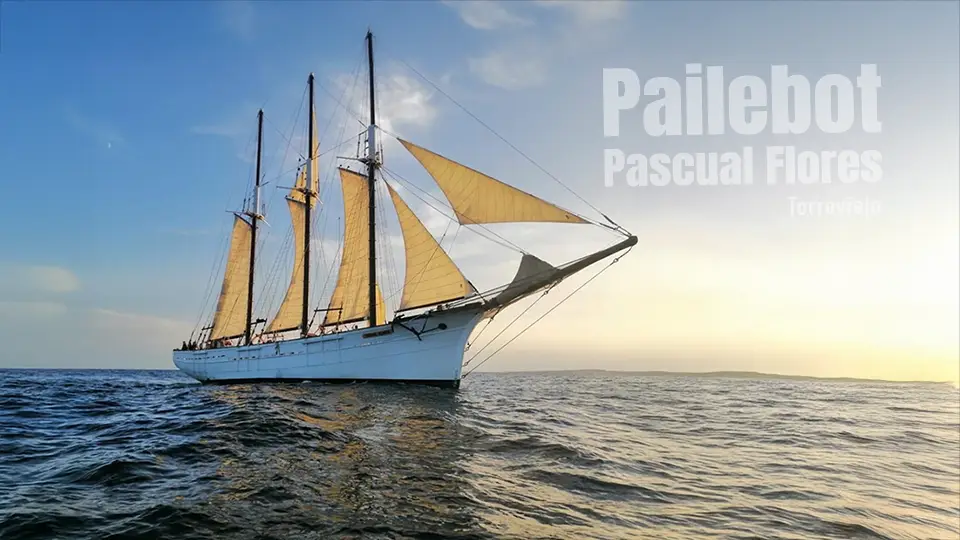
Like many other sailing vessels built during that period, Pascual Flores was constructed in the shipyards of Torrevieja. The most famous and highly regarded among them belonged to Antonio Marí, known as el Temporal — “the Storm” — due to the extraordinary speed with which completed vessels left his yard. The construction of Pascual Flores was completed in 1917, and in the same year she entered service. She transported fruit, salt, and other small cargoes to nearly all the major ports of the Mediterranean basin, occasionally venturing as far as the west coast of Africa.
During her numerous voyages, the ship, and her crew experienced countless adventures, stories of which today’s sailors working on board can recount for hours. The vessel battled powerful storms, lost sails and rigging, and even several crew members. On another occasion, she fled from African pirates or became lost among the Greek islands, yet she always ultimately returned safely to port. Over the years, Pascual Flores underwent many modernisations and structural changes. For a long time, she carried people and goods, until she was eventually sold to a shipowner in England, where her service came to an end, forgotten at anchor near the port of Milford.
After many years, the vessel was spotted and recognised by sailors from a Spanish merchant ship. When news of her poor condition reached the councillors of Torrevieja, it was decided to repurchase the ship and restore her former splendour so that Pascual Flores could become a symbol of the town’s maritime heritage and its flagship. This objective was achieved thanks to an agreement between Torrevieja Town Council and the Nao Victoria Foundation — a non-profit organisation dedicated to promoting and popularising events significant to Spanish tradition and culture, supported by several replicas of famous historic ships.
- Nao Victoria — a replica of the ship that first circumnavigated the globe, the greatest maritime feat of all time.
- El Galeón Andalucía — a replica of a 17th-century Spanish galleon.
- Nao Santa María — a replica of the largest of Christopher Columbus’s three ships on his voyage searching for a sea route to Asia.
- Pascual Flores — a pailebote sailing under the colours of the city of Torrevieja, where she was built in 1917.
Visiting Pascual Flores
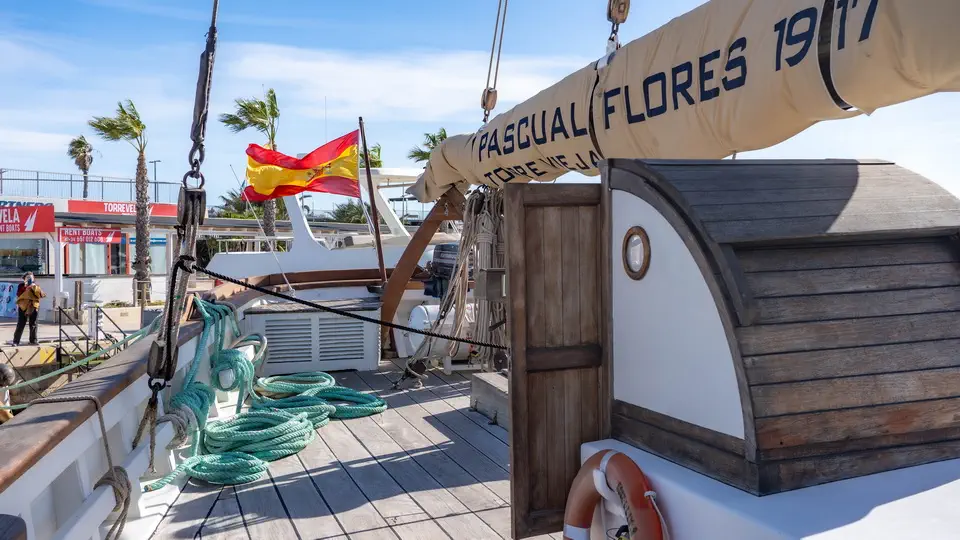
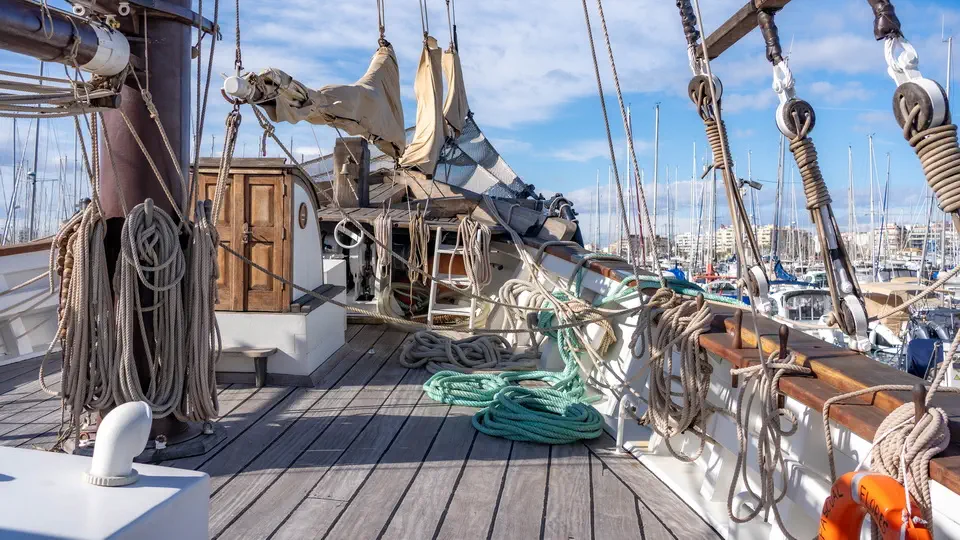
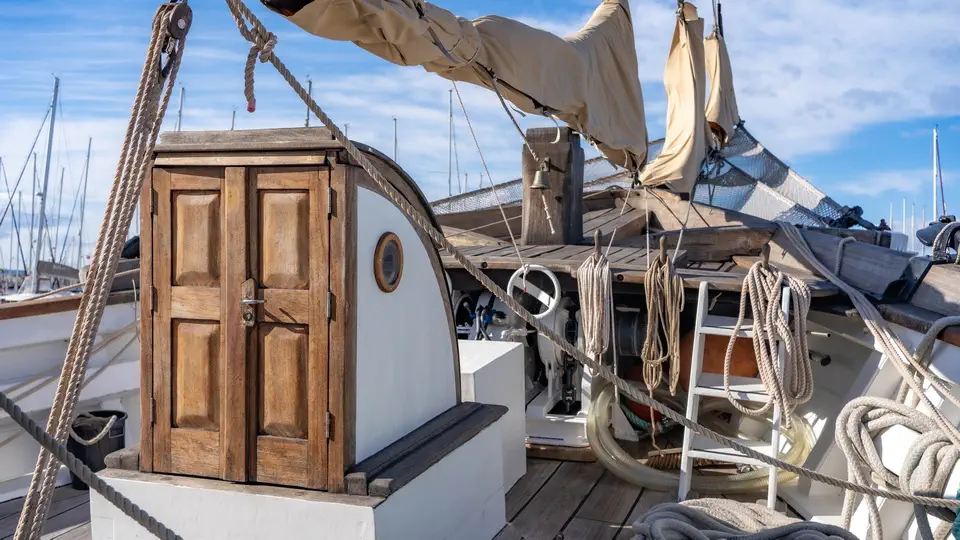
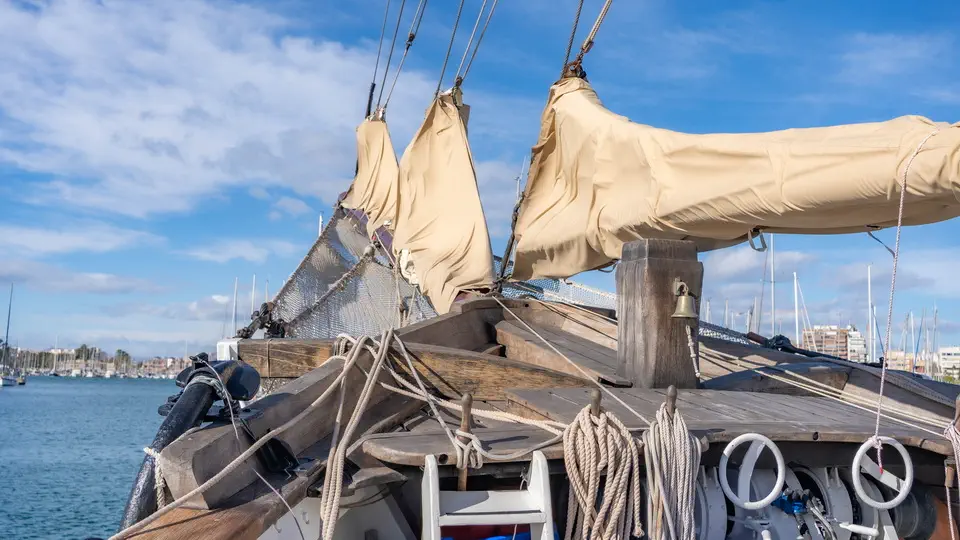
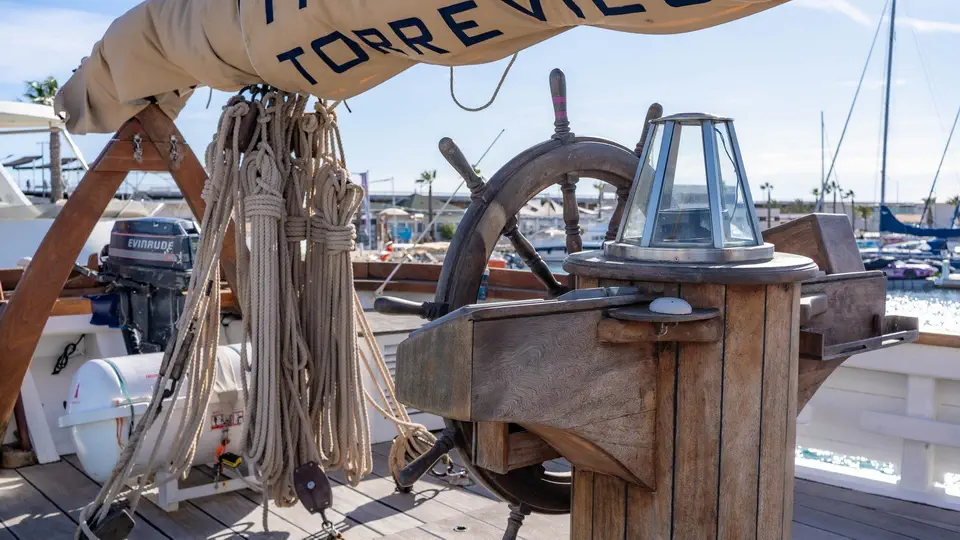
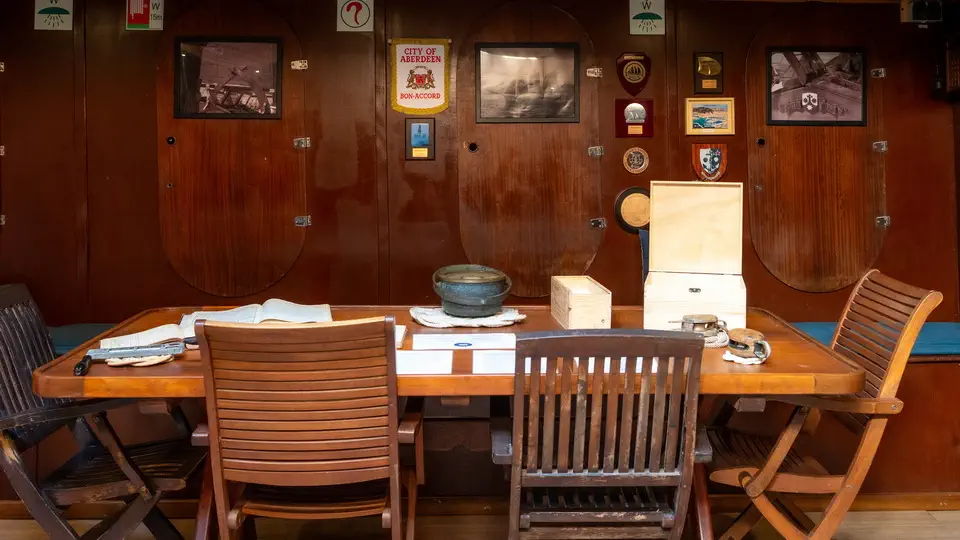
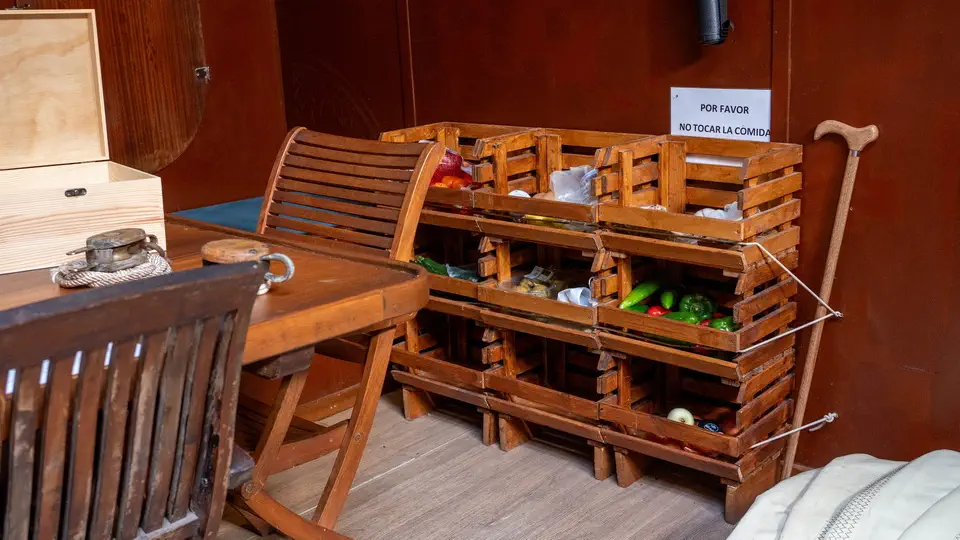
Visiting the ship moored in the port of Torrevieja is a pure pleasure — after all, there are few things in the world more beautiful than a sailing vessel, even when her sails lie safely furled and secured. When we stepped on board, we were the only visitors and had the entire ship to ourselves. Pascual Flores is not large, which becomes evident from the amount of gear and equipment stowed literally everywhere. Coils of rope, additional rigging, spare sails and a multitude of chests and boots holding supplies and everything necessary for a sea voyage take up considerable space — and the crew must also be accommodated and granted at least a semblance of comfort.
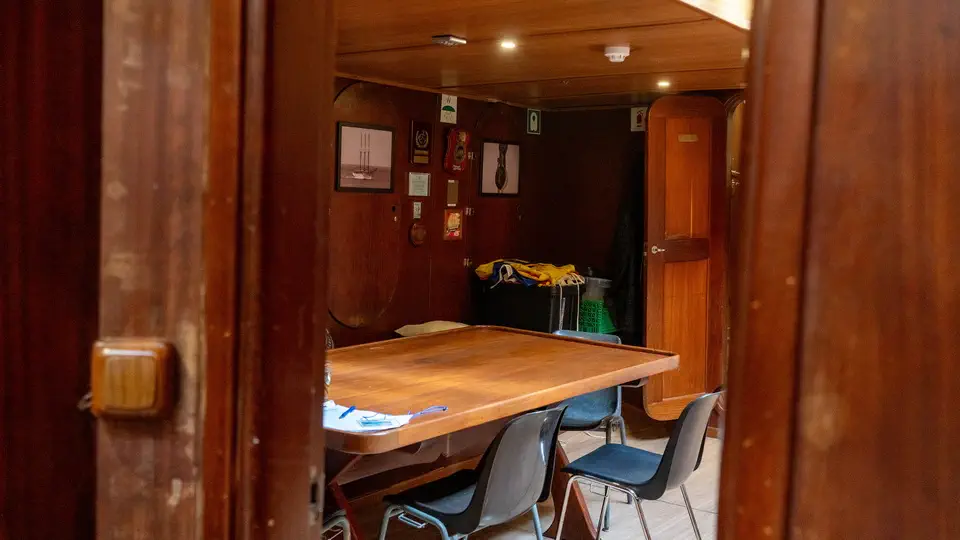
Below deck it is no better — quite the opposite. The cramped conditions and lack of space can overwhelm anyone who struggles with claustrophobia. Narrow toilets, tight bunk beds and stuffy air were once the daily reality of sailors working on vessels of this kind. Today, of course, there are such luxuries as electricity and air conditioning, but a century ago life aboard a small sailing ship must have been extremely demanding.
There are very few restrictions regarding visiting the ship, both on deck and below — only a handful of rooms remains closed. You are therefore free to explore the nooks and crannies of the vessel. Remember that the crew and those associated with the ship are happy to answer any questions and do so with genuine enthusiasm. We enjoyed it immensely and, given that the ticket costs only a few euros, it is an experience I wholeheartedly recommend to everyone.
Pascual Flores today
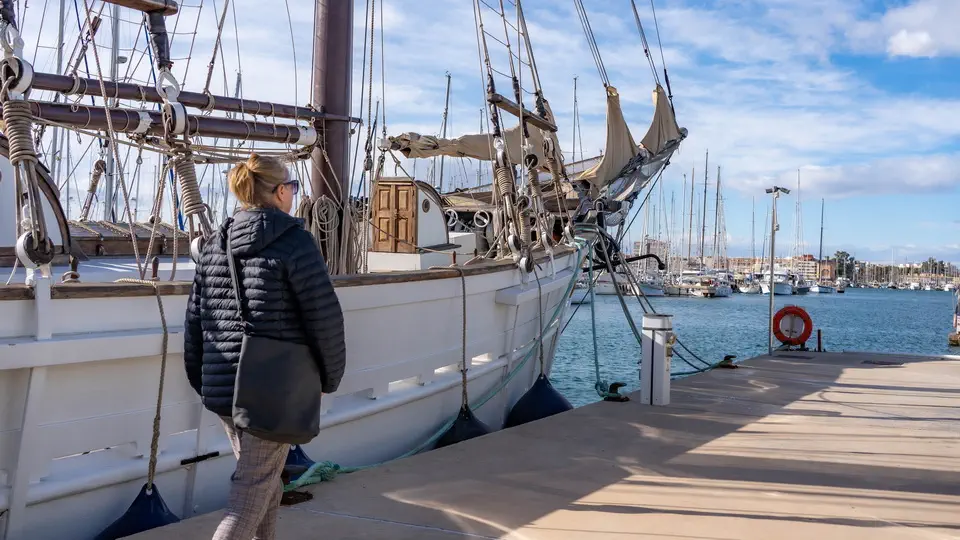
The pailebote Pascual Flores takes part in numerous voyages and calls at many ports around the world, promoting the rich history of Torrevieja and reminding visitors how important this unassuming town once was. Both the ship and her crew present the history of pailebotes in the context of salt transport across the Mediterranean. Each year, Pascual Flores returns to the port of Torrevieja so that residents and the many tourists can admire this remarkable sailing ship up close.
Pascual Flores — interesting facts about the sailing ship from Torrevieja and information about pailebotes
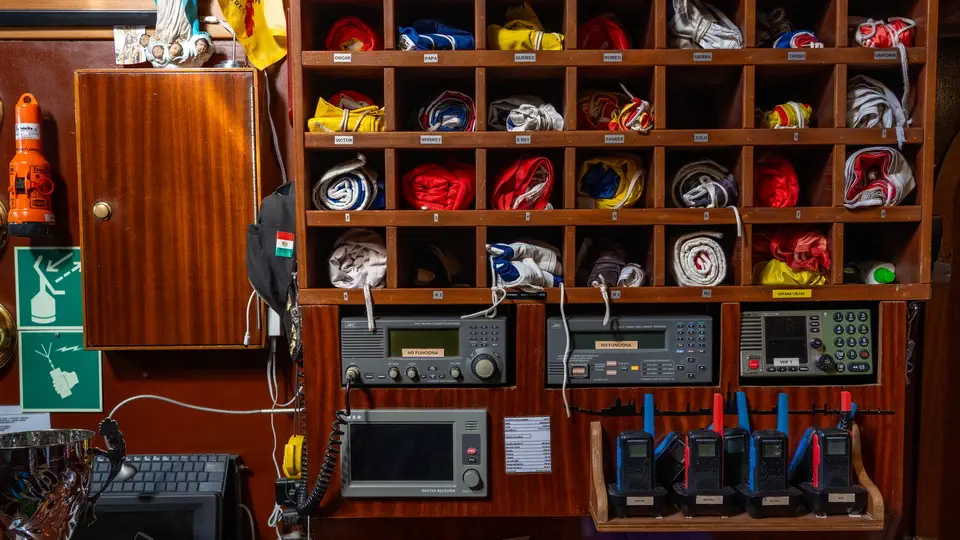
- Pascual Flores was built in 1917 in Torrevieja by Antonio Marí, a renowned Spanish shipwright.
- The ship measures over 34 metres in length, has a draught of 4 metres, and the height of the main mast above deck is 26 metres.
- The vessel boasts a displacement of 210 tonnes and 400 square metres of sail area.
- Below deck there is space for six cabins with 20 berths.
- Pailebote is a term used mainly in Spain and Latin America to describe small merchant sailing vessels.
- The name derives from the English language — most likely from the term “pilot boat”.
- They were most often schooner-rigged vessels (two or more masts).
- They were very popular in the 19th and early 20th centuries.
- They were mainly used to transport goods along coastlines.
- They were renowned for their manoeuvrability and relatively shallow draught.
- Thanks to their shallow draught, they could enter small ports and bays.
- They frequently carried salt, wine, grain, timber, and fruit.
- They were cheaper to operate than large ocean-going sailing ships.
- A pailebote’s crew was usually small — from a few to a dozen sailors.
- In Caribbean countries, pailebotes played an important role in local interisland trade.
- In some regions they were also used as fishing vessels.
- Their hull design was adapted for coastal navigation, although some also sailed across the Atlantic.
- In South America, they were used to transporting coffee and sugar.
- Pailebotes were often built of wood, although later steel constructions appeared.
- They were considerably faster than traditional merchant barges.
- Some pailebotes were armed during times of conflict and served as auxiliary vessels.
- With the development of steamships, their importance began to decline.
- To this day, in some Latin American countries the word “pailebote” is still used as a general term for a small sailing vessel.
- Several historic vessels of this type have been restored and now serve as museum or tourist ships.