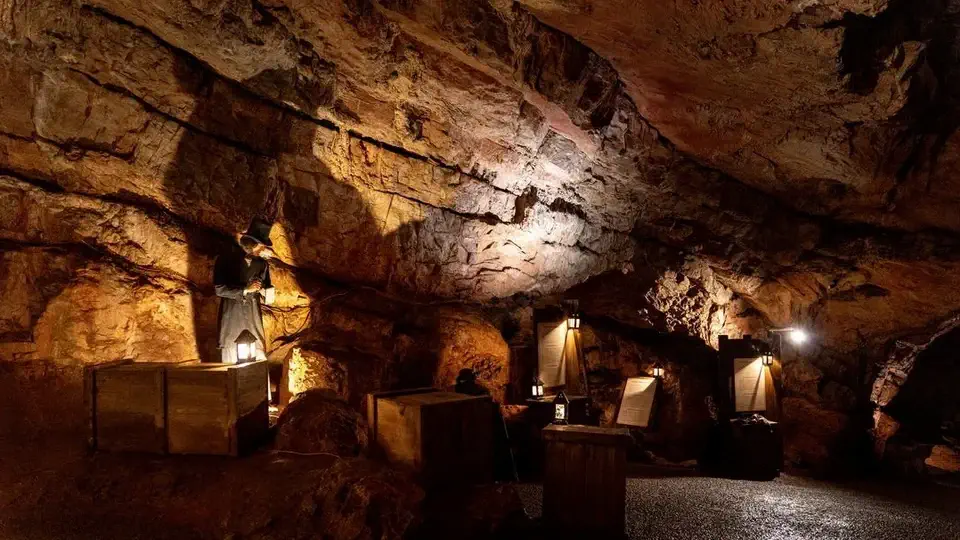
Kents Cavern Caves in the town of Torquay are a true work of art created by nature.
Caves are fascinating and unusual places, mainly because they hide the secrets of our most distant past. During our many travels, we have visited the huge Batu Caves in Kuala Lumpur, the capital of Malaysia. We descended into the Jameos del Agua caves on the island of Lanzarote, visited the Wierzchowska Cave on the Kraków–Częstochowa Upland, as well as many other, more or less well-known stone monuments created by nature.
Kents Cavern Caves in the town of Torquay in south-west England
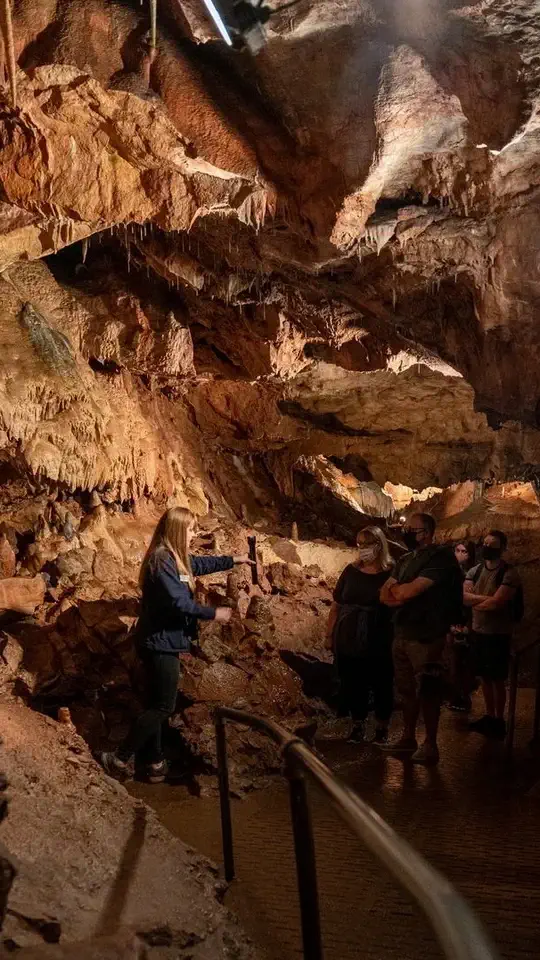
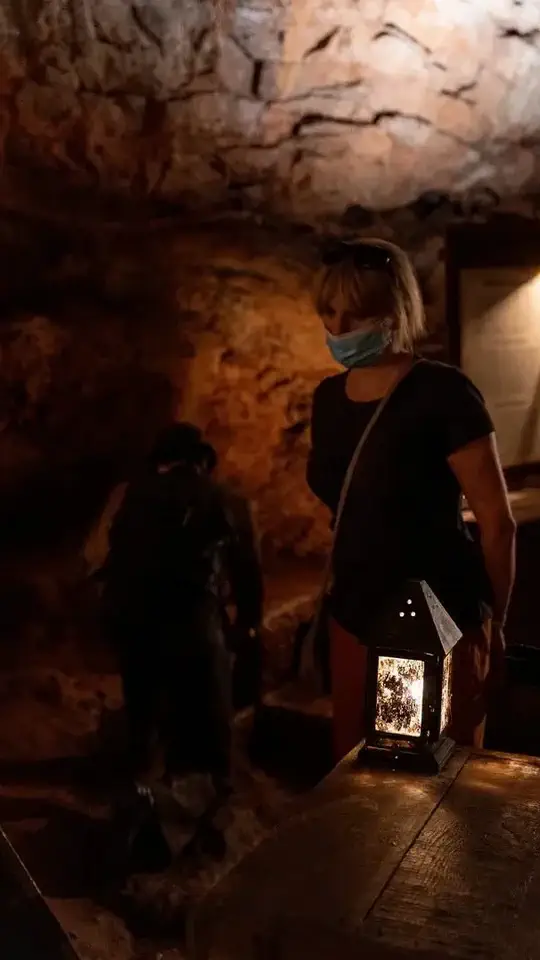
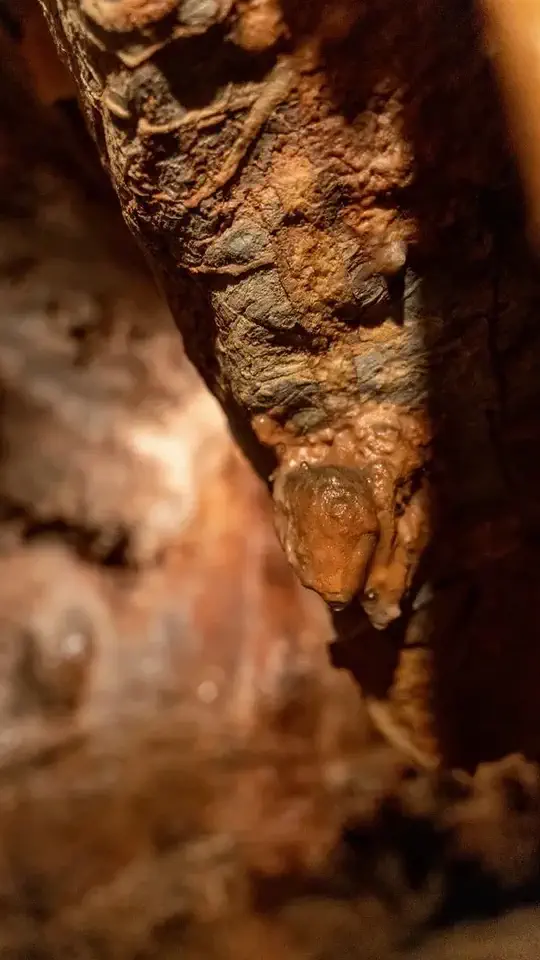
Kents Cavern consists of large chambers and underground passageways known as limestone caves, located on the rocky coast of the Cornish Peninsula. Like almost all limestone caves, those in Torquay were formed by rainwater seeping deep underground through cracks in the rock. An old saying claims that even the smallest drop can wear away stone, and here, in the cool and damp underground corridors, this truth becomes obvious. Over millions of years, water flowing from the surface carved out impressive caves and long tunnels. At one point, there was so much water that it formed an underground river and many streams feeding into it. Over time, the river dried up, leaving behind smooth tunnels, vast chambers and remarkable rock formations resembling underground sculptures.
In Kents Cavern, as in other caves of this type, hundreds of stalactites and stalagmites formed over millions of years, creating beautiful dripstone decorations. Unfortunately, people began exploring the caves before the value and beauty of these monumental underground spaces were fully understood. Sadly, dynamite and heavy hammers were used to widen tunnels and narrow passages. Powerful explosions allowed access to the interior of the caves, but at the same time caused serious damage.
The discovery of Kents Cavern in Torquay and its history
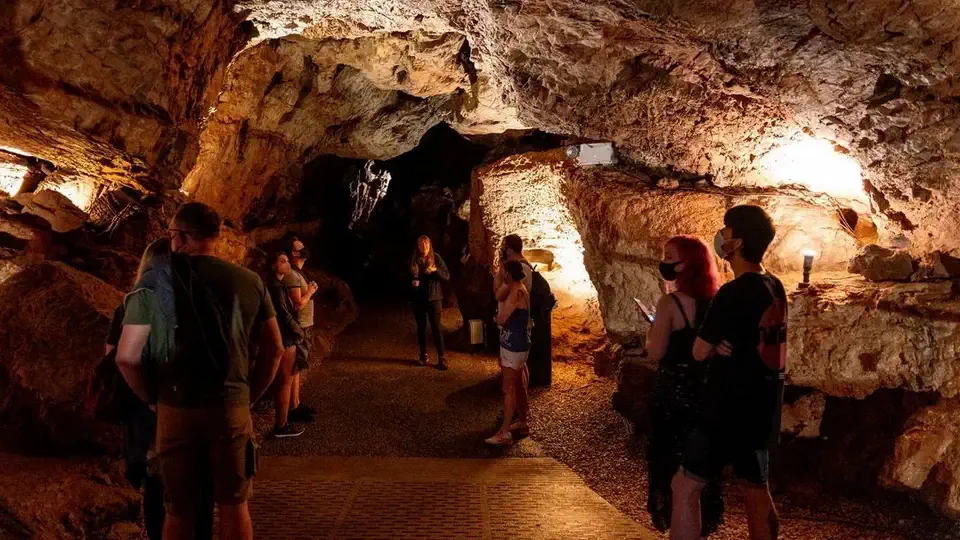
From the very beginning, the discovery of the caves in Torquay was a major event. Over time, they became an important archaeological and anthropological site. It quickly became clear that the underground chambers had once been home to early humans. Bones and tools belonging not only to modern humans but also to an earlier human form, known as Heidelberg Man, sometimes referred to as the Swanscombe Man, were found in the caves.
Heidelberg Man was an intermediate form between modern humans and Neanderthals. He appeared in Europe around half a million years ago and became extinct about two hundred thousand years later. In the caves beneath Torquay, archaeologists found not only human remains but also stone tools and evidence of fire use. Research indicates that the caves were inhabited not only by humans but also by many animals. Among the discoveries were remains of giant cave bears, sabre-toothed tigers and many other extinct creatures.
Kents Cavern in Torquay and its exploration
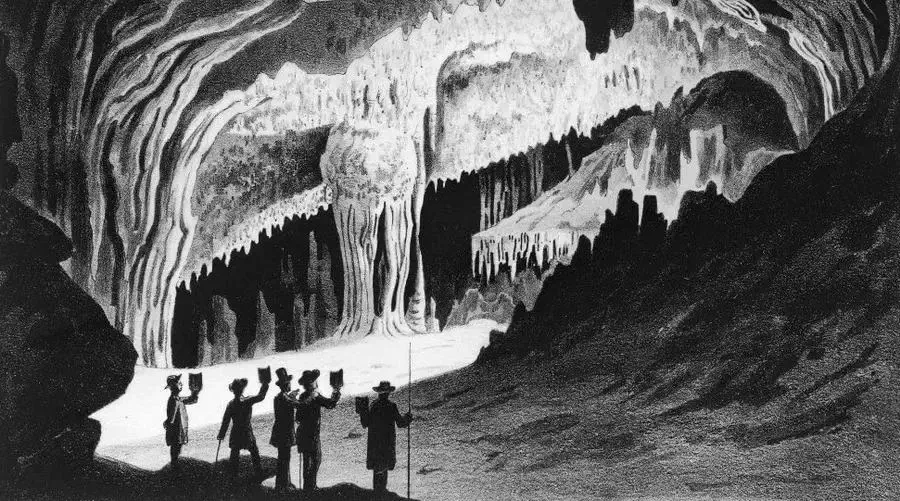
In modern times, Kents Cavern attracted great interest. Names carved into the rock walls of the tunnels reveal the earliest explorers. The first was William Petre, who carved his name and the year 1571 into the stone. He was followed by Robert Hedges, who left his inscription dated 1688. Neither explorer went very far, as the tunnels were originally narrow and uncomfortable. Exploring dark and damp underground passages is not pleasant when your only source of light is a weak candle.
Thomas Northmore
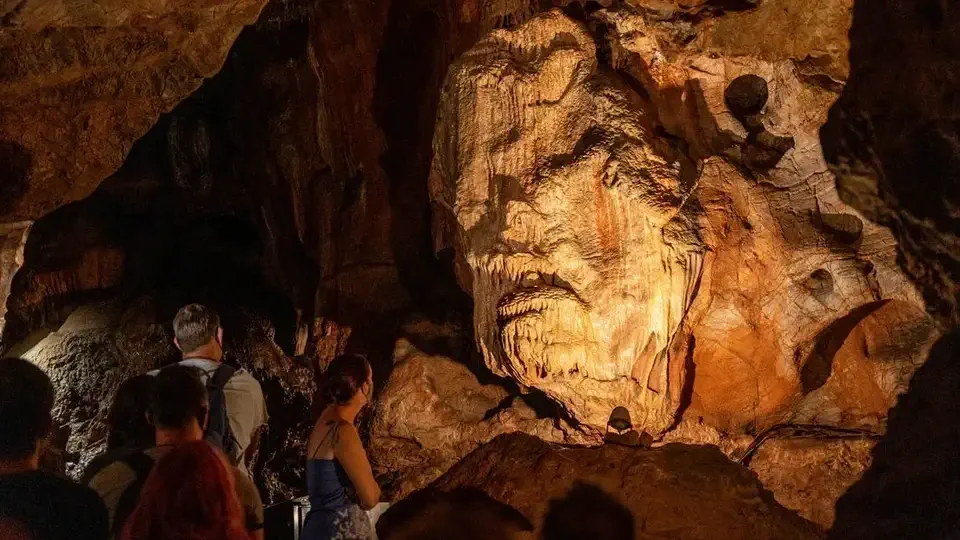
The first serious explorer was Thomas Northmore in 1824. He discovered a forgotten entrance to the tunnels that had been created by the Romans thousands of years earlier. As he ventured deeper underground, Thomas discovered why the Romans had gone to such effort to carve their way through solid rock. He found a large chamber where a rock protruding from one wall resembled a human face. The Romans believed it to be the image of the god of the underworld and created a shrine there.
Father John MacEnery
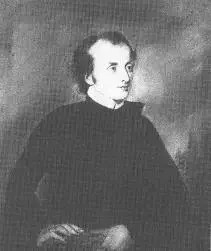
Another amateur archaeologist and curious explorer was a priest from Ilsham Chapel, located just above the caves in Torquay. The chapel dates back to the 13th century and was linked to an old legend claiming that its builders discovered mysterious underground tunnels while digging the foundations. MacEnery found the location described in old chronicles and entered the caves through a passage not discovered earlier by Thomas Northmore.
During his underground explorations, Father John discovered many bones of ancient humans and extinct animals. At first, he carefully recorded his findings and even made drawings. Over time, however, he realised that his estimates of the artefacts’ age did not match the biblical timeline, and he abandoned his work. Today, we know that most of his observations were accurate and later confirmed by scientific research.
William Pengelly
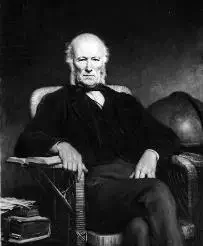
William Pengelly was a well-known cave researcher in Victorian England. One day, he came across the notes and drawings made by the old priest from Torquay. He believed that the priest had made a serious mistake by giving up his research and decided to continue it himself. The studies lasted many years and proved extremely valuable. William Pengelly developed a research method later known as 3D mapping. It involved carefully recording the position of each artefact in three dimensions in relation to others.
He divided the caves into a grid system that described where each object was found. He recorded the exact length, width, and depth at which artefacts were discovered, making it possible to estimate their age. William proudly presented his discoveries, inviting not only leading scientists but also prominent figures of the time to his home in Torquay. Among the visitors he guided through Kents Cavern were members of royal families from England, Germany, and Russia.
Arthur Ogilvy
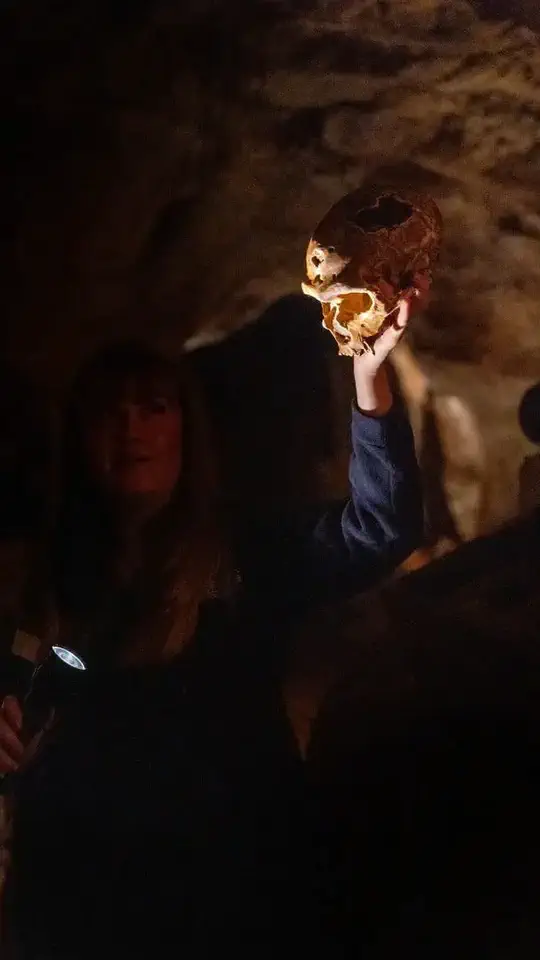
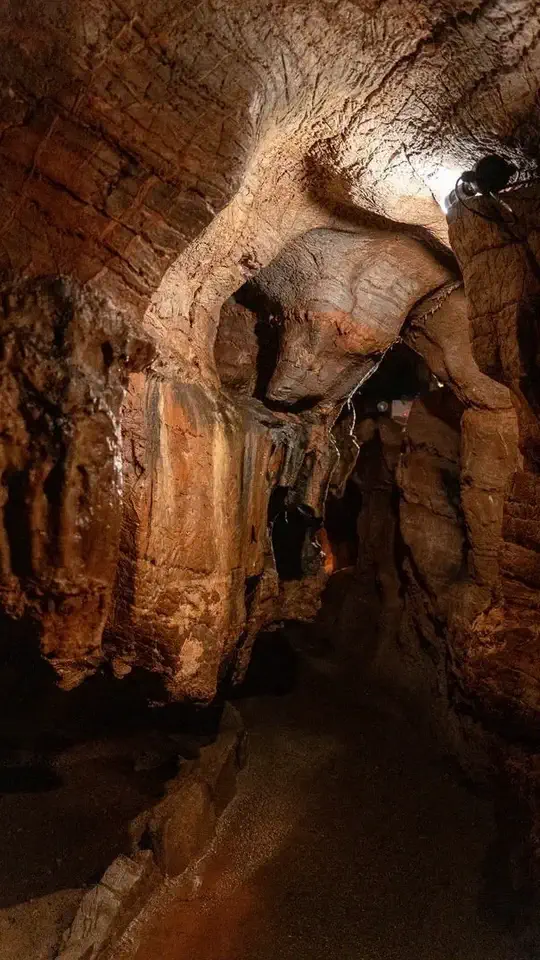
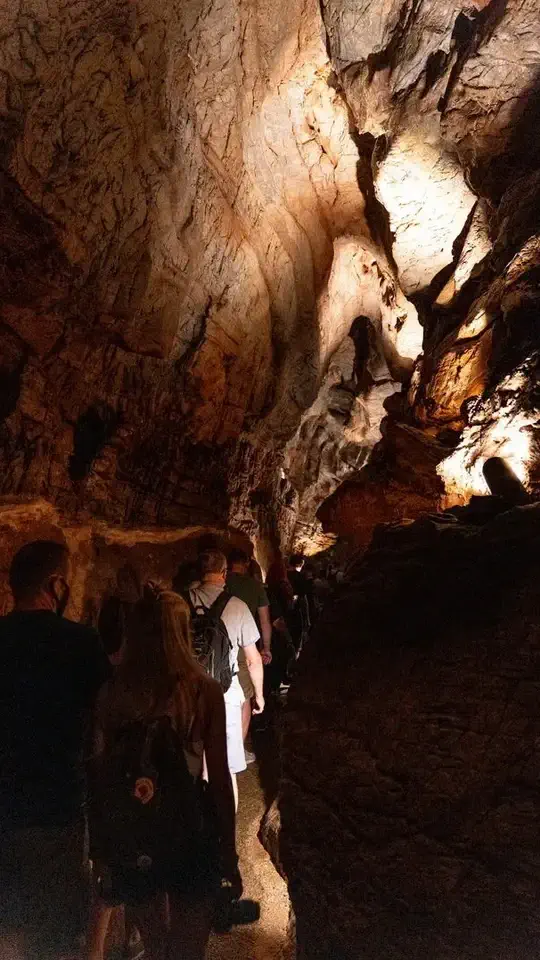
The last independent explorer of Kents Cavern was Arthur Ogilvy, the head of the local museum in Torquay. He discovered the remains of the oldest human found not only in the British Isles but in the whole of Europe. The bones are over 500,000 years old and can be seen in the local museum. Arthur Ogilvy proposed a theory, supported by many scientists, that Neanderthals lived alongside modern humans around 40,000 years ago, based on finds from Kents Cavern. However, many archaeologists and anthropologists disagree with this view.
Kents Cavern – an underground journey, guided tours and practical information
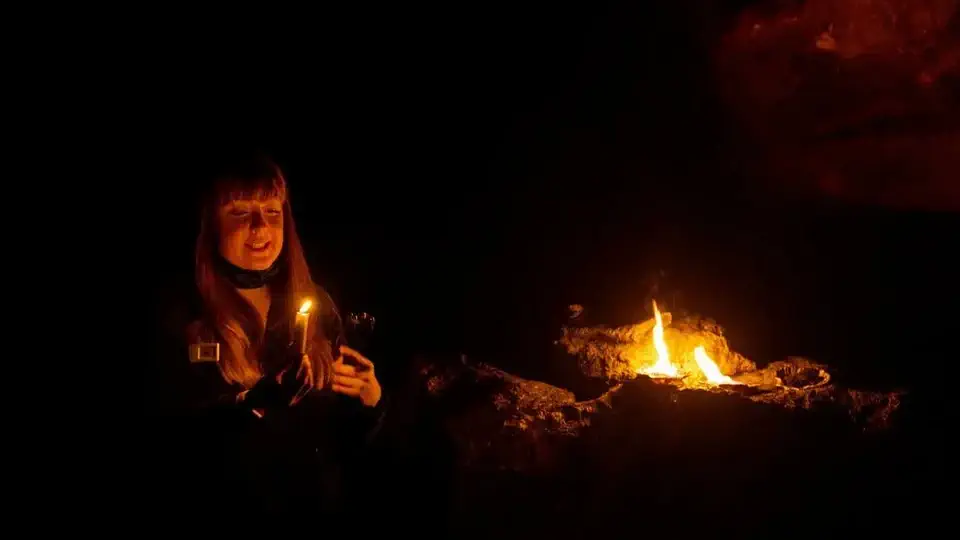
Visits to the caves in Torquay take place under the guidance of experienced guides. During the walk through the underground passages, they explain the stages of discovery and the history of the caves. The underground tour lasts about one hour. Visitors learn how ancient people lived in the caves and how they ensured safety, warmth, and fire. The importance of fire becomes clear only when you find yourself in complete darkness deep underground.
Kents Cavern ticket prices
- The adult ticket costs £19.
- Children up to the age of 15 pay £17.
- Children under the age of two enter free of charge.
At present, it is recommended to buy tickets in advance via the website. Interest is high and because of the pandemic, tour groups are smaller, which may cause problems at the ticket desk.
How to get to Kents Cavern in Torquay and parking
The caves are located at: Kents Cavern Prehistoric Caves, 91 Ilsham Road, Torquay TQ1 2JF.
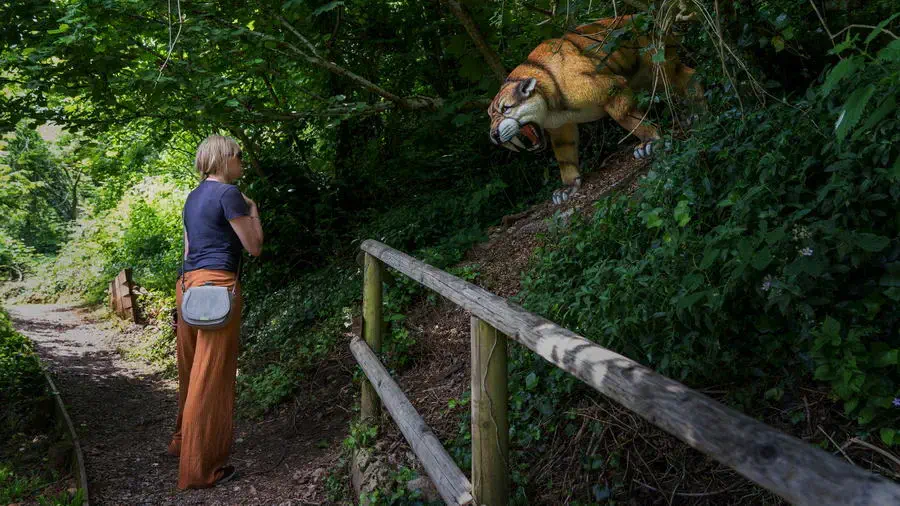
There is a fairly large car park on site, so parking should not be an issue. If necessary, cars can also be left on nearby streets. In addition to the caves, the site includes a large restaurant and a children’s educational path called the Woodland Trail. Along the trail, there are figures of extinct animals with information about them. This attraction is mainly aimed at children.
Interesting facts about the caves in Torquay
- Kents Cavern is the oldest discovered cave in the United Kingdom with evidence of prehistoric human settlement.
- Thanks to inscriptions carved into the rock, we know that brave and curious locals entered the caves hundreds of years ago.
- The first significant research was carried out in 1824 under the supervision of Thomas Northmore.
- Many fascinating artefacts found inside the caves are still owned by the Torquay Museum. These include spear and arrowheads over 40,000 years old, human and animal bones, and everyday objects made from reindeer bone, stone and wood.
- The caves in Torquay are an excellent example of the beauty of natural dripstone formations formed over hundreds of thousands of years.
- To this day, the caves remain in private ownership. They belong to the Power family, who bought them in 1903 with the idea of using the large underground chambers as workshops and storage areas.
- When the idea of turning the caves into a tourist attraction emerged, the floors were levelled and electric lighting was installed.
- Today, visitors can explore over 300 metres of tunnels and chambers. The total length of the cave system exceeds one kilometre, and archaeological research is still ongoing.
- Almost 100,000 people visit the caves each year.
- One of the most famous residents of Torquay was Agatha Christie. Part of the action of her novel The Man in the Brown Suit takes place in Kents Cavern.
- Only a few stalagmites have survived in the caves, the largest measuring about one metre in height. Considering that it formed from mineral-rich water dripping from the ceiling at one drop every two seconds, this is an impressive size.