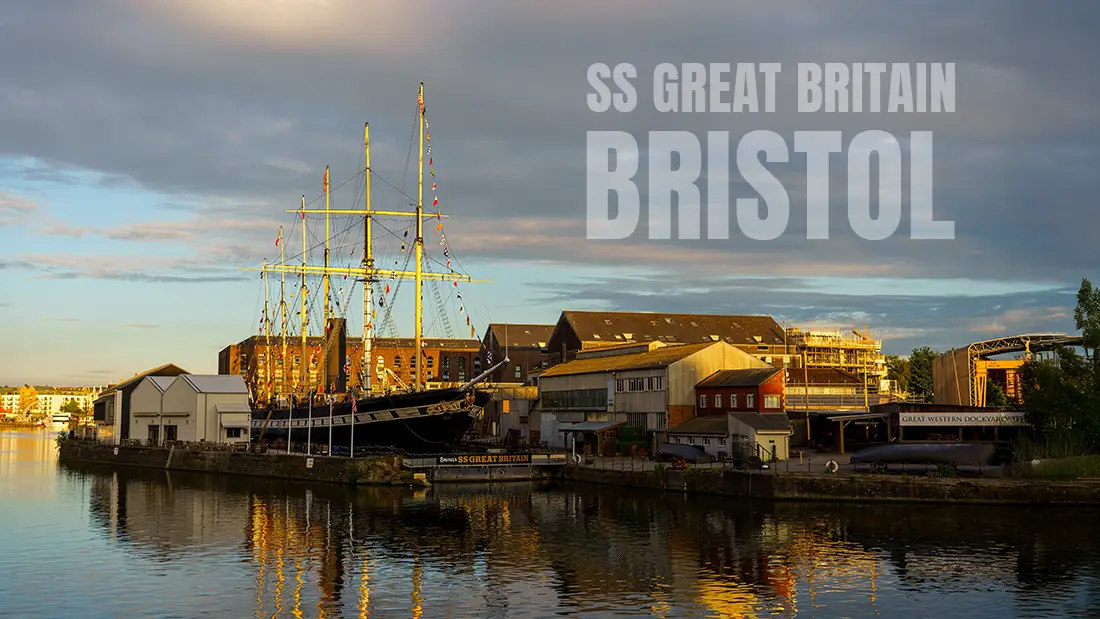
SS Great Britain is a museum ship located in Bristol, standing in the very dry dock where she was built.
People in their forties often feel that, over the course of their lives, they have achieved a great deal for themselves and others. They believe they have accomplished significant things and will be remembered for a long time—if not forever, then at least for a while. If you think the same, dear reader, listen to the story of a man who, at a similar age, designed and built the famous Great Western Railway and several other railway lines while working for the Great Western Railway company. Isambard Kingdom Brunel also constructed numerous bridges, river crossings, ships, and a wide range of machines. Some of his designs were even completed after his death. Today, Brunel is a legend, taught about in British schools.
Who was Isambard Kingdom Brunel?
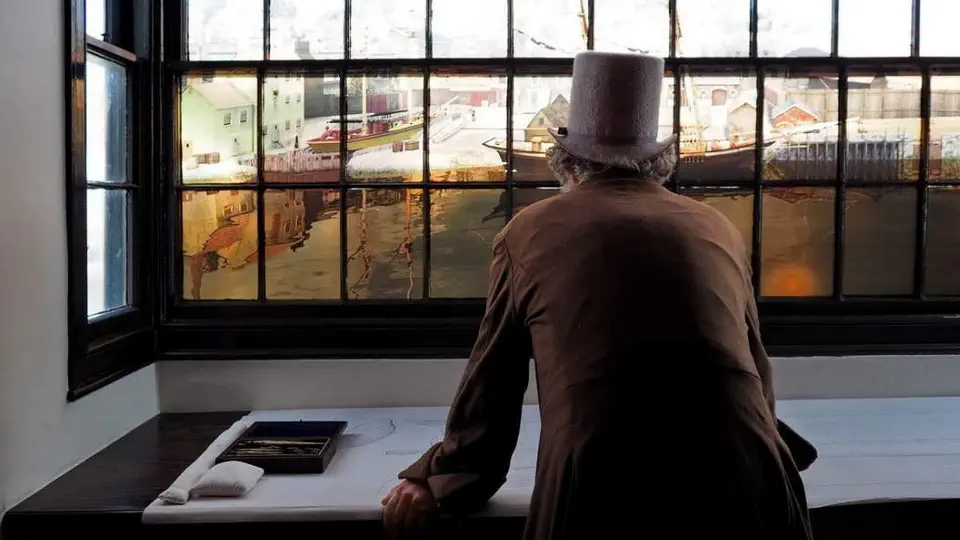
One of the structures for which Isambard Kingdom Brunel was responsible is the remarkable Clifton Suspension Bridge. To this day, it serves the people of Bristol in South West England and stands as a symbol of both the city and the genius of its creator. As if that were not enough, Brunel built ships in his spare time—and one of them is the subject of today’s article.
Brunel was the son of another engineer and inventor, the French émigré Marc Brunel, and from an early age, he observed his father at work in the workshop. It was there that extraordinary ideas for the time were born, including plans for a modern steam-powered mill and ambitious sketches of tunnels beneath the River Thames. As often happens, young Isambard followed in his father’s footsteps. After completing his engineering studies, he began his career by bringing his father’s earlier ideas to life. This is how the famous Thames Tunnel came into being.
Kingdom Brunel and his extraordinary projects, including SS Great Britain

In time, Brunel began to pursue his ideas and inventions. He built railway lines across England and constructed several modern stations along them. The most important of these is Bristol Temple Meads, a beautiful building that still serves as the city’s main railway hub. With railways and stations in place, it was time for bridges. The most famous of these spans the River Avon in Bristol. When the Clifton Suspension Bridge was completed, Brunel was hailed as the most talented engineer of his era.
Sadly, this remarkable man—ranked by many as the second-greatest Briton of all time after Churchill—died young, at the age of 53. He was worn down by overwork, a relentless pace of life, lack of sleep, and the 50 cigarettes he reportedly smoked each day. It is said that no one ever saw him without a cigarette. Brunel’s extraordinary abilities deserve an article of their own. Today, however, I will tell you about just one of the ships he built—a vessel that changed the face of maritime transport. Thanks to its innovations, SS Great Britain has been described as the greatest successful maritime experiment of all time.
SS Great Britain – how did she differ from other ships?
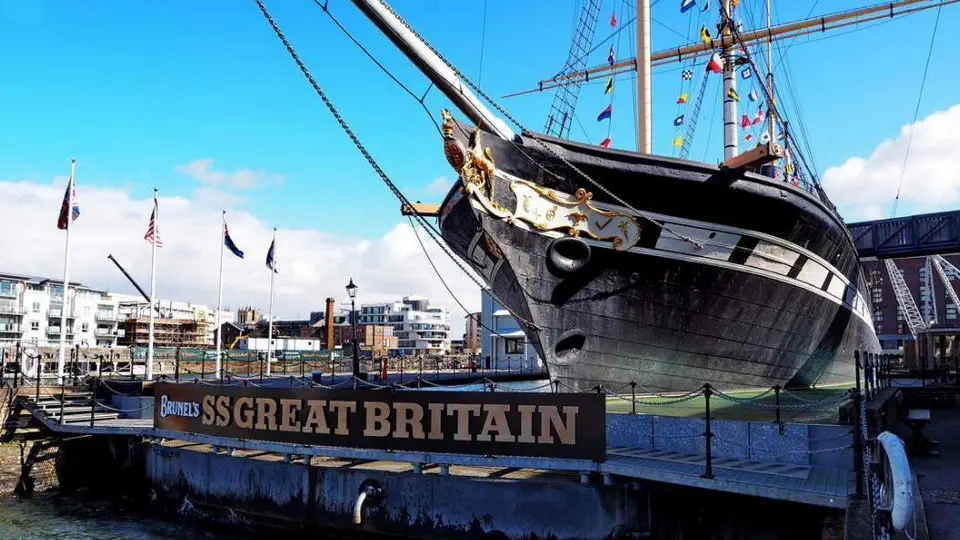
The most important innovations in the ship’s design included fitting an iron hull and replacing paddle wheels with a propeller. Convincing investors of the latter proved difficult. They were sceptical and reluctant to believe that a ship would not sink if the drive shaft extended from the stern beneath the waterline.
Eventually, a wealthy landowner agreed to finance the construction of a ship intended to carry passengers and cargo from England to the then-young United States of America. The project was completed in 1843. Shortly afterwards, SS Great Britain was launched and set off on her maiden voyage across the Atlantic. During this journey, she broke several records, including the fastest crossing from England to New York, silencing critics who claimed that the propeller would never replace traditional paddle wheels. Her impressive speed was partly due to a powerful steam engine of 1,000 horsepower—remarkable for its time.
New times, new roles for SS Great Britain
The era of mass migration to the United States ended a few years later. The ship was refitted and transformed from a luxury liner into a clipper carrying emigrants to Australia. In 1882, she was rebuilt again, her internal decks altered to accommodate cargo transport between Europe and the Americas.
In 1886, while rounding the treacherous Cape Horn, the ship endured a violent storm that nearly sent her to the bottom. Many sailors lost their lives, but thanks to her strong construction and exceptional stability, most of the crew survived.
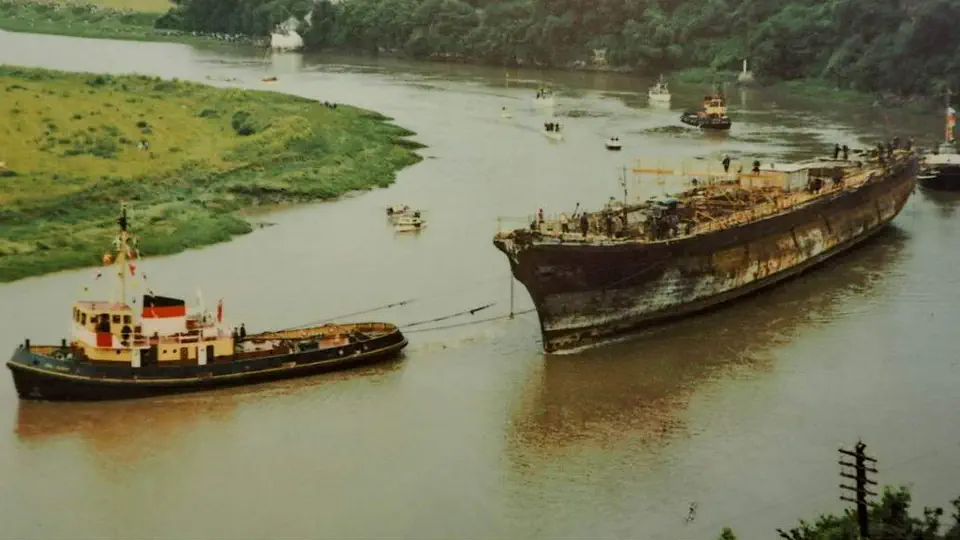
After sustaining heavy damage, the vessel never regained her former glory. She was sent to the Falkland Islands, where she served for many years as a floating warehouse. From 1933, she lay grounded on a sandbank, becoming a local curiosity. In 1970, she was purchased by the people of Bristol and undertook her final voyage across the Atlantic, returning to the very dry dock where she had been built. The British welcomed the wreck like a long-lost but beloved relative. Newspapers wrote:
“…the Old Lady has come home…”
SS Great Britain – a museum ship in Bristol
Today, SS Great Britain serves as a museum. Fully restored, she stands in dry dock in Bristol’s harbour—the very same dock where she was constructed. All decks, the engine room, and the masts have been meticulously restored. During your visit, you can admire the luxury of the first-class cabins, richly decorated ballrooms, and elegant dining rooms. It quickly becomes clear that wealthy passengers lacked nothing in comfort.
The same could not be said for the crew and poorer travellers. They were accommodated in cramped, shared cabins below deck, where conditions must have been stifling. On board, there was a doctor, a barber, and, of course, many cooks. As you explore the ship, you can see where they worked and the equipment they used. To enhance realism, everyday objects are scattered throughout the ship, while mannequins depict both crew and passengers. On certain days, actors in period costume wander the decks and rooms, happily sharing stories and long-forgotten anecdotes with visitors.
SS Great Britain – more than just a ship
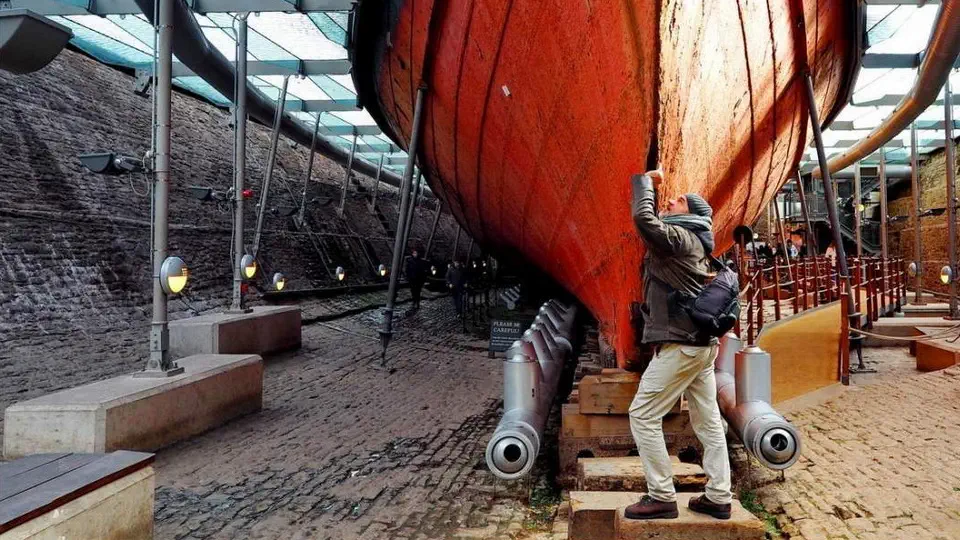
You can explore not only the ship’s interior but also the dry dock itself. Seeing the vessel from below is an extraordinary experience. Standing beneath the propeller and massive rudder, you truly appreciate the scale and ingenuity of the ship and the impression she must have made in her prime.
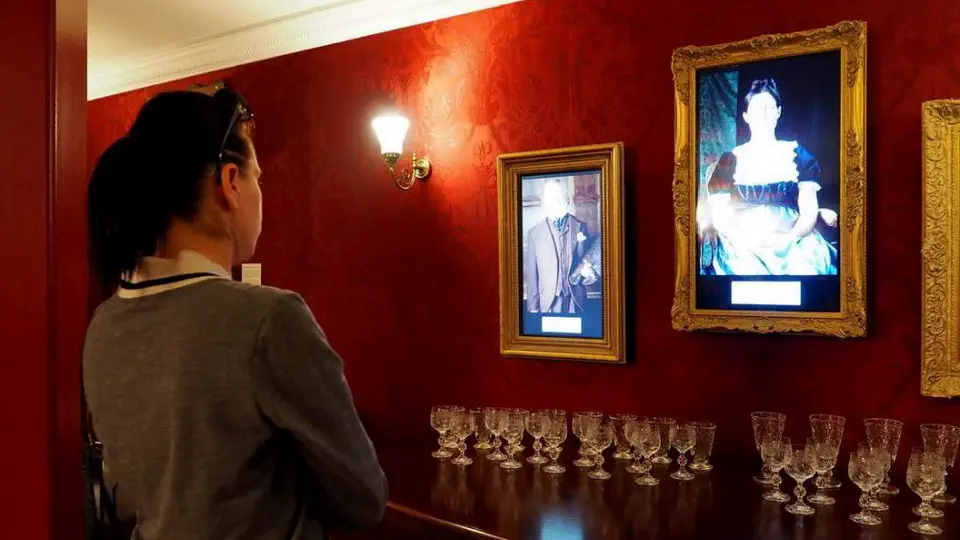
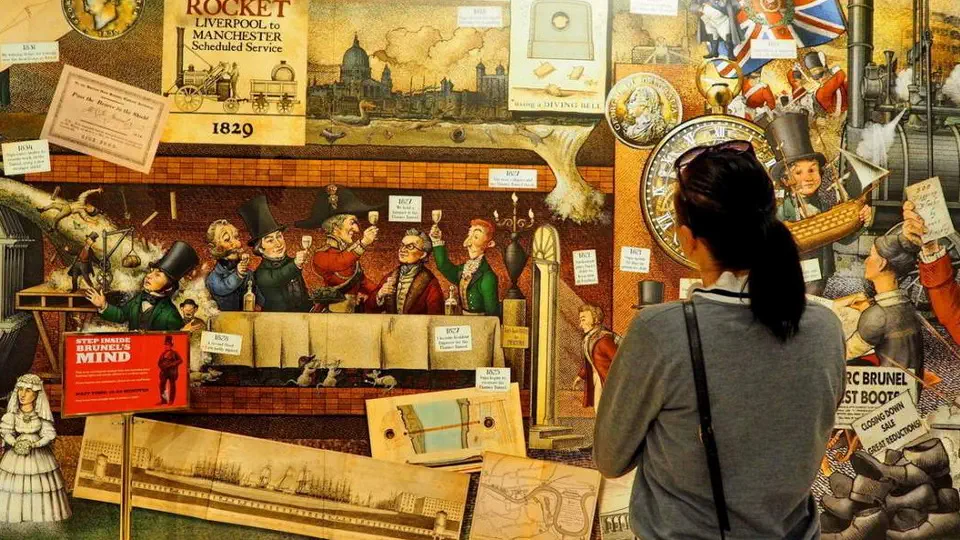
Nearby, an additional museum has been established, displaying artefacts belonging to former crew members and passengers, along with reconstructed design offices and workshops. The largest exhibition space is dedicated to the life and work of Isambard Kingdom Brunel.
In my view, this museum is one of Bristol’s greatest attractions. It captures perfectly the atmosphere of an age when great sailing ships—and later steamships—set out from busy docks towards unknown lands at the edge of the world. Quays were bustling with goods, and travellers, armed only with courage and hope, ventured across the ocean into the unknown.
Practical information about SS Great Britain
- The museum is open daily from 10:00 to 18:00 in summer and until 16:30 in winter.
- On selected days, with the assistance of staff and appropriate safety equipment, visitors can climb the rigging and ascend the mast—an experience said to offer remarkable views.
- Tickets are issued in the visitor’s name and allow free return visits for an entire year.
- The museum frequently hosts engaging historical activities, quizzes, and special events.
- It is even possible to organise a wedding on board the ship.
- Address: Great Western Dockyard, Gas Ferry Rd, Bristol BS1 6TY
- There is a convenient and reasonably priced car park nearby.
- Standard ticket price: approximately £22
- (Prices change frequently, so this should be treated as a guide—please check the official website for up-to-date information.)
Interesting Facts about SS Great Britain in Bristol
- SS Great Britain was the first transatlantic liner to operate regular services between England and New York.
- During her time on this route, she carried 252 first- and second-class passengers.
- She was the first ship to cross the Atlantic powered entirely by a steam engine.
- She has a darker chapter in her history, having been used to transport enslaved people to cotton plantations in the southern United States.
- The ship is said to be haunted, with reports of apparitions and ghostly cries heard on board.
- The museum attracts over 170,000 visitors annually.
- The dry dock in which she stands is the very same in which she was built over 150 years ago.
- During long voyages to Australia, passengers sometimes formed close relationships—even marrying during the journey.
- Romantic encounters became such an issue that at one time passengers were warned of financial penalties for inappropriate behaviour.
- SS Great Britain was designed by Isambard Kingdom Brunel, one of the greatest engineers of the Victorian era.
- She was launched on 19 July 1843 in Bristol.
- She was the largest passenger ship in the world from 1843 to 1854.
- She was the first large iron ocean-going ship driven by a screw propeller.
- In 1845, she became the first iron steamship to cross the Atlantic, completing the voyage in 14 days.
- Initially, she operated between Bristol and New York, later also sailing to Australia.
- On her maiden voyage, she could carry nearly 360 passengers, and later up to 730.
- Over her lifetime, she circumnavigated the globe 32 times, covering nearly one million nautical miles.
- In 1854, she was converted into a troop transport during the Crimean War.
- In 1857, she carried British troops to Bombay during the Indian Rebellion.
- In the 1880s, she was converted into a sailing vessel transporting coal and grain to and from San Francisco.
- In 1886, she was damaged in a storm off Cape Horn and forced into the Falklands.
- She remained there as a coal and wool store until 1937, when she was abandoned and partially sunk.
- In 1969, with the help of philanthropist Jack Hayward, she was salvaged and prepared for her return to Britain.
- Her return voyage to Bristol in 1970 involved a record-breaking tow of around 8,000 nautical miles.
- Today, she stands once again in the same dry dock where she was built.
- The ship now functions as a museum recreating life on board in the Victorian era.
- Visitors can explore the engine room, cabins, passenger areas, and decks reflecting 19th-century travel.
- SS Great Britain is listed on the National Historic Ships Register and recognised as a site of exceptional historical importance.
- Recently, the ship has received awards and conservation funding for its transformation into a modern museum and for its educational programmes.