Interesting facts about water, a substance without which we cannot live.
Water is an extraordinary and often underestimated substance. It is essential for life and responsible for transporting all substances within living organisms. Moreover, it is an excellent solvent that symbolizes one of the four fundamental elements. Below you will find a wealth of interesting facts about water, its composition, its role in our environment, and its place in beliefs and religions.
Interesting facts about water – Water and its importance in nature
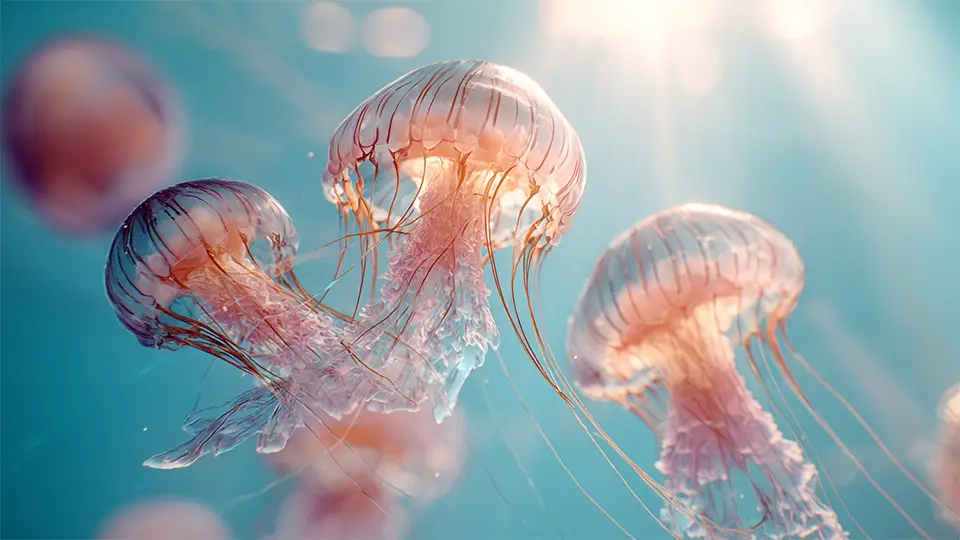
- Water covers approximately 71% of the Earth’s surface, earning our planet the nickname “Blue Globe.”
- About 97% of Earth’s water is found in the oceans, which regulate the climate by absorbing vast amounts of heat.
- The oceans produce over 50% of the oxygen we breathe – primarily thanks to microscopic organisms called phytoplankton.
- Mangroves and wetlands are among the most productive ecosystems, and their very existence depends on water.
- Rivers act as natural ecological highways, enabling the migration of fish and other animals.
- Groundwater is the primary source of drinking water for over 2 billion people worldwide.
- A single tree can release up to 400 litres of water into the atmosphere through transpiration each day.
- Tropical forests create their own rainfall through transpiration, maintaining a balanced local climate.
- Soil water determines which plant species can survive in a given area.
- The world’s largest reservoir of freshwater is the Antarctic ice sheet, containing approximately 70% of its reserves.
- Without adequate water in rivers, fish cannot spawn, which affects the entire food chain.
- Wetlands accumulate enormous amounts of carbon, allowing peat bogs to help mitigate climate change.
- Water acts as a natural filter – flowing through layers of sand and rock, it is cleansed of many pollutants.
- Dew, fog, and frost provide important micro-water sources for insects and small animals in arid environments.
- The phenomenon of upwelling in the oceans brings nutrients from the depths to the surface, supporting marine life.
- Whales, through their immersion and emergence, create a so-called whale pump that mixes water and promotes oxygen production in the oceans.
- Water in rivers and lakes regulates the microclimate of the surrounding area, making the surrounding areas cooler and more humid.
- Rainwater is crucial to desert ecosystems – even a short rainfall can briefly revitalize the entire desert.
- In nature, almost nothing is wasted – the same water molecule can circulate for millions of years.
- Many animals, such as brush wallabies and desert foxes, have adapted to live with minimal water availability, utilizing traces of water from food or condensation.
Interesting facts about water – What is water, and how is it created?
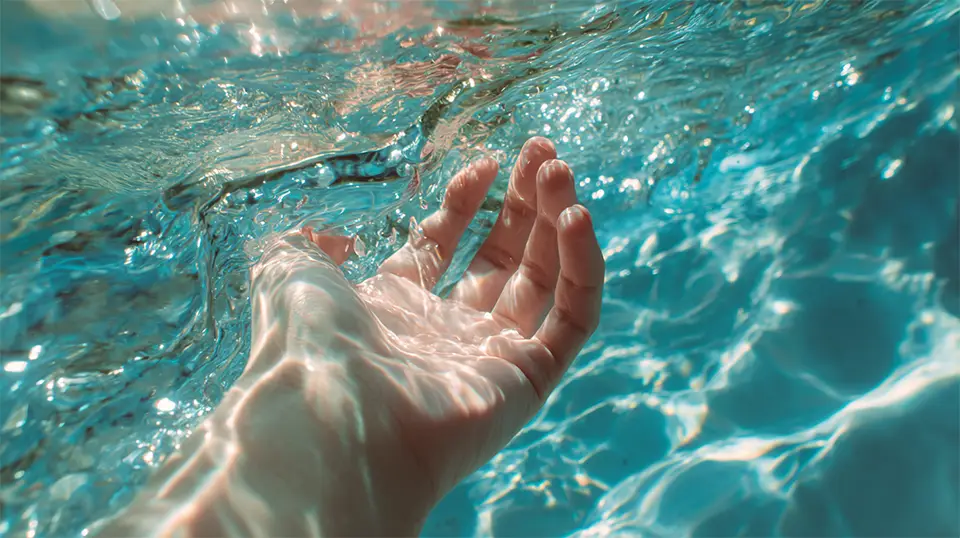
- Water is a chemical compound with the formula H₂O, composed of two hydrogen atoms and one oxygen atom.
- The bonds between the atoms in a water molecule are covalent, meaning they are formed by the sharing of electrons.
- The water molecule has an angular structure – the oxygen atom is at the centre, and the hydrogen atoms are separated from each other at an angle of approximately 104.5°.
- This structure makes water a dipole, meaning it has two electrical poles – positive and negative.
- The polar structure of the molecule gives water a strong surface tension, one of the highest among liquids.
- Water is one of the best solvents on Earth, which is why it is called the “universal solvent.”
- Water can exist in three states of matter: liquid, solid (ice), and gas (water vapour).
- In its solid state, water expands, which is why ice floats on the surface of water.
- Water formed in the Solar System from the reaction of hydrogen with oxygen and from comets that brought icy material to the young Earth.
- On Earth, water is also formed through chemical reactions, such as the combustion of hydrogen:
- 2H₂ + O₂ → 2H₂O
- The natural hydrological cycle causes water to constantly circulate between the oceans, the atmosphere, and the land.
- During evaporation, water changes from a liquid to a gas, rising into the atmosphere.
- Water vapour condenses, forming clouds, and then returns as precipitation, such as rain, snow, or hail.
- Only about 2.5% of all water on Earth is freshwater, suitable for drinking after treatment.
- Of this freshwater, as much as 70% is frozen in glaciers and polar caps.
- Water is essential for life – all known organisms require it for metabolic processes.
- The human body is made up of approximately 60% water, and in newborns, it’s as much as 75%.
- Water has a high heat capacity, meaning it can absorb a lot of heat without drastic temperature changes—it stabilizes Earth’s climate.
- Water is one of the few chemical compounds that is less dense in its solid state than in its liquid state.
- Water also forms in space—in interstellar clouds, where hydrogen atoms combine with oxygen on the surfaces of dust grains.
Interesting facts about water – Water and our health
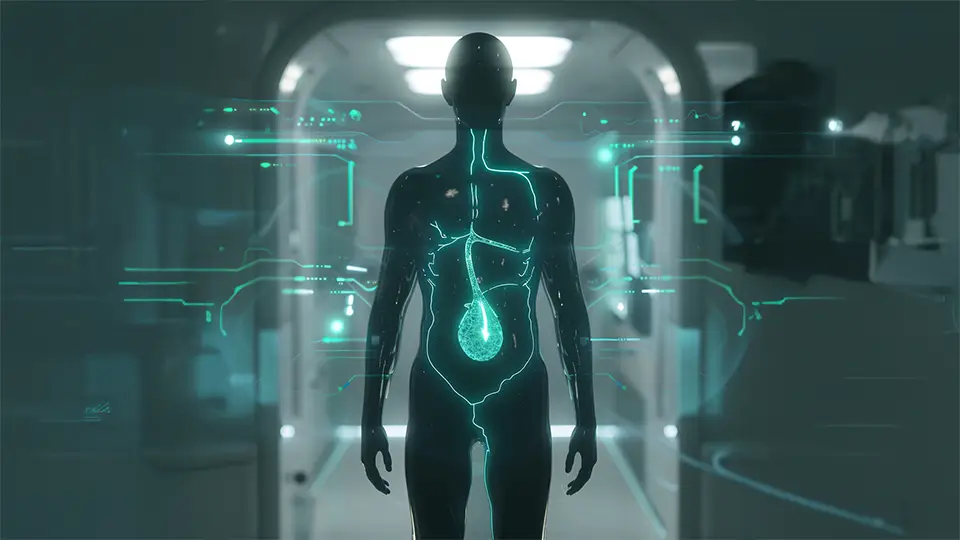
- The brain is made up of approximately 75% water, so its deficiency quickly affects concentration, memory, and well-being.
- Just 2% dehydration can cause a noticeable decrease in energy and cognitive performance.
- Water is essential for the production of saliva, which allows food to be digested in the mouth.
- Human blood is made up of over 80% water, allowing it to transport oxygen, nutrients, and hormones.
- The kidneys filter approximately 150–180 litres of fluid per day, and without water, they would be unable to remove toxins from the body.
- Water plays a crucial role in regulating body temperature—sweating is a natural cooling system.
- The human eye is filled with fluid high in water, which helps maintain normal blood pressure and vision.
- Water ensures proper skin elasticity, so its deficiency leads to dryness and accelerated ageing.
- The intestines need water to properly move food, preventing constipation.
- Water is responsible for joint lubrication, as synovial fluid is composed primarily of water.
- The feeling of thirst only occurs when the body is already slightly dehydrated—even by 1-2%.
- Hydration status affects blood pressure because blood volume is directly related to fluid intake.
- Water participates in the absorption of water-soluble vitamins, such as vitamin C and B vitamins.
- During sleep, the body continues to lose water—between 0.5 and 1 litter through respiration and evaporation through the skin.
- Water is crucial for proper muscle function because it enables the conduction of nerve impulses.
- Dehydration can lead to heart rhythm disturbances because electrolytes do not function properly without water.
- Adequate hydration improves sleep quality by regulating hormonal balance and body temperature.
- Drinking water supports the body’s natural detoxification process, helping organs excrete waste products.
- Water protects internal organs—such as the brain and lungs—by acting as a shock absorber.
- Without water, a person can survive on average 3-4 days, while without food even over a month – this shows how crucial it is to our lives.
The water we drink every day

- Drinking water must be free of pathogens such as E. coli, Salmonella, and intestinal viruses.
- In many countries, tap water is tested regularly—often several times a day.
- Unsafe water typically contains pathogenic microorganisms that can cause diarrhoea, parasitic diseases, or intestinal infections.
- Drinking water should have an appropriate pH, usually between 6.5 and 9.5.
- One of the most important differences is the content of heavy metals—in drinking water, these are at safe or undetectable levels.
- Unsafe water can be contaminated with lead, mercury, arsenic, or cadmium, which can be toxic even in small amounts.
- Drinking water is typically chlorinated or ozonised to prevent bacterial growth.
- Unsafe water may have excessive levels of nitrates and nitrites, which are particularly dangerous for infants.
- Drinking water contains natural minerals such as calcium, magnesium, and potassium—beneficial to health.
- Water that is too “soft” (lacking minerals) and water that is too “hard” (excessive minerals) can affect taste, but may still be safe to drink.
- Unsafe water regularly has an unpleasant odour, such as hydrogen sulphide or rotten.
- The colour of cloudy or brown water usually indicates the presence of sediment, rust, or microorganisms and makes it unsafe.
- Boiling water kills most pathogens but does not remove heavy metals, chemicals, or toxins.
- Drinking water is safe only if it meets sanitary standards, which specify the maximum allowable concentrations of each substance.
- Unsafe water may contain pesticides and chemicals that leach into groundwater from agricultural fields.
- Drinking water has a specific maximum electrical conductivity, which indicates the amount of dissolved salts.
- Drinking water is clear—colorless, although slight variations do not always indicate contamination.
- Non-potable water typically contains algae and microorganisms, which can cause an earthy or musty odour.
- Drinking water must have a certain oxygen content, which affects its taste and properties.
- In many regions of the world, people drink water from home filters, wells, or rainwater, but to be safe, it must be filtered, disinfected, or mineralized.
Water in ancient beliefs, rituals, and ceremonies
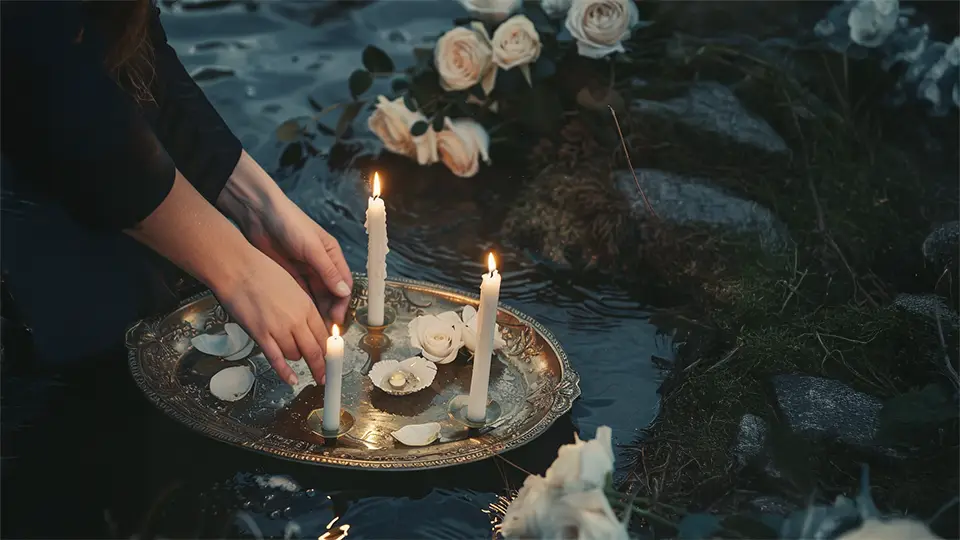
- In many cultures, water symbolized the beginning of life, as without it, organisms could not arise.
- In Ancient Egypt, the world was believed to have been born from the primordial ocean of Nun, the endless primordial water.
- In Greek mythology, the ocean was personified by Oceanus, one of the Titans.
- The Slavs considered water a barrier between the world of the living and the world of spirits.
- The ancient Greeks threw coins into springs to gain the favour of the nymphs – this custom survived in the form of throwing coins into fountains.
- In Hinduism, the Ganges River is considered sacred and has the power to cleanse sins.
- In Christian rituals, water is the basis of baptism, symbolizing spiritual rebirth.
- In Japanese Shinto, misogi, the cleansing of the body under a waterfall, is practiced.
- In ancient Rome, water from aqueducts was dedicated to the goddess Fons, the patron saint of springs.
- The Celts believed that lakes and rivers were inhabited by guardian spirits called kelpies or undines.
- In Norse mythology, the Mímisbrunnr spring was a treasure trove of wisdom.
- In West Africa, water was the domain of the goddess Oshun, a symbol of love and fertility.
- In many cultures, water symbolically signified renewal, which is why rites of passage were held by rivers.
- For Native Americans, rain was a gift from the spirits and required special dances to invoke water.
- In Chinese mythology, water dragons controlled rain, rivers, and floods.
- In Islam, believers perform ablution (wudu) before prayer – the water cleanses the body and spirit.
- In Slavic traditions, it was believed that water at midnight on Kupala Night acquired magical healing properties.
- In ancient Mesopotamia, the river gods – the Euphrates and Tigris – were considered guardians of the earth’s fertility.
- In Mayan culture, cenotes (natural wells) were sacred gateways to the underworld – Xibalba.
- The Australian Aboriginal Rainbow Serpent was a mythical creator who created rivers and lakes.
- In many ancient cultures, women served as guardians of springs, believing this brought prosperity to the village.
- Water used in funeral rites was believed to aid the soul in its passage to the afterlife.
- In Ancient Greece, the oracle at Dodona operated at a sacred spring, which was used for divination.
- In China, dynasties considered floods a sign of the loss of the “mandate of heaven,” meaning a lack of divine support.
- The Aztecs offered sacrifices to the god Tlaloc to ensure rain and abundant harvests.
- In Jewish tradition, there are mitzvahs, ritual baths for spiritual purification.
- The Slavs poured the first drops of milk onto the water after milking to gain the favour of the water deities.
- In the Middle Ages, some wells were believed to have the power to heal skin or eye diseases.
- According to the beliefs of the indigenous peoples of Siberia, the spirits inhabiting lakes could grant protection to hunters.
- In Greek mythology, the River Styx separated the world of the living from the land of the dead.
- In many cultures, river water was believed to acquire magical and divinatory powers on the night of the summer solstice.
- Sailors made offerings to the sea, believing that Poseidon or Neptune could calm the storm.
- For the Maori people, rites of passage often took place by the ocean, a symbol of beginning and end.
- In Tibet, it was believed that glacier water was the pure essence of the gods, and drinking it brought health.
- The Vikings considered waves to be an emanation of the goddess Ran, who could carry away the souls of sailors.
- In some African cultures, water was used in protective rituals, creating a barrier against evil spirits.
- In ancient India, the flowing of rivers was believed to symbolize the flow of karma.
- According to Slavic beliefs, water nymphs and mermaids punished people for disrespecting water, such as polluting rivers.
- In many cultures, water was a symbol of feminine energy, fertility, and life.
- In medieval Europe, “holy springs” were common, visited by pilgrims for miracles and healing.