Christmas in England is one of the most popular and commercial holidays in the UK.
Christmas is drawing near. Everyone is bustling about—cleaning, preparing, and, if they have the gift, cooking something special. For many, this season is not only important but truly magical: Christmas trees and ornaments appear, and homes begin to fill with the fragrance of nuts, cloves, and oranges. The scent of oranges has always been inseparable from Christmas in my mind—has it been the same for you? Beyond the less enchanting veil of commerce, hidden beneath the piles of shopping bags and wrapping paper, the old magic of Christmas still glimmers faintly.
In this article, I want to share with you how Christmas is celebrated in England, as I remember it. Of course, what you will read is entirely subjective, drawn from my experiences and the stories of my English friends. And if you happen to know of other charming traditions from England, I would be delighted to hear them—should they prove captivating, I will gladly weave them into this piece.
Christmas in England: Christmas traditions and customs in the British Isles
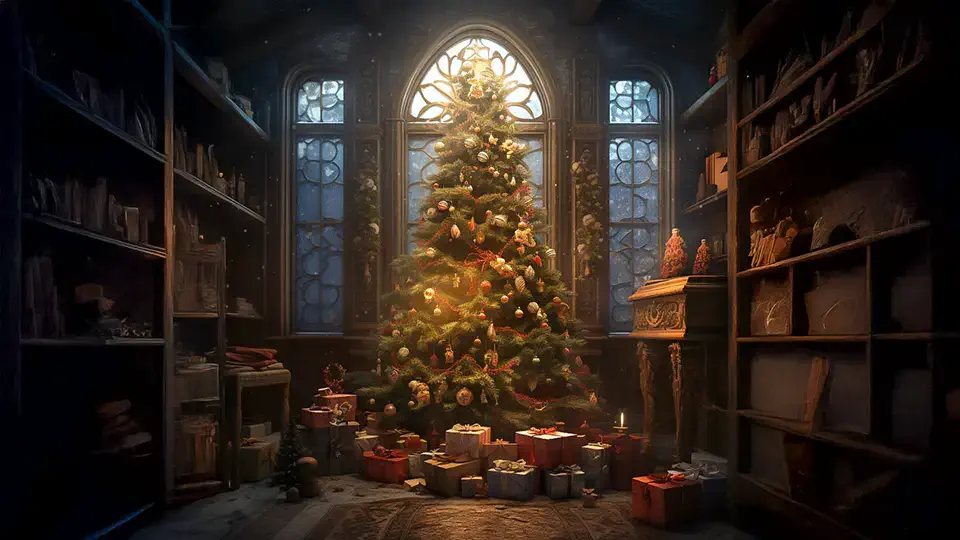
The word Christmas comes from the Old English phrase Mass of Christ, meaning the Mass of Christ. The celebration of Christmas on the British Isles dates back to the early Middle Ages, and, much like in other countries, many customs and rituals were adopted from earlier cultures and given Christian meaning. Over the centuries, most of these rituals faded away, and today Christmas traditions are quite similar to those observed in other parts of the world. Yet, the English still hold on to a number of small, unique customs found nowhere else.
On the Isles, Christmas begins very early, and the English truly love this season of preparation and anticipation. As early as October, shops fill with goods decorated with the image of a chubby Santa squeezed into a sleigh that seems a little too small. Houses are adorned with decorations, sometimes with thousands of twinkling lights. Gifts are bought by everyone for everyone. In workplaces, people organize what is known as Secret Santa—an exchange of inexpensive presents meant to spread joy among colleagues.
Christmas in England – Christmas Cards and Christmas Wishes
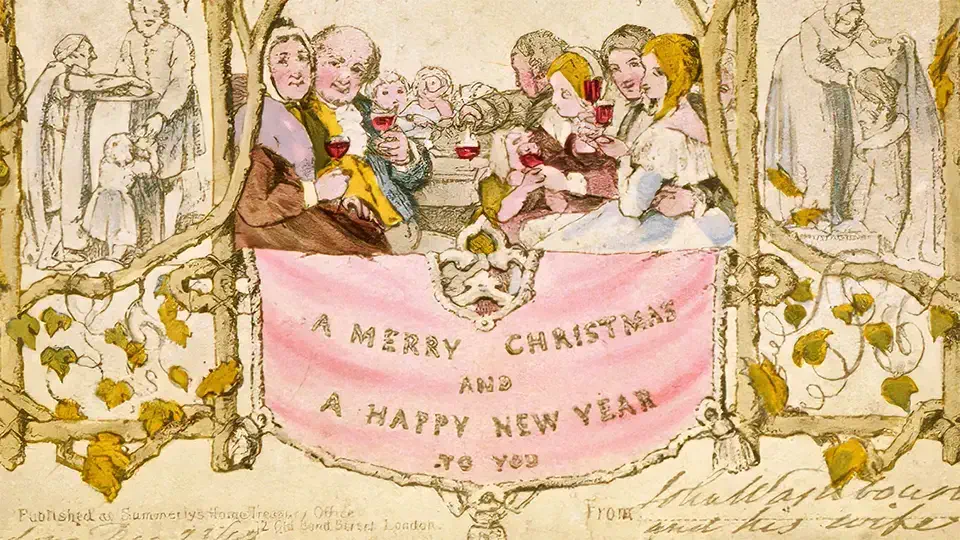
In addition, people exchange Christmas cards with elaborate, sometimes humorous greetings. This custom was introduced by a civil servant in 1843. Just a few years earlier, the Royal Mail had been reformed, and the cards were meant to help popularize its use among ordinary people in England. The very first card was illustrated by John Calcott Horsley. It depicted a three‑generation family raising a toast to the recipient of the card.
Christmas cards quickly won people’s hearts and became immensely popular. The cards received were hung above the fireplace on a string prepared especially for this purpose. The number of cards displayed was considered a reflection of the family’s status and popularity. Yet by January 6th, all greetings had to disappear from the house, along with other Christmas symbols. It was believed that if any trace of Christmas remained after Epiphany, the family would be cursed with bad luck and misfortune.
Christmas in England – Christmas events and gatherings
During the pre-Christmas period, employers organize outings to restaurants or pubs for their employees, creating a pleasant and enjoyable atmosphere. For example, a few days ago, I went with some colleagues from work to a dinner combined with a Murder Mystery performance. During the meal, a murder took place and actors, blended into the crowd of guests, began to play their roles. Gradually, a complex crime story unfolded and puzzles appeared. The task of the invited guests was to solve the mystery of the murder. It was a really great, fun experience.
How else do holidays in England differ from those in Europe?
In some European countries, like Poland, Christmas Eve dinner is the most important part of the holiday. In England, though, it isn’t celebrated at all. The big day here is Christmas Day, December 25th, with a very festive lunch. Gifts are stuffed into stockings hanging over the fireplace, and the ones that don’t fit are placed under the tree, waiting there from the morning. Another difference is that people don’t just grab the boxes with their names on them. Instead, everyone sits together by the tree and opens the presents one by one.
Each gift is taken out slowly, looked at carefully, and talked about. There are breaks for tea and cake, and then everyone goes back to the tree. The fun with presents can last the whole day. The tradition of stockings by the fireplace goes back to the 19th century, when in Victorian homes children would sit by the fire on Christmas Eve, write down their wishes for presents, and throw the notes into the flames. The smoke was believed to carry their wishes to Santa. Afterwards, they hung up stockings for the gifts they had “ordered”—the bigger, the better! The first mention of this tradition appeared in the Oxford Dictionary in 1854.
Christmas in England – food and family gatherings

Around Christmastime, companies often organize outings for their employees, like dinners in restaurants or pubs. It’s always nice and fun. For example, a few days ago, I went with some colleagues to a dinner that included a Murder Mystery show. In the middle of the meal, a “murder” happened and actors hidden among the guests started playing their roles. Slowly, a complicated crime story unfolded with puzzles to solve, and our job as guests was to figure out who the murderer was. It was such a great activity.
In Poland, the most critical moment of Christmas is the Christmas Eve dinner. In England, though, Christmas Eve isn’t celebrated at all. The big day here is Christmas Day, December 25th, with a festive lunch. Gifts are stuffed into stockings hanging over the fireplace, and the ones that don’t fit are placed under the tree from early morning. Instead of everyone grabbing their presents, the family sits together by the tree and opens each package one by one. Every gift is looked at carefully, commented on, and there are breaks for tea and cake before returning to the tree. The fun can last all day.
The tradition of stockings goes back to the 19th century, when Victorian children would sit by the fire on Christmas Eve, write down their wishes, and throw the notes into the flames. The smoke was believed to carry their requests to Santa. Afterwards, they hung stockings above the fireplace for the gifts they hoped to receive—the bigger the stocking, the better! The first mention of this tradition appeared in the Oxford Dictionary in 1854.
Christmas lunch itself is also a long affair. Nobody rushes, and it can last for hours. The main dish is stuffed turkey with roast potatoes and vegetables. For dessert, there are sweets and the famous Christmas Pudding—a very dark, very sweet cake soaked in strong alcohol, prepared weeks in advance so it has time to mature. Personally, I don’t like it much, but Piotrek truly enjoys it.
Instead of sharing the Christmas wafer like in Poland, here after the pudding people bring out paper rolls shaped like big candies, called crackers. Inside are little toys or funny rhymes. Two people pull on a cracker, it pops loudly, and a toy falls out. The winner is the one who ends up holding the bigger piece.
Christmas in England and the Christmas tree
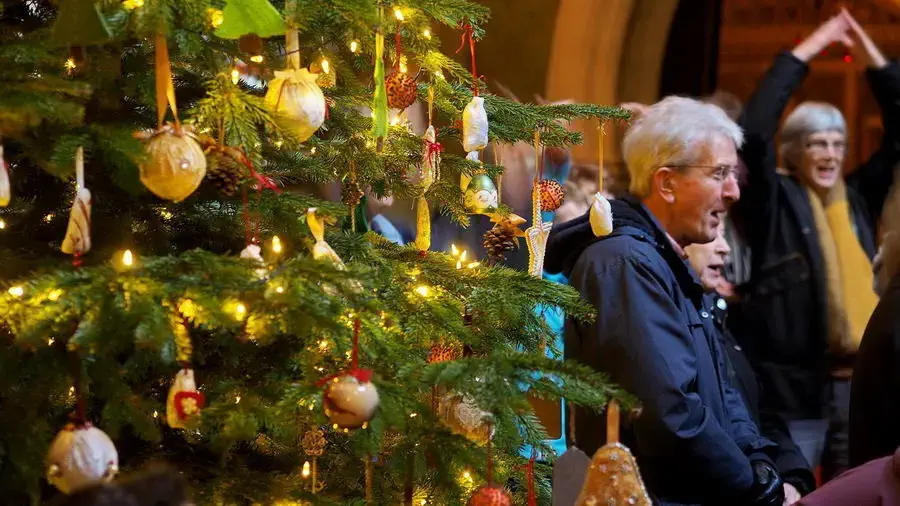
A common tradition across all European countries is decorating the Christmas tree. It’s widely believed that this custom comes from Germany, and that’s true, but the fir tree as a Christian symbol actually reached Germany from medieval England thanks to one of the local saints. According to legend, Saint Boniface from Devon travelled through Europe to spread Christianity. At that time, Germanic tribes worshipped the oak as a symbol of strength and power. In one of the towns he passed, there was a huge oak tree. Boniface cut it down in protest against paganism. The next day, a fir tree grew from the oak’s roots, which back then was considered a symbol of Christ. From that time on, fir trees were decorated with fruit, light, and ornaments.
The tradition of decorating the Christmas tree returned to England thanks to Queen Victoria’s husband, who brought a decorated tree from Germany and placed it in Windsor Castle. That was in 1841, and just a few years later richly decorated trees could be found in the homes of wealthier townspeople. Of course, there are many more differences between how Christmas is celebrated in England and in Poland, but the ones I’ve mentioned are the most noticeable. I’d love to read about the differences you’ve noticed. Share them in the comments!
Tyntesfield Christmas near Bristol, National Trust
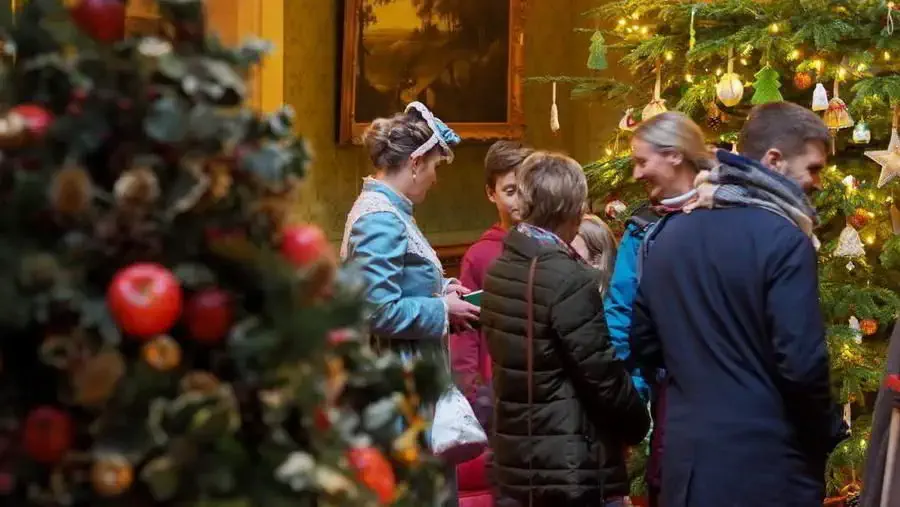
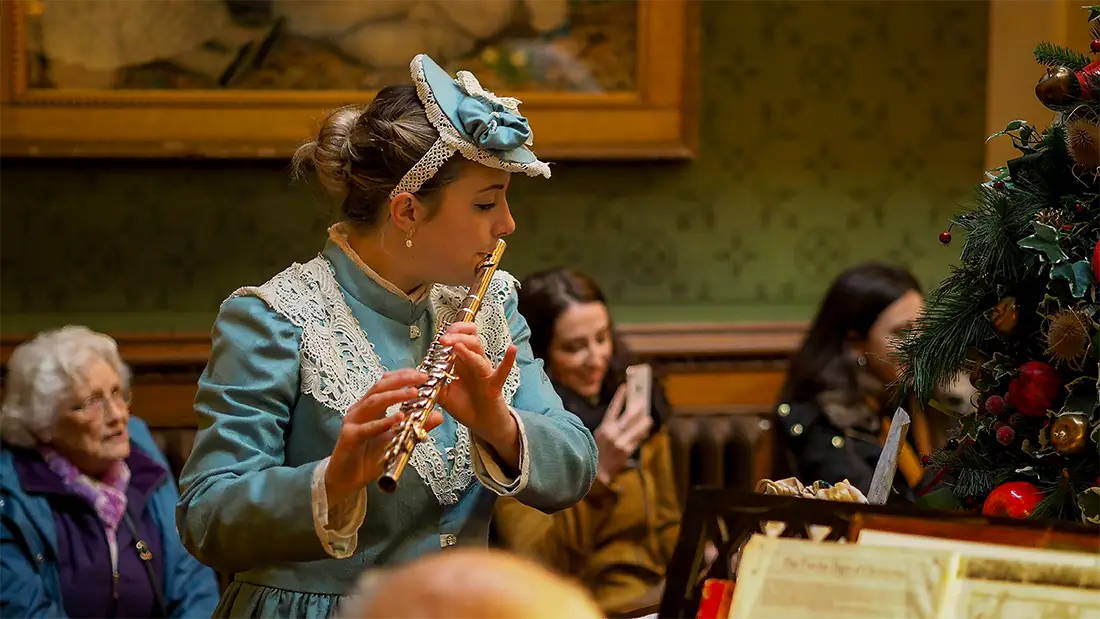
Christmas in England is also a special time at our favourite place, Tyntesfield. It’s an estate cared for by the National Trust, the organization that looks after historic sites across the UK. The manor house stands not far from Bristol, and we visit it often. In December, Tyntesfield becomes a stage for old Victorian Christmas traditions. Every room in the house is decorated in the style of the past. In the larger rooms, Christmas trees are set up, covered with dried fruit and handmade ornaments. Under the high ceilings hang sprigs of mistletoe and shiny decorations.
The National Trust staff dress up in costumes from the old days and walk around the house. You can meet the former owners or their friends, and there’s also the household staff, busy doing what servants used to do. Concerts and performances about old customs regularly take place on the estate. In the central part of the house, musicians play traditional carols and everyone has a great time. The gardens and parks surrounding the estate are decorated with lights and red ribbons. The whole place looks grand and very festive. For anyone who has the chance, we warmly recommend visiting and stepping back, even just for a moment, into times that feel a little like a fairy tale.
Our Trails would like to take this opportunity to wish everyone a Merry Christmas and a Happy New Year!
Christmas in England information and interesting facts
- Christmas in England is also one of the most commercial holidays in England.
- The first Christmas tree in England appeared in the year 1840.
- Preparations for Christmas on the islands begin already at the start of October, and typically even earlier.
- Throughout December, parties called Christmas Parties are organized. Colleagues from work, neighbours, and friends are invited to them.
- Christmas Eve in England is Christmas Eve and falls on December 24th. However, in the British Isles this holiday is not celebrated at all.
- On Christmas Eve in the evening, children in England hang large stockings on the fireplace, into which Santa Claus puts presents during the night.
- The English do not have the custom of sharing the Christmas wafer. Instead, on December 25th, during Christmas lunch, they tear open so-called Christmas Crackers—large packages shaped like candies. Inside are small gifts or fortunes.
- The second day of Christmas in England is Boxing Day.
- Boxing Day is also a day of big sales. All department stores and supermarkets lower their prices, and people go into a shopping frenzy.
- A favourite and traditional dish on English tables is stuffed turkey served with roast potatoes and thick gravy.
- The Royal Christmas Message—the monarch’s speech broadcast on television on December 25th—has been a tradition since the time of George V.
- Turkey instead of carp—the main Christmas dish is roast stuffed turkey with potatoes and cranberry sauce.
- Christmas pudding—a heavy dessert with dried fruit, often poured with brandy and set on fire before serving.
- Mince pies—small pastries filled with dried fruit and spices, a must-have Christmas treat.
- Christmas cards—England was the first country where, in the 19th century, Christmas cards began to be sent on a mass scale.
- Christmas tree—the custom was brought from Germany by Prince Albert, husband of Queen Victoria.
- Christmas jumpers—so-called Christmas jumpers are worn proudly, typically with very kitschy patterns.
- Boxing Day (December 26th)—a day devoted to sport, sales, and social gatherings.
- Carol singing—groups of people go from house to house singing carols.
- Christmas markets—popular in many cities, full of decorations, food, and mulled wine.
- Christmas lights in cities—London is well-known for the illuminations on Oxford Street and Regent Street.
- Father Christmas—the English equivalent of Santa Claus, who leaves presents in stockings by the fireplace.
- Christmas stocking—children hang stockings in which they find small presents.
- The smell of oranges and cloves—a traditional aroma of Christmas in English homes.
- Christmas pantomime shows—theatrical performances for whole families, full of humour and interaction with the audience.
- Advent calendars—advent calendars with chocolates or small gifts are very popular.
- Christmas cake—a rich fruit cake covered with marzipan and icing.
- Christmas advertisements—advertising campaigns (for example, John Lewis) have become part of Christmas culture.
- Christmas starts early—decorations and preparations begin already in November.
- About Christmas in other countries, we wrote in previous articles: