Krampus is a Germanic demon associated with Christmas celebrations.
An integral part of Christmas is giving. We give each other gifts and presents, wishing each other well, or not. Unless we’re children, we believe that the presents are the responsibility of an elderly man with a gray beard living somewhere far to the north.
The Christmas custom of giving gifts
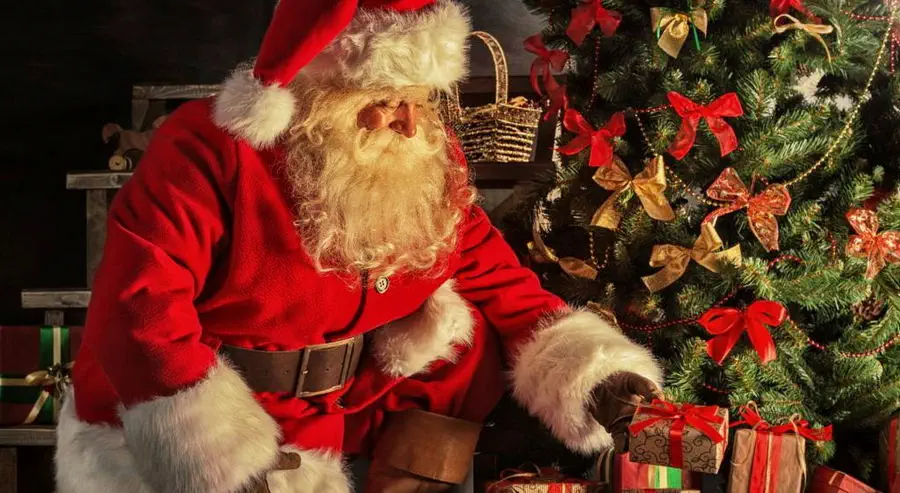
It is a strong tradition, but like many others, it is much older than it seems. Ancient tribes were already celebrating the custom of giving small gifts. This tradition was often accompanied by figures to whom all positive qualities were attributed. Today, the gift-bringing character has different names in various parts of the world. There are many of them, and even in Poland they differ depending on the region. For example, in my area, that is in Pomerania, the gifts are brought by the Gwiazdor. Most commonly, however, it is Saint Nicholas.
The Church promotes the theory of Bishop Nicholas, who, driven by extraordinary kindness, gave away all he had to the poor and needy. However, this story does not seem particularly plausible, as bishops who give anything away exist only in legends. There are regions in southern Poland where the gifts are brought by the Gwiazdka. In others, it is the Aniołek (Little Angel), and in yet others, located further east, the presents are distributed by Father Frost. Around the world, it is even more complicated. In South America, the gift-giver is an old man called Viejito Pasquero, and in Scandinavia, during the celebration of Julenisse, we are given presents by Jul Tomte. All these characters are naturally kind-hearted, though they sometimes get annoyed when we misbehave. Still, the only punishment we might receive is a birch switch under the Christmas tree.
Krampus and other dark figures at Christmas
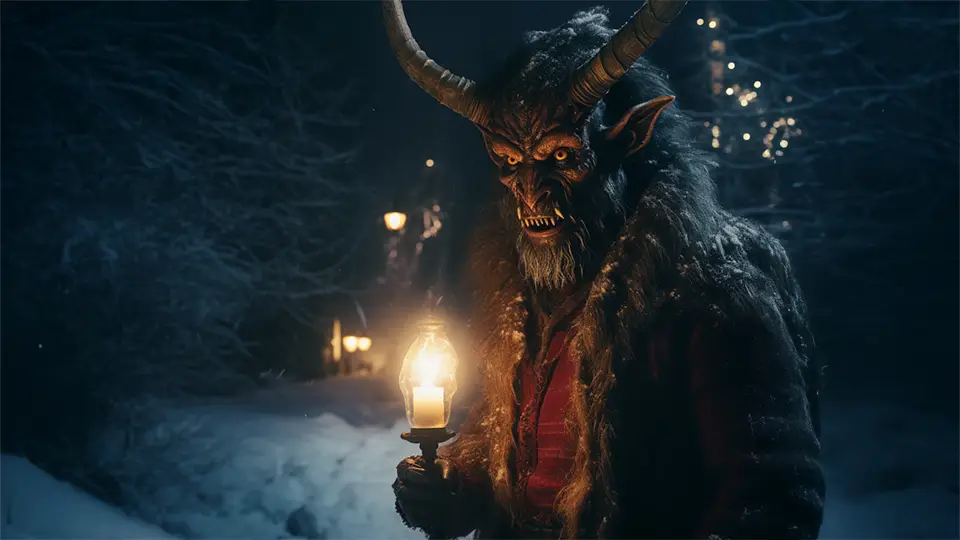
In some cultures, other, far more frightening figures have emerged—dark counterparts to Saint Nicholas. There are many examples. In Pennsylvania, children are frightened by Belsnickel, who is just as eager to hand out coal and stones as he is sweets and gifts. In Italy, children await presents brought by La Befana—rather, a mischievous witch who flies down the chimney and leaves gifts in stockings. Of course, only for the very well-behaved children. The others find excrement in their stockings.
An intriguing character is Cthulhu, a powerful being originating from the legends of the northern peoples. For the evil it inflicted upon humans, it was imprisoned deep at the bottom of the sea. It does not bring gifts, but dreams. On the longest night of the year, its power becomes strong enough to send pleasant dreams to good people and nightmares to the wicked. In England and the Anglo-Saxon countries, misbehaving children were threatened with Christmas phantoms that would haunt their bedrooms. It was said that these spirits would take the sleeping child’s soul to show them what they had done wrong during the past year.
However, the figure I like the most is the one known in the regions of southern Germany, Austria, and Switzerland: Krampus.
Krampus – A dark demon and the opposite of Santa Claus
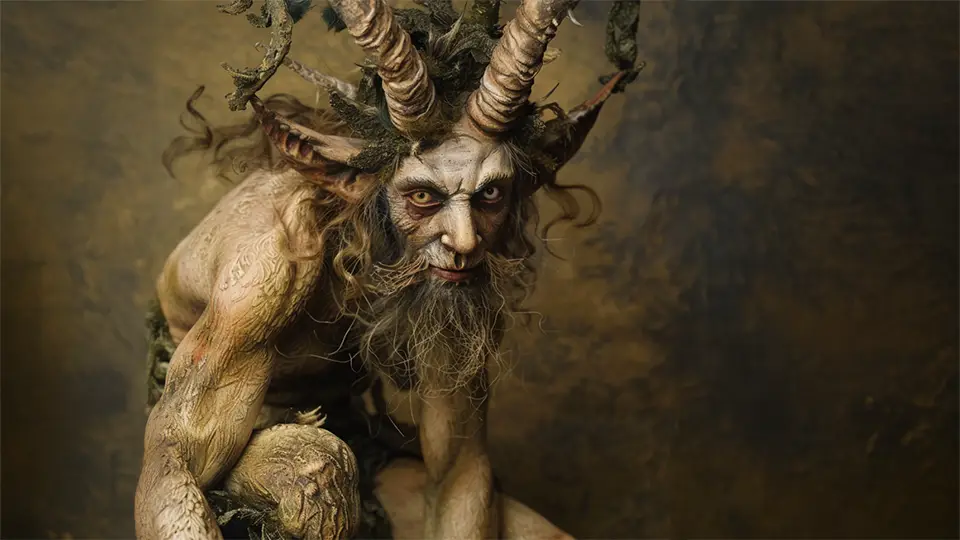
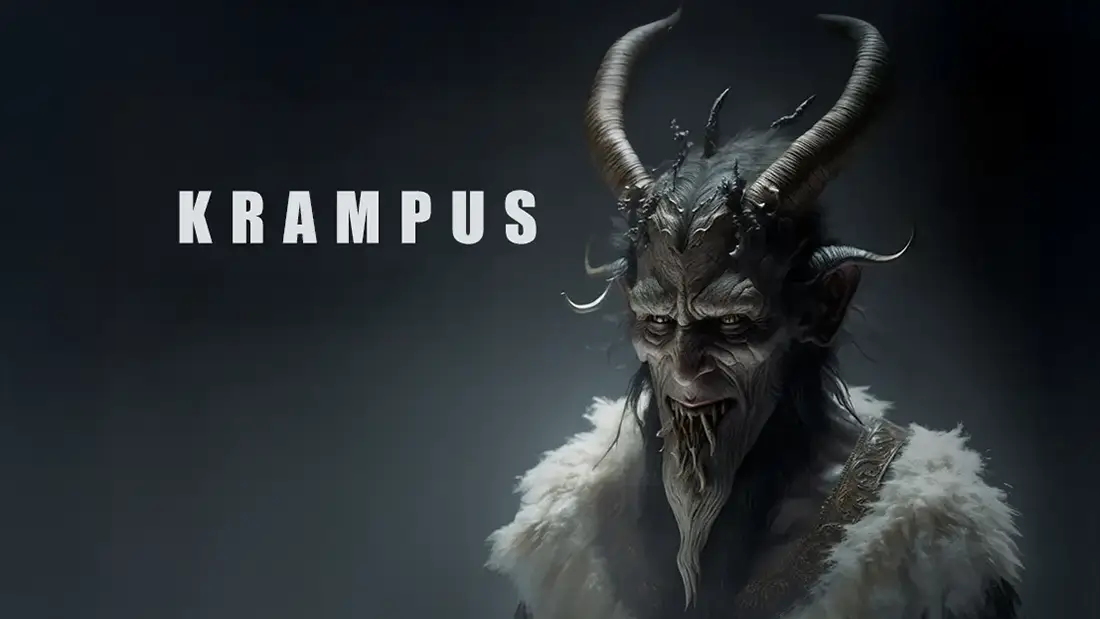
The figure of Krampus is depicted as half man and half goat. One winter, while travelling through Switzerland, we came across a street performance of costumed actors. It was there that we first heard the story of the Christmas demon. During the holidays, while Saint Nicholas rewards well-behaved children, Krampus deals with the naughty ones and prepares nasty surprises for them. In the legends, he silently appears behind Nicholas, and before anyone can react, he stuffs the misbehaving children into the sack on his back. Then he carries them off into the forest to torment the poor souls for the next few days. The very worst ones never return.
The holiday of Krampus, called Krampusnacht, or the Night of Krampus, falls on the day before Saint Nicholas Day. People take to the streets, dancing and shouting insults, dressed in sheepskins, horns, and carrying baskets on their backs. They frighten children and young girls, who—if they do not behave properly—will be the first to end up in Krampus’s sack. It is easy to associate the figure of Krampus with the devil. He has the same characteristics, and just like devils, he was used to instilling obedience not only in children but also in adults who firmly believed in his existence. It is frightening to imagine the psychological damage caused to children by the appearance of such a creature on a dark night, when the dim glow of flickering oil lamps was all that lit the room in an old cottage.
And now, honestly! Who visited you this year? Santa Claus or the cruel Krampus? 😉
Krampus information and interesting facts
- Half man, half goat — Krampus is depicted as a creature with a human body, goat legs, horns, a long tongue, and covered in fur.
- St. Nicholas’ Companion — In Alpine tradition, Krampus is not Nicholas’s enemy, but his helper — Nicholas rewards, Krampus punishes.
- Krampusnacht — Krampus Night — The holiday falls on December 5th, the day before St. Nicholas Day. This is when Krampus takes to the streets.
- Krampuslauf — Krampus Run — Many cities organize parades in which hundreds of costumed people run through the streets, ringing chains, and frightening onlookers.
- Bells and Chains — Krampus often wears heavy chains and bells, the sound of which is meant to emphasize his demonic nature.
- Birch Rod — Krampus’s traditional weapon is a bundle of birch twigs, called Ruten, which is used to symbolically punish naughty children.
- Bag or basket on his back – Krampus carries a bag or wicker basket in which, according to legend, he kidnaps disobedient children and carries them off into the forest or takes them away forever.
- Roots dating back to pre-Christian beliefs – Krampus is believed to be a relic of ancient Alpine deities and winter demons, dating back to long before the emergence of Christian tradition.
- Forbidden by the Church – In the Middle Ages, the Church banned the cult of Krampus, deeming it too pagan and sometimes even diabolical.
- Return in the 19th century – Despite prohibitions, the tradition was revived in the 19th century in Austria and Bavaria, where Krampus reappeared as a part of folklore.
- Krampuskarten – postcards – At the turn of the 20th century, Christmas cards with terrifying illustrations of Krampus, often with a humorous twist, were popular.
- The Custom of Smearing Faces with Soot – In many regions, Krampuslauf participants mark the faces of spectators with traces of soot or ash as a symbol of “sinfulness.”
- Alcohol as Part of Tradition – During Krampus festivals, drinking local spirits, especially punch and mulled wine, is popular, as they are said to give courage to encounter the demon.
- Krampus Masks Are Works of Art – Hand-carved wooden masks can cost enormous sums, and their creation is considered a traditional profession in the Alps.
- Two Faces of Winter Holidays – Krampus embodies the dark side of Christmas – a reminder that winter was once a time of uncertainty, fear, and the struggle for survival.
- A Symbol of Morality – The Krampus figure served as a parenting tool – he was supposed to ensure children were well-behaved throughout the year.
- Krampus as Folkloric Erziehung – In many families, parents still invite “Krampus” to visit the house and “admonish” the children before St. Nicholas arrives.
- Krampus Festivals in the 21st Century – Today, Krampus parades have become a tourist attraction, drawing thousands of spectators from around the world.
- Pop Culture Inspiration – Krampus appears in films, games, and comics as a menacing yet fascinating icon of dark winter folklore.
- The Duality of Good and Evil – In Alpine tradition, Krampus reminds us that the holidays are not only about joy but also about reflection on one’s own behaviour – a balance between reward and punishment.