The Niepołomice Castle is a royal residence dating back to the mid-14th century, and today it is the greatest attraction not only of the town of Niepołomice, but of the entire Lesser Poland (Małopolska) region. The Gothic Niepołomice Castle, often referred to as the “second” or “little Wawel,” once served as a base for hunting expeditions operating in the dense and wild Niepołomice Forest. In this article, I will tell you about our visit to the castle and reveal whether it is worth taking the time to explore the Royal Castle in Niepołomice.
Niepołomice Castle – practical information useful when planning a trip
Niepołomice Castle is open to visitors from Tuesday to Sunday (closed on Mondays). Opening hours vary depending on the season; from October to April, the castle is open from 10:00 AM to 5:00 PM, and from 10:00 AM to 6:00 PM the rest of the year.
The museum is located on the first floor of the Niepołomice Castle at 2 Zamkowa Street.
There is a free car park right next to the castle, but unfortunately, in summer, finding a free space is almost impossible. So, you may have to look for a parking space on the streets adjacent to the castle.
Niepołomice Castle is accessible to people with disabilities. The chambers and the Cloth Hall are equipped with convenient ramps, and the museum is accessible by lift. However, to use the lift, please notify the museum in advance by calling 661 953 422.
The museum’s prices aren’t exorbitant; I won’t list them here, as they can change at any time. For up-to-date information, please visit the museum’s official website.
If you’re not travelling by car and want to visit Niepołomice Castle, you should take MPK buses 211, 221, or 301 and get off at the Niepołomice Rynek stop. You’ll find bike racks near the castle, and I recommend this method of travelling around Niepołomice; after all, exercise is good for your health.
Niepołomice Castle – visiting a beautiful monument
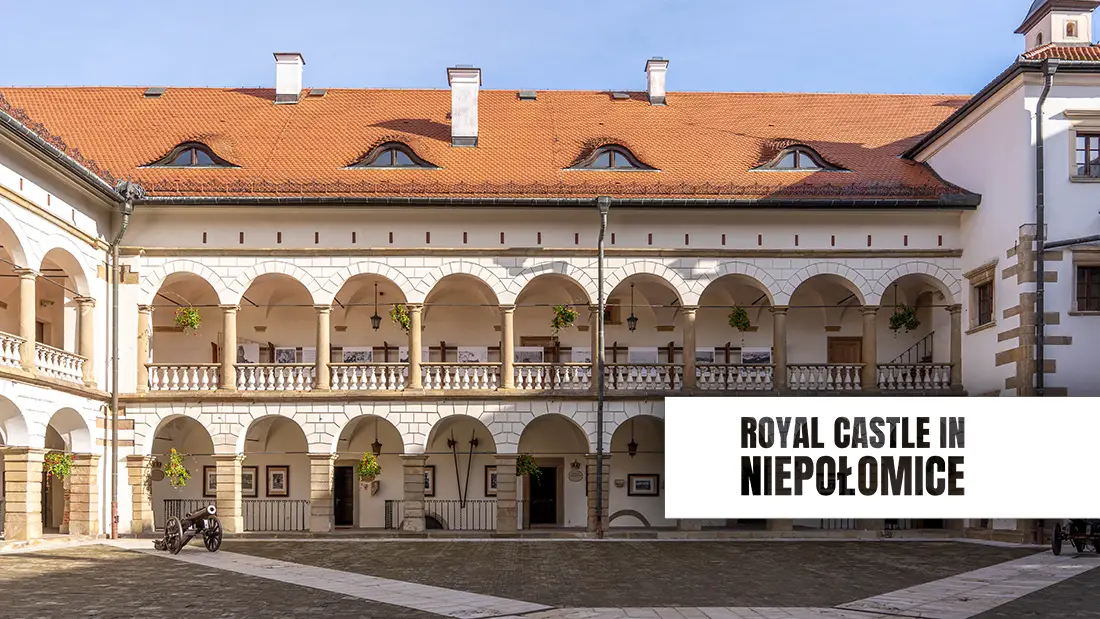
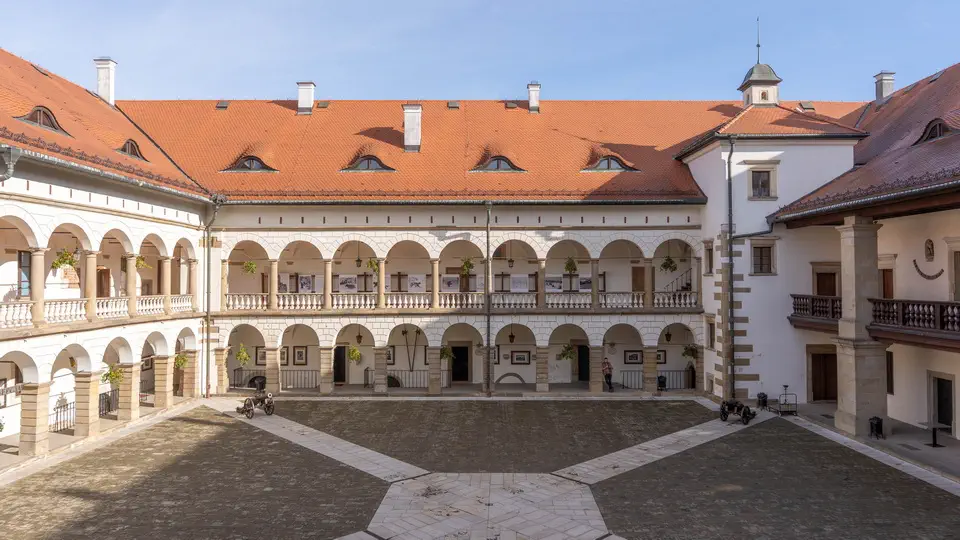
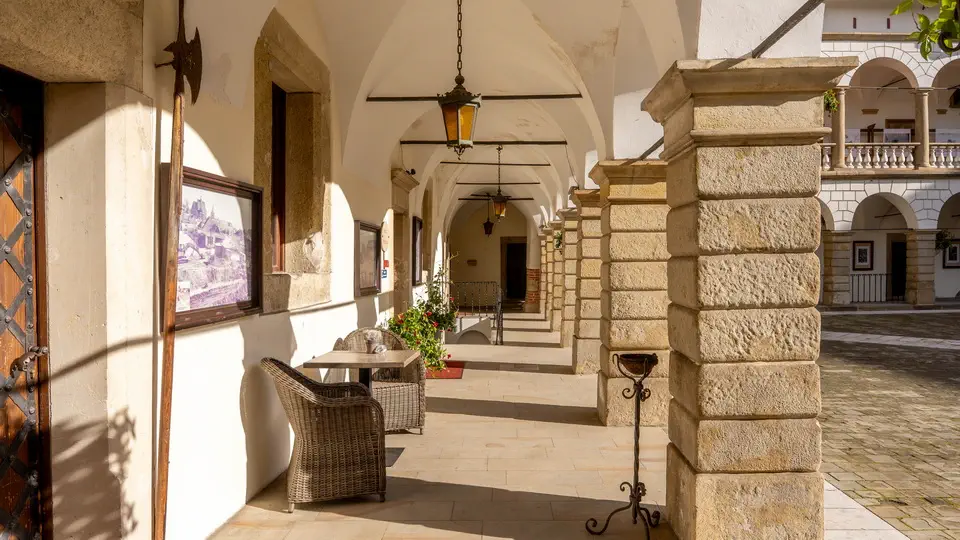
Your adventure begins at the large castle gate, which is said to be one of the oldest elements of the former fortress. Just beyond the gate lies a spacious castle courtyard with historic cannons positioned in each of its corners. From the courtyard, stairs lead up to beautiful 16th-century arcades added during the reign of King Sigismund II Augustus. The courtyard is very picturesque, and the arcades are truly charming—on bright, sunny days the view from them feels almost fairy-tale like. Remember that both the courtyard and the arcades can be visited free of charge, while tickets for the exhibitions are purchased on the upper floor.
The Niepołomice Castle is an enormous historic monument, but only a small part of it is dedicated to the Niepołomice Museum; the remaining rooms serve as a hotel and a restaurant. The museum’s collections are rich and cover a wide range of themes, from exhibitions of Polish painting and religious artifacts to stuffed animals brought from the farthest corners of the world. Below, you will find a description of the exhibitions and places within the castle that I particularly enjoyed.
Exhibition of Polish art
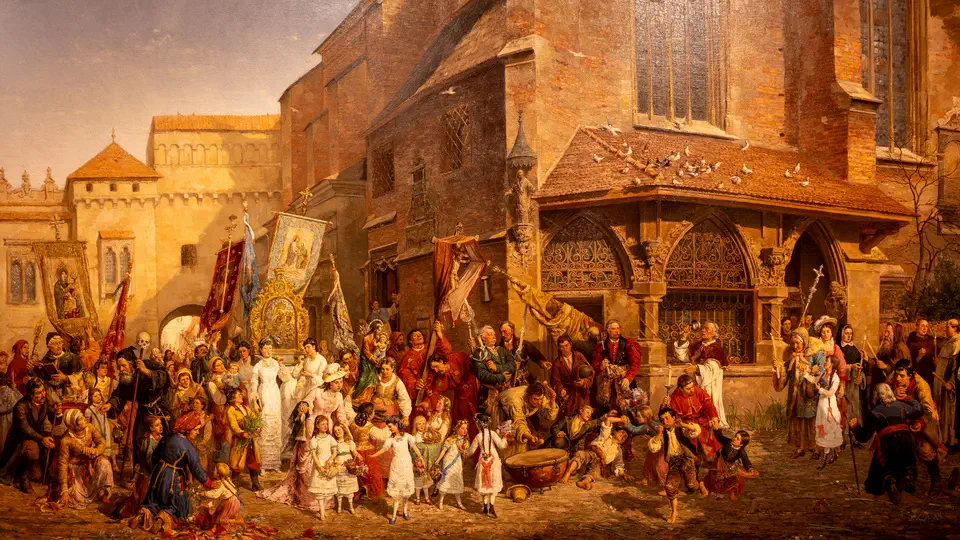
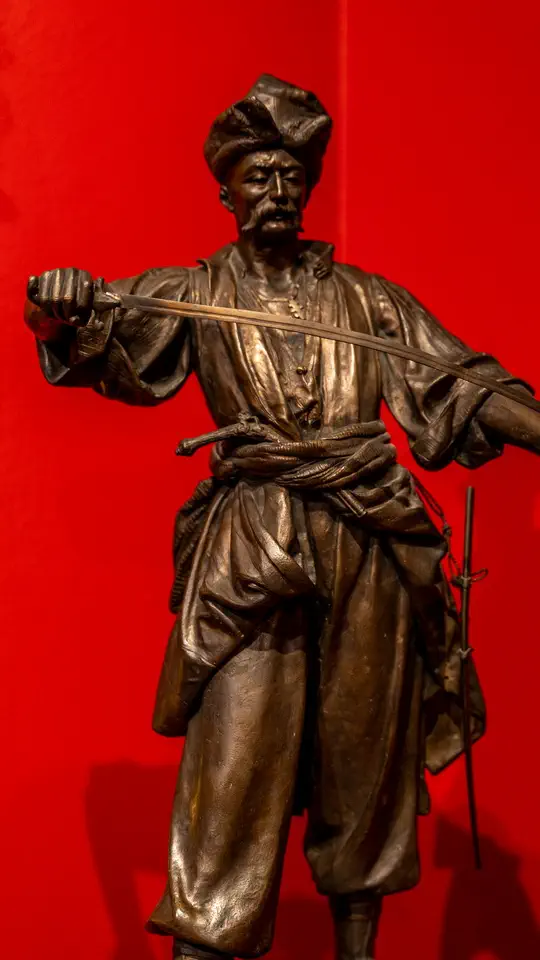
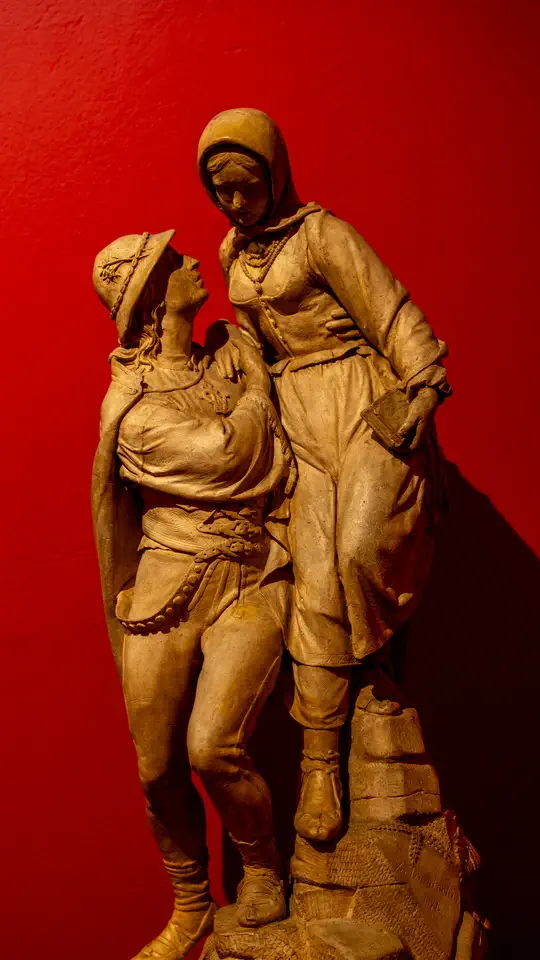
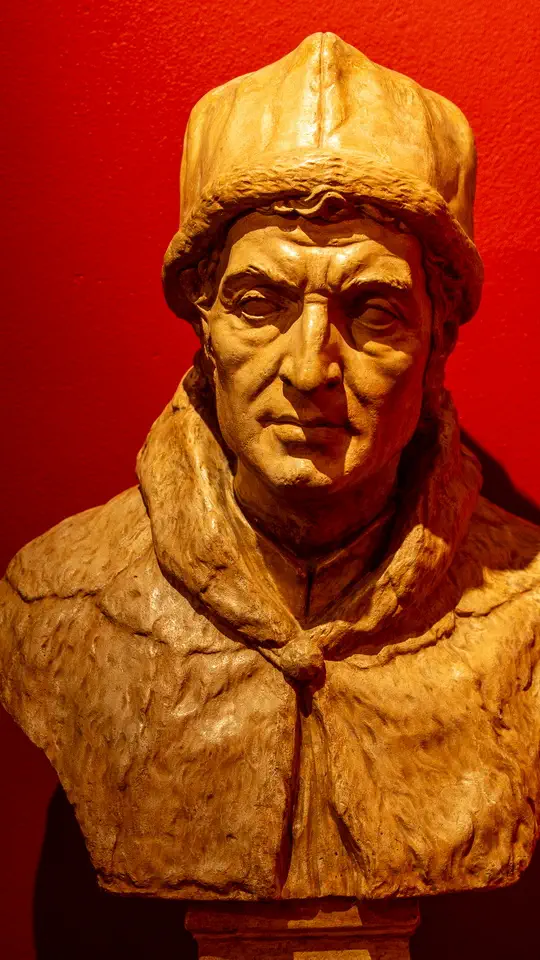
The Exhibition of Polish Art is spread across eight castle halls and consists of over 150 exhibits, most of which are paintings by Polish masters, arranged by artistic genre and the periods in which they were created. The works depict genre scenes, portraits of prominent Poles, important historical events, native landscapes, historic monuments, and religious scenes. Here you can see works by artists such as Jan Stanisławski, Artur Grottger, Leon Wyczółkowski, Piotr Michałowski, and many others. An interesting fact is that some paintings on display have never been exhibited before, which is why the gallery’s unofficial name is “Known and Unknown Works.” In addition to the paintings, several dozen sculptures from the collection of the National Museum in Kraków are displayed throughout the museum halls.
Treasures of the Niepołomice Parish
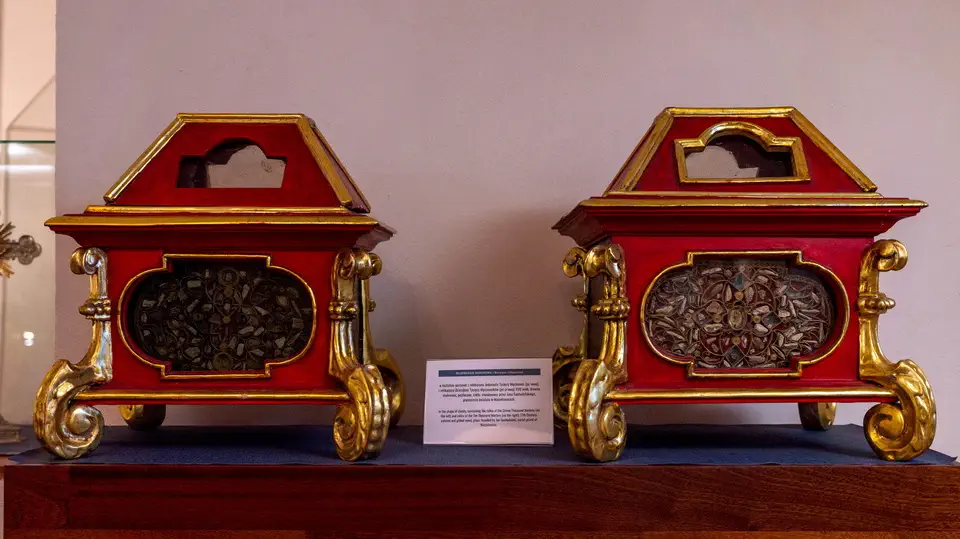
In one of the castle rooms you will find true treasures donated to the museum by the Niepołomice parish. The display cases hold royal and papal documents, records, and letters. The oldest of them date back to the 14th century and belonged to King Casimir the Great and the Bishop of Kraków. From their contents, we learn when and under what circumstances the Niepołomice parish, dedicated to the Ten Thousand Martyrs, was established.
In addition, liturgical vestments are displayed here—the oldest dates from the late 16th century and is a Renaissance damask set. There is also a valuable monstrance, also from the late 16th century, funded by officials of Niepołomice, as well as Baroque reliquaries, paintings with biblical themes, and valuable theological and historical books.
Although the room is not large, the memorabilia gathered here are fascinating. Be sure to pay attention to two caskets that serve as reliquaries, said to contain the bones of ten thousand women martyred for their faith. It is from them that the parish takes its name. One may have doubts about the authenticity of both the account and the contents of the ornate chests, but these are matters of the Church and its faithful, and not for me to judge.
The history of Niepołomice – the city, time, and people
This part of the museum tells the story of the town of Niepołomice and its inhabitants from the First Partition of Poland up to the outbreak of World War II. Here you will find documents, paintings, the very first postcards sent by the town’s residents, official chronicles, and a wealth of photographs—both formal and taken from private family albums. Thanks to the memorabilia collected here, you will learn not only about the history of the town itself, but also about its notable residents. Among them is Władysław Wimmer, the mayor who built the town hall and served the community voluntarily, without receiving a salary from the office (such an honourable approach to public service may seem almost absurd today).
Another remarkable figure was General Walerian Czuma, who fought on many fronts of World War I as a legionary and earned a reputation for fearlessness. It is worth spending a bit more time in this section, as the stories told here are truly fascinating and offer a vivid reflection of life in the Polish provinces during the difficult years of the partitions.
The office of nature photographer Włodzimierz Puchalski

A particularly interesting place—especially for those interested in photography—is the study of Włodzimierz Puchalski, where memorabilia and photographs of this outstanding photographer, deeply in love with nature and passionately devoted to capturing it, are displayed. The collection includes over 100,000 negatives, prints, as well as handwritten notes and records created by the photographer. In addition, visitors can browse through albums and awards won by Mr. Puchalski, which were donated to the museum by his closest family.
Włodzimierz Puchalski was not only a photographer, but also an eminent naturalist and a director of nature films. He was the one who coined the term “bloodless hunting,” which today refers to photographers and wildlife enthusiasts who take a camera instead of a weapon on their hunts. He took part in numerous expeditions to Antarctica, and it was during one of them that he died and was buried; his grave has since been entered on the list of Antarctic Historic Sites and Monuments.
Hunting Halls
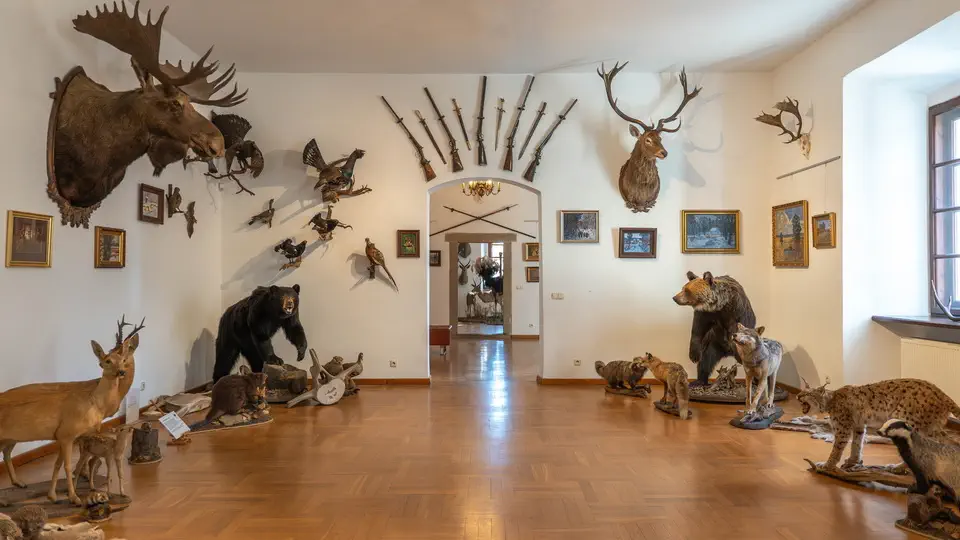
The Hunting Halls are an exhibition spread across three rooms, where game animals and birds hunted in the Niepołomice Forest are displayed. In one of the rooms, you will also see animals from almost all over the world—from Siberia and Canada to Africa. All of them were shot by Polish hunters, and their stuffed bodies were donated to the museum. Among the exhibits are giraffes, zebras, antelopes, jackals, and porcupines.
Personally, I prefer watching animals running free rather than gathering dust in museum corners, even if they look lifelike. I do understand, however, that this part of the museum refers to the hunting traditions associated with royal hunts, for which the castle in Niepołomice was built. An interesting fact is that the exhibition was created with the support and cooperation of Count Potocki and Professor Tadeusz Uhl from the Polish Hunting Association.
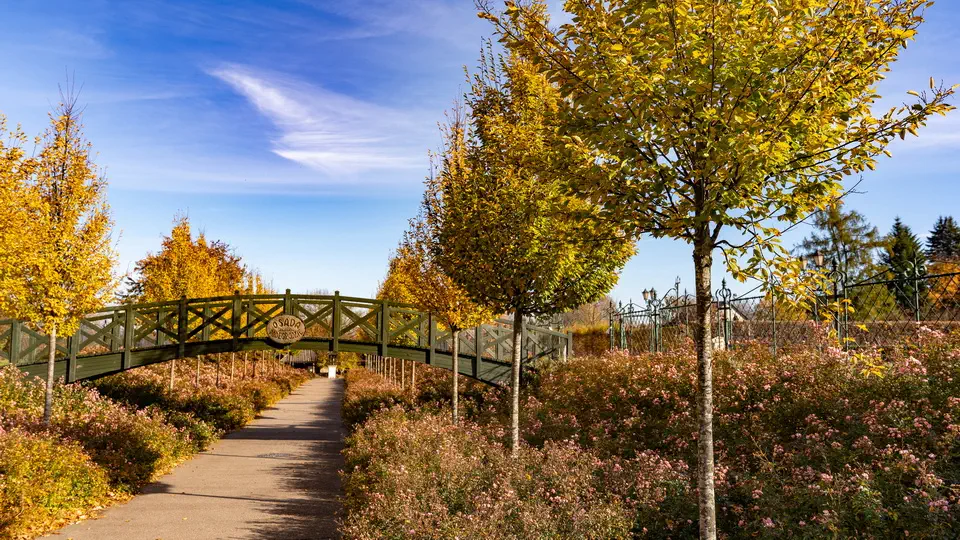
These are not all the attractions that the Niepołomice Castle offers to visitors. Before your trip, I suggest checking the monument’s official website, as meetings with interesting people, thematic exhibitions, workshops, and many other noteworthy events are often held there. In addition, in the immediate vicinity of the castle you will find a beautiful park, Queen Bona’s Gardens, numerous sculptures, and of course, the town of Niepołomice itself. I wish you an enjoyable visit—and if you come across anything fascinating worth mentioning, be sure to write to us; we will be happy to add it to our article.
Niepołomice Castle and its history
The Niepołomice Castle was built in the mid-14th century by order of King Casimir the Great. It was intended to serve the ruler as a hunting base for expeditions into the Niepołomice Forest, while also fulfilling the role of a fortress if necessary. Initially, the castle consisted of three towers and two buildings forming the southern and eastern wings. The western and northern sides of the castle were surrounded by a high stone wall that enclosed the castle courtyard. At the same time, a settlement called Niepołomice developed around the castle as a place of residence for the castle’s servants.
The idea of maintaining a hunting castle on the edge of the old, dense forest appealed to subsequent rulers such as Władysław II Jagiełło, Sigismund I the Old, and Sigismund II Augustus. They modernized the stronghold and adapted it to their needs. In addition to hosting hunts, the Niepołomice Castle served as a venue for royal assemblies, courts, and many other events and ceremonies. At the beginning of the 16th century, the royal court even took refuge in Niepołomice while fleeing an epidemic raging in Kraków.
Unfortunately, the castle’s history was not free of misfortune. In 1550, a massive fire broke out in the castle chambers, destroying two wings of the building. The Niepołomice Castle was considered so valuable that King Sigismund II Augustus decided to rebuild the ruins and restore its former glory. The reconstruction lasted nearly 20 years, but it was worth the wait—the former Gothic fortress was transformed into a Renaissance building rich in classical references. The arcades on the upper floor, surrounding the spacious courtyard, added particular charm. The surroundings of the stronghold also underwent major changes, as a beautiful garden designed by Queen Bona was created around the walls.
In the following years, the castle changed owners several times, and each introduced alterations to its interior. Fireplaces, decorations, and embellishments appeared, especially visible on the ceilings and vaults. The arcades were also rebuilt, giving them a Baroque character. Unfortunately, subsequent years brought the Swedish invasions, during which the castle’s interior was looted, and the empty buildings were turned into warehouses. The Austrians also showed little respect for the monument, converting it into barracks and adding reinforcements and buttresses to the walls. In later years, until the outbreak of World War I, the Niepołomice Castle served storage, residential, and public utility functions.
Over the years, this beautiful monument fell into increasing ruin and would likely have collapsed entirely if, in the early 1990s, it had not come into the ownership of the Niepołomice municipality, which decided to allocate substantial funds for its renovation. The restoration work was completed in 2007, and the royal residence once again became a shining and proud castle open to visitors. Today, the building houses a hotel, a large conference hall, and of course, the Niepołomice Museum. In addition, the castle is home to the choir of the Society of Lovers of Music and Singing in Niepołomice, proudly bearing the name Cantata.
Niepołomice Castle facts, information, and curiosities
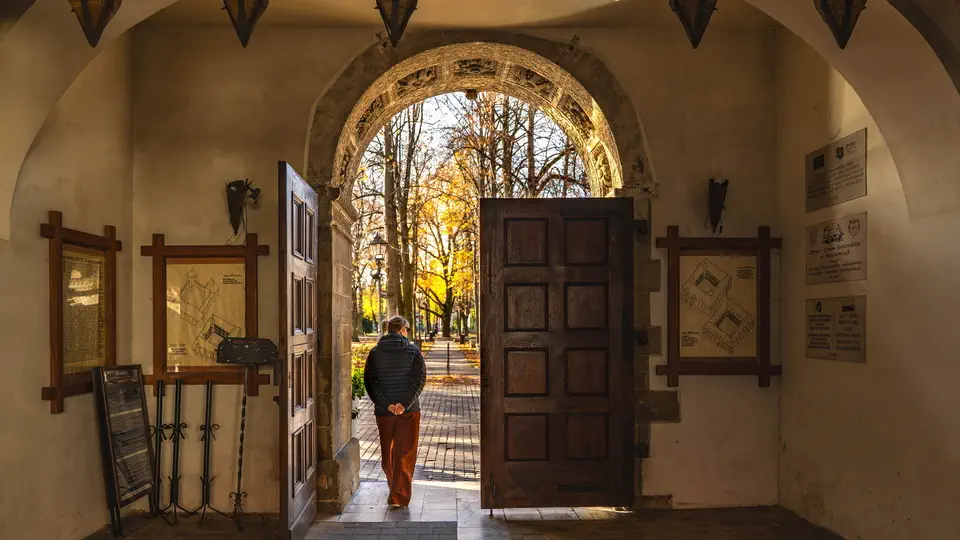
- If you’re looking for a day trip from Krakow, Niepołomice is a great choice—the castle is located just outside the city, nestled in a charming blend of Renaissance arcades and greenery.
- The castle was built at the initiative of King Casimir the Great in the 14th century, and from the beginning served as a royal residence and a base for hunting expeditions to the once vast Niepołomice Forest.
- It is sometimes called the “second Wawel”—a term derived from its similarities to the royal residences in Krakow and emphasizing the castle’s importance in the region’s history.
- In the 16th century, the castle underwent a major Renaissance reconstruction, during which masters like Tomasz Grzymała and the Italian sculptor Santi Gucci gave it its present-day character.
- In the central part of the castle is a wide, arcades courtyard with cloisters—the perfect spot for a photo with the “old castle, modern selfie” effect.
- The castle’s interior now houses the Niepołomice Museum, where you can see exhibitions on the history of hunting, local art, and collections related to the region.
- One of the most interesting galleries is the hunting and nature collections. This is the castle’s pride and joy, combining the history of courtly customs with local flora and fauna.
- The castle has been rebuilt and destroyed many times – its history is a constant struggle to preserve and recreate its former appearance, giving it a distinctive, layered architectural character.
- During times of plague and epidemics, royal residences, including Niepołomice, served as a safe haven for the court – this is one of the reasons the castle gained importance in the Middle Ages.
- A walk around the castle is also a walk through the town’s history – not only a royal residence, but also a commercial and trading settlement developed here since the Middle Ages.
- The castle is situated on a slope of the Vistula River valley – the view from its surroundings combines the panorama of a small town with vast fields and forests.
- For architecture enthusiasts: Gothic elements later transformed into Mannerist and Renaissance decorations are a striking example of the stylistic transformations in Poland.
- During the season, the castle hosts concerts, temporary exhibitions, and cultural events—drop in in the evenings when the cloisters are illuminated by lamplight.
- For families with children: interactive tours and historical workshops often transform the castle into a place of both fun and learning.
- A beautiful park surrounds the castle—after a tour, it’s worth sitting on a bench or having a picnic overlooking the walls.
- The castle has survived the region’s turbulent history, including wars and occupations—its restored wings are the result of lengthy conservation work and tourist revitalization.
- If you’re interested in detail, observe the stones and tracery: some elements of the façade are the work of Italian craftsmen brought here during the Renaissance.
- Kings, aristocrats, and famous historical figures have visited the castle—this place has its own royal tales, which guides eagerly share during tours.
- Productive advice: When planning your visit, check the museum’s opening hours and any special events—this will help you avoid disappointment.
- Finally—the atmosphere: Niepołomice is the perfect place if you want to combine sightseeing with tranquillity in the nearby nature; the castle evokes a sense of history while remaining visitor-friendly.